
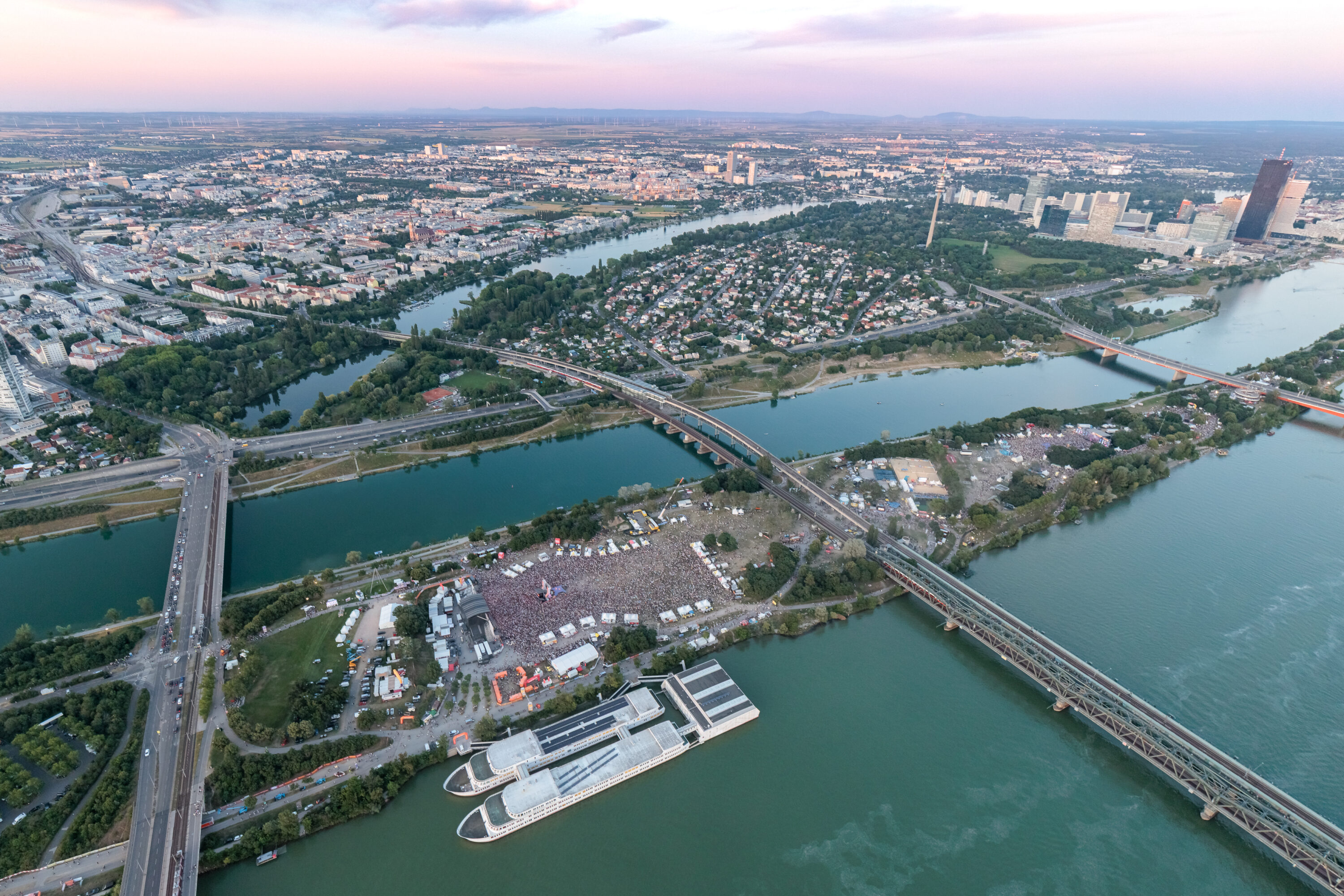
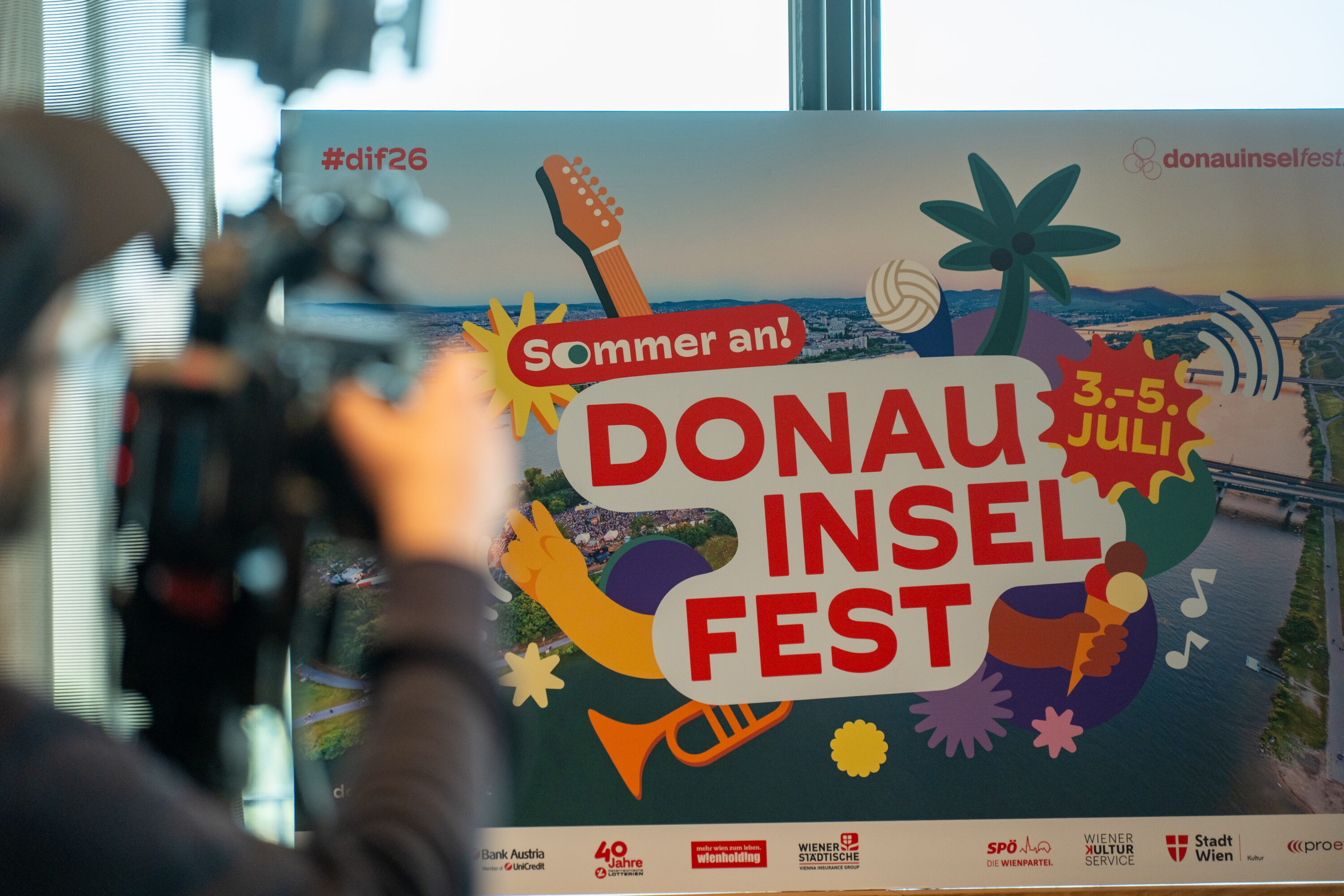
Three days, fourteen stages, around 200 acts, and not one euro for a ticket. That's Donauinselfest 2026 in a sentence, and in 2026 it runs from 3 to 5 July on the long green island in the middle of the Danube. This is the 43rd edition, and for the first time it opens in July rather than late June, timed to the first weekend of the Vienna school holidays. What you get is a proper start-of-summer party that also happens to be Europe's biggest open-air festival, free from start to finish.
We've spent enough summers on the Donauinsel to know it rewards a bit of planning. Here's what's new at Donauinselfest 2026, who's playing, how to get there without stress, and how to turn a few hours of music into a full day on the water.
What's New at Donauinselfest 2026
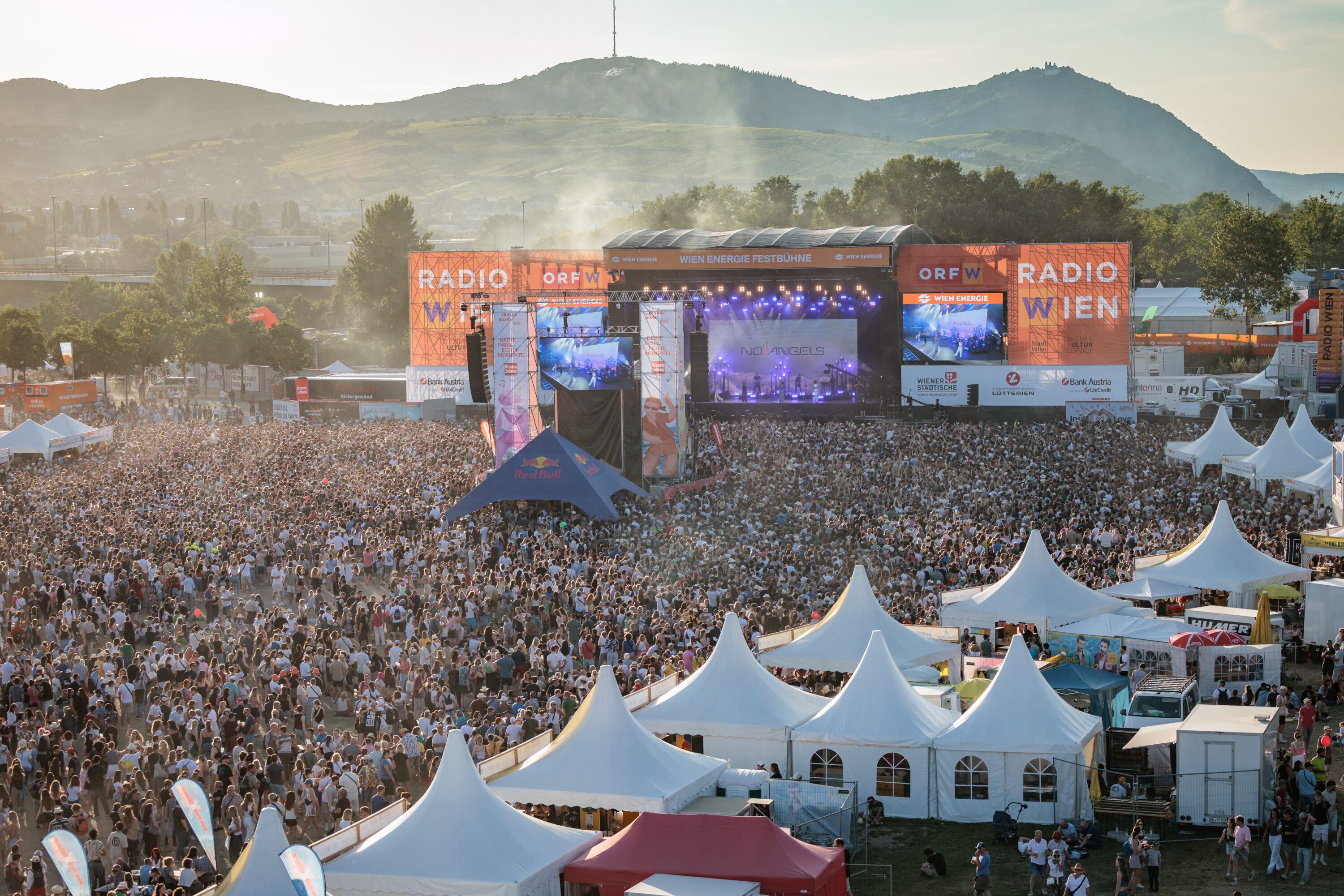
The headline change is the date. The festival moved a week later into July, partly to avoid clashing with the Formula 1 weekend at the Red Bull Ring, and partly to line up with the first holiday weekend, the Friday being report-card day for Vienna's schools. The motto this year is "Sommer an!", roughly "summer on", and the whole thing is built as the official kickoff to the Viennese summer.
There's also a leaner setup. The Thursday pre-opening is gone, so it's back to the classic three days, and the stage count dropped from sixteen to fourteen. The trade-off is a good one for anyone actually standing in the crowd: fewer acts, but longer sets, so the artists you came for get real stage time instead of a quick handful of songs. The festival ground still stretches about 4.5 km along the island, between the Reichsbrücke and the Nordbrücke, with more than 700 hours of programme across the weekend.
A few additions are worth flagging. A large chain carousel goes up this year with views over the island and the city, the Edelstoff design market returns after a year away, and football fans get two live World Cup screenings on the main stage, which we'll come back to below.
The Donauinselfest 2026 Line-Up Worth Planning Around
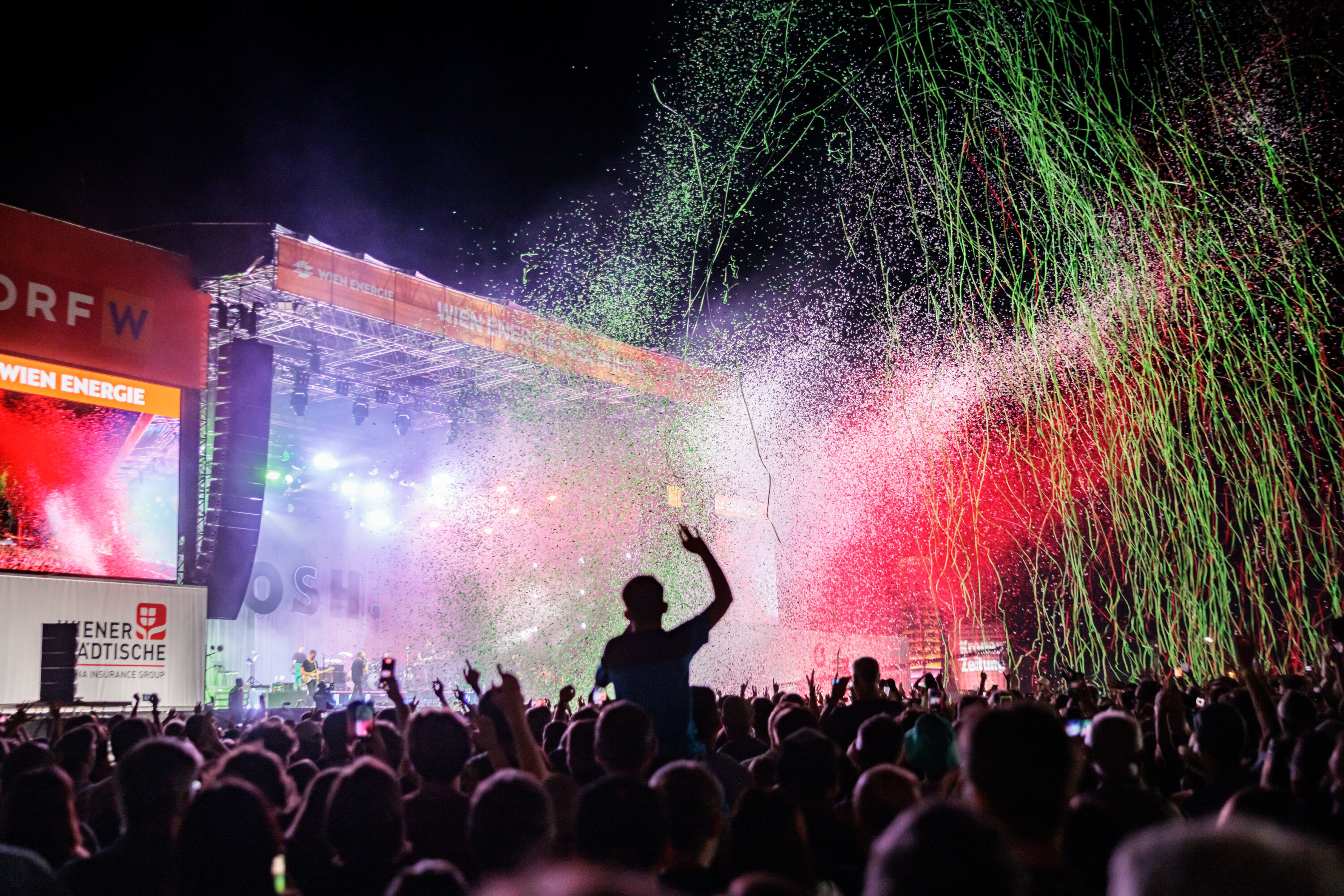
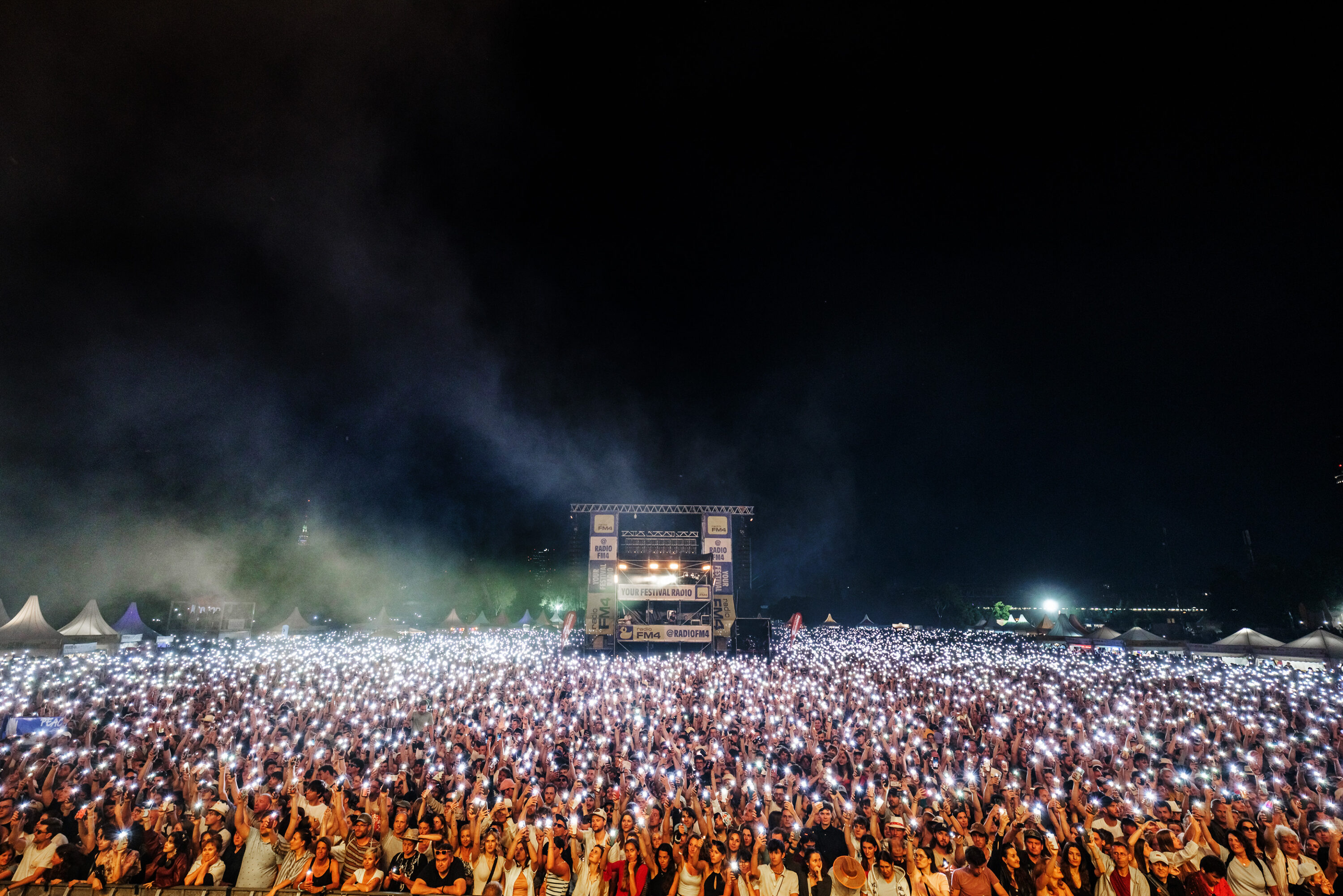
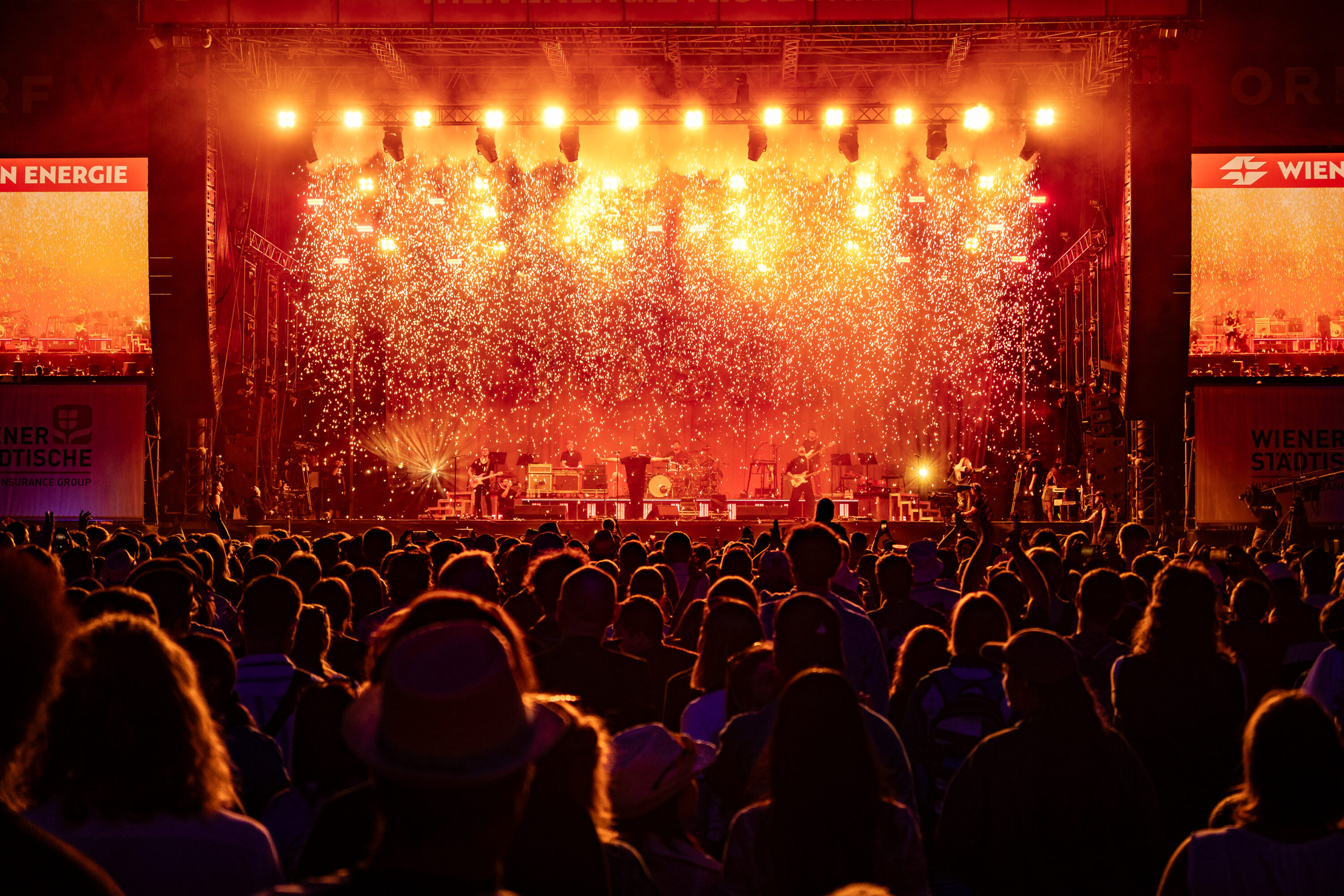
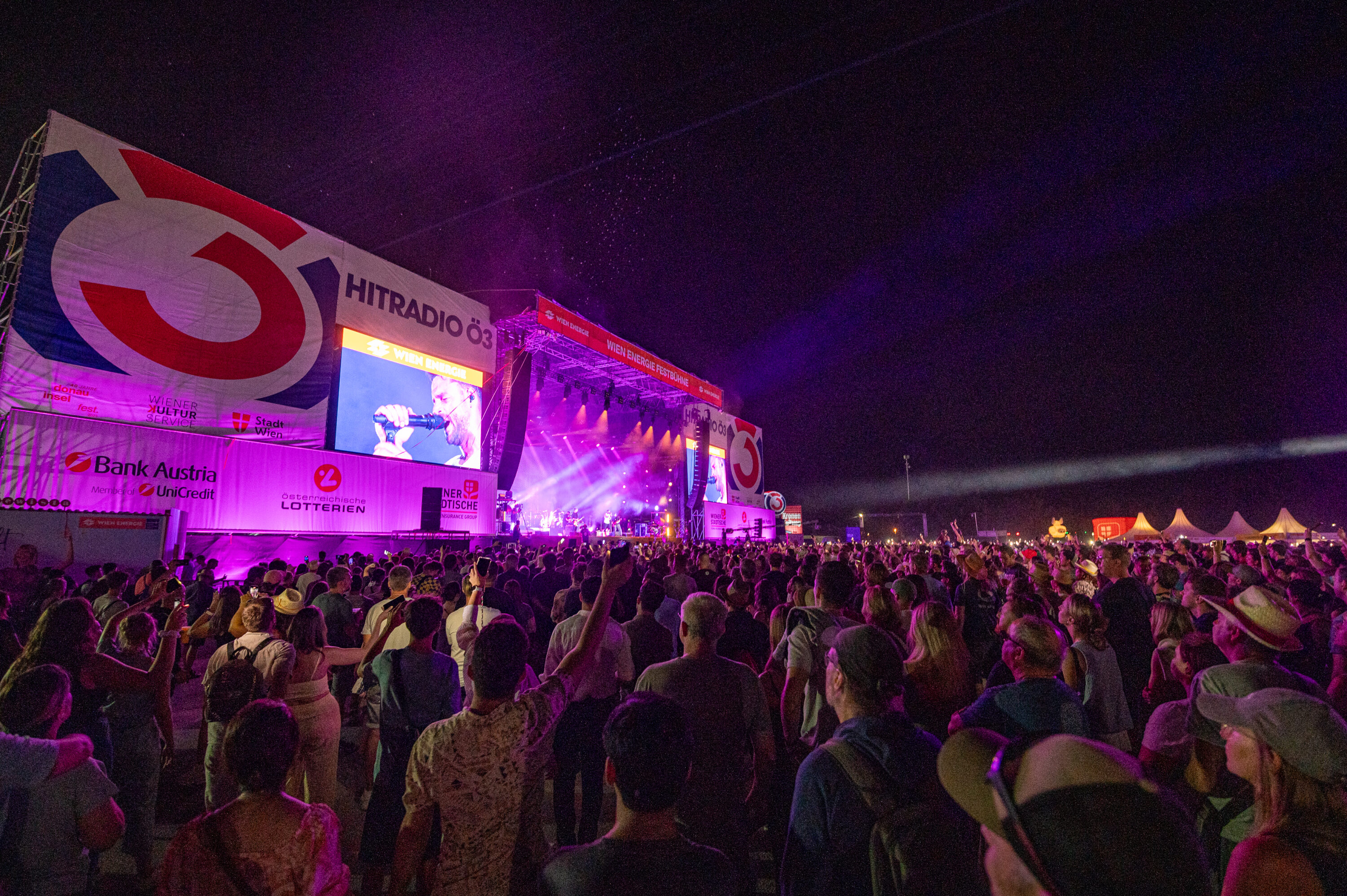
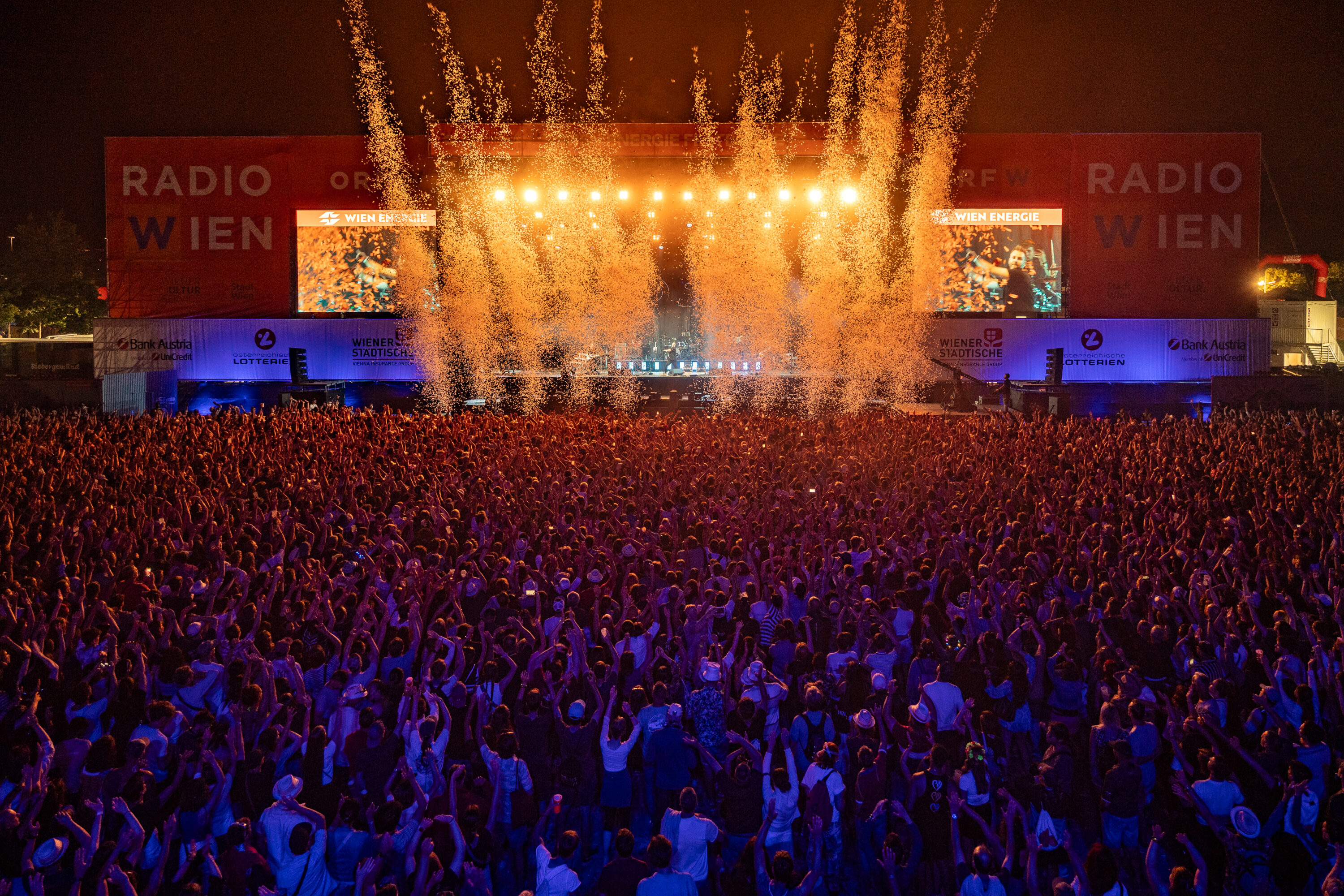
Around 200 acts cover most of what you'd want from an open-air weekend: rock, pop, hip-hop, electronic, Schlager, and Wienerlied. On the big FM4 main stage you'll find names like Nico Santos, Zartmann, KAMRAD, My Ugly Clementine, and Giant Rooks. Rock fans get Airbourne, Avatar, and Feuerschwanz, while the Austropop and Schlager corner brings Jazz Gitti, Andy Borg, and Matakustix.
What we like about the programming is how much room it leaves for homegrown talent. The Rock The Island Contest has been opening doors for newcomers for sixteen years, and this year six emerging acts, all female-led, won the chance to open the big stages out of roughly 300 applications. If you like discovering bands before everyone else does, the early-afternoon slots are where to be.
The Friday opening leans into something Donauinselfest does genuinely well. The day starts with an inclusion concert by Austrian-Icelandic musician Thorsteinn Einarsson around noon, performed with live sign-language interpretation, and the main-stage moderation runs in Austrian Sign Language all day. The Special Olympics Summer Games take place in Vienna from 25 to 30 June this year, the first time in nearly three decades, and the athletes are honoured on the festival stage.
For the full timetable and any last-minute additions, it's worth a look at the official site before you go.
Getting to the Island
This is the easy part, and it's a big reason the festival works at the scale it does. The Donauinsel sits right on Vienna's U-Bahn network, so you don't need a car and frankly shouldn't bring one.
By U-Bahn: The U1 stops at Donauinsel station, which drops you straight onto the island at the southern end near the Reichsbrücke. The U6 stops at Neue Donau, handy for the northern stretch. Trains run frequently and late, which matters when half the city is heading home at once.
Timing: Crowds build through the afternoon and peak in the evening. If you want a relaxed start of the Donauinselfest 2026, arrive earlier, find your spot, and let the day come to you. Heading out right at the end of a headline set means queuing with everyone else, so either leave a little early or stay for one more act and let the platform clear.
How to Do the Festival Well
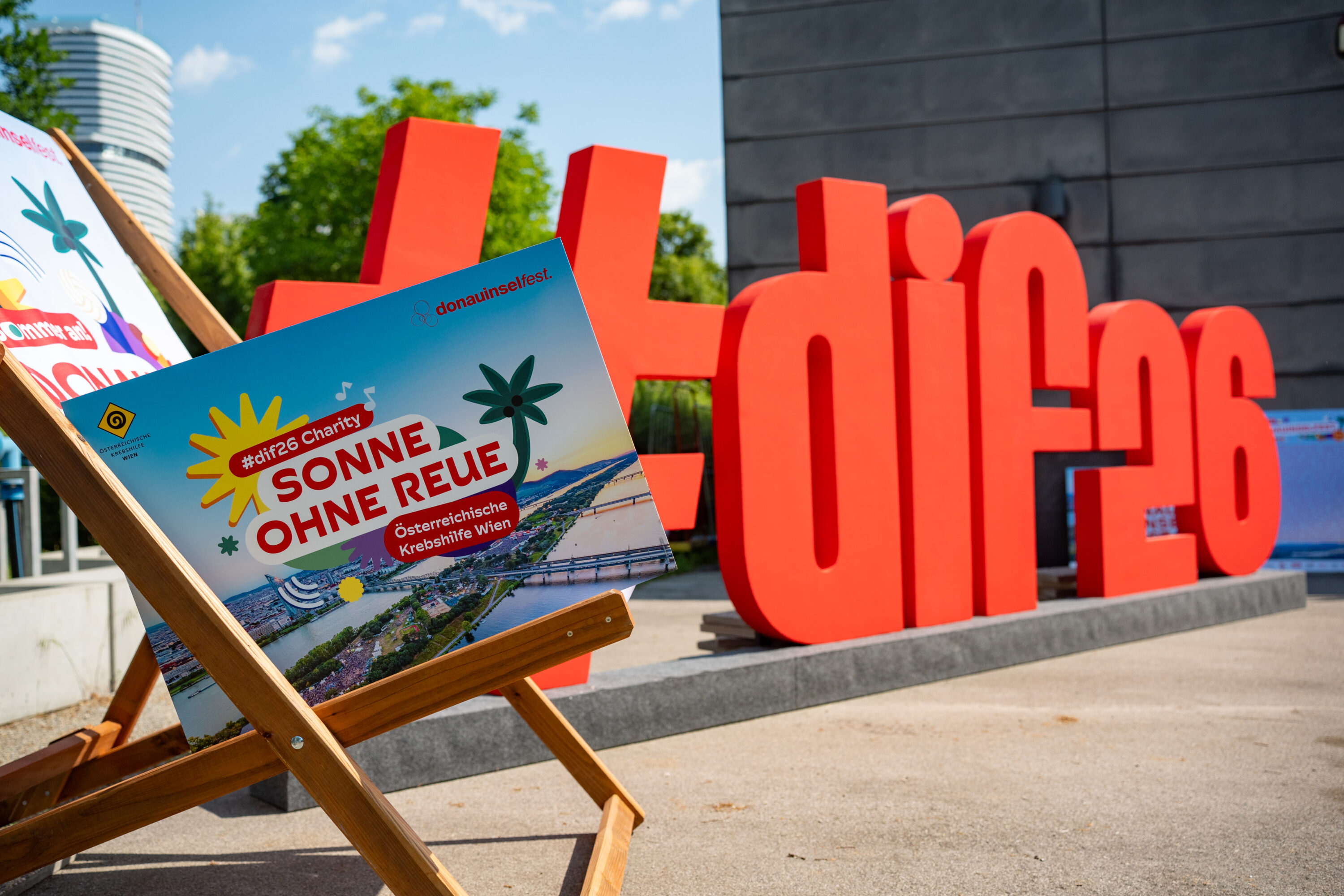
Pick your end of the island: With 4.5 km to cover, nobody walks the whole thing in one go. Check the stage list, decide which acts you actually care about, and base yourself near that cluster rather than wandering the full length.
Build in quiet time: There are four designated quiet zones this year for stepping out of the noise, which is genuinely useful if you're there all day, came with kids, or just need a reset.
Bring sun cover and water: Early July on an exposed island means real sun. Shade is limited away from the tree-lined edges, so a hat and a refillable bottle go a long way.
Football on the side: A round-of-32 World Cup match screens on the main stage on Friday 3 July from 20:00, and a round-of-16 match on Saturday 4 July from 19:00. If you're juggling both, our guide to where to watch the World Cup in Vienna covers the rest of the city.
Make a Day of It on the Donauinsel
The Donauinselfest 2026 is the headline, but the island is a destination in its own right, and early July is prime season for it. The same stretch of water has proper swimming spots, beach bars, and shaded paths, so it's easy to fold a few hours of music into a full day outdoors.
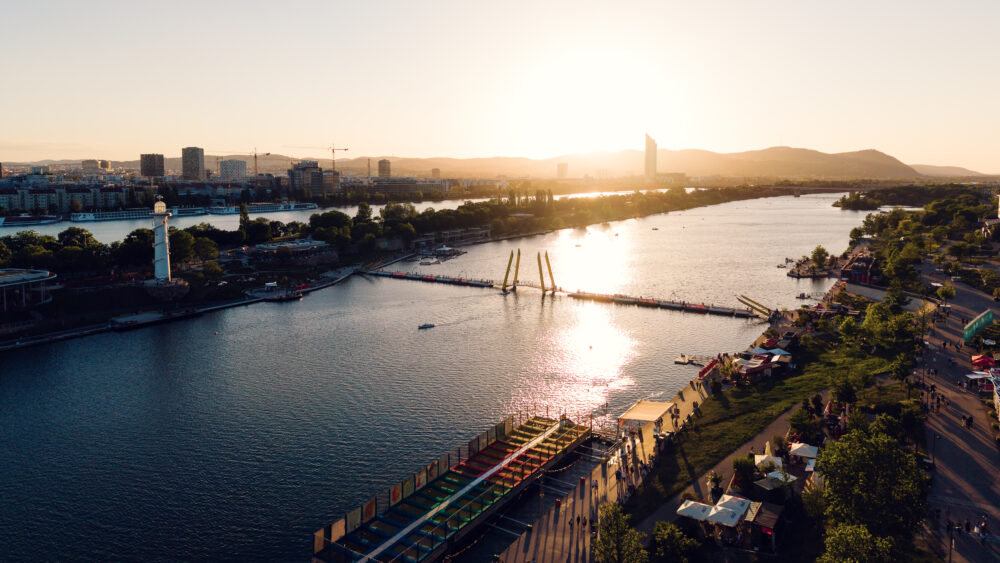
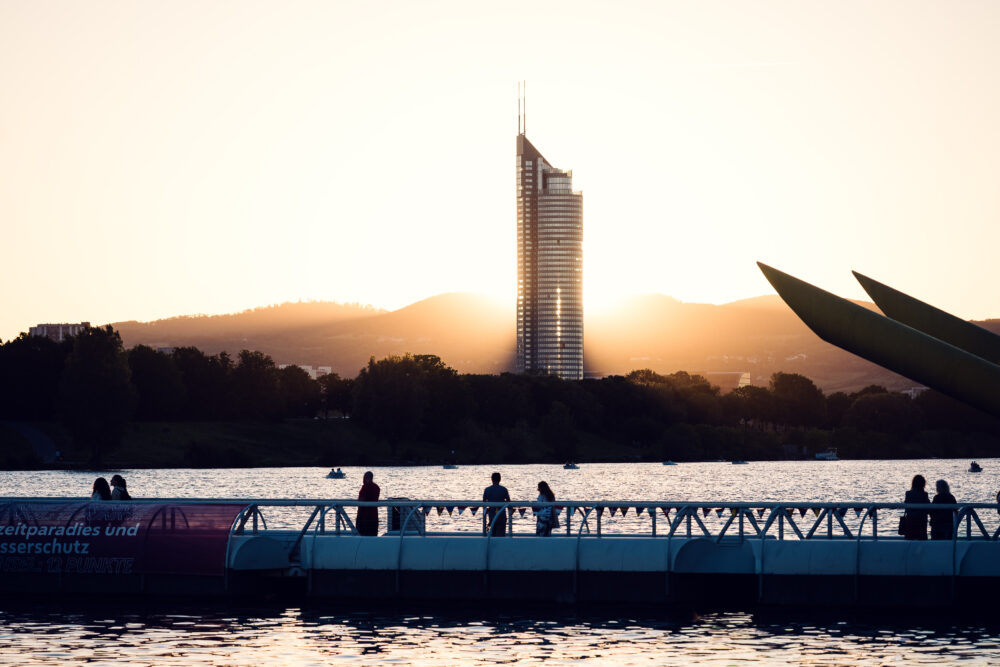
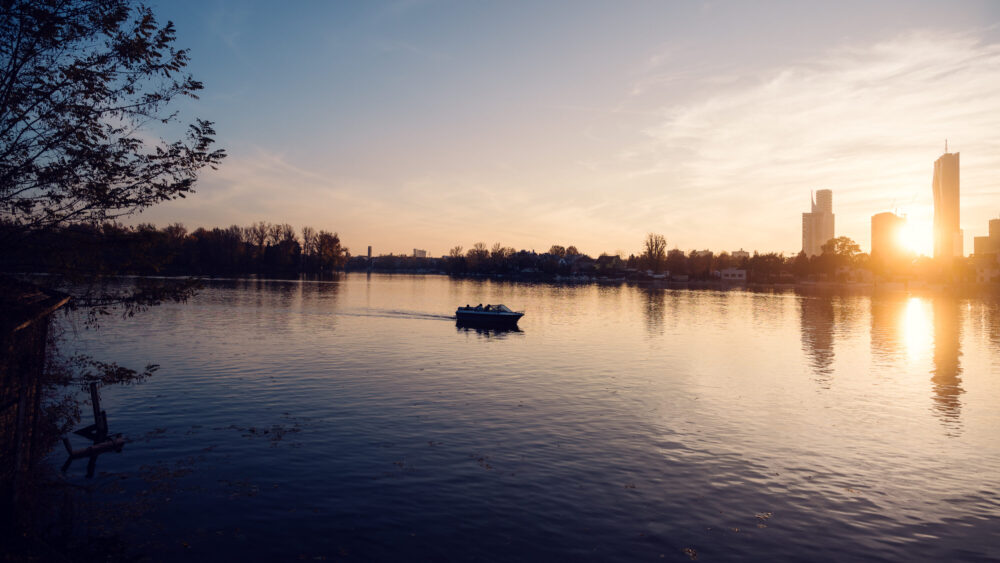
Copa Beach sits at the southern tip by the Reichsbrücke, with sandy banks, a marina, and bars right on the Neue Donau, an easy place to cool off between sets. For calmer, more local swimming, the Alte Donau nearby trades crowds for still water and boat rentals, and Das Bootshaus there is a lovely spot for dinner with the waterfront in view. If you'd rather see the whole skyline from the water, a Danube river cruise passes the Donau City towers and the island itself.
Good to Know
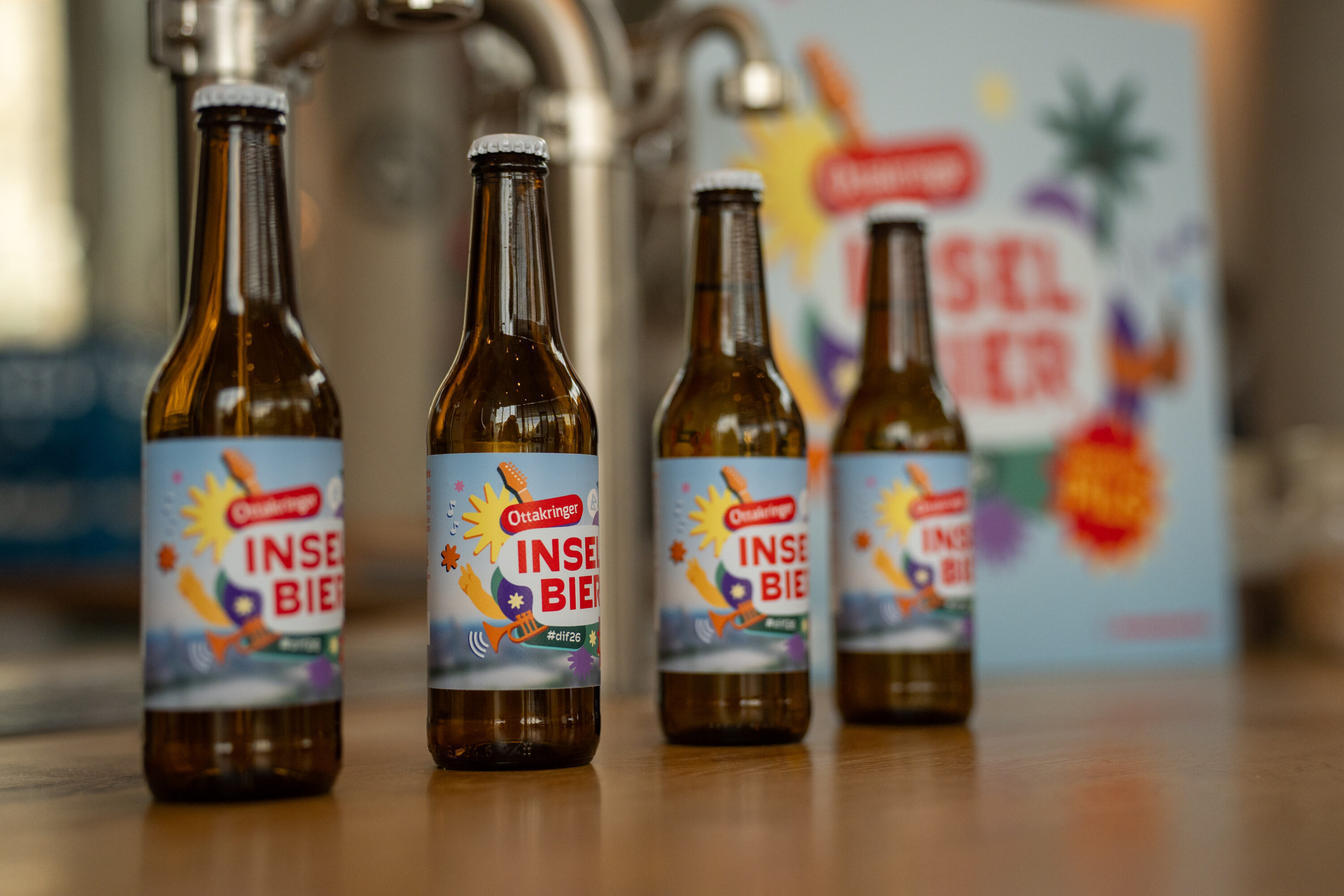
Money: Entry to the Donauinselfest 2026 is free, every day. You'll only spend on food, drinks, and rides, and most stands take card, though a little cash never hurts. The festival even has its own seasonal beer, Ottakringer Inselbier, if you want the full local experience.
With kids: The festival is built for all ages, with dedicated family areas and activities. On Friday, schoolkids get free ice cream from around 11:30 while supplies last, a nice touch on report-card day.
Accessibility: Beyond the quiet zones and sign-language programming, there are shuttle and companion services on site, so the island is workable for visitors with limited mobility.
Weather: It's an open-air event, so check the forecast the morning of. Early-summer thunderstorms tend to pass quickly, but they do pass through.
If you're building a trip around the festival, our Vienna in July guide rounds up everything else worth your time that month, from swimming spots to open-air cinema.