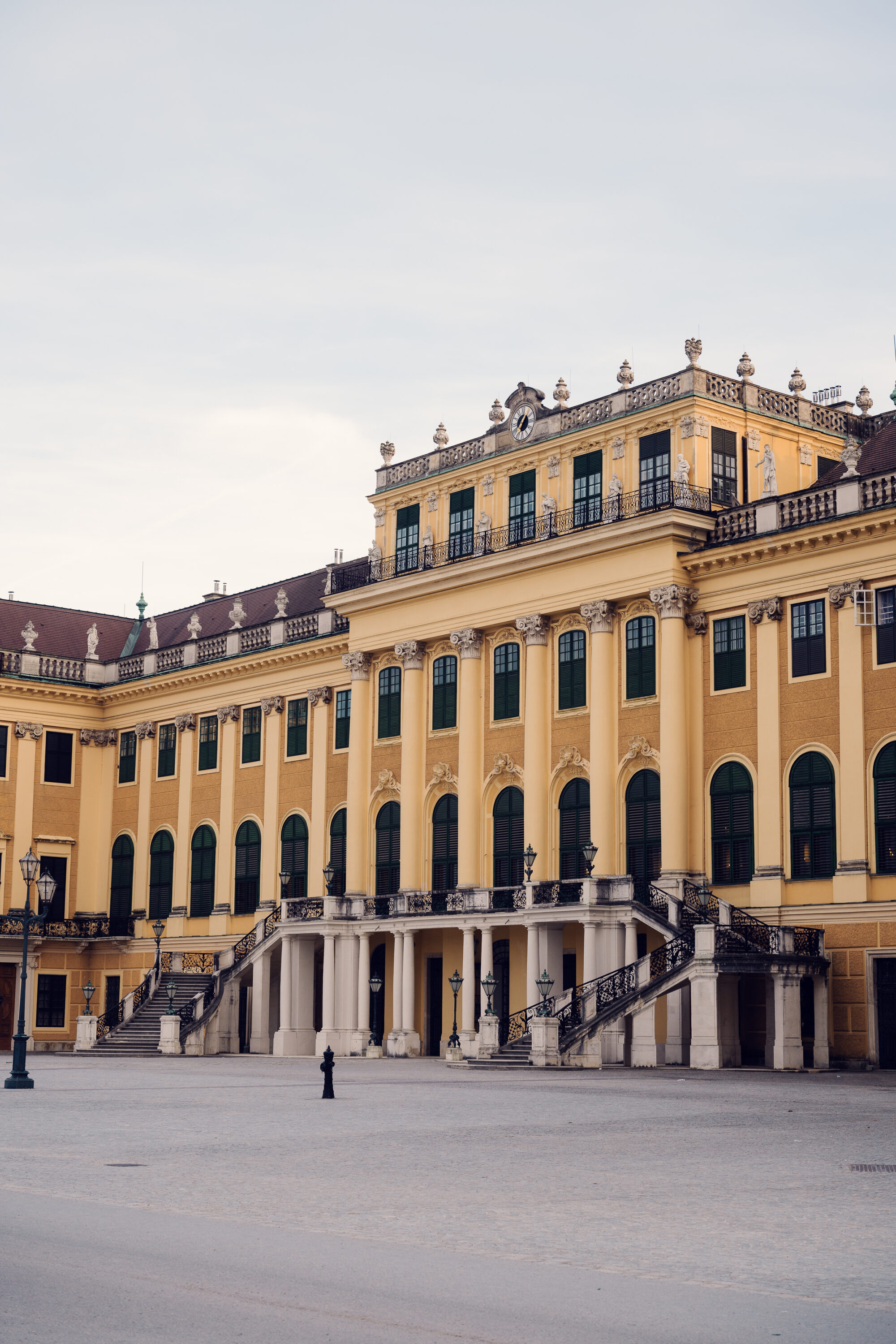

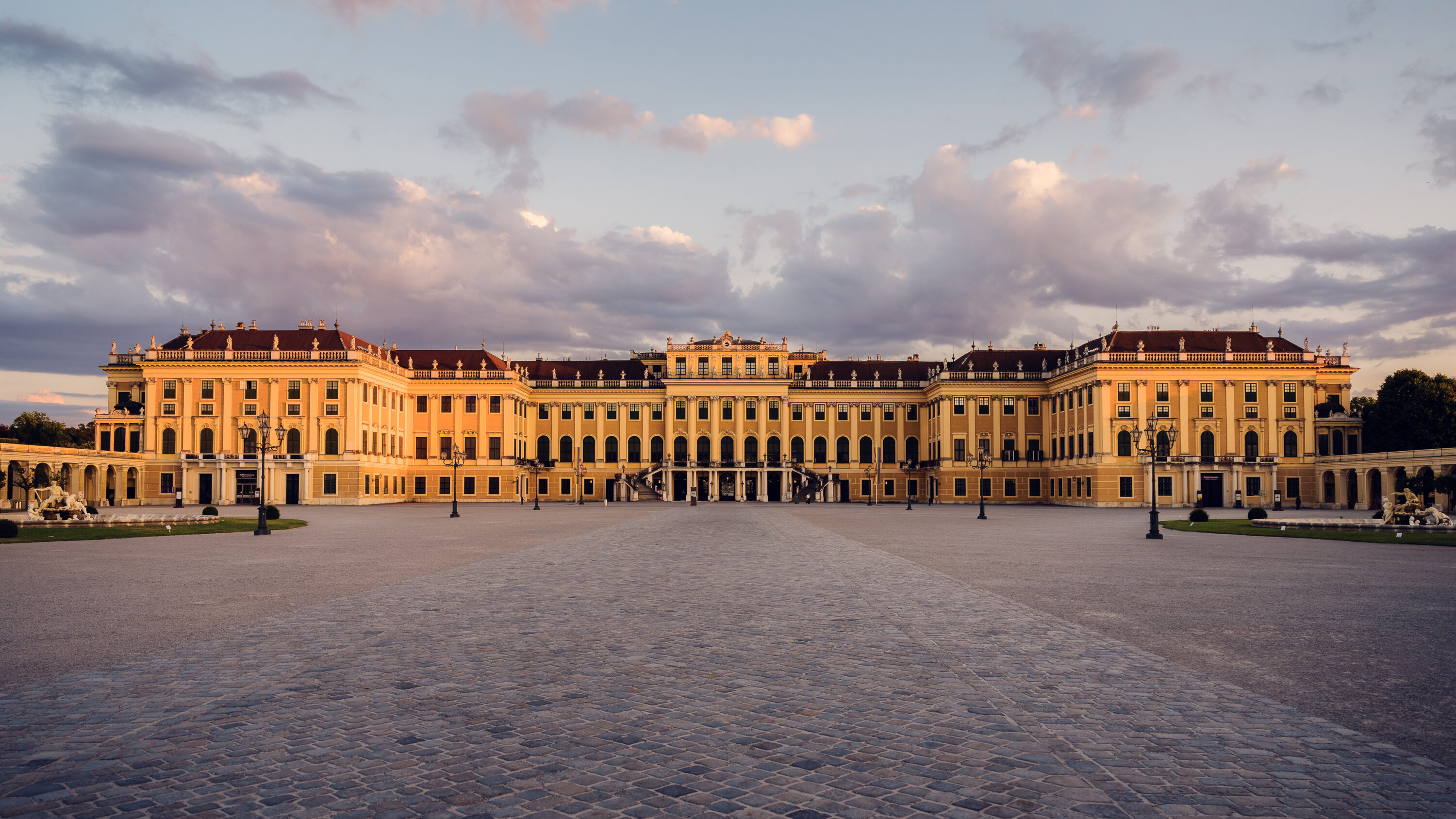
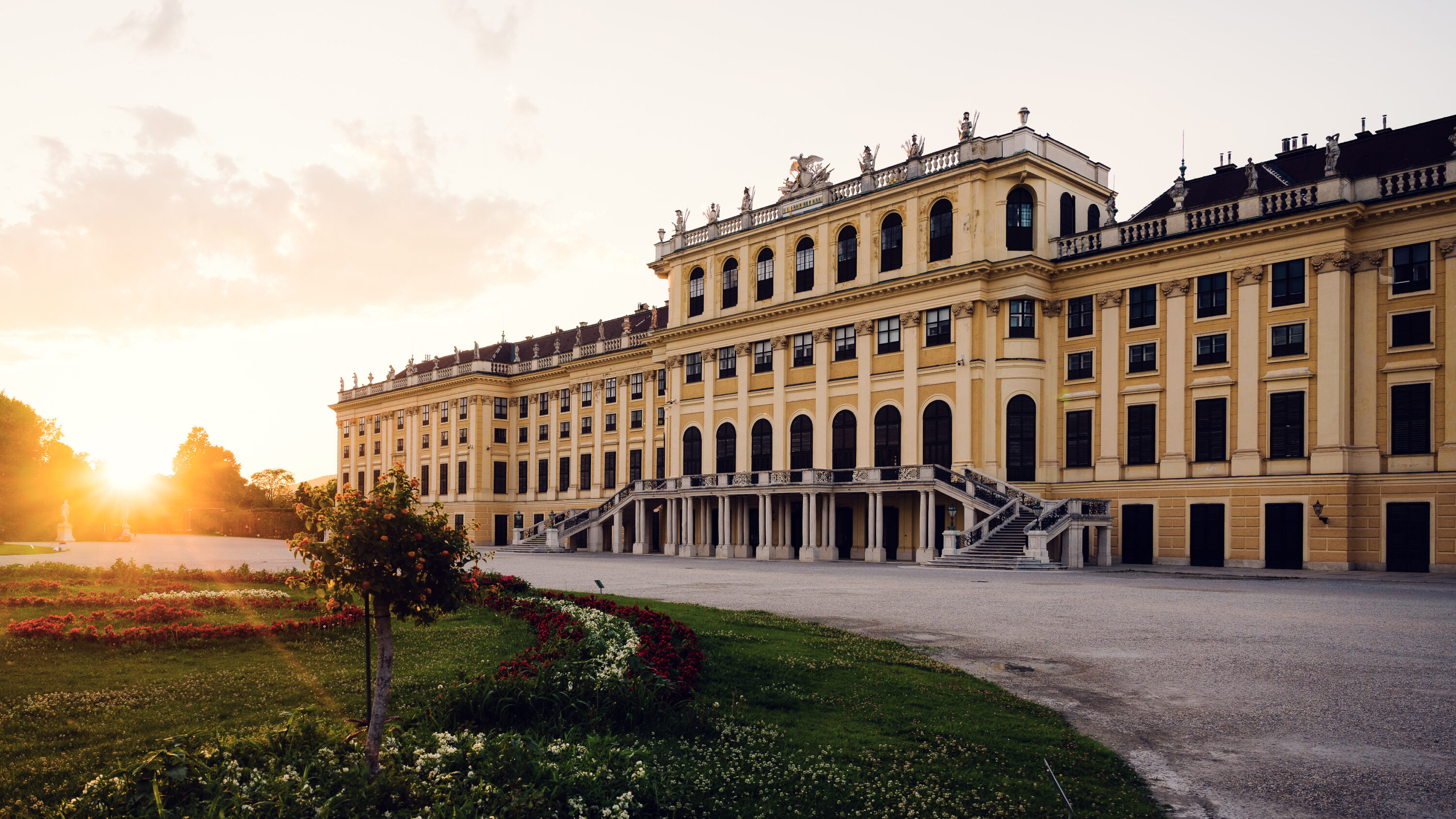
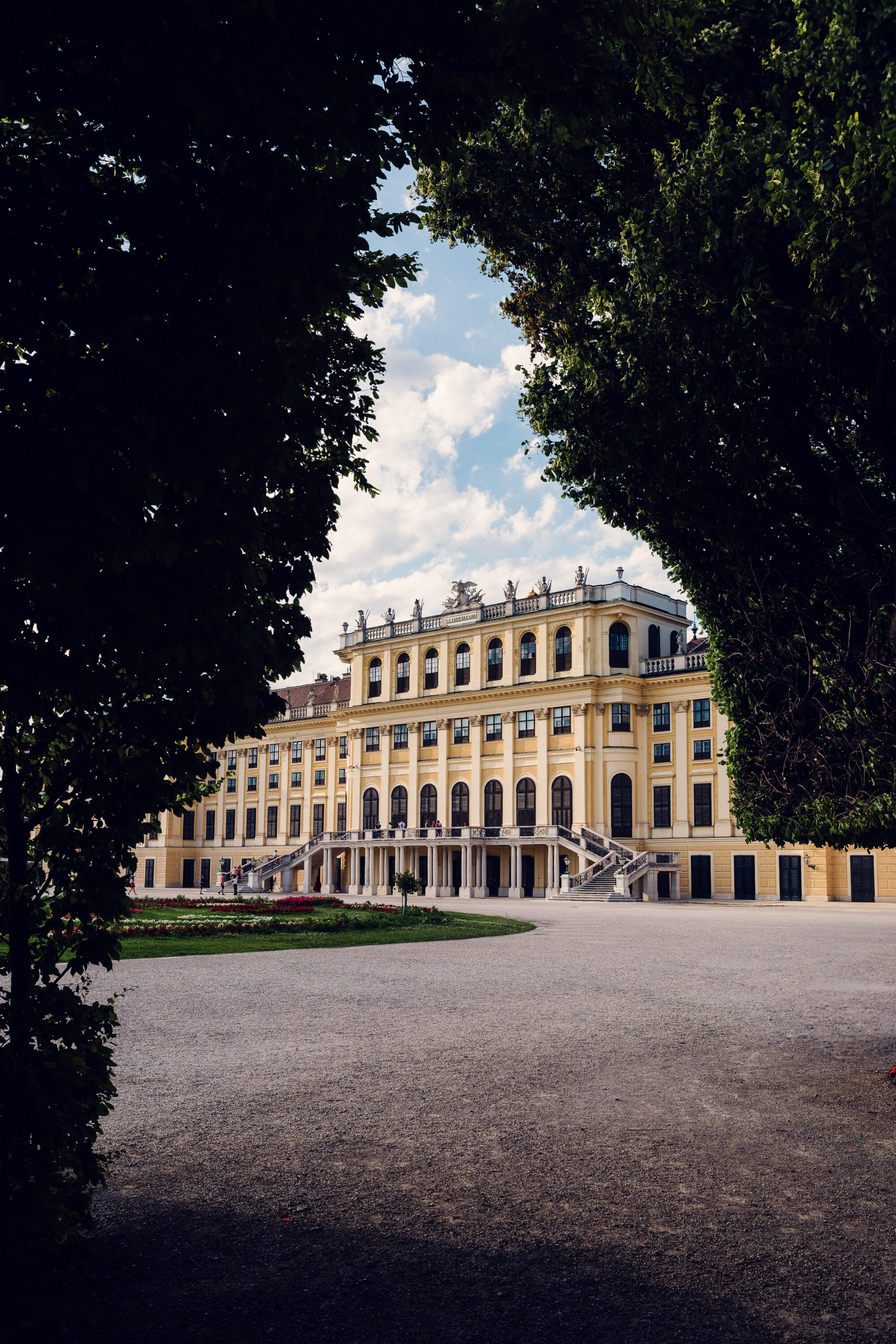
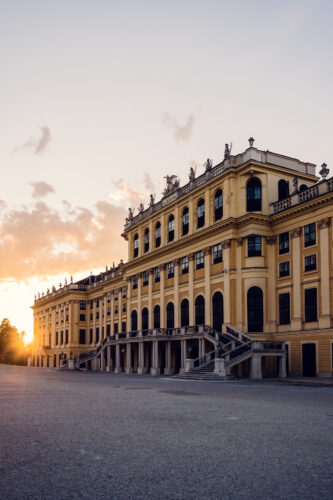
Exterior view of Schönbrunn Palace main building, baroque Austrian imperial palace with characteristic yellow walls.
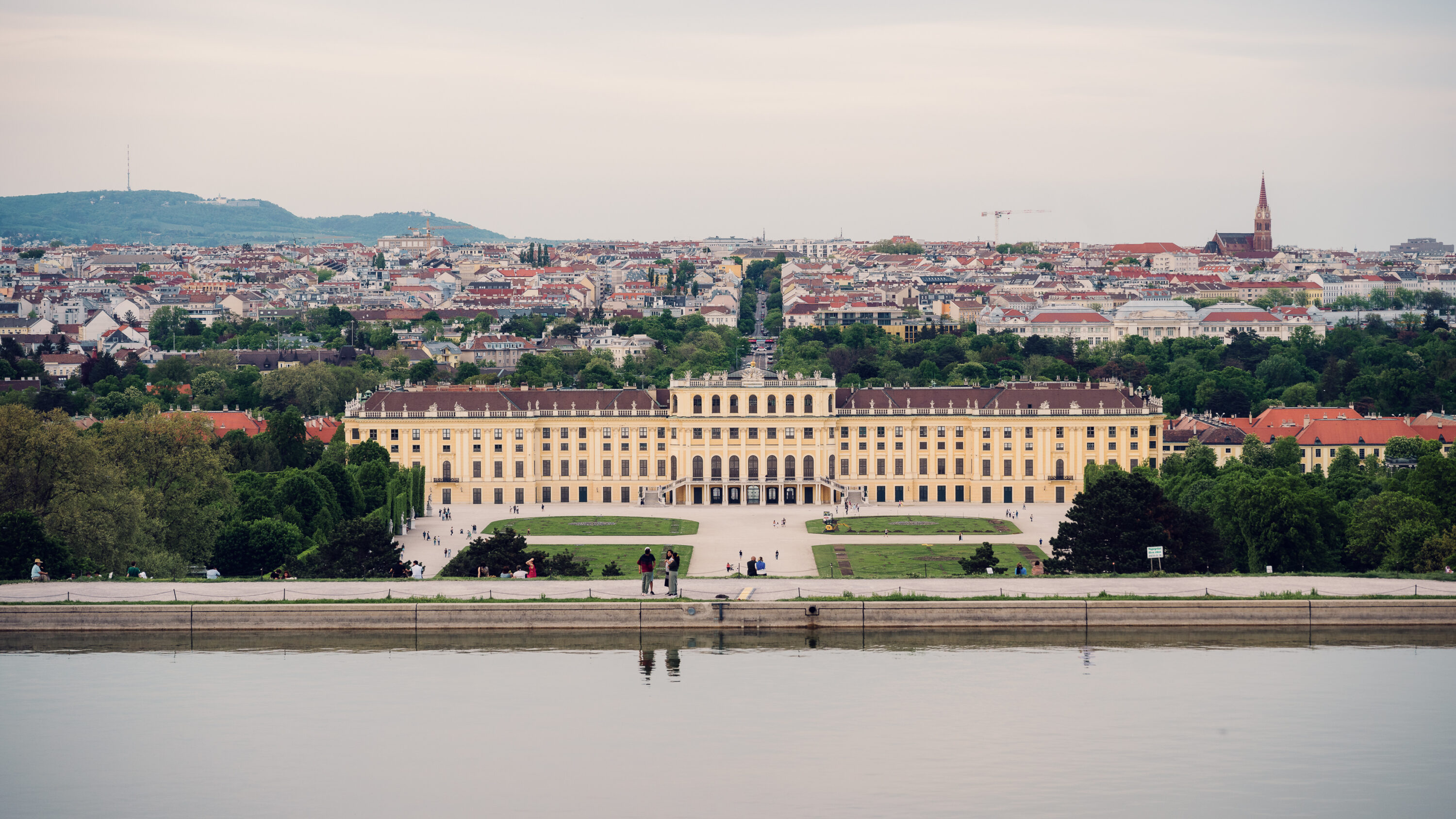
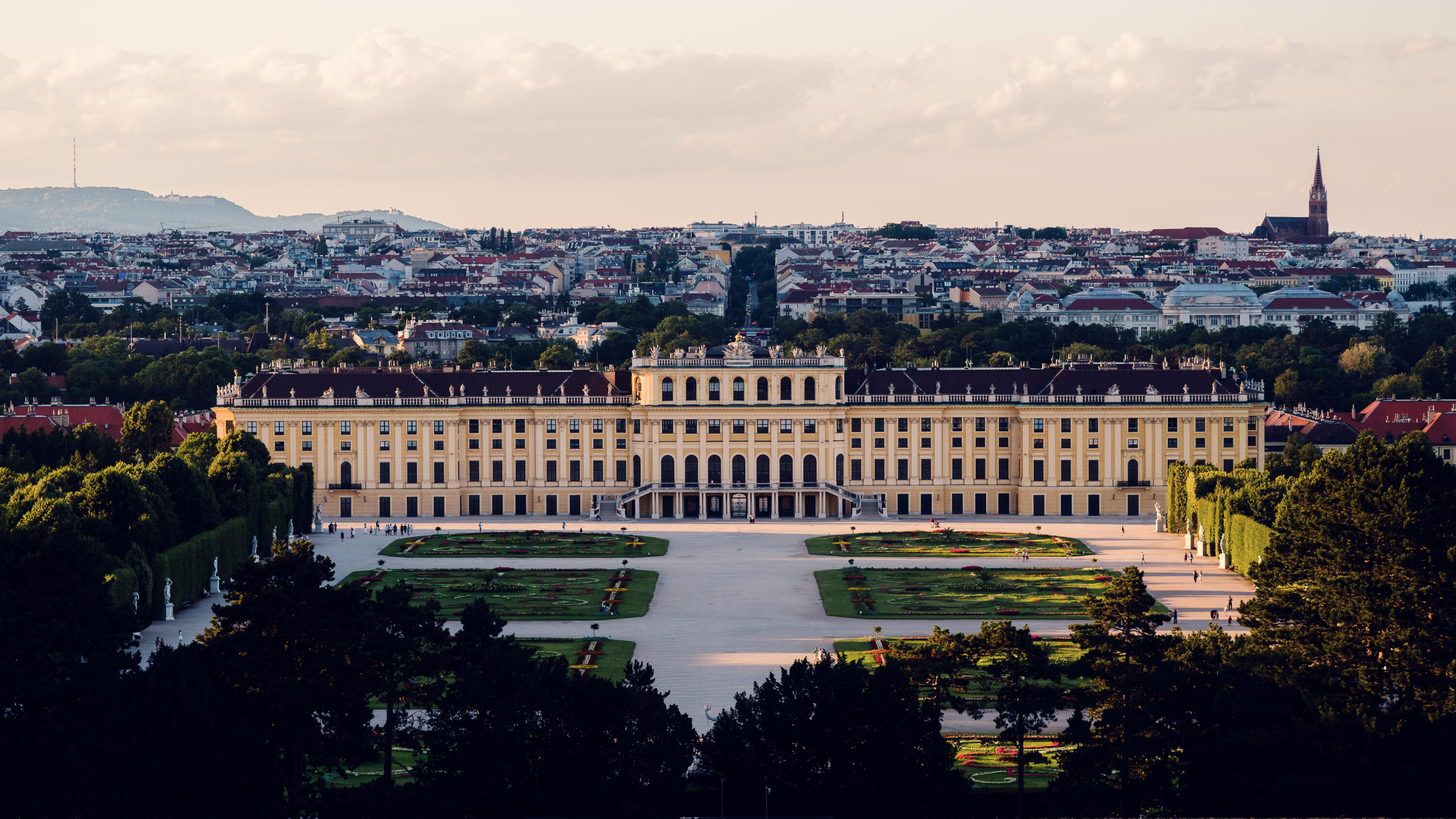
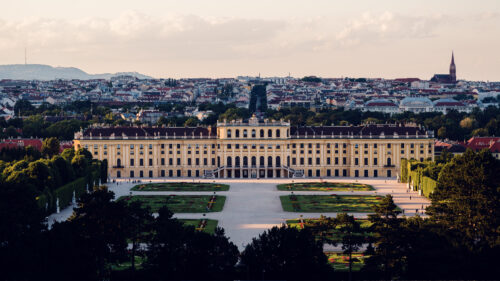
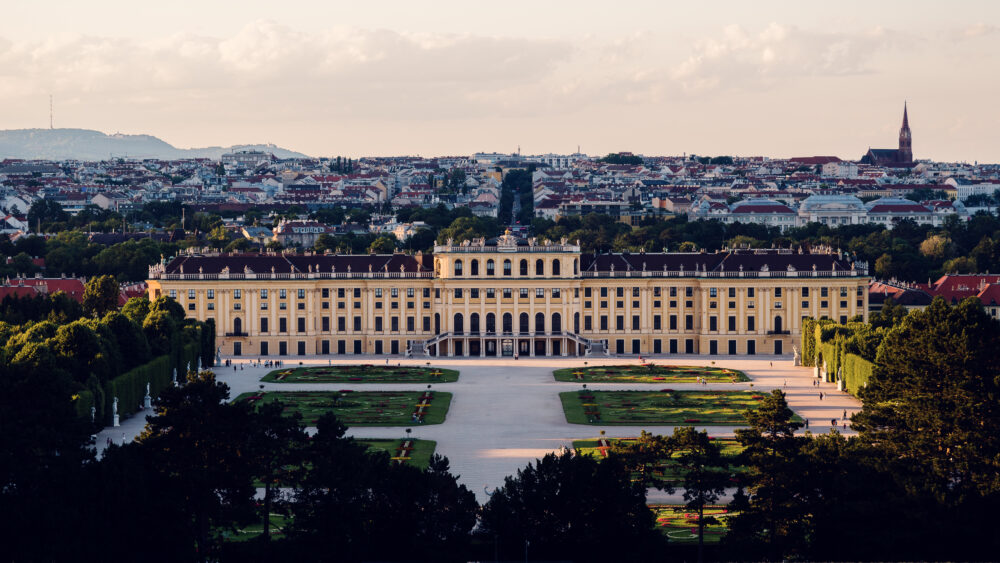
Panoramic daytime view from the Gloriette terrace overlooking Schönbrunn Palace and Vienna's skyline.
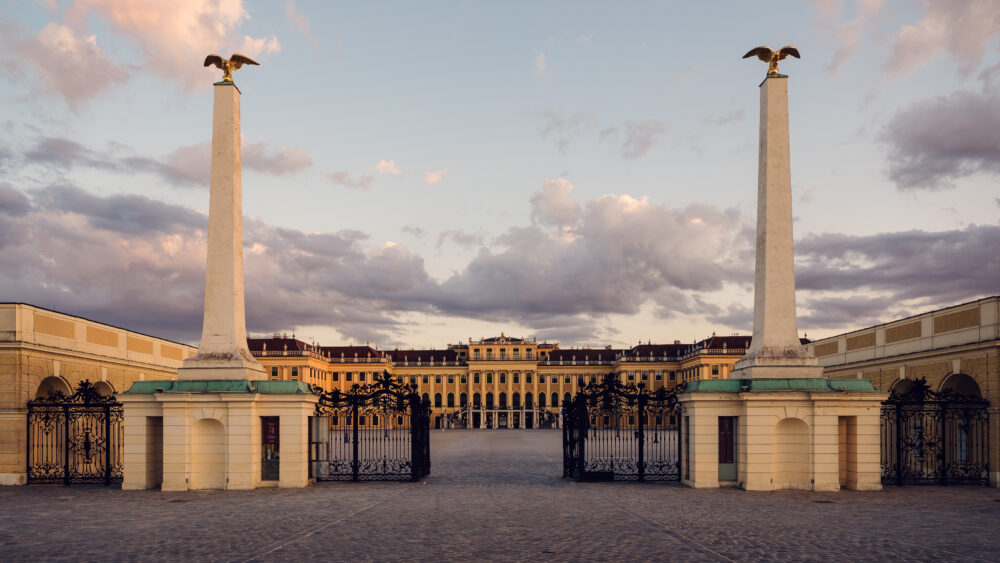
Historic entrance gate to Schönbrunn Palace, baroque Austrian imperial palace main entry with elaborate wrought iron gates and classical stone architecture.
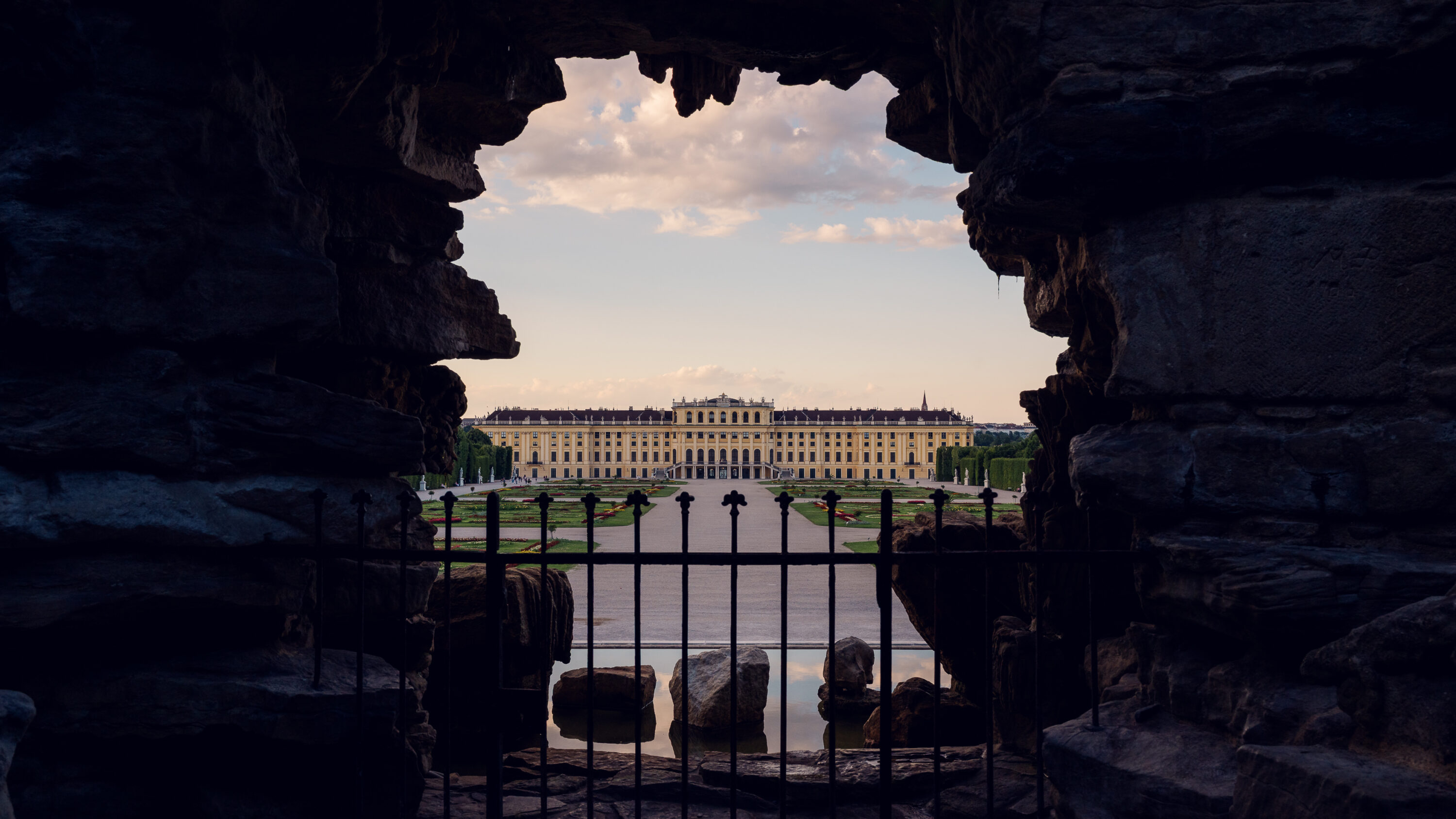
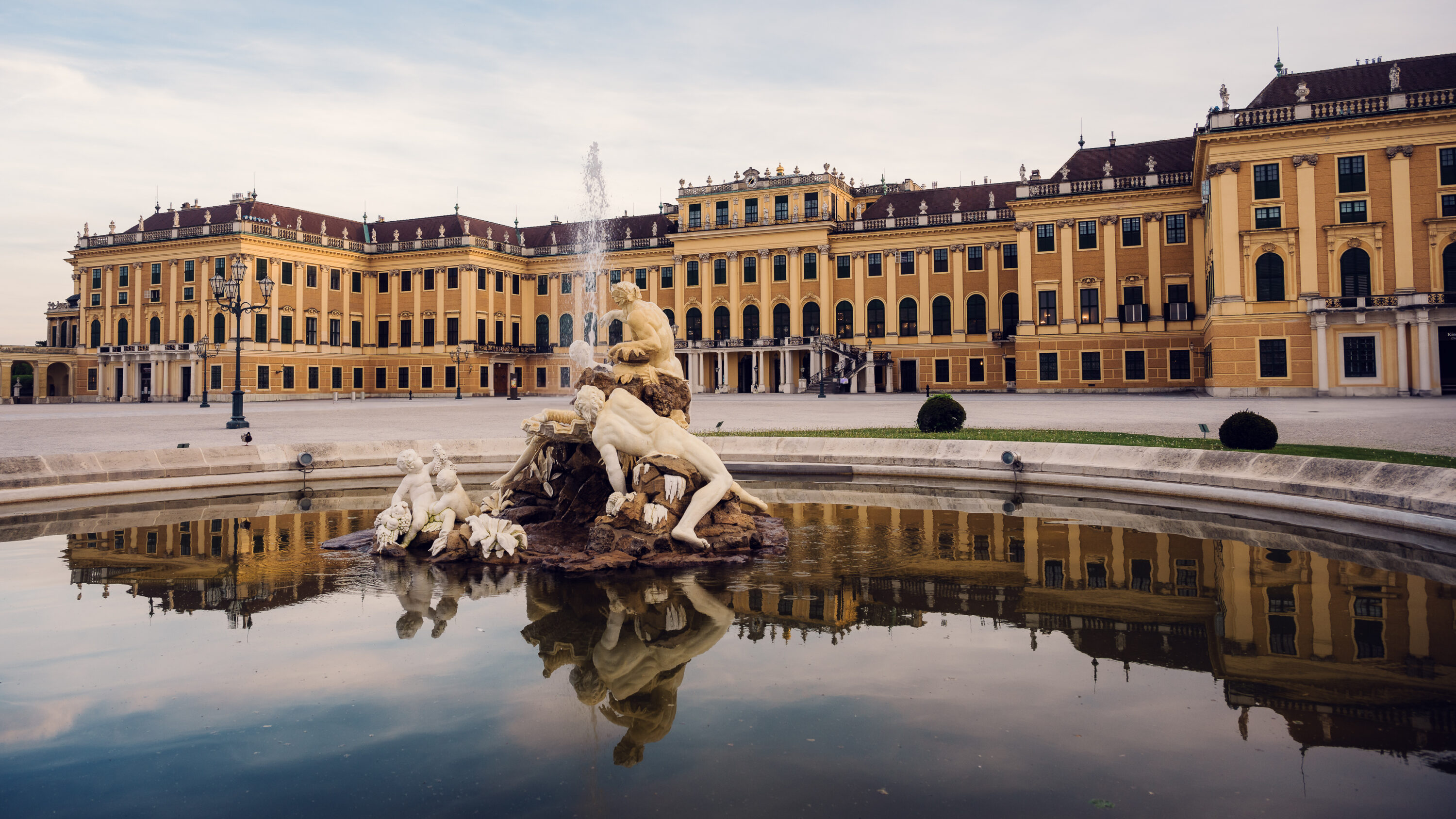
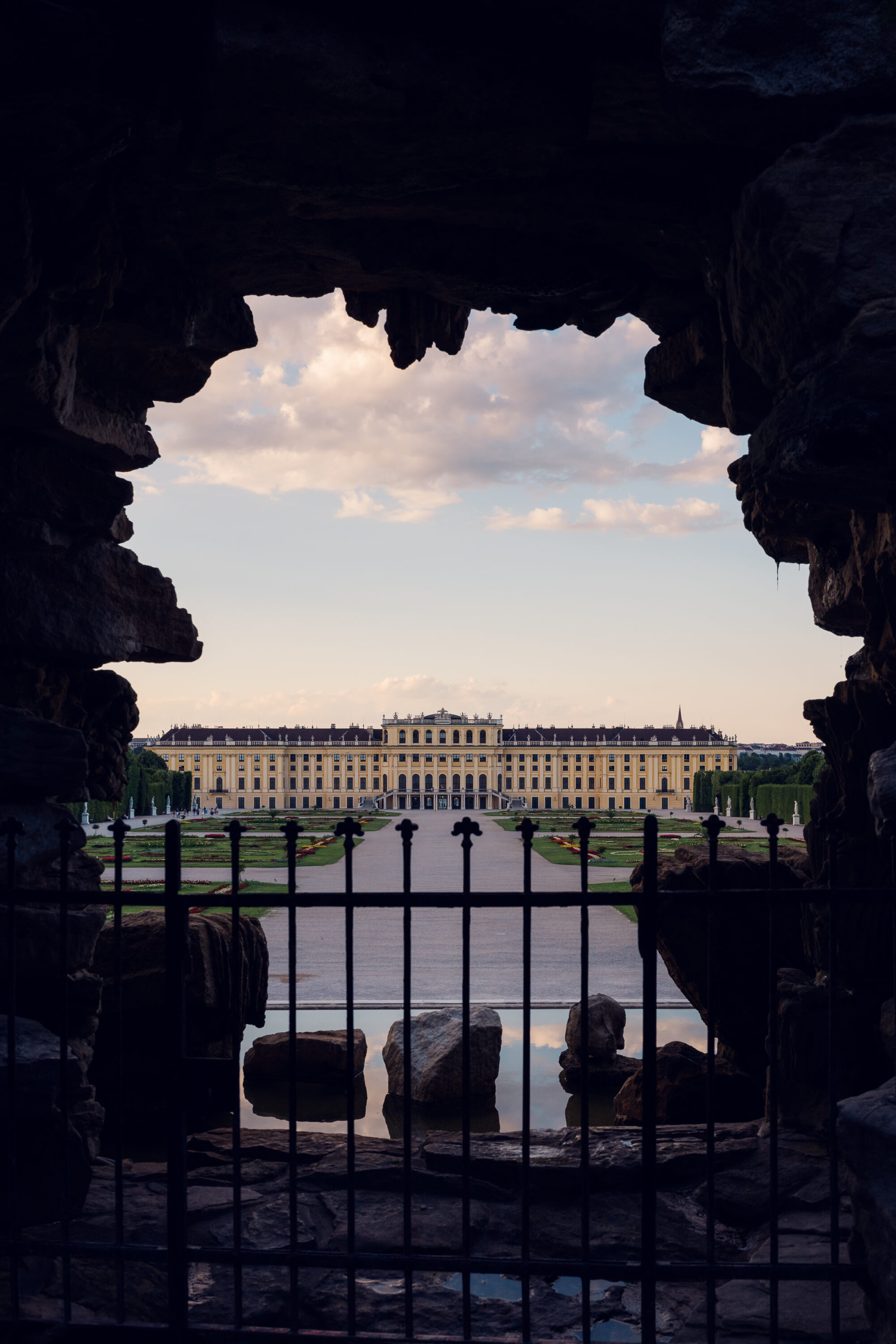
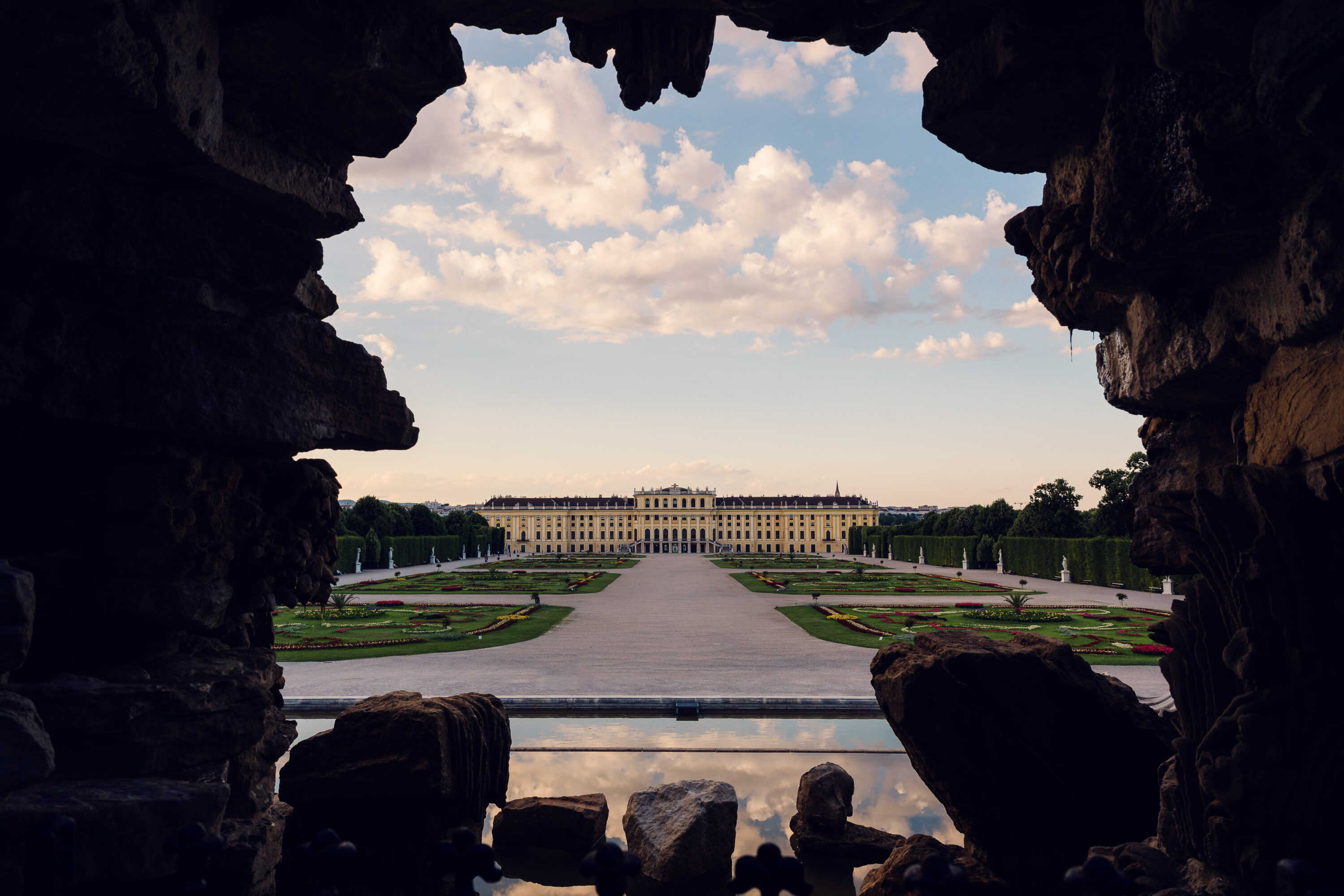
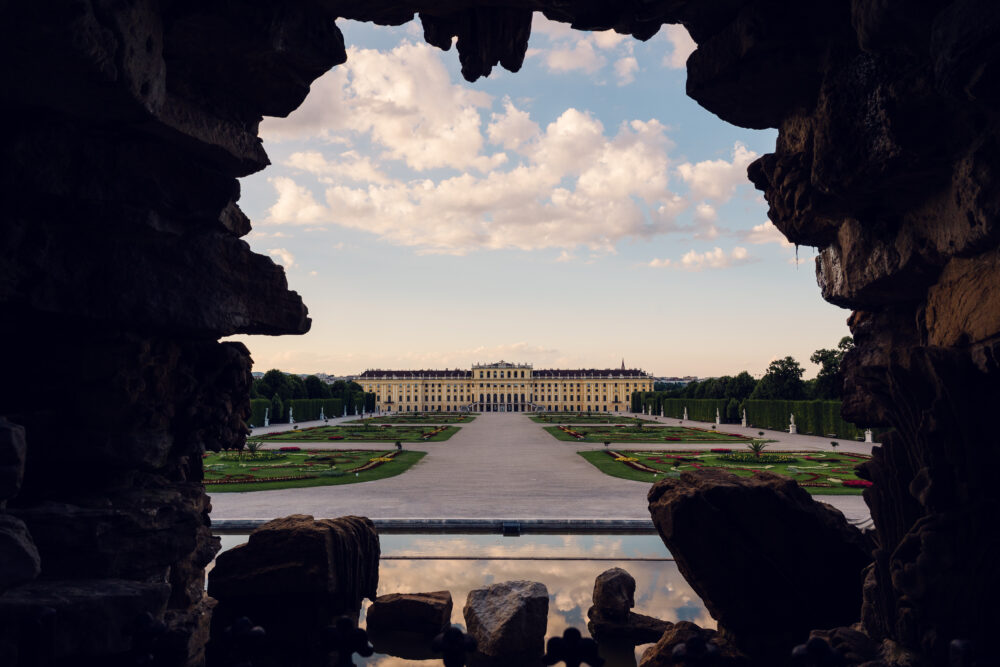
Neptun baroque fountain with mythological figures and palace view behind.
Enchanting fountain scene at Schönbrunn Palace entrance.
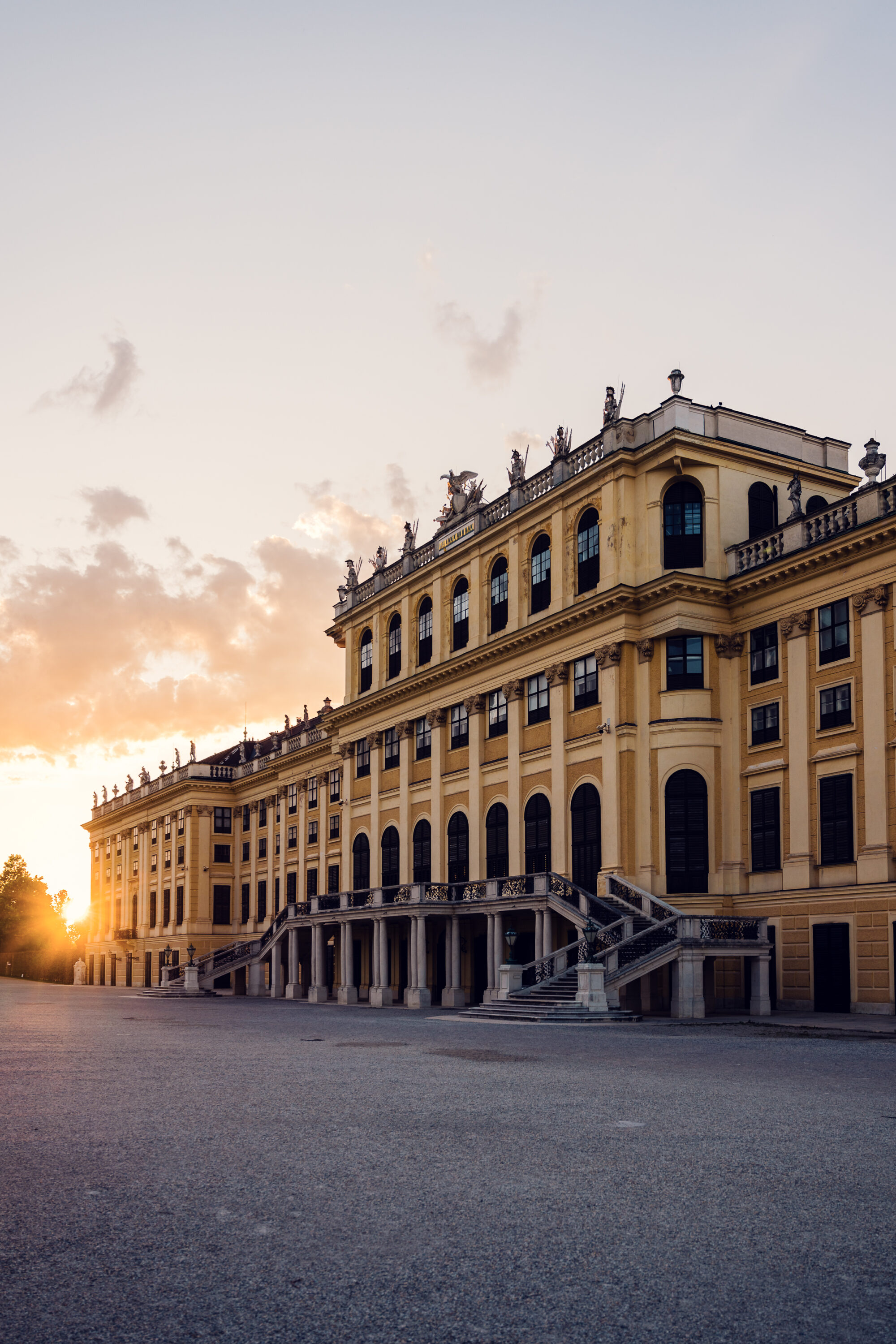
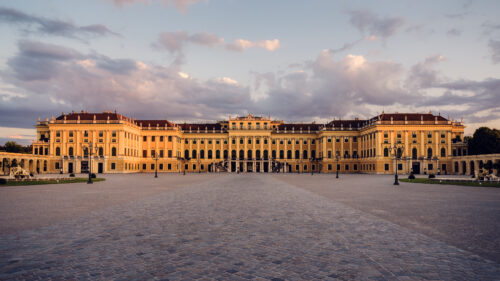
Schönbrunn Palace Schloss Schönbrunn baroque facade illuminated by golden sunset light.
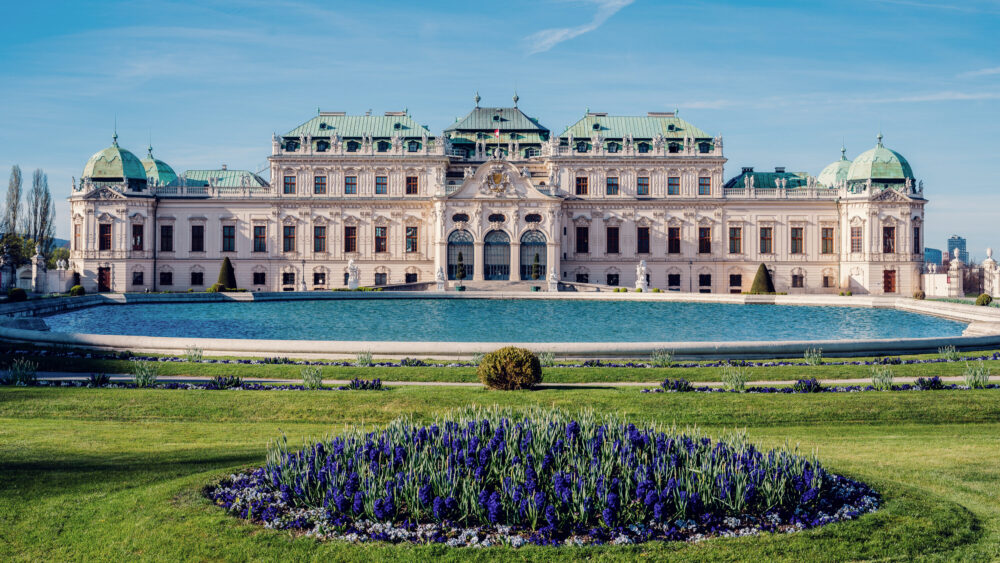
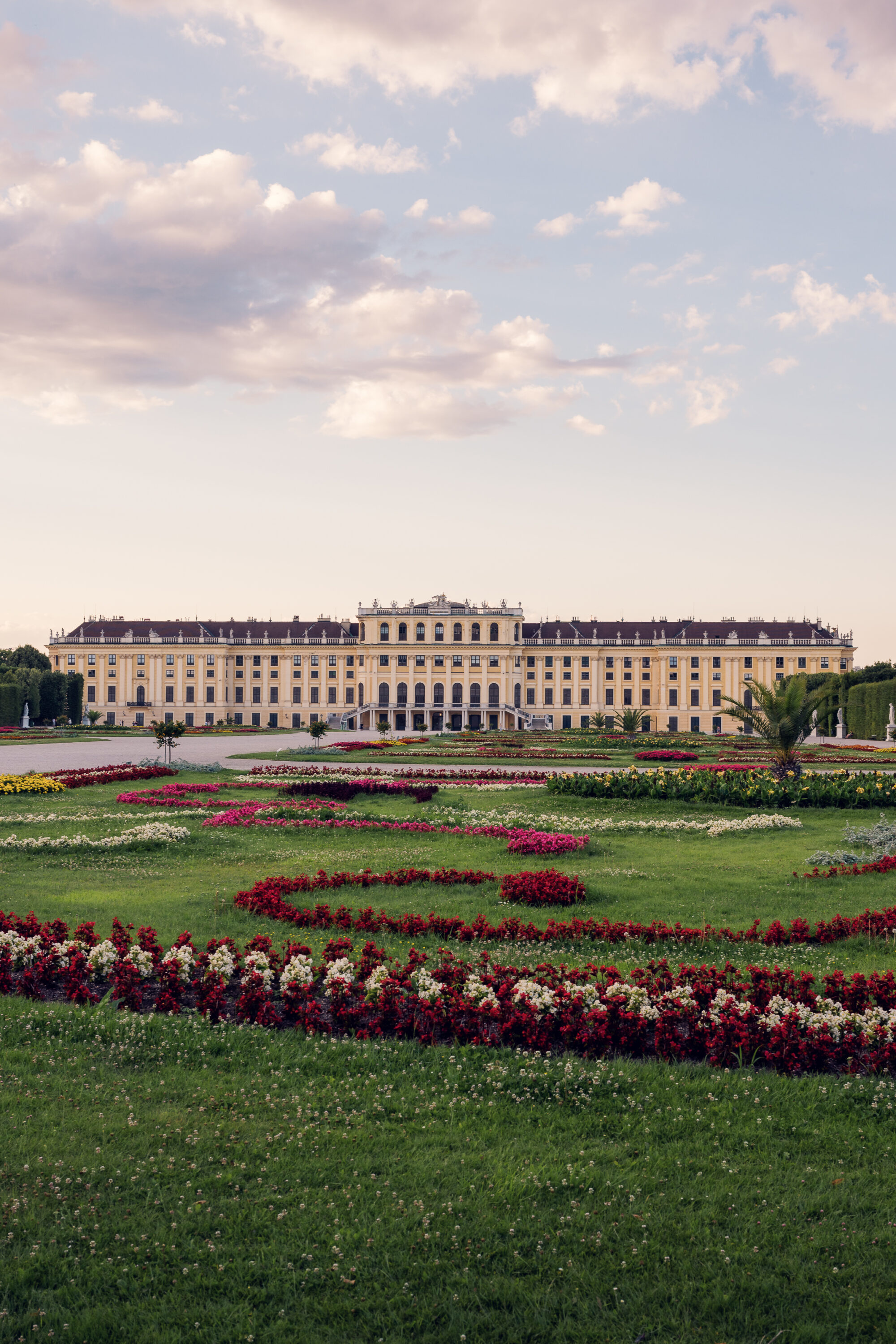
Schönbrunn Palace Schloss Schönbrunn baroque facade with colorful flower gardens in foreground.
Neptun baroque fountain with mythological figures and palace view behind.
Schönbrunn Palace Schloss Schönbrunn baroque facade illuminated by golden sunset light.
Schönbrunn Palace baroque facade with colorful flower gardens in foreground.
Schönbrunn Palace west facade with palace gardens.
Fall in Love with

Schönbrunn Palace

Schönbrunn Palace: Vienna's Baroque former imperial residence with grand state rooms, vast gardens, a historic zoo, and UNESCO World Heritage status.

* Affiliate links: if you book, a small commission supports our independent work, at no extra cost to you.

01 / 06
01 / 05

Schönbrunn Palace

Muvamo Must See 2026Picked by our team as one of Vienna's essential sights.

2026

Must See

Schönbrunn Palace

When a sight carries this label, it's one we'd send a friend to first. Must See is our highest distinction for sights, and our team gives it on the strength of our own visits, without fixed criteria or a set number of places. It can't be bought or applied for. The label shows the current year, and a sight that no longer holds up loses it.

See all Must See sights in Vienna

Admission
€42
Palace Ticket
Plan for
2 hours
indoors and outdoors
Where
Schönbrunn
13th district

Tickets & tours

Schönbrunn Palace

Tickets & prices

TicketAdultsChildrenReduced
Palace
Palace Ticket€42€30not available
State Apartments€30€20not available
Maria Theresia guided palace tour€44€34€37.50
Reduced: students 19-25
Reduced: international student ID
Passes
Sisi Pass€60€38not available
Combined ticket Children's Museum + Maze€16€16not available
Combined ticket Children's Museum + Maze + Zoo€39€29not available
Gardens & extras
Exclusive Gardens€16€11not available
Children's Museum€12€12not available
Children from 3 years

Children: 6-18 years

Tours & experiences

  • Gerstner K. u. K. Hofzuckerbäcker Baking Show & Tasting

    Go behind the scenes of Vienna’s legendary imperial bakery and watch master bakers stretch paper-thin dough and craft a classic Viennese apple strudel in a live demo, then enjoy a warm slice with a cup of Viennese coffee – plus take the original recipe home.

    See tour

Schönbrunn Palace is one of Vienna's most iconic landmarks and a UNESCO World Heritage Site. Once the summer residence of the Habsburg monarchy, this grand Baroque palace is renowned for its stunning architecture, lavish interiors, and expansive gardens. With its history stretching back to the 17th century, Schönbrunn offers visitors an insight into Austria’s royal past, featuring 1,441 rooms (though only a fraction are open to the public), and beautifully landscaped gardens that sprawl over 400 acres. A must-visit for history and art lovers, and anyone fascinated by imperial grandeur, the palace provides an unforgettable journey into the opulent world of Austria’s ruling dynasty.

Plan your visit

Opening Hours
Daily 08:30 - 17:00All hours
Getting there
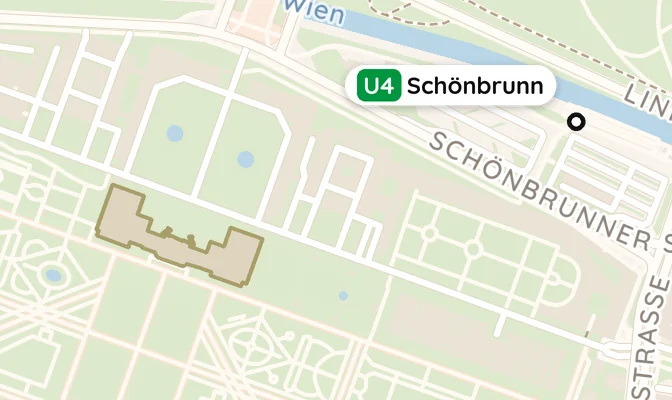
Schönbrunner Schloßstraße 47, 1130 WienU4 Schönbrunn · 5 min walkSchönbrunn · 13th district
Good to know

Limited wheelchair access Accessible toilet

Website · schoenbrunn.at

What's on here

Christmas Market Schönbrunn Palace

A towering tree, 90 stalls, and the Baroque palace lit up behind it all. The Schönbrunn Christmas market is peak Vienna postcard material.

Nov 06, 2026 - Jan 06, 2027 Now

Easter & Spring Market Schönbrunn Palace

Painted eggs, spring flowers, and Habsburg grandeur. The Easter market runs on into a spring market, so it stays open well past Easter. Come for the crafts, stay for the Osterstriezel.

~Mar 17, 2027 - Apr 20, 2027 Estimated

Opening hours

Schönbrunn Palace

Monday08:30 - 17:00
Tuesday08:30 - 17:00
Wednesday08:30 - 17:00
Thursday08:30 - 17:00
Friday08:30 - 17:00
Saturday08:30 - 17:00
Sunday08:30 - 17:00

Next: Sat 5 December: 08:30 - 17:30

Last admission: 45 minutes before closing

Changes in the next 12 months

Seasons

1 Apr - 9 NovHours not known

Special days

Sat 5 Dec - Tue 8 Dec08:30 - 17:30
Sat 12 Dec - Sun 13 Dec08:30 - 17:30
Sat 19 Dec - Sun 20 Dec08:30 - 17:30
Fri 25 Dec - Wed 6 Jan08:30 - 17:30

Open 365 days a year, including all public holidays. The palace park opens daily at 06:30 and has its own seasonal closing times; gardens, maze and Gloriette have separate hours.


Muvamo Opinion

Schönbrunn Palace is a breathtaking symbol of Austria's cultural heritage and one of the most remarkable examples of Baroque architecture in Europe. Located in Vienna, this former imperial summer residence of the Habsburgs offers a fascinating glimpse into European history, culture, and opulence.

The palace itself is a marvel. Its grand exterior, adorned with intricate detailing, reflects the wealth and artistic tastes of the Austro-Hungarian monarchy.

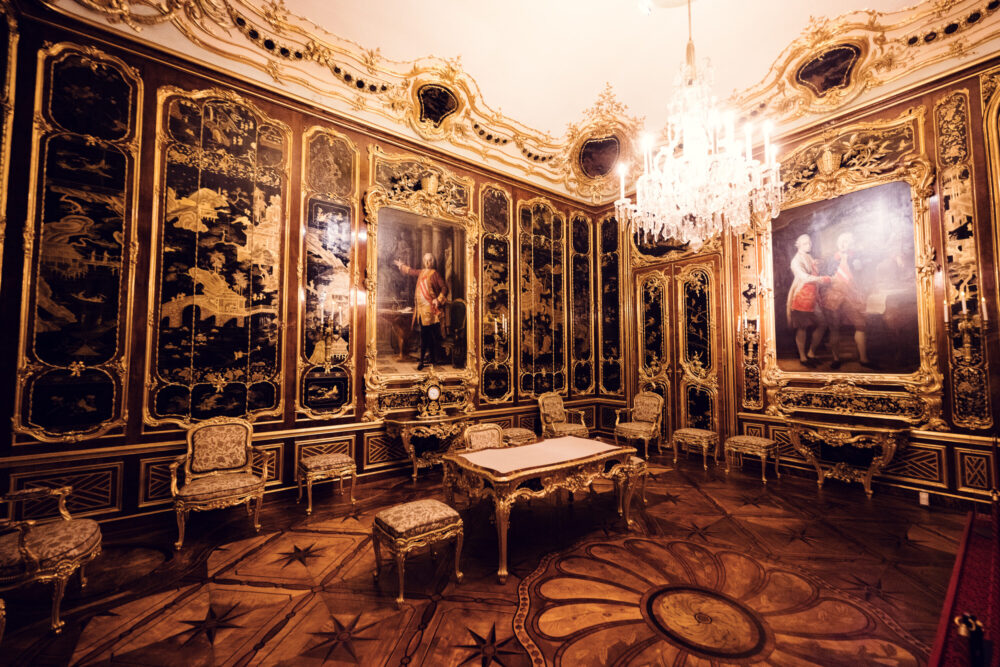
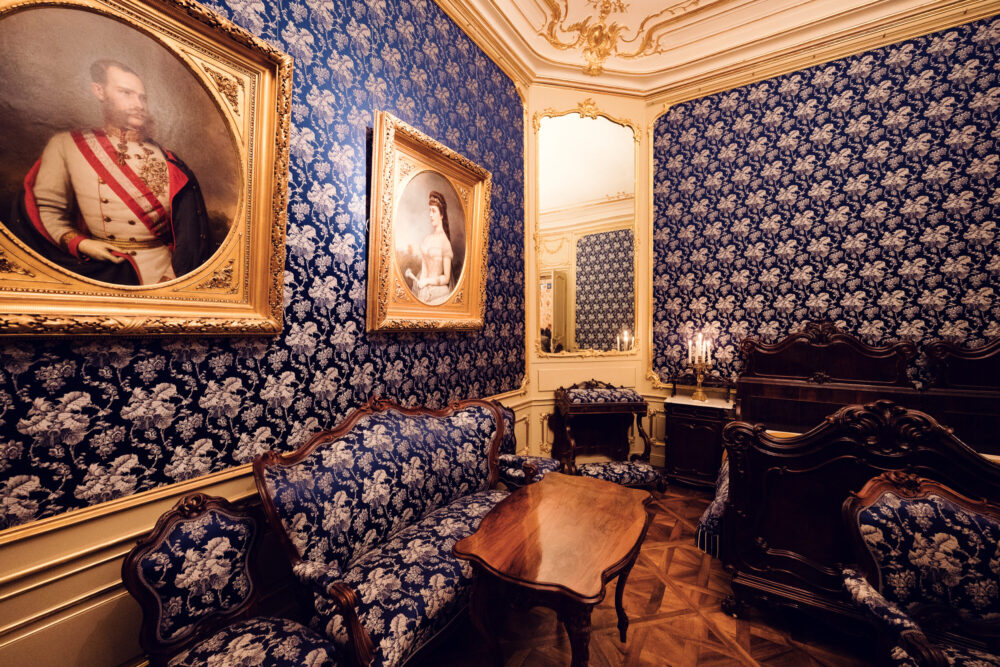
We started with the Grand Tour, which takes you through 40 of the palace’s most ornate rooms. From the Rococo elegance of the Great Gallery to the understated charm of Franz Joseph’s study, every corner has a story to tell. What fascinated us most were the smaller details, like the ceramic stoves that heated the rooms and the personal portraits of the Habsburg family, which made it all feel surprisingly intimate despite the grandeur.

After exploring the palace interiors, you can head outside to the beautifully landscaped gardens. The Neptune Fountain is a standout feature, and the tree-lined paths leading up to the Gloriette are just as impressive. Climbing up to the Gloriette is worth the effort for the panoramic view of the palace and Vienna’s skyline.

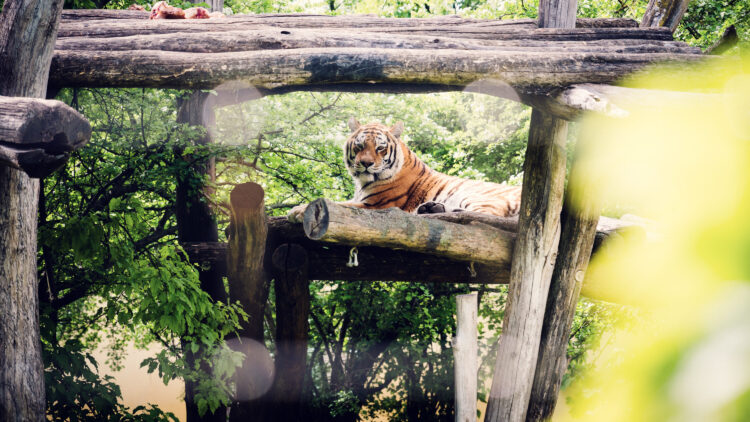
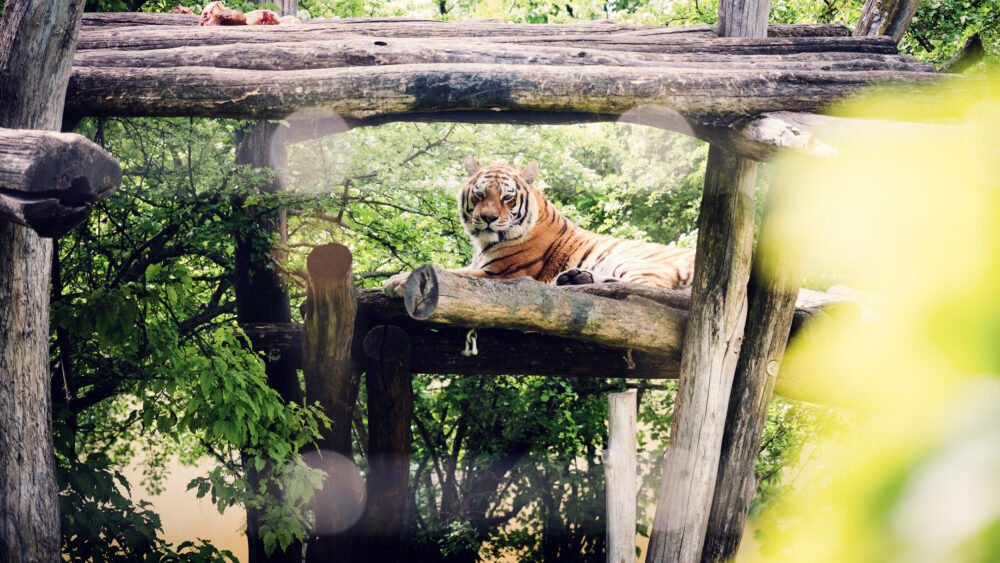
Schönbrunn also houses a zoo, the Tiergarten Schönbrunn, which is the oldest continuously operating zoo in the world, adding to its appeal for families. The combination of history, art, and nature makes this palace a versatile attraction for all types of visitors.

In our opinion, a visit to Schönbrunn Palace is a must for anyone traveling to Vienna. It encapsulates the grandeur of European royalty while providing a tranquil escape into beautifully preserved history and nature.

Recommended tours & experiences

  • Gerstner K. u. K. Hofzuckerbäcker Baking Show & Tasting: Go behind the scenes of Vienna’s legendary imperial bakery and watch master bakers stretch paper-thin dough and craft a classic Viennese apple strudel in a live demo, then enjoy a warm slice with a cup of Viennese coffee – plus take the original recipe home.

Helpful Hints

  • Book tickets online for a smoother experience.
  • Guided tours are worth it for the rich historical context.

Gastronomic Discoveries

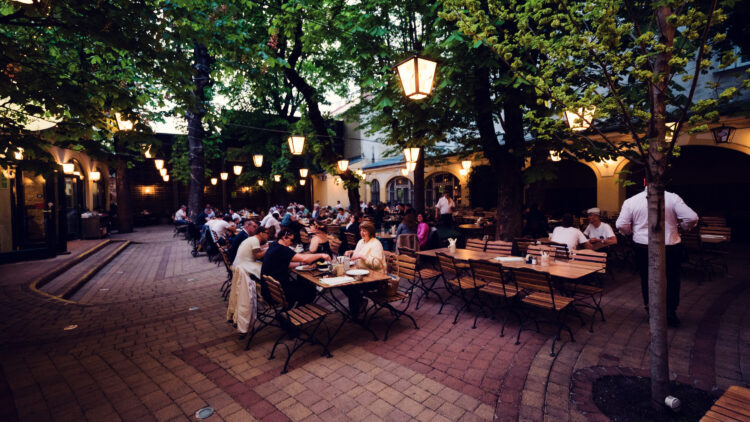
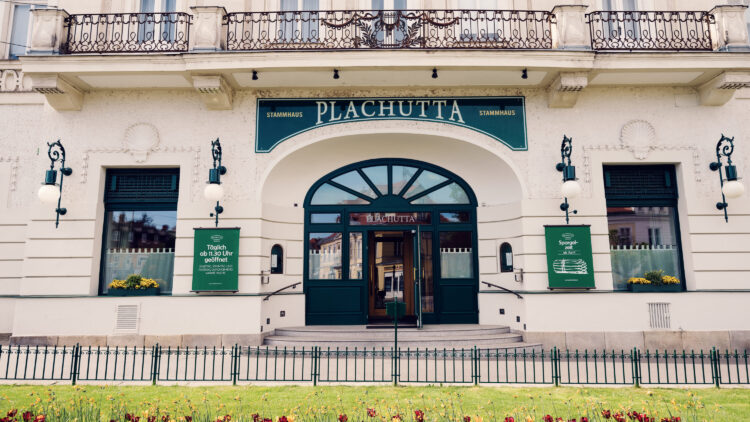
  • If you're feeling hungry, we recommend the traditional Viennese tavern Brandauer Schlossbräu, just a short walk away, known for its charming beer garden.For a more upscale dining experience, the nearby Plachutta Stammhaus Hietzing offers classic Viennese cuisine in an elegant setting. In both cases, advance reservations are highly recommended.
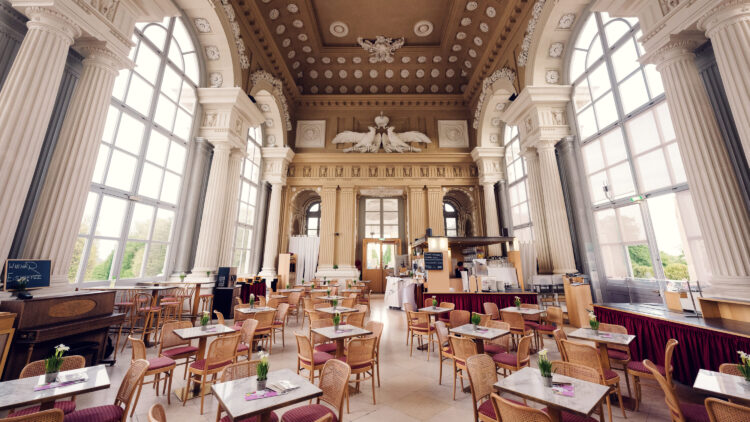
  • Don’t miss the Café Gloriette. Keep in mind, reservations are not possible (limited to breakfast reservations only), so seating is on a first-come, first-served basis. Aim to arrive early to secure a table, especially on weekends.

Hidden Gems

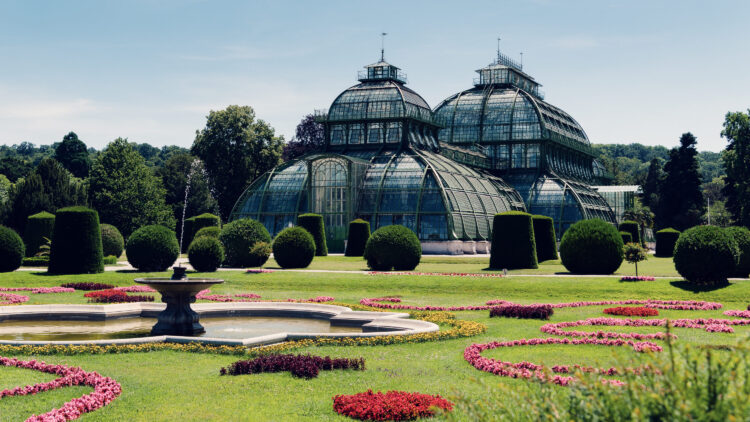
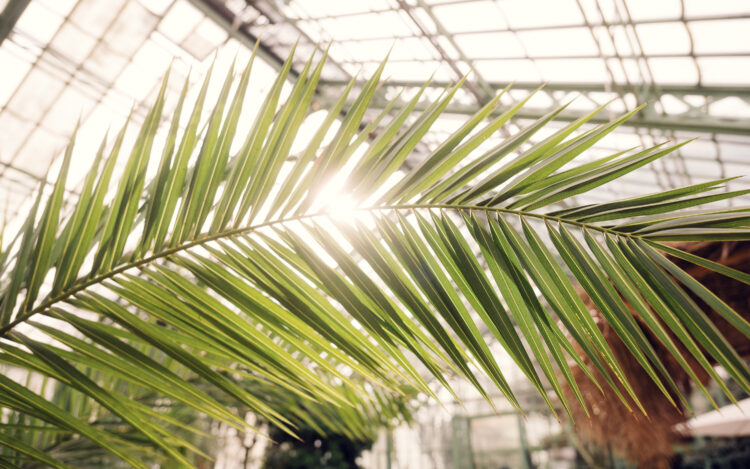
  • Visit the Palm House, a stunning glasshouse filled with exotic plants.

Our Little Extras

  • Try the Panorama Train that takes you around the palace grounds. It’s a lifesaver for tired feet!
Photo Spots & POIs
Panoramic daytime view from the Gloriette terrace overlooking Schönbrunn Palace and Vienna's skyline.

Gloriette View

The view from the Gloriette offers the most iconic, elevated perspective of Schönbrunn Palace, with its Baroque symmetry perfectly aligned through the sculpted gardens. Arrive in the early morning or late afternoon for golden light that adds depth and richness to your shot, especially when the city skyline fades into the background.

Map
Photos More
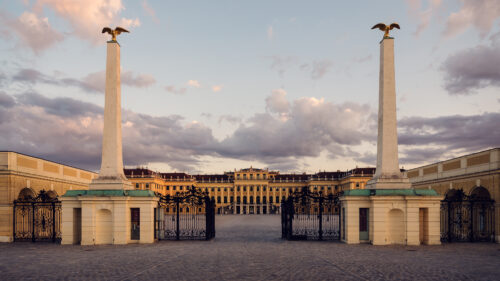
Historic entrance gate to Schönbrunn Palace, baroque Austrian imperial palace main entry with elaborate wrought iron gates and classical stone architecture.

Entrance Courtyard (Schönbrunn Front Façade)

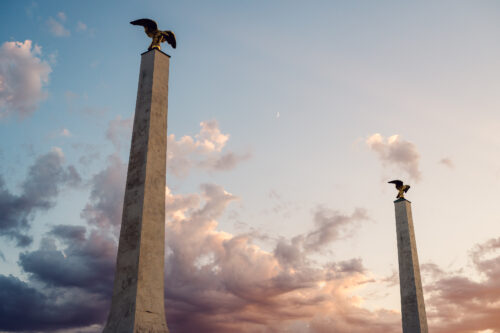
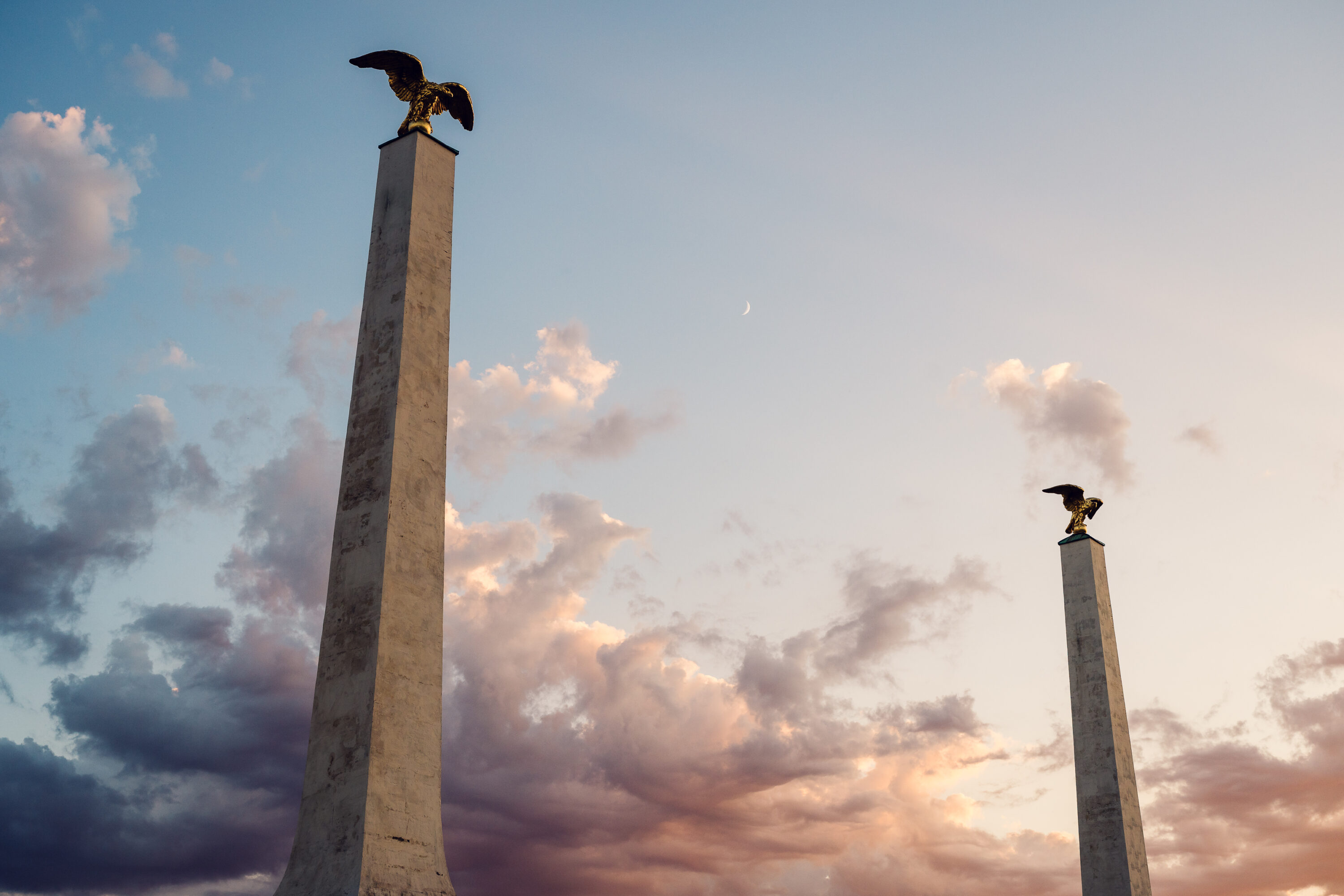
The central avant-corps is crowned by the sculpted double-headed imperial eagle and Habsburg-Lorraine coat-of-arms, projecting dynastic power above the entrance arches. Historically, this was the parade ground where imperial carriages and visiting dignitaries arrived, its geometry choreographed for maximum first-glance impact. Today, photographers can centre the façade while using the twin fountain basins and eagle-topped obelisk gate-piers as foreground anchors for balanced reflection shots.

Map
Photos
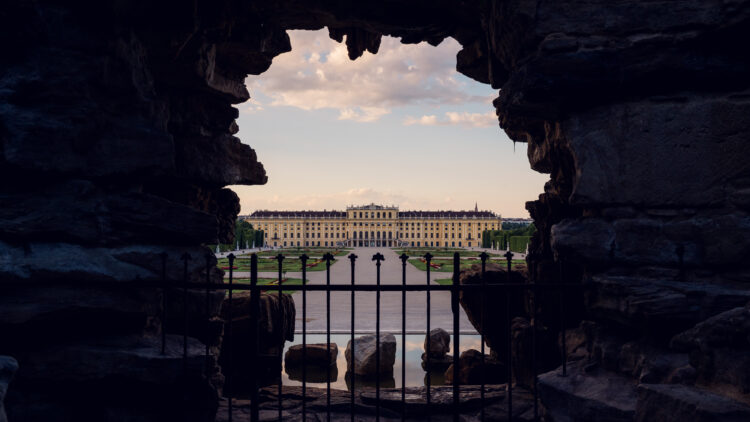
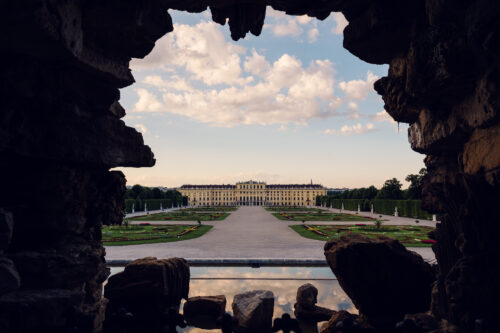
Neptun baroque fountain with mythological figures and palace view behind.

Behind the Neptune Fountain

Climb the side paths, then frame the palace through the grotto arch or over the balustrade: water, sculpture silhouettes and the palace form a natural layered stage.

Map
Photos
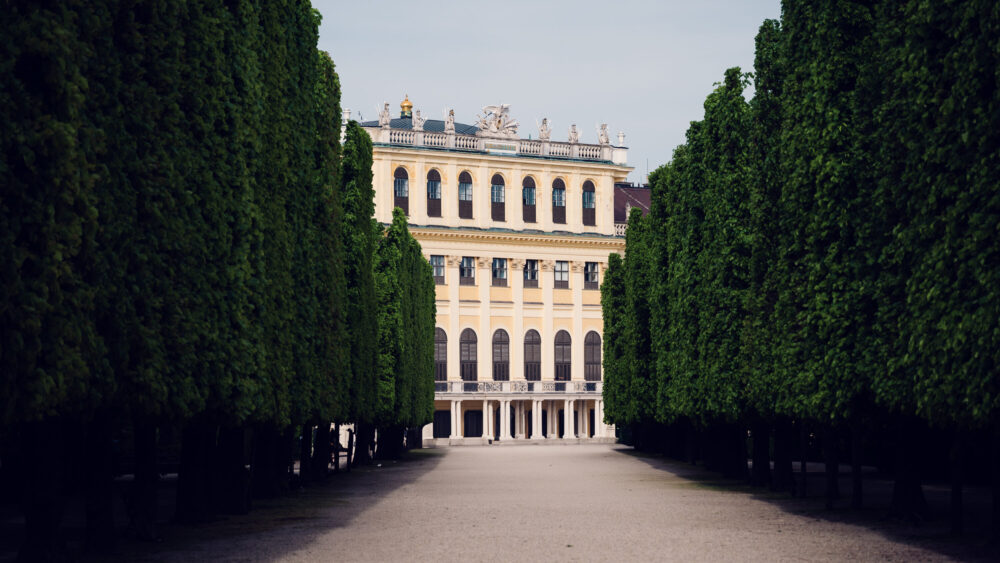
Schönbrunn Palace side view through tree-lined green pathway with mature foliage framing yellow baroque palace facade.

Tiergartenallee

A quiet, double-rowed lime-tree walk skirting the zoo. In spring blossom or autumn colour it ends in a centred palace view, giving a softer, more contemplative “secret garden” perspective with a little bit less crowds.

Map
Photos
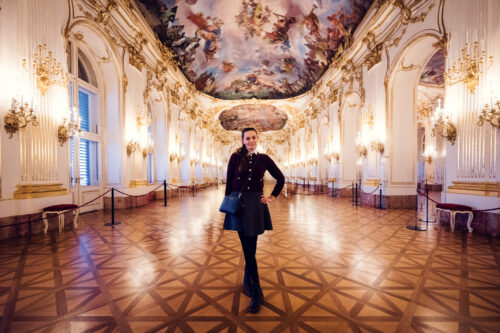
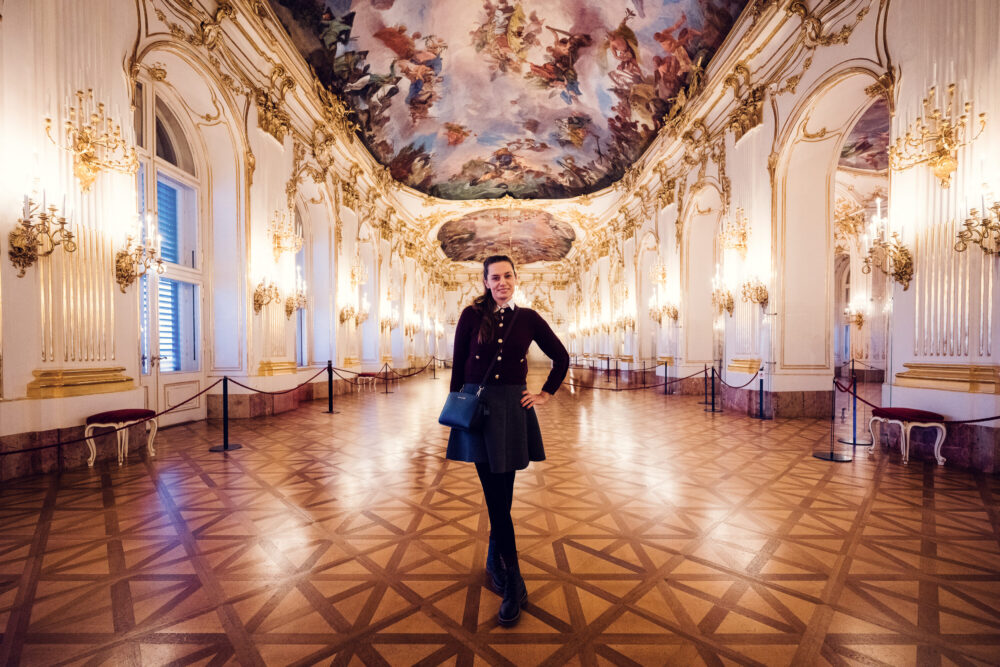
Adriana in elegant pose at Schönbrunn Palace (Schloss Schönbrunn), baroque Austrian imperial palace with elaborate golden ornaments and period furniture.

The Great Gallery

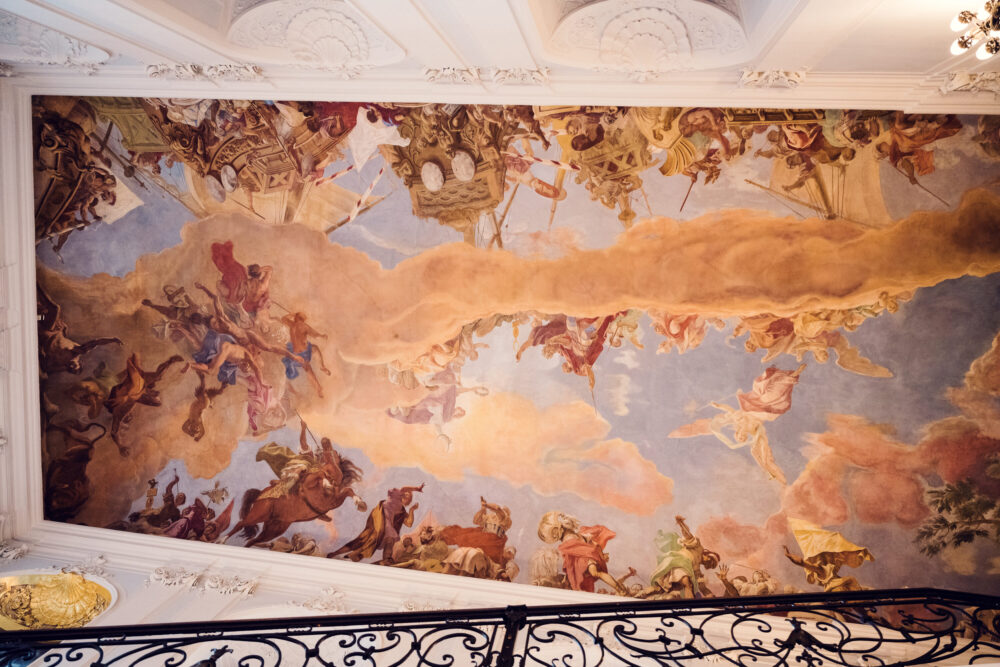
This opulent Rococo hall, with its immense chandeliers, gilded stucco, ceiling frescos by Gregorio Guglielmi and 868 candle-shaped LED lamps to recreate the blaze of the original chandeliers, was once the stage for imperial balls and receptions. It was also famously hosting the 1961 Kennedy-Khrushchev summit. The symmetry and reflective parquet creates a stunning frame for photographs, especially when you capture the full depth of the room.

Photos

About Schönbrunn Palace: A Glorious Legacy of Austria’s Past

Schönbrunn Palace is a symbol of Austria's imperial power and cultural grandeur. Located in Vienna, this UNESCO World Heritage Site is one of the most important architectural, cultural, and historical landmarks in Europe. The palace, with its stunning Baroque architecture and expansive gardens, tells the story of the mighty Habsburg dynasty, whose influence shaped Europe for centuries.

The Beginnings: A Modest Manor Turned Royal Residence

The origins of Schönbrunn Palace date back to the late 16th century when the estate was used as a hunting ground by the Habsburgs. In 1569, the land was acquired by Emperor Maximilian II, who envisioned a modest retreat. However, it wasn’t until the mid-17th century that the estate began to take shape as we know it today. Following the destruction of the original Katterburg manor during the Turkish sieges of Vienna in 1683, Emperor Leopold I commissioned architect Johann Bernhard Fischer von Erlach to design a grandiose Baroque residence worthy of imperial stature.
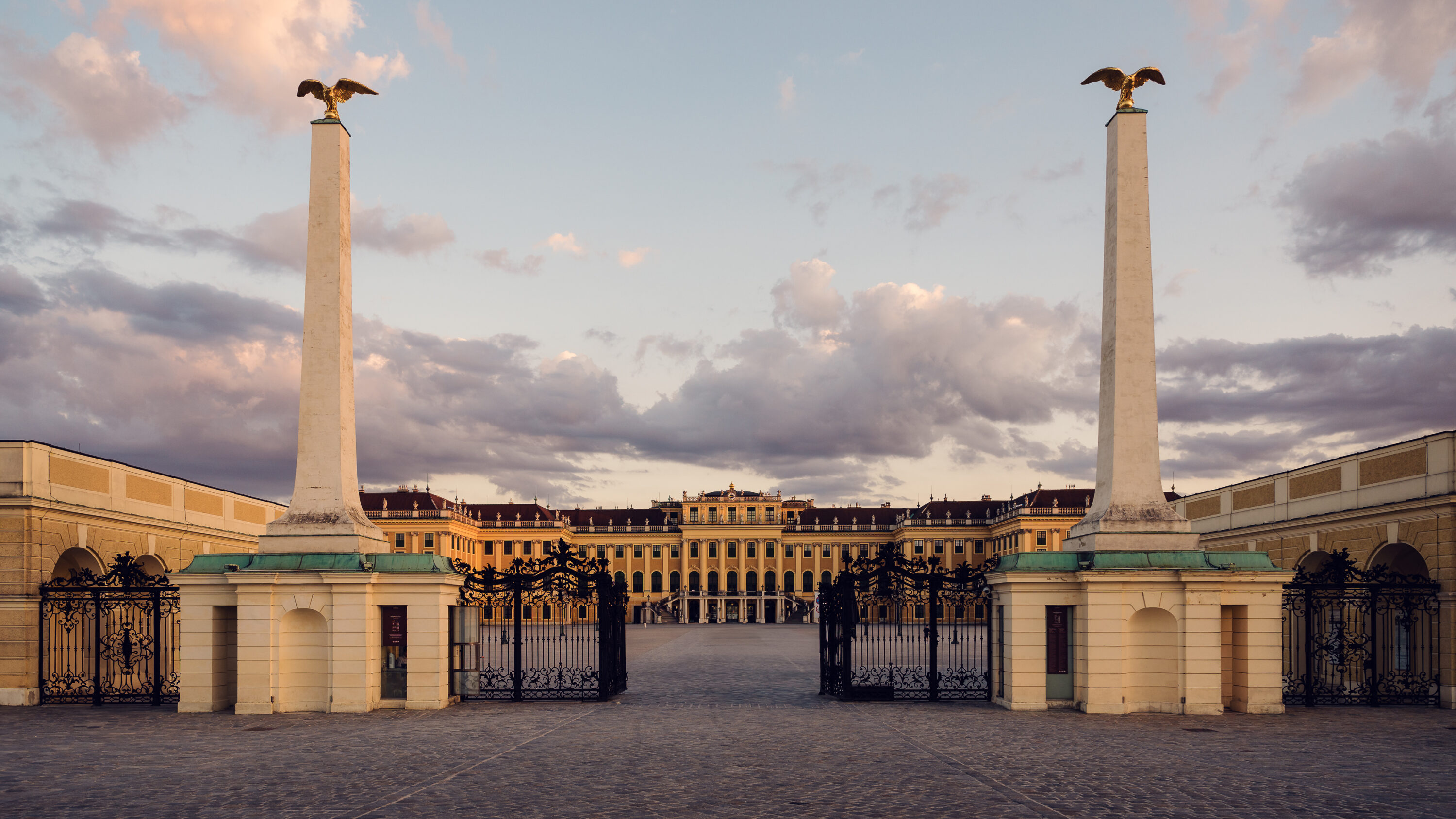
Historic entrance gate to Schönbrunn Palace, baroque Austrian imperial palace main entry with elaborate wrought iron gates and classical stone architecture.
Schönbrunn Palace was once the Habsburg summer residence and is now one of Vienna's most photographed spots.

The name "Schönbrunn," which translates to “beautiful spring,” is derived from an artesian well discovered on the grounds. By 1696, the first phase of the palace’s construction was underway, but the ambitious plans were scaled back due to financial constraints. Despite this, Schönbrunn Palace became a symbol of the Habsburgs’ growing influence in European politics and culture.

Maria Theresa and the Golden Age of Schönbrunn Palace

The palace’s most transformative era came during the reign of Empress Maria Theresa, the only female ruler of the Habsburg Empire. In the mid-18th century, Maria Theresa adopted Schönbrunn Palace as her summer residence and commissioned architect Nikolaus Pacassi to renovate and expand the palace. Under her guidance, Schönbrunn Palace became a dazzling symbol of Baroque artistry and imperial sophistication.

Maria Theresa's influence extended beyond the architecture. Schönbrunn Palace became a hub of music, diplomacy, and cultural patronage. The young Wolfgang Amadeus Mozart famously performed for the Empress in the Hall of Mirrors at the tender age of six, impressing the court with his prodigious talent.

A Witness to History

Schönbrunn Palace has witnessed pivotal moments in European history. During the Napoleonic Wars, Schönbrunn Palace served as the headquarters of Napoleon Bonaparte twice. Later, it became a favorite residence of Emperor Franz Joseph I, who was born at Schönbrunn Palace in 1830.
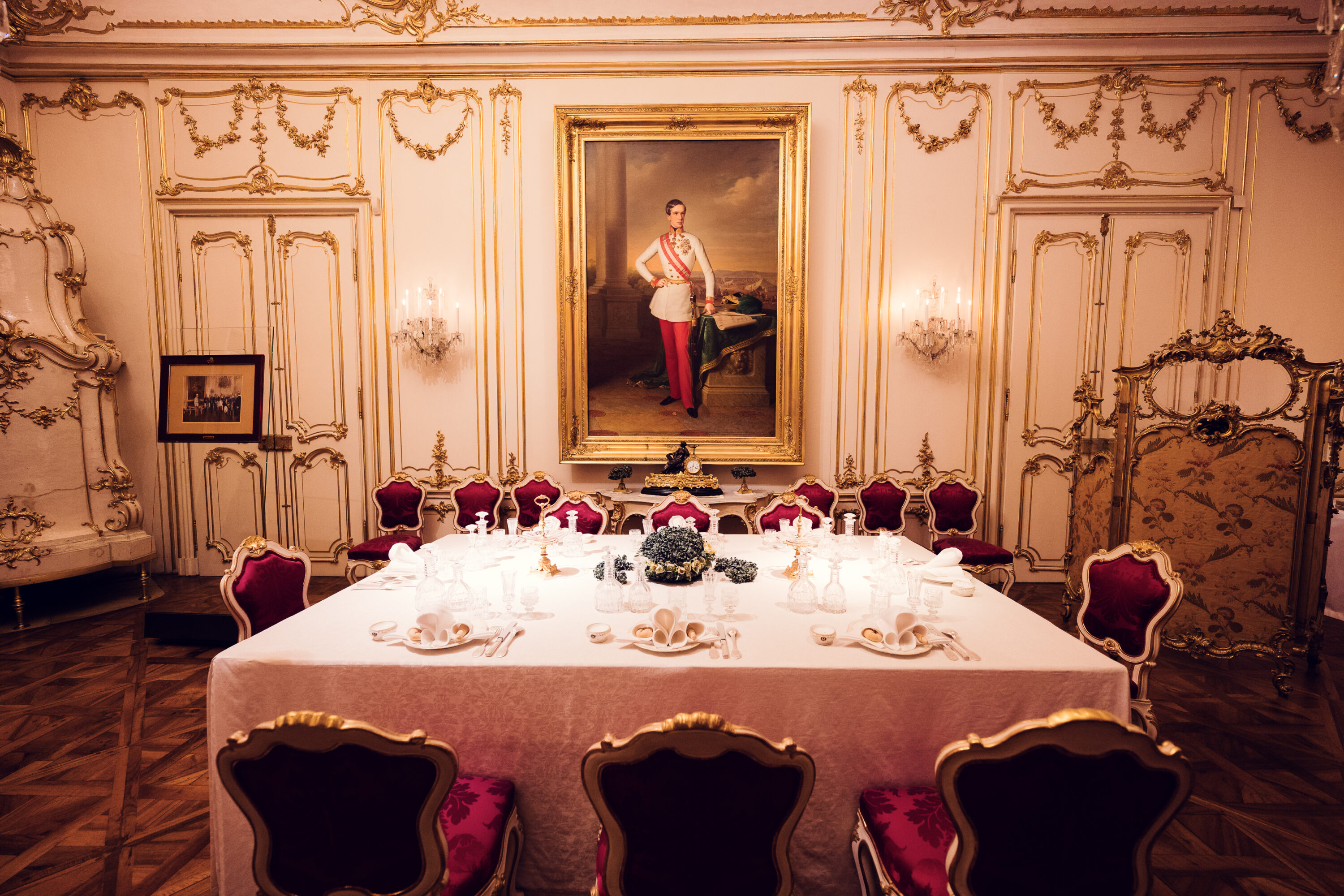
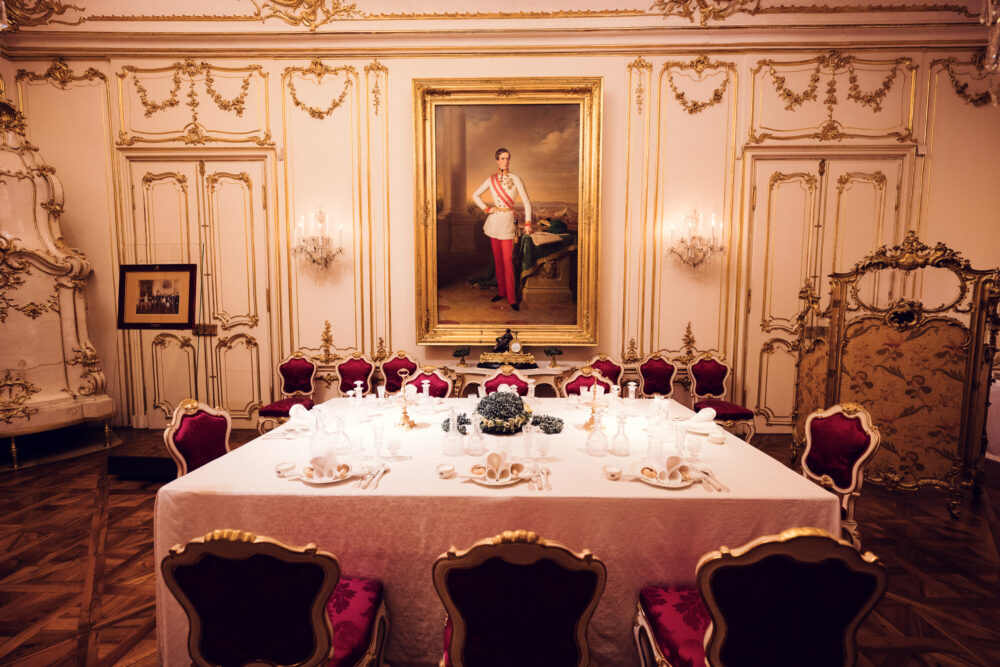
Elegant baroque dining room at Schönbrunn Palace (Schloss Schönbrunn) with red velvet curtains and imperial furniture.
Imperial dining at Schönbrunn Palace! In this magnificent dining room, the Habsburg family once enjoyed their meals.

Under Franz Joseph, Schönbrunn Palace became a place of significant historical events, such as state visits and diplomatic meetings. It was also here, in 1916, that Franz Joseph passed away, marking the end of an era for the Austro-Hungarian Empire. Following the fall of the monarchy in 1918, the palace was transferred to the Republic of Austria and opened to the public.

Architectural Grandeur and Gardens of Paradise

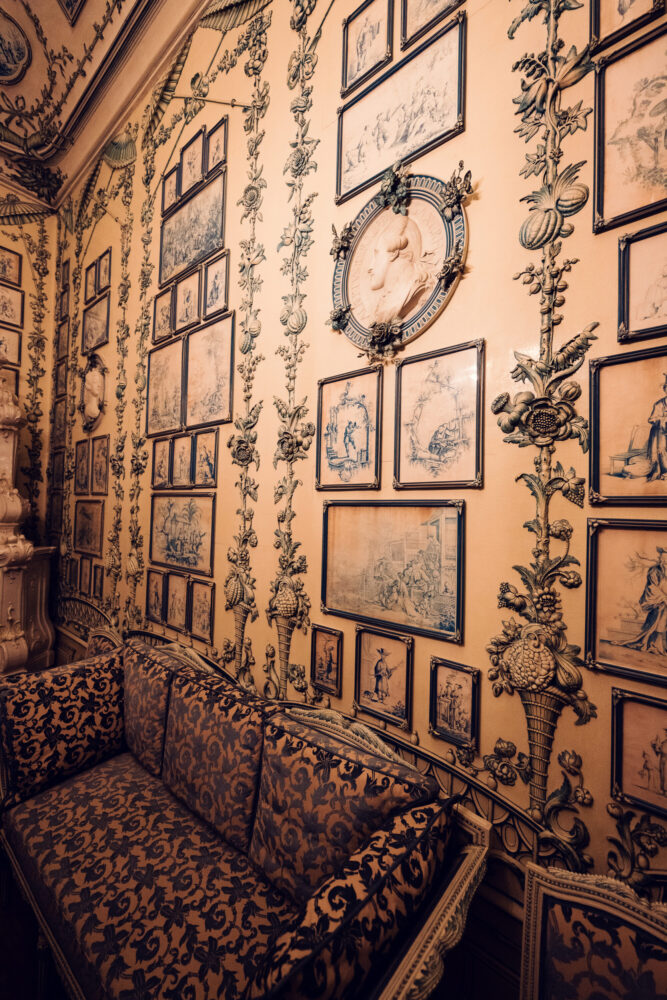
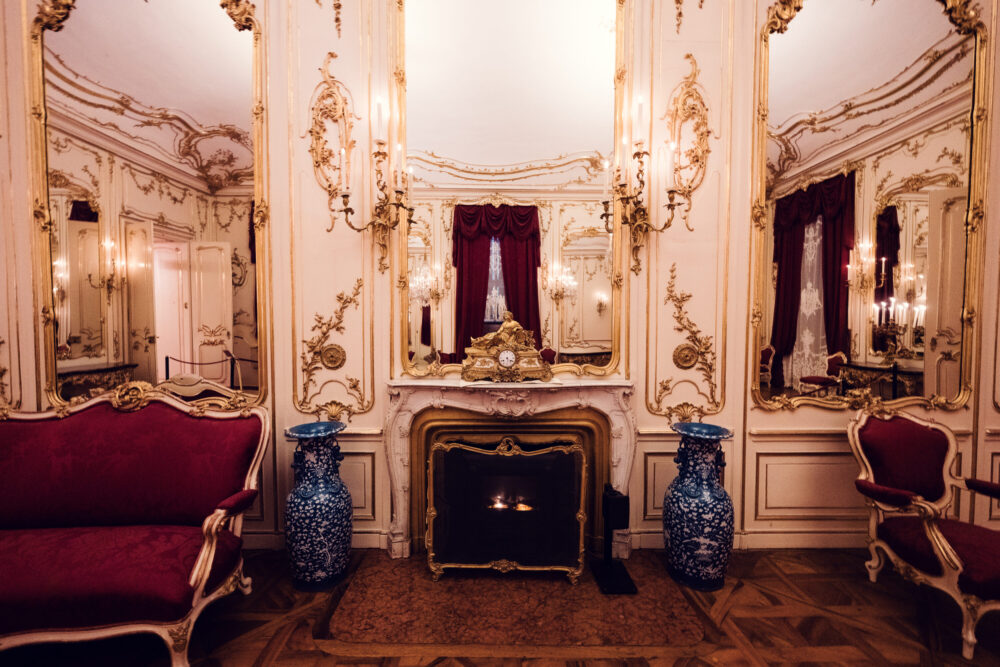
The palace itself boasts 1,441 rooms, though only a fraction are open to visitors. The Great Gallery, with its elaborate stucco work and sparkling crystal chandeliers, is one of the most breathtaking spaces and was used for imperial banquets and balls. The Blue Chinese Salon, decorated with delicate porcelain, reflects the Habsburgs’ fascination with Asian art.

Adriana in elegant pose at Schönbrunn Palace (Schloss Schönbrunn), baroque Austrian imperial palace with elaborate golden ornaments and period furniture.
This 43-meter-long hall in Schönbrunn Palace was once the heart of imperial festivities. With its crystal chandeliers, mirrors, and ceiling paintings, the Great Gallery is a true baroque masterpiece.

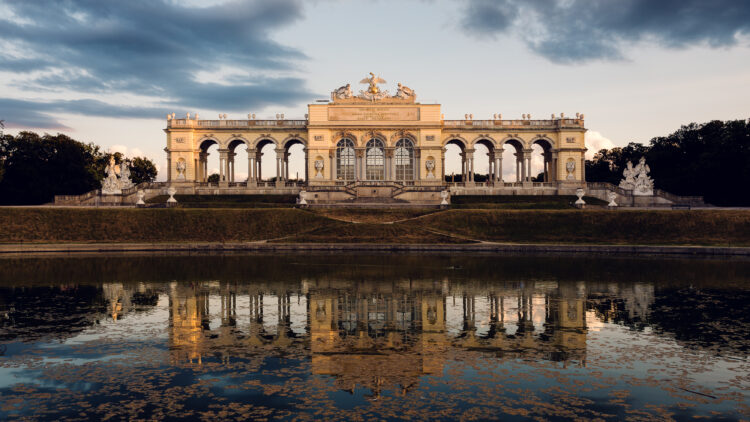
Outside, the palace gardens are a masterpiece of Baroque landscaping. Designed by Jean Trehet in the formal French style, the gardens feature tree-lined avenues, fountains, statues, and floral parterres. The Gloriette, a grand colonnaded structure perched on a hill, offers stunning views of the estate and the city beyond. It was originally built as a dining hall and later repurposed as a monument to Habsburg power.

The Neptune Fountain, a focal point of the gardens, symbolizes the empire’s control over the seas - a fitting metaphor for the Habsburgs’ reach. Additionally, the Schönbrunn Zoo, established in 1752, holds the title of the world’s oldest zoo and remains a family favorite.

Preservation and Modern-Day Appeal

Today, Schönbrunn Palace attracts millions of visitors annually. Its status as a UNESCO World Heritage Site underscores its significance as both a cultural treasure and a historical landmark.

From intimate glimpses of royal life in the Imperial Apartments to the awe-inspiring beauty of the gardens, Schönbrunn Palace continues to captivate the imagination of all who visit.