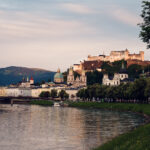

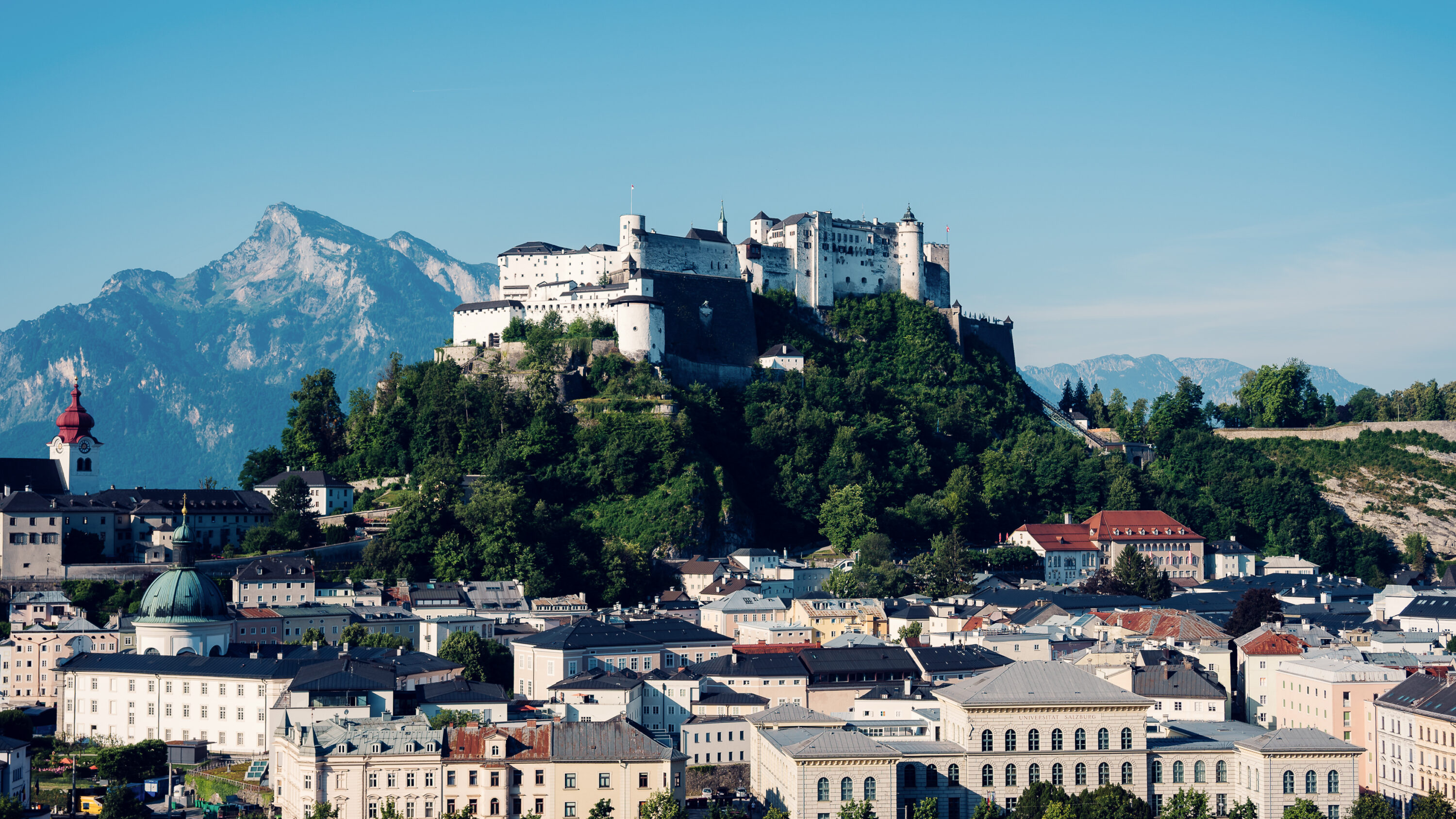
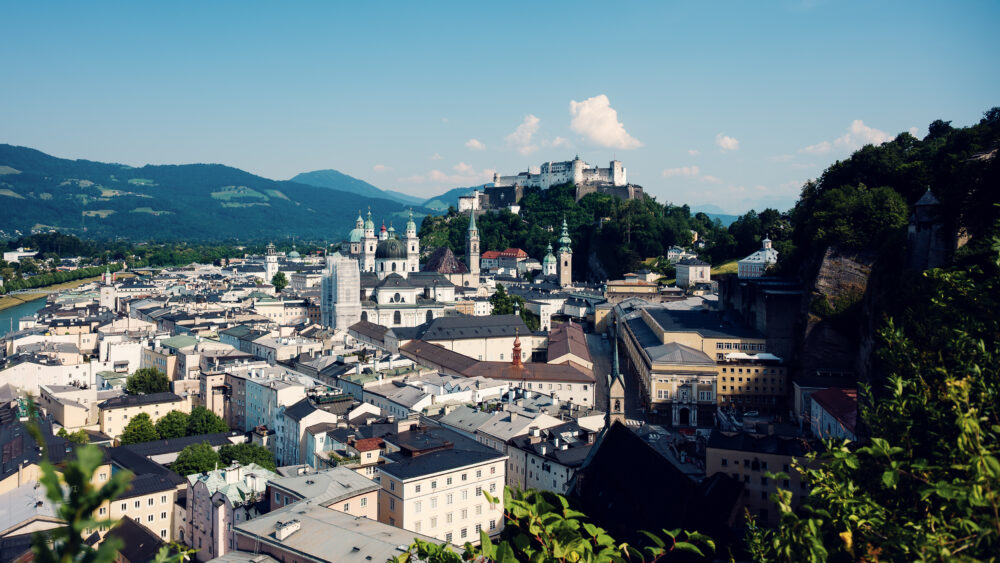
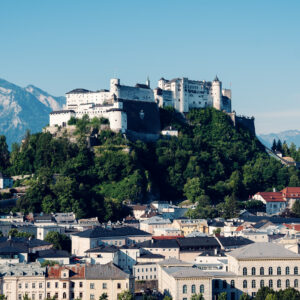
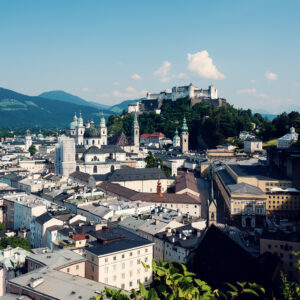
Hohensalzburg Fortress above tightly packed Old Town roofs, a jagged peak beside it, seen from the Kapuzinerberg.

Things to Do

in Salzburg

Things to do in Salzburg: the fortress, the cathedral and its squares, Mozart's two houses, the Old Town lanes, the city hills and the Salzach footbridges.

* Affiliate links: if you book, a small commission supports our independent work, at no extra cost to you.

The Best Things to Do in Salzburg

The things to do in Salzburg are packed into a small, walkable center. The Salzburg Old Town spreads along both banks of the Salzach. Its core sits on the left bank, backed by the ridge of the Mönchsberg, with Hohensalzburg Fortress on the Festungsberg above it; the Kapuzinerberg rises from the right bank opposite. For centuries Salzburg was a city-state ruled by prince-archbishops, and the historic center they built, with the cathedral, the Residenz and their squares, is a UNESCO World Heritage Site.

Wolfgang Amadeus Mozart was born here in 1756, and two of the family's homes are museums today. Since 1920, the Salzburg Festival has filled the Old Town with opera, theater and concerts every summer. This page gathers the things to do in Salzburg we'd point a friend to, grouped by where they are: the fortress and the palaces, the archbishops' squares, Mozart's addresses, the lanes of the Old Town, the two city hills and the footbridges over the river, and a handful of places you'll only find here.

Our Take on the Best Things to Do in Salzburg

Most of the best things to do in Salzburg sit within a short walk of each other, and for a first visit that's the city's big advantage. You can spend the morning in Salzburg Cathedral and the DomQuartier, go up to Hohensalzburg Fortress before lunch, and still cross the river to the Mozart Residence in the afternoon. For day one we'd pick the fortress, the cathedral, one Mozart house and a slow walk through the lanes of the Salzburg Old Town, and we'd save the city hills, Hellbrunn and the smaller places for day two.

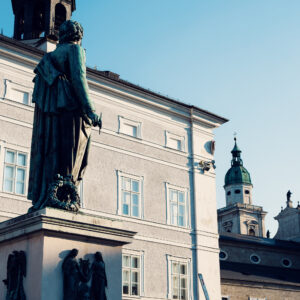
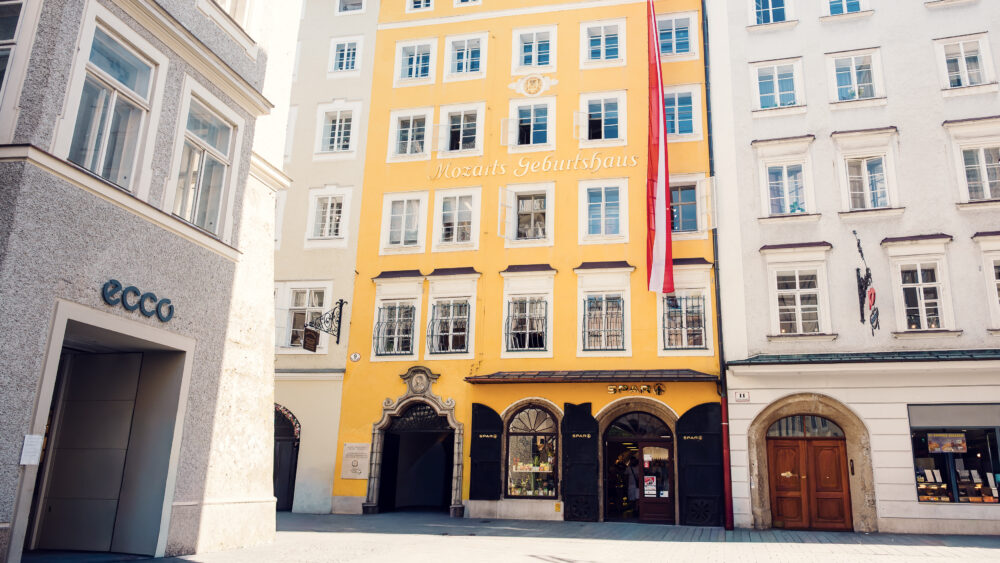
If you only have time for one of the two Mozart museums, choose Mozart’s Birthplace: it's the house where he was born and where the family lived for 26 years. The Residence across the river is the roomier visit, with his own pianoforte and many original documents and portraits. The place we'd argue hardest for on a short trip is Hellbrunn Palace, south of the center. A prince-archbishop built it to amuse his guests with hidden water jets, and the trick fountains still catch people out.

Two or three days is a comfortable length for the things to do in Salzburg on this page. Our Salzburg itinerary plans the city day by day, and if you want lakes and mountains as well, Day Trips from Salzburg covers what lies beyond the city.

Guided Tours & Activities


Hohensalzburg Fortress and the Archbishops’ Palaces

Hohensalzburg Fortress stands on the Festungsberg, the rock that rises directly above the Old Town. Archbishop Gebhard began building it in 1077, his successors kept adding to it, and by around 1500, under Archbishop Leonhard von Keutschach, it looked much as it does today. Foreign troops never captured it. The Festungsbahn funicular has run up from Festungsgasse since 1892; the footpath is the other way in.

The palaces came later and were built for pleasure rather than defense. Mirabell Palace began in 1606 as Prince-Archbishop Wolf Dietrich von Raitenau's palace for Salome Alt and their children, and at Hellbrunn, south of the center, his successor Markus Sittikus built a summer residence between 1613 and 1615 with water as its main idea.
Our Favourites
Hohensalzburg Fortress

Begun in 1077, it is the biggest fully preserved castle in Central Europe. On the third floor, the Golden Hall and the Golden Room keep furnishings unchanged since 1501/1502, and the Panorama Tour takes you up the keep to its observation platform.
{"type":"FeatureCollection","features":[{"type":"Feature","properties":{},"geometry":{"type":"Polygon","coordinates":[[[13.0479631,47.7953014],[13.0480242,47.7954253],[13.0480021,47.7954656],[13.0478716,47.7954804],[13.0479045,47.7955856],[13.0480219,47.7955716],[13.0484235,47.7956535],[13.048884,47.795824],[13.0490203,47.7960904],[13.0493326,47.7959574],[13.0492606,47.7958896],[13.0492852,47.7958242],[13.0494738,47.7956677],[13.0495483,47.7956651],[13.0495009,47.7956067],[13.0495692,47.7952604],[13.0496476,47.7952498],[13.0495695,47.7952031],[13.049026,47.7951392],[13.0489345,47.795065],[13.0486362,47.794987],[13.0484878,47.7948508],[13.0480221,47.7946461],[13.0481029,47.7945404],[13.0474782,47.7944833],[13.0473844,47.7943364],[13.0471648,47.7943713],[13.0471028,47.7944087],[13.0471258,47.7944801],[13.047001,47.7945141],[13.0466276,47.7944355],[13.0465752,47.7945702],[13.0462011,47.794798],[13.046305,47.7948548],[13.0461005,47.7950859],[13.0465895,47.7952055],[13.0467801,47.7953525],[13.0470049,47.7952487],[13.0474582,47.7952716],[13.0474543,47.7953034],[13.0479631,47.7953014]]]}}]}
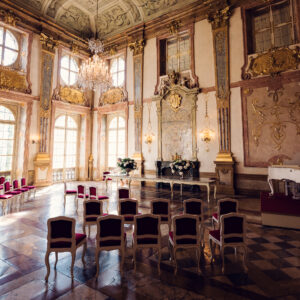
Mirabell Palace

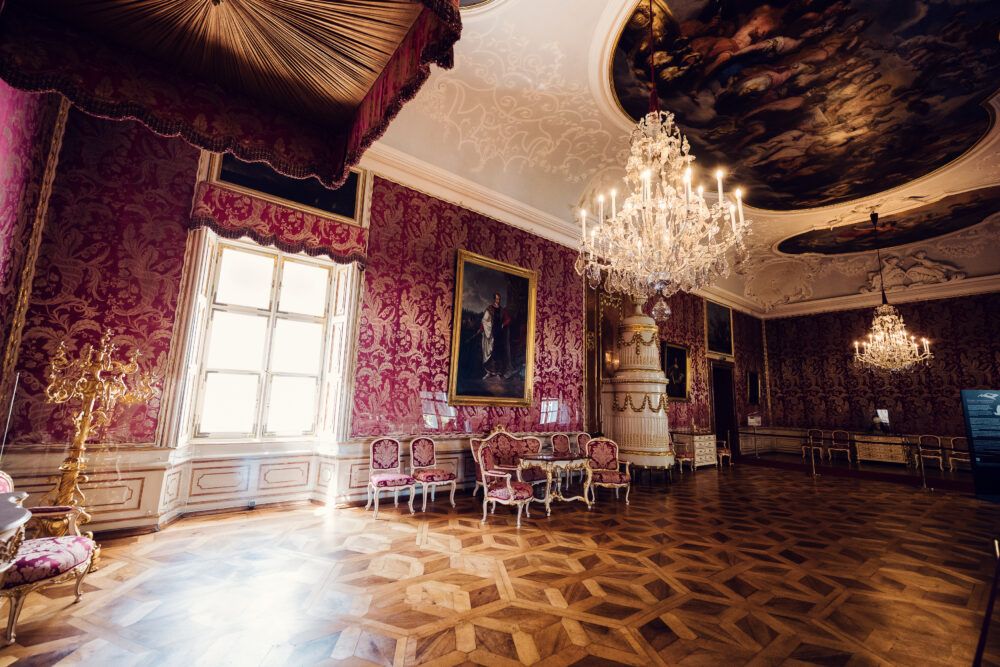
Built in 1606 for Salome Alt and later rebuilt as a baroque palace. You can see the Marble Hall, where Leopold Mozart and his children performed, and Georg Raphael Donner’s Angel Staircase; the rest of the building houses the mayor’s office and the city administration.
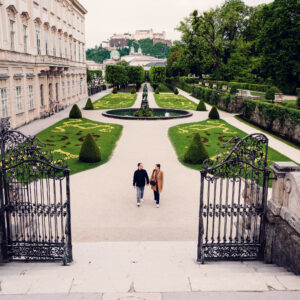
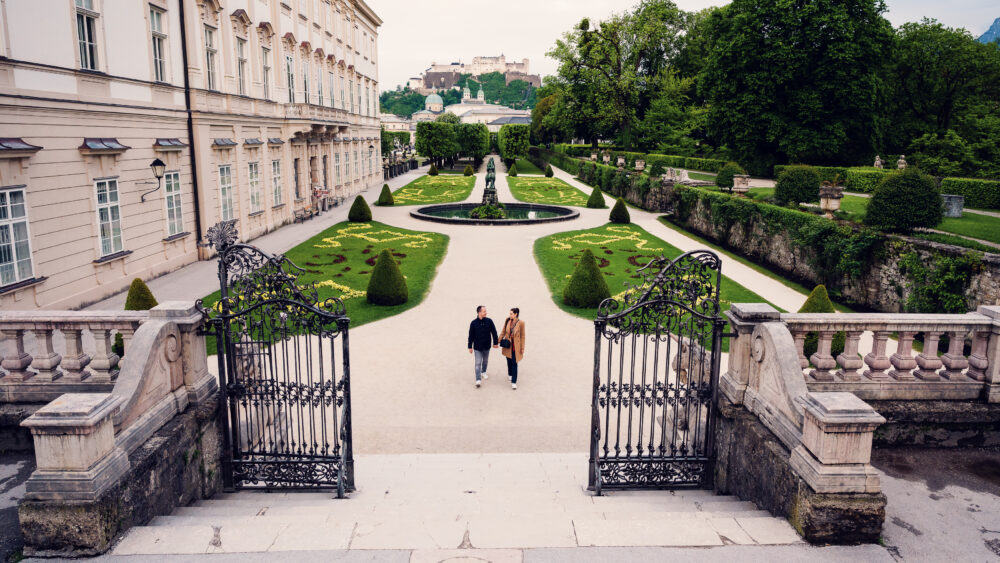
Mirabell Gardens

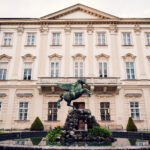
Reshaped around 1690 to plans by Johann Bernhard Fischer von Erlach, with a sightline across the parterre to the cathedral and the fortress. Maria and the children sing Do-Re-Mi around the Pegasus Fountain here in The Sound of Music.
{"type":"FeatureCollection","features":[{"type":"Feature","properties":{},"geometry":{"type":"Polygon","coordinates":[[[13.0396113,47.805439],[13.0409876,47.8056977],[13.0421398,47.8060908],[13.042237,47.805929],[13.0413601,47.8057008],[13.0416949,47.8051205],[13.0427441,47.8053936],[13.0431977,47.8045748],[13.042836,47.8044797],[13.0428611,47.8044366],[13.0427563,47.804409],[13.0433154,47.8034488],[13.0427191,47.8032866],[13.0426908,47.8034276],[13.042594,47.8035228],[13.0425072,47.8035111],[13.0421463,47.8037288],[13.0419739,47.8040315],[13.0417134,47.8039579],[13.0410842,47.804438],[13.0410136,47.8043966],[13.0408614,47.804509],[13.0404762,47.8042815],[13.0400588,47.8047373],[13.0396113,47.805439]]]}}]}
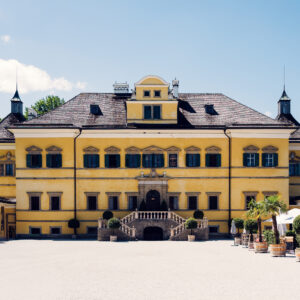
Hellbrunn Palace & Trick Fountains

Markus Sittikus’s summer palace, designed by Santino Solari, the architect of the cathedral. The Mannerist trick fountains are the reason to come, and the hidden jets still catch visitors out.

{"type":"FeatureCollection","features":[{"type":"Feature","properties":{},"geometry":{"type":"Polygon","coordinates":[[[13.0621375,47.7627805],[13.0620984,47.7628336],[13.0612649,47.7625629],[13.0612414,47.7625963],[13.0608744,47.7624995],[13.0608673,47.7626043],[13.060727,47.7627364],[13.0609737,47.7632021],[13.0602009,47.7634665],[13.060014,47.7634555],[13.0600287,47.7634011],[13.0598129,47.7633749],[13.0597983,47.7634292],[13.0589914,47.7633252],[13.058922,47.7632651],[13.0596077,47.761495],[13.0604509,47.7610209],[13.0624845,47.7605403],[13.0625139,47.7604966],[13.0625985,47.7605109],[13.0626253,47.7604581],[13.0630453,47.7606414],[13.0638337,47.7607995],[13.0654621,47.7605681],[13.0668303,47.7599609],[13.0669784,47.7599819],[13.067878,47.7595208],[13.0684653,47.759106],[13.0689016,47.7584778],[13.0692269,47.7578293],[13.0694457,47.7569539],[13.06986,47.7563041],[13.0701422,47.7553511],[13.0708645,47.755248],[13.0716882,47.7552884],[13.0720779,47.755418],[13.0720057,47.7556557],[13.0708287,47.7579342],[13.0704044,47.7582532],[13.0701722,47.7585208],[13.0695223,47.7599768],[13.0692434,47.760523],[13.0691422,47.7605961],[13.0692019,47.7606448],[13.0690625,47.7609351],[13.0687956,47.7612043],[13.0680395,47.7615478],[13.0678608,47.7616832],[13.0676412,47.7621872],[13.0672186,47.7627029],[13.0668003,47.7629292],[13.0667584,47.763302],[13.0644357,47.7633473],[13.0642874,47.7635783],[13.0641676,47.7635423],[13.064145,47.7635764],[13.0638899,47.7634997],[13.0639827,47.7633612],[13.0621375,47.7627805]]]}}]}
All Palaces

Salzburg Cathedral, the DomQuartier and the Archbishops’ Squares

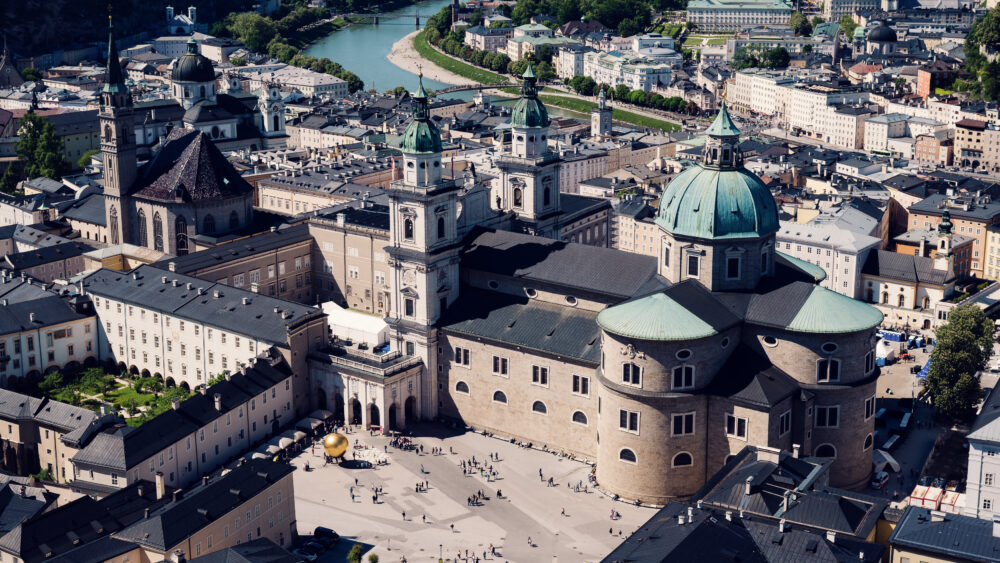
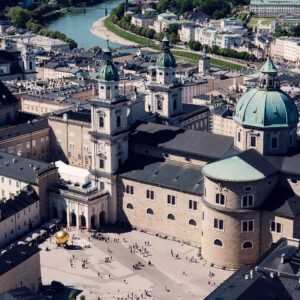
Salzburg Cathedral, the Residenz and the squares around them form the ensemble between the river and the fortress rock. It took shape after about 1600, when Prince-Archbishop Wolf Dietrich von Raitenau set out to rebuild Salzburg as a baroque city with an Italian look, a project the prince-archbishops after him completed. Making room for Residenzplatz alone meant tearing down 55 medieval buildings.

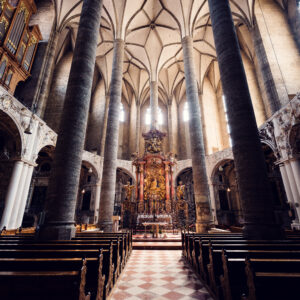
The DomQuartier, opened in 2014, lets you walk the whole complex as one route for the first time in 200 years: the Residenz state rooms, the Dome Terrace, the organ gallery inside the cathedral and the museums of St. Peter’s Abbey. The Franciscan Church next door is probably older than the cathedral and has kept its Romanesque nave and Late Gothic chancel.
Our Favourites
Salzburg Cathedral (Salzburger Dom)

Santino Solari’s cathedral, consecrated in 1628 and the first early Baroque church north of the Alps. Mozart and Joseph Mohr, who wrote the words of Silent Night, were baptized in its bronze font from 1311.
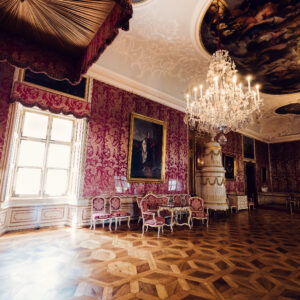
DomQuartier Salzburg

One route through the Residenz state rooms, the cathedral’s organ gallery and the museums of St. Peter’s Abbey. In the Residenz, the seven-year-old Mozart gave his first Salzburg court concert.
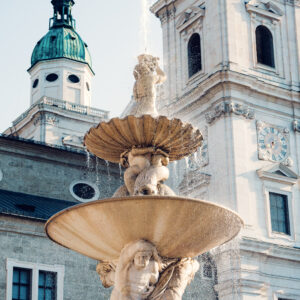
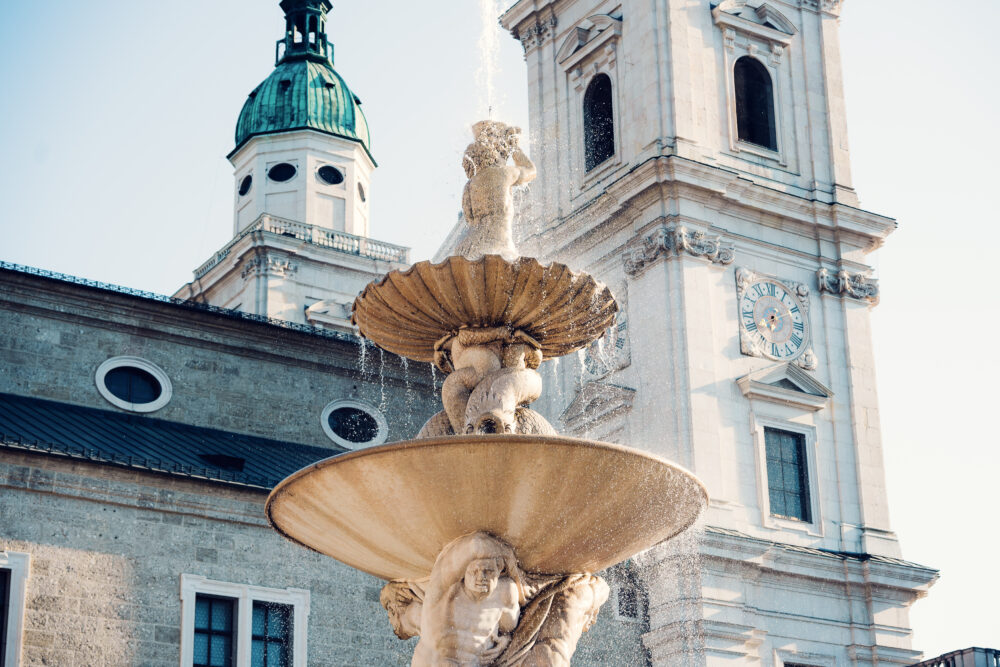
Residenzplatz

Laid out under Wolf Dietrich to plans by Vincenzo Scamozzi. The Residence Fountain at its center has four horses bursting from the rock and a Triton blowing a jet of water from a conch shell.
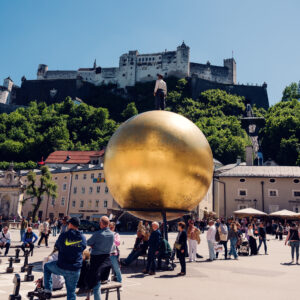
{"type":"FeatureCollection","features":[{"type":"Feature","properties":{},"geometry":{"type":"Polygon","coordinates":[[[13.0460183,47.7988682],[13.0471867,47.7987815],[13.0474632,47.7986674],[13.0474847,47.7985076],[13.0474039,47.7985036],[13.0473718,47.7982739],[13.0474329,47.7982771],[13.0474458,47.7981623],[13.0475306,47.7981668],[13.0475479,47.7980373],[13.0470285,47.7980686],[13.0468544,47.7981583],[13.0467032,47.7980701],[13.0461373,47.7981],[13.0461192,47.7982331],[13.0458215,47.7982512],[13.04581,47.7987836],[13.0454607,47.7987815],[13.0454353,47.7990093],[13.0460183,47.7988682]]]}}]}
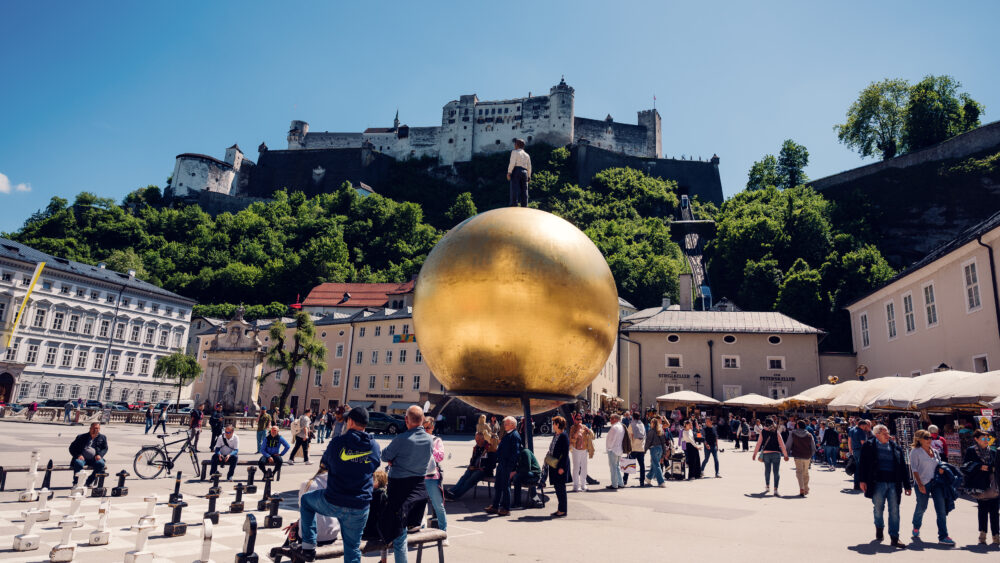
Kapitelplatz

The square you cross on the way to the funicular and St. Peter’s Cemetery, with the 1732 Kapitelschwemme, a Neptune fountain on the site of a medieval horse pond, a giant chessboard and Stephan Balkenhol’s Sphaera.
{"type":"FeatureCollection","features":[{"type":"Feature","properties":{},"geometry":{"type":"Polygon","coordinates":[[[13.0471481,47.7973152],[13.0471783,47.7967343],[13.0464321,47.7969042],[13.0463285,47.7967531],[13.0462835,47.7970952],[13.0461539,47.7970834],[13.0461711,47.7970109],[13.0458788,47.7969905],[13.0457362,47.7975669],[13.0460335,47.797552],[13.0460867,47.7976857],[13.0466548,47.7976542],[13.0467832,47.7975487],[13.0469192,47.7975677],[13.0469774,47.7976213],[13.0471462,47.7976127],[13.0471481,47.7973152]]]}}]}
Franciscan Church

A dark Romanesque nave that opens into a light Late Gothic chancel with star vaulting. The high altar by Fischer von Erlach holds a Madonna and Child by Michael Pacher.

All Landmarks


Mozart’s Salzburg

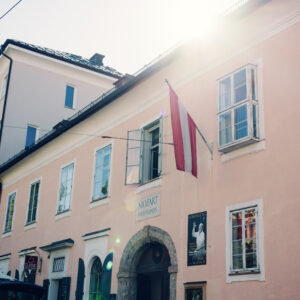
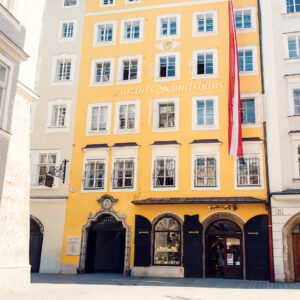
Wolfgang Amadeus Mozart was born on January 27, 1756, in a third-floor apartment on the Getreidegasse. In 1773 the family moved across the river to the Dance Master's House on Makartplatz, and Mozart lived there until he left for Vienna in 1781. Both addresses are museums of the International Mozarteum Foundation: Mozart’s Birthplace and the Mozart Residence. The cathedral where he was baptized and the Residenz where he played as a court musician belong to the same walk.

The Lanes of the Salzburg Old Town

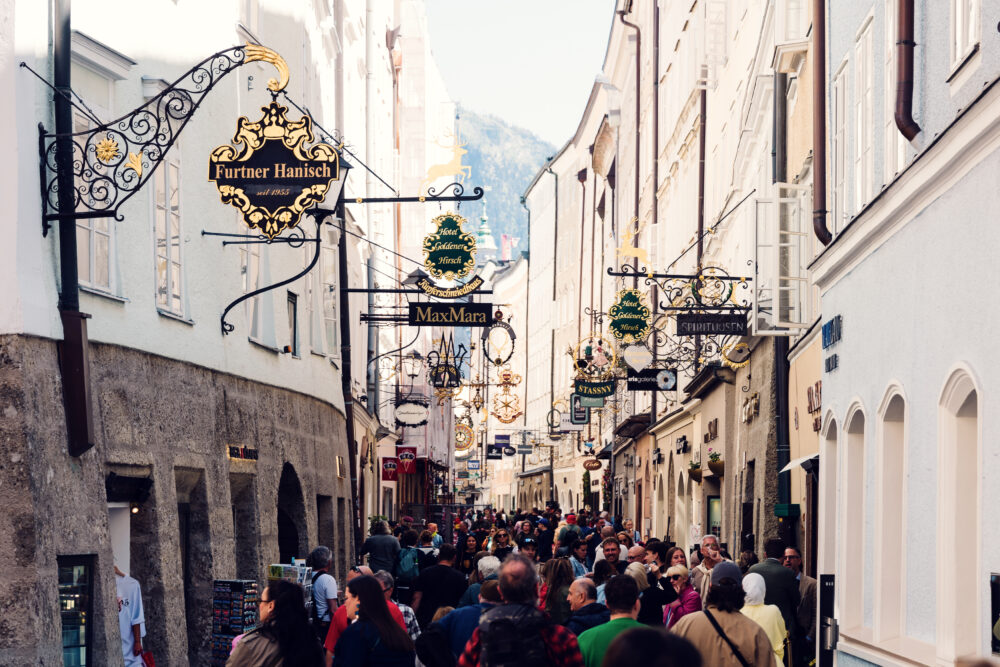
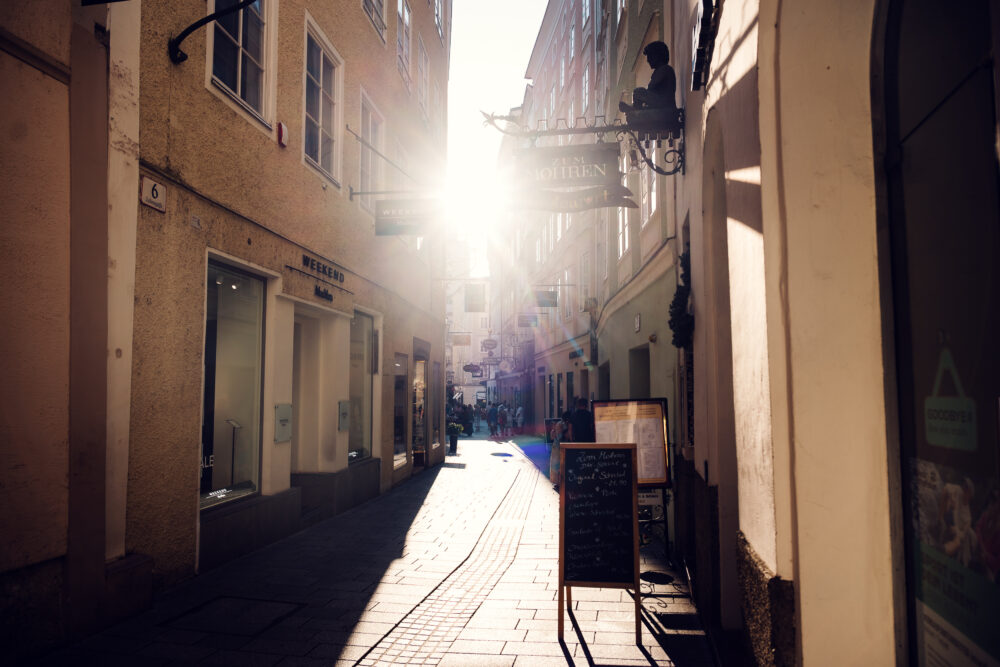
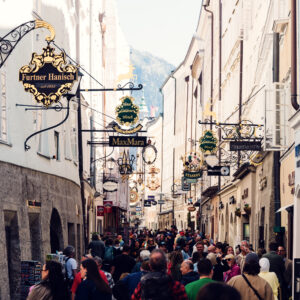
Much of the Salzburg Old Town is at its best between the big sights. On the Getreidegasse, the windows get smaller from floor to floor, guild signs hang over the lane, and through-houses lead under arcades from one street to the next; the best known runs from the Schatz House to Universitätsplatz. Alter Markt, Goldgasse and Judengasse carry the walk on toward Residenzplatz, and on the Hofstallgasse the Felsenreitschule and the Grosses Festspielhaus stand side by side, the main stages of the Salzburg Festival.

Across the river, the Linzergasse and the Steingasse follow the old roads out of town, one toward Linz and Vienna, the other south toward Italy.
Our Favourites
Getreidegasse

The name has nothing to do with grain: it grew out of Trabegasse, from an old word for trotting. Look up for the guild signs; Wieber, a metalworking shop on the lane, still makes them by hand.
{"type":"FeatureCollection","features":[{"type":"Feature","properties":{},"geometry":{"type":"Polygon","coordinates":[[[13.0413015,47.7999538],[13.0420621,47.7999743],[13.0432264,47.8000493],[13.0444085,47.8000014],[13.0444638,47.8000361],[13.0444121,47.8000732],[13.0432269,47.8001212],[13.0420574,47.8000461],[13.0406833,47.8000239],[13.0400669,47.800044],[13.0400182,47.8000292],[13.0400304,47.799979],[13.0413015,47.7999538]]]}}]}
Alter Markt

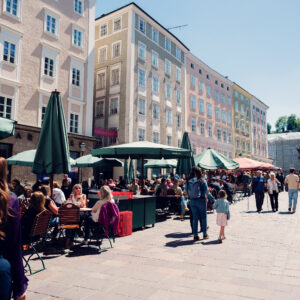
A market square since the 13th century, framed by town houses with medieval cores. The market fountain dates from 1488, and St. Florian has stood on its column since 1734.
{"type":"FeatureCollection","features":[{"type":"Feature","properties":{},"geometry":{"type":"Polygon","coordinates":[[[13.0454607,47.7987815],[13.045467,47.7987253],[13.04533,47.7987254],[13.0453376,47.7988343],[13.0449303,47.7990776],[13.0449006,47.799179],[13.0451083,47.799633],[13.0450207,47.7996568],[13.0451327,47.7999631],[13.0450902,47.8000247],[13.0451336,47.8000309],[13.0455022,47.7999677],[13.0452676,47.7992038],[13.0455331,47.7991627],[13.0454353,47.7990093],[13.0454607,47.7987815]]]}}]}
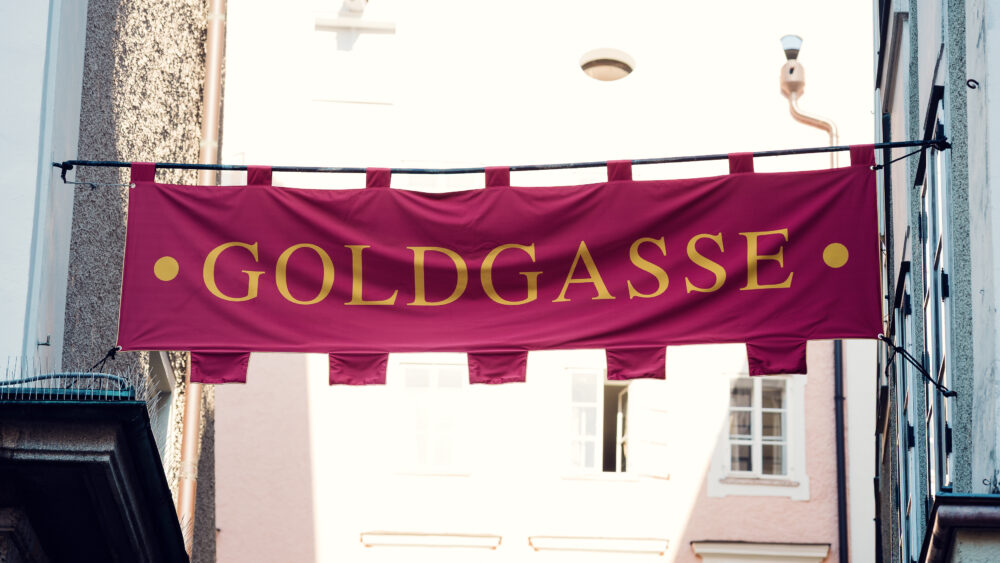
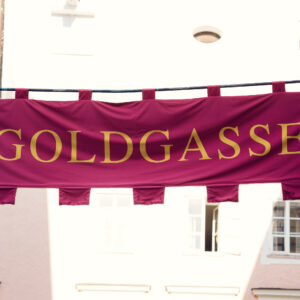
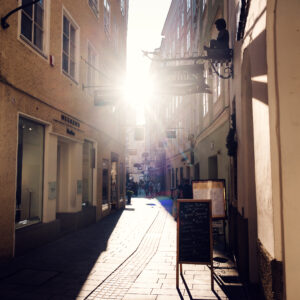
Goldgasse

Named for the goldsmiths who worked here, a narrow lane of five- and six-story houses between Residenzplatz and Alter Markt. In 1700, Jean Fontaine received a license to serve coffee in the Reitsamerhaus; his coffeehouse later moved to Alter Markt as Café Tomaselli.
{"type":"FeatureCollection","features":[{"type":"Feature","properties":{},"geometry":{"type":"Polygon","coordinates":[[[13.0452064,47.7997551],[13.0451719,47.7997099],[13.0452116,47.7996858],[13.045655,47.7996088],[13.04596,47.7993574],[13.0459863,47.7992918],[13.0459537,47.7987863],[13.0459762,47.7987537],[13.0460295,47.7987505],[13.0460716,47.798865],[13.0460935,47.7992947],[13.0460606,47.799383],[13.0457234,47.799665],[13.0452064,47.7997551]]]}}]}
Judengasse

The continuation of the Getreidegasse and, until the expulsion of 1498, the center of Salzburg’s Jewish community. A synagogue once stood at number 15, and number 3 has the only purely Jugendstil doorway in the city.

{"type":"FeatureCollection","features":[{"type":"Feature","properties":{},"geometry":{"type":"Polygon","coordinates":[[[13.0452942,47.8000091],[13.0452308,47.7999813],[13.045272,47.7999387],[13.0459844,47.7998236],[13.0462,47.7997528],[13.0464077,47.7996523],[13.0465758,47.7995002],[13.0466369,47.7992644],[13.0467119,47.7992575],[13.0467326,47.7992906],[13.0466782,47.7995226],[13.046477,47.7997074],[13.0462589,47.7998129],[13.0460267,47.7998897],[13.0452942,47.8000091]]]}}]}

More Lanes to Explore

On the Hofstallgasse, the festival street, the Felsenreitschule and the Grosses Festspielhaus stand side by side. The Toscaninihof is a courtyard at the foot of the Mönchsberg, where Stephan Balkenhol’s Woman in the Rock hides in a niche of the rock face. Across the river, the Linzergasse is the pedestrian street of the right bank, and the Steingasse, one of its oldest streets, follows the old road south to Italy.

All Streets

The City Hills and the Salzach Footbridges

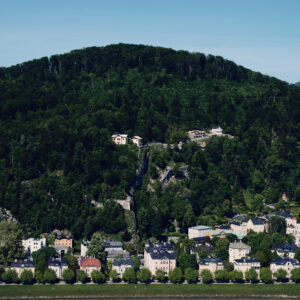
Salzburg sits between its city hills, and two of them rise straight out of the center. The long ridge of the Mönchsberg rises directly behind the Old Town on the left bank; the MönchsbergAufzug lift climbs 60 meters inside the rock from the Gstättengasse in 30 seconds, and paths run along the top past the Museum der Moderne. The Kapuzinerberg, 640 meters high, is the wilder hill on the right bank, with a Capuchin monastery in the forest and a colony of wild chamois.

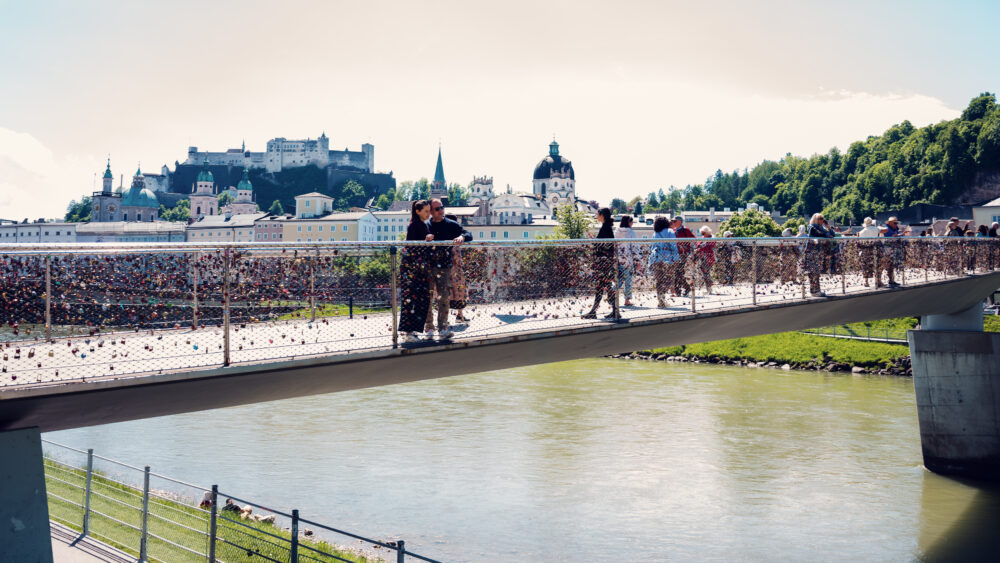
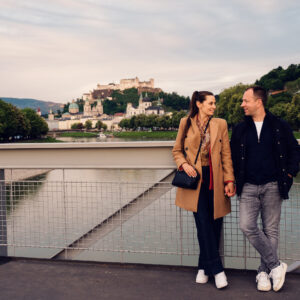
Down at the river, the footbridges are reserved for pedestrians and cyclists. Each one lines up the Old Town and the fortress a little differently, and crossing them is a pleasant way to switch between the two banks.
Our Favourites
Mönchsberg

The lift from the Gstättengasse is the quick way up. On top, walking paths lead through meadows and forest past old fortifications and the Museum der Moderne, which opened in 2004.
{"type":"FeatureCollection","features":[{"type":"Feature","properties":{},"geometry":{"type":"Polygon","coordinates":[[[13.0463015,47.7963643],[13.045458,47.7962917],[13.04374,47.7970616],[13.0432592,47.7971246],[13.0428918,47.7973386],[13.0424519,47.7974782],[13.0421449,47.7974858],[13.0419128,47.7975552],[13.0410893,47.7982778],[13.0407849,47.798457],[13.0405844,47.7986579],[13.0405368,47.7988678],[13.0404597,47.7989138],[13.0402109,47.7988638],[13.0400335,47.7989199],[13.0399132,47.7991259],[13.0398971,47.7994088],[13.0392252,47.8003069],[13.038912,47.8010389],[13.0381939,47.8022915],[13.0379015,47.80294],[13.0379558,47.8031571],[13.0363619,47.8045205],[13.0363324,47.8048015],[13.0357403,47.8053987],[13.0355043,47.8057405],[13.035275,47.8058662],[13.0351865,47.8058509],[13.0348344,47.8054919],[13.0344569,47.8053212],[13.033724,47.8046871],[13.0334611,47.8045574],[13.0330051,47.8041475],[13.0325076,47.8038206],[13.0321375,47.8033224],[13.0320731,47.8031107],[13.0322146,47.8024405],[13.0322072,47.802296],[13.0320945,47.8021208],[13.0322675,47.8018897],[13.0323185,47.8014848],[13.0327061,47.8005704],[13.0326739,47.8003641],[13.0330427,47.7996002],[13.0333444,47.7991516],[13.0334584,47.7990822],[13.0336878,47.7990597],[13.0340499,47.7989183],[13.0354111,47.7989309],[13.0361219,47.7988201],[13.036374,47.7988192],[13.0370969,47.7989093],[13.0377533,47.7986341],[13.0378519,47.7984877],[13.0383749,47.7983251],[13.038955,47.7980165],[13.0392091,47.7976634],[13.0391997,47.7973553],[13.0390683,47.797221],[13.0390562,47.7970616],[13.0387364,47.7964138],[13.0382368,47.7960399],[13.037754,47.7955237],[13.0375287,47.7954633],[13.0377405,47.7941795],[13.0380423,47.7939696],[13.0382475,47.793647],[13.0387666,47.7932993],[13.0391058,47.7929875],[13.0397134,47.7926542],[13.0406106,47.7923785],[13.0413588,47.7924542],[13.0416687,47.7924064],[13.0419812,47.7920848],[13.042134,47.7920199],[13.0427684,47.7921073],[13.0430782,47.7925758],[13.0431305,47.7931678],[13.0433169,47.7934002],[13.0435355,47.7939065],[13.0435637,47.7941056],[13.0437125,47.7943462],[13.0438292,47.794412],[13.0439928,47.7944038],[13.0443509,47.7945687],[13.0446446,47.794584],[13.0447813,47.794512],[13.0451247,47.7939273],[13.045527,47.7936326],[13.0457845,47.7936227],[13.0461654,47.7937002],[13.0473804,47.7936497],[13.0481811,47.7937687],[13.0490501,47.7940633],[13.0495128,47.7942822],[13.0502169,47.7950047],[13.0506105,47.7952823],[13.0497301,47.7959165],[13.0496791,47.7960967],[13.0497212,47.7963946],[13.0492526,47.7964093],[13.0487424,47.7963643],[13.0484936,47.796412],[13.0481489,47.7963931],[13.0476902,47.7963463],[13.0472007,47.796226],[13.0466361,47.7962755],[13.0463015,47.7963643]]]}}]}
Kapuzinerberg

From the Linzergasse, a path climbs past the Stations of the Cross to the Capuchin monastery. The Hettwer Bastion looks across to the fortress, and Stefan Zweig lived in the Paschinger Schlössl from 1919 to 1934.
{"type":"FeatureCollection","features":[{"type":"Feature","properties":{},"geometry":{"type":"Polygon","coordinates":[[[13.0458023,47.8018528],[13.0457537,47.8017622],[13.0459962,47.801453],[13.0461992,47.8013093],[13.0465268,47.8012335],[13.0467929,47.8012125],[13.0475736,47.8014289],[13.0479585,47.8012506],[13.0487658,47.8011866],[13.0491118,47.8012127],[13.0502631,47.8010952],[13.0512831,47.8007596],[13.0518572,47.8006486],[13.0529465,47.8003196],[13.0530312,47.800329],[13.0533336,47.8005425],[13.0538727,47.8006686],[13.0553011,47.8005583],[13.0562589,47.8003858],[13.0569364,47.8004316],[13.0587181,47.8003479],[13.0591345,47.8004102],[13.060188,47.8008442],[13.0606788,47.800947],[13.0611402,47.8009001],[13.0620696,47.8011064],[13.06226,47.8011695],[13.0622654,47.8015199],[13.0623619,47.8016019],[13.0628568,47.8017794],[13.0632124,47.8020904],[13.0640061,47.8030774],[13.0643012,47.8033287],[13.064875,47.8035092],[13.0652285,47.8038913],[13.0656342,47.8041575],[13.0659427,47.804507],[13.0659923,47.8046736],[13.0659293,47.8050132],[13.0658236,47.8052485],[13.0657586,47.8053133],[13.0656595,47.805327],[13.0656045,47.8054203],[13.0655175,47.8057266],[13.065338,47.8057829],[13.0653027,47.8060615],[13.0652393,47.8061288],[13.0656145,47.8068298],[13.0658743,47.8071362],[13.0659333,47.807306],[13.0658401,47.8073455],[13.0657937,47.8074508],[13.0660057,47.8075082],[13.065802,47.8076588],[13.0656999,47.8076357],[13.0654817,47.80782],[13.0651226,47.8078746],[13.0633859,47.8077481],[13.0629765,47.8076747],[13.0623052,47.8074738],[13.062244,47.8074375],[13.0622701,47.8072986],[13.0617408,47.8071714],[13.0617669,47.8070262],[13.0605689,47.8068801],[13.0604944,47.807006],[13.0597602,47.8069516],[13.0597046,47.8068138],[13.059505,47.8068178],[13.0594212,47.8070849],[13.0592005,47.8070753],[13.0591077,47.8068238],[13.0589488,47.8067821],[13.0586994,47.8067895],[13.0585414,47.8067273],[13.0576418,47.8066675],[13.0570431,47.8067048],[13.0567777,47.8066342],[13.0566665,47.8065222],[13.0563658,47.8064669],[13.0559946,47.8065294],[13.0558104,47.8063943],[13.0555433,47.8063164],[13.0553925,47.806364],[13.055213,47.8062826],[13.0551584,47.8061693],[13.0549166,47.8061105],[13.0547233,47.8061959],[13.0541713,47.8060411],[13.0530654,47.8054793],[13.0530009,47.8053385],[13.0525544,47.805042],[13.0505716,47.8043682],[13.0501243,47.8041773],[13.0496704,47.8041323],[13.0490882,47.8039093],[13.0488344,47.803905],[13.0486413,47.8039913],[13.0484601,47.8039838],[13.0478927,47.8038141],[13.0477388,47.8037353],[13.0476955,47.8034463],[13.0475172,47.8032347],[13.0471367,47.8029846],[13.0464354,47.8026624],[13.0463019,47.8024917],[13.0463521,47.8023156],[13.0462807,47.8021753],[13.0458023,47.8018528]]]}}]}
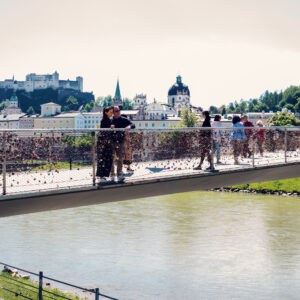
Marko-Feingold-Steg (formerly Makartsteg)

The Marko-Feingold-Steg (formerly Makartsteg) is the footbridge where couples fix love padlocks to the balustrade and throw the key into the Salzach.
{"type":"FeatureCollection","features":[{"type":"Feature","properties":{},"geometry":{"type":"Polygon","coordinates":[[[13.0420772,47.8012474],[13.0422235,47.8017275],[13.0424375,47.8020637],[13.0426275,47.8022511],[13.0425825,47.8022919],[13.0425328,47.8022788],[13.0423435,47.8020981],[13.0421215,47.8017491],[13.0419661,47.8012165],[13.0420339,47.801194],[13.0420772,47.8012474]]]}}]}
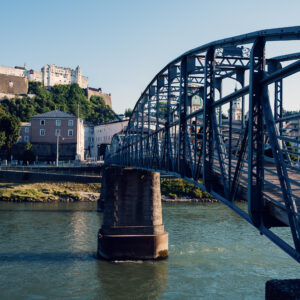
Mozartsteg

An Art Nouveau footbridge where you had to pay a toll to cross until 1921. The old toll house still stands and now holds the smallest coffee shop in Salzburg.
{"type":"FeatureCollection","features":[{"type":"Feature","properties":{},"geometry":{"type":"Polygon","coordinates":[[[13.0487058,47.7993865],[13.0487267,47.7993509],[13.0488091,47.7993302],[13.0492883,47.800238],[13.0492692,47.8002849],[13.0492211,47.8002873],[13.0491873,47.8002616],[13.0487058,47.7993865]]]}}]}
Müllnersteg

The footbridge furthest downstream of these three, worth adding if you keep walking along the river.

{"type":"FeatureCollection","features":[{"type":"Feature","properties":{},"geometry":{"type":"Polygon","coordinates":[[[13.0371111,47.8049082],[13.0386153,47.8052053],[13.0386584,47.8052471],[13.0386239,47.8052745],[13.0385585,47.8052713],[13.0370831,47.8049776],[13.0370455,47.8049335],[13.0371111,47.8049082]]]}}]}
All Viewpoints


Unique Things to Do in Salzburg

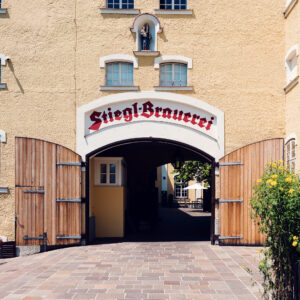
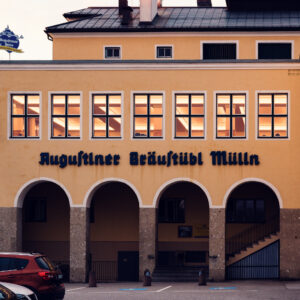
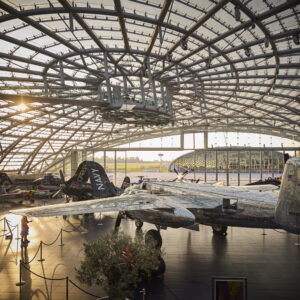
Some of the more unusual things to do in Salzburg come from its breweries, its monasteries and Red Bull. Stiegl has been brewing since 1492 and is Austria's biggest private brewery; its Stiegl-Brauwelt shows how the beer is made. Augustiner Bräu Kloster Mülln, founded by Augustinian hermits, has been brewing since 1621. The Stiftsbäckerei St. Peter, Salzburg's oldest bakery, still bakes in its original wood-fired oven, and out at the airport, Red Bull Hangar-7 keeps the historic aircraft of The Flying Bulls under a roof of glass and steel.
Helpful Hints

  • The Salzburg Card covers one visit to each of the city's attractions and museums plus public transport, except the S-Bahn.
  • At Mirabell Palace, only the Marble Hall and Angel Staircase are open; the Marble Hall can close for special occasions.
  • On Jedermann performance days in July and August, the cathedral's hours change, and it can't be visited during the performance.
  • Mozart's Birthplace isn't accessible by wheelchair; the Mozart Residence is.

Hidden Gems

  • The smallest house in the Old Town stands on Alter Markt next to Café Tomaselli, only 1.42 meters wide.
  • By the Franciscan Church's door is the Hand of Refuge: whoever touched it was granted entry, guilty or not.
  • Look closely at the marble by the cathedral entrance for scribbles left some 370 years ago.
  • The Zwergerlgarten in the Mirabell Gardens, the oldest dwarf garden in Europe, keeps 17 of its 28 Untersberg marble dwarfs.
  • The nuns of Nonnberg Abbey, where The Sound of Music story begins, sing Gregorian chant in their church every morning.

Our Little Extras

  • When the tower trumpeters play, their baroque fanfares from the fortress's trumpet tower carry down to the Old Town.
  • The Mozart Residence courtyard holds the wooden house where Mozart is said to have composed The Magic Flute in Vienna.
  • In festival season, the Siemens Fest>Spiel>Nächte on Kapitelplatz show selected festival productions free on a big open-air screen.
  • Next to the Stiftsbäckerei St. Peter entrance, the mill wheel on the Almkanal has been rebuilt after old models.