
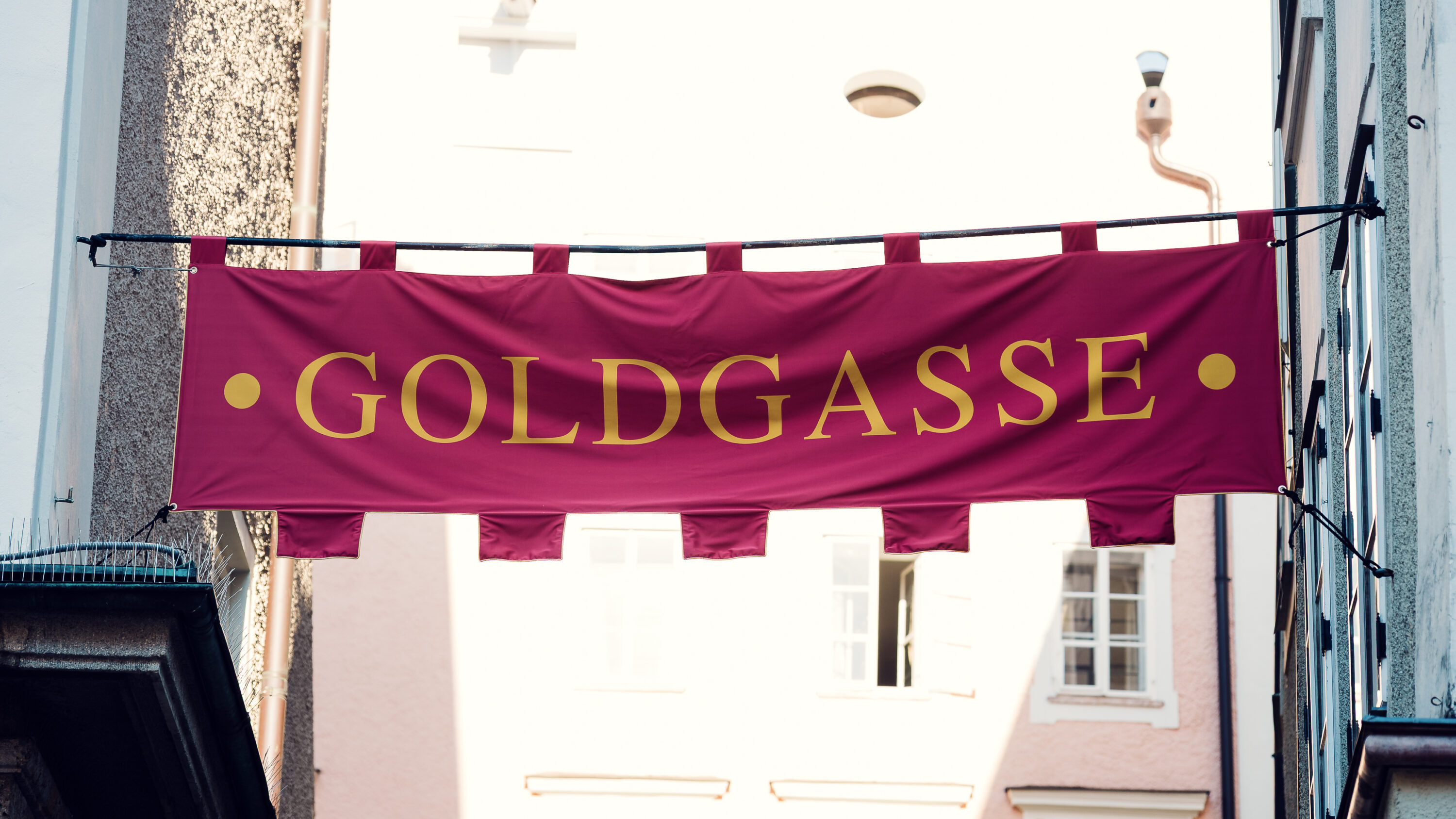
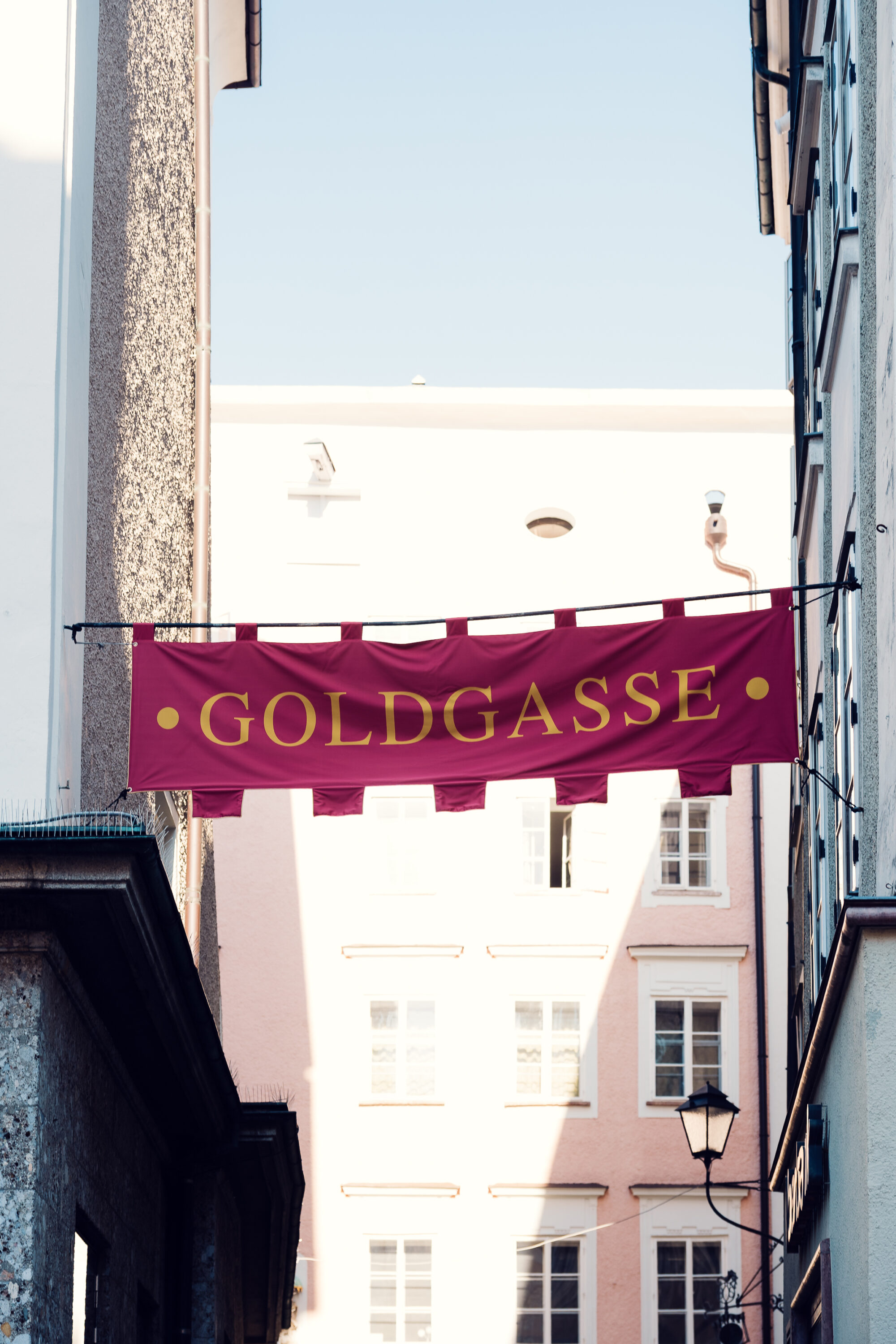
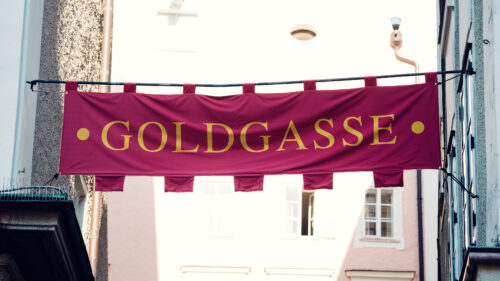
Burgundy Goldgasse banner with gold lettering hanging across the lane in Salzburg.
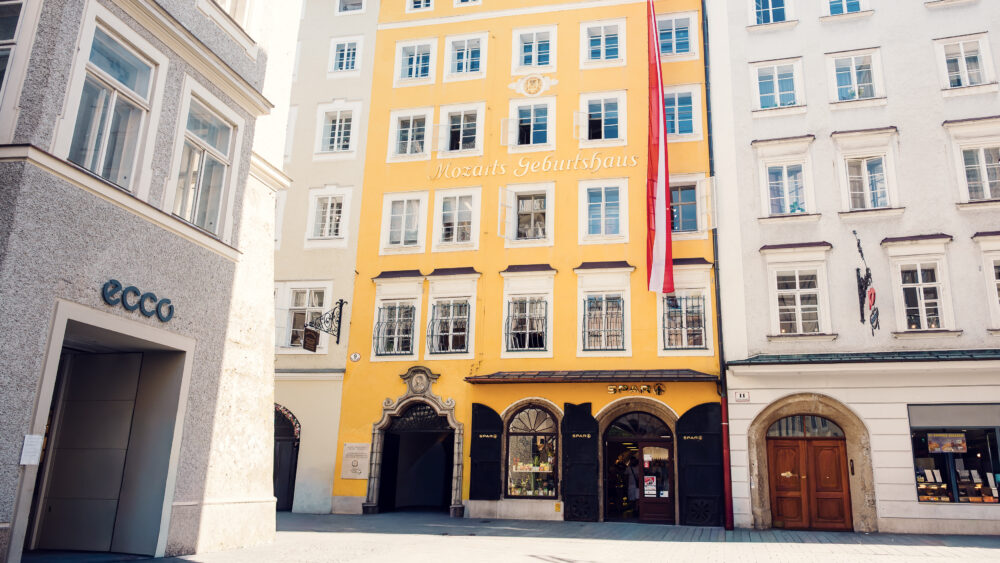
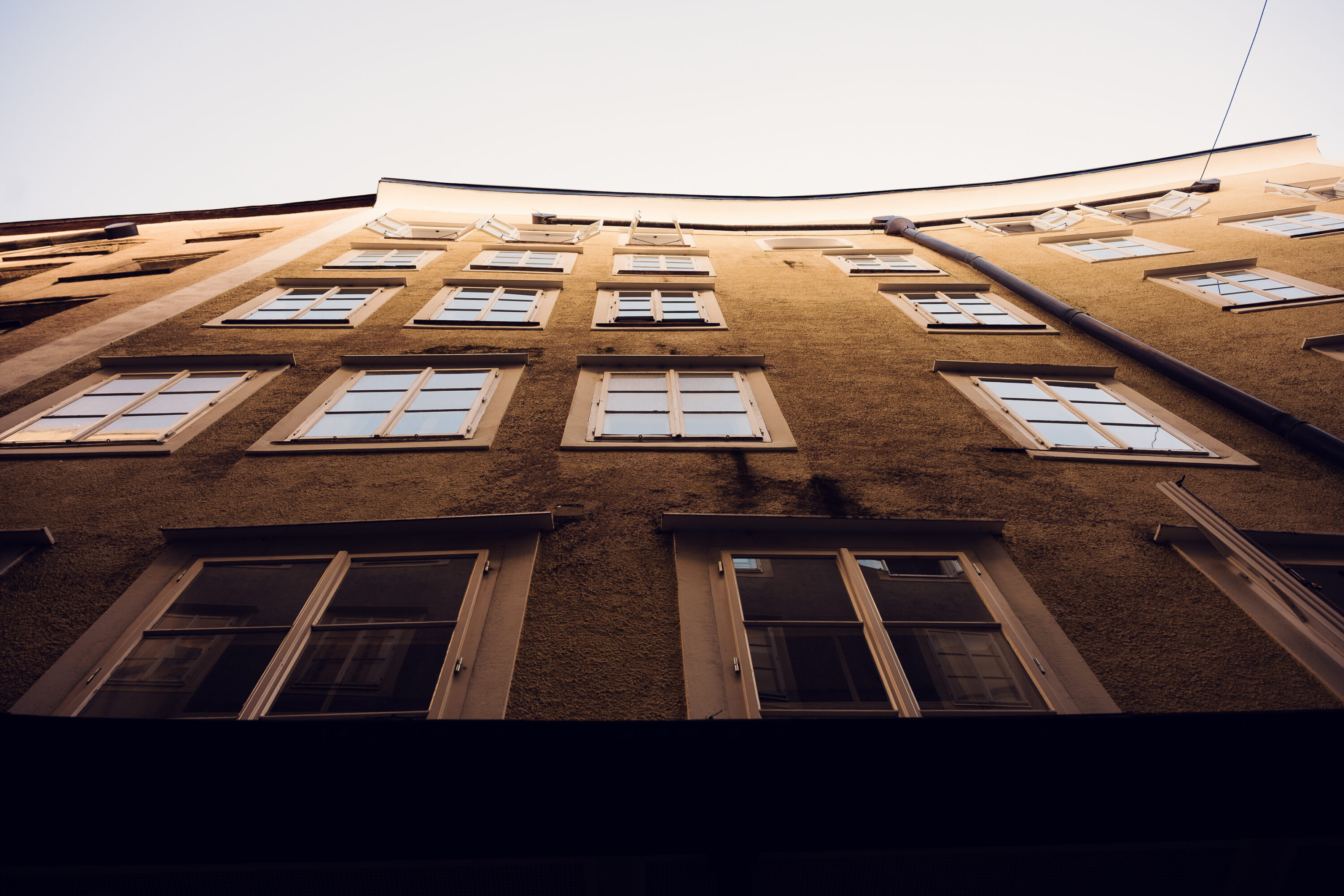
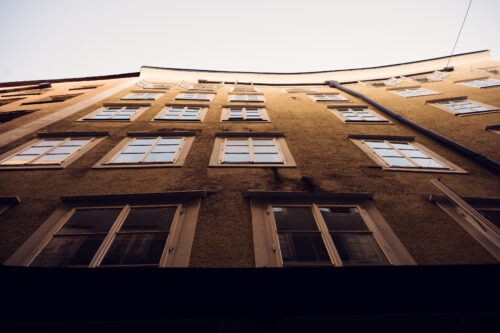
Tall ochre building facade with rows of windows along Salzburg's Goldgasse.
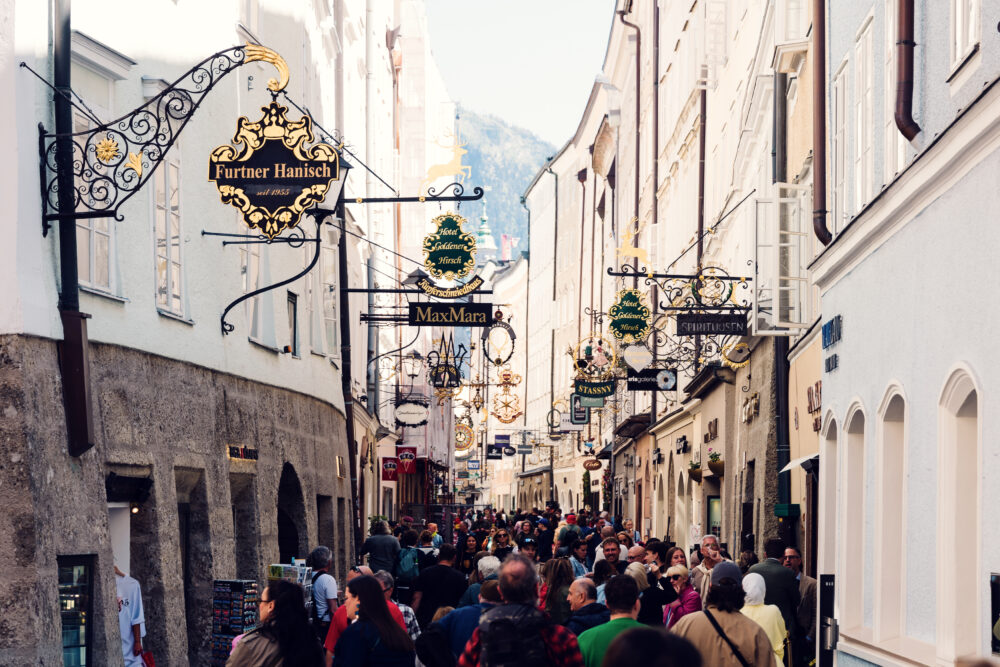
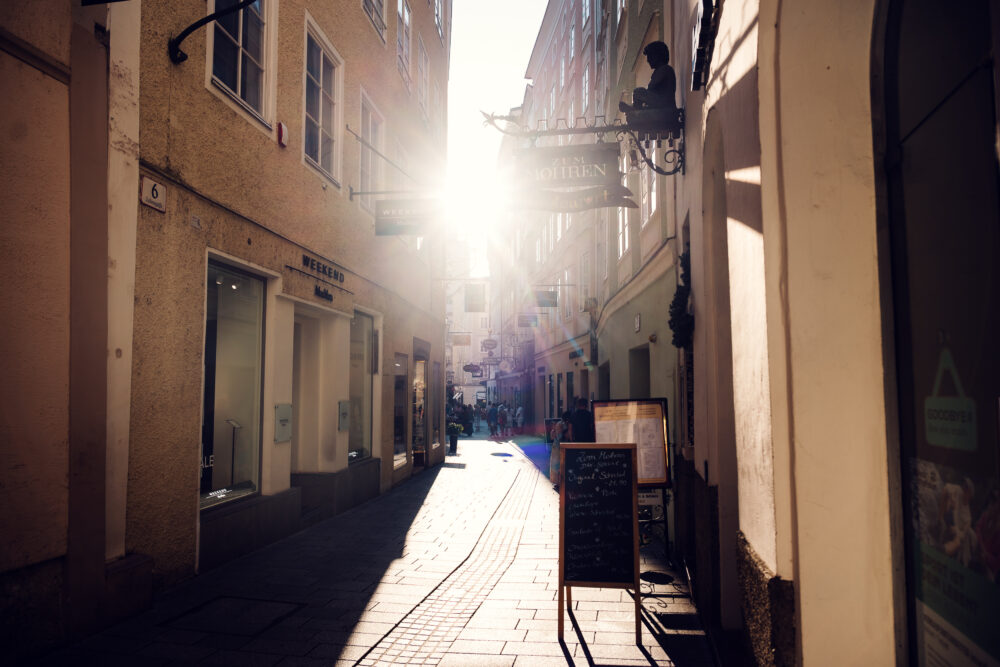
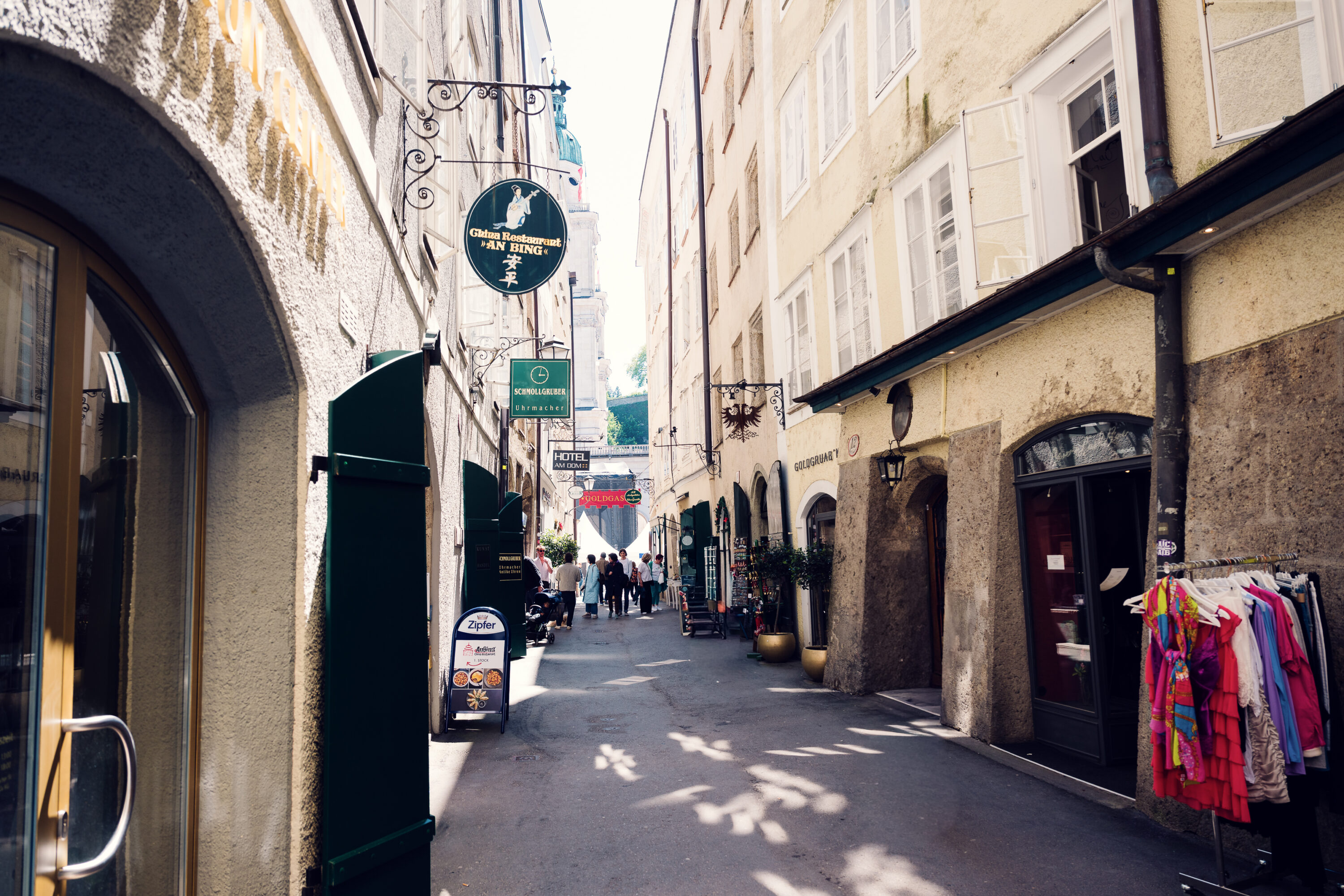
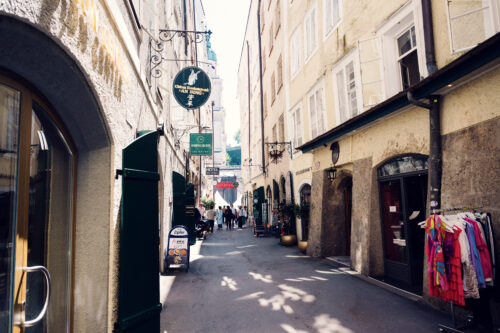
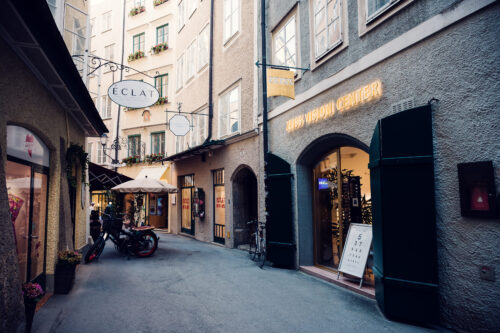
Narrow Goldgasse lane lined with shops and a hanging sign in Salzburg's old town.
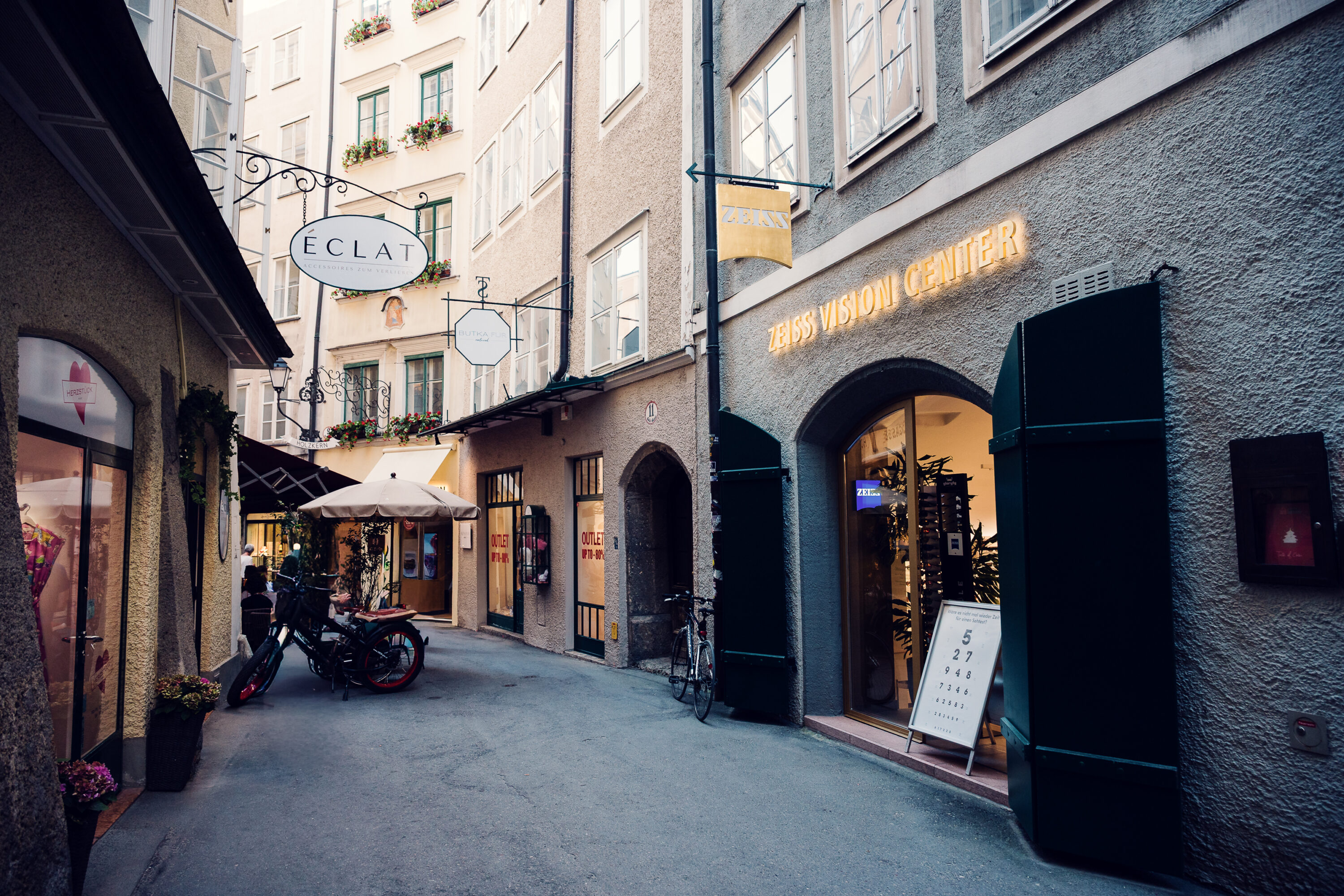
Motorcycle parked along the Goldgasse lane past shopfronts in Salzburg.
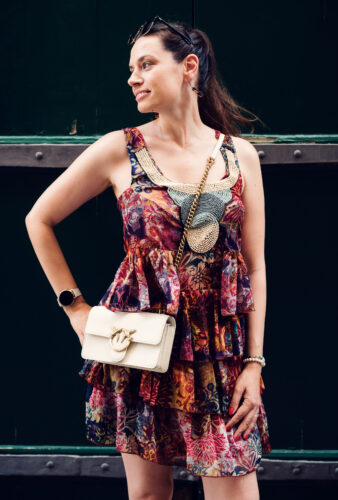
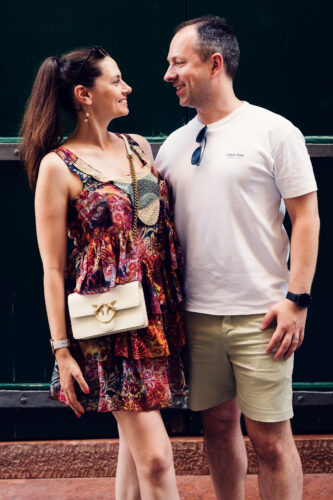
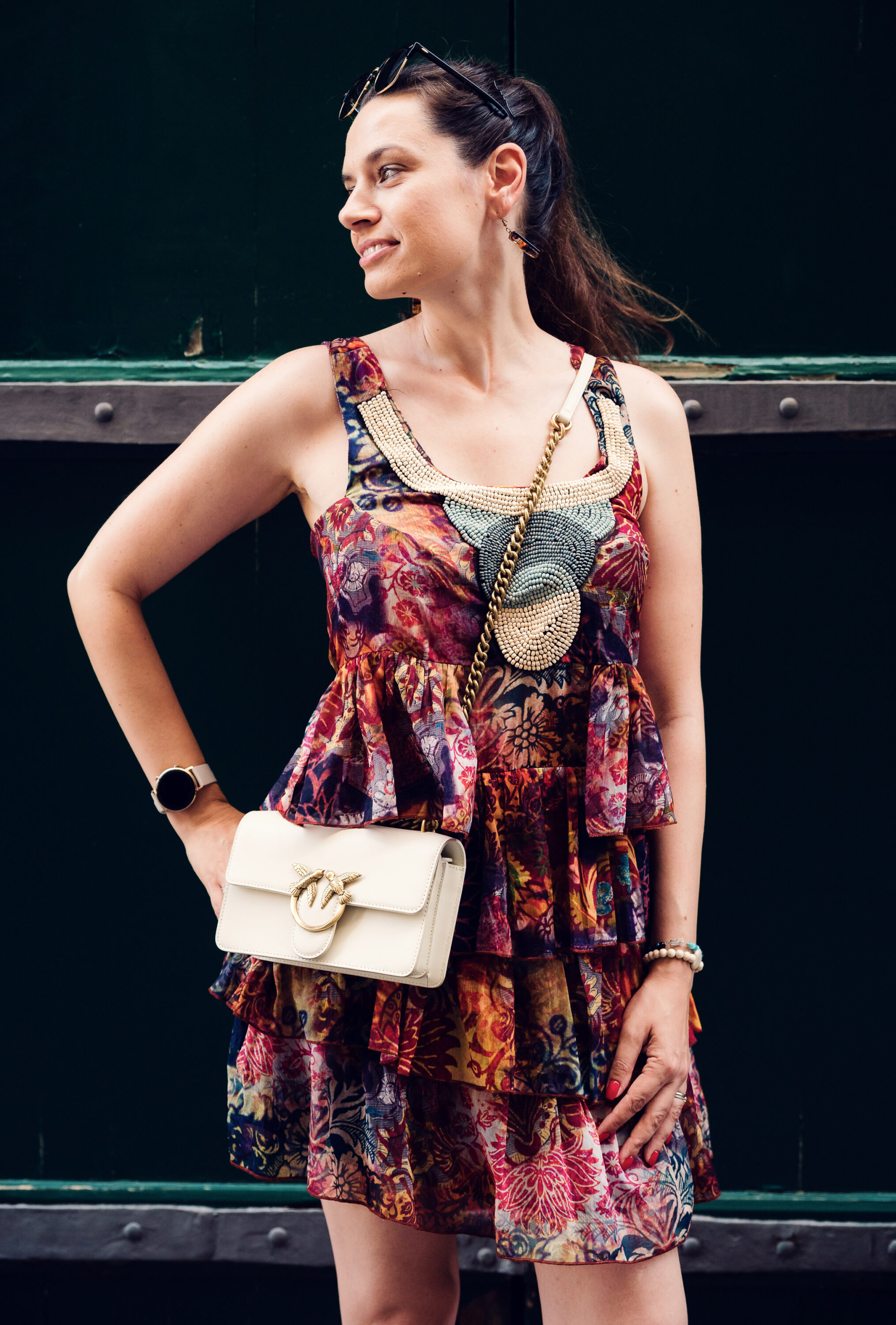
Adriana standing in a floral dress with a white handbag in Salzburg's Goldgasse.
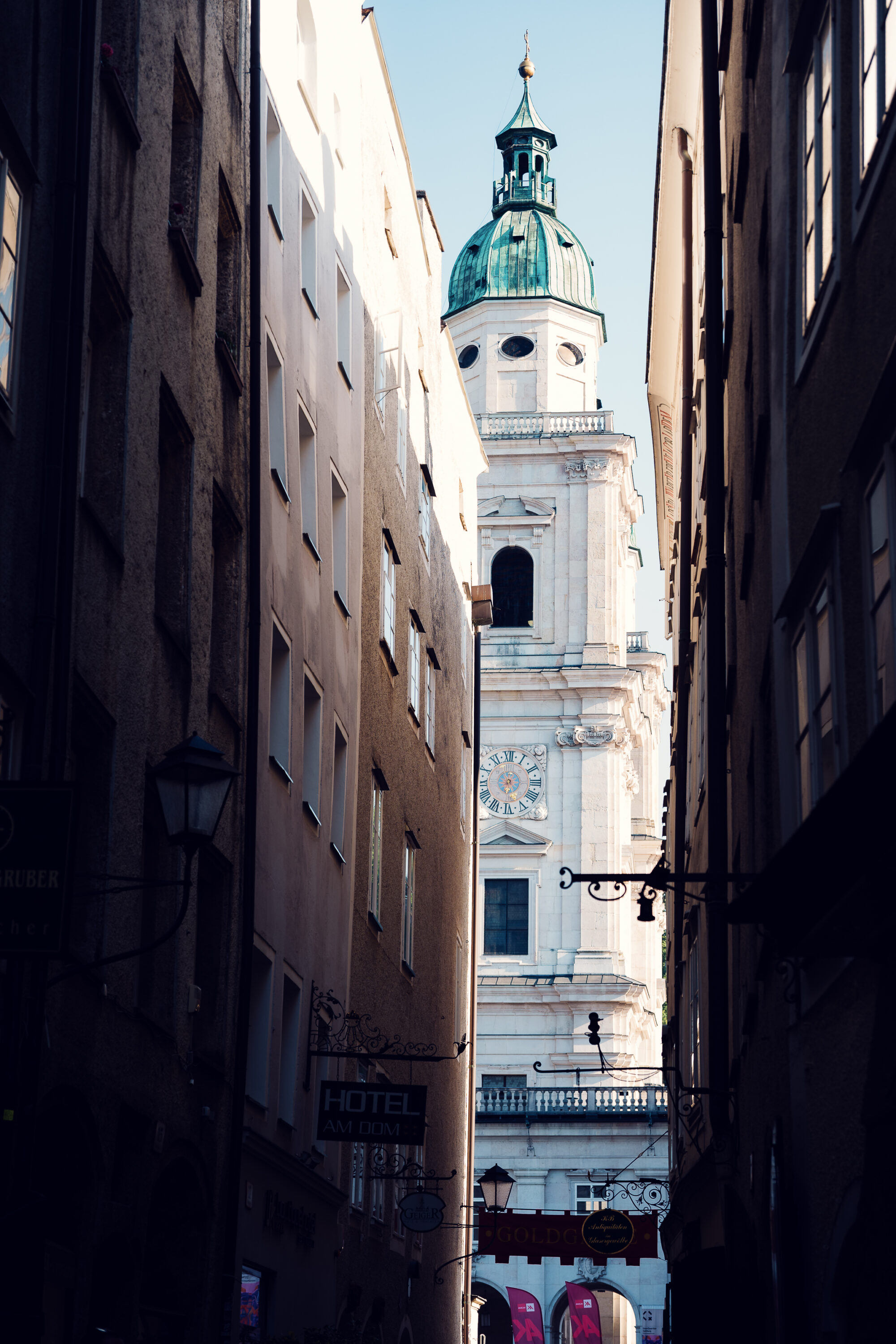
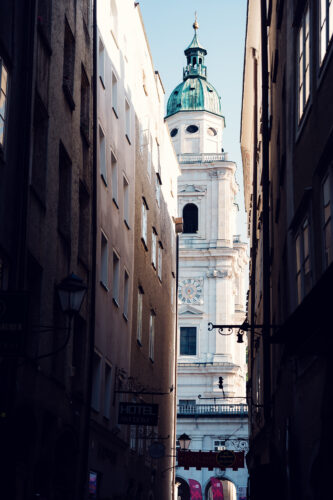
Salzburg Cathedral tower framed at the end of the narrow Goldgasse lane.
Fall in Love with

Goldgasse

Goldgasse is one of Salzburg's last medieval lanes, curving from Alter Markt to Residenzplatz past small, chain-free shops and wrought-iron guild signs.

* Affiliate links: if you book, a small commission supports our independent work, at no extra cost to you.

01 / 04
01 / 02

Goldgasse

Muvamo Must See 2026Picked by our team as one of Salzburg's essential sights.

2026

Must See

Goldgasse

When a sight carries this label, it's one we'd send a friend to first. Must See is our highest distinction for sights, and our team gives it on the strength of our own visits, without fixed criteria or a set number of places. It can't be bought or applied for. The label shows the current year, and a sight that no longer holds up loses it.

See all Must See sights in Salzburg

Today
Always accessible
Admission
Free
Plan for
30 mins
outdoors
Where
Old Town

A short walk from the busy Getreidegasse, the Goldgasse keeps the character of a much older Salzburg. It's a slim, curving lane that links the Alter Markt with the Residenzplatz, crossing the Brodgasse on the way, and one of the last surviving medieval streets in the old town. The houses rise five and six storeys on either side, most of them from the 16th century, and the gap of sky between them is so narrow that you instinctively look up.

Part of the appeal is what isn't here: no flagship stores, nothing you'd find in every other city. It's one of Salzburg's most traditional old-town shopping lanes, still known for small, individual shops rather than international chains. Antique dealers, jewellers, dealers in old coins and clocks, leather and ceramics, all behind shopfronts that have changed little in generations. The name comes from the gold and silversmiths who worked here in the Middle Ages, and a handful of traditional wrought-iron shop signs still reach out over your head. It's short, it's quiet, and it rewards anyone who slows down.

Plan your visit

Opening Hours
Always accessible
Getting there
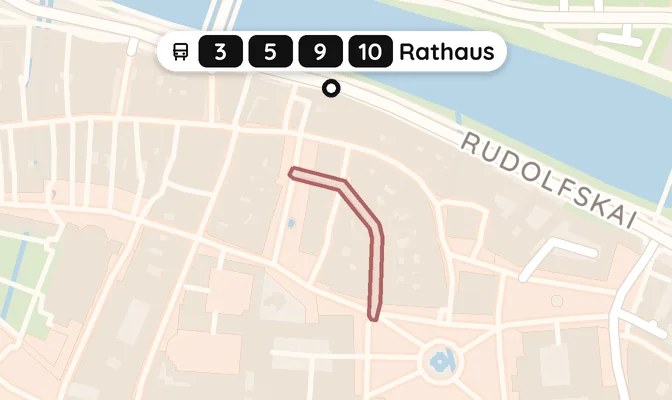
Goldgasse, 5020 SalzburgBus 3 5 9 10 Rathaus · 3 min walkOld Town

Tours & experiences

Goldgasse


Muvamo Opinion

The contrast is striking. You can be in the crush of the Getreidegasse one minute, shoulder to shoulder under the Mozart crowds, and 200 metres later you've got a whole medieval lane practically to yourself. The Goldgasse is narrow enough that two people with shopping bags have to negotiate, and that tightness is part of its character. The shopfronts are at arm's reach, the wrought-iron signs hang low enough to read, and the curve of the lane means you never see the whole thing at once. You round the bend and there's another stretch of it.

It's also the rare place where the shops are the sightseeing. The lane is lined with independent boutiques and specialist shops. One doorway might lead to a vault full of antique silver, the next to a dealer in old Salzburg coins or a workshop selling handmade ceramics. None of it was set up for tourists, because the Goldgasse never reinvented itself for them. The mix of small, individual shops here isn't a marketing line. It's just what the street is.

Our honest tip: come for the lane itself, not a shopping list. Walk it slowly once in each direction, because you'll catch different signs and house details depending on which way you're facing. Look up at the painted house blessings and the old house names tied to former trades. If you only have a short window in Salzburg, the Goldgasse gives you a genuine slice of the old town in the time it takes to drink a coffee, and it sits two minutes from the Residenzplatz and the cafés of the Alter Markt. We'd put it on any first visit, and we still walk it on every return.

Recommended tours & experiences

Helpful Hints

  • The lane connects Alter Markt and Residenzplatz and crosses the Brodgasse; from the Getreidegasse it's about a three-minute walk via the Alter Markt.
  • Many small shops keep traditional Salzburg retail hours, with shorter Saturday hours and Sunday closures common; check current opening times if you want to shop.
  • In Advent the whole street is decorated, which is lovely but busier; weekday mornings still give you breathing room.

Gastronomic Discoveries

  • The Café Tomaselli on the neighbouring Alter Markt traces its origins to a coffee licence granted on the Goldgasse in 1700.
  • For a classic Salzburg sweet, Café Konditorei Fürst at the Alter Markt is the home of the original Mozartkugel, a two-minute stroll away.
  • Gasthof Goldgasse on the lane serves Austrian classics such as Wiener Schnitzel and Salzburger Nockerl if you want to eat without leaving the Goldgasse.

Hidden Gems

  • Look up for painted house blessings and old house names tied to former trades, including the bell-founder's house, wire-drawer's house and goldsmith's house.
  • Despite its name, the lane was also called the Milchgasse into the 1800s, after a small milk market once held here.

Our Little Extras

  • Walk the lane once in each direction; the wrought-iron signs and house details read completely differently depending on which way you face.
  • Time a visit to an event such as "Ein Tag in der Goldgasse" or the Goldgasse street market, when the shops open up and the lane turns festive.
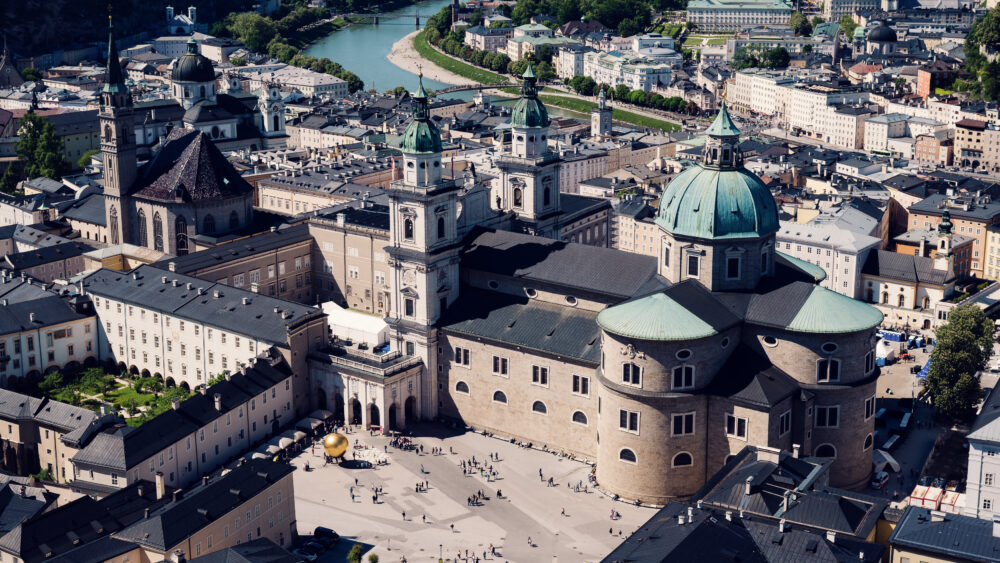
  • Pair the Goldgasse with the DomQuartier and Salzburg Cathedral, both a minute away at the Residenzplatz end.

The Goldsmiths' Lane: A Short History of the Goldgasse

The Goldgasse runs in a gentle arc between the Alter Markt and the Residenzplatz, crossing the Brodgasse on the way. Barely 200 metres long, it is one of the last fully preserved medieval lanes in the old-town core, and it has carried several names over the centuries. The one that stuck comes from the goldsmiths and silversmiths who had their workshops here in the Middle Ages. There's a quieter theory too: some local historians trace the name to the Latin collatio, a fee a journeyman from elsewhere had to pay a Salzburg master before he was allowed to work for him, which over time may have been misread as "gold." The goldsmith story is the one Salzburg tells, and you can still buy fine jewellery on the lane today.

Gold wasn't the only trade to leave its mark. Into the early 19th century the street was also called Milchgasse, after a small milk market held here. Earlier still it was named for the Sporer, the locksmiths who forged riding gear like spurs, bits and stirrups. Many of the houses still carry the names of the crafts once practised behind their walls, from the bell-founder's house to the wire-drawer's and the goldsmith's.
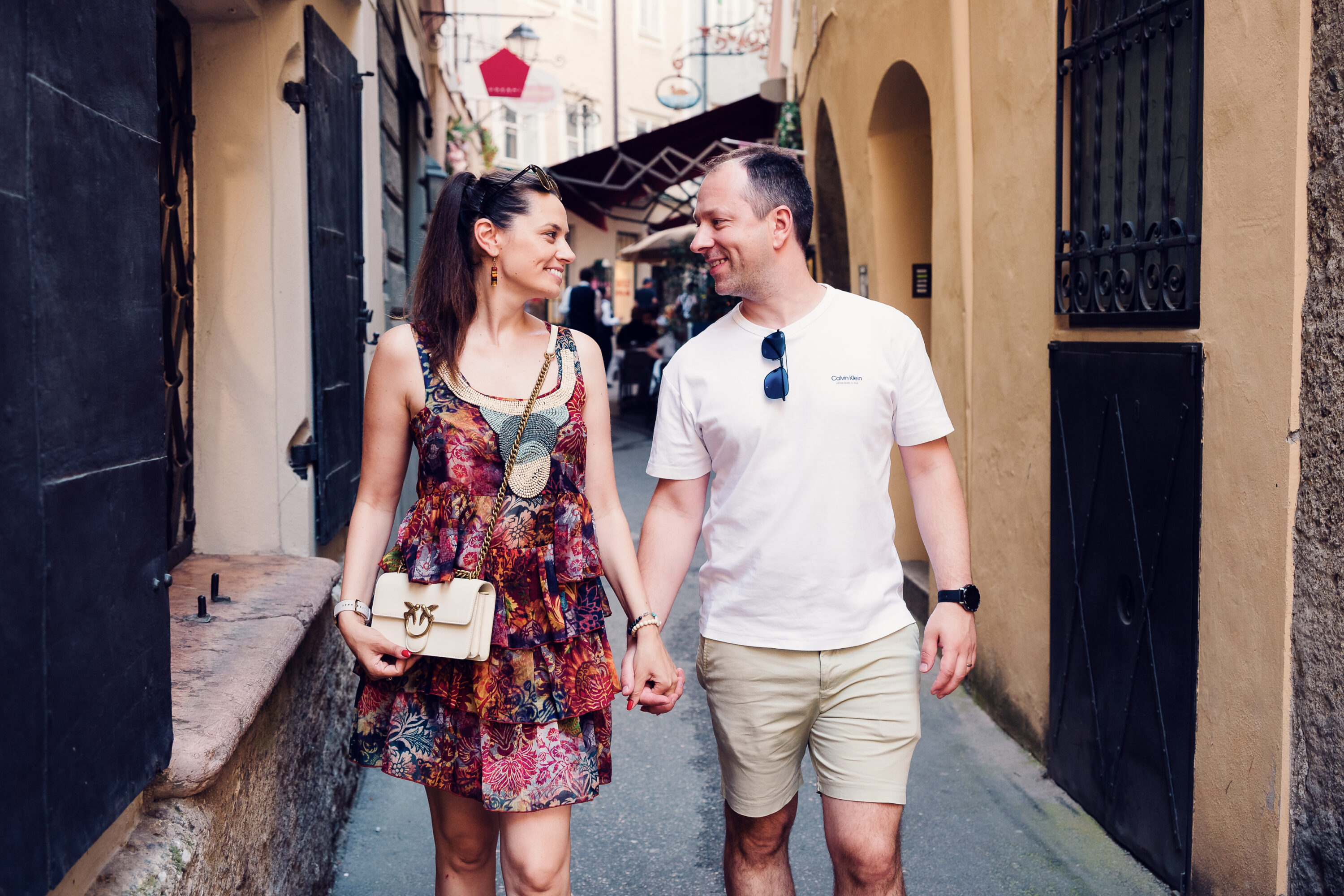
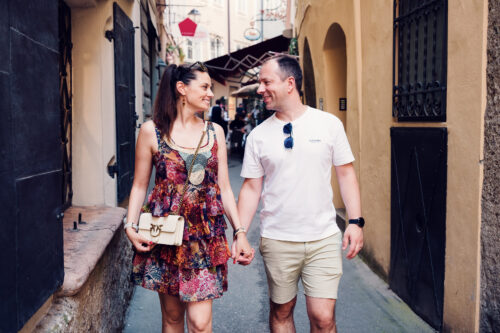
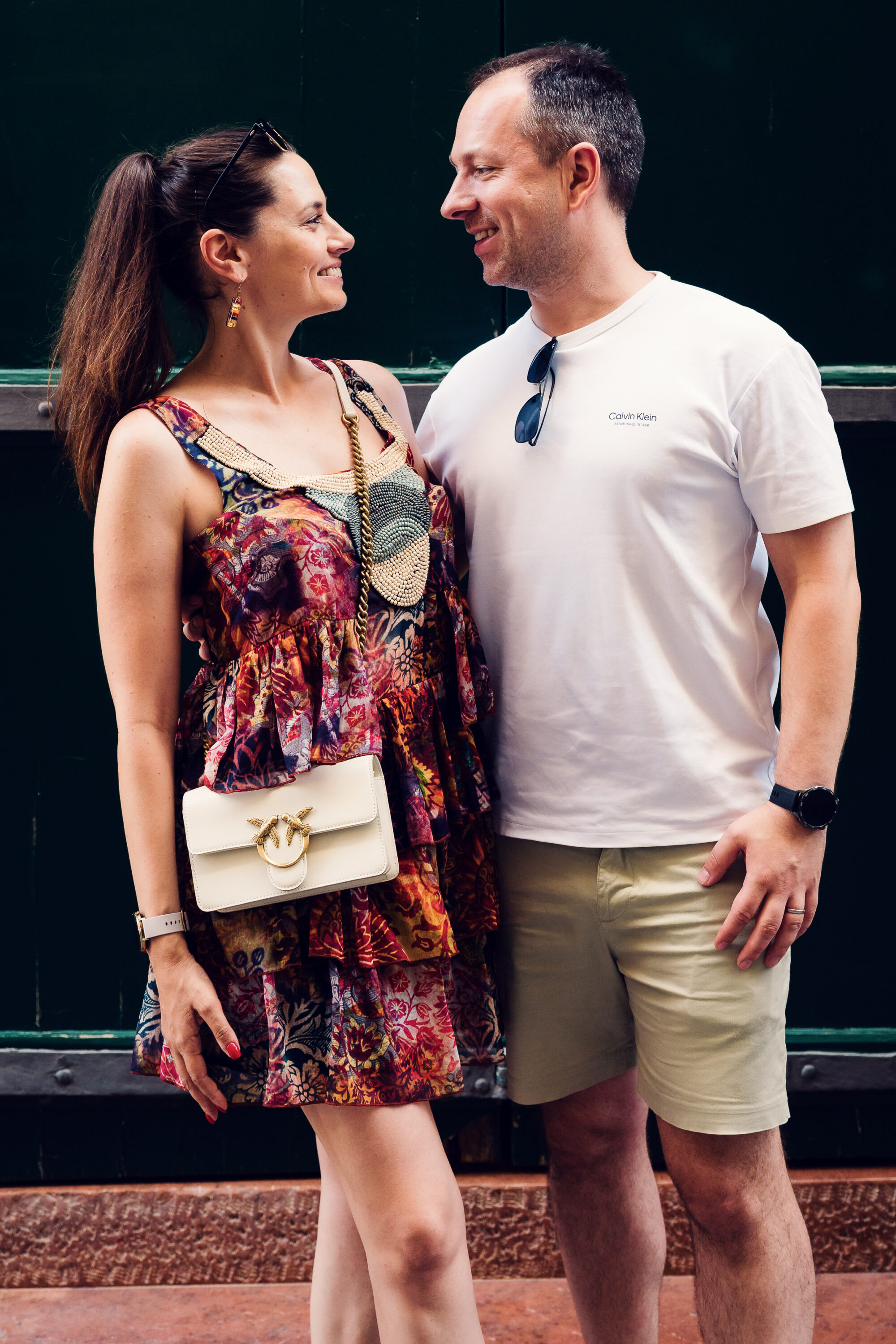
Mario and Adriana walking hand in hand through the Goldgasse lane in Salzburg.
Hand in hand through the Goldgasse, one of the narrowest lanes in Salzburg's old town, lined with wrought-iron guild signs and small cafes.

The buildings you see today are mostly 16th century, tall and narrow at five to six storeys, with the flat façades typical of Salzburg's old town. Look closely and the older fabric shows through: round-arched conglomerate-stone portals, window sills of red Adnet marble, and painted house blessings set into the upper floors, small religious panels that once asked for protection over the house and everyone in it. The house at Goldgasse 12, long home to a family of bell-founders, still wears one of these blessings. The details sit above eye level, which is why the Goldgasse repays a slow second look on the way through.

One address has an outsized place in Salzburg's coffee history. In the Reitsamerhaus at Goldgasse 5, first recorded in 1424, the French merchant Jean Fontaine received the city's first permit to serve coffee in the year 1700. The coffee house later moved around the corner to the Alter Markt, where it still trades today as the Café Tomaselli, one of the oldest cafés in Central Europe. So the next time you sit down for a Melange a minute's walk away, you're continuing a tradition that began right here on the Goldgasse.

Today the lane is part of Salzburg's UNESCO World Heritage old town, inscribed in 1996, and it is celebrated in events such as "Ein Tag in der Goldgasse" and the Goldgasse street market, when the shops open their doors and the lane fills with visitors. It remains, above all, a working street, which is the whole reason it's still worth your time.