
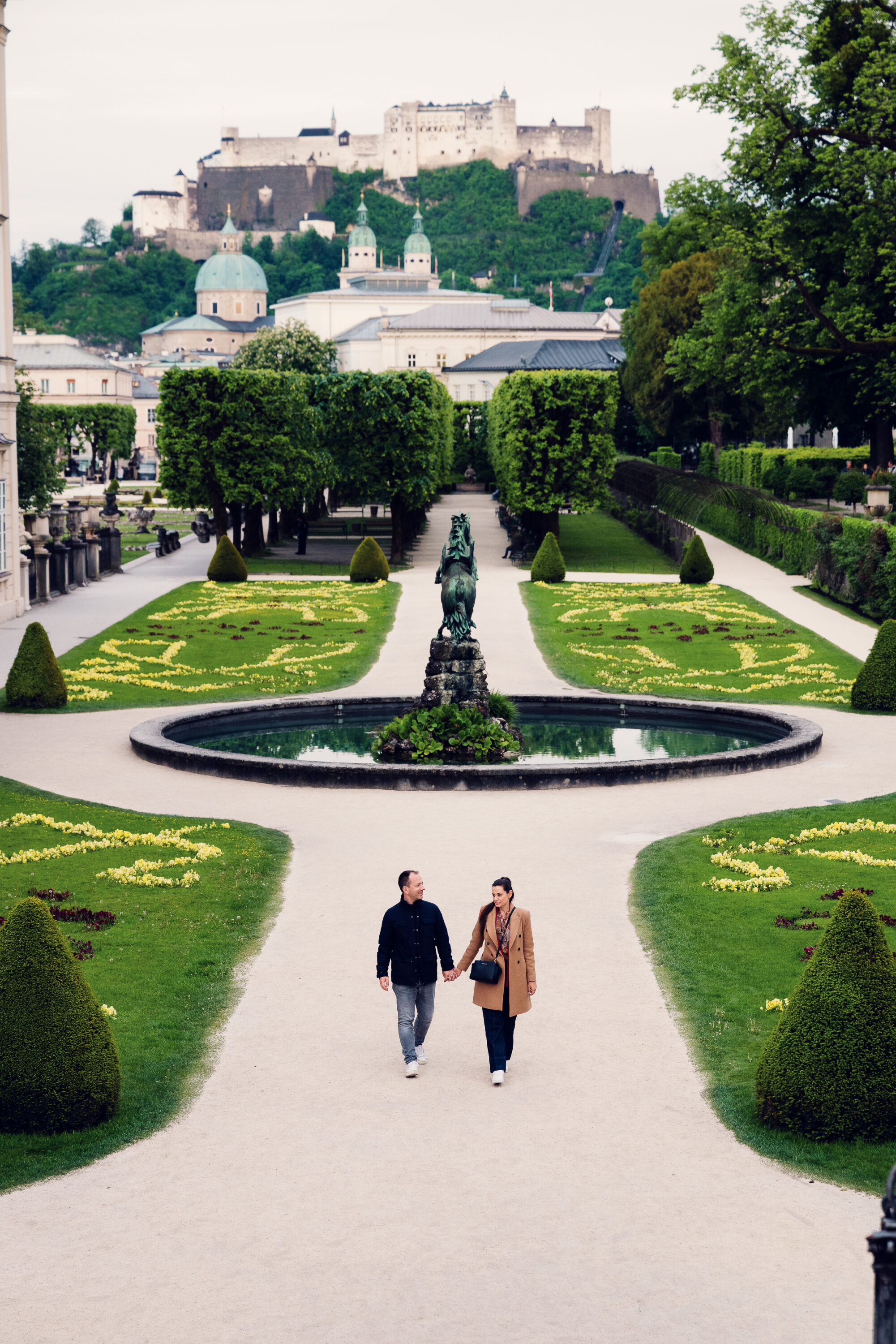

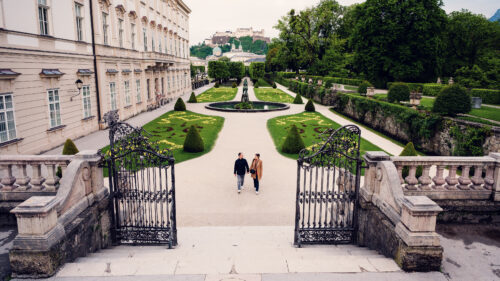
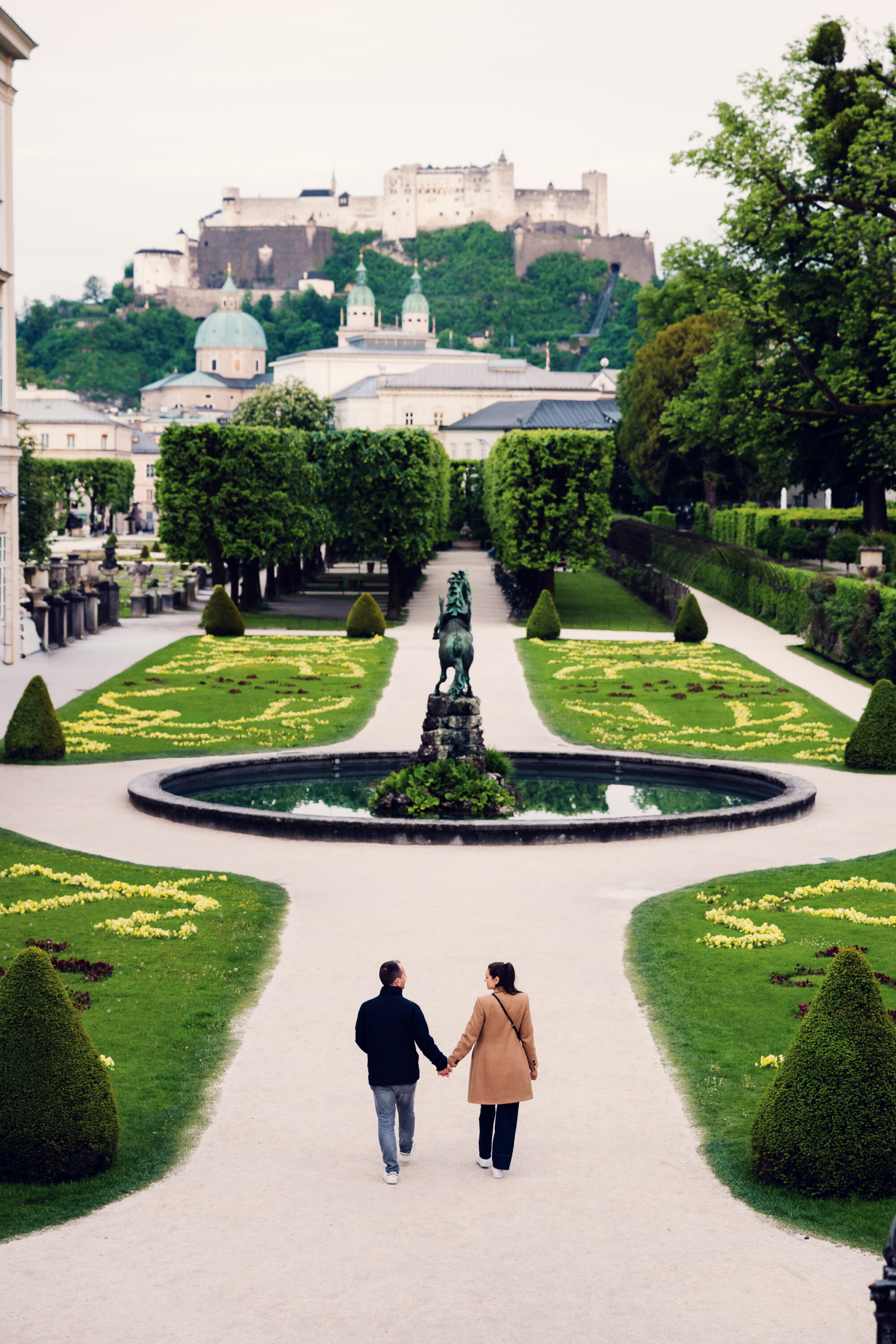

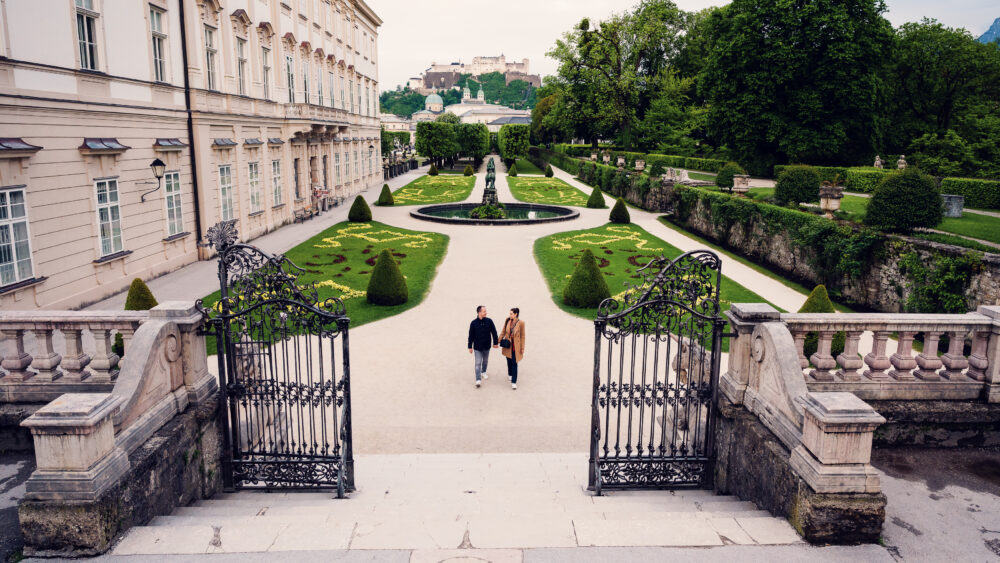
View through the open iron gate at the top of the stairs down to the Mirabell Gardens parterre with Mario and Adriana on the central path.
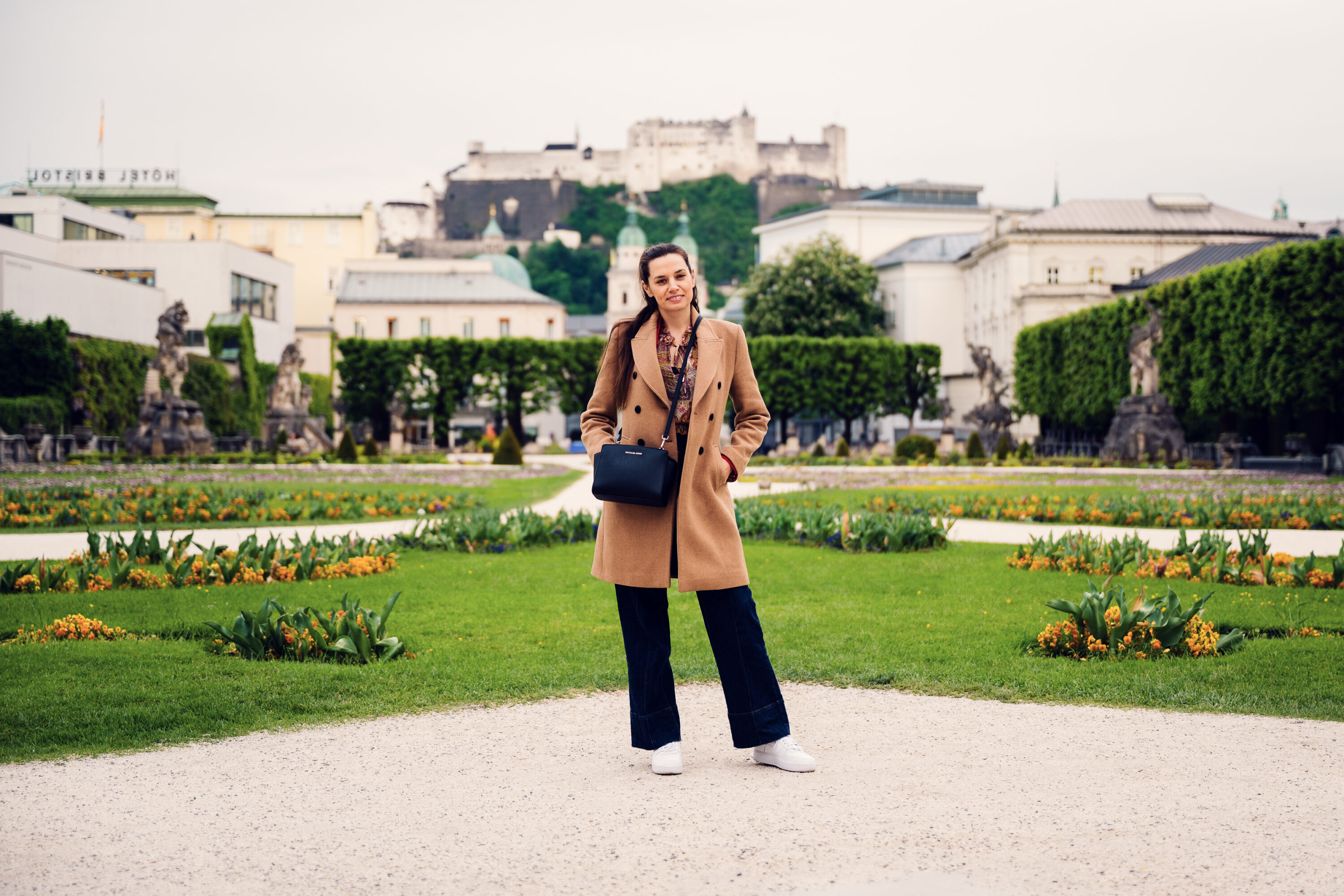
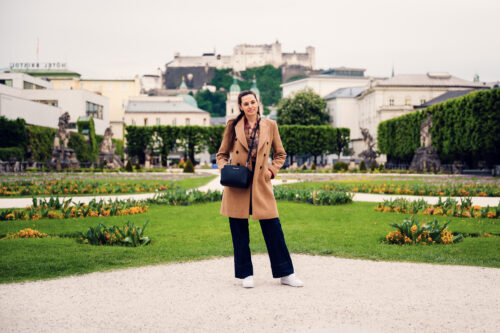
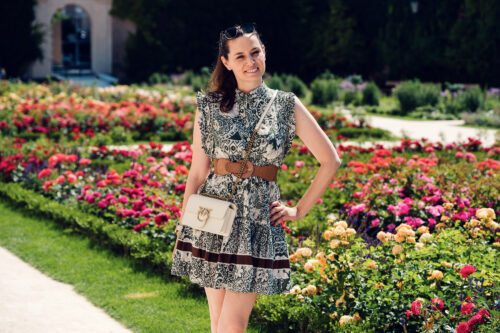
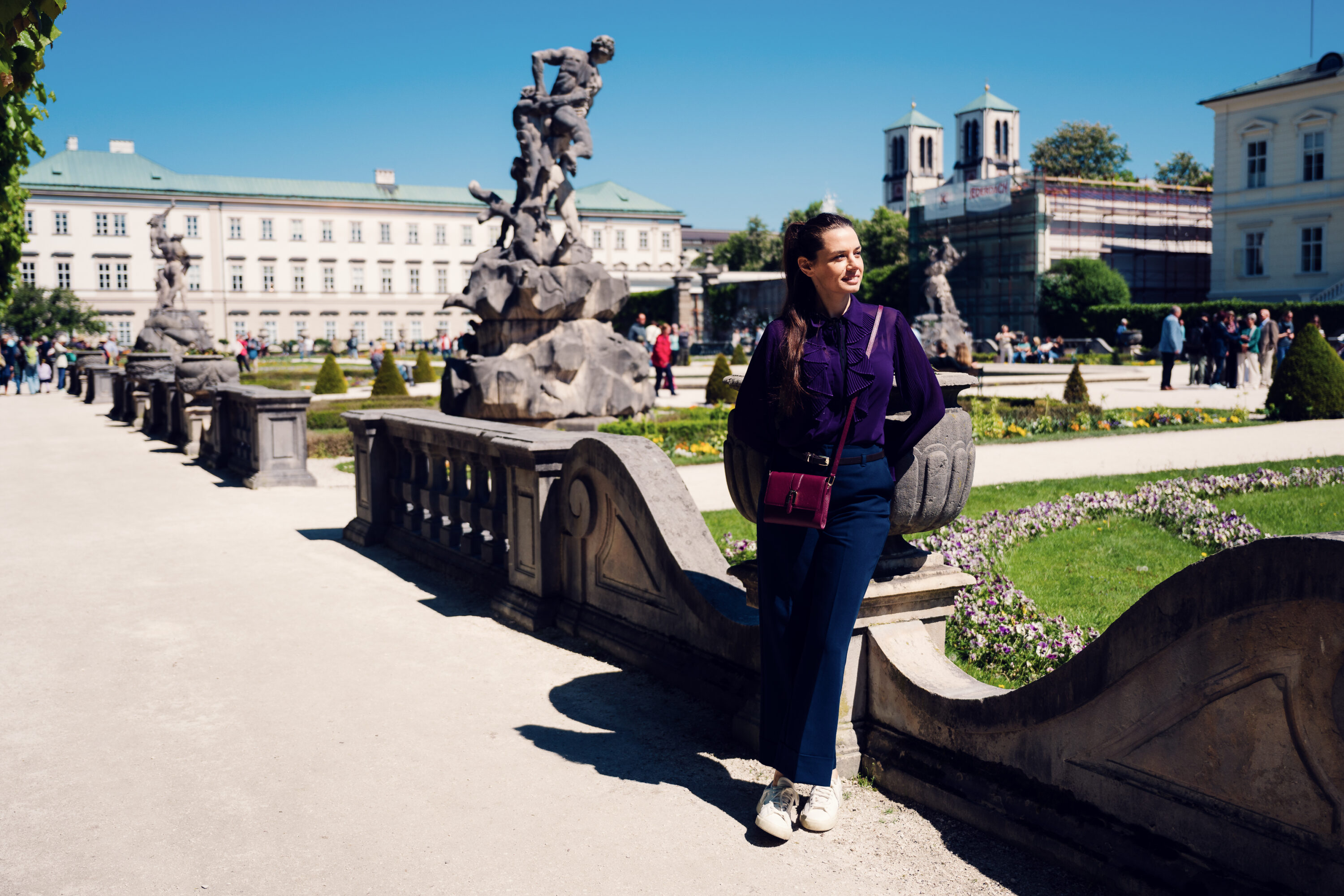
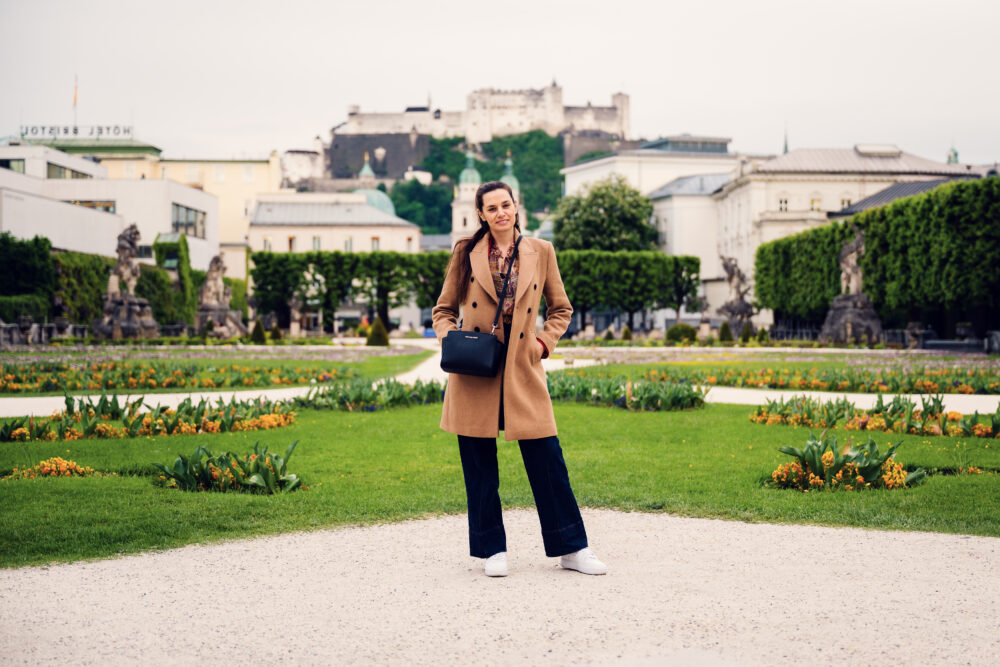
Adriana standing in the Mirabell Gardens parterre with colorful flower beds and Hohensalzburg Fortress behind her.
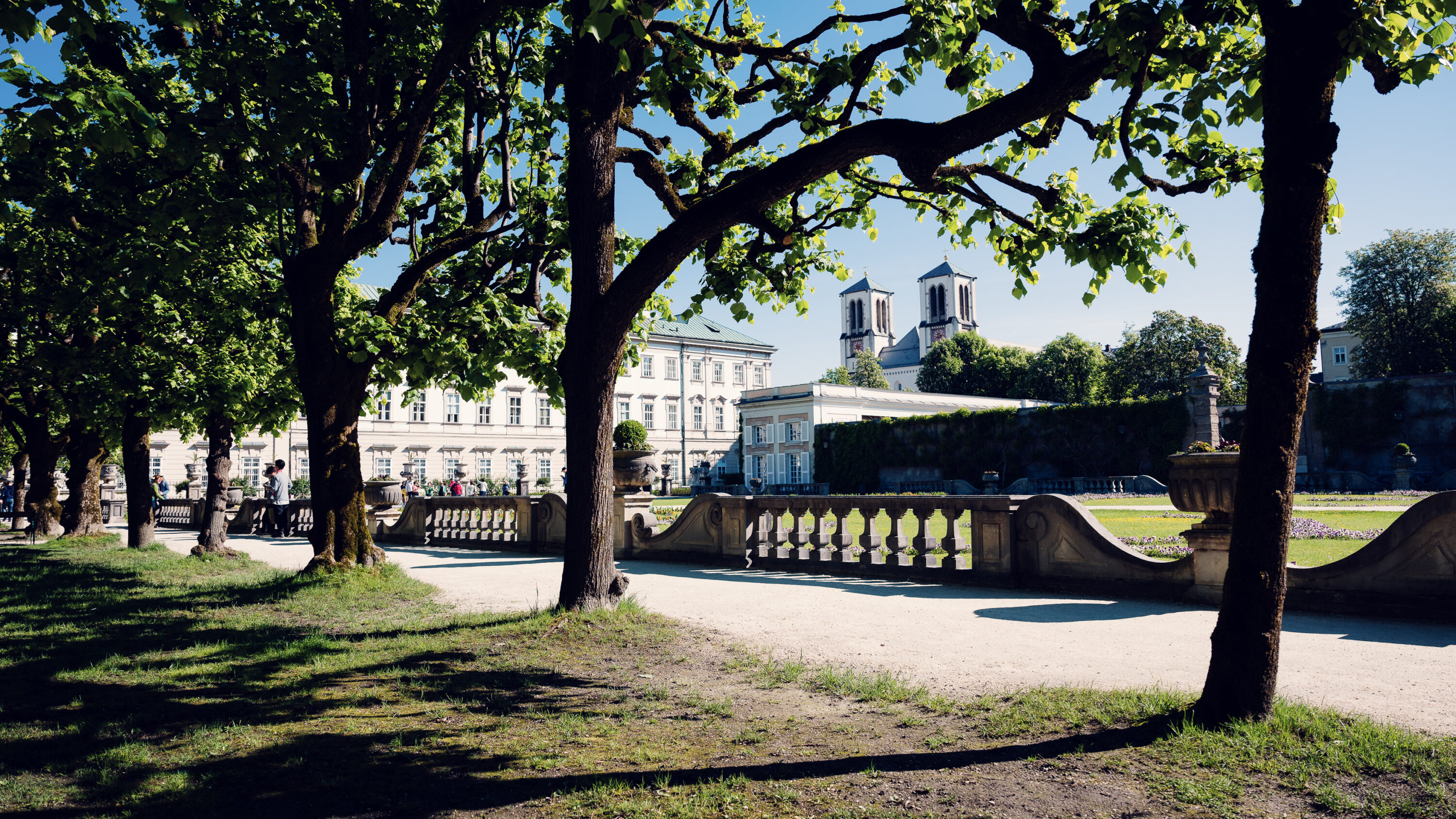
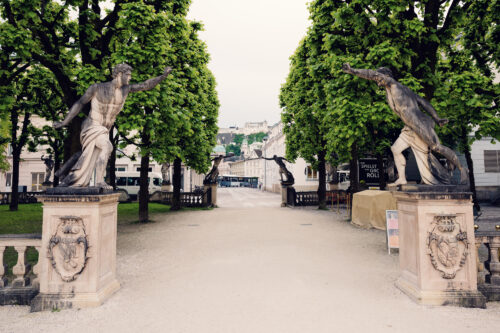
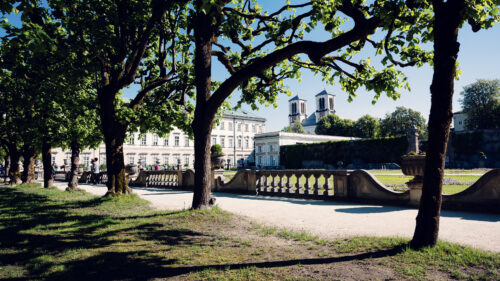
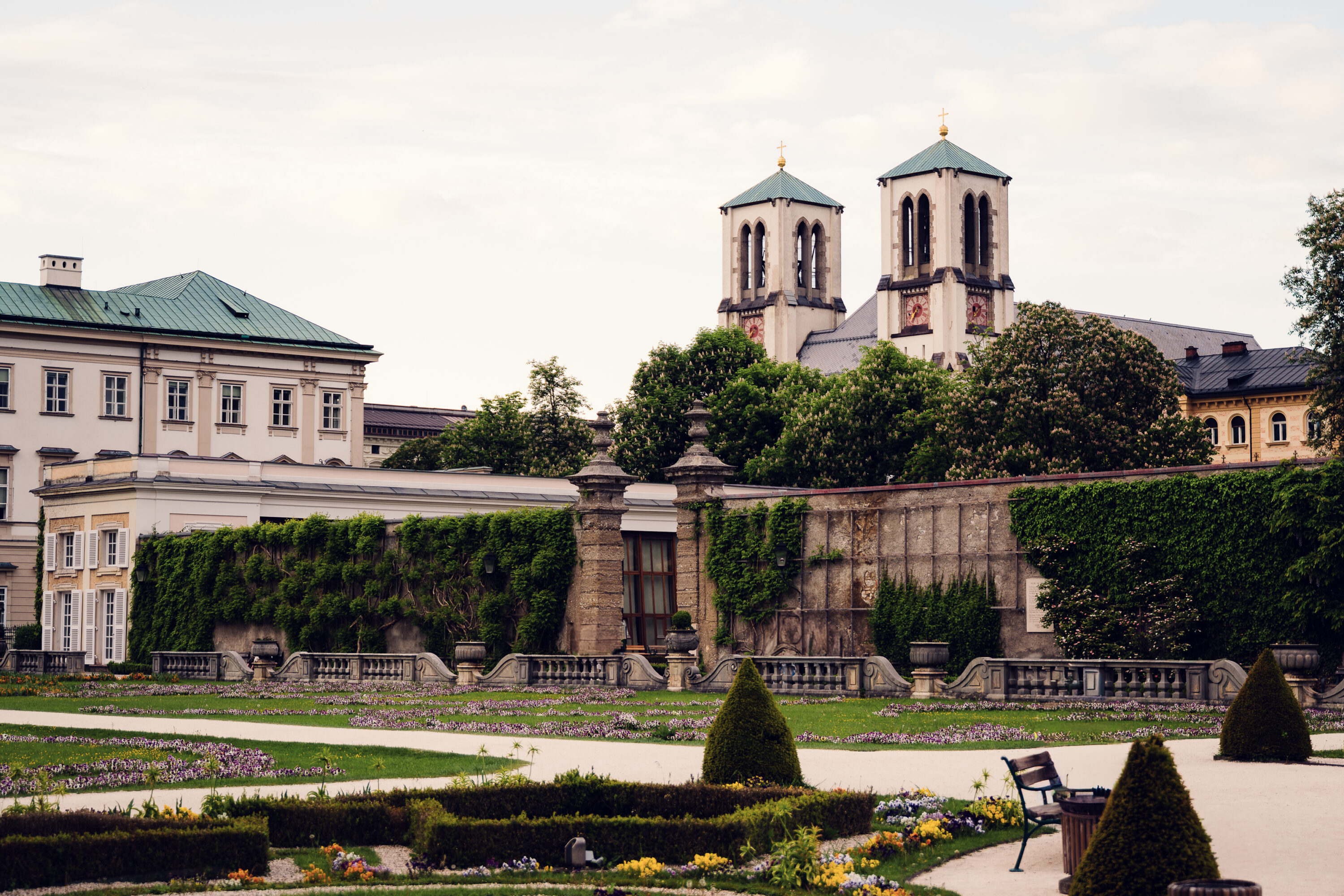
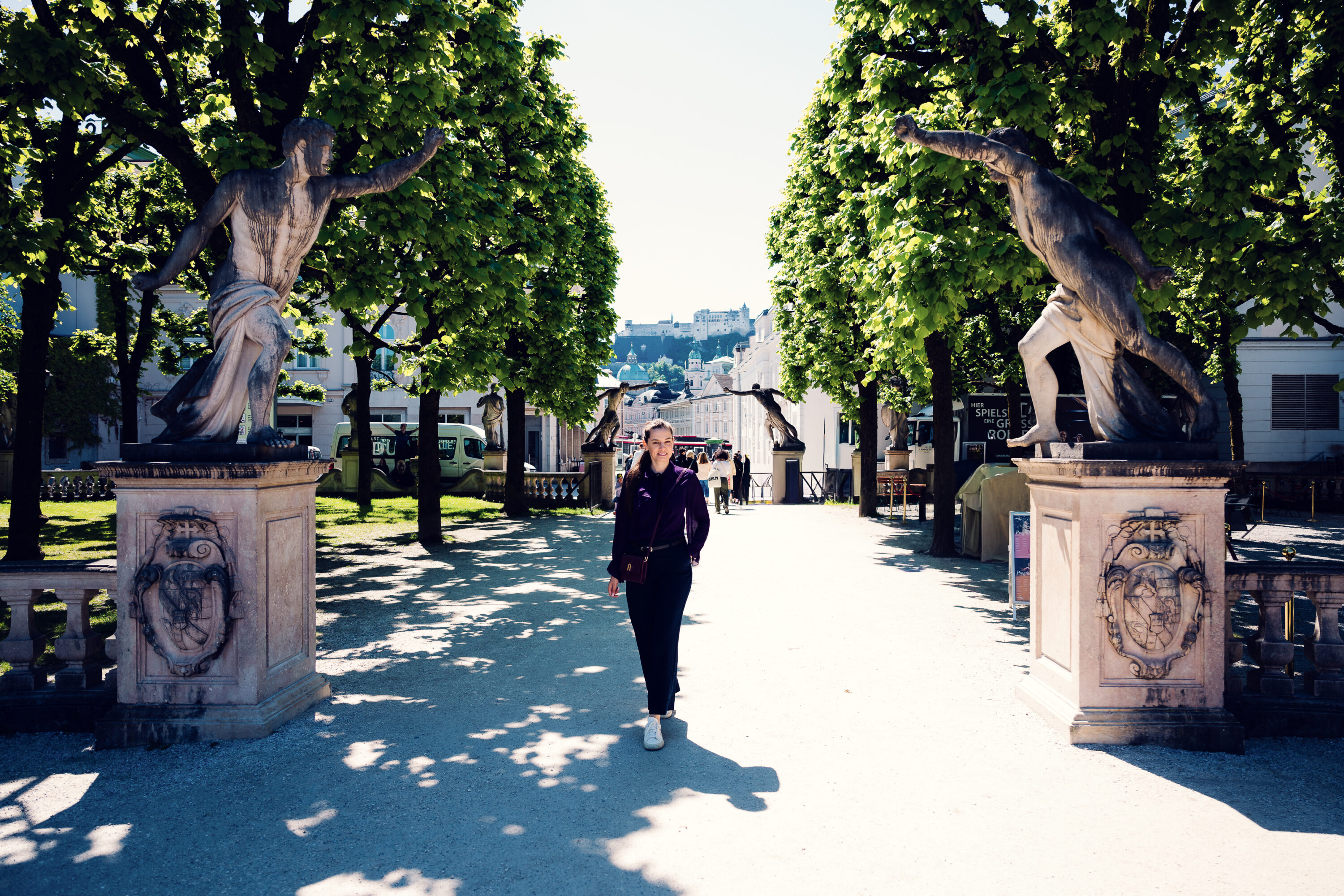
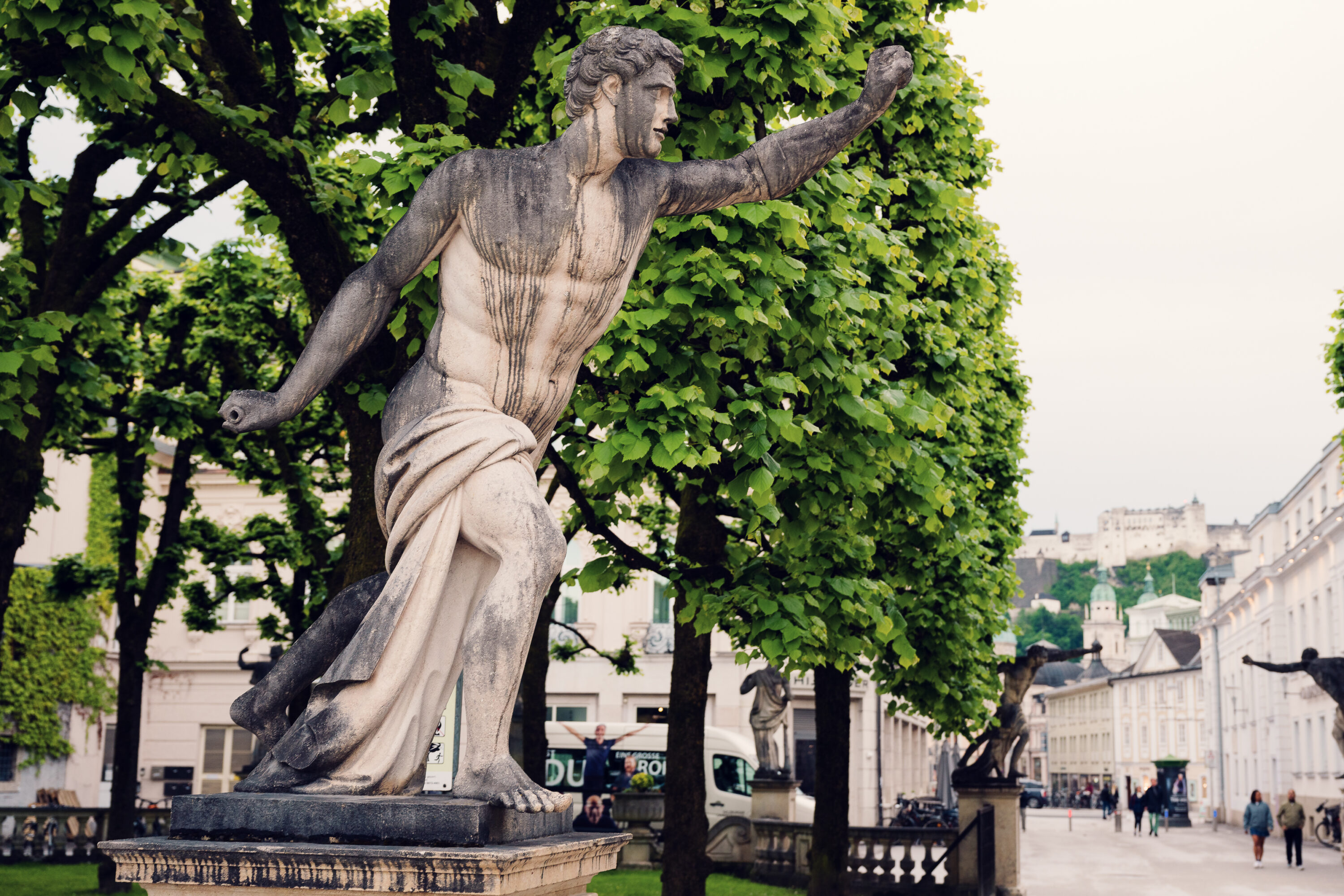
Shaded linden tree avenue in the Mirabell Gardens with a view toward the palace and the Andräkirche towers.
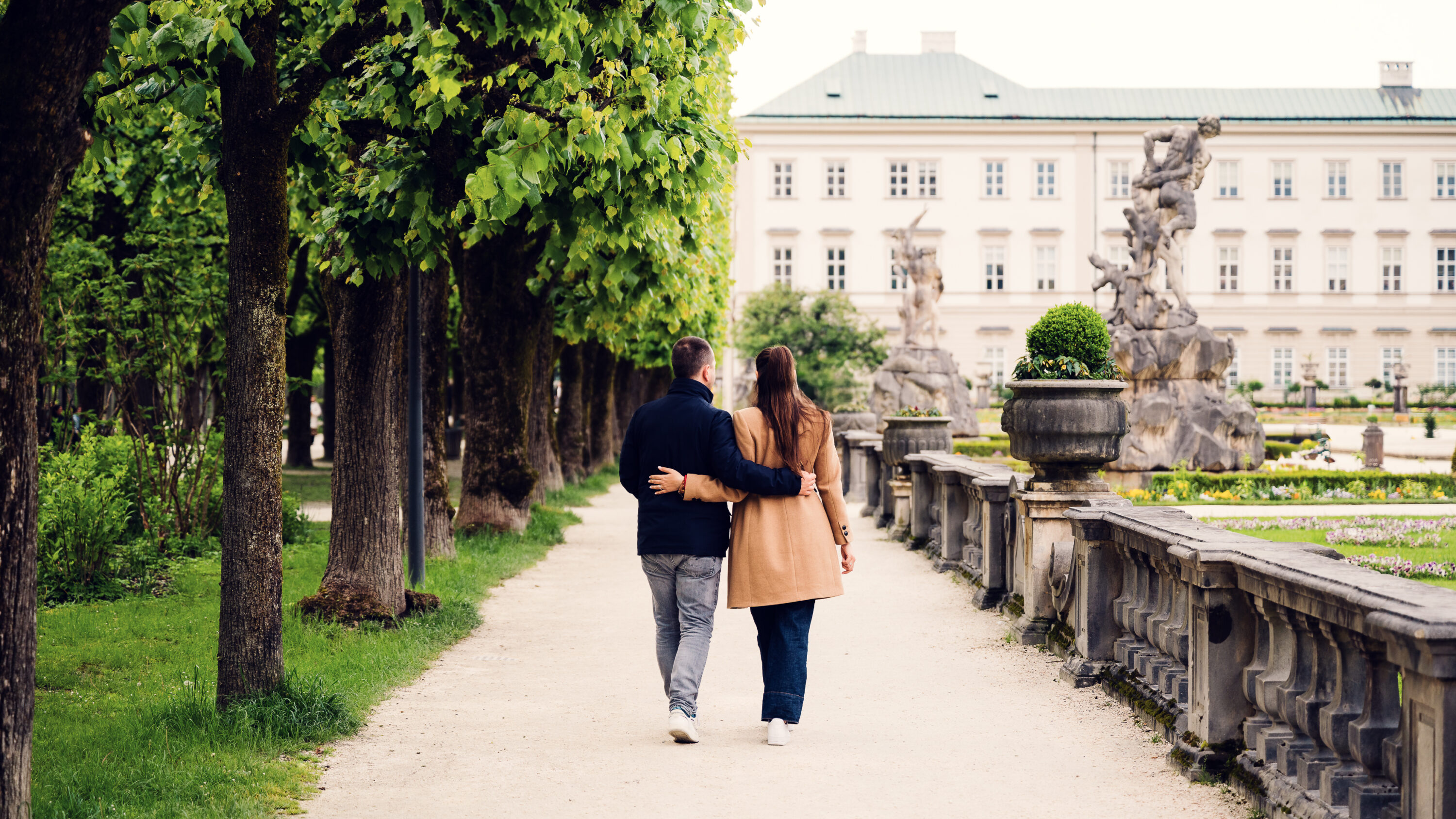
Mario and Adriana walking arm in arm along a garden path toward Mirabell Palace with baroque statues lining the balustrade.
Mario and Adriana walking hand in hand toward the Pegasus fountain in the Mirabell Gardens, the Salzburg skyline and fortress behind them.
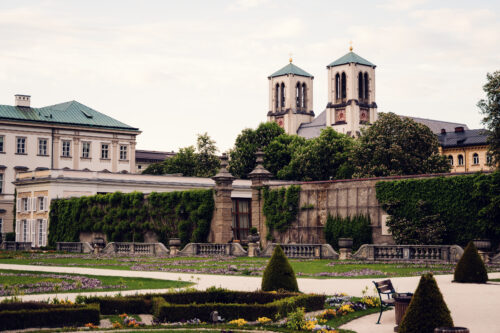
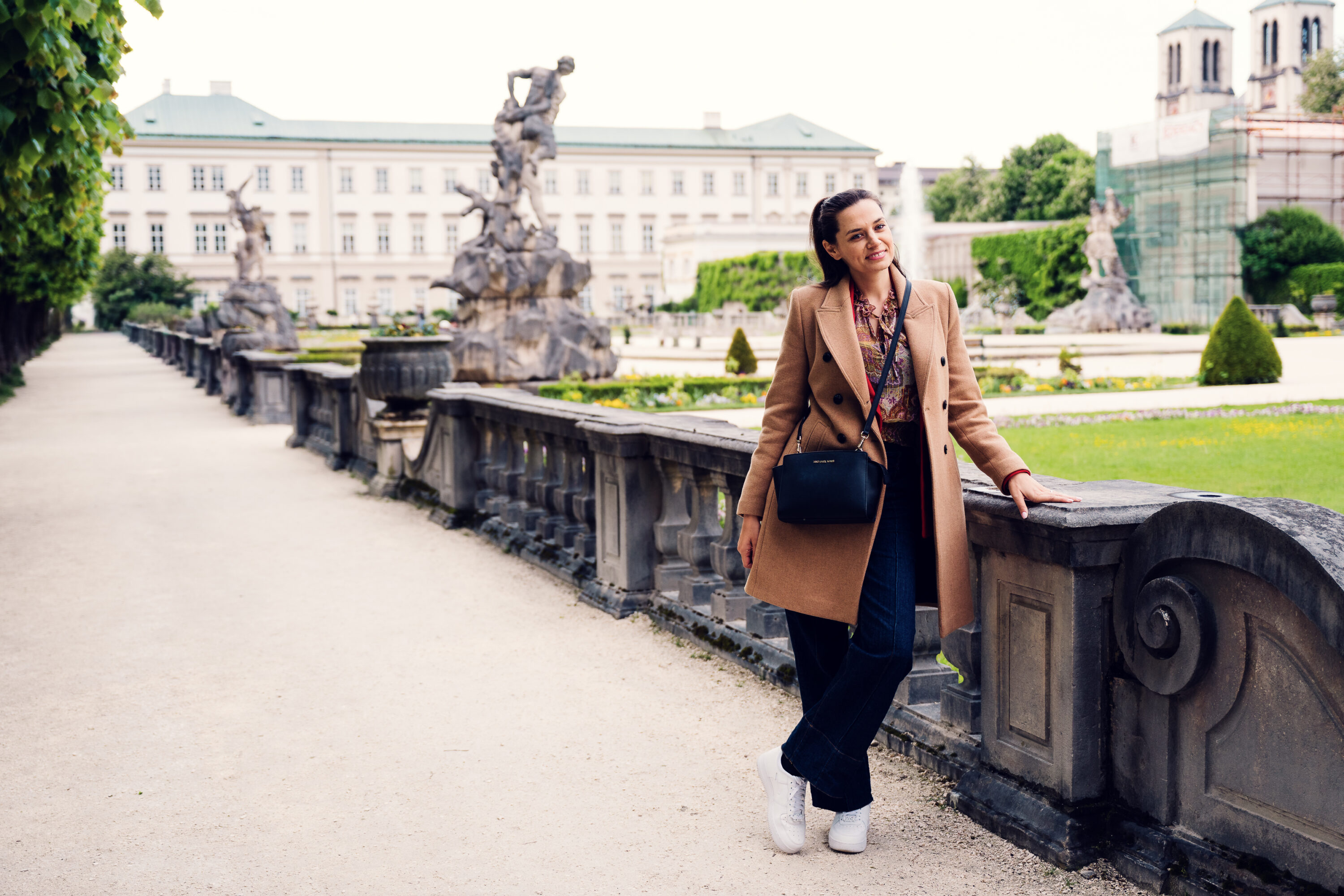
Adriana on a gravel path in the Mirabell Gardens with the palace facade and baroque statues in the background.
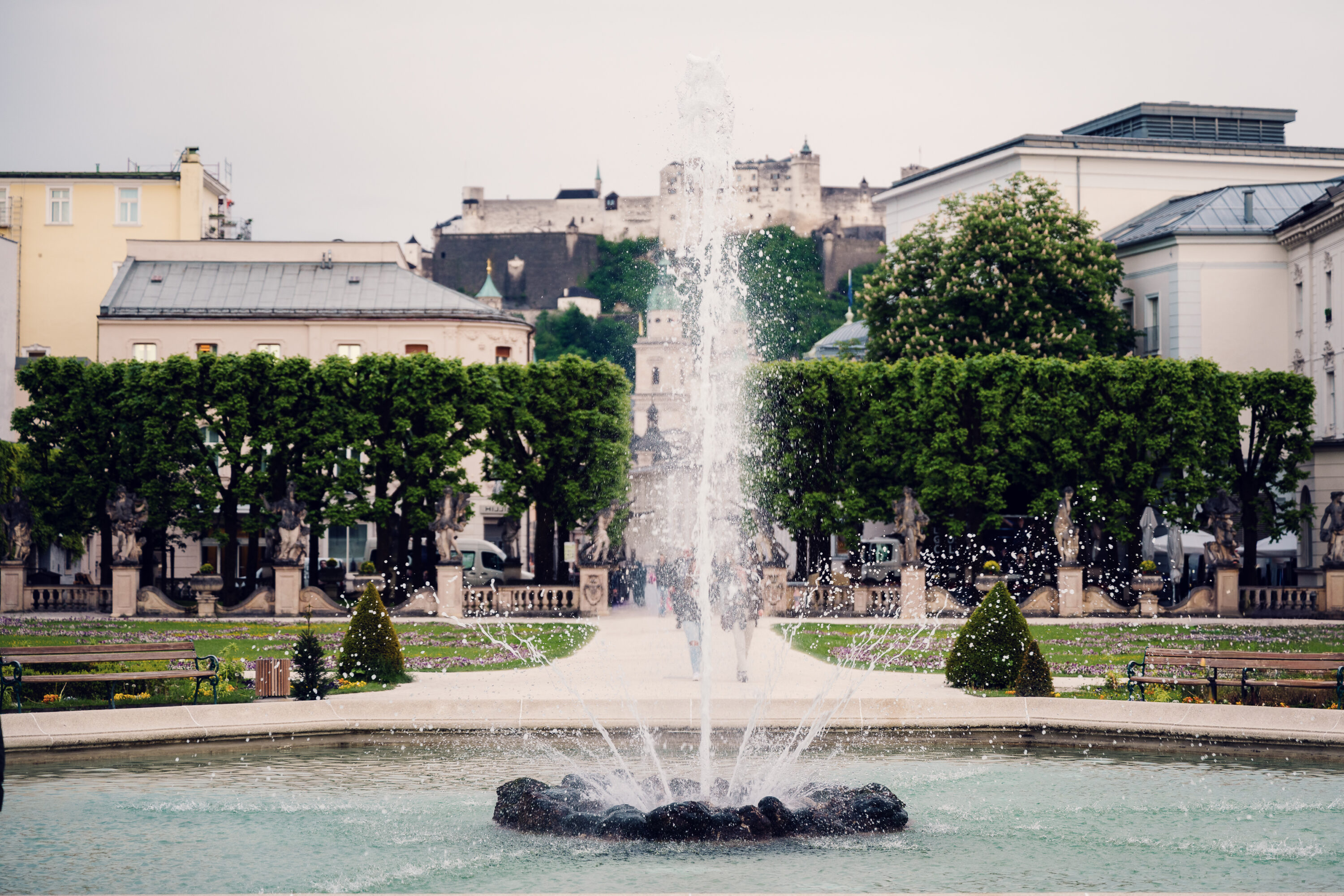
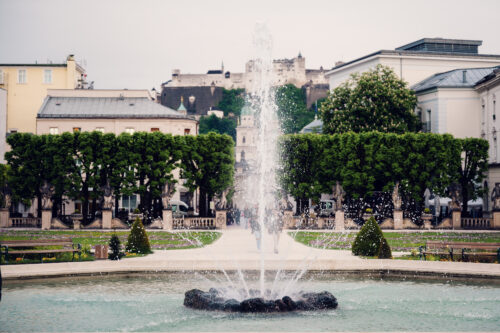
The central fountain of the Mirabell Gardens with water shooting upward, the formal parterre and Hohensalzburg Fortress in the background.
Fall in Love with

Mirabell Gardens

Mirabell Gardens is a free baroque garden in Salzburg with fountains, sculptures, fortress views, and a setting in the UNESCO-listed old town.

* Affiliate links: if you book, a small commission supports our independent work, at no extra cost to you.

01 / 04
01 / 03

Mirabell Gardens

Muvamo Must See 2026Picked by our team as one of Salzburg's essential sights.

2026

Must See

Mirabell Gardens

When a sight carries this label, it's one we'd send a friend to first. Must See is our highest distinction for sights, and our team gives it on the strength of our own visits, without fixed criteria or a set number of places. It can't be bought or applied for. The label shows the current year, and a sight that no longer holds up loses it.

See all Must See sights in Salzburg

Admission
Free
Plan for
90 mins
outdoors
Where
Mirabell & Kapuzinerberg

Mirabell Gardens is one of Salzburg’s most visited landmarks and part of the city’s UNESCO World Heritage Site. Located on the right bank of the Salzach, directly behind Mirabell Palace, the garden offers a striking visual axis from the Grand Parterre straight through to the Salzburg Cathedral and Hohensalzburg Fortress on the hilltop beyond.

The garden was originally laid out in the early 1600s as part of a palace built for the prince-archbishop’s companion. Its current baroque form dates to a redesign by Johann Bernhard Fischer von Erlach in the late 17th century. Fountains, mythological statues, a hedge theater, the oldest dwarf garden in Europe, and an orangery all sit within a compact space that takes roughly an hour to explore properly.

Film fans will recognize the setting from the “Do-Re-Mi” sequence in The Sound of Music. Beyond the Hollywood connection, the garden is genuinely one of the finest baroque gardens in Central Europe – and it’s completely free to visit year-round. The adjacent Marble Hall inside the palace hosts regular classical concerts in a room where Mozart himself once performed.

Plan your visit

Opening Hours
Daily 07:00 - 22:00All hours
Getting there
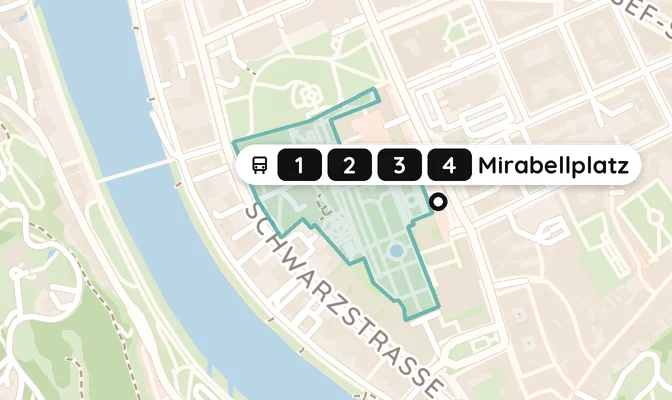
Mirabellplatz 3, 5020 SalzburgBus 1 2 3 4 Mirabellplatz · 2 min walkMirabell & Kapuzinerberg
Good to know
Website · stadt-salzburg.at

Opening hours

Mirabell Gardens

Monday07:00 - 22:00
Tuesday07:00 - 22:00
Wednesday07:00 - 22:00
Thursday07:00 - 22:00
Friday07:00 - 22:00
Saturday07:00 - 22:00
Sunday07:00 - 22:00

From 1 May: Daily 05:00 - 23:00

Changes in the next 12 months

Seasons

1 May - 30 SepDaily 05:00 - 23:00
from 1 OctDaily 07:00 - 22:00

Parts of the garden are closed in winter.

Tours & experiences

Mirabell Gardens


Muvamo Opinion

Mirabell Gardens stands out among city-center parks because it offers far more than a quick look at its main axis. The Grand Parterre is the main focal point, with its central fountain, baroque parterre layout, and four sculptural groups by Ottavio Mosto symbolizing the four elements. Many visitors stop there and leave too quickly, but that means missing some of the garden’s most rewarding corners.

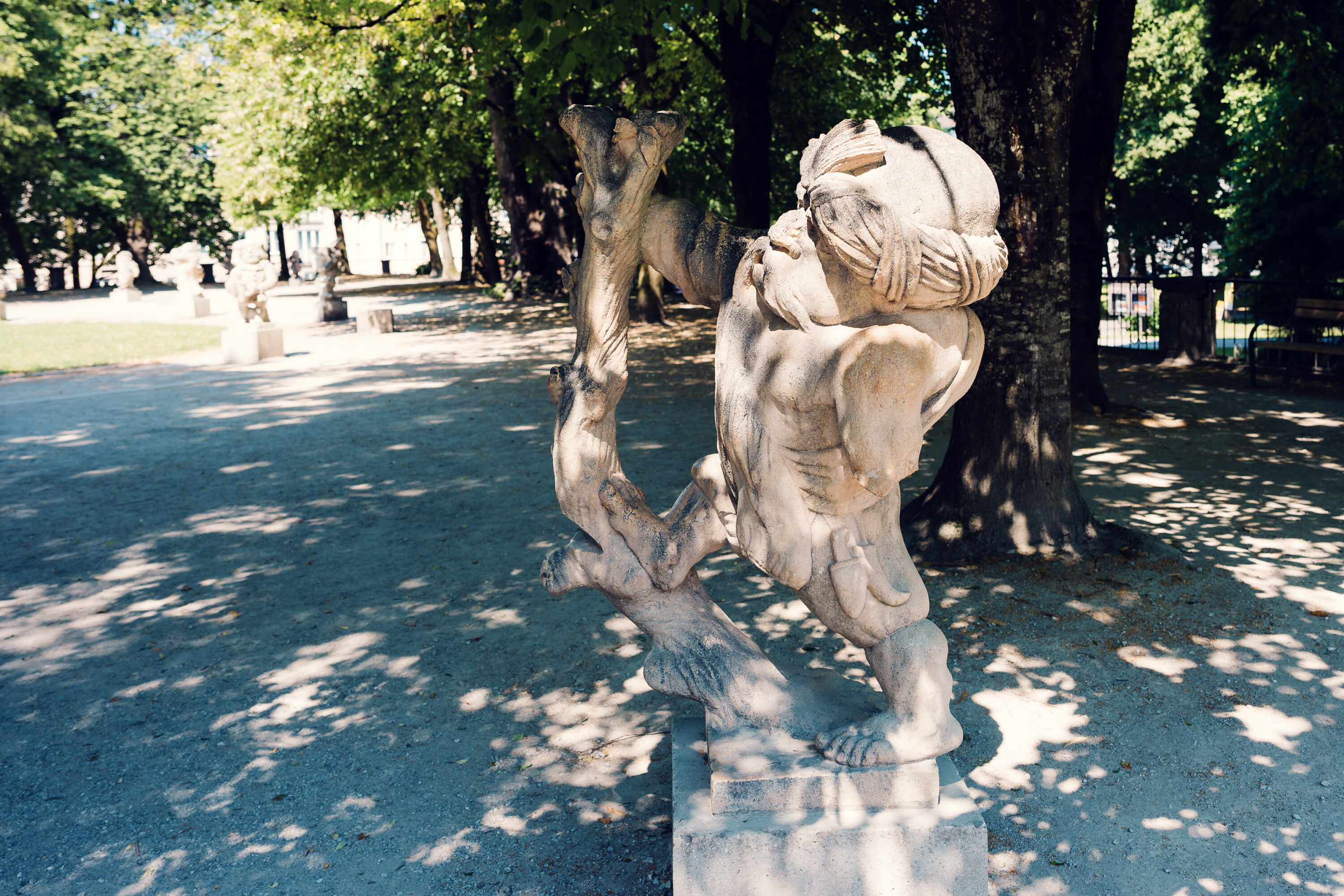
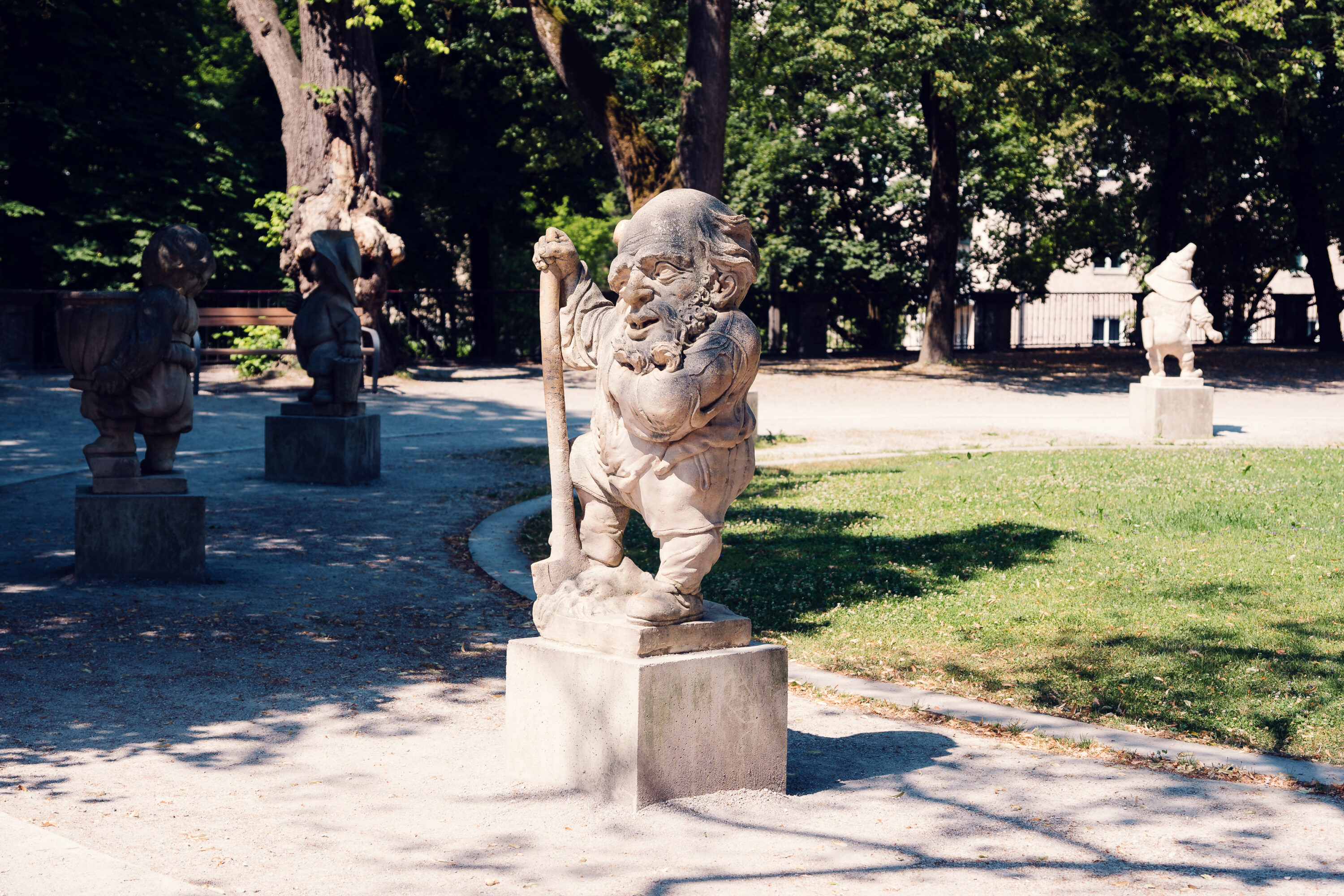
Within a few minutes’ walk, the atmosphere changes. The Dwarf Garden (Zwergerlgarten) is one of the garden’s most distinctive features, with 17 surviving figures from an original set of 28, all carved from white Untersberg marble. They are eccentric, expressive, and full of character. Nearby, the Hedge Theater is one of the oldest hedge theaters north of the Alps. Along the south side of the palace, the Rose Garden is especially beautiful when the roses are in full bloom.

If your timing allows, make the Marble Hall a priority. The staircase leading up to it is lined with marble putti in all kinds of poses, and the hall itself is genuinely one of the most beautiful rooms in Austria. It’s free to walk through during opening hours, and if you can catch one of the evening palace concerts, do it – the acoustics in that room are extraordinary.

A practical tip: Mirabell Gardens becomes much busier by mid-morning. For a quieter experience, arrive right at opening, around 6 am in summer. Later in the morning, especially in peak season, the paths fill with walking tours and Sound of Music groups. That lively atmosphere is part of the charm, but for calm and space, earlier is better.

Recommended tours & experiences

Helpful Hints

  • The Marble Hall is free to visit but has limited hours. It is not open for visits during special events, so it’s worth checking ahead.
  • The Dwarf Garden and Hedge Theater close during winter months. Plan for spring through autumn if these are on your list.
  • Nearest parking is the Mirabell Congress Garage on Faberstrasse. Bus lines 1, 2, 3, 5, 6, and 25 stop at Mirabellplatz.

Gastronomic Discoveries

  • For a coffee break near Mirabell Palace, Café Konditorei Fürst at Mirabellplatz is the most straightforward pick. This classic Salzburg café is known for its pastries and for serving the original Salzburger Mozartkugel.
  • For concerts with dinner, a combined dinner and concert package at the Sheraton Grand pairs Austrian cuisine with the Marble Hall experience.

Hidden Gems

  • From the Rose Hill steps, where the final moments of the “Do-Re-Mi” sequence in The Sound of Music were filmed, the view back across Mirabell Gardens toward the palace is one of Salzburg’s classic postcard scenes.

Our Little Extras

  • Salzburg’s main train station is about a 10 to 15-minute walk from Mirabell Gardens, making it an easy first stop if you are arriving by train or have a short layover.
  • Wedding ceremonies in the Marble Hall are held regularly on Tuesday and Friday mornings and on Saturdays. If you visit Mirabell Gardens during those hours, you may spot a bridal party on the Angel Staircase.
Photo Spots & POIs
Adriana standing in the Mirabell Gardens parterre with colorful flower beds and Hohensalzburg Fortress behind her.

Grand Parterre

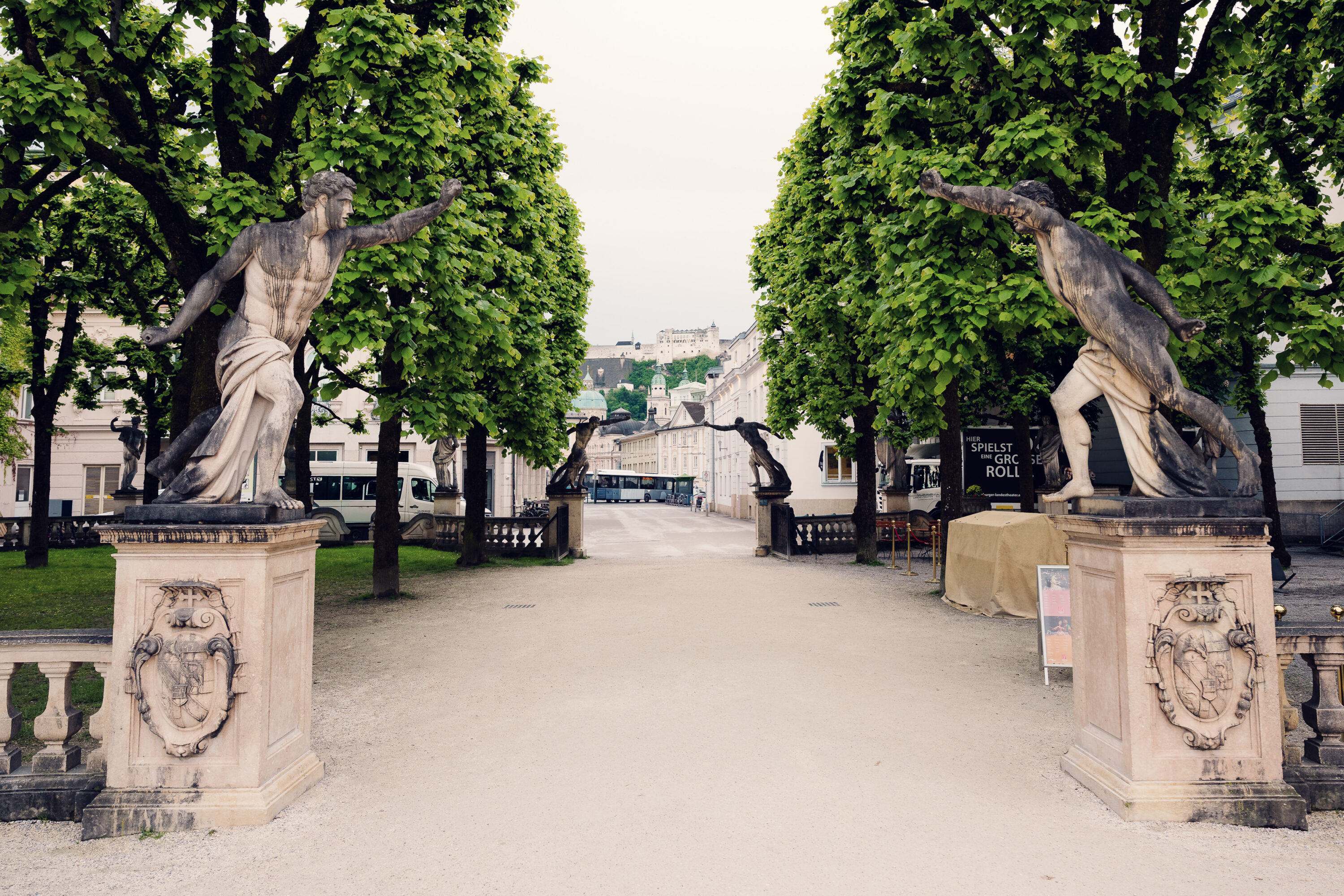
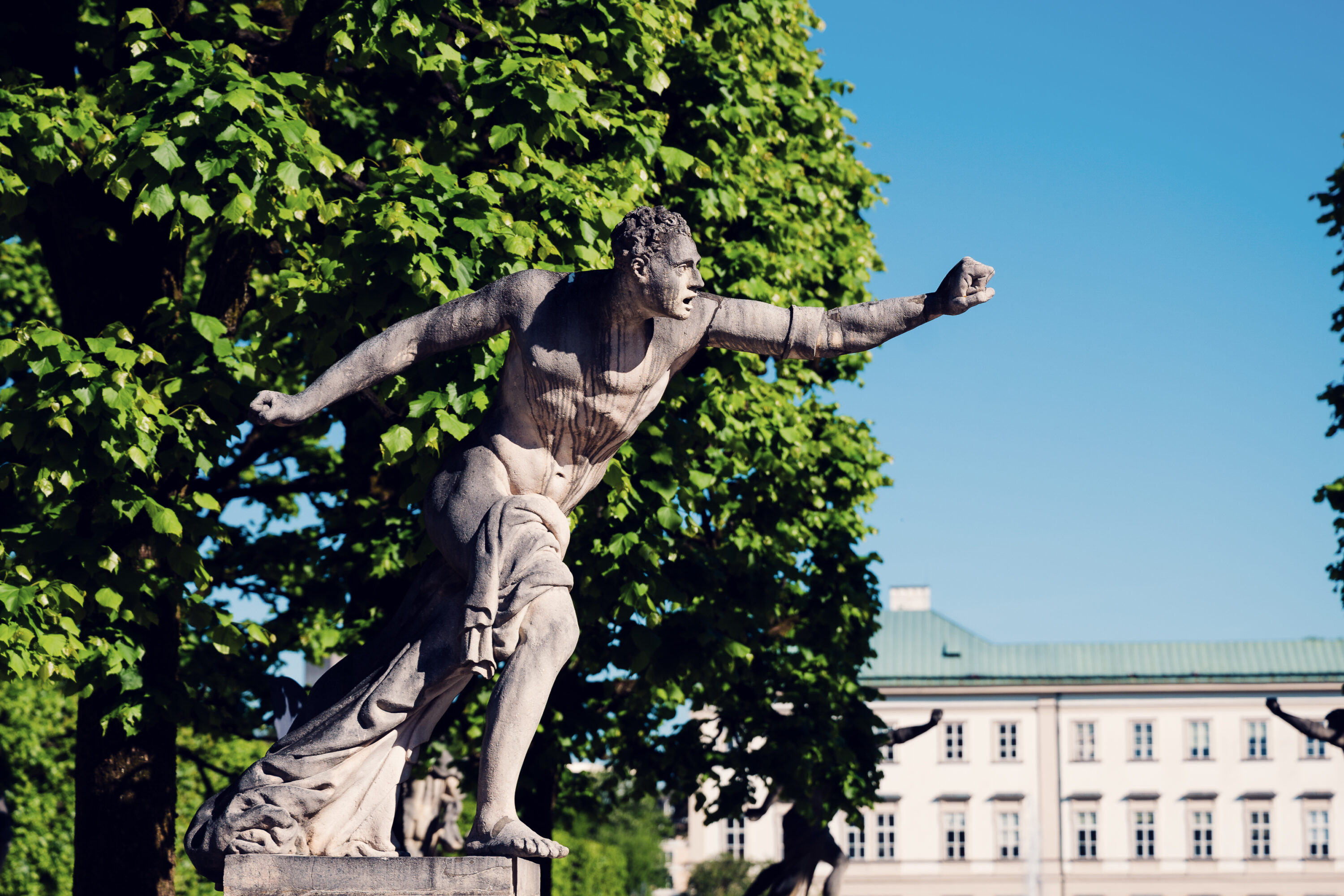
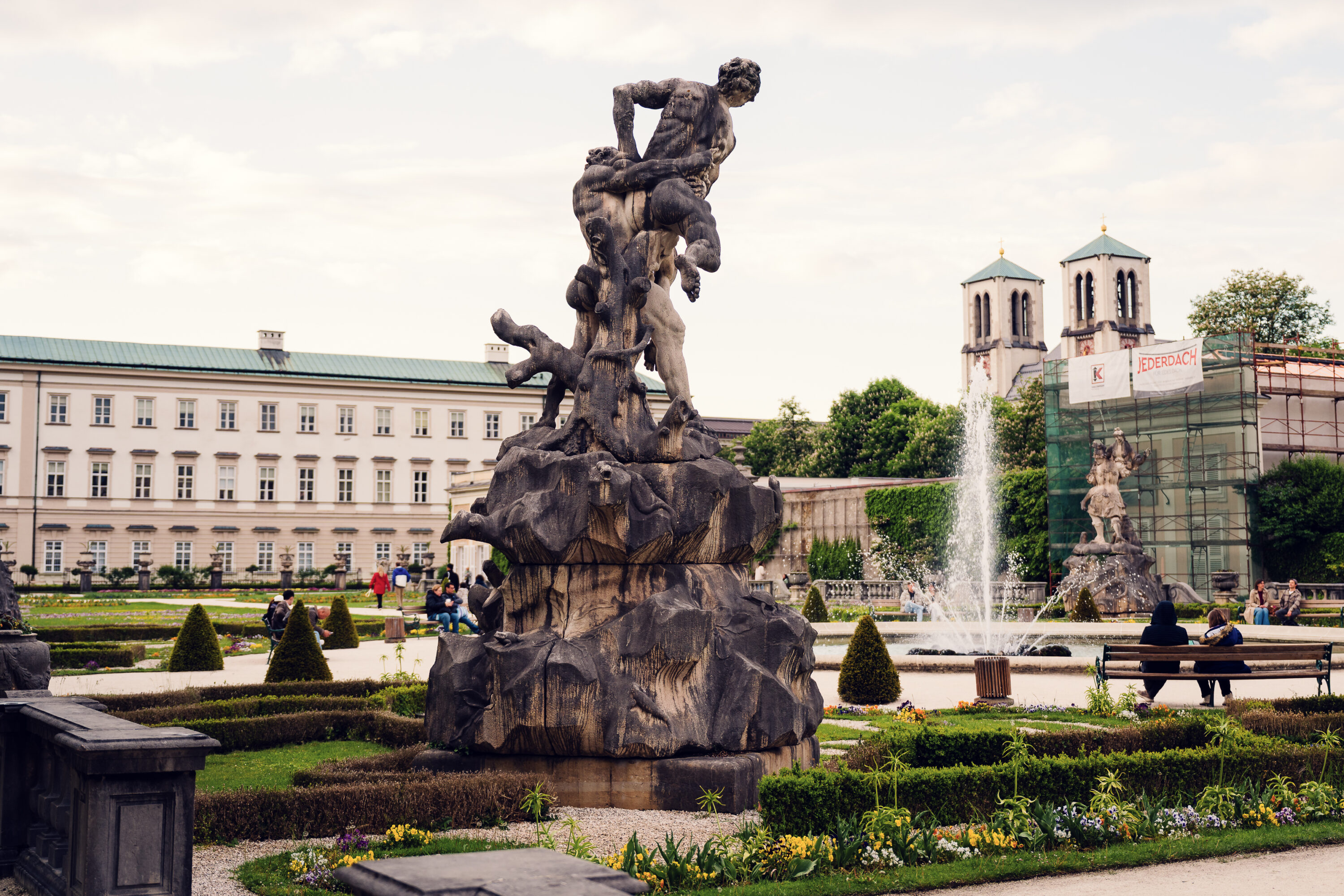
The central axis does all the work here: flowerbeds, the Große Fontäne and Hohensalzburg Fortress line up in a single frame. Four figure pairs by Ottavio Mosto surround the fountain basin, carved around 1690, each showing one person carrying another to rescue, abduct or defeat them: Paris and Helena, Aeneas and Anchises, Hercules and Antaeus, Hades and Persephone. They stand primarily for the four elements, though the symbolism was designed to be read more than one way. The marble balustrades and vases follow designs by Johann Bernhard Fischer von Erlach, who planned 28 statues of gods and heroes for the garden.

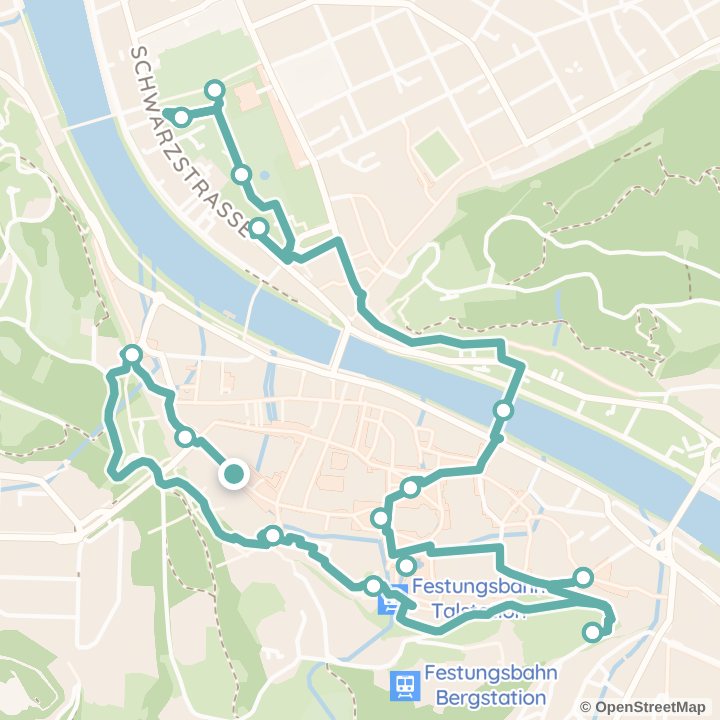
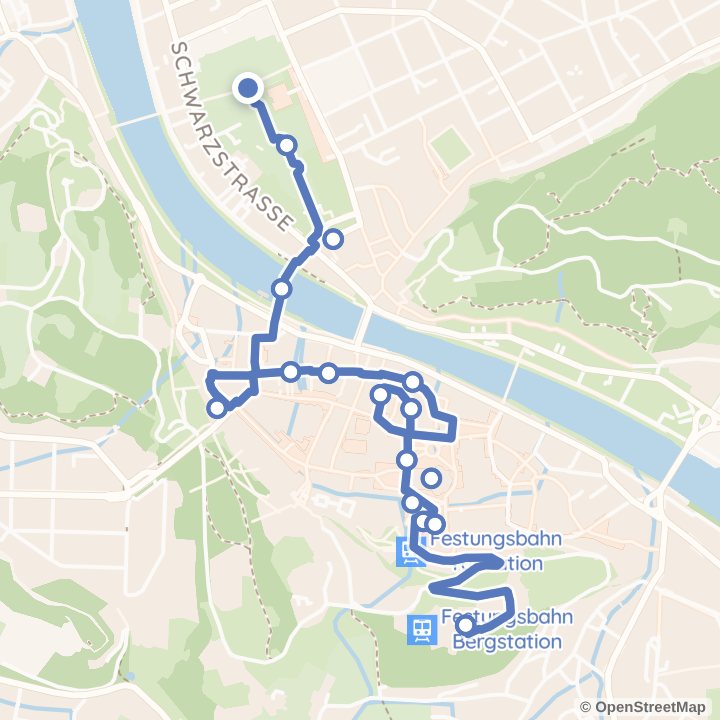
Map
Photos
View through the open iron gate at the top of the stairs down to the Mirabell Gardens parterre with Mario and Adriana on the central path.

Do-Re-Mi Steps

The broad staircase at the northwestern edge of the garden, flanked by two stone unicorns, the heraldic animals of the Thun archbishops. It's the closing location of the Do-Re-Mi number in The Sound of Music (1965): on Broadway, Rodgers and Hammerstein had staged the song in the hallway of the von Trapp villa, and director Robert Wise broke it open into a montage across sixteen Salzburg locations, ending here with Julie Andrews at the top of the steps and the children climbing them as a scale. The Pegasus Fountain they circle earlier in the sequence is right below. Come before 9 am if you want the steps empty.

Map
Photos
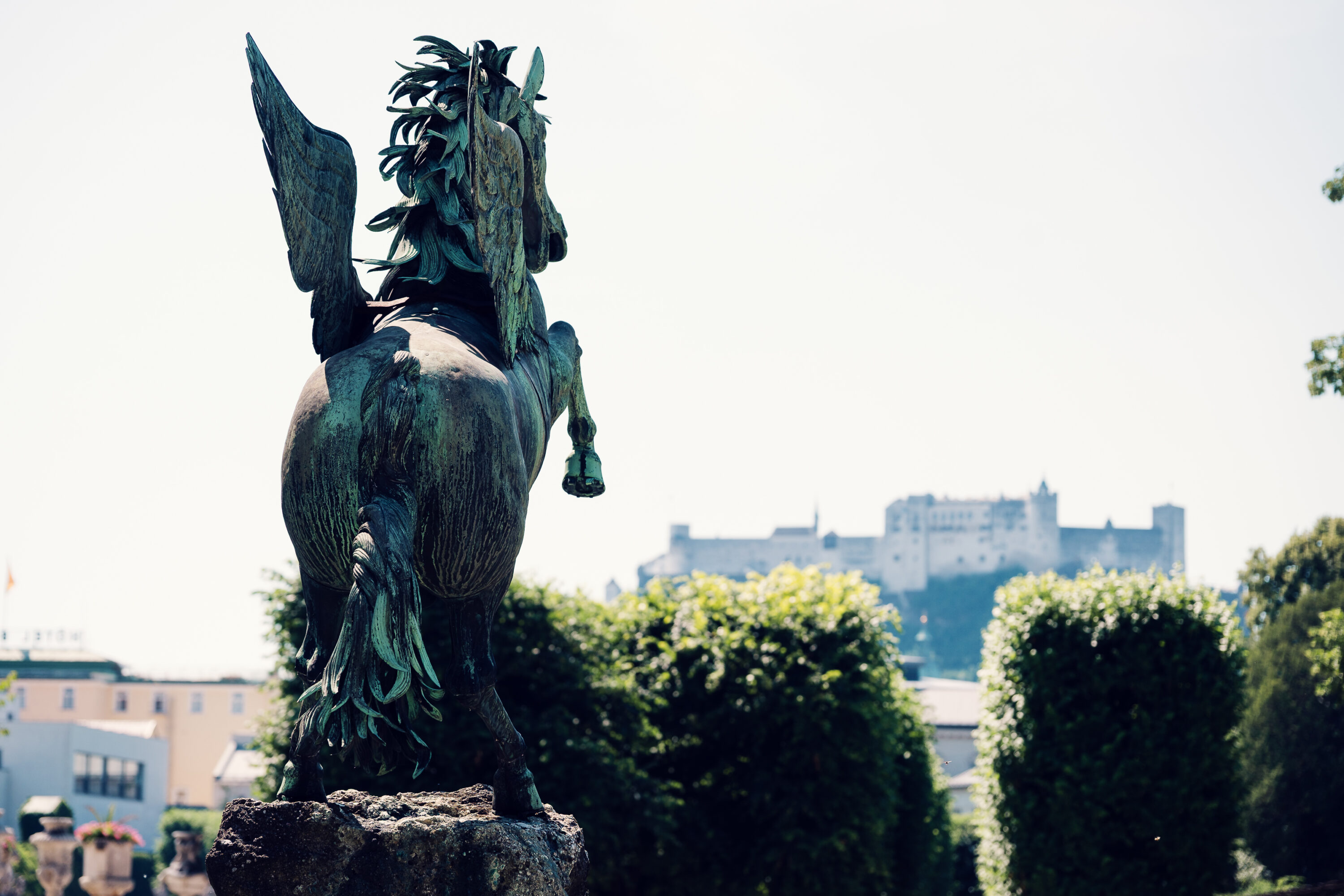
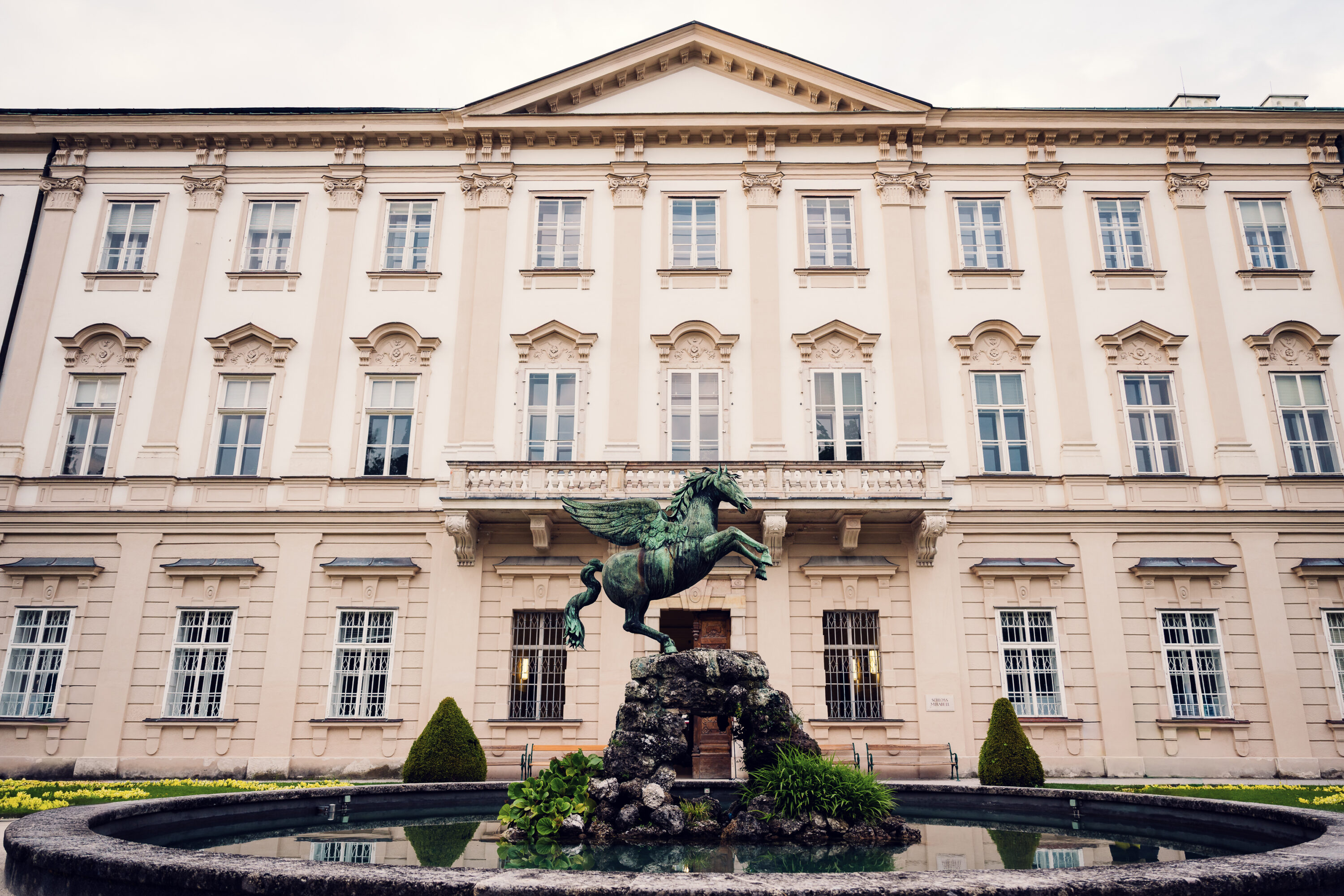
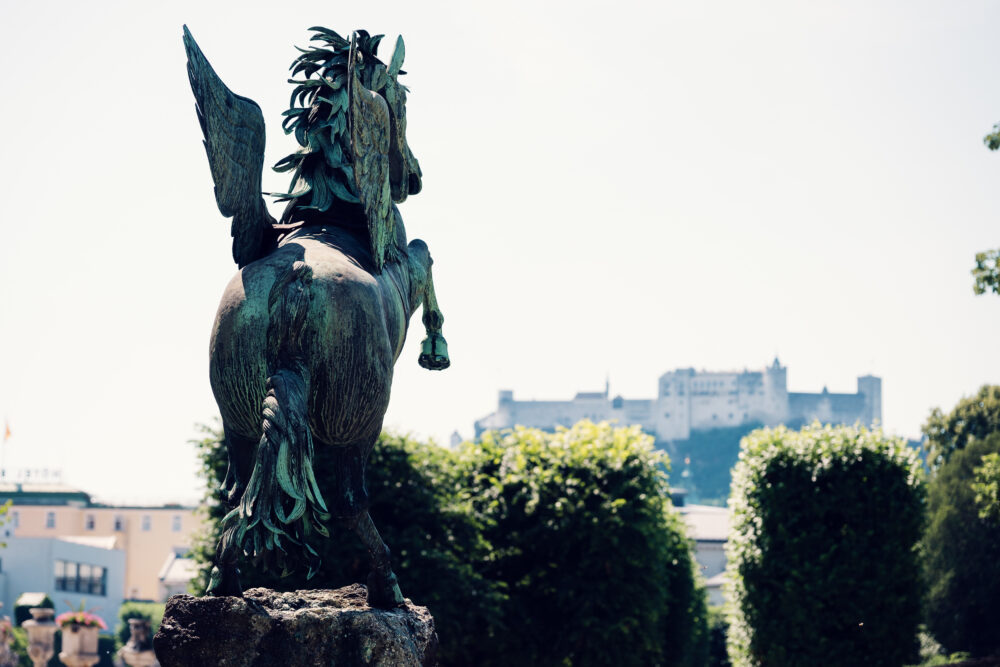
The Pegasus fountain seen from behind in the Mirabell Gardens with Hohensalzburg Fortress on the hilltop in the distance.

Pegasus Fountain

The winged horse was cast in 1661 by Caspar Gras, a metal sculptor from Innsbruck, commissioned by Archbishop Guidobald von Thun for a horse pond on Kapitelplatz. It moved to Mirabellplatz around 1700, lost its place to the Neustadt fire of 1818, and then spent most of a century out of sight: in storage, nearly auctioned off in 1836, briefly on today's Makartplatz from 1842, back in a museum depot from 1859. It reached this basin in 1913. Gras caught the horse in the second it lifts off, which turns the water beneath it into the Hippocrene spring and the rock into Mount Helicon. It faces the Old Town and the cathedral, as it did on Kapitelplatz.

Map
Photos
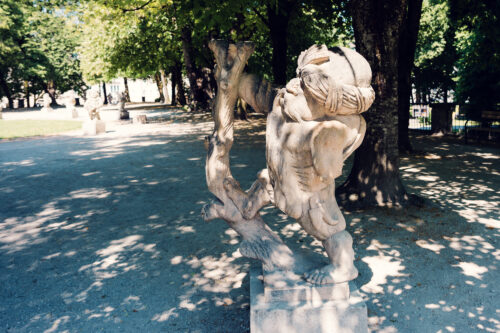
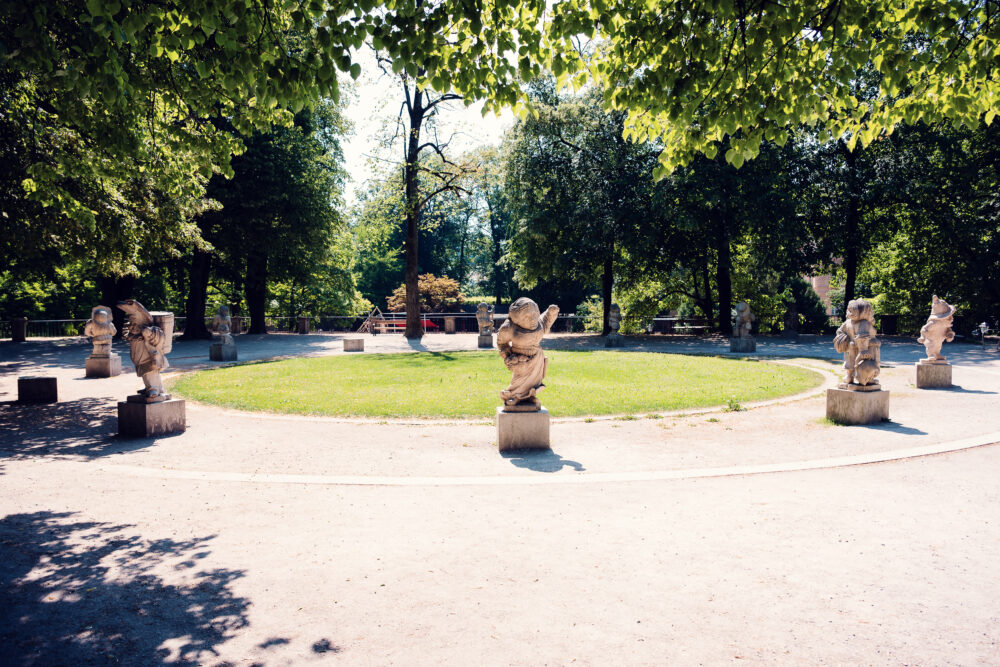
Overview of the Zwerglgarten in the Mirabell Gardens with baroque dwarf statues arranged in a semicircle beneath tall trees.

Dwarf Garden

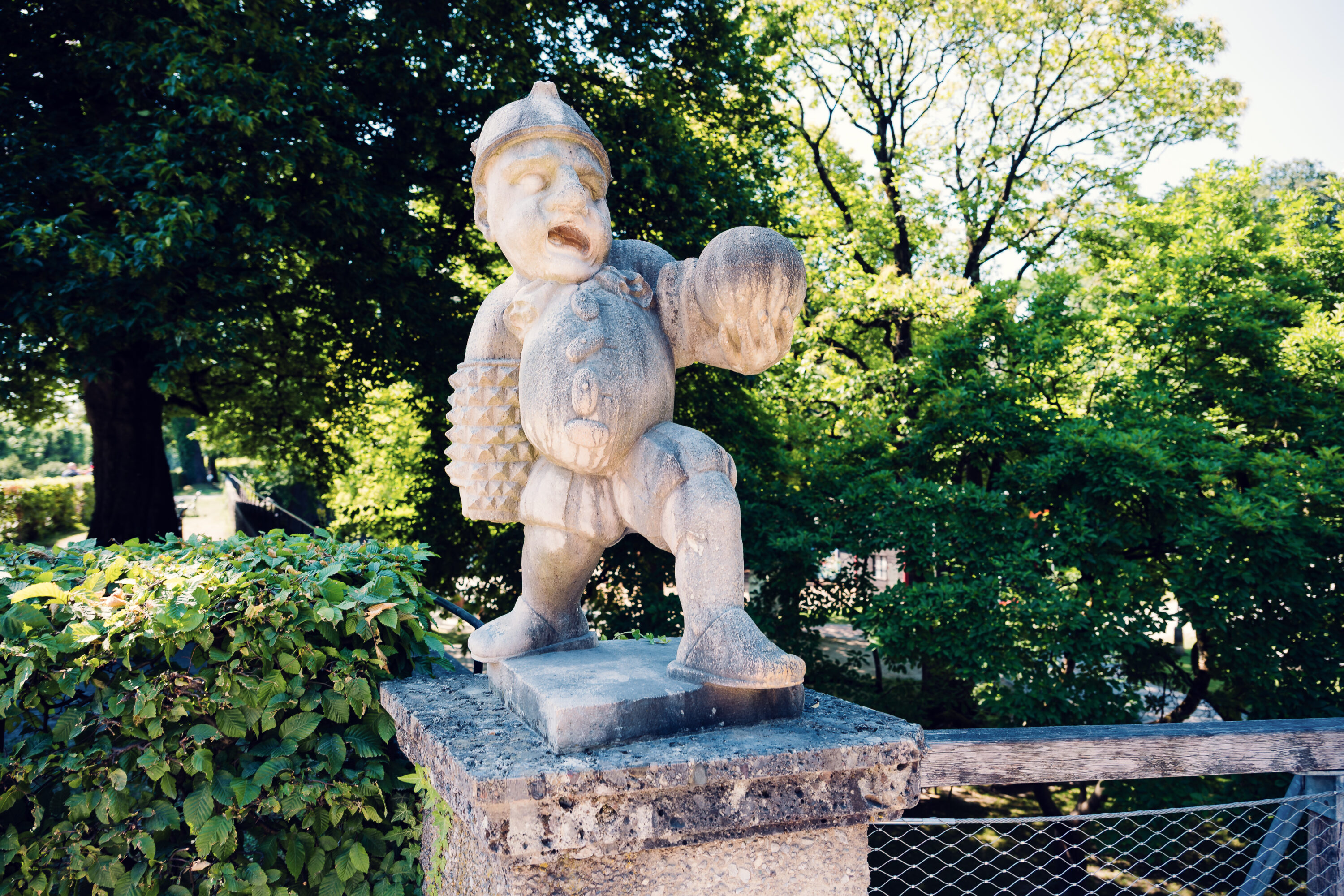
Two dwarfs playing Pallone guard the bridge, spiked sleeves on their arms, one wearing a pot on his head. Behind them stand the survivors of the oldest dwarf garden in Europe, laid out in the 1690s by Fischer von Erlach for Archbishop Johann Ernst Graf Thun und Hohenstein as the cheerful counterweight to the 28 gods and heroes down in the parterre: 28 dwarfs, 28 statues. The Enlightenment had no patience for them. Crown Prince Ludwig of Bavaria had them auctioned off in 1811 and they scattered into private gardens across Salzburg, Bavaria and the Hausruck. The city began buying them back in 1919. Nineteen stand here today, the last two added in 2025 as laser-scanned copies of originals still in private hands. They're not in the historic dwarf garden, which lies just south of here: they've stood on the Kleiner Bastionsgarten since the 1920s, and the return to the original site has been on the city's list since 1919.

Map
Photos
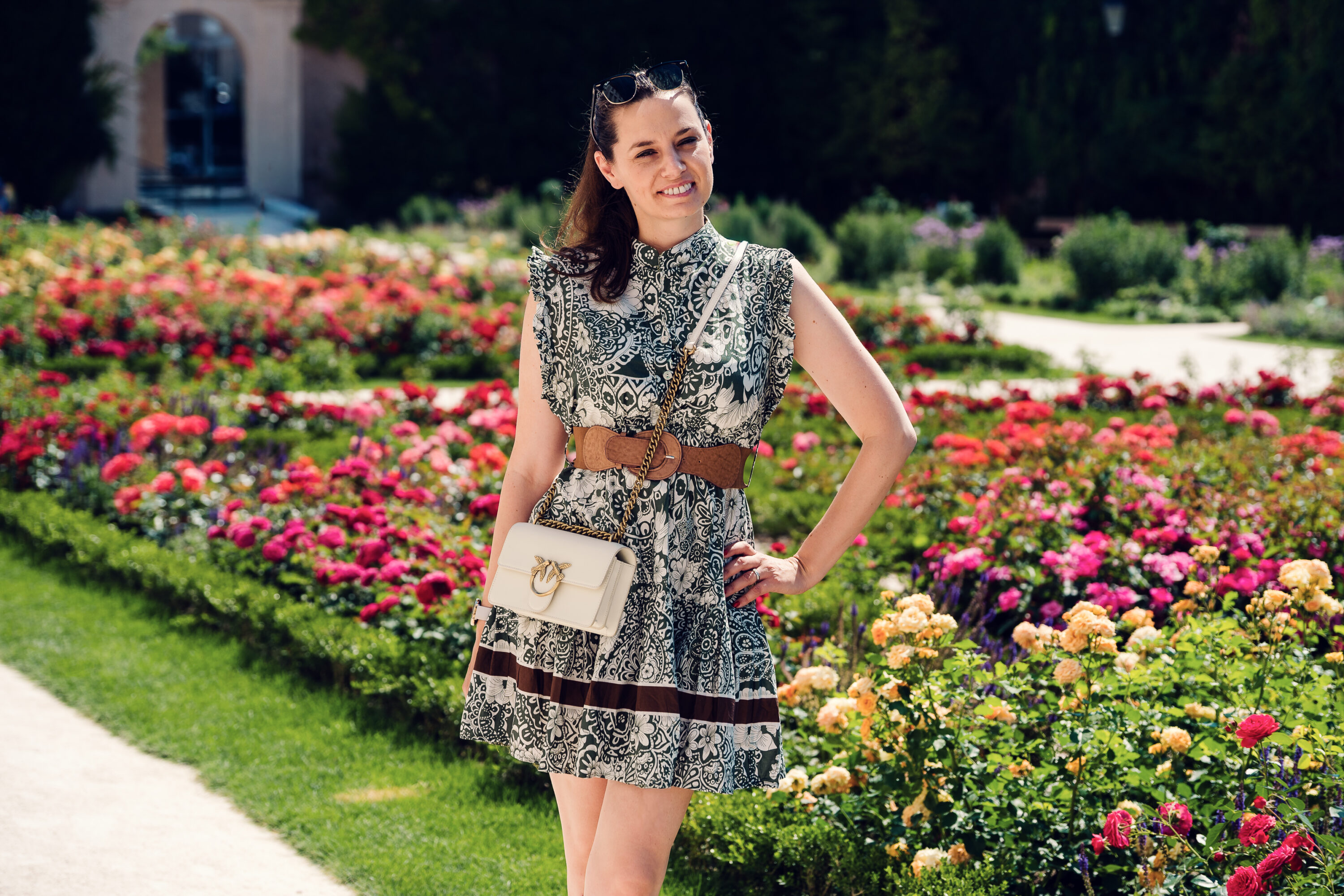
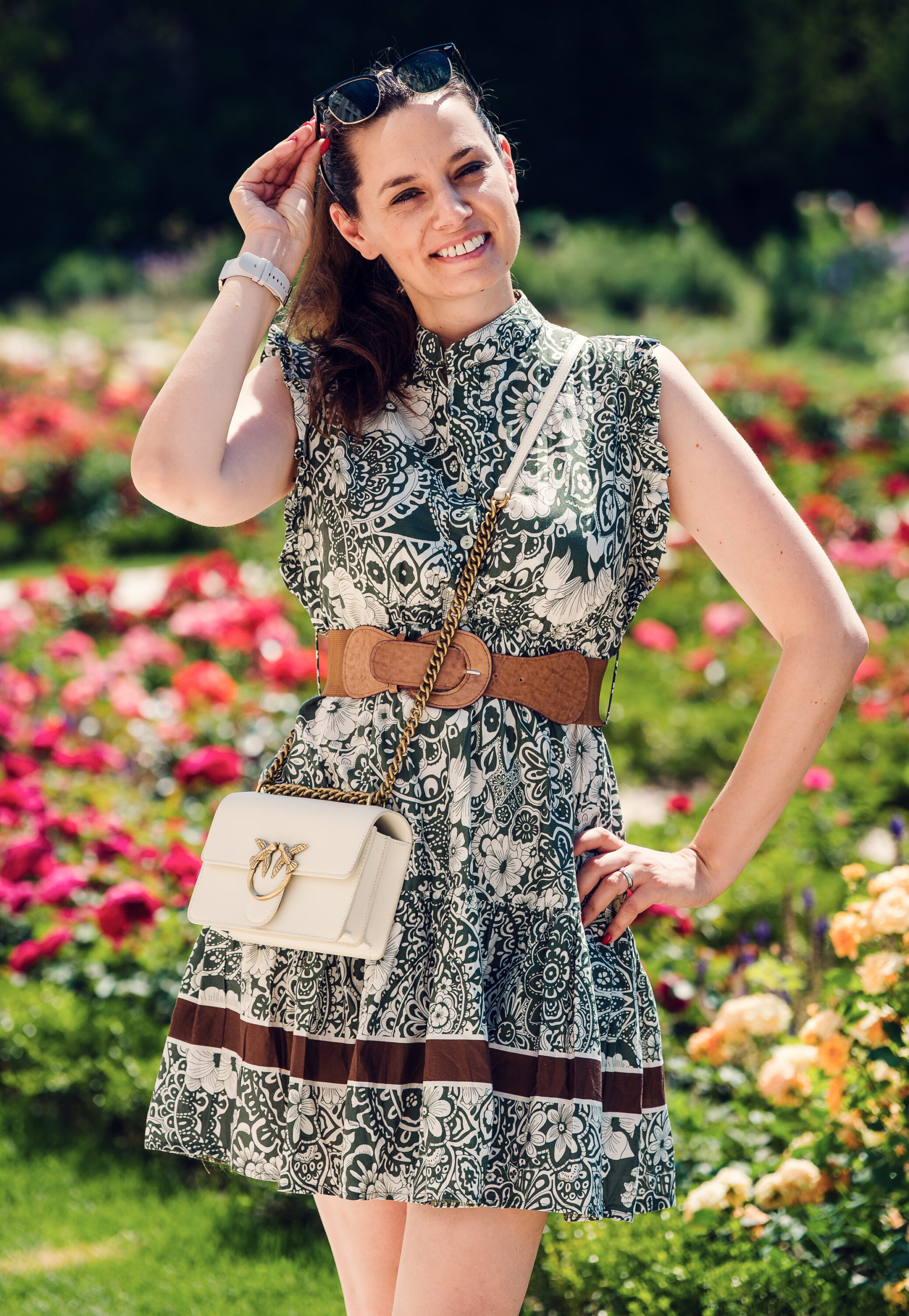
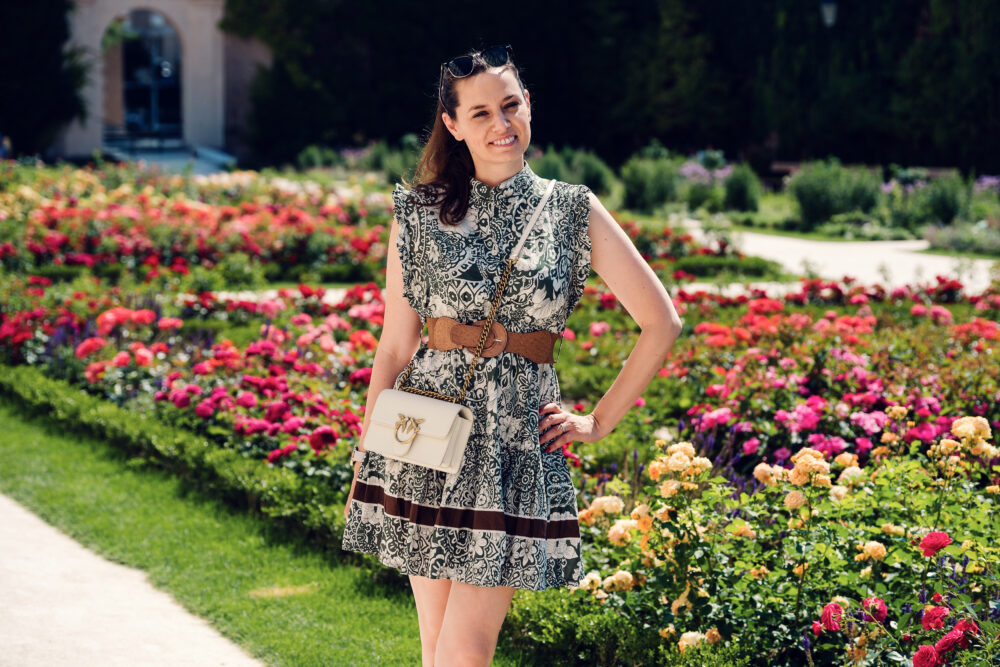
Adriana standing in front of the colorful rose beds in the Mirabell Gardens on a sunny day.

Rose Garden

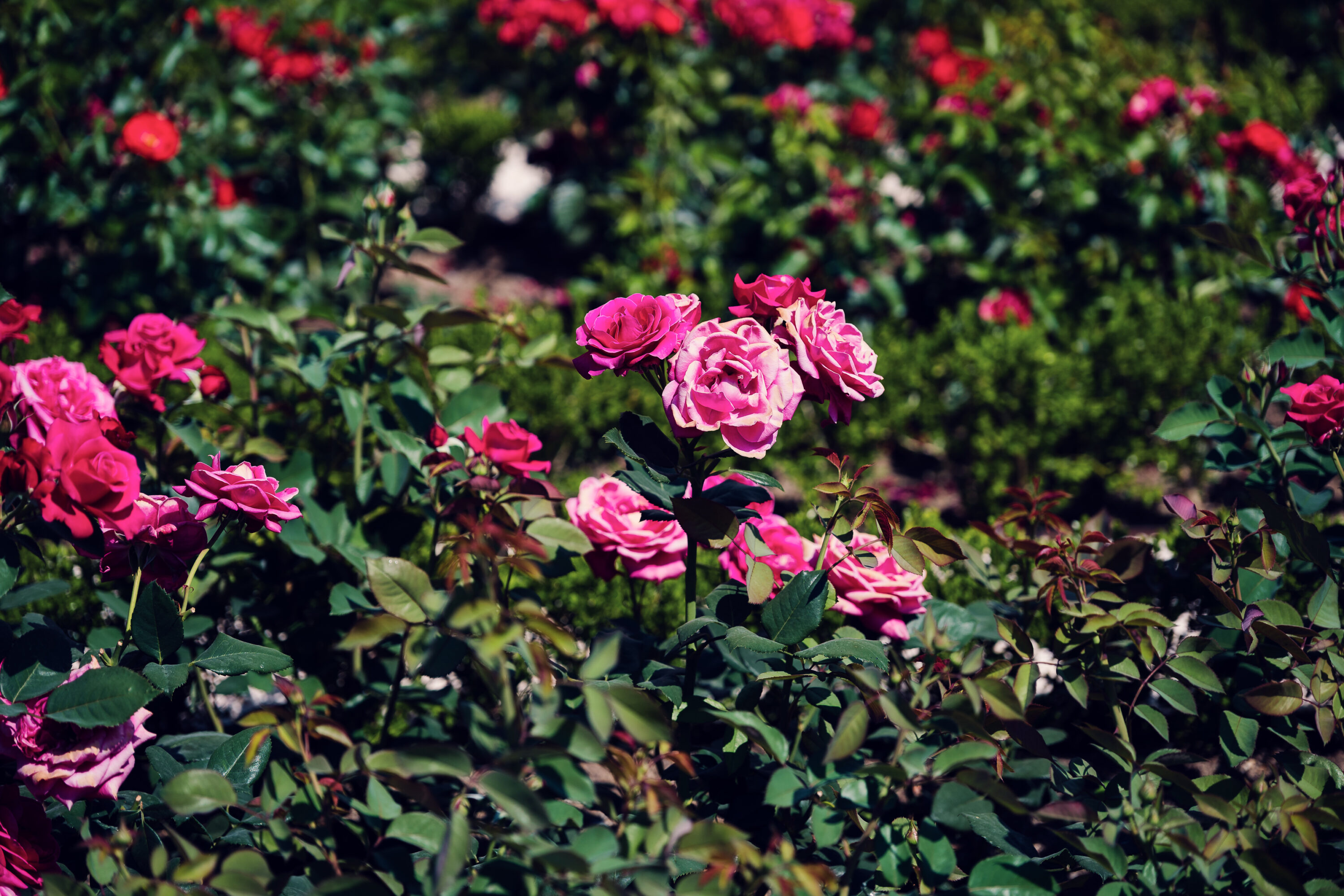
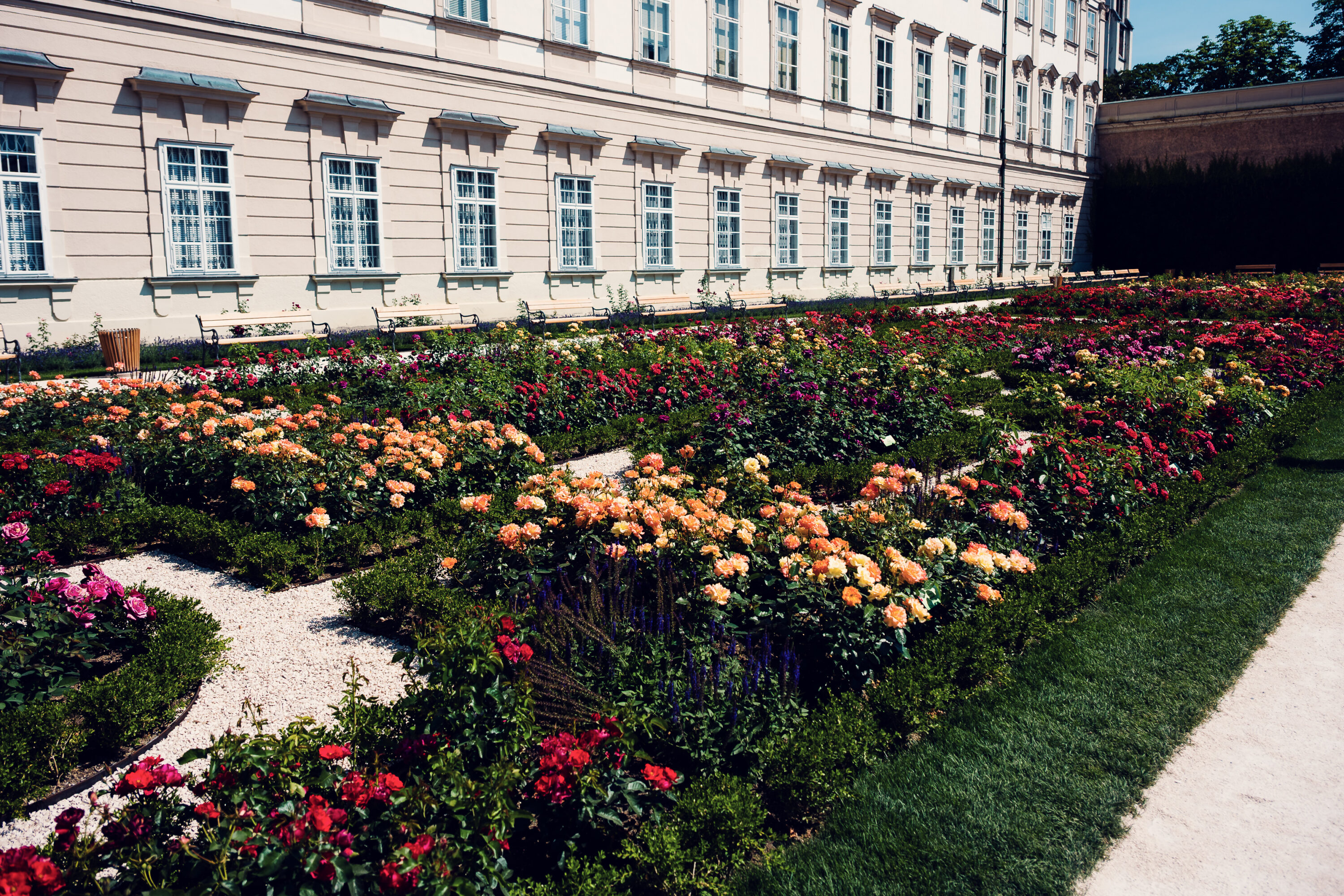
The Baroque garden grew citrus here, not roses. This was the Großer Pomeranzengarten, and the 17 marble vases that fence it in, designed by Fischer von Erlach, once held the orange trees. In the hunger years after the war the beds went to vegetables. Roses returned around 1955. It's the one spot where flowers and the palace façade share a frame without the fortress pulling the eye away.

Map
Photos

A Palace Born from a Love Affair - Mirabell Gardens

The story of Mirabell Gardens begins with one of Salzburg's most dramatic love affairs. In the early 1600s, Prince-Archbishop Wolf Dietrich von Raitenau commissioned a palace just outside the medieval city walls as a residence for his companion, Salome Alt, and their children. The estate was originally called Schloss Altenau, named in honor of Salome.

When Raitenau fell from power, his nephew and successor expelled Salome and her children from the palace and renamed it "Mirabell" - from the Italian mirabile (admirable) and bella (beautiful). Raitenau himself spent his remaining years imprisoned in Hohensalzburg Fortress. The name, and the palace, outlasted them all.

The Baroque Garden Takes Shape

The Mirabell garden's current layout dates to the late 17th century, when Johann Bernhard Fischer von Erlach redesigned the grounds in the baroque style. He created the characteristic geometric form that still defines the garden today: symmetrical parterres, a central fountain, and a deliberate visual axis aligned toward the Cathedral and the Fortress. Four statue groups representing the four elements were added around the central fountain, and the Dwarf Garden (Zwergerlgarten) - Europe's oldest of its kind - was established during this same period, originally 28 figures carved in white Untersberg marble.
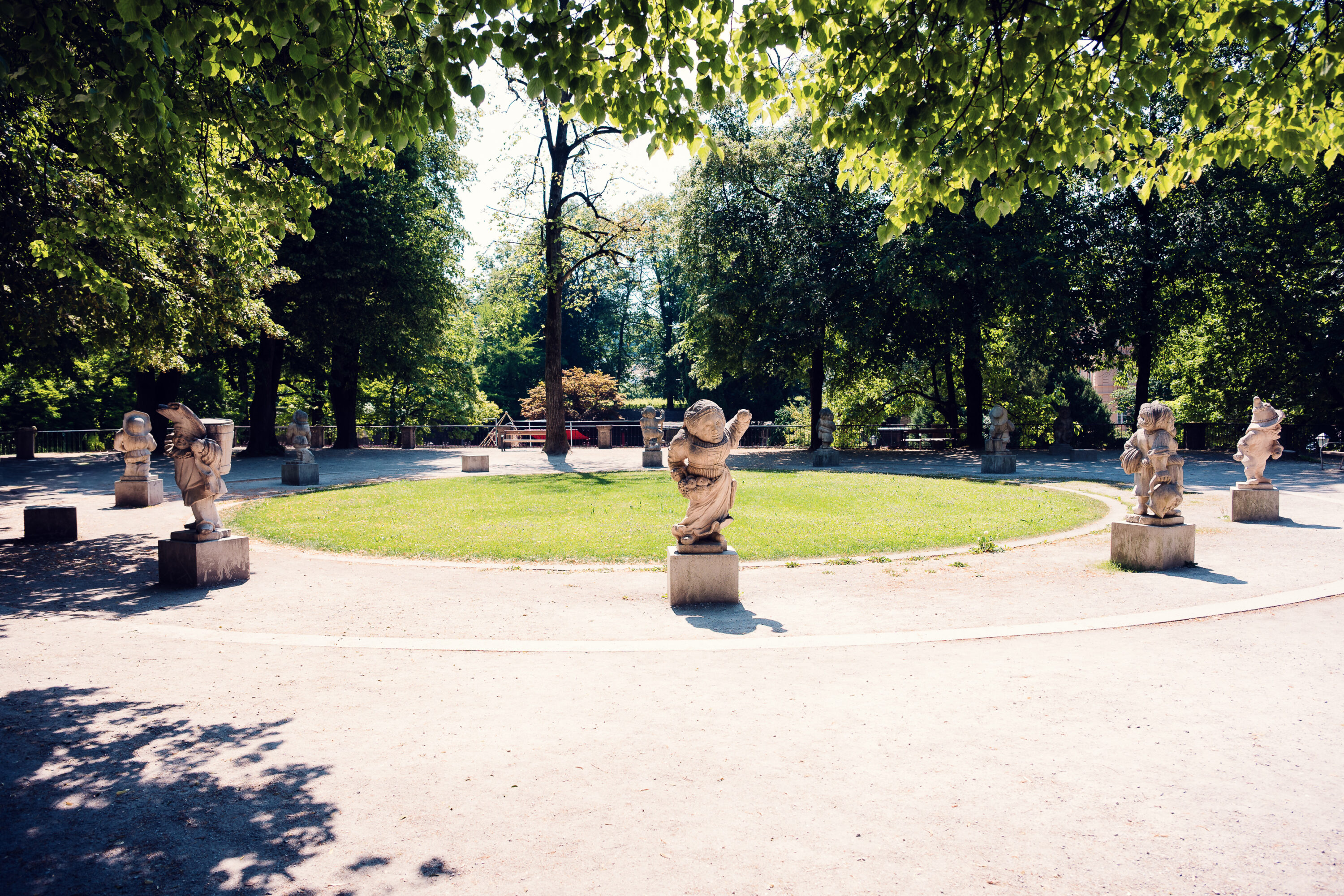
Overview of the Zwerglgarten in the Mirabell Gardens with baroque dwarf statues arranged in a semicircle beneath tall trees.
The Zwerglgarten is one of the oldest dwarf gardens in Europe. Its marble figures date back to 1715 and were originally commissioned by Prince-Archbishop Franz Anton von Harrach.

A few decades later, Johann Lukas von Hildebrandt - the architect behind Vienna's Belvedere Palace - rebuilt the palace itself as a grand baroque complex. He created the celebrated Marble Hall and the Angel Staircase, with its white marble balustrade decorated by putti. The gardens were further refined by subsequent court gardeners, shaping what's now considered one of the most beautiful baroque gardens in Europe.

Fire and Reinvention

In the early 19th century, a devastating fire swept through Salzburg and heavily damaged the palace. Many baroque decorations were lost, though the Marble Hall and Angel Staircase survived untouched. The restoration gave the building its current neoclassical exterior.

Emperor Franz Joseph opened the gardens to the public in 1854. The city of Salzburg later purchased the palace itself. The gardens have remained publicly accessible since 1854, while the palace is only partly accessible to visitors, as much of it serves the city administration.
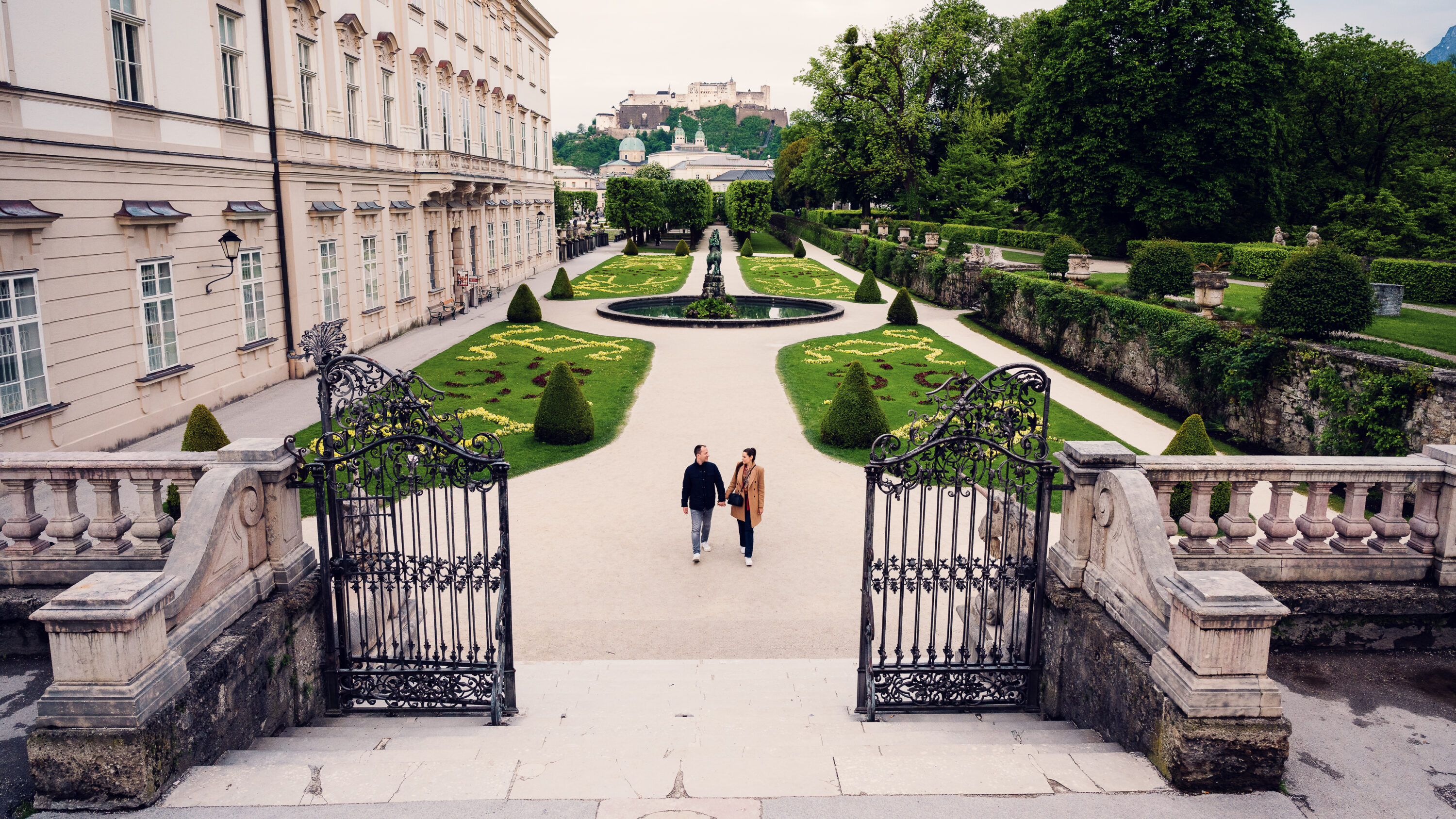
View through the open iron gate at the top of the stairs down to the Mirabell Gardens parterre with Mario and Adriana on the central path.
Adriana and Mario strolling through the Mirabell Gardens parterre.

Sound of Music and the Garden Today

The Mirabell garden gained worldwide fame as a filming location for the 1965 movie The Sound of Music. The "Do-Re-Mi" sequence was shot around the Pegasus Fountain, the hedge arcades, and the steps of the Rose Hill. These spots remain among the most photographed locations in Salzburg.

Today, Mirabell Palace houses the offices of Salzburg’s mayor and parts of the municipal administration. The Marble Hall serves as a venue for weddings, conferences, and the renowned Salzburg Palace Concerts, continuing a musical tradition that dates back to performances by Mozart himself.