

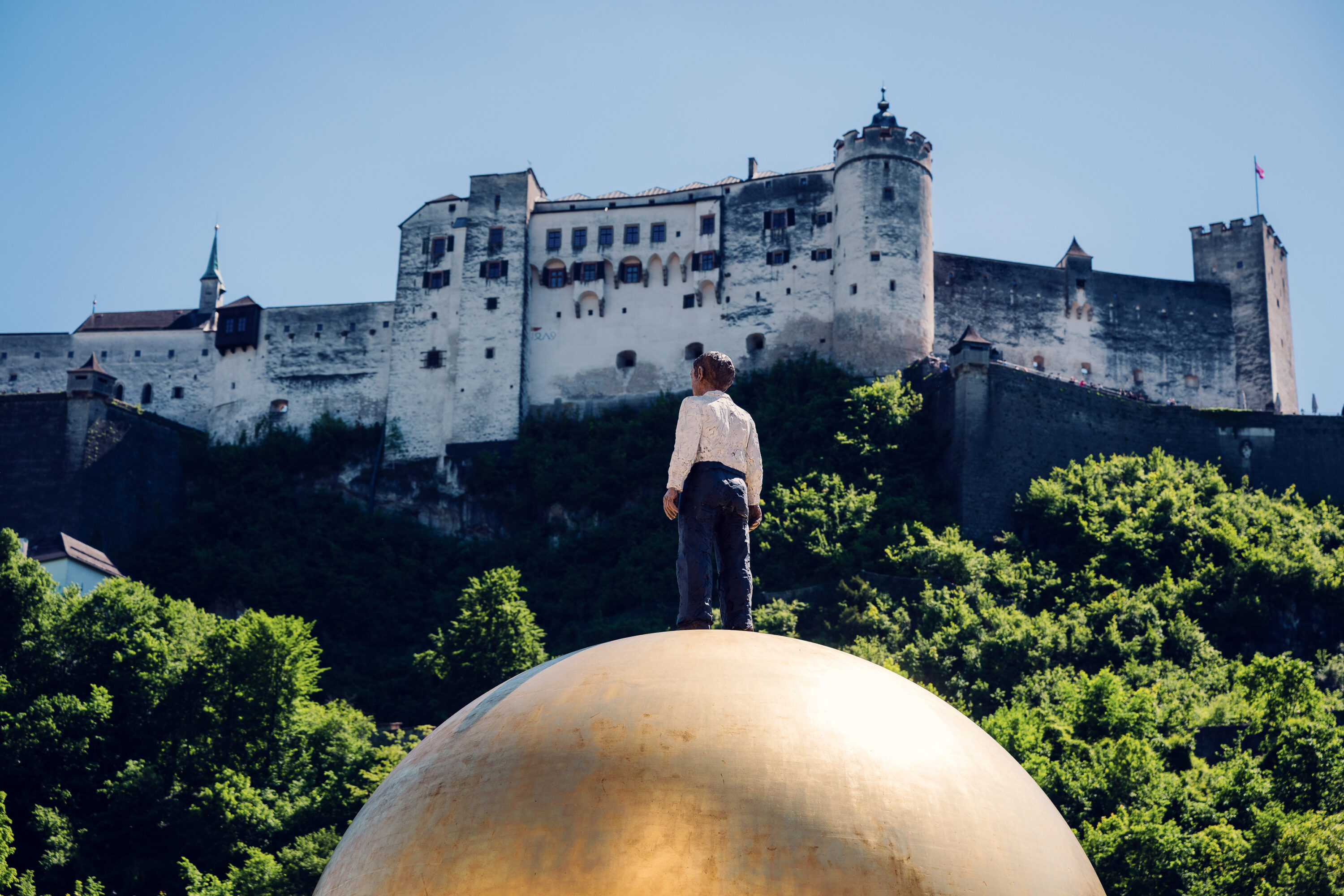
Salzburg Travel Tips at a Glance
The Salzburg travel tips that matter most fit into one paragraph. Austria runs on the euro, and cards work in most places, but small cafés and shops still like cash. The old town is compact and best explored on foot, and the electric trolleybuses cover the rest of the city. If you sleep anywhere in the state of Salzburg, your accommodation hands you the Guest Mobility Ticket for buses and trains during your stay. Most shops close on Sundays and public holidays. July and August belong to the Salzburg Festival, Advent to the Christmas markets. And pack for rain in any season: Salzburg even has its own word for the heavy, steady kind, Schnürlregen.
Getting to Salzburg by Plane, Train or Car
Which airport should I fly into for Salzburg?
Salzburg Airport W. A. Mozart (SZG) sits about 4 km from the city center and is the second-largest airport in Austria, with direct flights from cities such as London, Berlin, Frankfurt and Istanbul. If the flights you need don't go there, the larger hubs are the alternative. From Vienna Airport, a direct Railjet runs to Salzburg Main Station every hour during the day, taking from 2 hours 50 minutes, and many travelers fly into Munich, where trains from the airport via Munich East station (München Ost) reach Salzburg in about two and a half hours.
How do I get from Salzburg Airport to the old town?
By bus, in about 15 to 25 minutes. Line 10 runs from the terminal to the city center in about 15 minutes, and Line 2 goes to Salzburg Main Station in about 23 minutes. Buy your ticket at the machine at the stop or online from Salzburg Verkehr. Taxis wait outside the terminal and need about 15 minutes to the historic center.
How long is the train from Vienna to Salzburg?
About two and a half hours, without changing trains. ÖBB runs two Railjets an hour between Vienna and Salzburg, and the fastest, the Railjet Xpress, takes about 2 hours 25 minutes with stops in St. Pölten and Linz. The private WESTbahn leaves Vienna Westbahnhof or Hütteldorf every 30 minutes and takes about 2 hours 30 minutes. Both arrive at Salzburg Main Station (Hauptbahnhof), a 20-minute walk from the center, or ten minutes on trolleybus lines 1, 2, 3, 5 or 6.
How do I get to Salzburg from Munich?
By train, in one and a half to two hours. At least 17 direct long-distance trains a day run from Munich Central Station, and the Bayerische Regiobahn (RE 5) regional train leaves every hour via Rosenheim, Traunstein and Freilassing and arrives in just under two hours. Salzburg Main Station is a German border station, so Deutsche Bahn fares apply all the way: the Germany Ticket is valid on public transport to Salzburg Main Station, and the Bavaria Ticket on regional trains.
Should I drive into Salzburg?
We'd leave the car outside the center. The old town is a restricted traffic zone, open mainly to residents, hotel guests and authorized vehicles, and all parking in the center is short-term and paid. In peak summer, the city has also closed inner-city roads to visitor cars with non-local number plates, so check the current rules before you set off. The easier way in is one of the four Park & Ride lots on the edge of town, where a combined ticket covers parking plus a day of public transport for up to five people. If your hotel lies inside the zone, it tells you how to reach it. Austrian motorways need a toll sticker (vignette), except the stretch between Walserberg and Salzburg Nord.
Getting Around Salzburg: Walking, Buses and Bikes
Can I see Salzburg on foot?
Mostly, yes. The historic center, a UNESCO World Heritage Site, lies on both banks of the Salzach, and footbridges such as the Marko-Feingold-Steg (formerly Makartsteg) link the two sides. Between Getreidegasse, Residenzplatz and the Mirabell Gardens on the other bank, you'll walk rather than ride. The hills are the exception: the FestungsBahn funicular climbs to Hohensalzburg Fortress, and the Mönchsberg Lift takes you up to the Mönchsberg from the old town side.
How does public transport work in Salzburg?
The backbone is the electric trolleybus, which locals call the Obus, plus regular bus lines. Most run every 10 to 20 minutes during the day, a special holiday timetable applies in July and August, and the NachtStern night buses and the Bustaxi cover the late hours. Single tickets and 24-hour tickets for the core zone are cheaper when you buy them in advance at kiosks, ticket machines or in the SalzburgMobil app, and an advance ticket must be validated on your first ride. For a stay of more than four days, a weekly ticket usually pays off.
Do I need a bus ticket if I'm staying overnight?
Usually not. Since May 2025, every overnight guest in the state of Salzburg, the city included, gets the Guest Mobility Ticket from the accommodation at check-in, as a PDF or digital ticket. It covers city buses and trolleybuses, regional buses, S-Bahn, regional and long-distance trains across the state for your whole stay, and it's financed by a small mobility levy added to the overnight tax. If you arrive by public transport, ask your accommodation whether it can email you the ticket before you arrive, so you can use it on the way in from the station or the airport.
Is Salzburg a good city for cycling?
Yes. The city has more than 180 km of cycle paths, most of them along the Salzach and through its parks and avenues. For short trips there's S-Bike, a station-based e-bike sharing system with around 600 bikes at about 60 stations, rented and returned through the wegfinder app; in pedestrian zones the motor slows down or switches off. Long-distance routes such as the Tauern Cycle Path and the Mozart Cycle Path also run through the city.
Can I pay for a taxi by card?
Yes. Every Salzburg taxi has carried a card machine since May 2019, so cash, debit and credit cards all work. You'll find taxi ranks around the center, to the right of the main entrance of Salzburg Main Station and at the airport, or you can order one by phone or through the Das Salzburger Taxi app. Fares are regulated by law, and the meter is compulsory in the core area.
When to Visit Salzburg: Seasons, Crowds and Rain
When is the best time to visit Salzburg?
It depends on what you're coming for and how much company you want. In July and August, the Salzburg Festival fills the city with opera, drama and concerts, and the old town is at its fullest. From the second half of November until 1 January, the Christkindlmarkt takes over the squares around the cathedral. Outside those two stretches, Salzburg is calmer. We like late spring and early autumn, when afternoons are usually mild enough for the fortress walk and the river paths, and the lakes are still an easy day trip.
What does the Salzburg Festival mean for my trip?
The Salzburg Festival (Salzburger Festspiele) runs for five to six weeks each summer, from the second half of July to the end of August, with opera, plays and concerts. It dates back to 1920, when Hugo von Hofmannsthal's play Jedermann was first performed on Domplatz in front of the cathedral. The festival halls line Hofstallgasse at the foot of the Mönchsberg. Expect fuller hotels and busier streets in these weeks, and if you're coming for a performance, book your tickets and your room early. Our events page lists what else is on.
What is Schnürlregen, and what should I pack?
Schnürlregen is Salzburg's own word for rain that comes down so steadily it looks like strings hanging from the sky; Schnürl means string in the local dialect. The city lies on the northern edge of the Alps, gets more than twice as much rain as Vienna, and most of it falls in the warmer half of the year, so a summer trip doesn't promise dry days. Pack a compact umbrella or a light rain jacket in any season, and warm layers for winter. A wet afternoon suits the DomQuartier or Mozart's Birthplace.
How many days do I need in Salzburg?
Two full days cover the old town, the fortress, the Mönchsberg and the Mozart houses at an easy pace. One day works if you stay in the old town and go up to Hohensalzburg Fortress. A third day leaves room for Hellbrunn Palace and its trick fountains or a trip out to the lakes. Our Salzburg itinerary plans it day by day, and the things to do in Salzburg guide covers the sights.
What is Salzburg like in winter?
Quiet, apart from Advent. Advent brings the Christmas markets and the Salzburg Advent Singing, a musical tradition of the weeks before Christmas, and around Mozart's birthday on 27 January the Mozart Week (Mozartwoche) festival celebrates the composer. January and February are the calm months, when the old town sometimes feels like it's all yours.
Salzburg Travel Tips for Money, Tipping and Sundays
Do I need cash in Salzburg?
Carry some. Austria uses the euro, and cards are accepted in hotels, larger restaurants and stores, but small shops, cafés and grocery stores are more likely to want cash. ATMs work around the clock with the common international cards, though your bank may charge fees. If you're unsure, look for the card logos at the entrance before you order.
How much should I tip in Salzburg?
In restaurants, cafés and taxis, a tip of 5 to 10 percent is the Austrian custom, depending on how happy you were with the service. You add it when you pay, in cash or on the card. Check the bill first: if service is already included, you don't tip twice.
Is there a tourist tax in Salzburg?
Yes. Accommodation in the city adds an overnight tax, the Nächtigungsabgabe, per person and night to your bill, together with the mobility levy that pays for your Guest Mobility Ticket. It's charged by the hotel, so there's nothing to arrange yourself.
Are shops open on Sundays and public holidays?
Most aren't. Under Austrian law, shops close on Sundays and public holidays, supermarkets included. Railway station and airport shops are among the exceptions, and in Salzburg's inner city a state rule also lets some shops selling food, souvenirs and travel needs open. Restaurants, cafés and market stalls aren't covered by the rule. Do your shopping on Saturday, and check the page of any sight you want to visit on a holiday.
Where can I refill a water bottle?
At the fountains. Of the city's 49 fountains, 27 run with spring water from the Untersberg, free for anyone to drink. Some are old: the lion's head fountain at the foot of St. Erhard's Church in Nonntal dates back to the late 17th century, and another lion's head, on Ferdinand-Hanusch-Platz near Getreidegasse, decorates the wall of a fishmonger's.
The Salzburg Card, Safety and Tourist Information
Is the Salzburg Card worth it?
It pays off if you plan to see several museums and sights in a short time. The Salzburg Card gives one-time free entry to the city's attractions and museums and free rides on city public transport, the S-Bahn excepted. It runs for 24, 48 or 72 hours from the first use, not per calendar day, so a 24-hour card started in the afternoon lasts until the same time the next afternoon. On the fortress funicular and the Mönchsberg Lift, the ride down counts separately, so start down before the card expires. If you're staying overnight, your buses are already covered by the Guest Mobility Ticket, so judge the card by the admissions alone.
Where can I buy the Salzburg Card?
Online, as a digital card that works on your phone right away, or as a physical card at most hotel receptions, the tourist information offices, ticket offices, the airport and Salzburg Main Station. You don't need to book it before you arrive. Keep your phone charged if you use the digital version: without battery, the card doesn't work.
Is Salzburg safe?
Yes. Crime levels in Austria are generally low, according to the UK government's travel advice. The main risk is petty theft: pickpockets look for crowded places, stations and trains. Keep your bag closed and in front of you in the Christmas market crowd, on a full summer afternoon in Getreidegasse and when you take your luggage off a train.
Where do I find tourist information in Salzburg?
The city's tourist information offices are on Mozartplatz in the old town and at Salzburg Main Station. The staff answer questions, book guided tours and help with hotel rooms, and both sell the Salzburg Card.
More Salzburg Travel Tips: Phones, Power, Access and Kids
Will my phone work in Salzburg, or do I need an eSIM?
If your phone plan comes from an EU country, it works in Austria at no extra cost under the EU's roam-like-at-home rules, within the data allowance of your contract. From outside the EU, a travel eSIM is the easy route: it's data only, you install it over Wi-Fi by scanning a QR code, and your phone has to be unlocked and eSIM-compatible. The city's free Salzburg surft! Wi-Fi covers spots such as the Mirabell Gardens, Mozartplatz, Kapitelplatz and the Marko-Feingold-Steg, with no account needed.
Do I need a power adapter in Salzburg?
Power in Salzburg comes at 230 volts and 50 hertz. Check the label on your charger before you plug in: if it reads 100-240 V, it works here with a plug adapter wherever your sockets at home look different. A device rated only for a lower voltage also needs a voltage converter.
Is Salzburg accessible for wheelchair users?
In many places, yes: many sights, churches, venues, hotels and restaurants have barrier-free entrances, and most of the city's buses have low-entry doors and a wheelchair ramp that folds out when needed. The FestungsBahn funicular gives barrier-free access up to Hohensalzburg Fortress, and some of the public toilets in the old town are accessible with the Euro-Key. The tourist board's brochure "Salzburg without barriers" helps you plan the rest.
Is Salzburg good for a trip with kids?
Yes. The city is compact and easy to explore, and the tourist board's picks for families include the Haus der Natur natural history museum, the fortress and Salzburg Zoo. For a walk the children lead themselves, pick up the free City Explorers folder at a tourist information office: it takes about two hours through 13 stops in town, and kids who answer every question correctly collect a small gift at the office.