
From Court Stables to the Stage of the World: Hofstallgasse
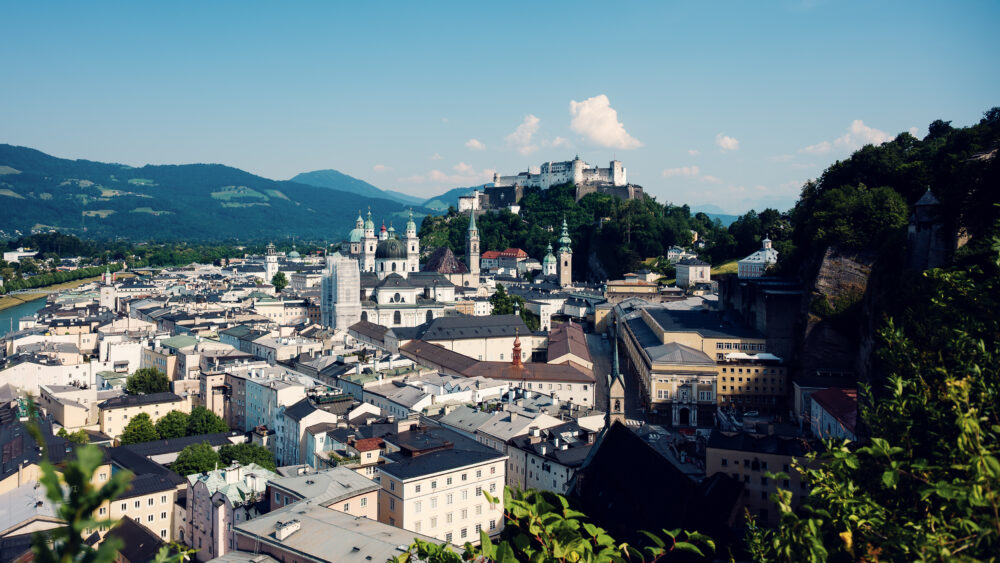
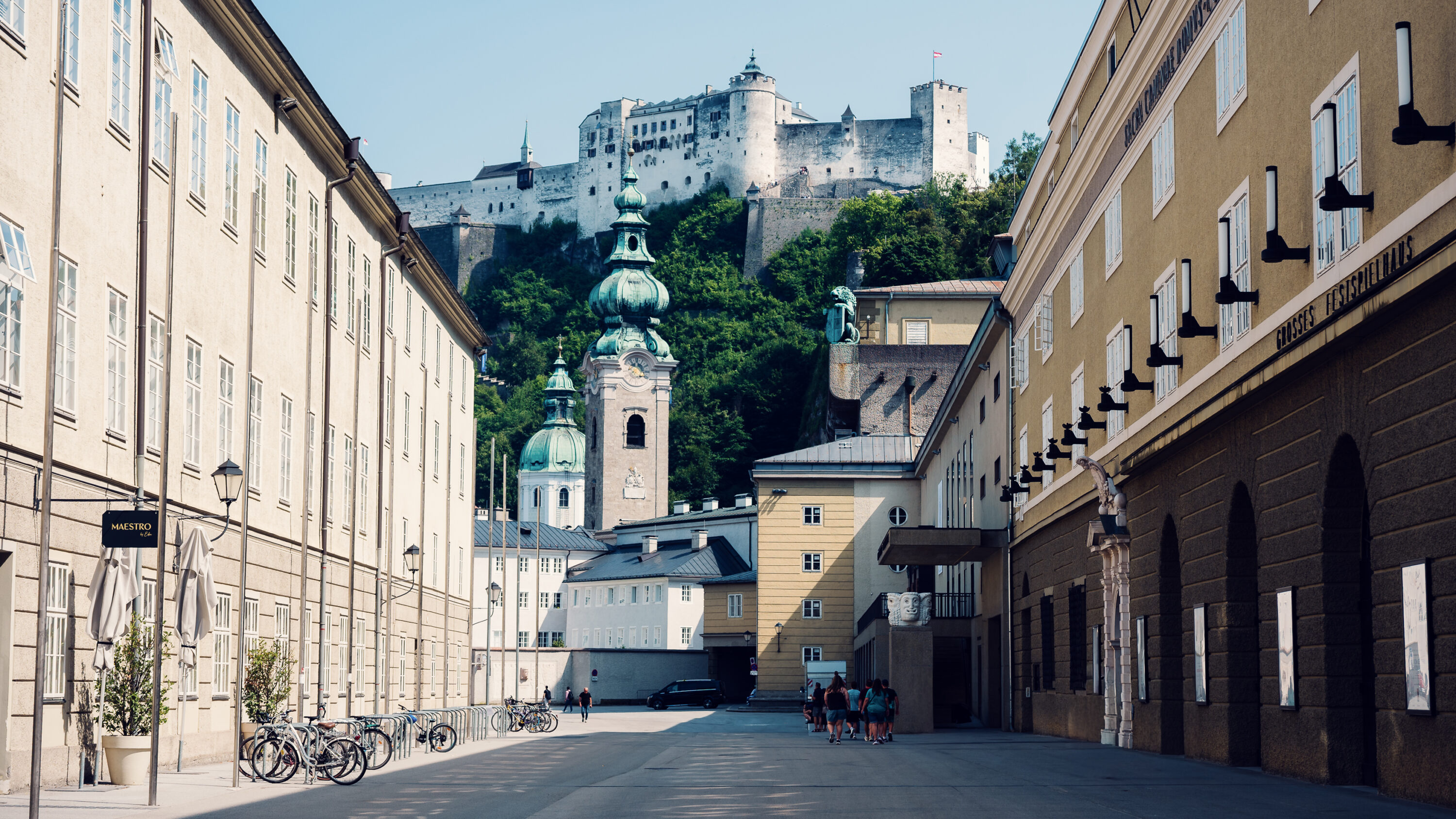
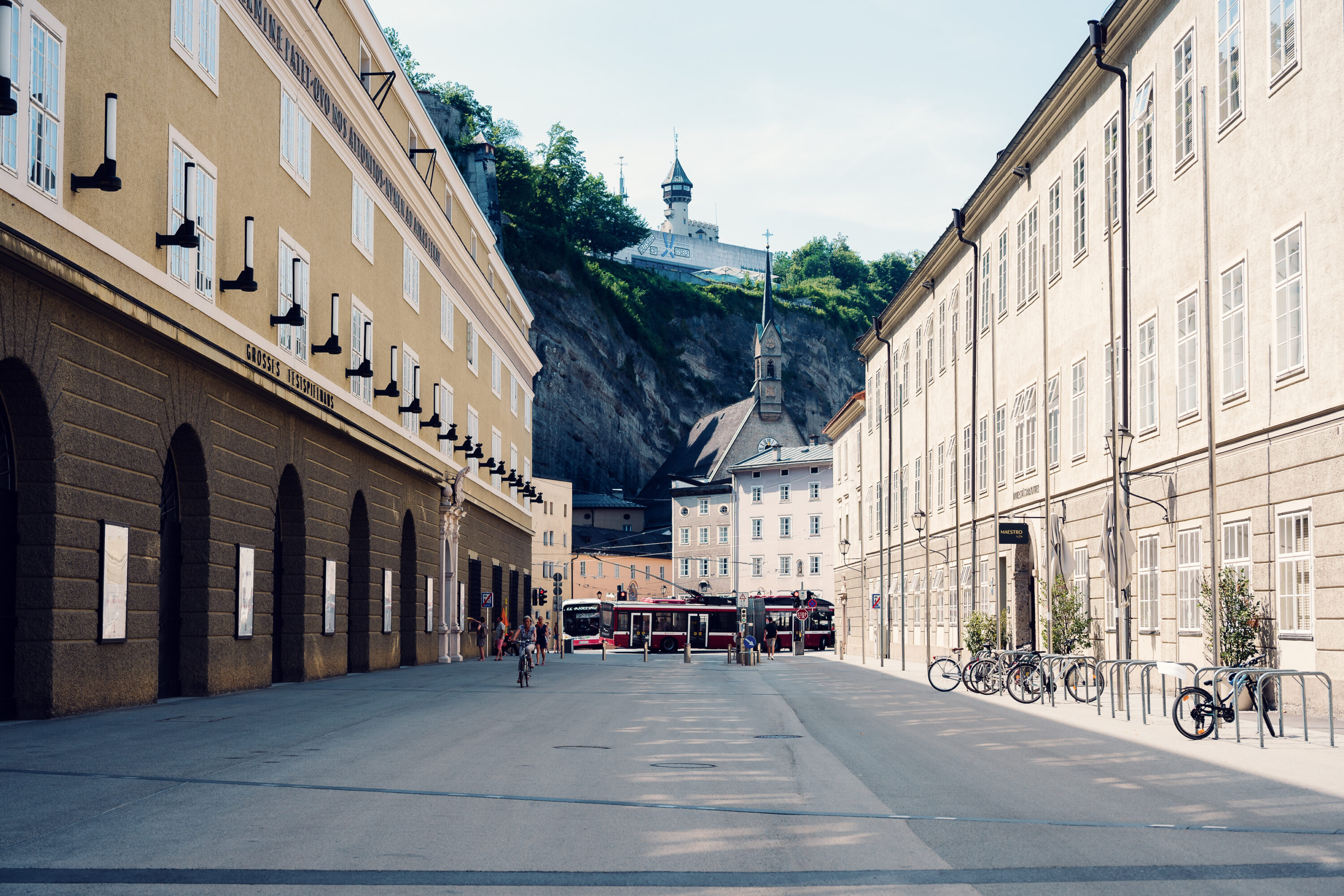
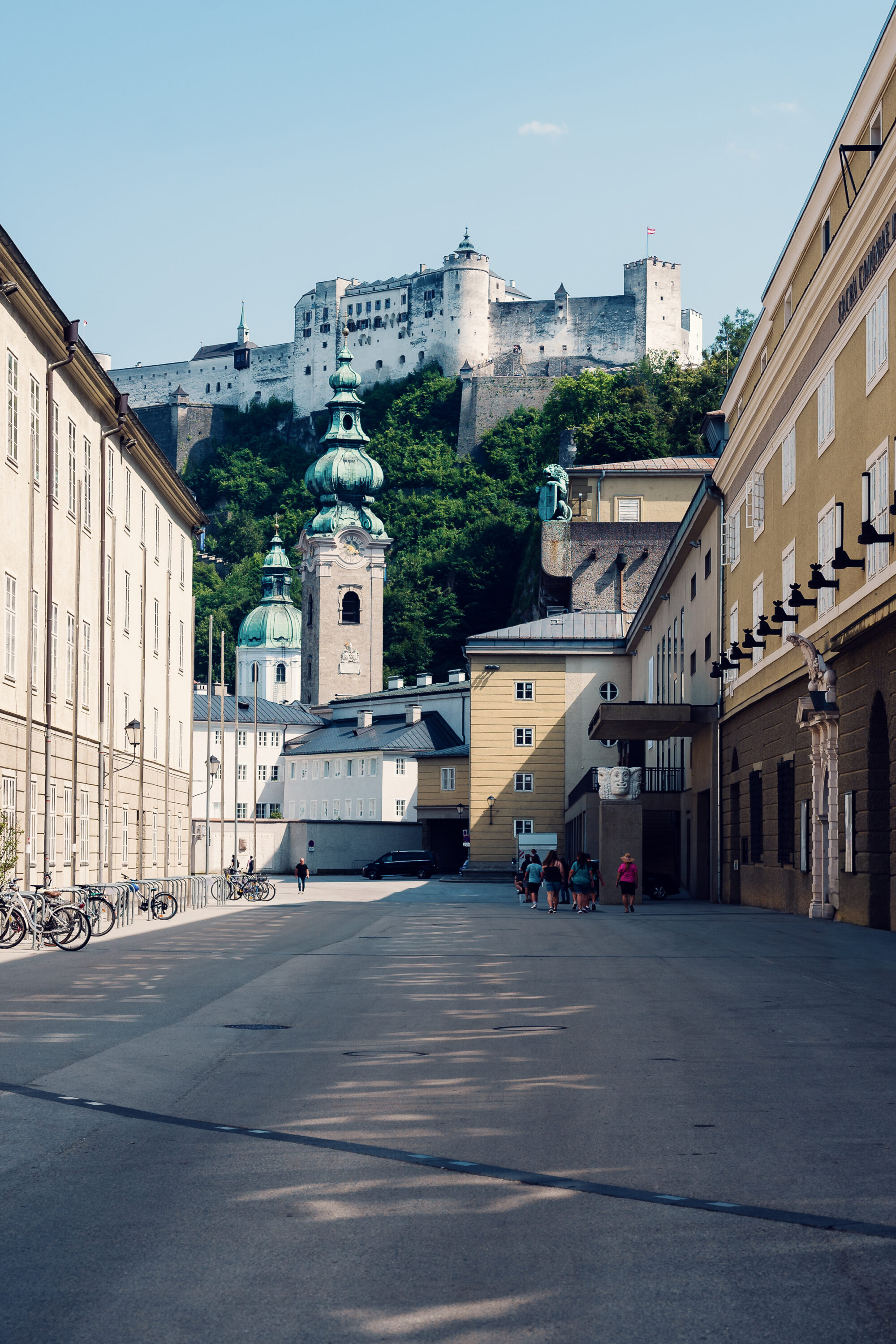
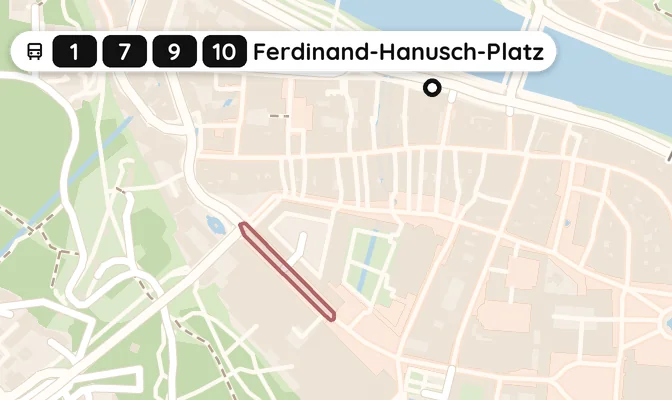
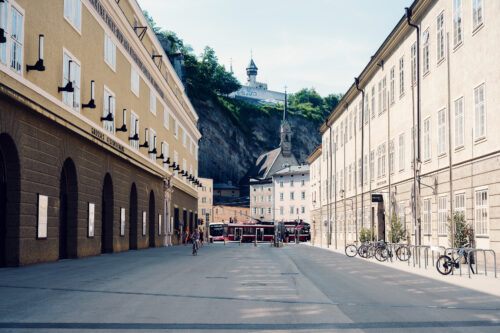
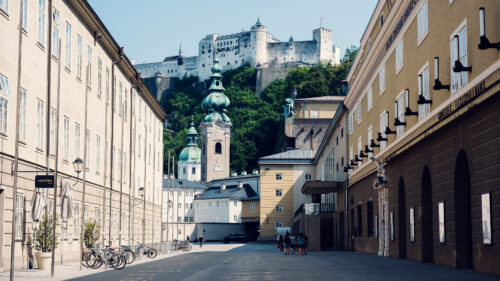
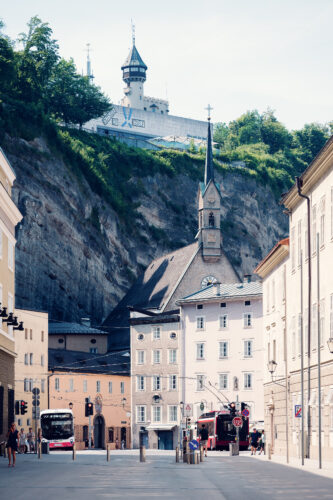
The Hofstallgasse was never meant to be ordinary. When Wolf Dietrich von Raitenau reshaped Salzburg into a Baroque capital, his master builder laid out this short lane as a piece of stagecraft: look south along it, and the spire of St Peter's and the fortress fall into a single line. That deliberate sightline still holds today.
A street named for horses
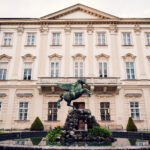
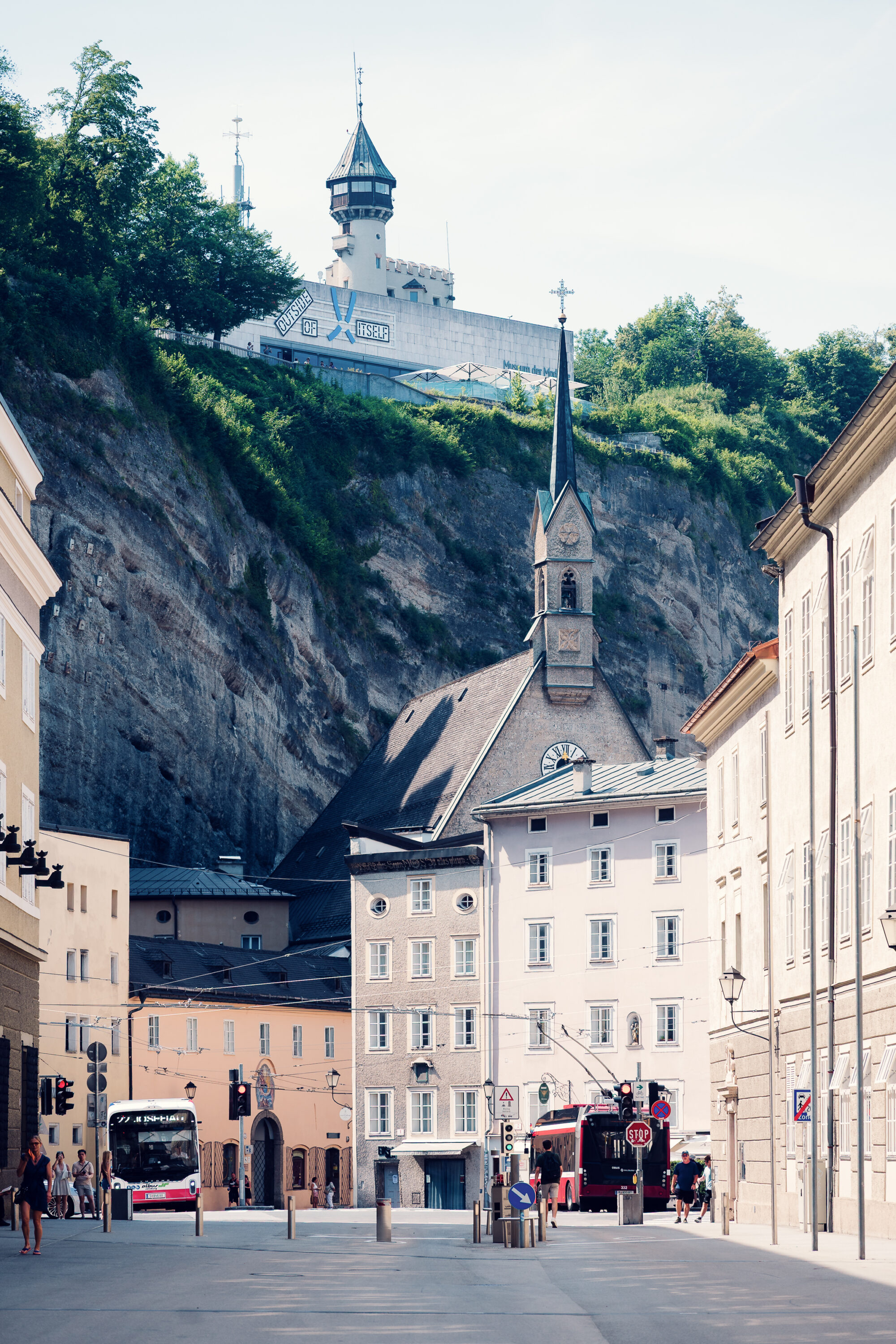
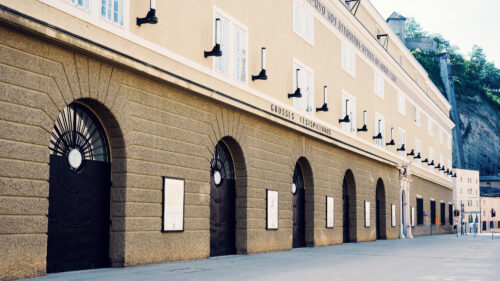
The name is literal. This was the address of the prince-archbishop's court stables, built for more than a hundred horses; later, the nearby summer riding school was created in the former Mönchsberg quarry, and its arcades survive today as the Felsenreitschule. At the southern end of the Hofstallgasse, the Pferdeschwemme still shows a horse-taming sculpture against a frescoed wall, one of the clearest surviving traces of the court-stable era.
When the festival moved in
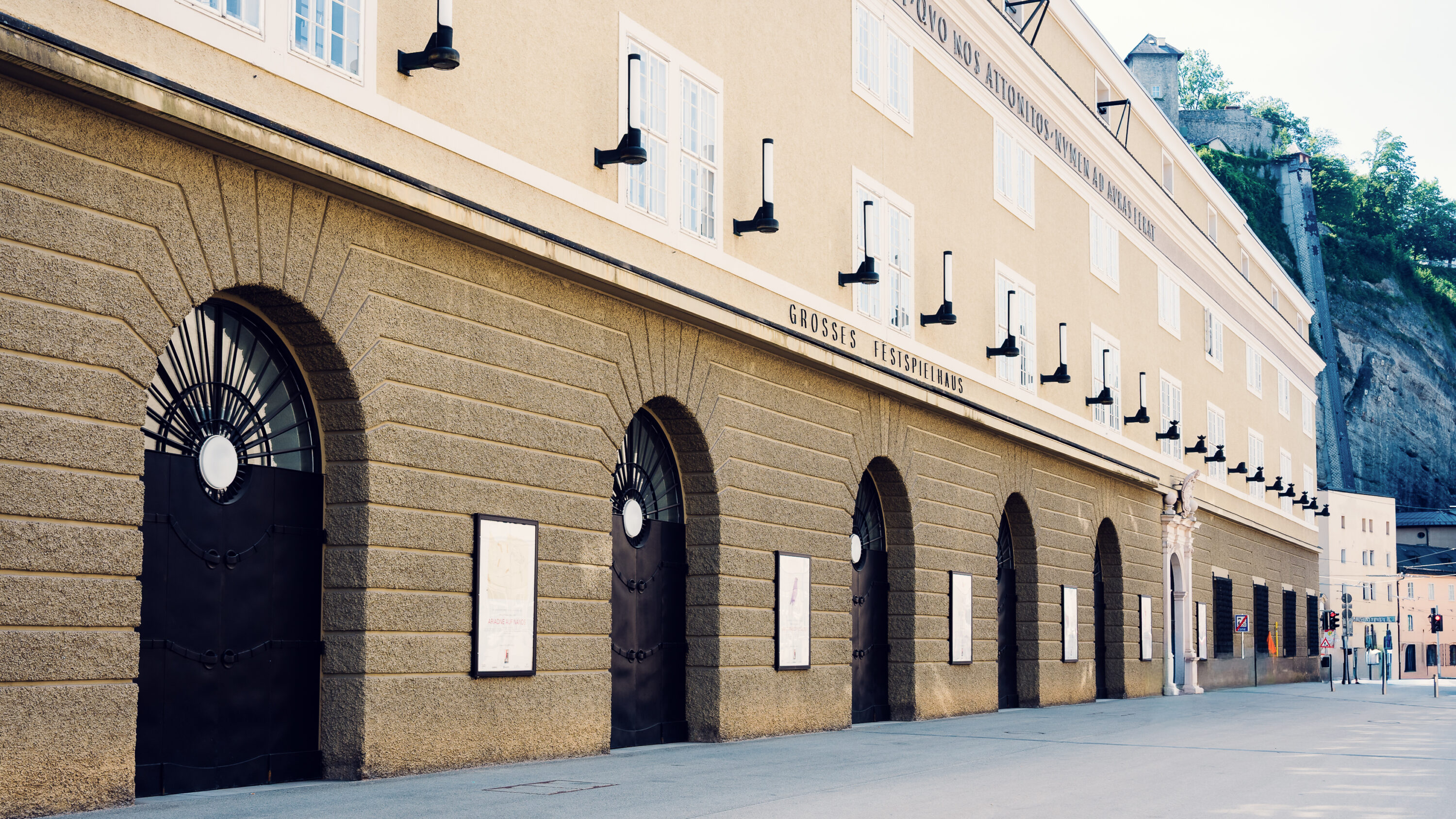
In its early years, the Salzburg Festival had big ideas and limited resources. Rather than build entirely new theatres straight away, the organisers gradually adapted the former prince-archbishop's stables and riding halls, and the temporary solution became permanent. Three houses now line the Hofstallgasse beneath the cliff: the Großes Festspielhaus, the Haus für Mozart, and the Felsenreitschule.
The great hall and the golden street
The Großes Festspielhaus is the newcomer, and building it meant blasting tens of thousands of cubic metres of rock out of the Mönchsberg to make room for one of the widest stages anywhere. It opened under Herbert von Karajan, and in its foyer you'll still find floor mosaics of horses' heads, a wink at what stood here first. The Hofstallgasse had its own moment of theatre when it was resurfaced in gold-toned asphalt for a Mozart anniversary, a choice that split the city before fading quietly back toward grey. Opposite the hall, the Alte Universität rounds out a lane that has carried Salzburg's sacred, academic and musical life for four centuries.