
A Marketplace Since the Middle Ages - Alter Markt
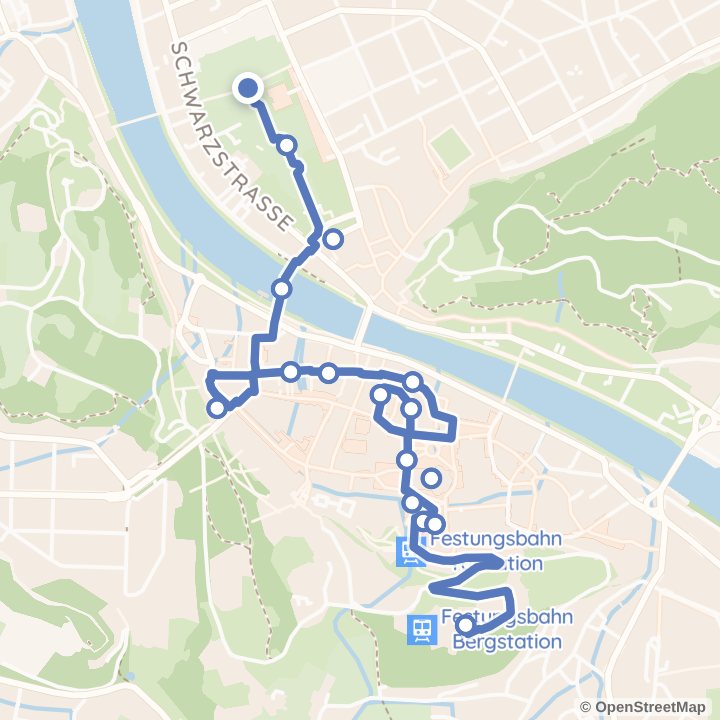
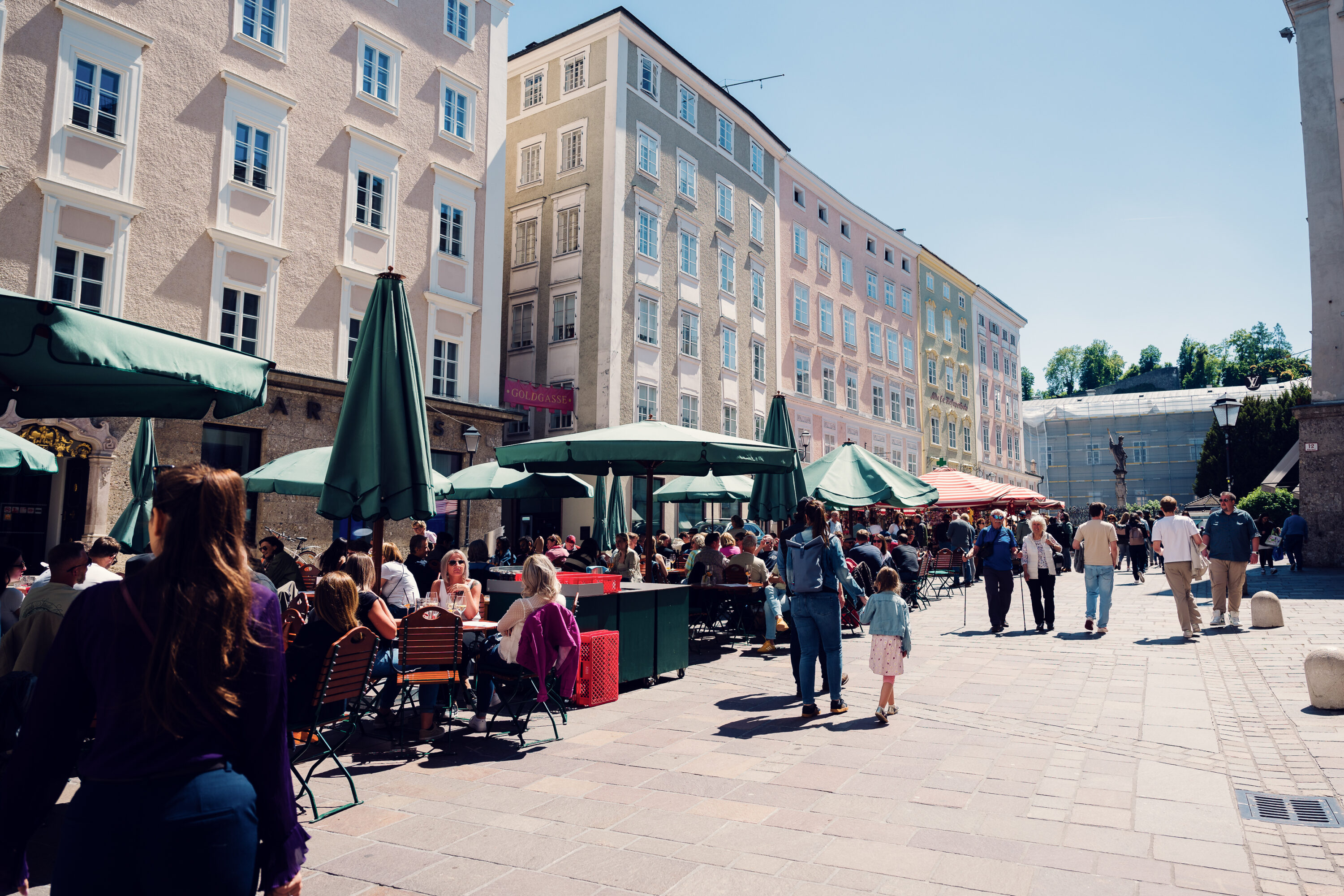
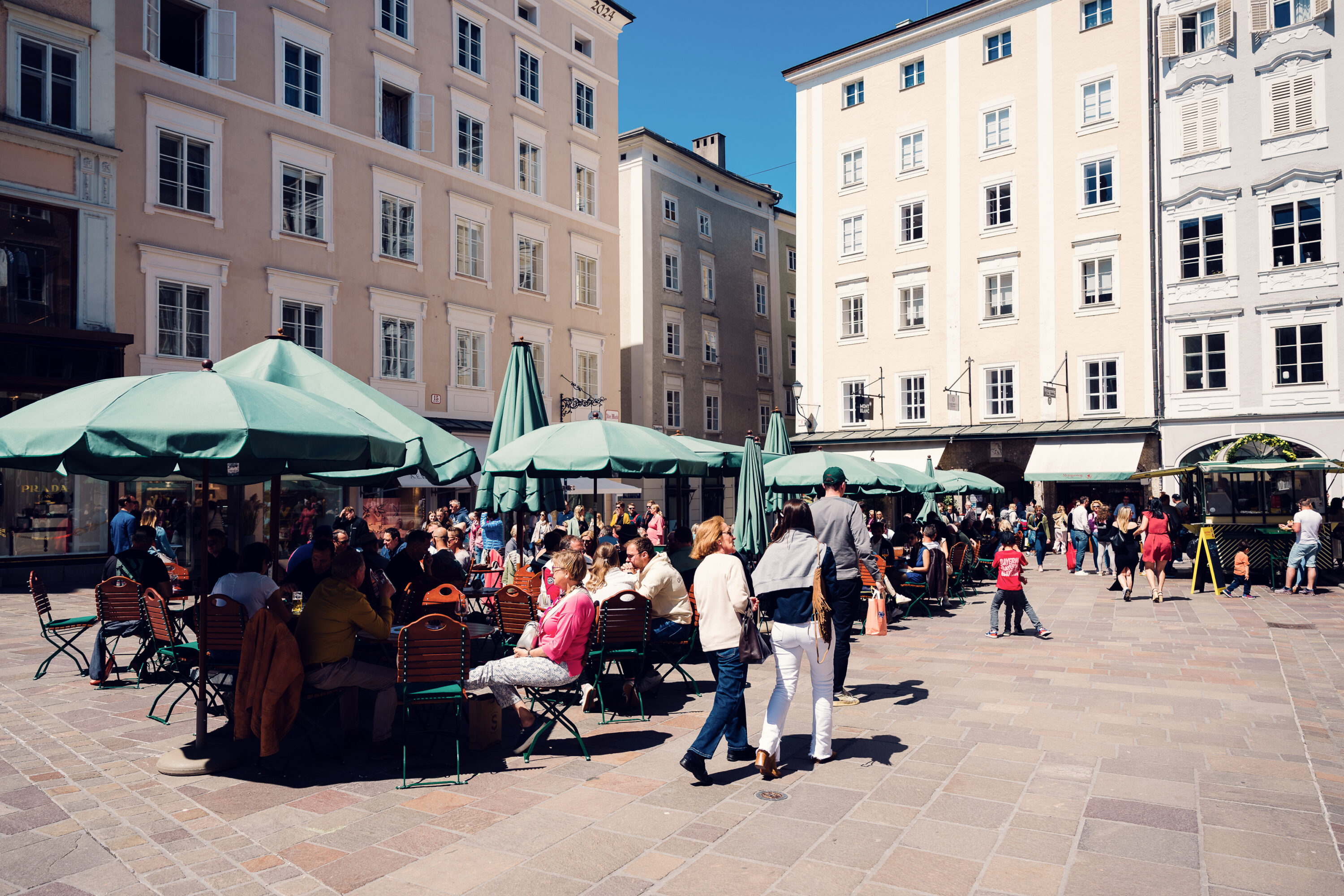
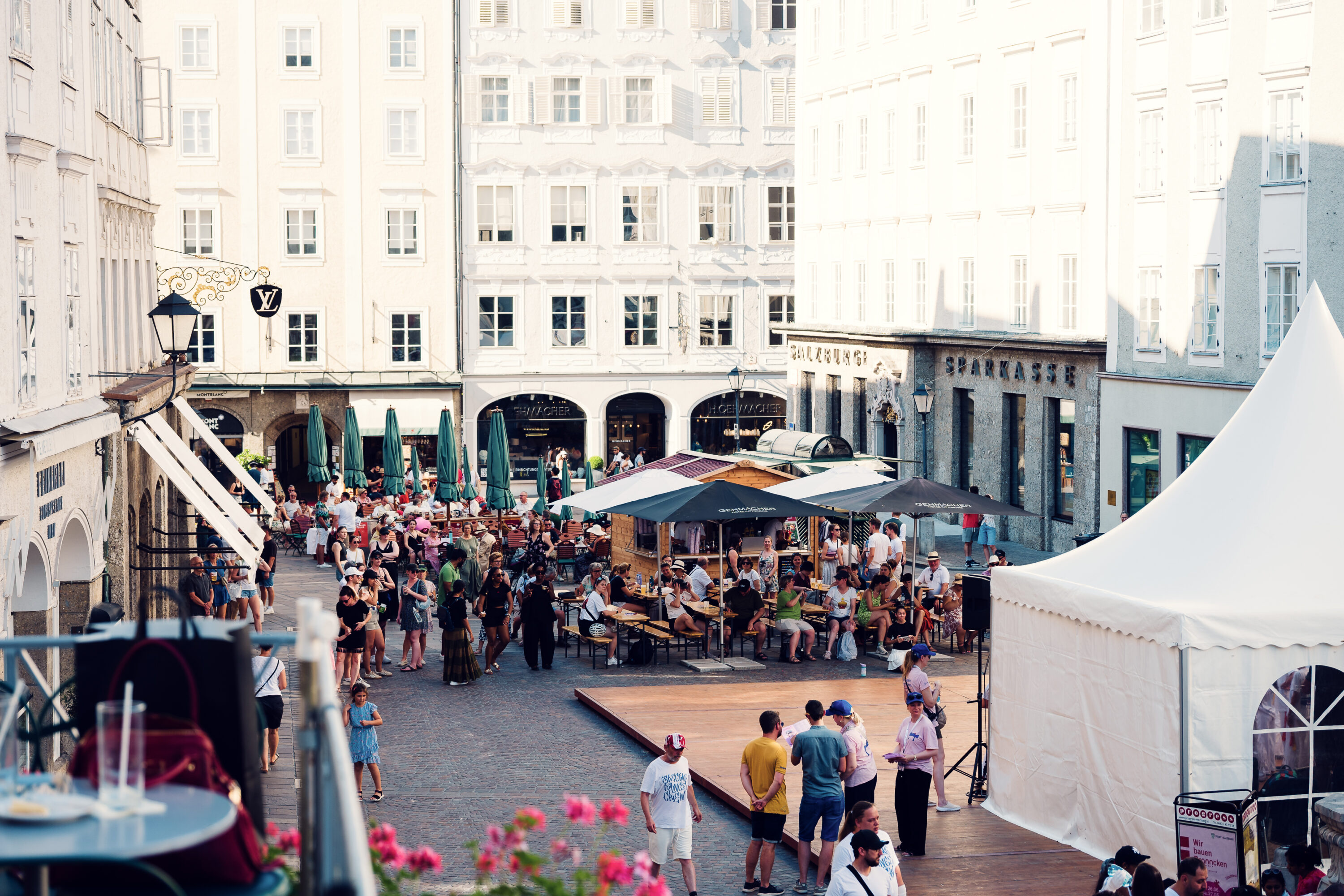
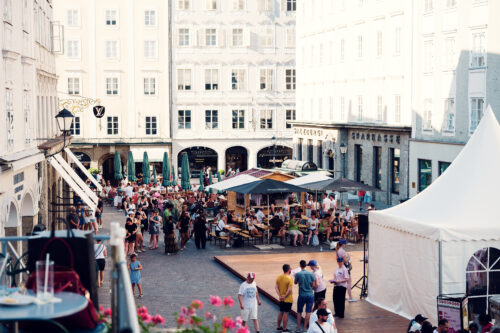
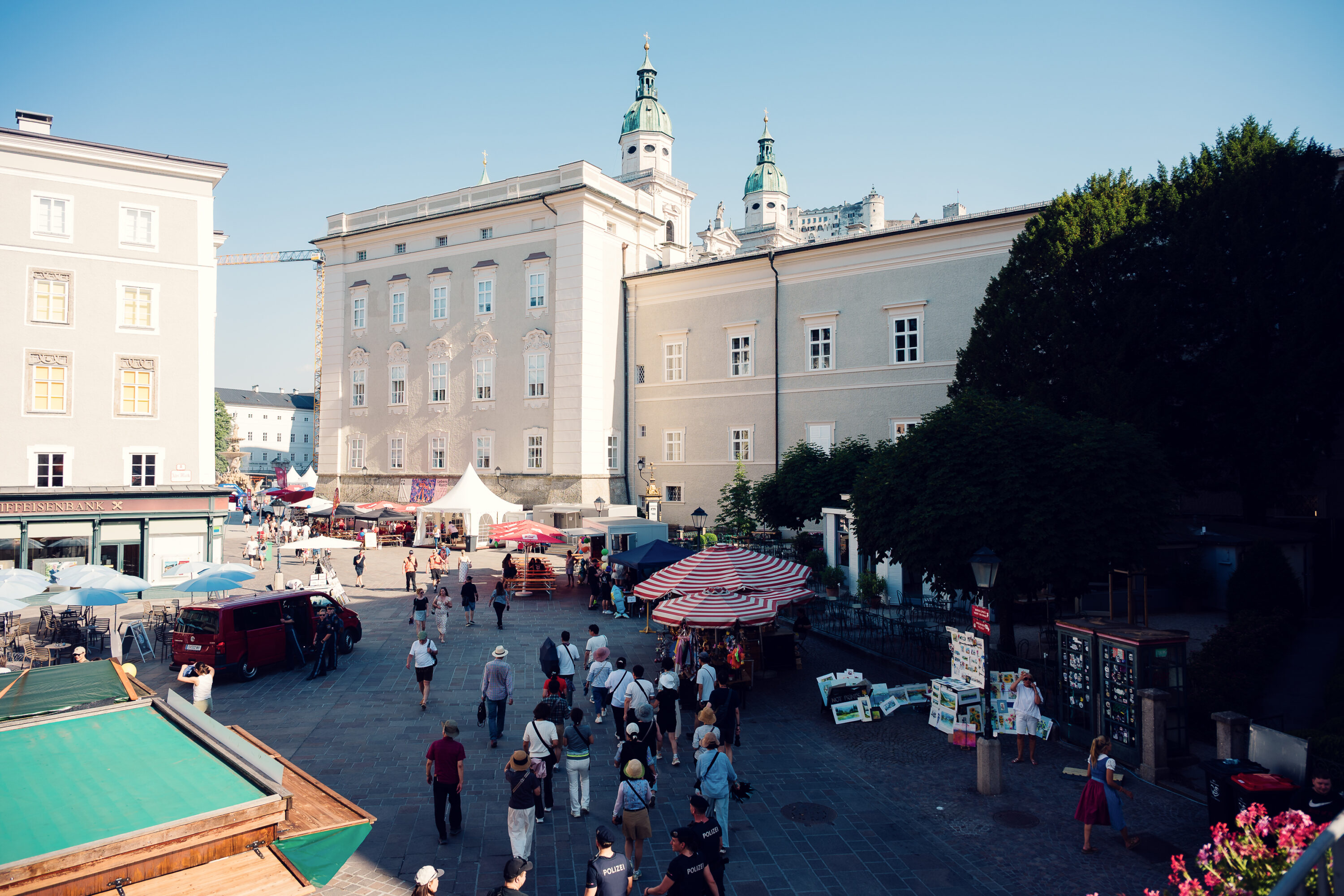
The Alter Markt was established in the mid-13th century as Salzburg’s third marketplace, after the Waagplatz and a smaller trading square at the junction of Brodgasse and Goldgasse. For roughly 600 years, it functioned as the city’s central weekly market, hosting dairy, herb, turnip, and stove-fitters’ stalls alongside the main commercial activity.
But the Alter Markt served more than commercial purposes. It doubled as a stage for public festivals and guild traditions: the Pfingsttanz at Whitsun, the sword dance performed by miners from the Dürnberg salt mines, and the Johannisfeuer celebrating the summer solstice. The barefoot bakers’ dance was held here annually, and until around 1800, the square hosted the Metzgersprung, a ritual where newly qualified butcher apprentices washed themselves in the fountain’s basin before being formally declared journeymen on Ash Wednesday.
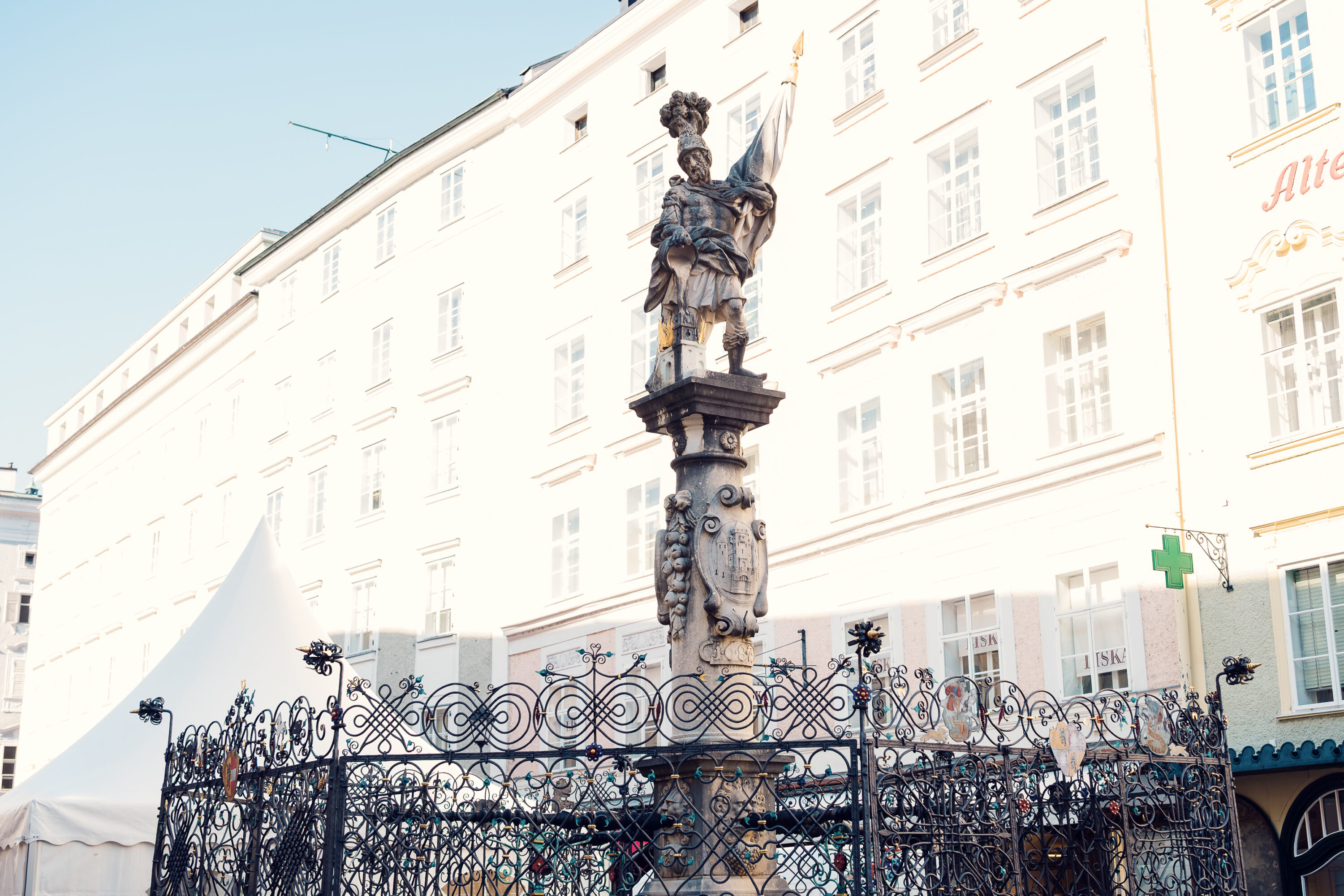
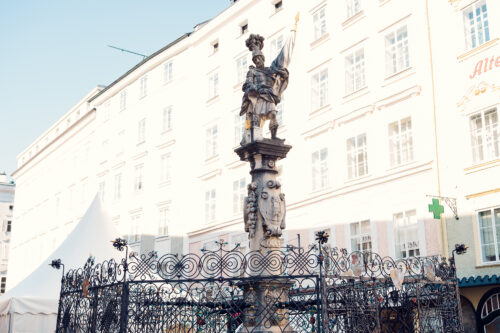
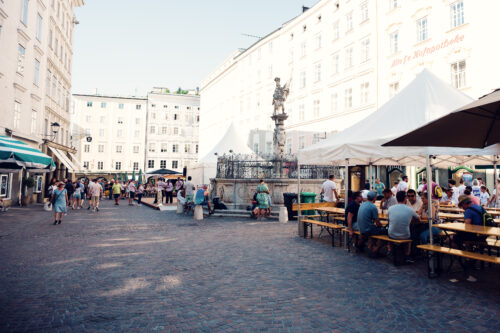
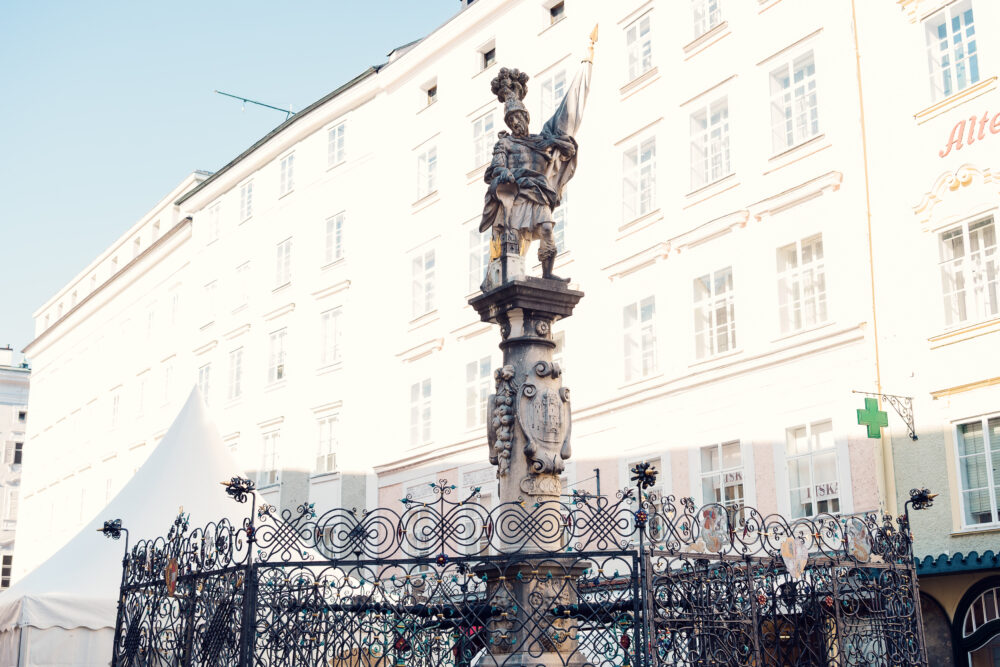
The Florianibrunnen
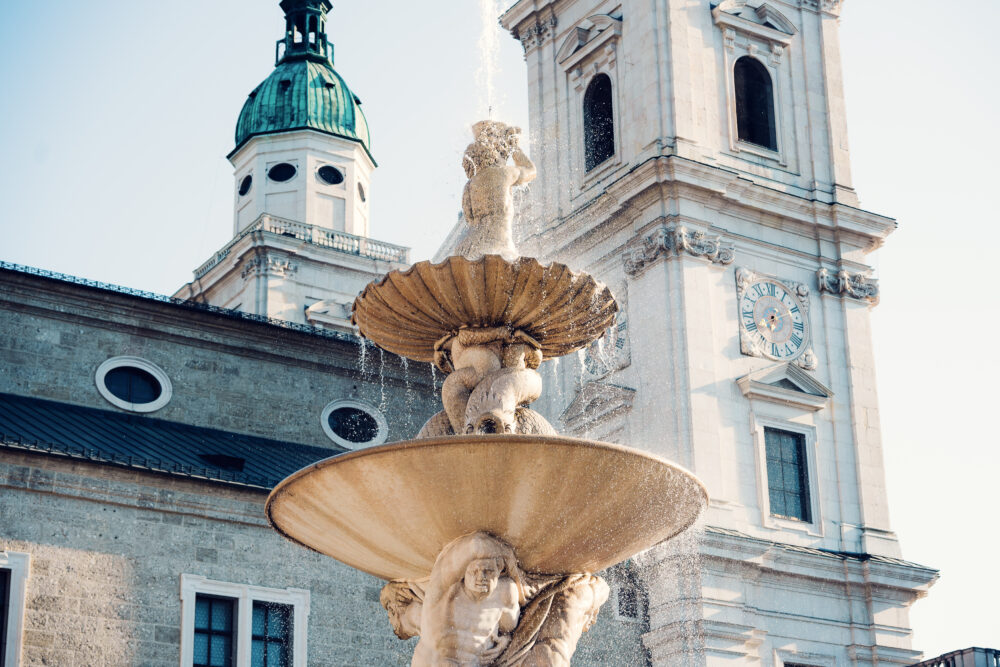
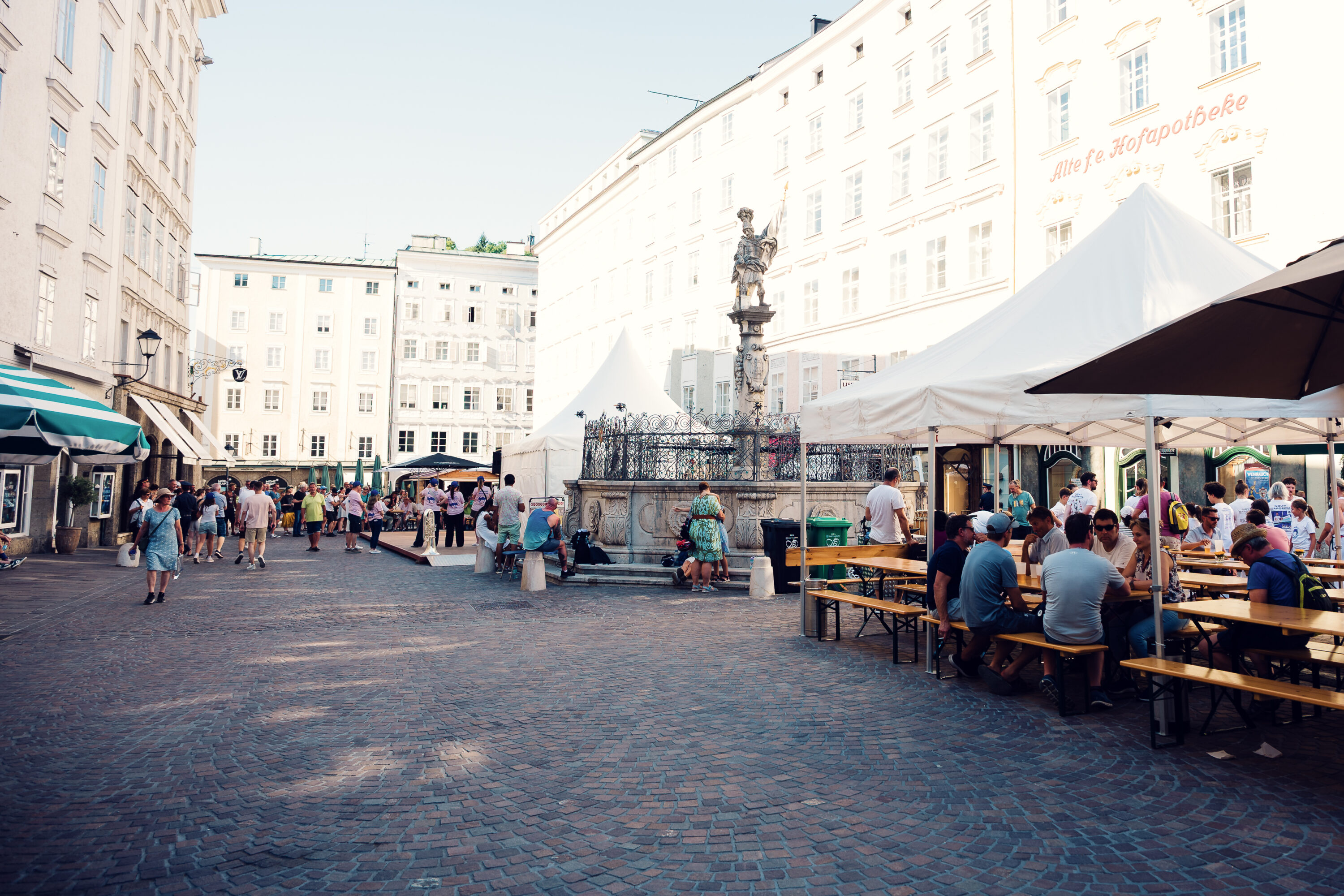
The fountain at the center of the Alter Markt has stood on this site since 1488, when it replaced an older draw well and became the first fountain in the civilian part of the city to receive piped drinking water from the Gaisberg. The original structure was substantially rebuilt between 1685 and 1687, when the eight-sided marble basin was added, decorated with rosettes on the side panels and acanthus leaves at the projecting corners. The wrought-iron spiral grating surrounding the fountain column is older still, dating to 1583. The statue of St. Florian at the top was added in 1734, a fitting choice for a fountain figure given his role as patron saint of firefighters.
The Buildings of the Alter Markt
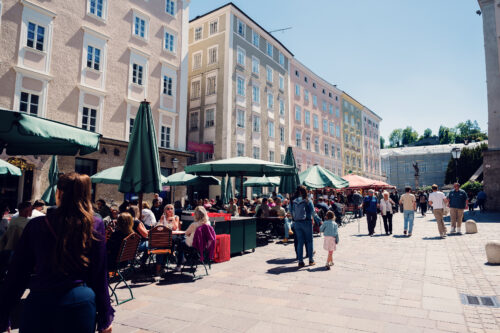
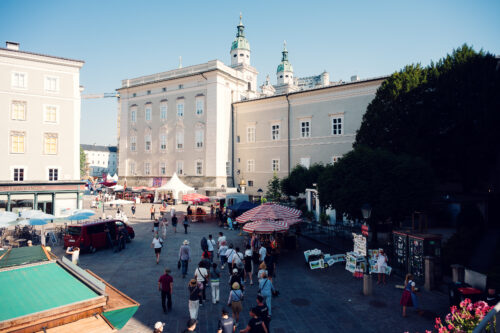
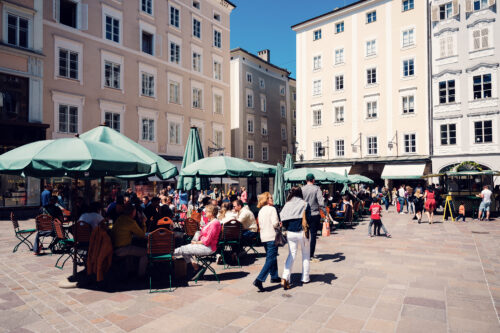
The square is enclosed by a continuous row of townhouses whose core structures mostly date to the medieval period, though their facades were updated in the Baroque and Classical periods. A few buildings stand out.
The Alte fürsterzbischöfliche Hofapotheke (Old Court Pharmacy) has been at the Alter Markt since 1591 and was appointed prince-archiepiscopal court pharmacy in 1647. It moved to its current location at No. 6 in 1903, bringing along its Rococo furnishings from 1777, and still operates today.
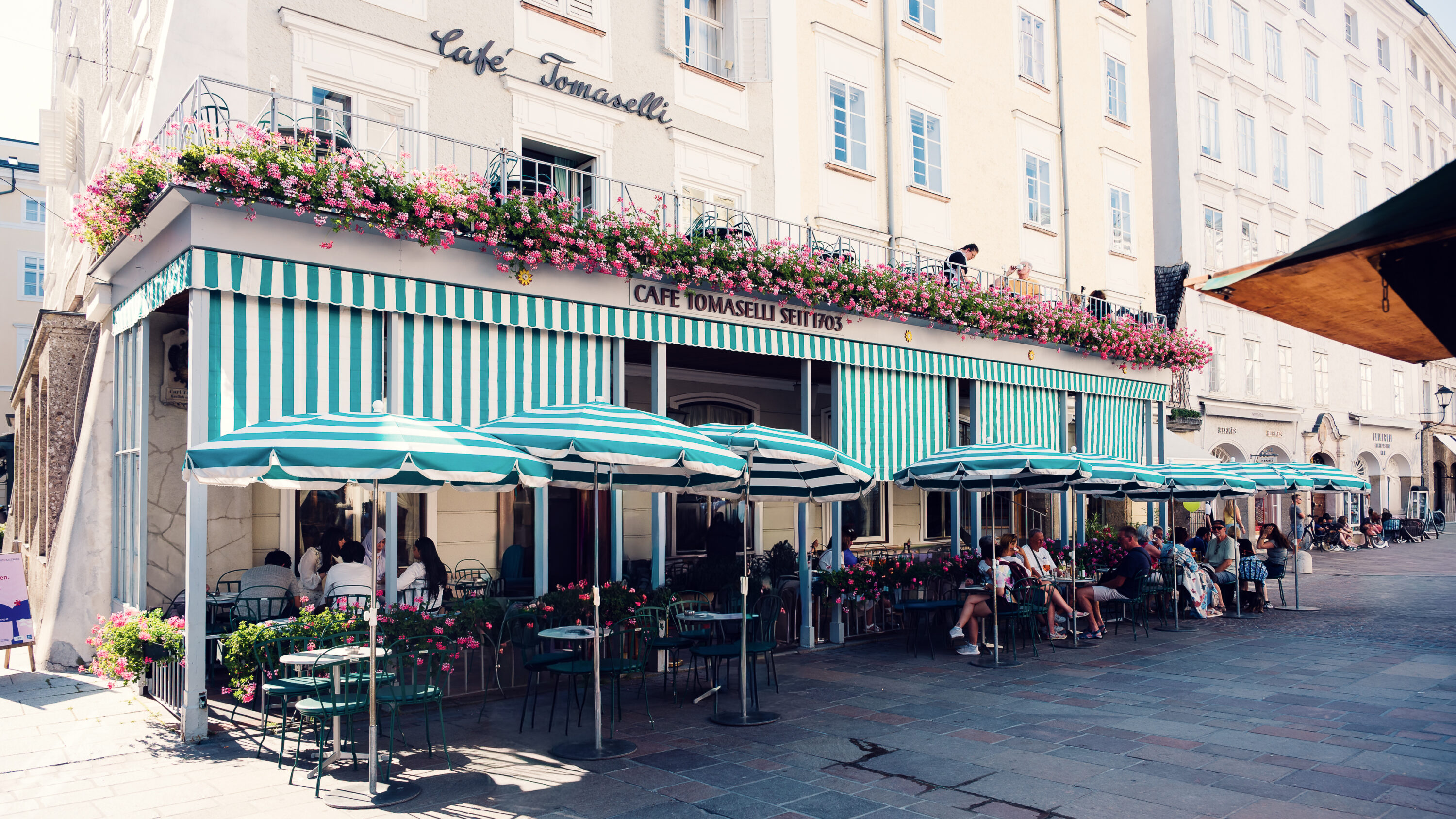
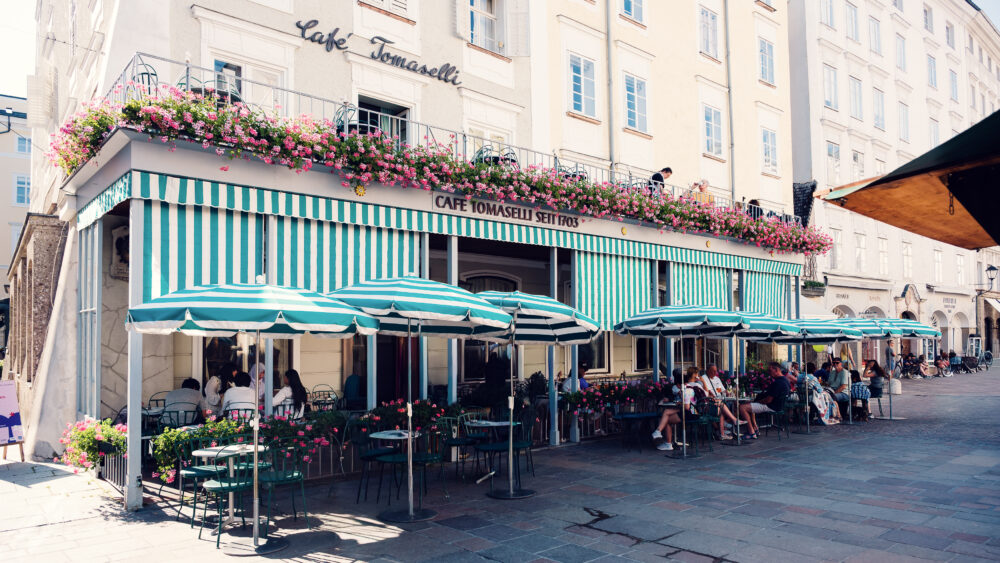
At No. 9 and 10 sits Café Tomaselli, Salzburg’s oldest café and quite possibly the oldest continuously operating coffeehouse in Central Europe. It traces its origins to 1700, when a license to serve coffee, tea, and chocolate was first granted at a nearby location on Goldgasse before the business moved to the Alter Markt.
The Altes Rathaus at the northern edge of the square was acquired by the city in 1407; its present Rococo facade dates from renovations carried out between 1772 and 1775, while the Justitia statue above the portal was created in 1616 and the tower carries a moon-phase clock. Adjacent to it at Kranzlmarkt 3 stands what is probably Salzburg’s oldest surviving patrician house, with a medieval core and a Gothic residential tower.
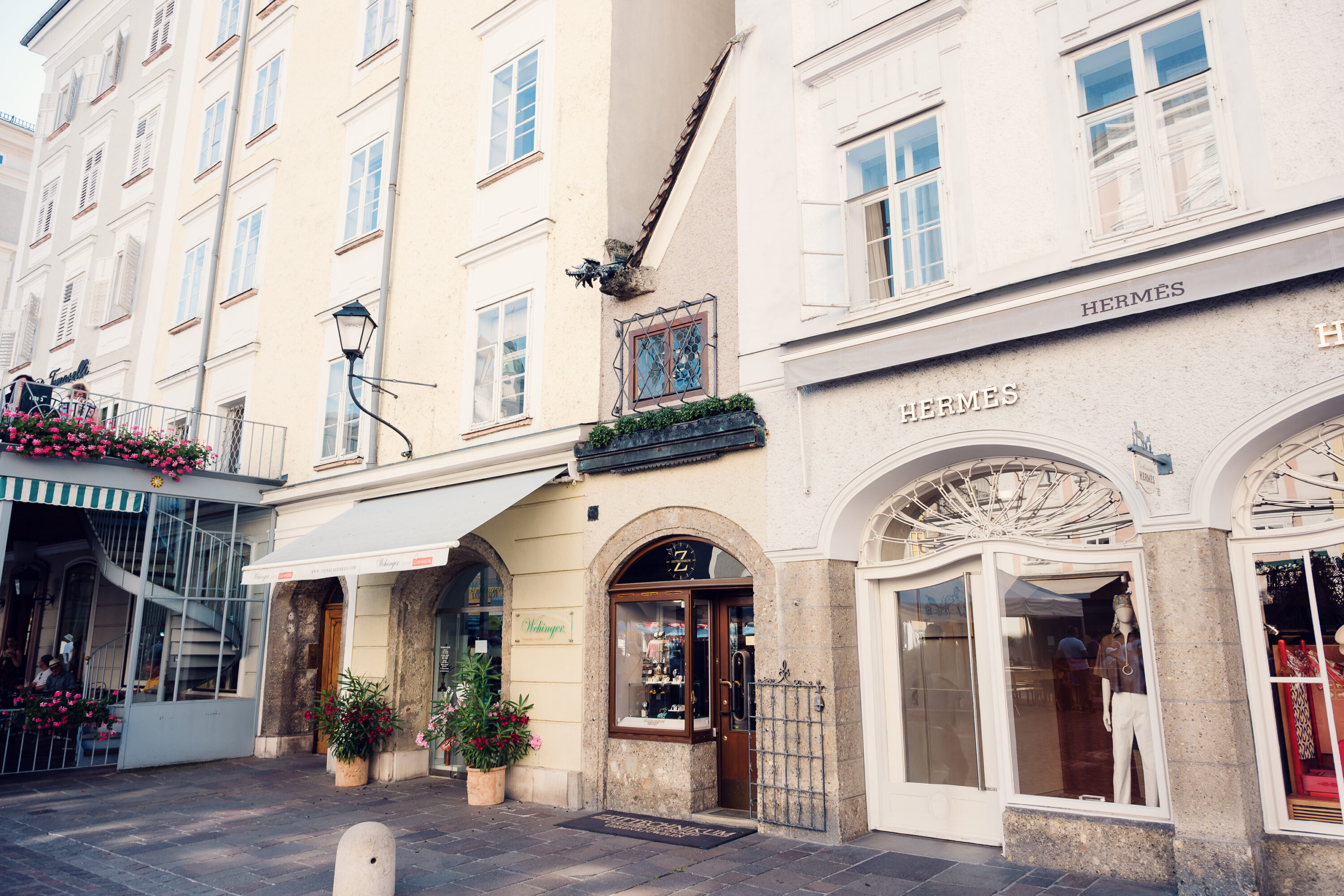
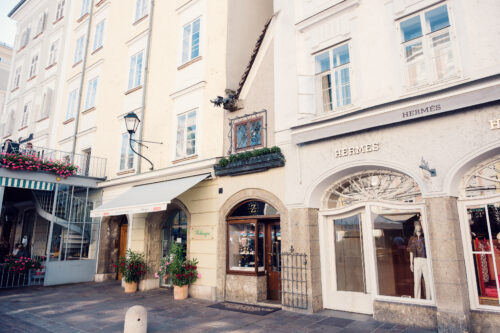
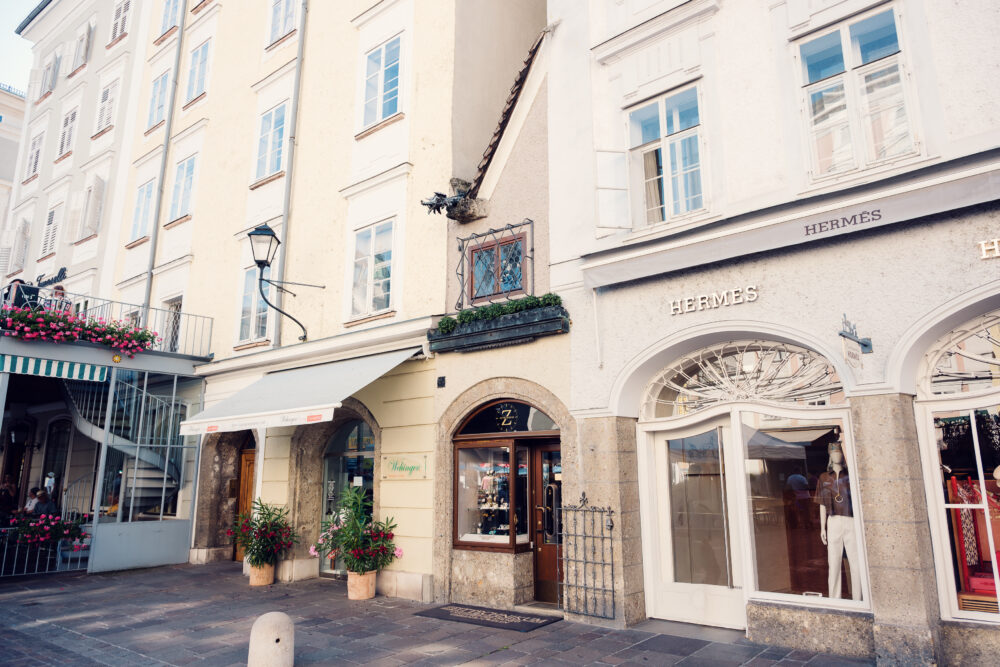
Between the Café Tomaselli and the next building, the smallest house in Salzburg’s Old Town was squeezed into a narrow alley gap between 1830 and 1860. At just 1.42 meters wide, it’s easy to walk past without noticing.
From Market to Monument
In 1857, the weekly market was relocated to the Universitätsplatz, and the square, previously called simply “Marktplatz,” was renamed “Alter Marktplatz.” From 1886 to 1927, it was called Ludwig-Viktor-Platz in honor of Archduke Ludwig Viktor, the youngest brother of Emperor Franz Joseph I, who lived at Schloss Klessheim and was known in Salzburg for his charitable support. In 1927, the city council returned to the historical name, settling on the current “Alter Markt.”
A plaque on the Café Tomaselli building commemorates Constanze Mozart, who lived at the Alter Markt with her second husband in the 1820s.