
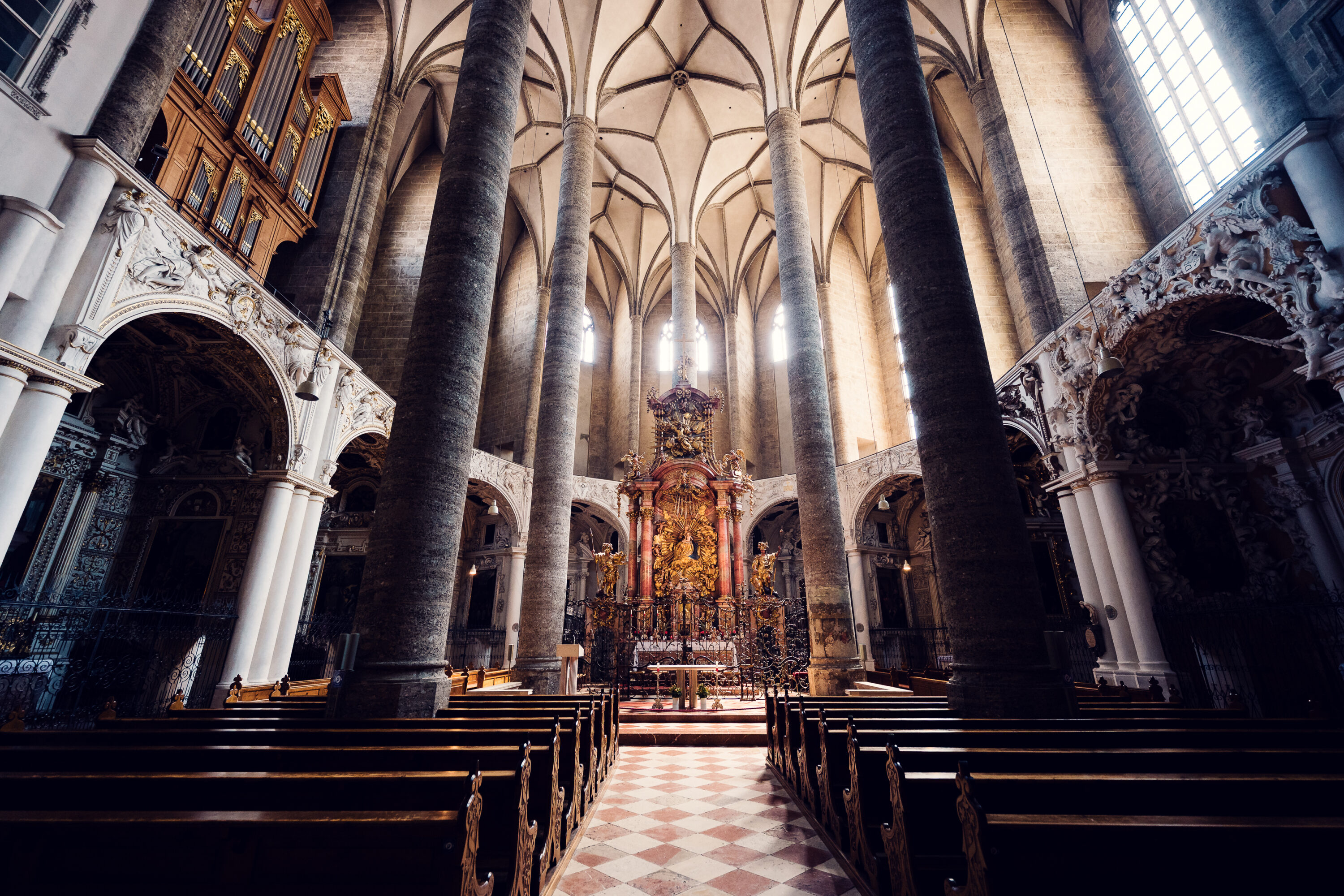
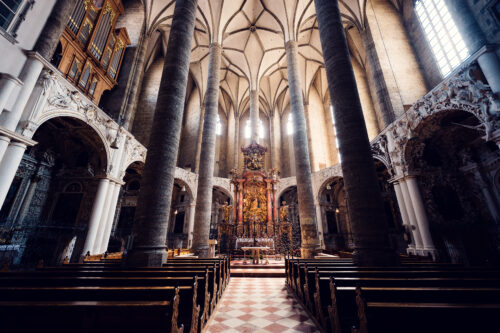
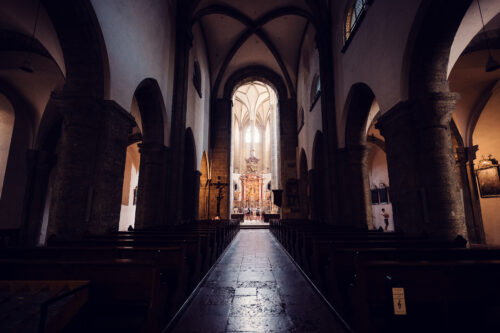
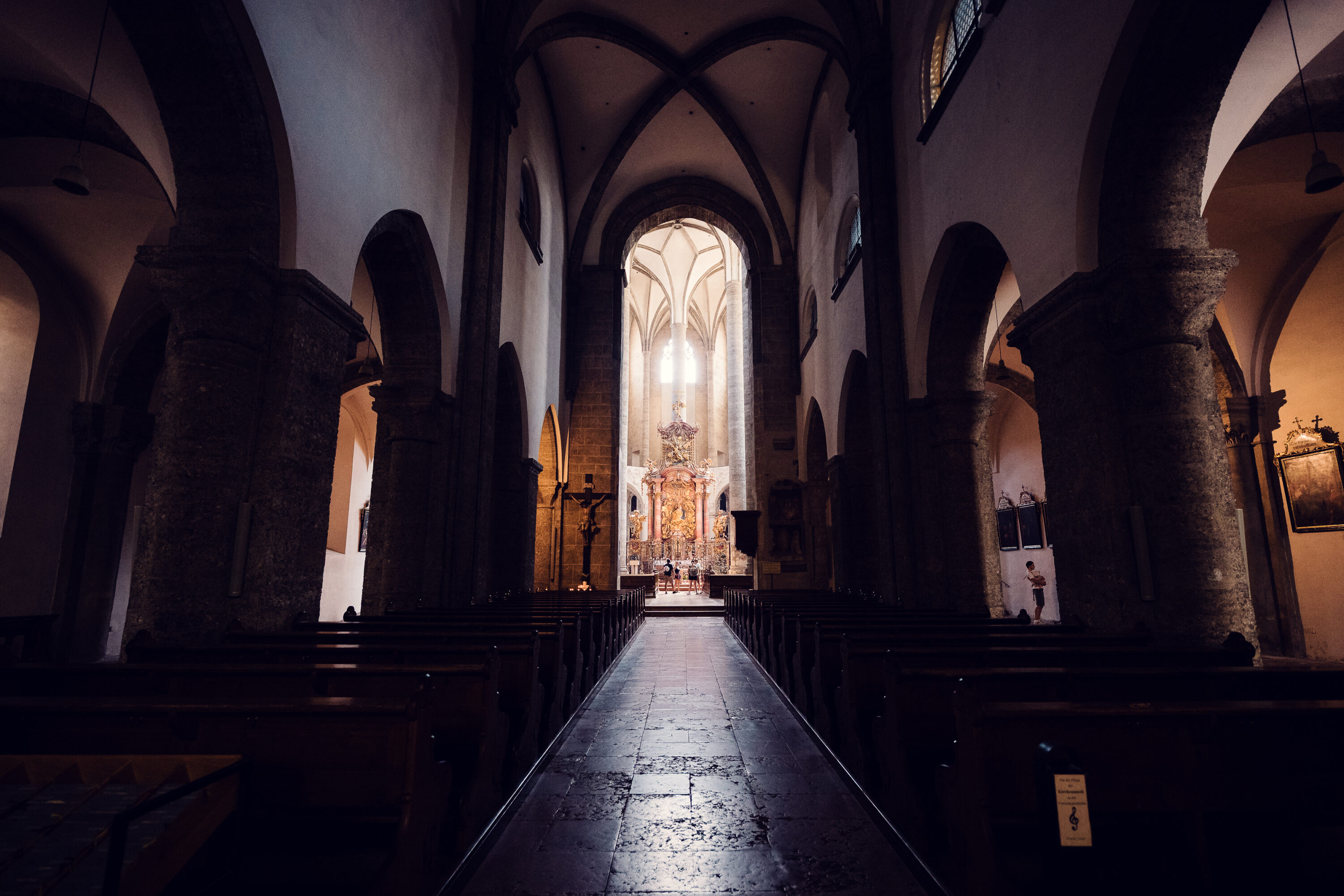
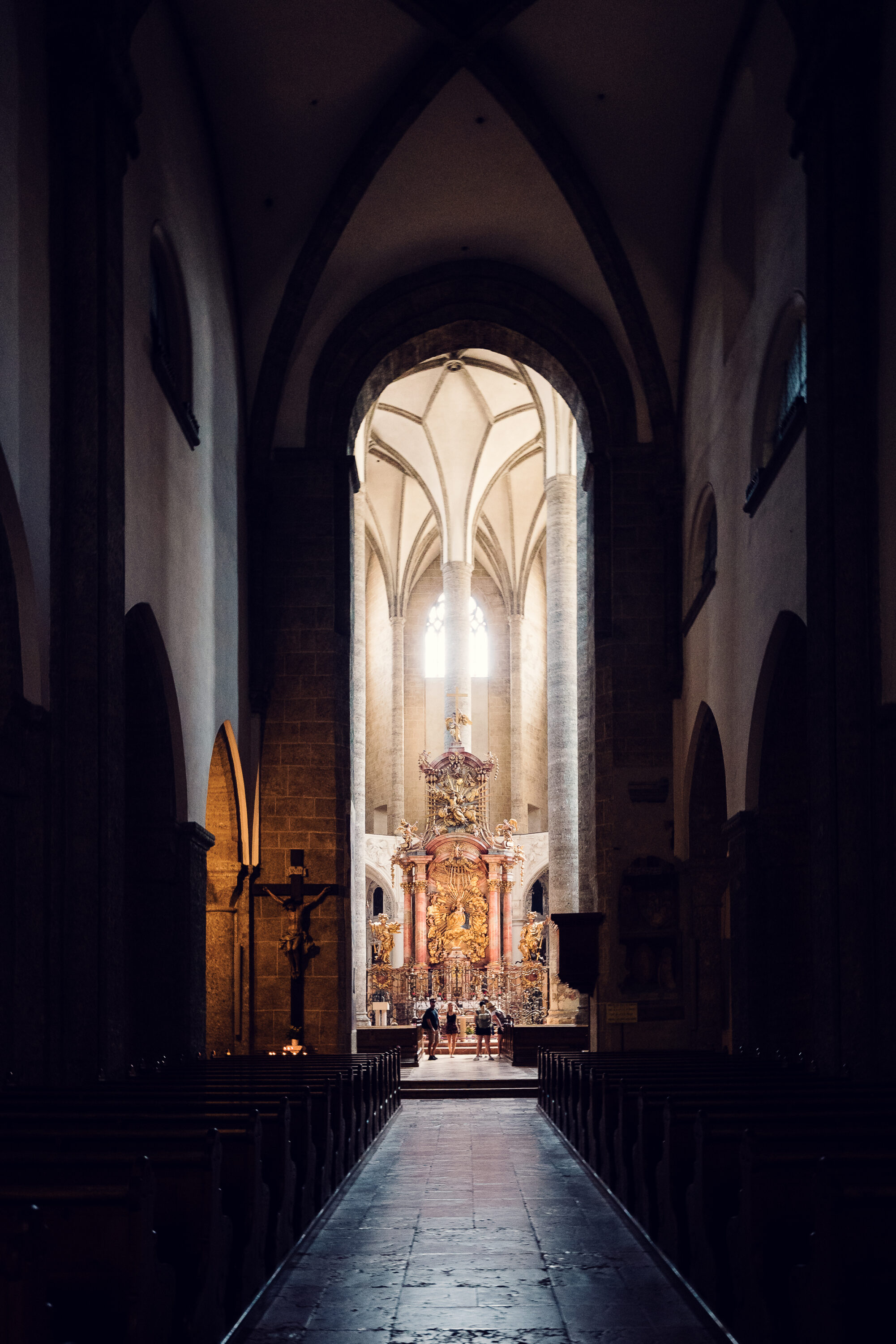
Interior of the Franciscan Church with Gothic vaulting, wooden pews, the organ gallery, and the Baroque high altar.
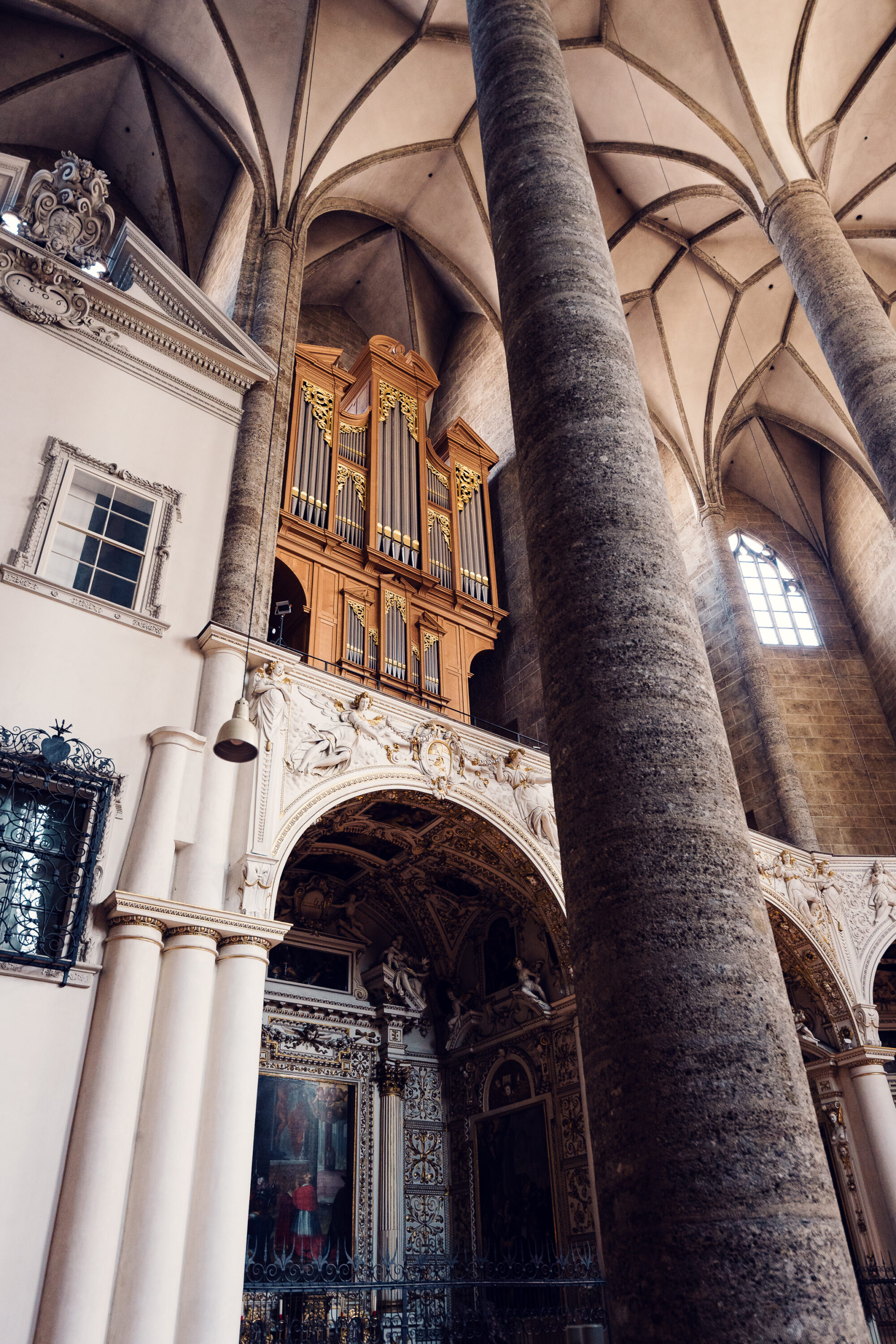
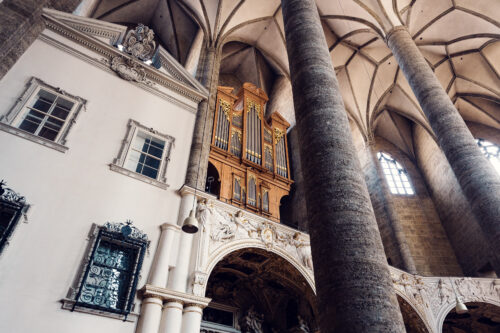
Wide-angle view of the organ gallery and Gothic star vaulting above the side chapels of the Franciscan Church.
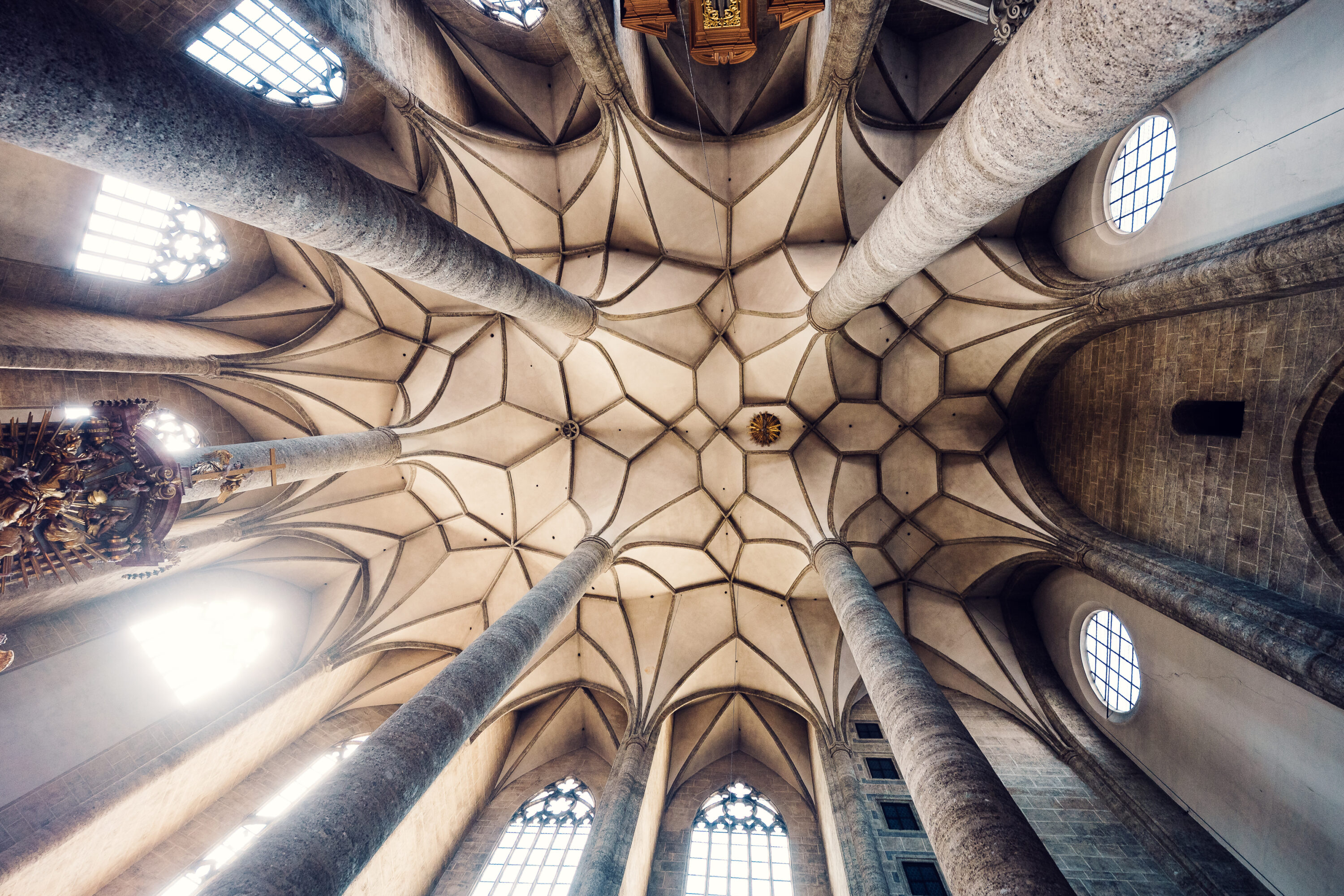
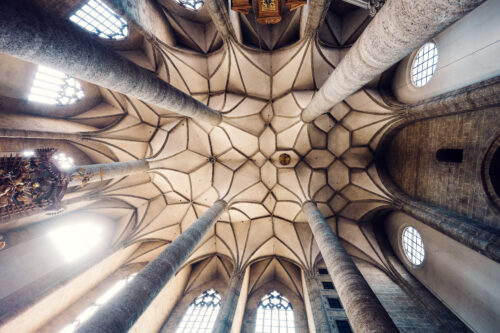
Star-shaped Gothic ribbed vault ceiling of the Franciscan Church seen from directly below with columns converging overhead.
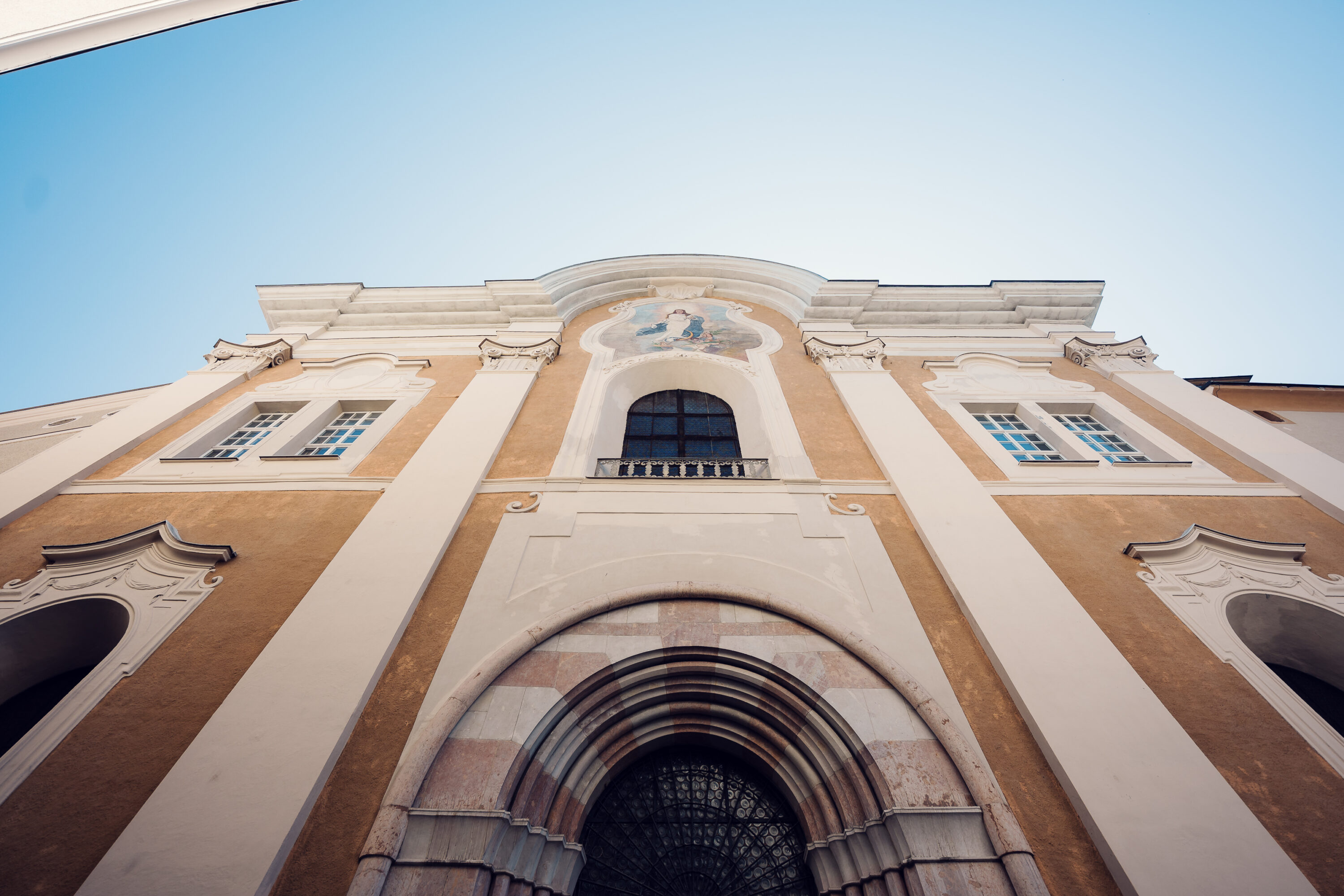
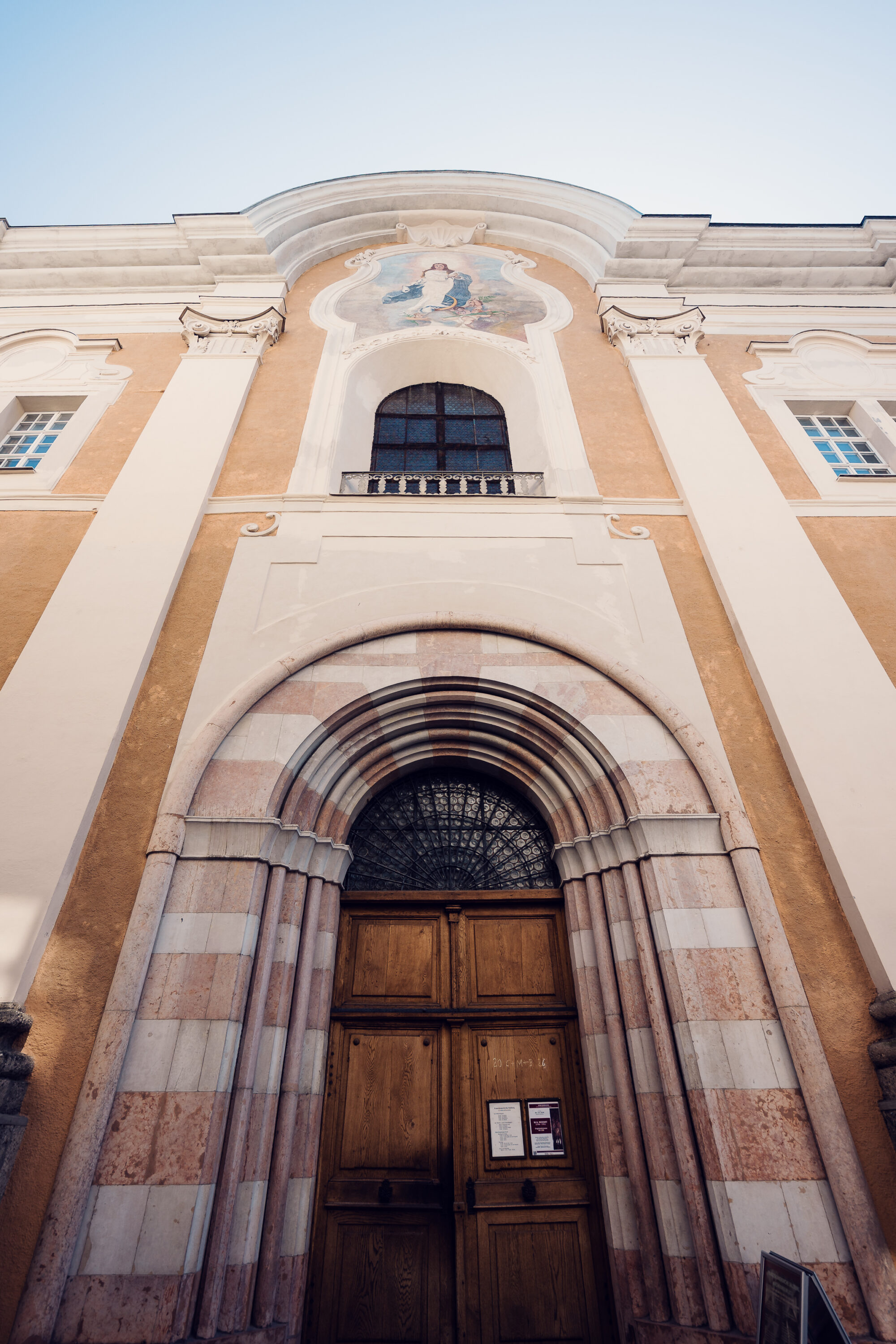
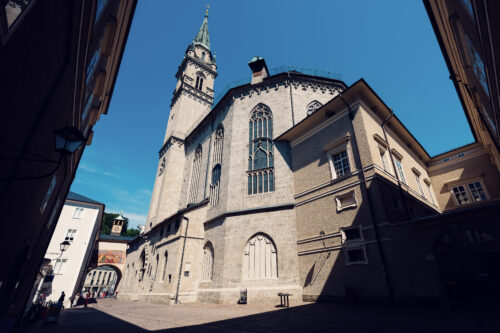
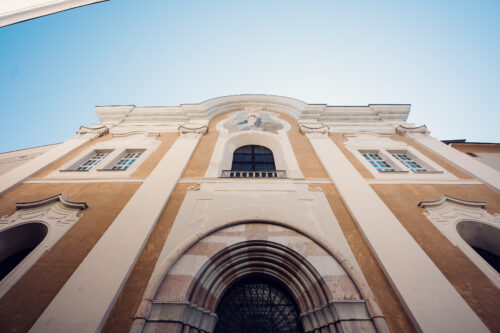
Baroque front facade of the Franciscan Church with ochre walls, white pilasters, and a painted medallion above the entrance.
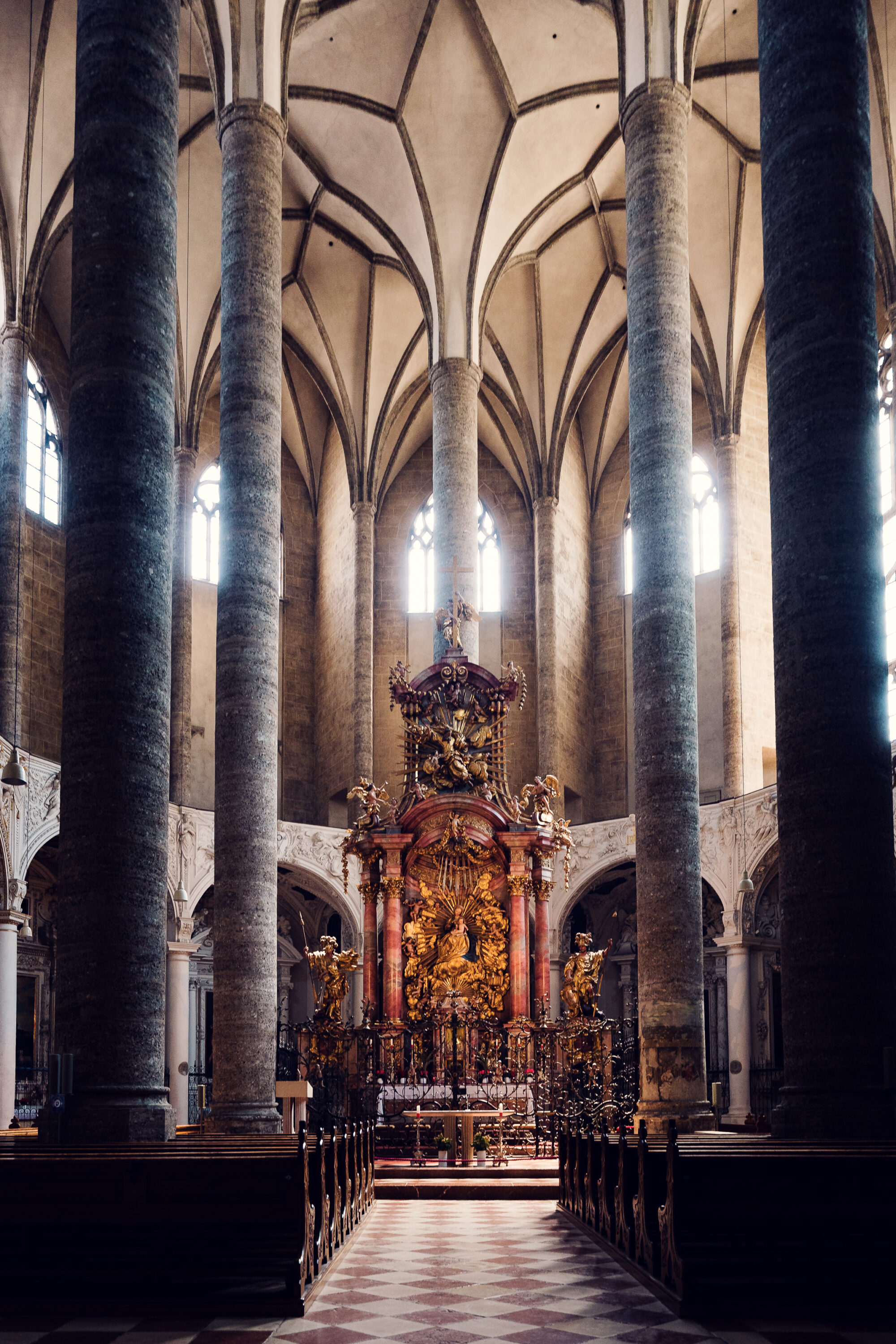
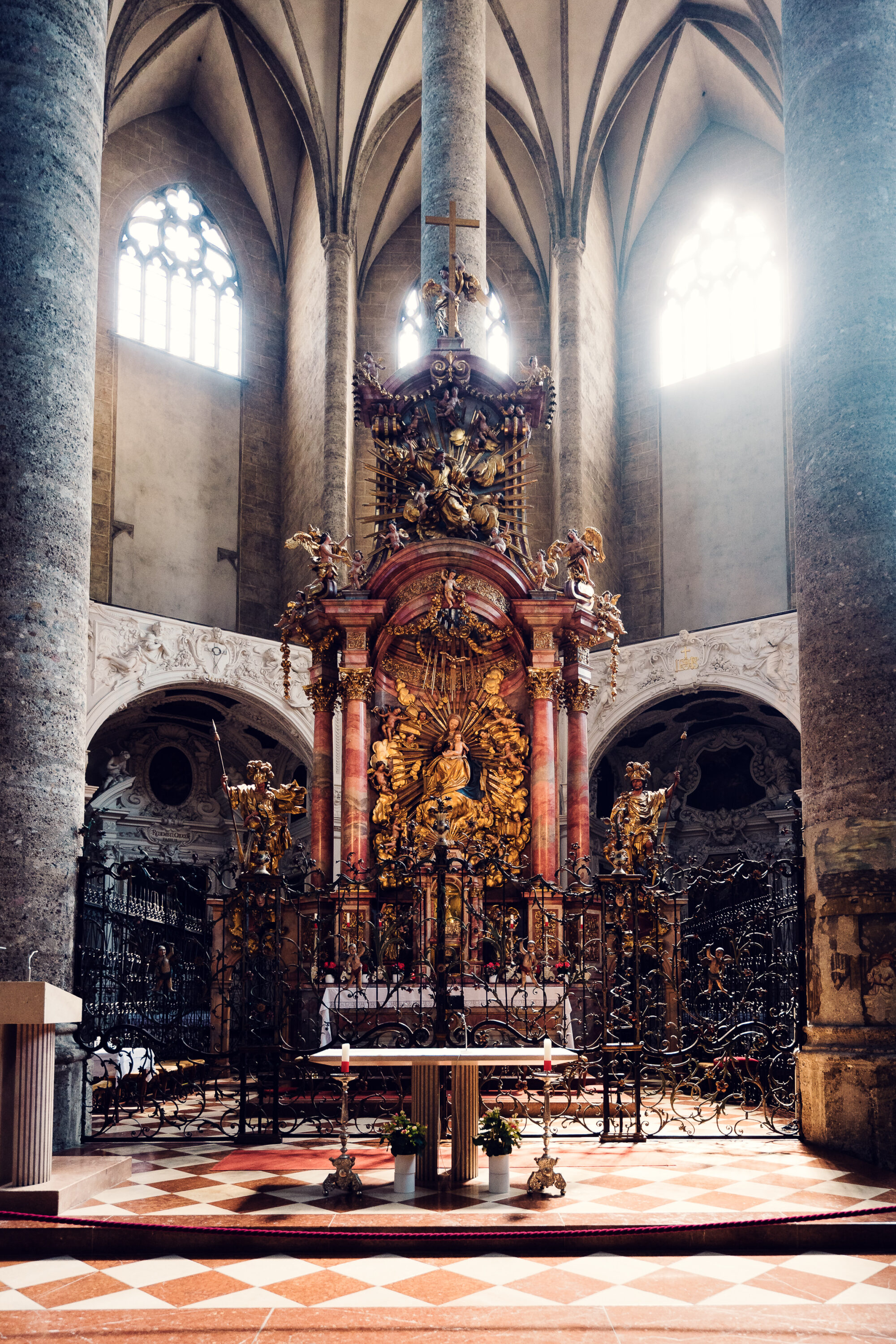
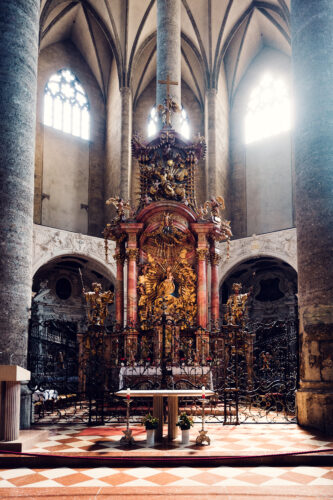
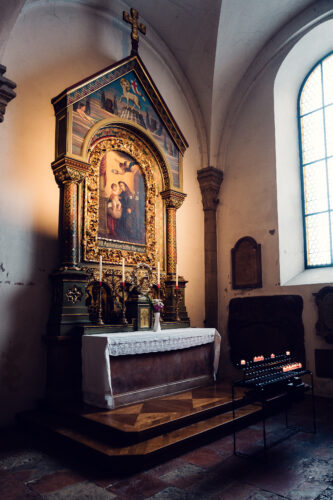
Baroque high altar of the Franciscan Church surrounded by tall Gothic choir columns and star-shaped ribbed vaulting.
Organ on a white Baroque gallery between dark Gothic stone columns with ribbed vaulting above in the Franciscan Church.
Frontal view of the Baroque high altar with its gilded Madonna, marble columns, angel statues, and wrought iron gates.
Main entrance portal of the Franciscan Church with its arched wooden door, striped marble columns, and painted medallion above.
Fall in Love with

Franciscan Church

The Franciscan Church in Salzburg merges a dark Romanesque nave with a soaring Gothic choir. Free entry, famous organ concerts, and three centuries of art.

01 / 04
01 / 04

Franciscan Church

Plan for
45 mins
indoors
Where
Old Town

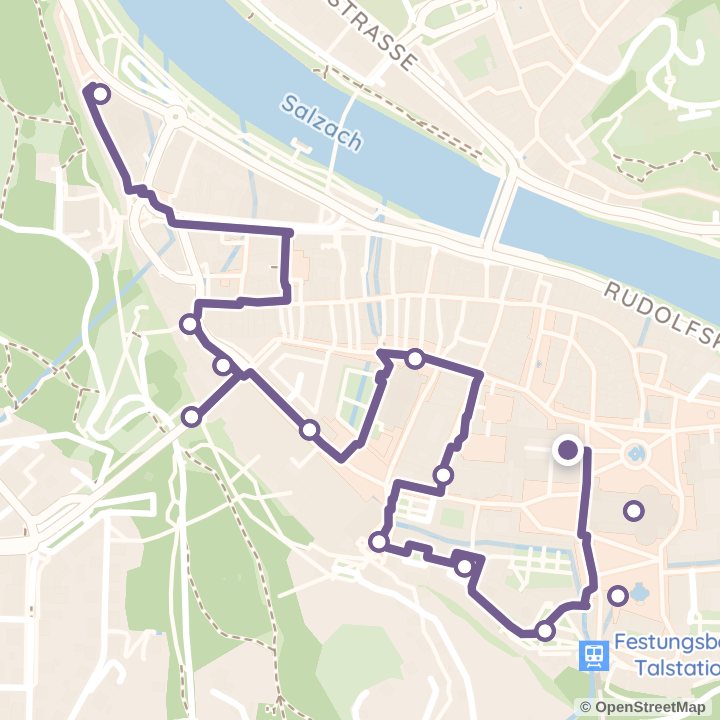
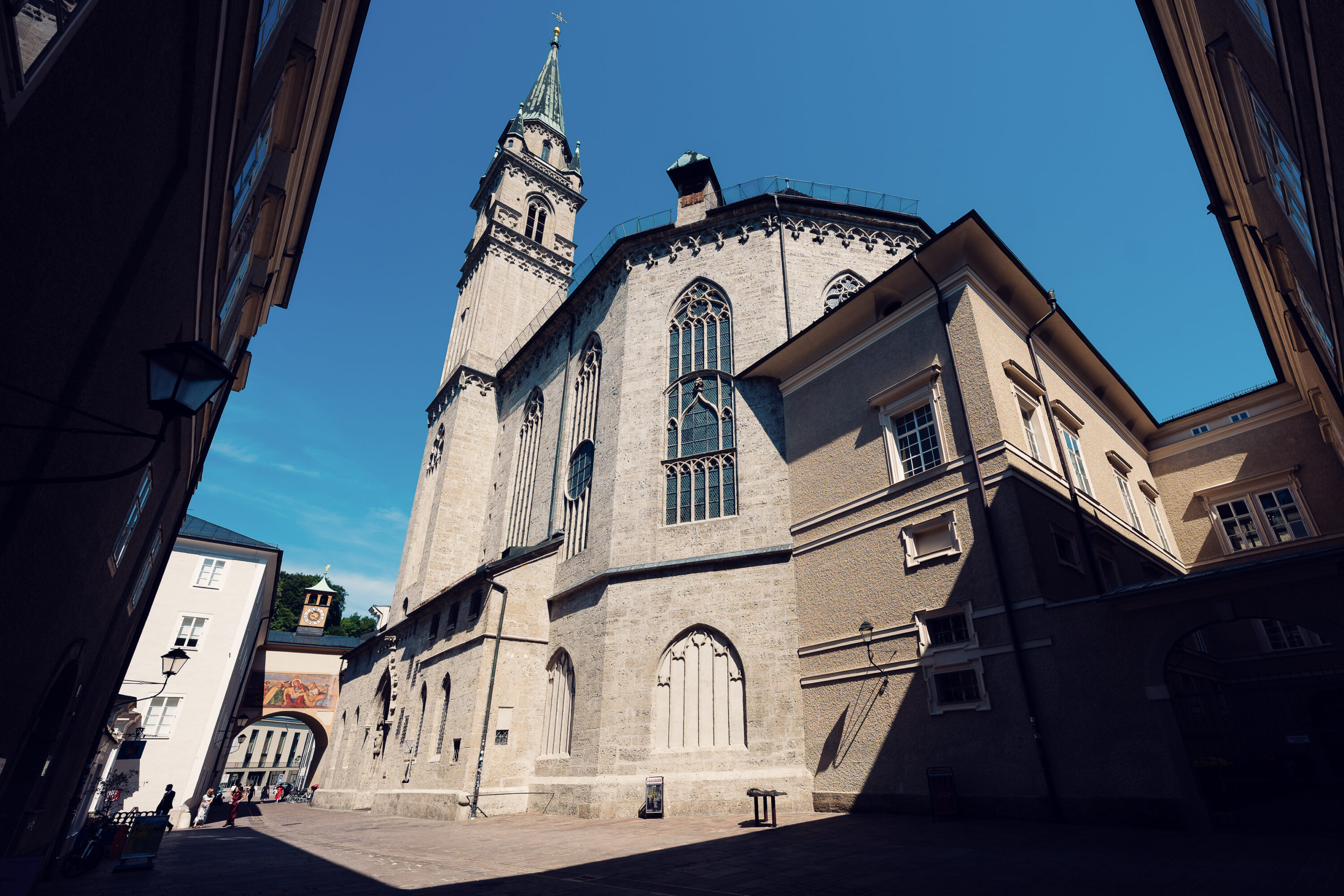
The Franciscan Church is one of Salzburg’s best-known historic churches and one of the city’s oldest surviving buildings, with roots reaching back to the eighth century. Located at the intersection of Franziskanergasse and Sigmund-Haffner-Gasse in the heart of the Altstadt, it sits just steps from the Salzburg Cathedral and the Residenz. Inside, a heavy, dimly lit Romanesque nave from the early 1200s gives way to an airy, light-flooded Late Gothic choir completed around 1450. The contrast between the two halves is one of the most striking interior transitions in any Austrian church.

The high altar, designed by Johann Bernhard Fischer von Erlach in 1709, frames a carved Madonna by Michael Pacher dating to the 1490s. Nine side chapels ring the choir; several were commissioned by Salzburg archbishops or civic patrons, including four archiepiscopal chapels. The Franciscan Church also has a strong musical identity: its three organs, choir, and the orchestra Pro Musica Sacra shape the 9:00 AM High Mass on many Sundays and feast days; the Franciscan Church orchestra is made up predominantly of active and former members of the Mozarteum Orchestra. Admission is free, and the church is open daily.

Plan your visit

Opening Hours
Daily 06:45 - 19:45All hours
Getting there
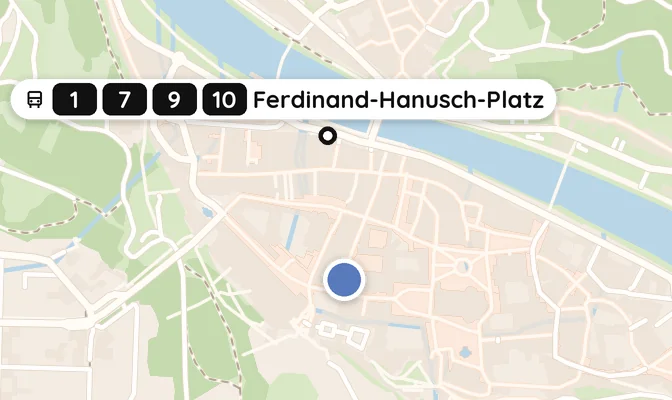
Sigmund‑Haffner‑Gasse 13, 5020 SalzburgBus 1 7 9 10 Ferdinand-Hanusch-Platz · 4 min walkOld Town
Good to know

Wheelchair Access

Website · franziskaner.at

Opening hours

Franciscan Church

Monday06:45 - 19:45
Tuesday06:45 - 19:45
Wednesday06:45 - 19:45
Thursday06:45 - 19:45
Friday06:45 - 19:45
Saturday06:45 - 19:45
Sunday06:45 - 19:45

Mass is held Monday to Saturday at 07:00, 09:00 and 19:00, and on Sundays and public holidays at 09:00 (High Mass), 10:30 and 19:00.


Muvamo Opinion

Most visitors to Salzburg’s Altstadt walk right past the Franciscan Church. The entrance on Sigmund-Haffner-Gasse doesn’t scream for attention, and with the Dom just around the corner, it’s easy to skip. That would be a mistake.

Inside, you get something no other Salzburg church has: two completely different buildings in one. The front half is a heavy, dark Romanesque nave from the 1200s. Low ceilings, thick pillars, not much light. Then the space opens into a Gothic choir that feels like it belongs to a different century and a different architect entirely. Tall, bright, with columns so thin they shouldn’t be holding anything up. The shift between the two sections is the whole point, and it works every time.

The high altar is Fischer von Erlach at full volume: big, dramatic, gold and red marble. But the real star is the small Gothic Madonna by Michael Pacher at its center, carved in the 1490s and somehow holding her own against all that Baroque excess.

Where the Franciscan Church really earns your time is the music. The Sunday and feast-day High Mass at 9:00 AM is often musically elaborate, with choir, organ, and on many dates the orchestra Pro Musica Sacra performing works by composers such as Mozart, Haydn, Schubert, Hummel, and others. Hearing sacred music by Mozart during a regular Catholic mass in his own city still feels unusually special.

If you’ve got 30 to 45 minutes between the Dom and St. Peter’s, this is where they should go. Free entry, no crowds, and an interior that rewards a slow lap around the chapels.

Helpful Hints

  • The Franciscan Church is open daily from 6:45 AM to 7:45 PM; sightseeing is not possible during services. Admission is always free.
  • Sunday and feast-day High Mass is normally at 9:00 AM; many services feature the choir, organ, and sometimes orchestra, with Pro Musica Sacra drawing predominantly on active and former Mozarteum Orchestra members. Arrive 10-15 minutes early for a seat in the choir section where the acoustics are strongest.
  • Organ concerts and special church music events take place throughout the year. Summer organ concerts are ticketed; regular liturgical services with music are free, with donations often requested. Check the church music schedule for dates.
  • During the Salzburg Festival (July-August), the church hosts performances. Check the Salzburg Festival program for dates and tickets.
  • The church is wheelchair accessible via a ramp on the left side. The ramp also provides access to the altar area.

Gastronomic Discoveries

  • Stiftsbäckerei St. Peter is one of Salzburg’s oldest bakeries, with written references going back to the twelfth century and the Almkanal tradition linked to 1160. It’s a short walk from the Franciscan Church toward St. Peter’s. Grab fresh bread or a Bierstangerl.
  • The Stiegl-Keller on the Festungsberg is within walking distance and pairs Salzburg’s local Stiegl beer with traditional Salzburger Nockerl and panoramic views.

Hidden Gems

  • On the right side of the Baroque entrance portal, look for a carved stone hand in a swearing position. Two competing legends explain it: one says the mason swore never to replicate this gate, the other marks the church as a sanctuary for the persecuted.
  • The large Marienglocke rings every Friday at 3:00 PM in memory of the hour of Christ’s death. The Armeseelen bell rings daily after the evening ringing.

Our Little Extras

  • The Franciscan Church houses three pipe organs. The Heilig-Geist organ, built by Swiss maker Metzler in 2003, has served as the church's main organ since then.

Eight Centuries Between Darkness and Light - Franciscan Church

The earliest Marian church on this site may predate the cathedral building associated with Saint Virgil; in the eighth century, Virgil is associated with restoring or developing the church as a Marian, baptismal, and synodal church. He may have used the building for baptisms, a function it served alongside the cathedral community for centuries. A document from 1139 records a parish church here, but that building was destroyed by fire in 1167 along with five other Salzburg churches, including the Dom.

Reconstruction began around 1208 in the late Romanesque style. The late Romanesque nave, with its ribbed vaulting and heavy supports, was consecrated in 1223. Today the Franciscan Church remains one of the oldest standing structures in Salzburg, a rare physical link to the city's pre-Gothic past.

The Gothic Transformation

The church's most dramatic architectural chapter began in 1408 when Master Hans von Burghausen started work on a new choir to replace the Romanesque original. What he and his successor Stefan Krumenauer completed by 1450 was a masterpiece of Late Gothic hall-church design: three naves of equal height, slender cylindrical columns rising to a star-ribbed vault, and large windows that flood the space with light. The choir stands at roughly twice the height of the Romanesque nave, and the transition between the two creates an almost theatrical experience of spatial expansion.
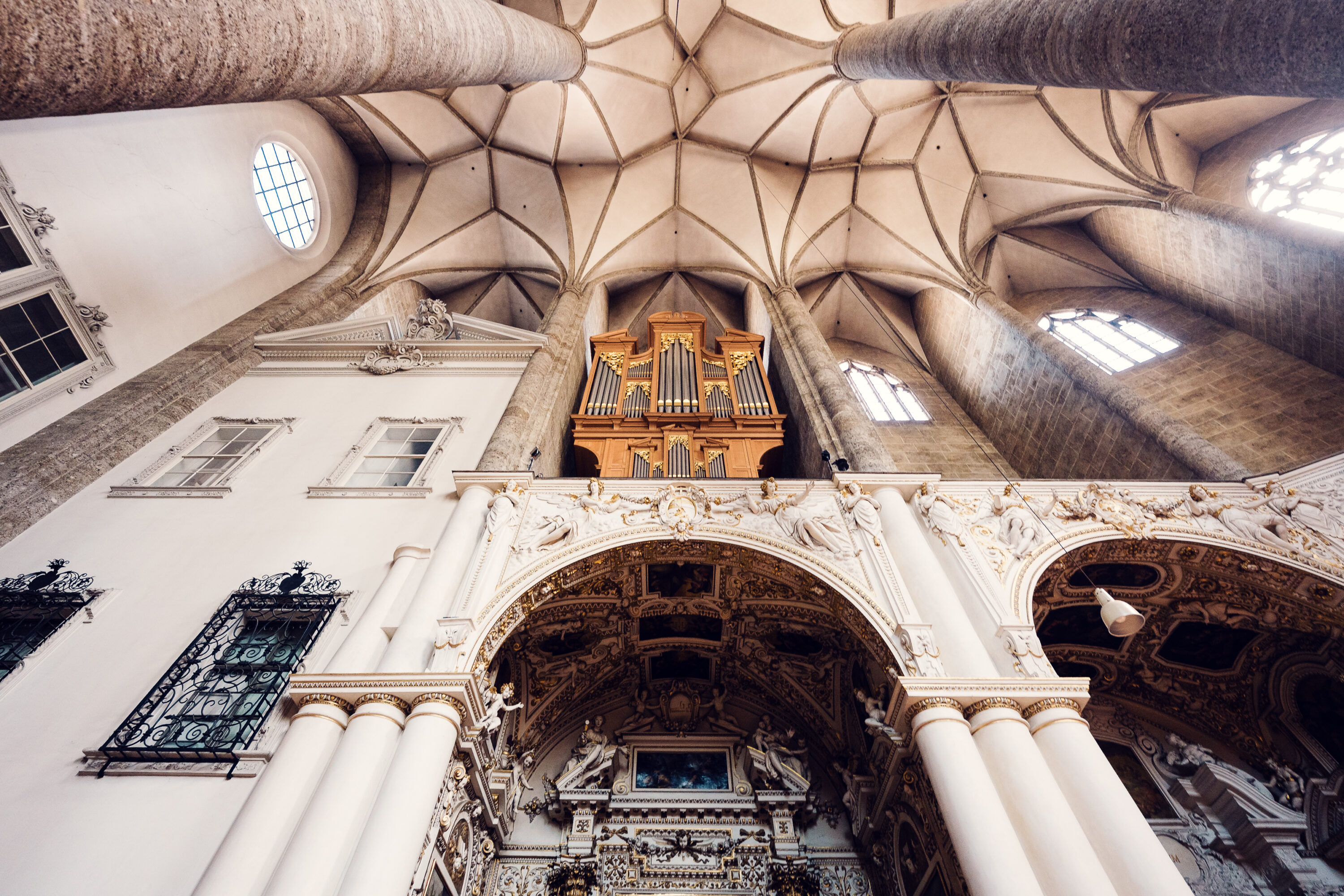
Looking up at the Gothic star vaulting and Baroque organ gallery from the nave of the Franciscan Church.
The Franciscan Church blends a dark Romanesque nave with a soaring Gothic choir, a golden Baroque high altar, and an organ perched on a white stucco gallery.

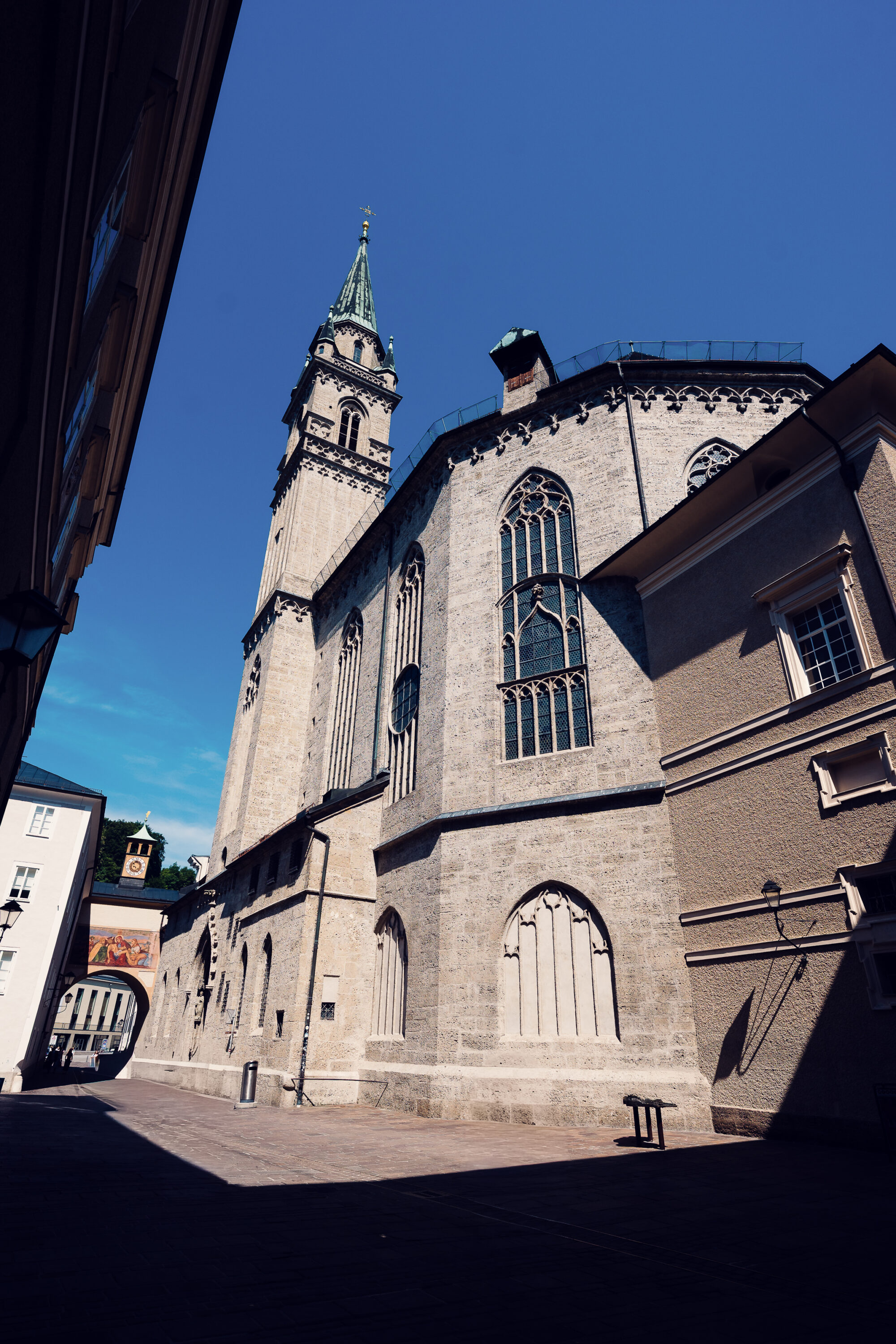
The Gothic tower was expanded in the late fifteenth century; the tower's upper storeys are generally dated to 1486-1498, with the present Gothic tower completed around 1496/1498. It soon became a point of controversy. In 1670, Archbishop Max Gandolf von Kuenburg ordered the spire removed because he considered it improper for the Franciscan Church's tower to exceed the height of the cathedral. The Neo-Gothic restoration of the spire followed in 1866-67 under Josef Wessicken.

From Parish Church to Franciscan Convent

The Franciscan Church served as Salzburg's main parish church for centuries, dedicated to the Virgin Mary. That changed in 1635 when the rebuilt cathedral took over the parish role. The building had been assigned to the Franciscan Order by Archbishop Wolf Dietrich von Raitenau in 1592, and it became their convent church. Wolf Dietrich also created a connecting corridor to the Residenz, allowing the archbishop to attend services without stepping outside.

The Baroque period brought Johann Bernhard Fischer von Erlach's high altar in 1709-1710, a grand marble-and-gold structure built around Michael Pacher's Gothic Madonna. Throughout the seventeenth century, the archbishops and their patrons filled the radial chapels with Baroque decoration, each chapel reflecting the taste and ambition of its donor. The Franziskuskapelle, commissioned by Archbishop Johann Ernst Thun, features frescoes by Johann Michael Rottmayr depicting scenes from the life of St. Francis.
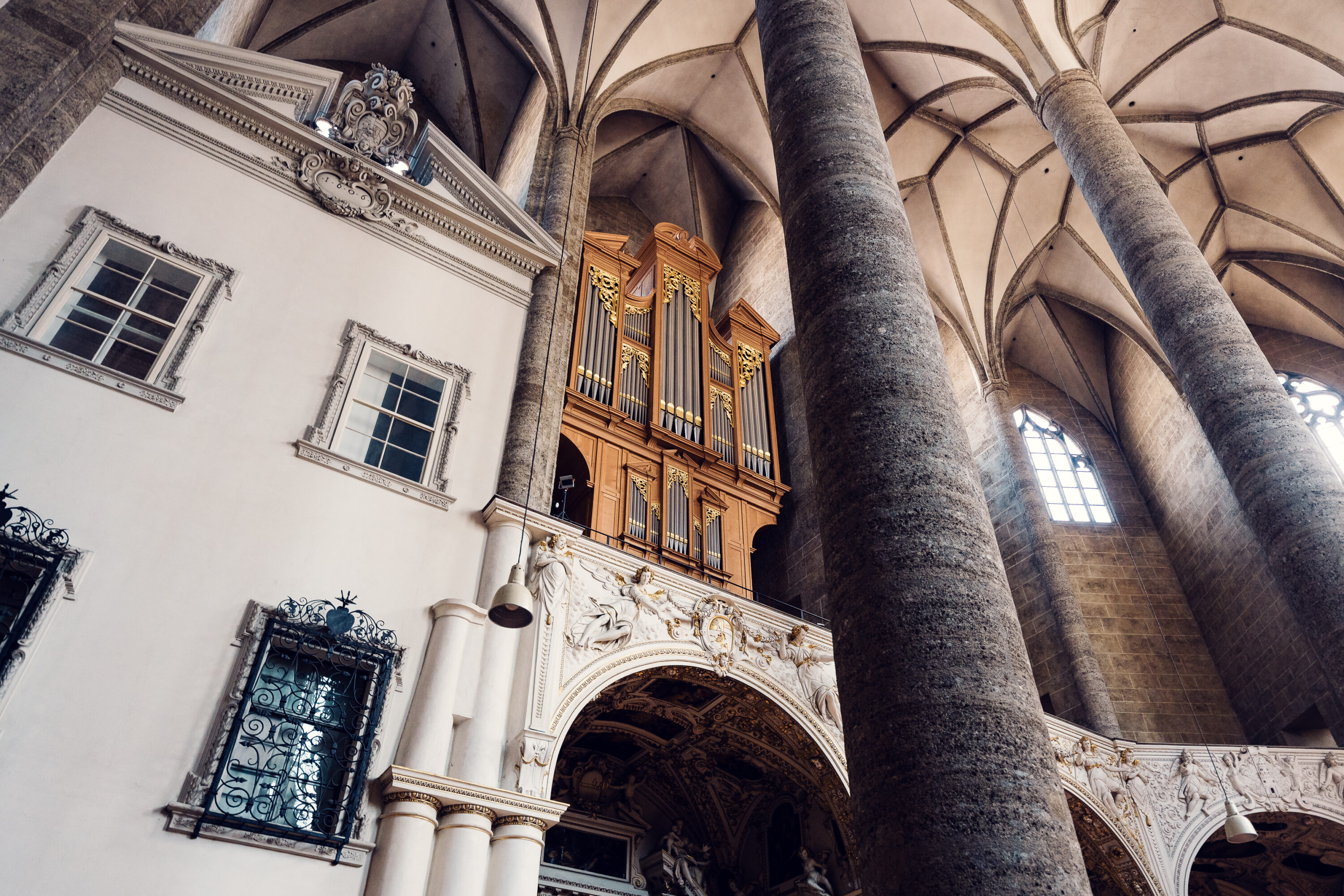
Wide-angle view of the organ gallery and Gothic star vaulting above the side chapels of the Franciscan Church.
The organ sits on a richly decorated Baroque gallery, its warm wooden pipes framed by the church's massive Gothic stone columns.

Survival and Revival

The Napoleonic wars brought French soldiers into the monastery in 1800, using it as a barracks for three months. After Salzburg became part of Austria again following the Congress of Vienna, the Franciscan community gradually rebuilt. The most severe threat came in 1938 when the Nazi regime seized the monastery as a Gestapo headquarters and used parts of the building as a prison. The church itself remained open, tended by a handful of friars who continued living in the city.

After 1945, American forces occupied the monastery, and Austrian public broadcaster ORF's Salzburg studio operated from its rooms until 1973. A full restoration in 1974-1977 returned the complex to the Franciscans, and since 2007 it has served as the seat of the Franciscan Province of Austria. Today, about a dozen friars live and work here, continuing a tradition of pastoral care and the music at the Franciscan Church that spans centuries.