
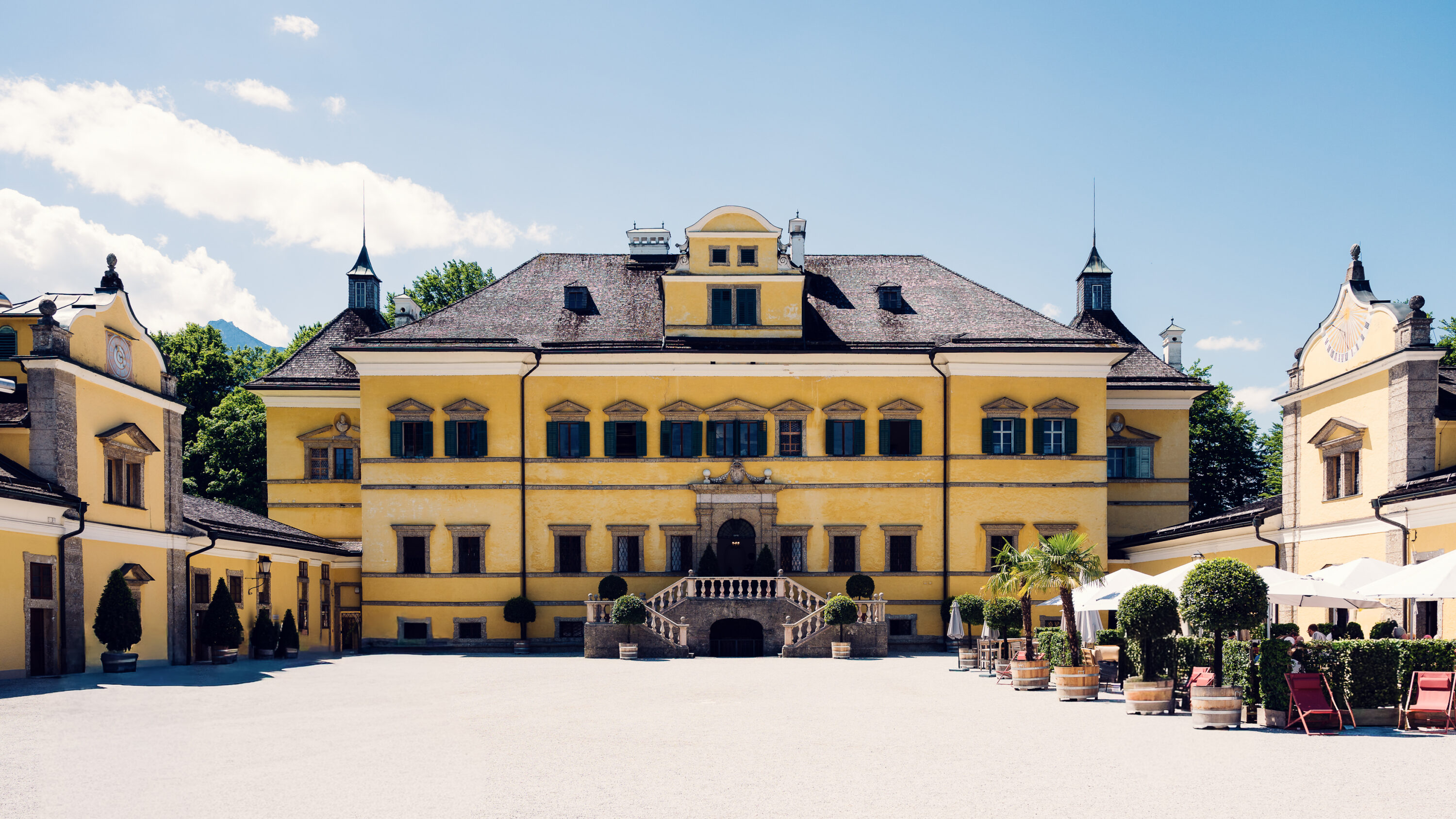
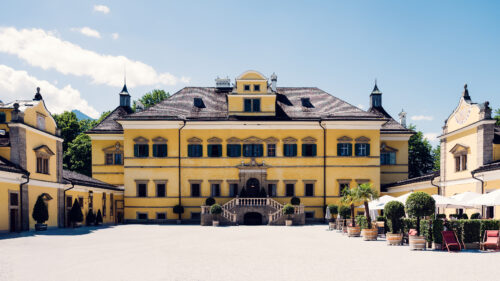
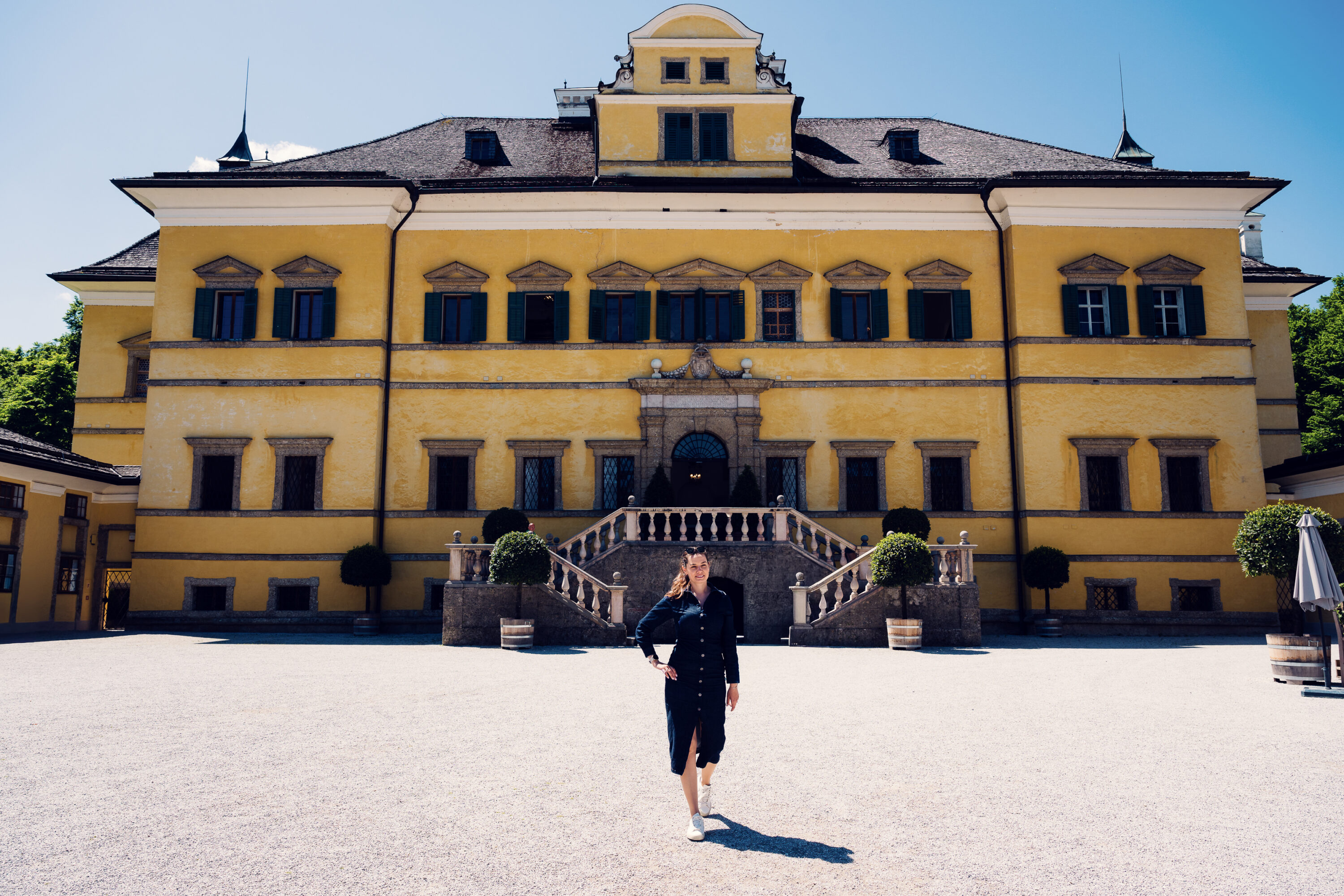
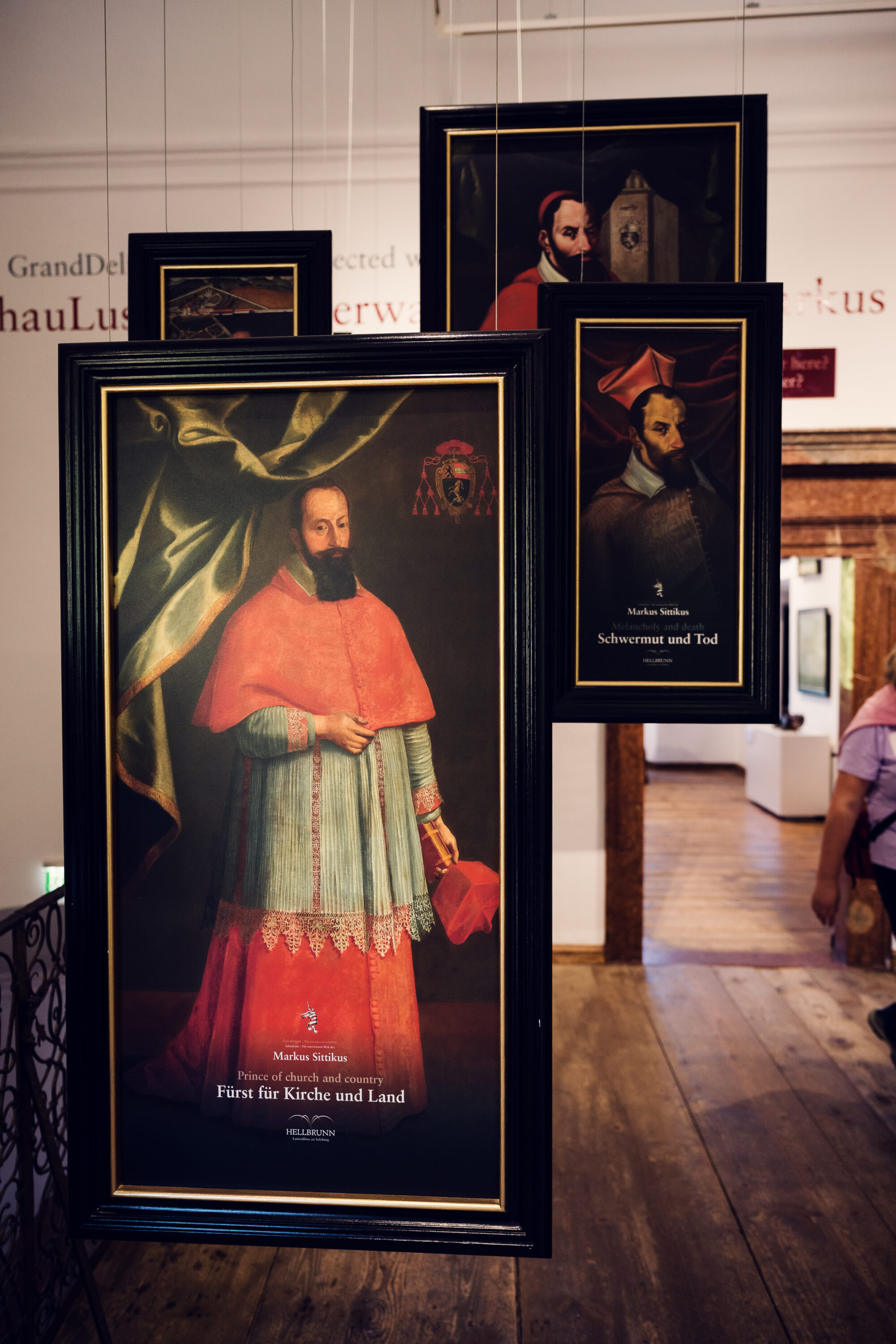
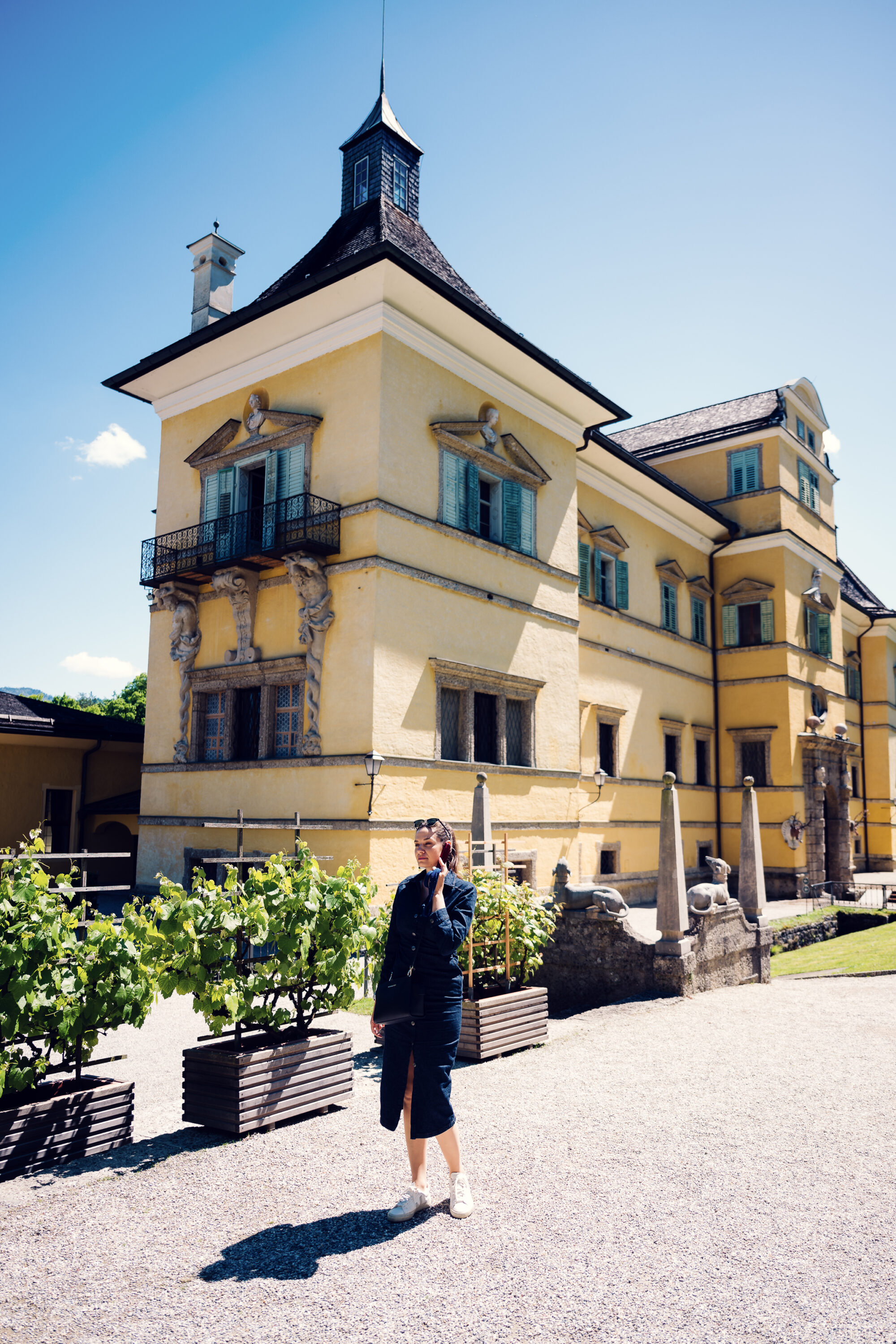
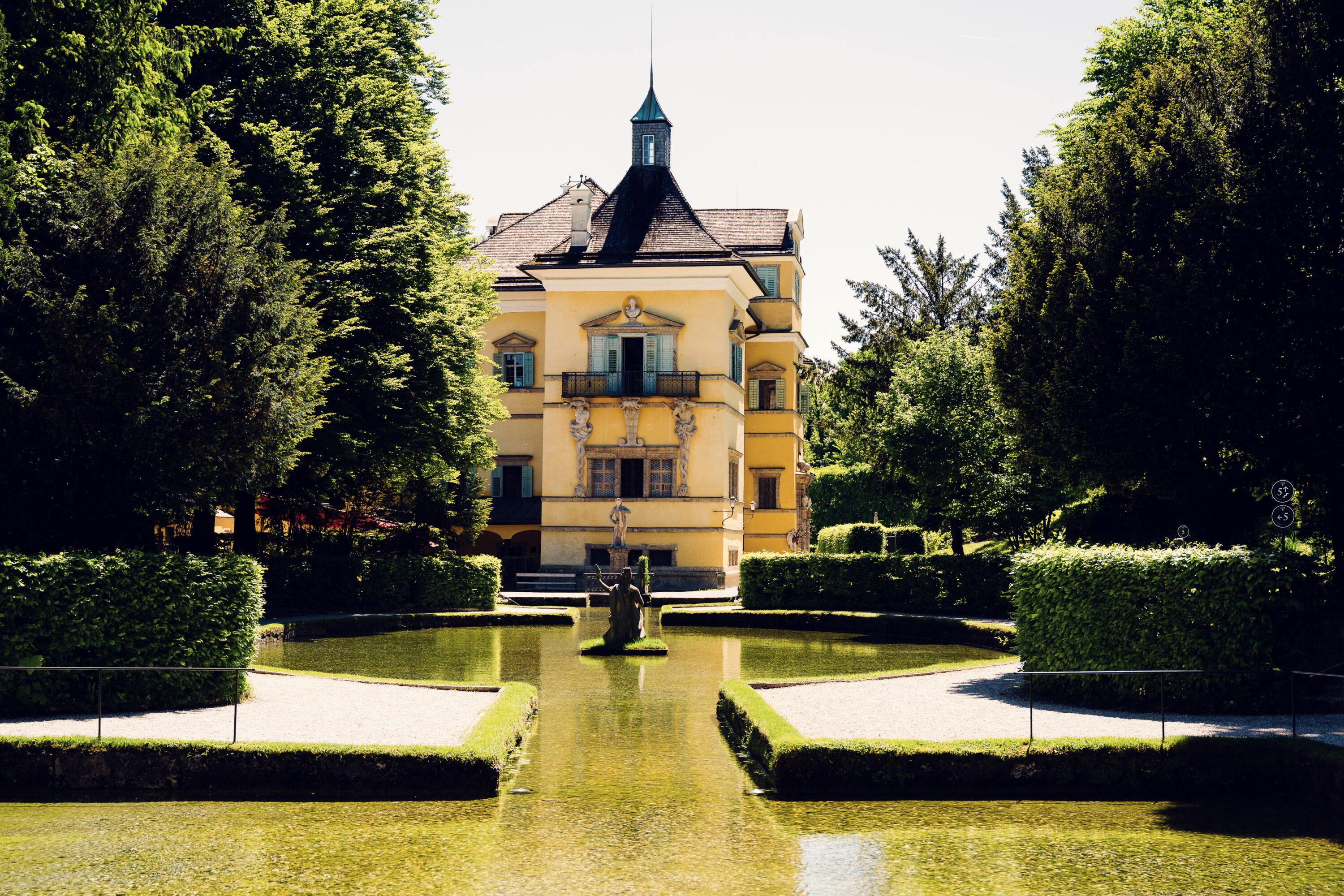
Wide view of the yellow Hellbrunn Palace facade with its courtyard and outdoor cafe tables.
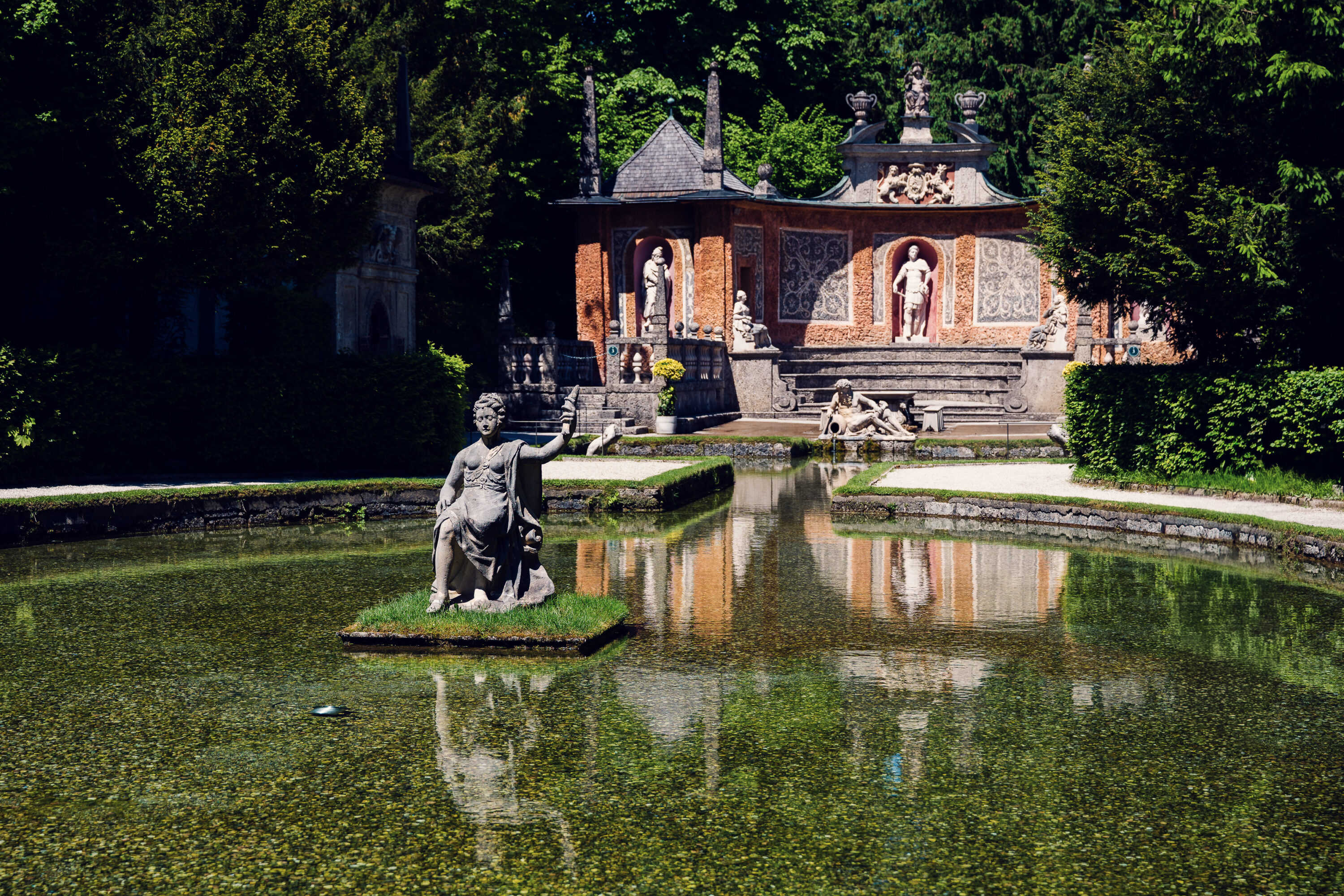
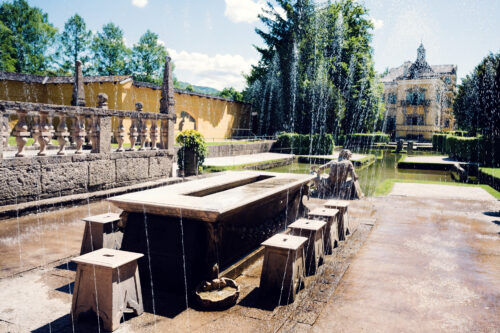
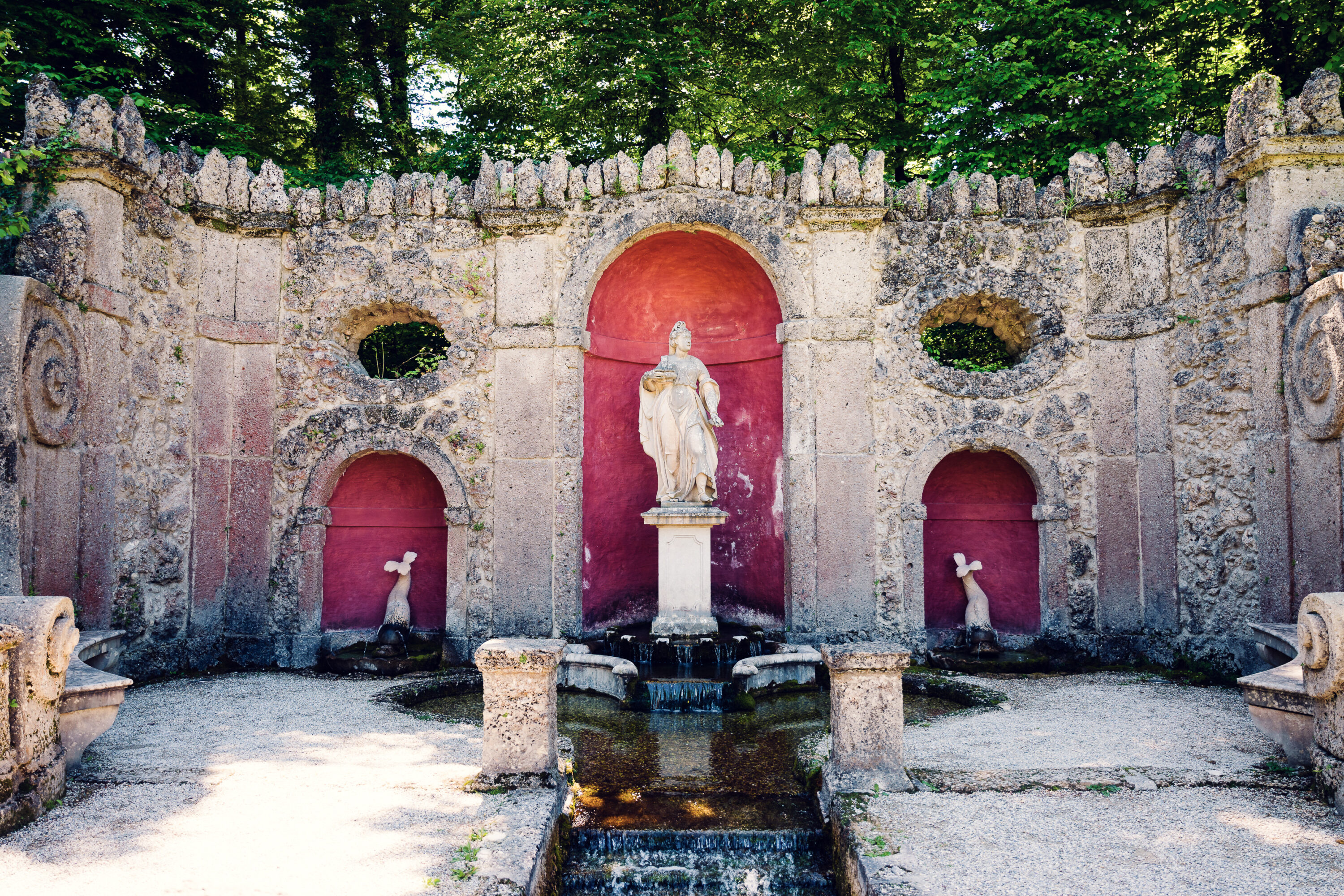
Reflecting pool with a statue on a small island and the stone fountain theater with figures in niches behind it at Hellbrunn.
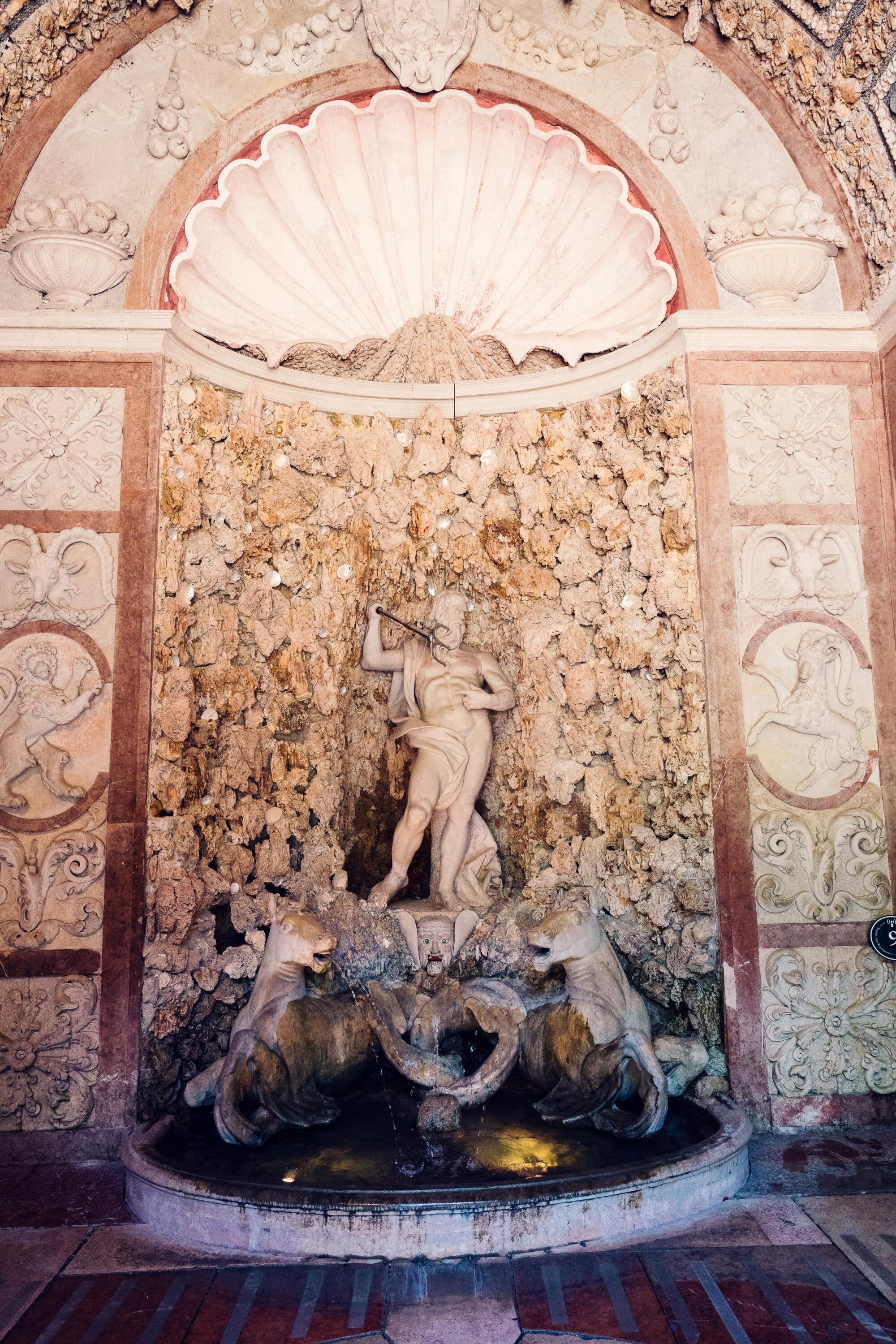
Close-up of two mythical creatures flanking a mask with green eyes at a grotto fountain in Hellbrunn.
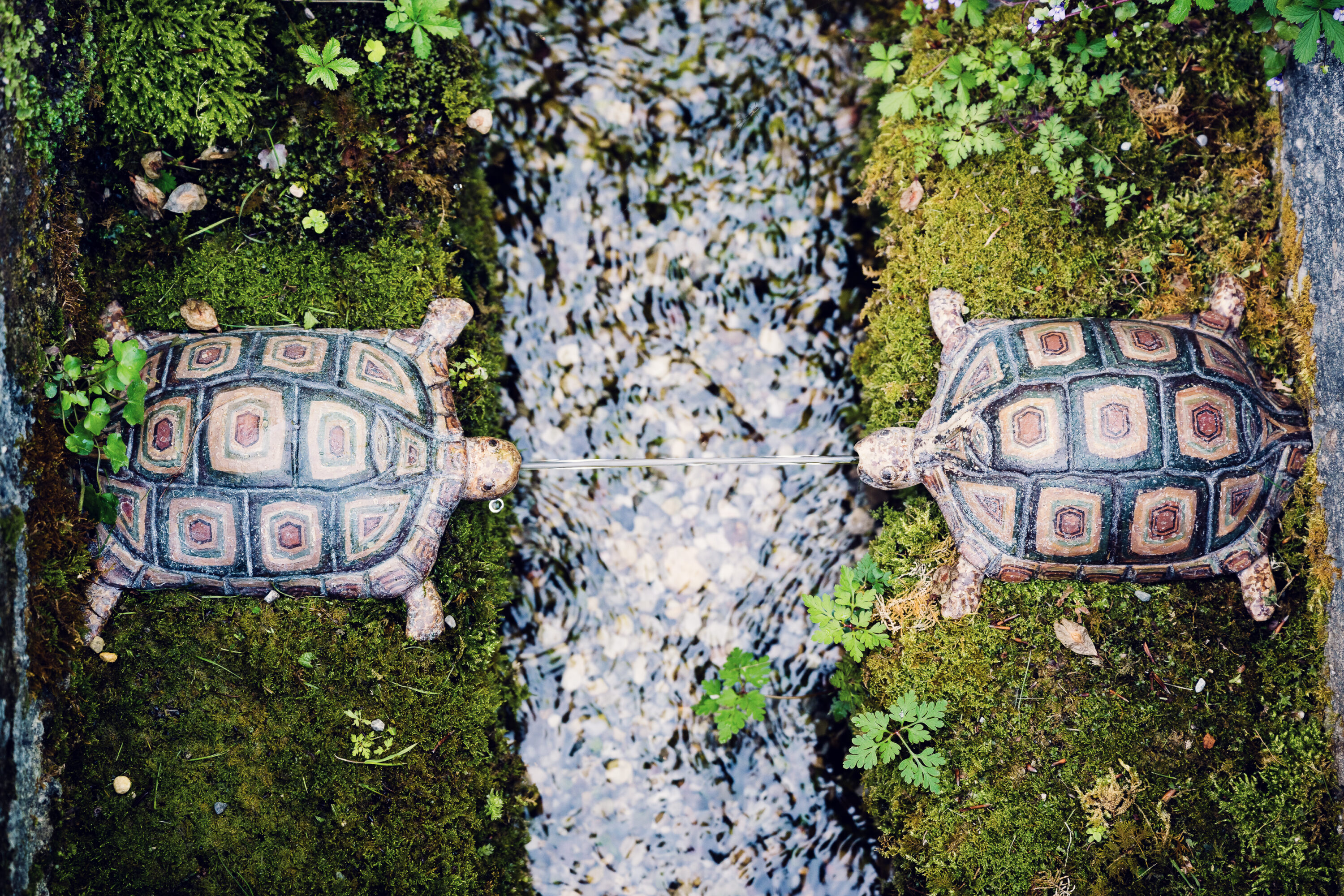
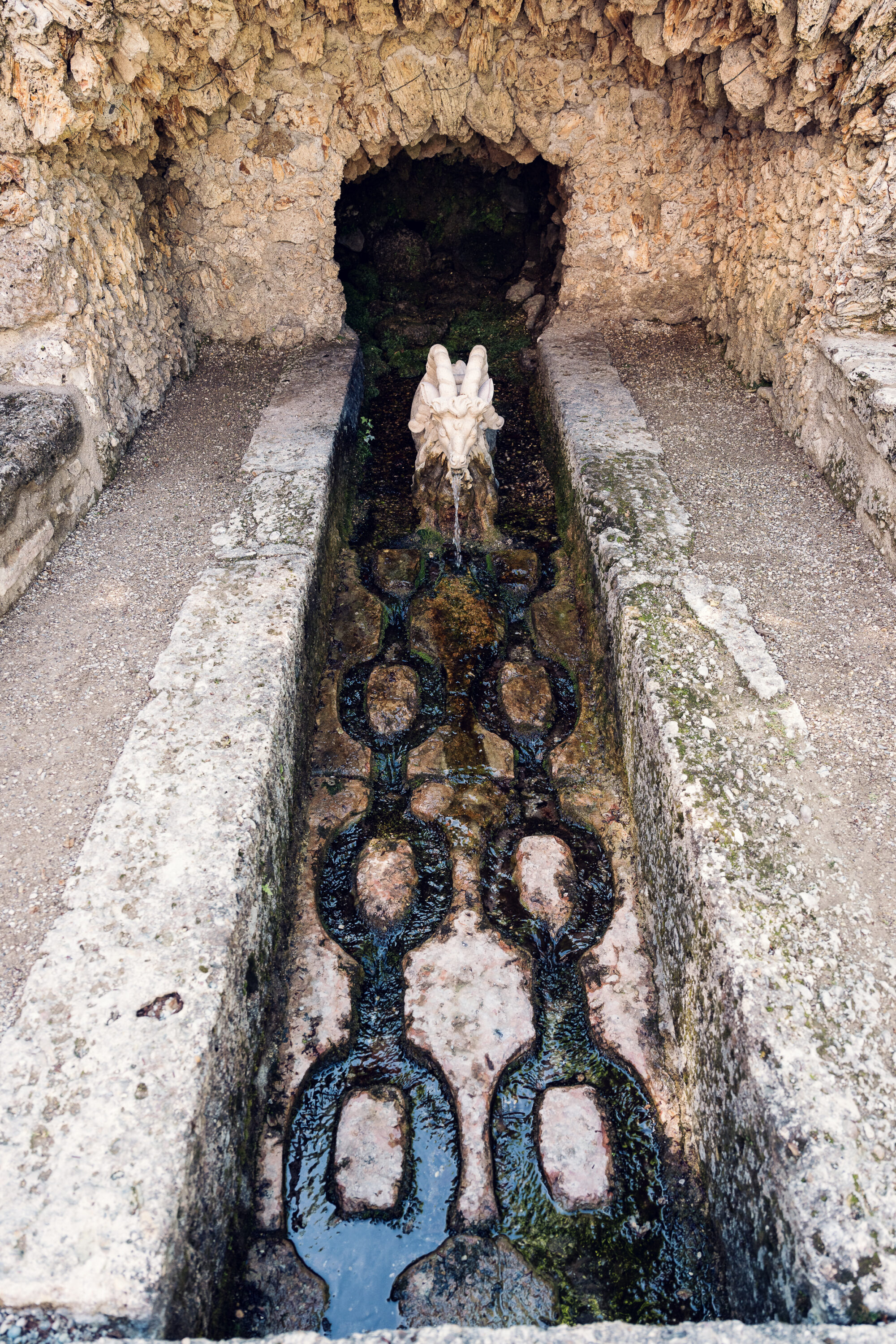
Two turtle figures on mossy stones beside a small water channel at the Hellbrunn trick fountains seen from above.
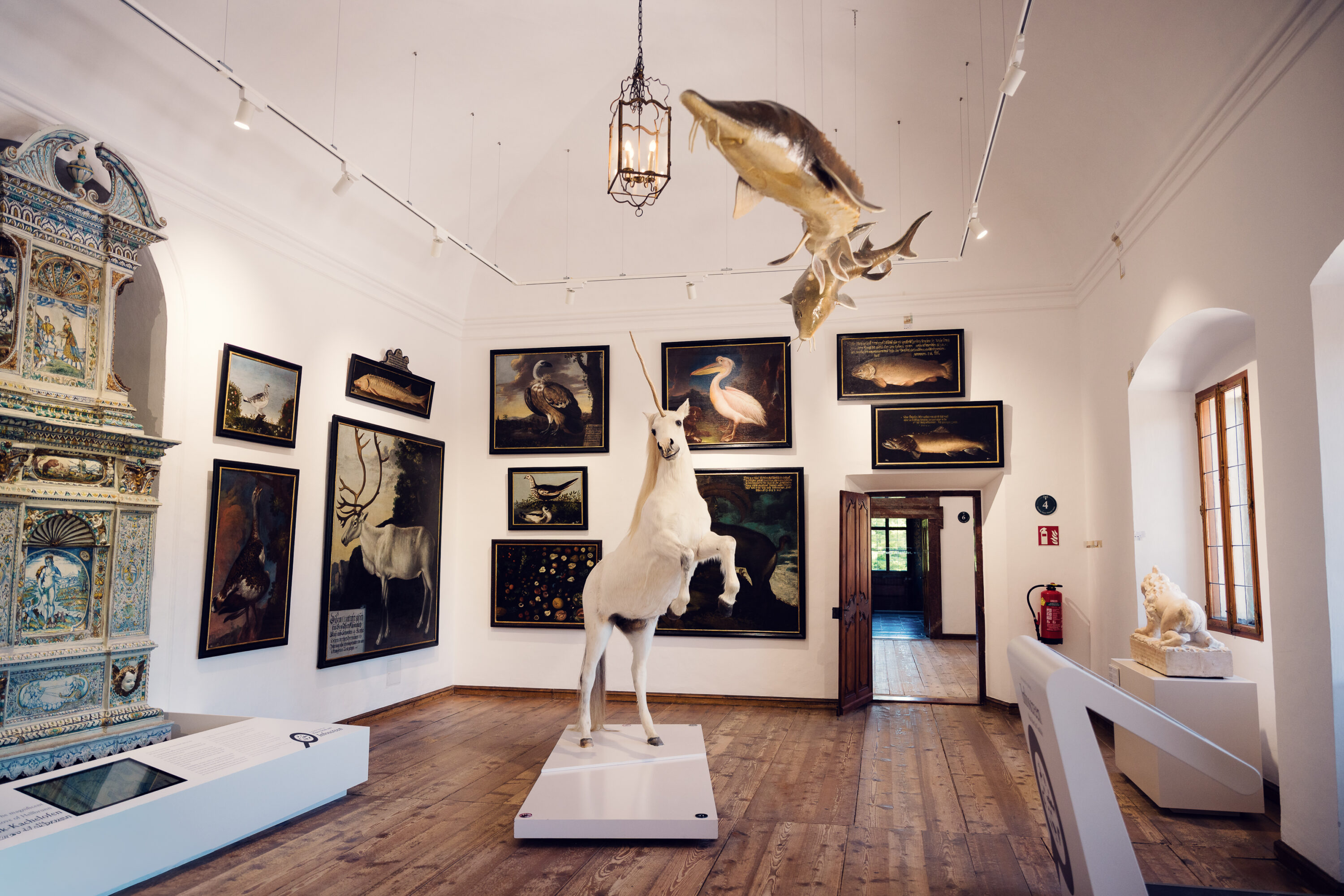
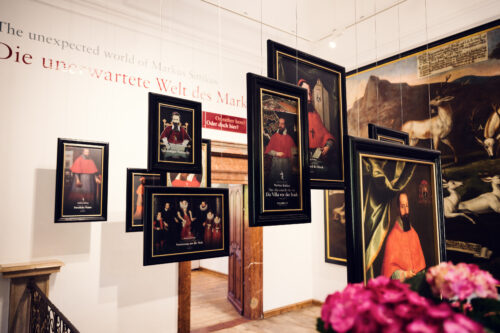
Museum room with a unicorn figure, animal paintings on the walls, and hanging fish models overhead.
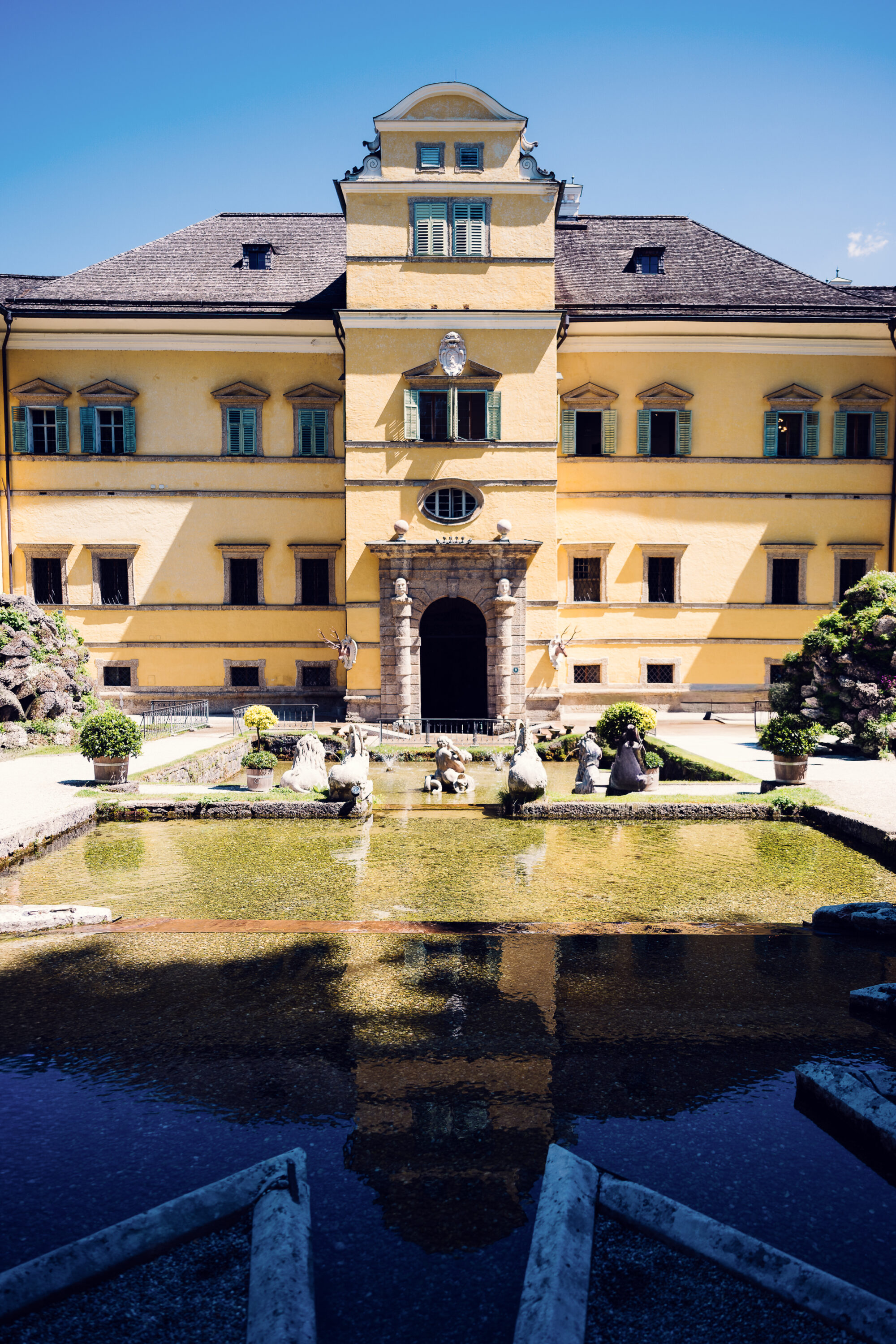
Yellow facade of Hellbrunn Palace from the garden side with animal sculptures at the entrance and a water basin.
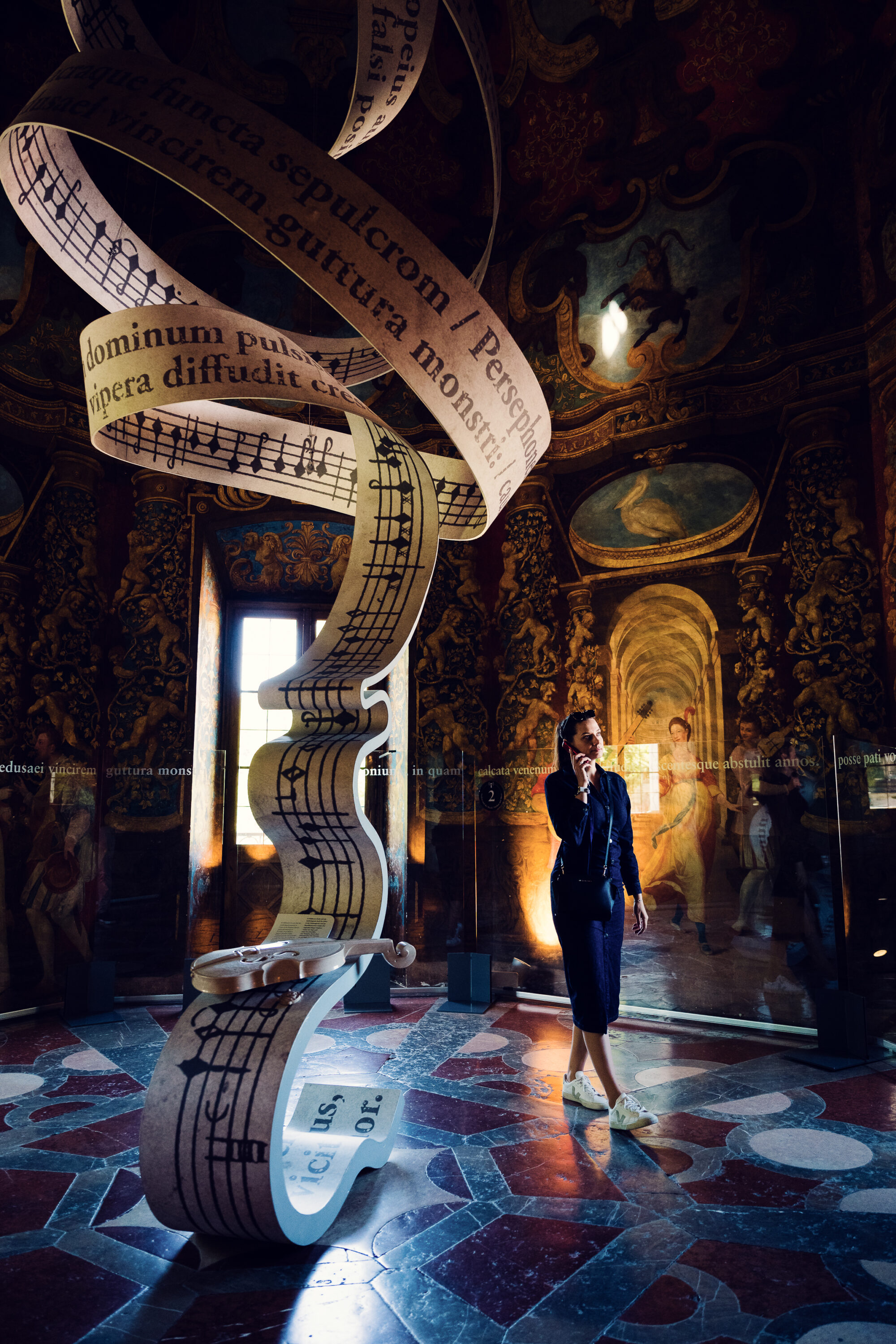
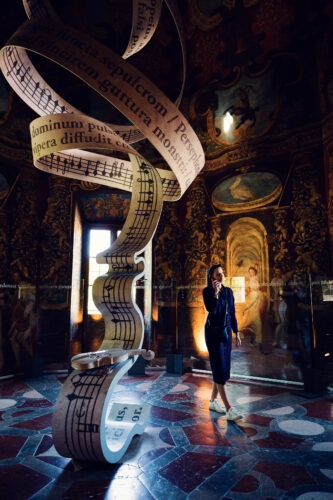
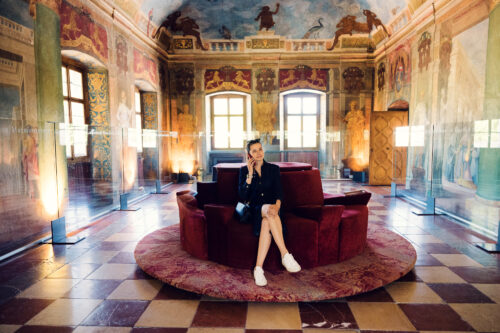
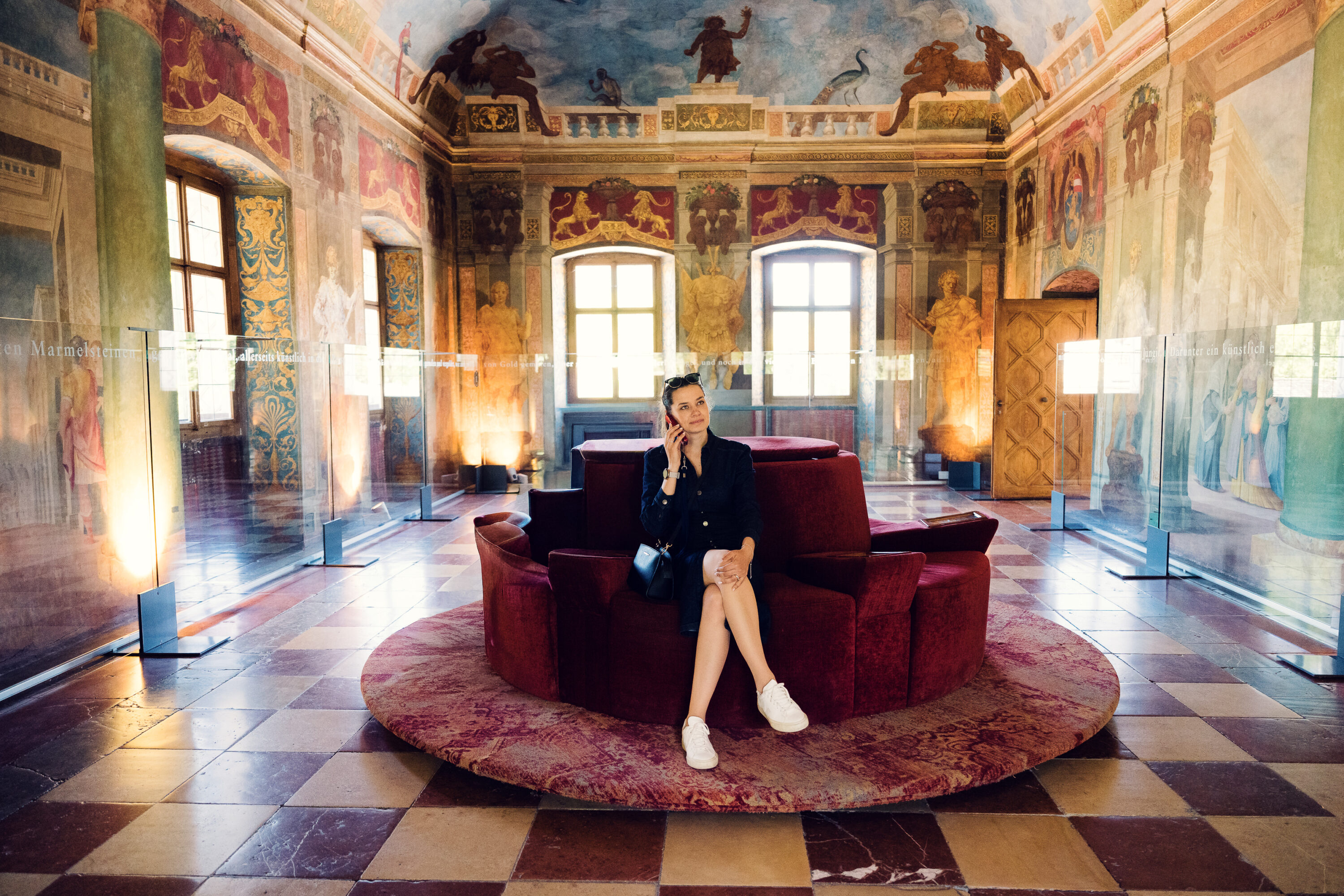
Adriana inside an ornate hall at Hellbrunn Palace with frescoed walls and a large music scroll sculpture.
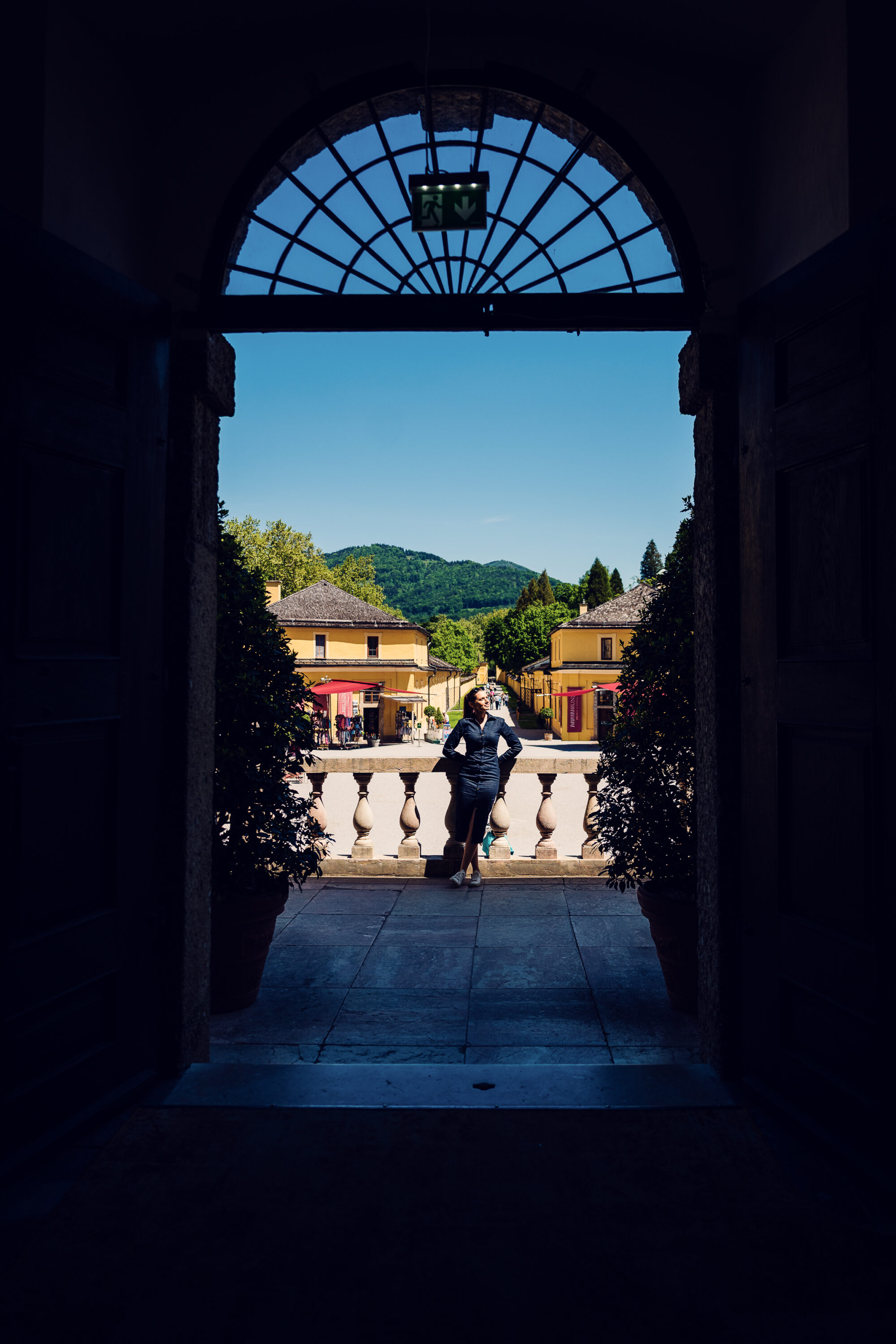
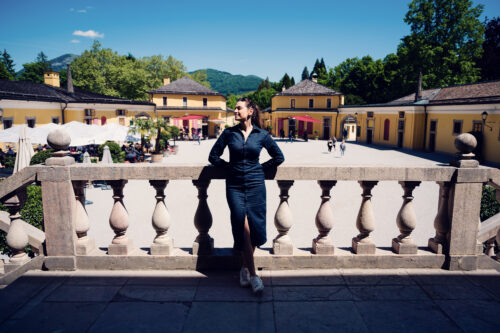
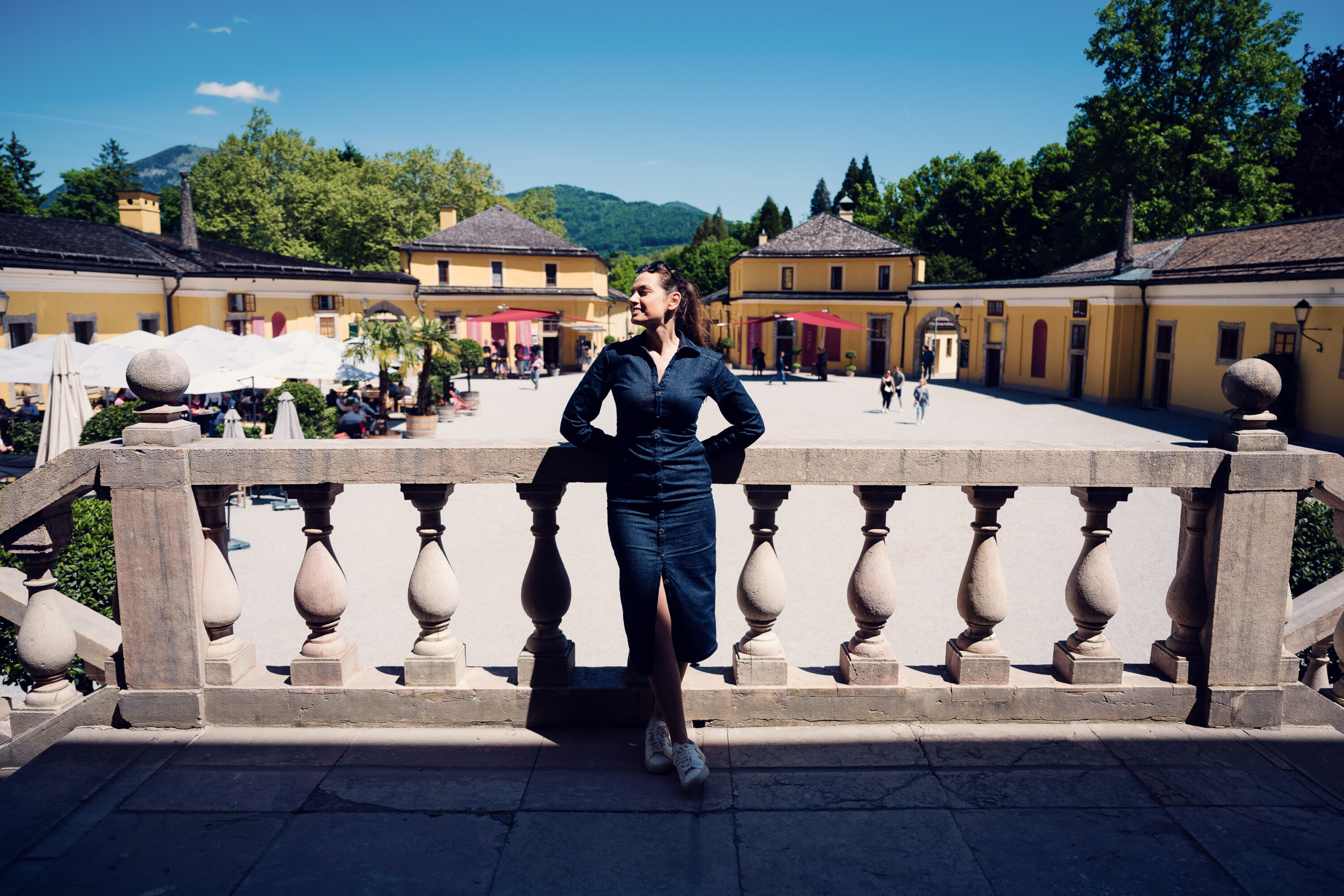
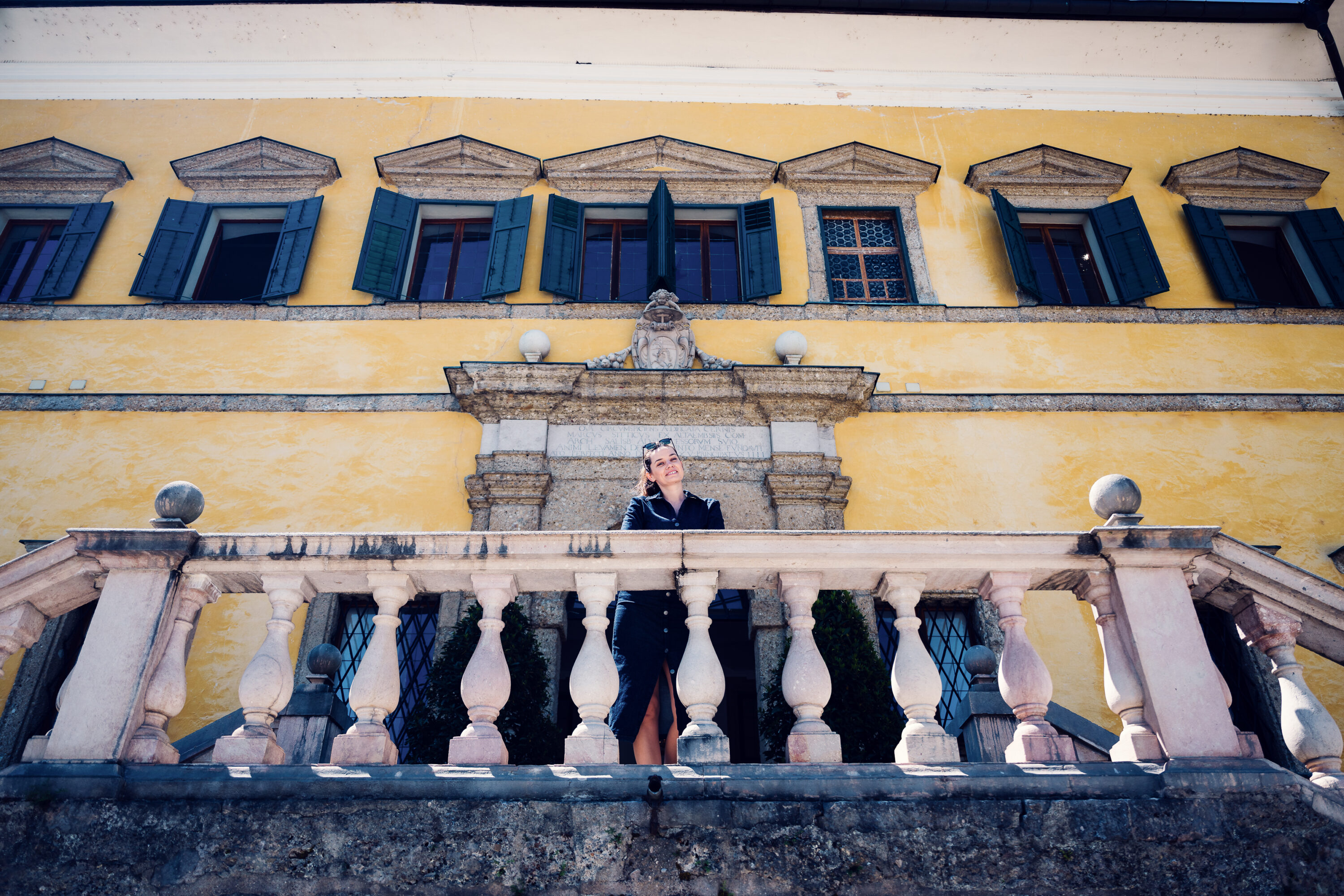
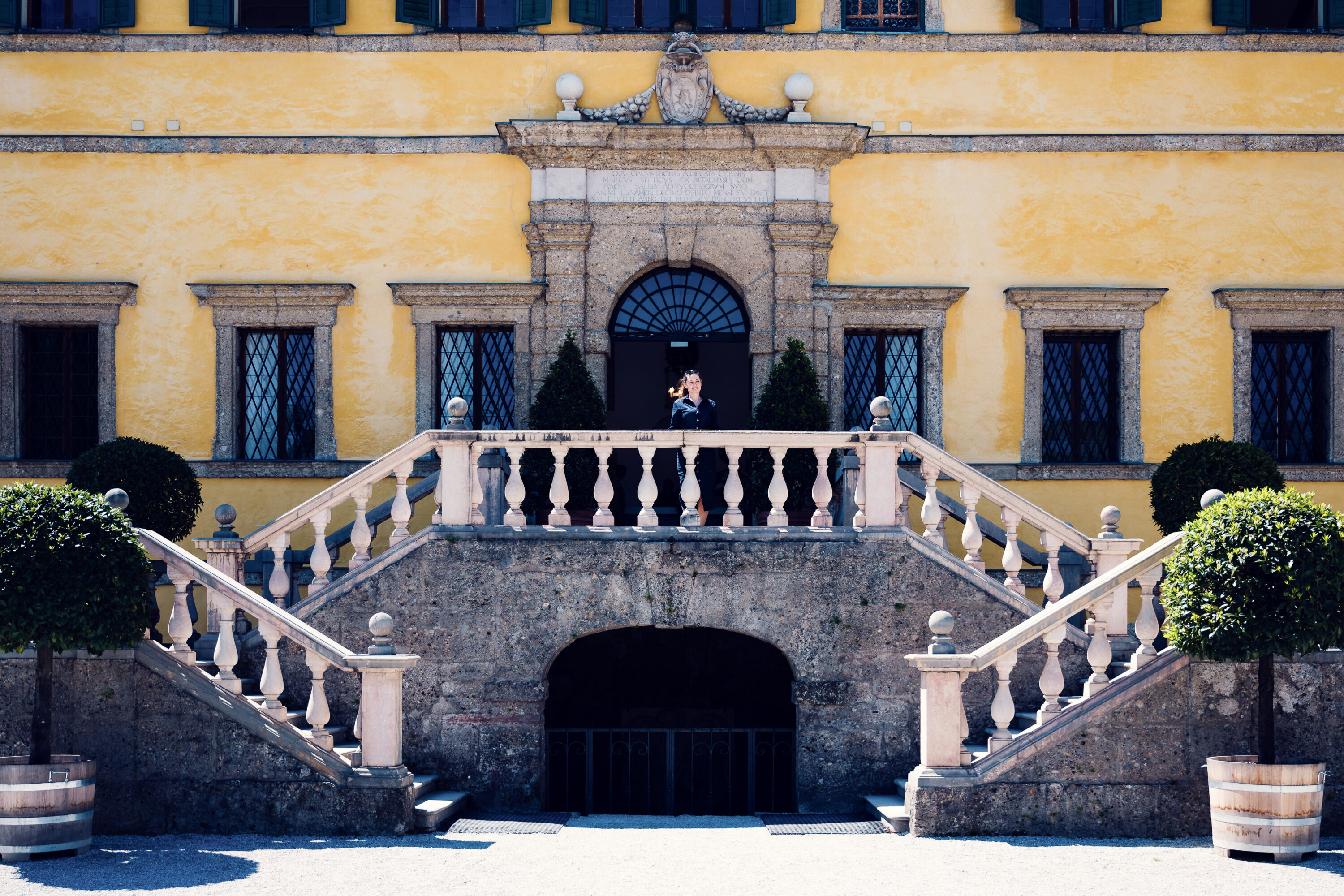
Adriana framed by the arched entrance of Hellbrunn Palace with the courtyard behind her.
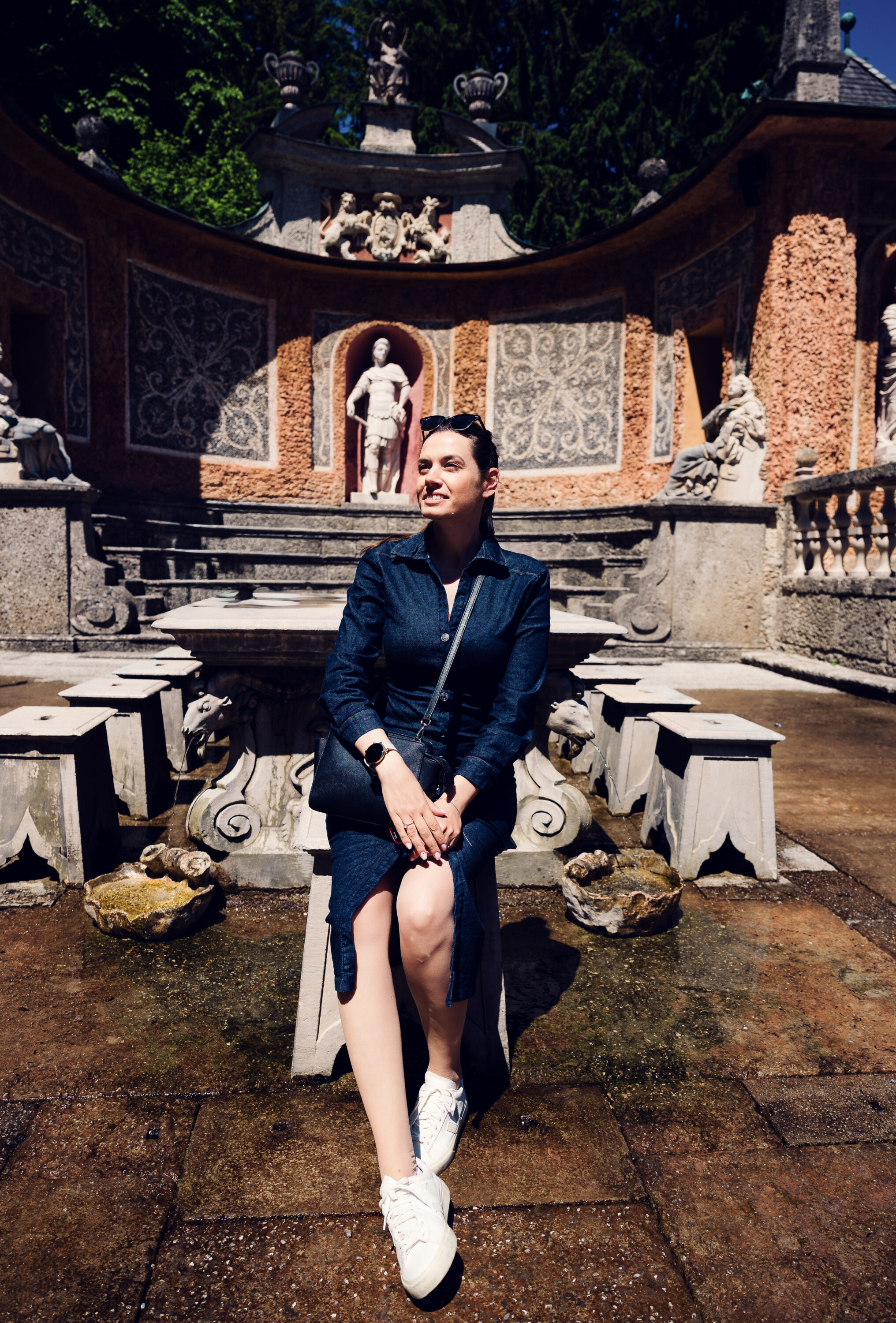
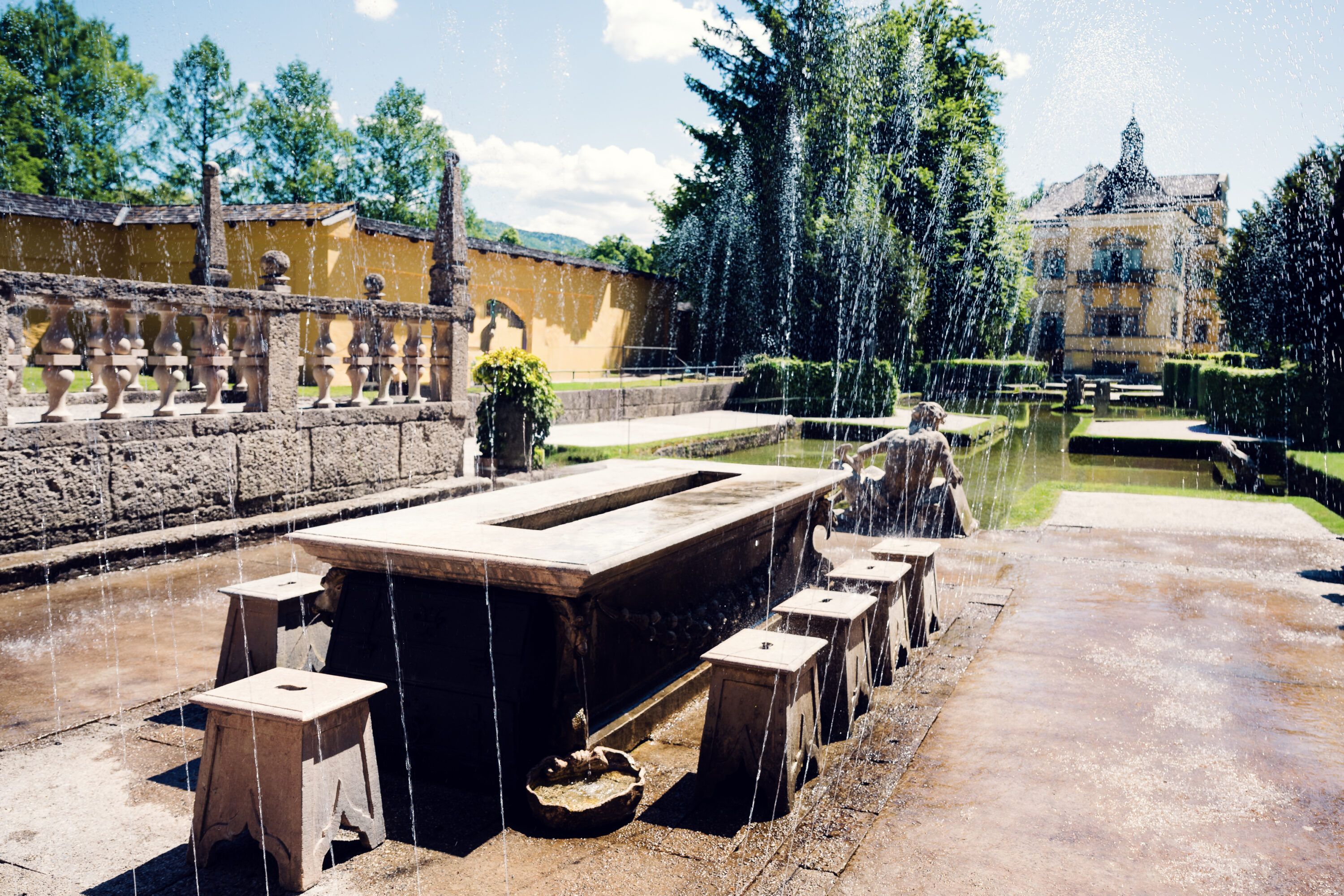
Adriana sitting on the stone steps in front of the trick fountain theater with sculpted niches at Hellbrunn.
Fall in Love with

Hellbrunn Palace & Trick Fountains

Hellbrunn Palace and its trick fountains south of Salzburg: a 17th-century pleasure palace where hidden water jets have surprised guests for 400 years.

* Affiliate links: if you book, a small commission supports our independent work, at no extra cost to you.

01 / 05
01 / 04

Hellbrunn Palace & Trick Fountains

Admission
€16.50
Plan for
2 hours
indoors and outdoors
Where
Hellbrunn

Tickets & tours

Hellbrunn Palace & Trick Fountains

Tickets & prices

TicketAdultsChildrenReduced
Admission€16.50€6.50from €9.50
Reduced: students 19-26 €9.50 · people with disabilities €14.50
Reduced: with ID; companion free if noted in the ID
Family ticket (2 adults + 1 child)€36.50
Each additional childnot available€3.50not available
with family ticket
Groups (20 people or more), per person€14.50

Children: 4-18 years

Tours & experiences

Palace and trick fountains closed for the winter until 24 March 2027 - Hellbrunn Palace and the trick fountains are closed for the winter. The palace park stays open all year, every day. Opening times at Hellbrunn

A few kilometres south of the old town, Hellbrunn Palace is the one Salzburg sight built for the sheer fun of it. The prince-archbishop who created it didn’t want a residence with grand bedrooms; he wanted a place to entertain his guests, and the main entertainment was getting them wet. Four hundred years on, the trick fountains still catch you off guard, and the gardens are some of the loveliest open space in the city.

Plan your visit

Getting there
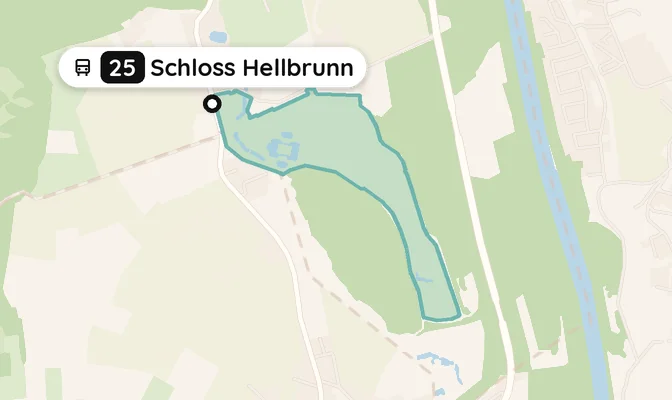
Fürstenweg 37, 5020 SalzburgBus 25 Schloss Hellbrunn · 5 min walkHellbrunn
Good to know

Limited wheelchair access Accessible toilet

Website · hellbrunn.at

What's on here

Hellbrunner Adventzauber

An Advent market in the courtyard of Schloss Hellbrunn. Hundreds of fir trees hung with red baubles, a giant advent calendar across the palace facade and the winter water displays lit up.

Nov 19, 2026 - Dec 24, 2026

Hellbrunner Adventzauber

Nov 19, 2026 - Dec 24, 2026

An Advent market in the courtyard of Schloss Hellbrunn. Hundreds of fir trees hung with red baubles, a giant advent calendar across the palace facade and the winter water displays lit up.

  • Schloss Hellbrunn, Fürstenweg 37, 5020 Salzburg
  • 19 November to 24 December. Tue-Fri 13:00-20:00, Sat, Sun and holidays 10:00-20:00. 24 Dec 10:00-14:00. Closed Mondays, except Monday 21 December 13:00-20:00.
  • 8 € per person, includes one hot drink. Children under 6 free. Free entry after 19:00 and on 24 December.
  • This is the one for families: a Christmas post office, a petting corner and a little Christmas train. Take bus 25 from the centre, or walk the Hellbrunner Allee if the weather holds.

Muvamo Opinion

Hellbrunn is a palace with no bedrooms. Markus Sittikus built it as a day villa, a stage for parties where the host’s favourite joke was hidden water. That single idea makes Hellbrunn Palace unlike anywhere else in Salzburg. You sit down at the stone prince’s table in the Roman theatre, your guide gives a quiet signal, and thin jets shoot up through the seats and soak everyone except the chair at the head, the one the archbishop always kept for himself. People laugh, step back, and immediately start watching the ground for the next ambush.

What carries the visit is how playful the whole thing still feels. The water powers everything, from the surprise jets to a little mechanical town of more than a hundred carved figures that move without a drop of electricity. The gardens around it are calm and green, the views toward the mountains are wide, and the gazebo from the Sound of Music sits quietly among the trees. Come on a warm day, wear something that dries fast, and let yourself be the guest the archbishop was teasing. It’s the most light-hearted couple of hours you’ll spend in Salzburg.

Recommended tours & experiences

Helpful Hints

  • You will get a little wet on the fountains tour, and that’s the point. Keep your phone in a pocket on showery sections.
  • The trick fountains run seasonally, roughly late March to early November. Check the official site for current dates and your fountain time slot.
  • Allow about two hours for the fountains, palace and a wander through the gardens. The gazebo and park are free even outside fountain season.

Gastronomic Discoveries

  • The Schlossrestaurant in the palace courtyard and the Parkcafé in the gardens are handy for coffee, cake, or something Austrian before or after the tour.
  • On a hot day, bring water or grab an ice cream at the kiosk; the gardens are large and there’s plenty of walking between the grottoes.

Hidden Gems

  • The Germaul, a carved face that rolls its eyes and sticks out its tongue, is often called the secret mascot of Hellbrunn. Look for it once the jets start.
  • The Sound of Music gazebo isn’t a replica of the exterior pavilion: it’s the original bandstand used for the film’s exterior scenes, moved here from Leopoldskron Palace so visitors could reach it.

Our Little Extras

  • The grottoes hold the quieter surprises that most people rush past: a crown that bobs and spins on nothing but a column of water, and the mechanical theatre’s tiny town where every figure moves by water power alone. The audio guide marks out the stations one by one, so slow down and let it walk you through them. And keep half an eye on your guide’s hands; the best soakings come right when you’ve stopped expecting them.

A Pleasure Palace Built to Surprise: Hellbrunn Palace

When Markus Sittikus von Hohenems became prince-archbishop of Salzburg in the early 17th century, he wanted something the city had never seen: a place purely for pleasure and play. The result, raised just south of town in only a few years, was Hellbrunn Palace, and it has kept that spirit ever since. The name Hellbrunn is commonly explained as meaning “healing spring”, a fitting name for a place whose trick fountains still run on natural water pressure.

Markus Sittikus and an Italian Idea

Sittikus had spent part of his life in Italy, and he wanted Hellbrunn to feel like the villas he had seen there. He gave the commission to Santino Solari, who was also commissioned for Salzburg Cathedral, and Solari designed a villa suburbana in the late-Renaissance style: a low, elegant building set in a wide garden, meant to be enjoyed by day and left empty by night. Inside, the ceremonial hall and Octagon are decorated with early-17th-century illusionistic frescoes associated with the Florentine painter Donato Arsenio Mascagni, and the Octagon still opens toward the garden in a theatrical way.

The Trick Fountains and the Prince’s Table

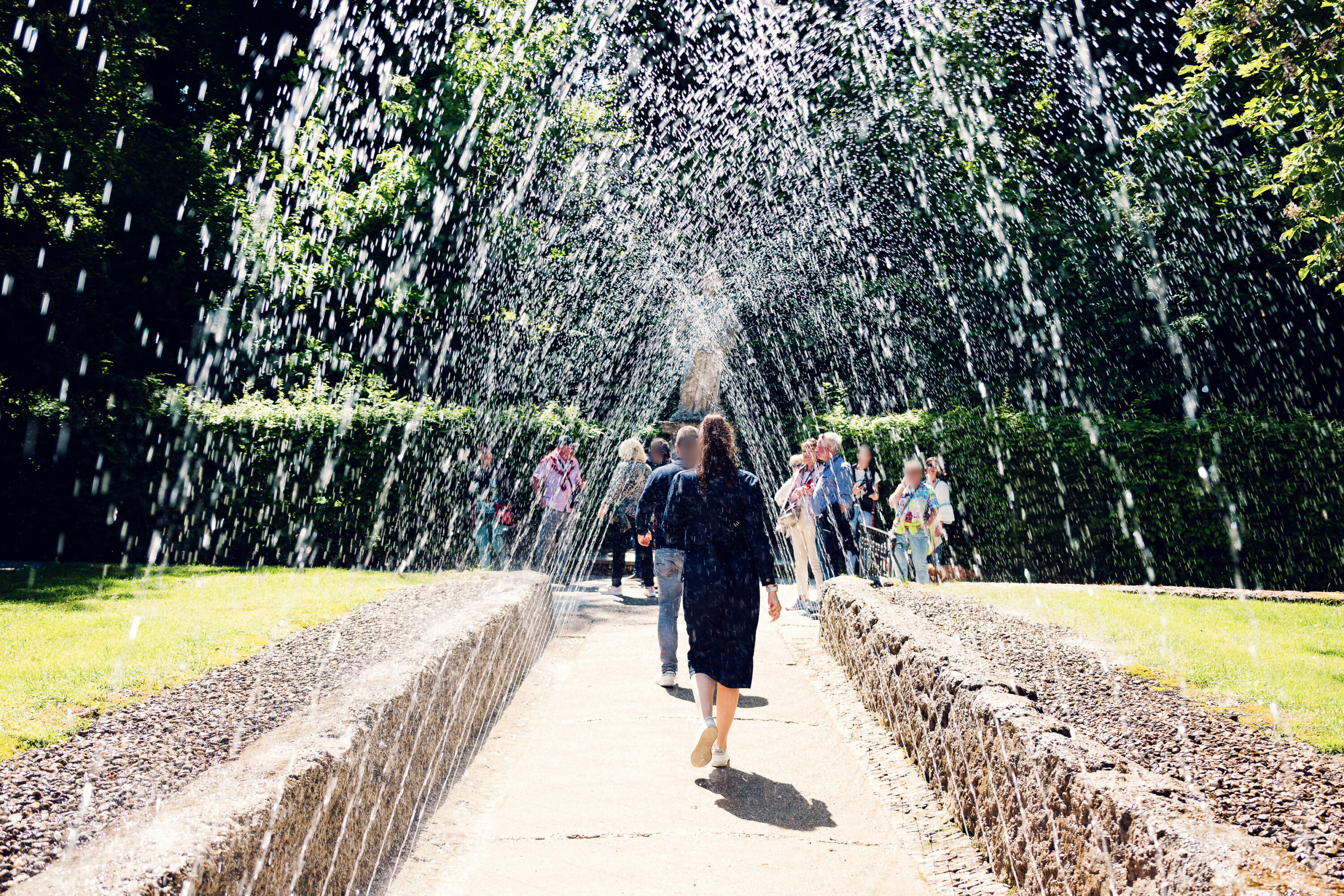
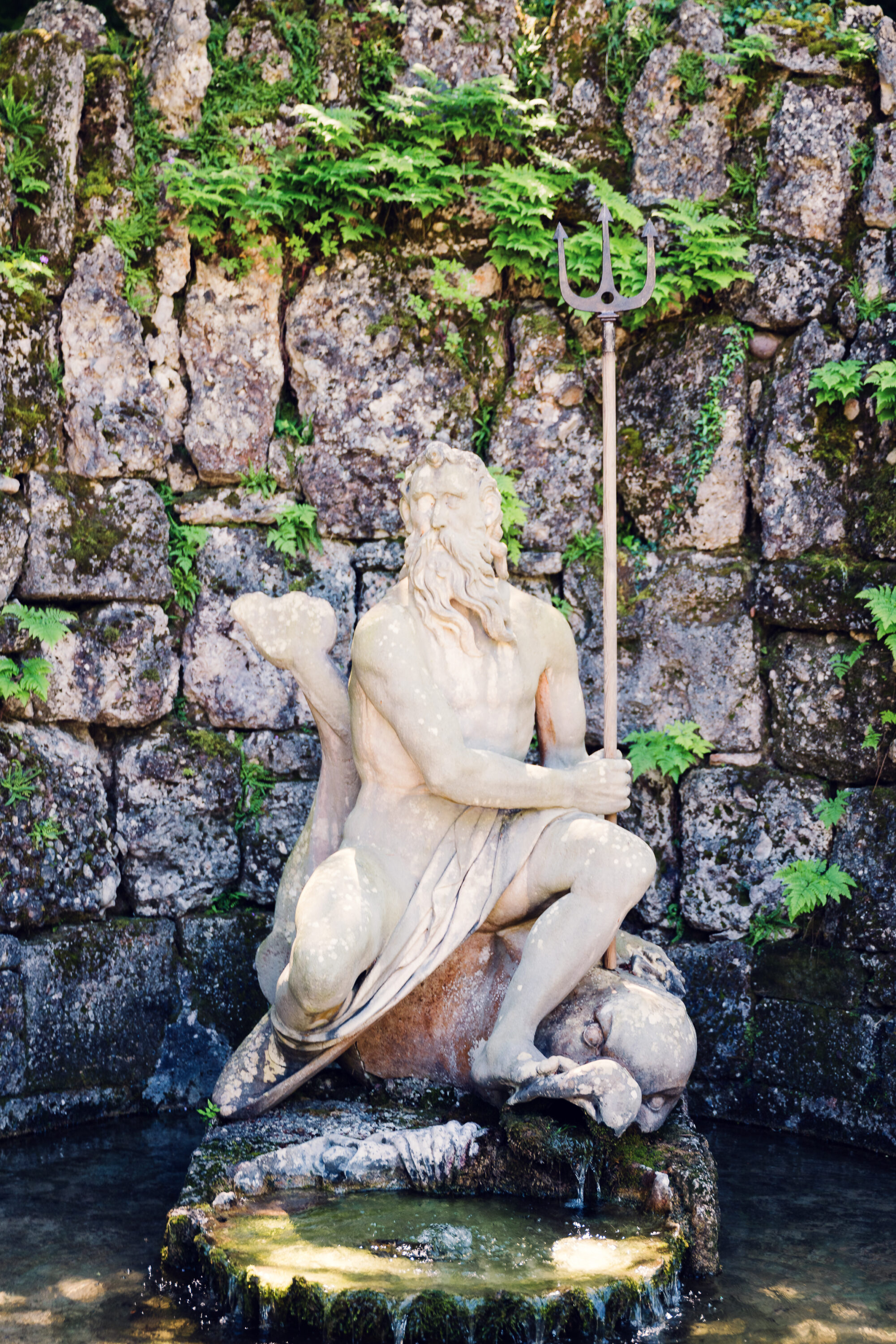
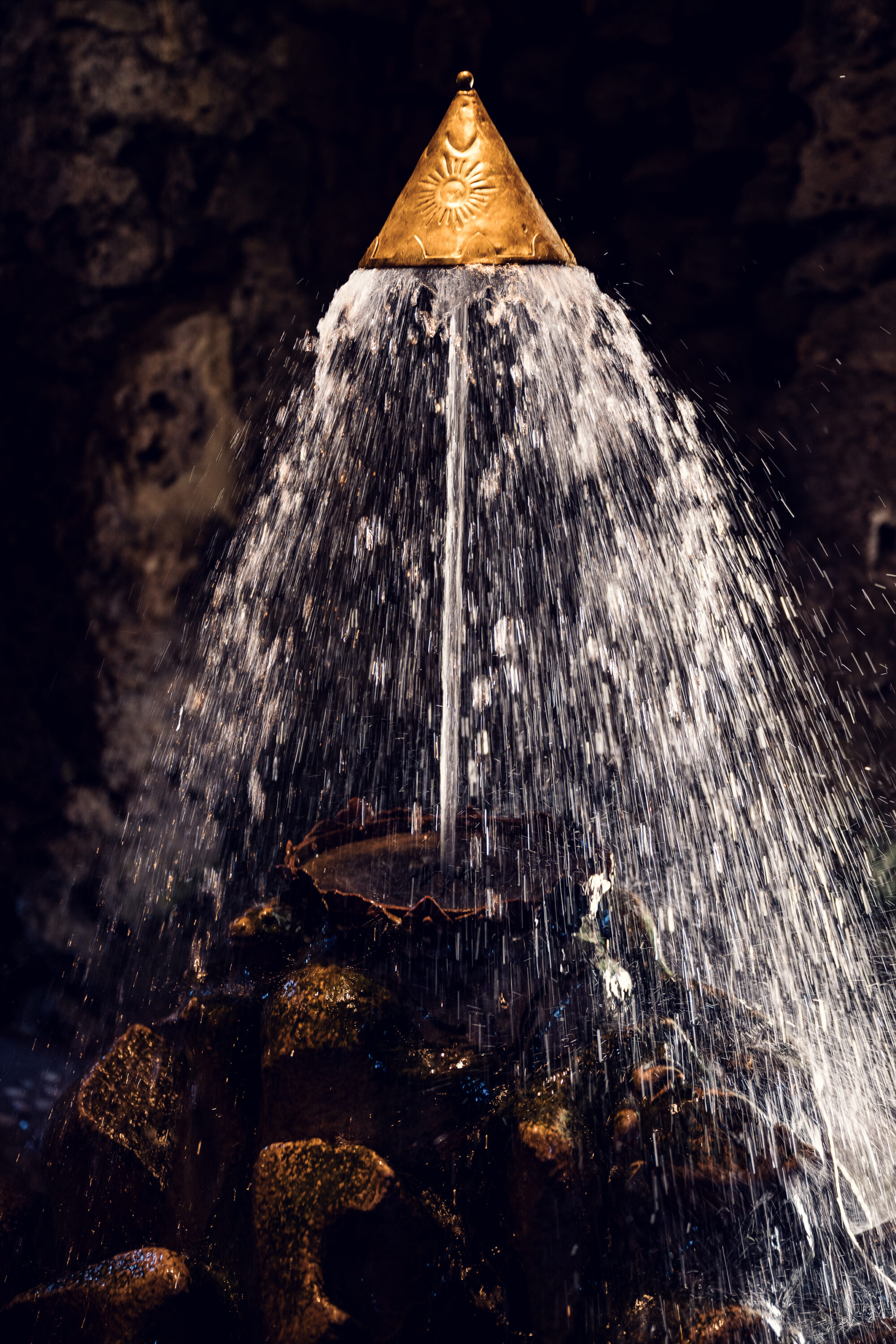
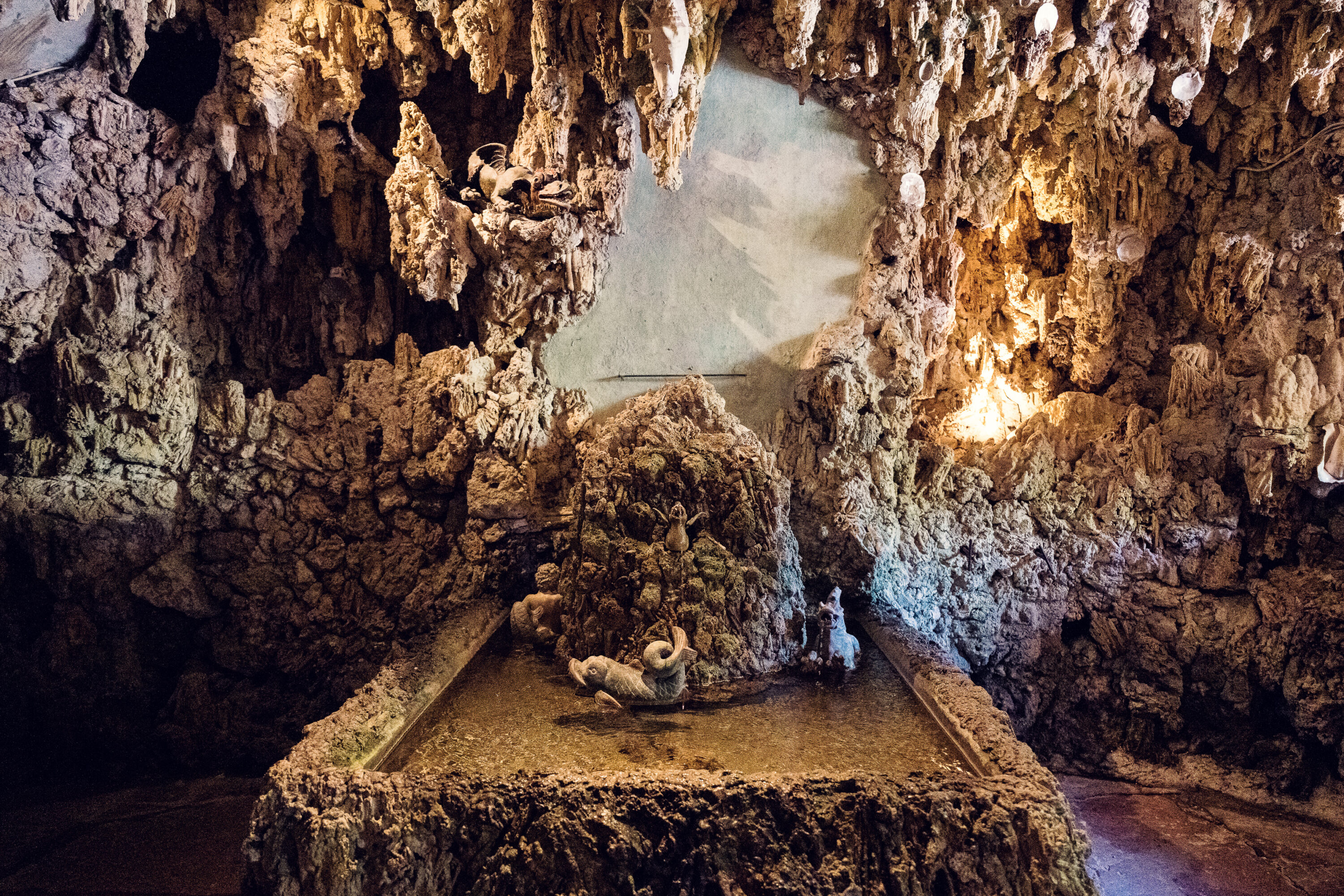
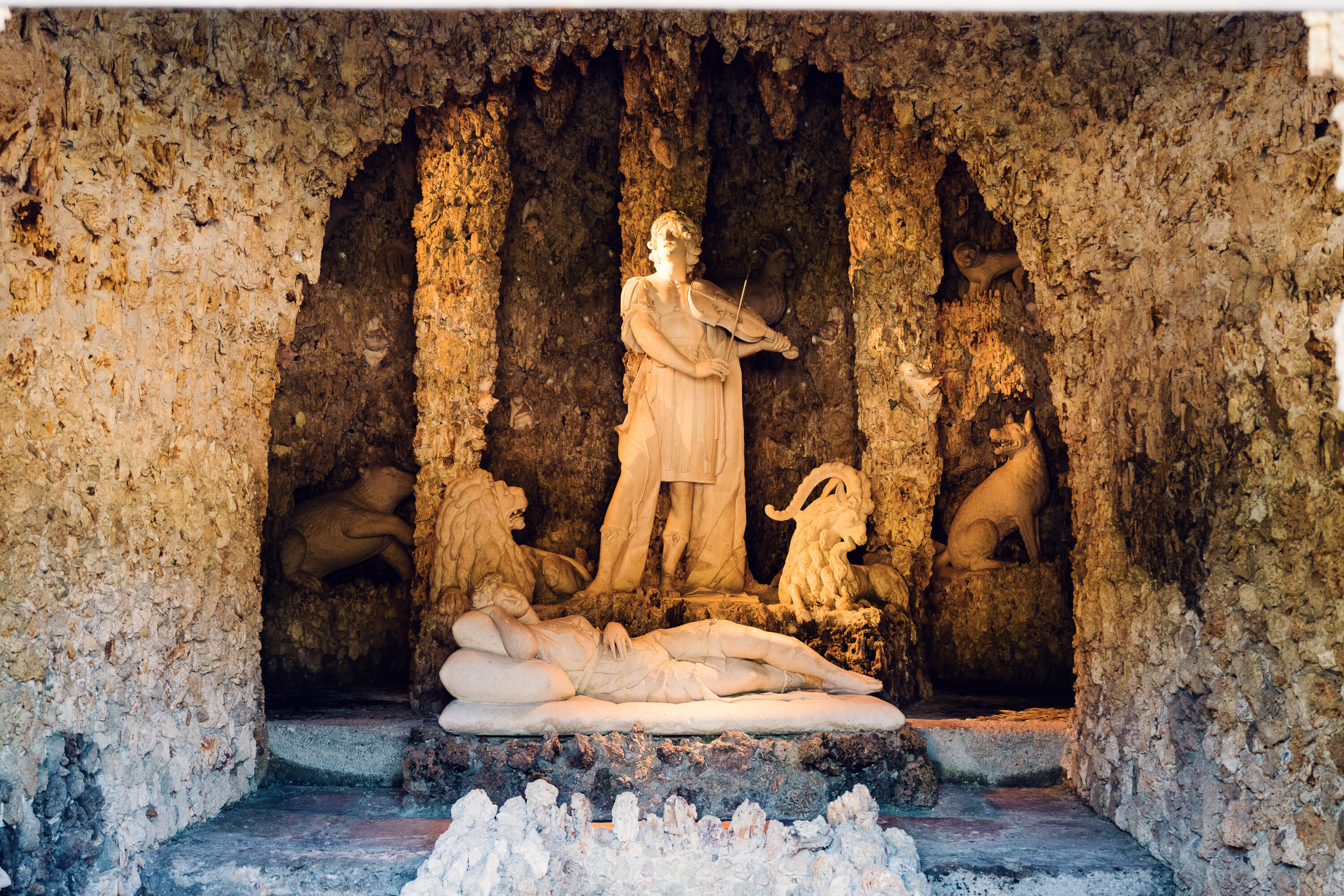
The real heart of Hellbrunn Palace is the trick fountains, created around the same time as the palace and now among the best-preserved water gardens of the late Renaissance anywhere in the world. Solari and his craftsmen used nothing but natural water pressure to power a sequence of grottoes, hidden jets and moving figures. The centrepiece is the Roman theatre, where the archbishop seated his guests at a long stone table for wine and conversation. At the right moment, water rose through the stone benches and drenched everyone but the host. Around the rest of the garden, fountains hide behind statues and inside grottoes, a crown rises and dances on a single jet of water, and a face known as the Germaul rolls its eyes and sticks out its tongue.
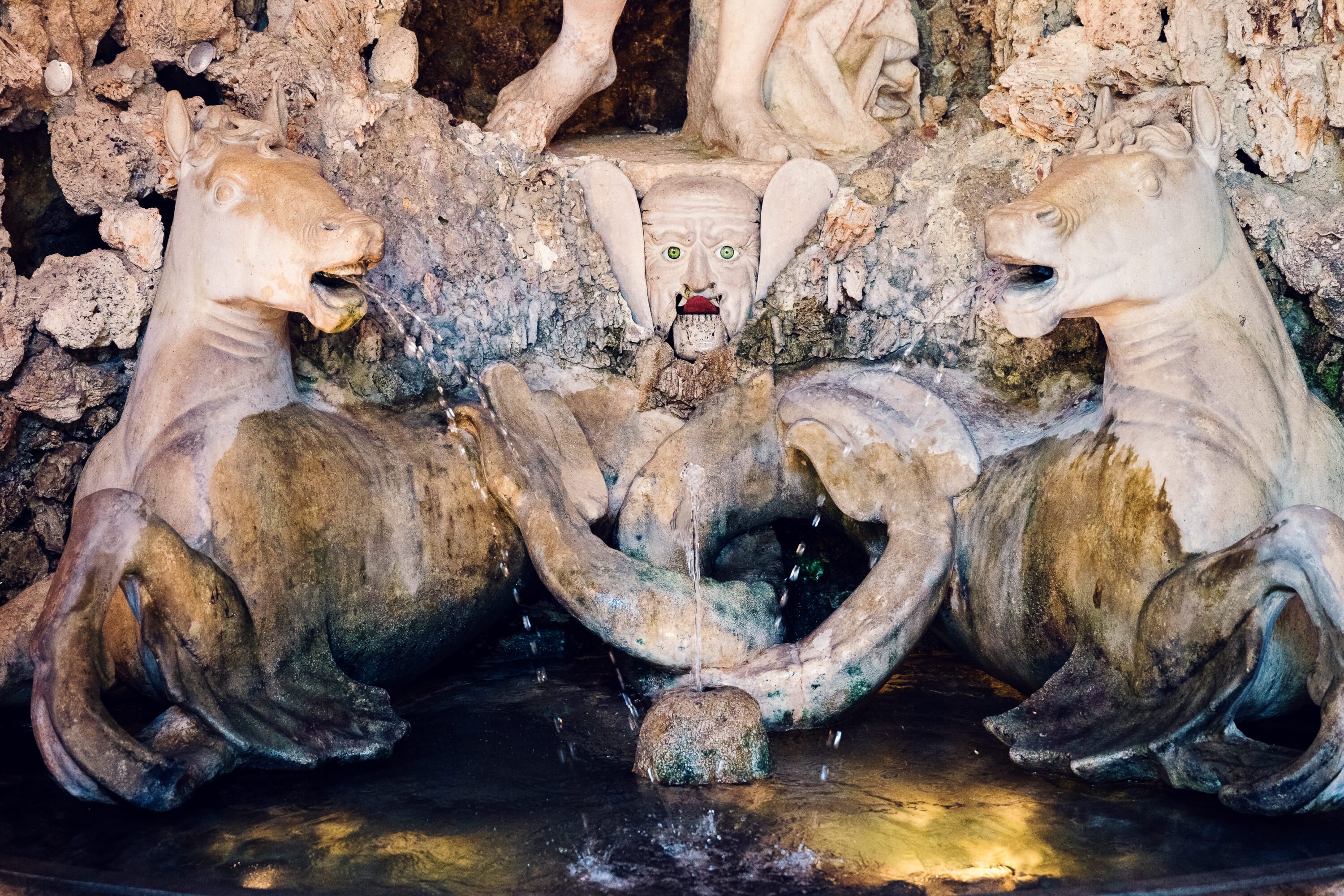
Close-up of two mythical creatures flanking a mask with green eyes at a grotto fountain in Hellbrunn.
The trick fountains at Hellbrunn Palace were built in the early 17th century by Archbishop Markus Sittikus and still run entirely on water pressure today.

The Mechanical Theatre and Later Additions

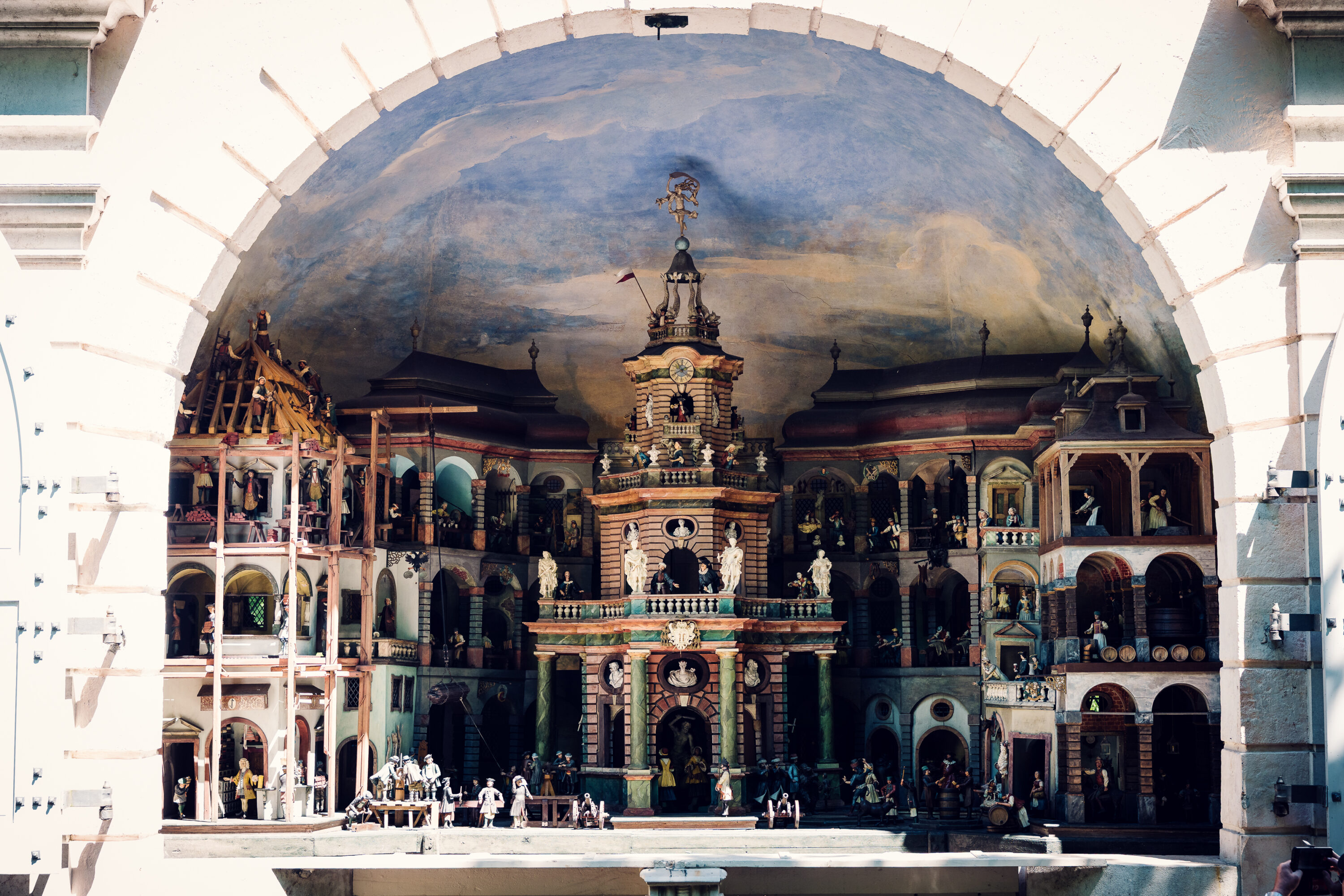
Well over a century later, under a later archbishop, the gardens of Hellbrunn Palace gained their most intricate piece: a mechanical theatre. More than a hundred hand-carved figures act out the scenes of a small baroque town, a barber at work, a craftsman hammering, dancers turning, all driven by water and accompanied by a water-powered organ. It still runs today, and watching it work is a quiet reminder of how much engineering went into what was, at heart, a very elaborate joke.

The Gazebo, the Gardens, and the Zoo

Hellbrunn picked up a second life thanks to the cinema. The small white bandstand from The Sound of Music, used for the film’s exterior romantic scenes, originally stood in the park at Leopoldskron and was later moved to Hellbrunn so fans could see it up close. It now stands among the trees, free to visit. The wider park stretches out into landscaped gardens and the long, tree-lined Hellbrunn Avenue that connects the palace to the city, and part of the old grounds is home to Salzburg’s zoo. Today Hellbrunn Palace, its gardens and fountains belong to the city of Salzburg and draw visitors from all over the world.