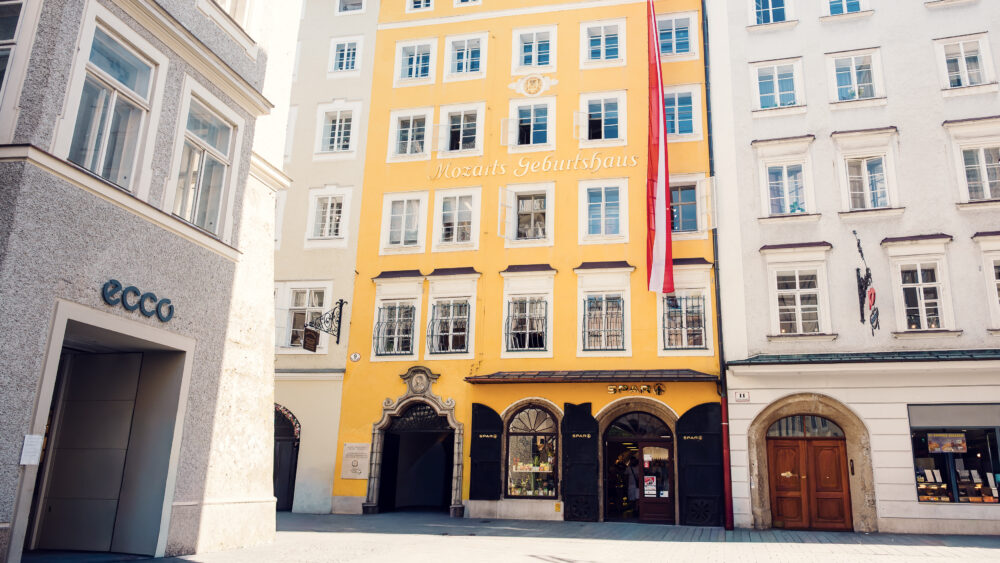

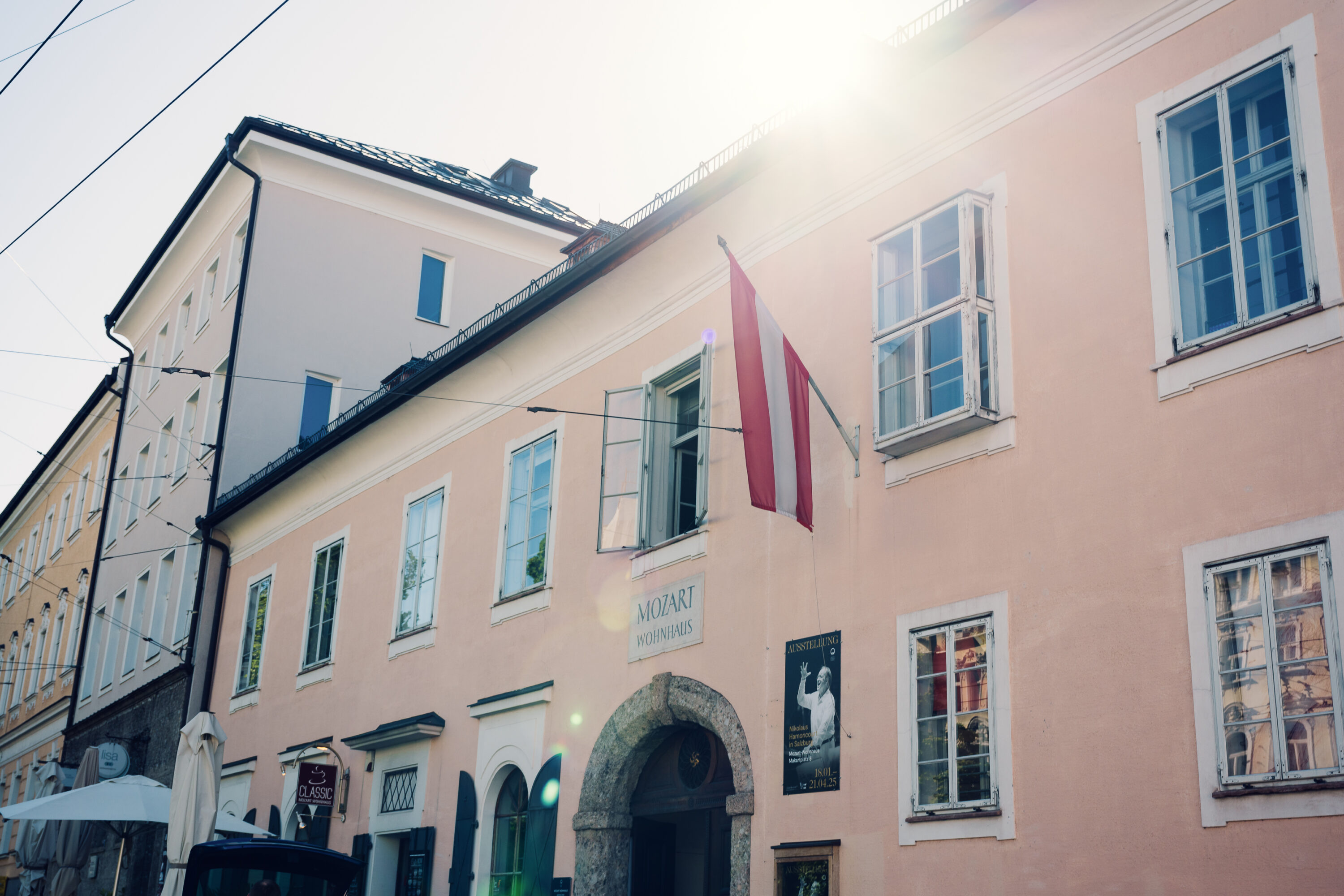
Sun flaring over the pink facade of the Mozart Wohnhaus, an Austrian flag hanging beside an open window.
Entrance area of the Mozart Wohnhaus with the museum sign above the doorway.
Close-up of a memorial plaque on the outer wall of the Mozart Wohnhaus in Salzburg.
Sun flaring over the pink facade of the Mozart Wohnhaus, an Austrian flag hanging beside an open window.
Entrance area of the Mozart Wohnhaus with the museum sign above the doorway.
Close-up of a memorial plaque on the outer wall of the Mozart Wohnhaus in Salzburg.
Fall in Love with

Mozart Residence (Mozart Wohnhaus)

Visit Salzburg’s Mozart Residence on Makartplatz to see Mozart’s original pianoforte, family portraits, and the Magic Flute House.

* Affiliate links: if you book, a small commission supports our independent work, at no extra cost to you.

01 / 03
01 / 03

Mozart Residence (Mozart Wohnhaus)

Admission
€18
Plan for
90 mins
indoors
Where
Mirabell & Kapuzinerberg

Tickets & tours

Mozart Residence (Mozart Wohnhaus)

Tickets & prices

TicketAdultsChildrenReduced
Tickets
Admission€18from €6from €4.50
Children: €7 · 6-14 €6
Reduced: groups of 10, students, seniors €15 · school groups; pupils; per person 6-18 €4.50
Reduced: with valid ID
Family ticket (2 adults with children)€32
Passes & combined tickets
Combined ticket Mozart's Birthplace and Mozart Residence€25from €8from €6
Children: €10 · 6-14 €8
Reduced: groups of 10, students, seniors €22 · school groups; per person €6
Adults: valid 48 hours
Combined ticket, family (2 adults with children)€50

Children: 6-14 years

Free: children under 6, visitors with disabilities and one registered companion, Salzburg Card holders

Tours & experiences

Guided tours at the venue

TicketAdultsChildrenReduced
Private guided tour of the Mozart Residence, German€100 per group
plus museum admission; max. 25 people
Private guided tour of the Mozart Residence, EN, FR, IT or ES€120 per group
plus museum admission; max. 25 people

The Mozart Residence on Makartplatz is where Wolfgang Amadeus Mozart spent his late teens and early adulthood in Salzburg after the family moved there in 1773. While the Geburtshaus on Getreidegasse gets most of the attention, this spacious eight-room apartment is where Mozart lived from 1773 until the end of 1780, composed many of his Salzburg works, and lived with his family before leaving Salzburg for good.

Run by the International Mozarteum Foundation, the Mozart Residence museum holds his original pianoforte, family letters, and the famous Magic Flute House in the courtyard.

Together with his birthplace across the river, it is one of Salzburg’s two main Mozart museums.

Plan your visit

Opening Hours
Daily 09:00 - 17:30All hours
Getting there
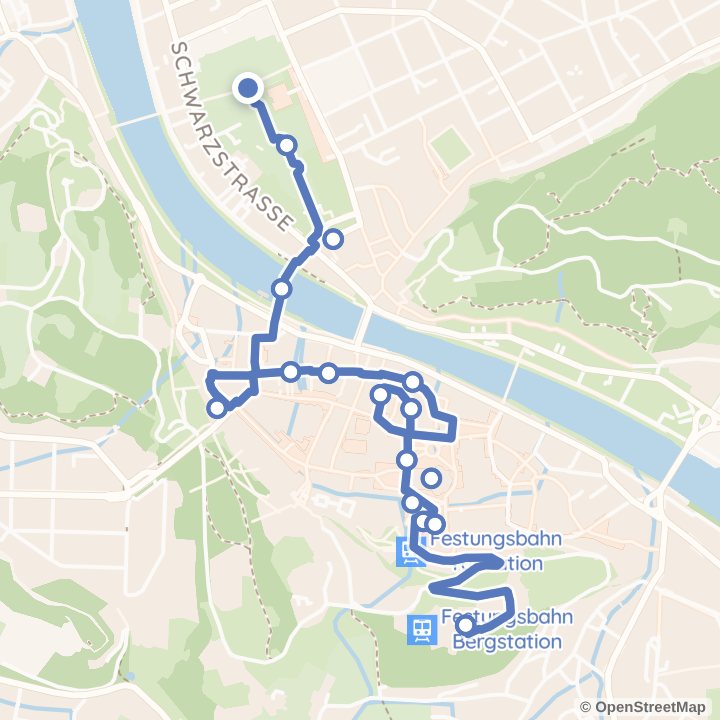
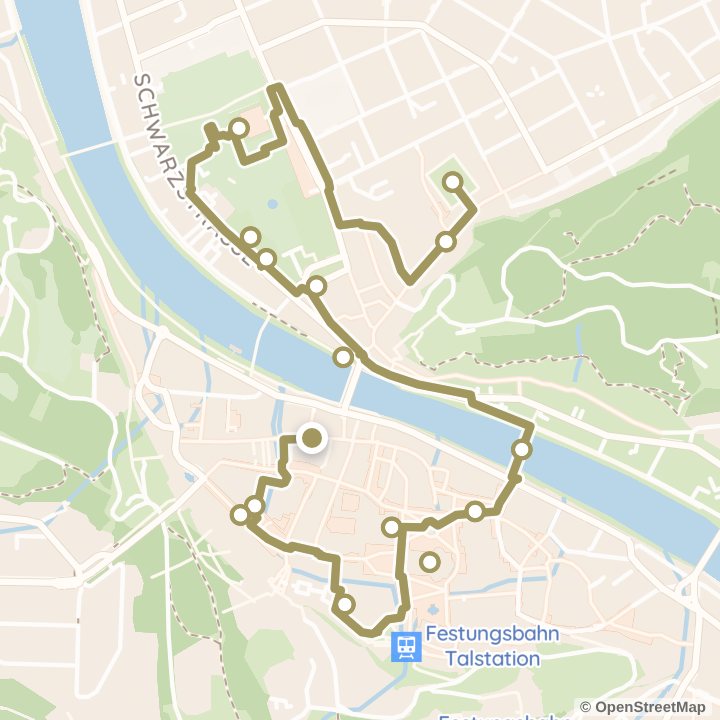
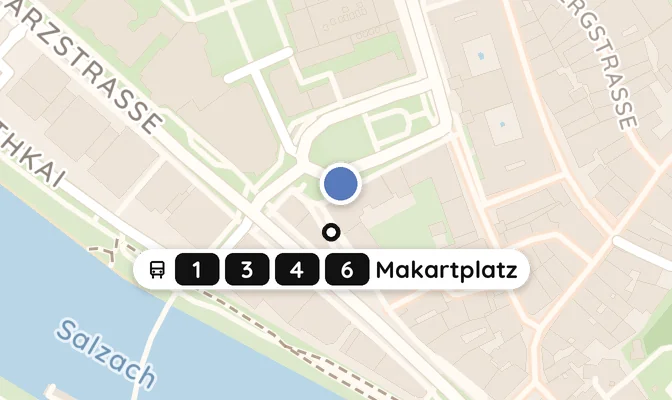
Makartplatz 8, 5020 SalzburgBus 1 3 4 6 Makartplatz · 1 min walkMirabell & Kapuzinerberg
Good to know

Wheelchair Access

Website · mozarteum.at

What's on here

Mozart & Mozarts: A Journey through Mozart's Iconography at the Mozart Residence

Jan 16, 2027 - Apr 16, 2027

Real portraits of the Mozart family hang next to the sensational finds that turned out not to be Mozart at all, a look at how his face was painted, copied and faked from the Baroque to Historicism.

  • Mozart Residence (Mozart-Wohnhaus), Makartplatz 8, 5020 Salzburg
  • Daily 09:00-17:30, last admission 30 minutes before closing. On 21 January 2027 the museum closes at 15:00.
  • Mozart Residence ticket 18 EUR, reduced 15 EUR, young people 7 EUR, children 6-14 6 EUR, under 6 free. Combined ticket with Mozart's Birthplace 25 EUR, reduced 22 EUR. Online tickets are only valid from the Mozarteum's own web shop.
  • Get the combined ticket with Mozart's Birthplace on Getreidegasse: it's valid for 48 hours from when it's first used, so you don't have to fit both houses into one day. Plan about an hour for the Mozart Residence itself.

Opening hours

Mozart Residence (Mozart Wohnhaus)

Monday09:00 - 17:30
Tuesday09:00 - 17:30
Wednesday09:00 - 17:30
Thursday09:00 - 17:30
Friday09:00 - 17:30
Saturday09:00 - 17:30
Sunday09:00 - 17:30

Next: Thu 24 December: 09:00 - 13:00

Last admission: 30 minutes before closing

Changes in the next 12 months

Special days

Thu 24 Dec09:00 - 13:00
Fri 1 Jan12:00 - 17:30
Thu 21 Jan09:00 - 15:00

Special events and set-up and dismantling work can cause temporary closures or restricted visits.


Muvamo Opinion

The Mozart Residence (Wohnhaus) is a different experience from the Geburtshaus (Birthplace). Where the birthplace leans into the child-prodigy narrative, the Wohnhaus tells the story of a young man finding his voice, pushing against the constraints of provincial Salzburg, and eventually walking out the door for Vienna at age 25.

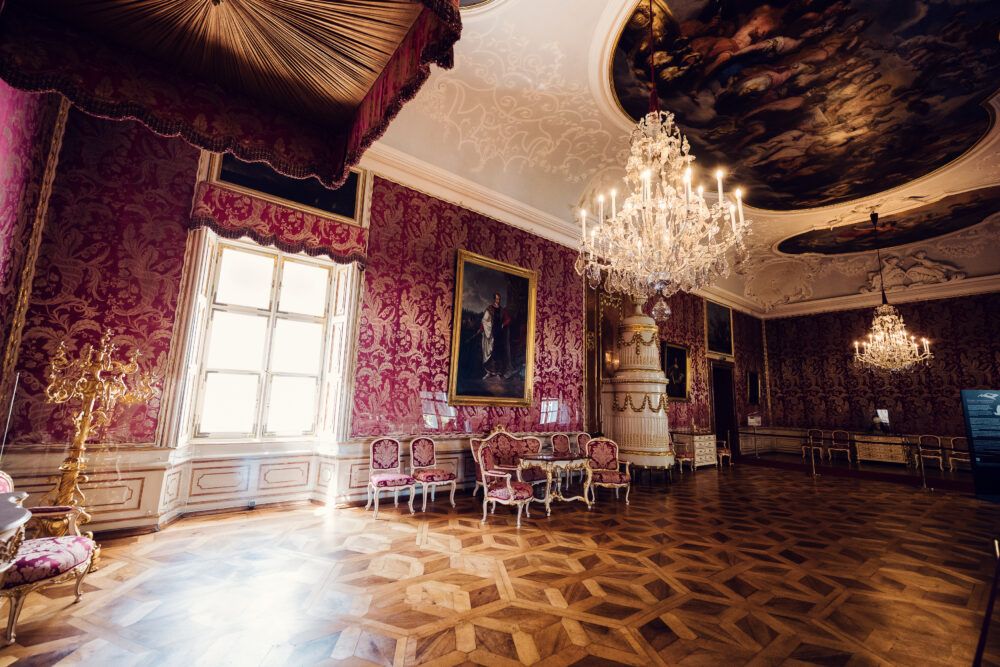
What makes the Mozart Residence stand out is the quality of the original objects on display. Mozart's pianoforte sits in the room where it was actually played. The family portrait by Johann Nepomuk della Croce, one of the most important depictions of the Mozart family, hangs in the space where it makes the most sense. You're not looking at reproductions or reconstructions. You're looking at things Mozart touched, used, and lived with.

The exhibition is well-paced and clearly organized, moving through the family's daily life, their social world in Salzburg, and the musical output of those years. The second floor focuses on "Mozart at the Theater," with miniature stage models (dioramas) that trace the history of his opera productions across centuries. It's a surprising and engaging section that even non-specialists will find themselves spending time with.

Then there's the Magic Flute House in the courtyard. This small wooden hut is said to be where Mozart composed parts of his final opera in 1791. It originally stood in the garden of the Freihaustheater in Vienna and was brought to Salzburg in 1873 by the Mozarteum Foundation. It's a small, slightly surreal thing to encounter in the middle of a museum courtyard, and it adds a tangible connection to Mozart's final creative years.

The building itself has a complicated history. Two-thirds of it was destroyed in an Allied air raid in October 1944. An office block was built on the ruins, then demolished in 1994 to allow faithful reconstruction. The Mozart Residence reopened on Mozart's 240th birthday, 26 January 1996.

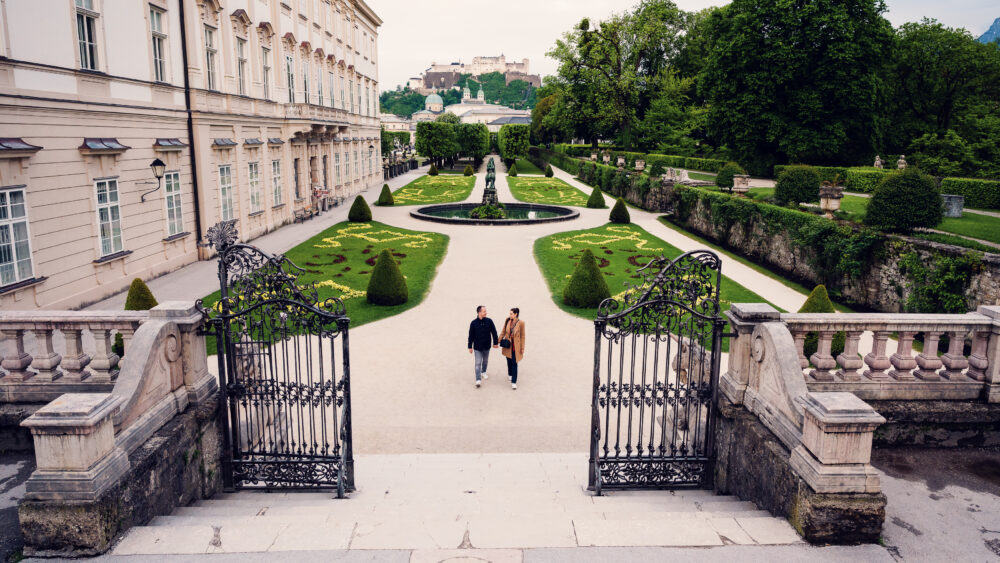
We'd suggest budgeting around 90 minutes for a full visit, and combining it with a stop at Mirabell Garden just a few steps away. If you're deciding between this and the Geburtshaus, the honest answer is: do both and get the combined ticket.

Recommended tours & experiences

Helpful Hints

  • Get the combined ticket for both the Mozart Residence and the Birthplace.
  • Buy tickets only through the official Mozarteum webshop or directly at the museum box office. Third-party tickets won’t be accepted at the door.

Gastronomic Discoveries

  • Café Bazar at Schwarzstraße 3 is a short walk from the museum. It is a traditional Salzburg coffeehouse on the bank of the Salzach, with a terrace overlooking the Old Town.
  • Triangel on Wiener-Philharmoniker-Gasse is a reliable lunch spot popular with locals.

Hidden Gems

  • The Autograph Vault in the basement of the Mozart Residence holds around 190 original Mozart letters, around 370 letters by his father, and over 100 autograph music manuscripts. It can only be visited on special guided tours, so check the museum’s current tour schedule or availability before your visit.

Our Little Extras

  • The Magic Flute House has had an unusually eventful history. It was acquired by the Mozarteum Foundation in 1873, ceremonially transferred from Vienna to Salzburg in 1877, erected on the Kapuzinerberg, moved to the Bastion Garden in 1950, and relocated to the courtyard of the Mozart Residence in autumn 2022.

A Dance Master's House Becomes Mozart's Home - Mozart Residence Salzburg

From Dance Lessons to Musical History

The building at Makartplatz 8 first appears in records in 1617. Until 1685 it actually consisted of two separate structures. Its defining identity took shape in 1711 when court dancing master Lorenz Spöckner received permission to give dance lessons to Salzburg's nobles, preparing them for life at court. By the census of 1713, the house was already known as the "Tanzmeisterhaus" (Dance Master's House). Spöckner's son Franz Gottlieb bought the building from his mother in 1739 and continued the family tradition.

The Mozart connection began in 1773. Leopold Mozart, his wife Anna Maria, and their two children had outgrown their apartment on Getreidegasse. The family needed space for social gatherings and musical performances that the cramped birthplace couldn't provide. As friends of the Spöckner family, the Mozarts moved into a spacious eight-room apartment in the Tanzmeisterhaus shortly after returning from their third trip to Vienna.
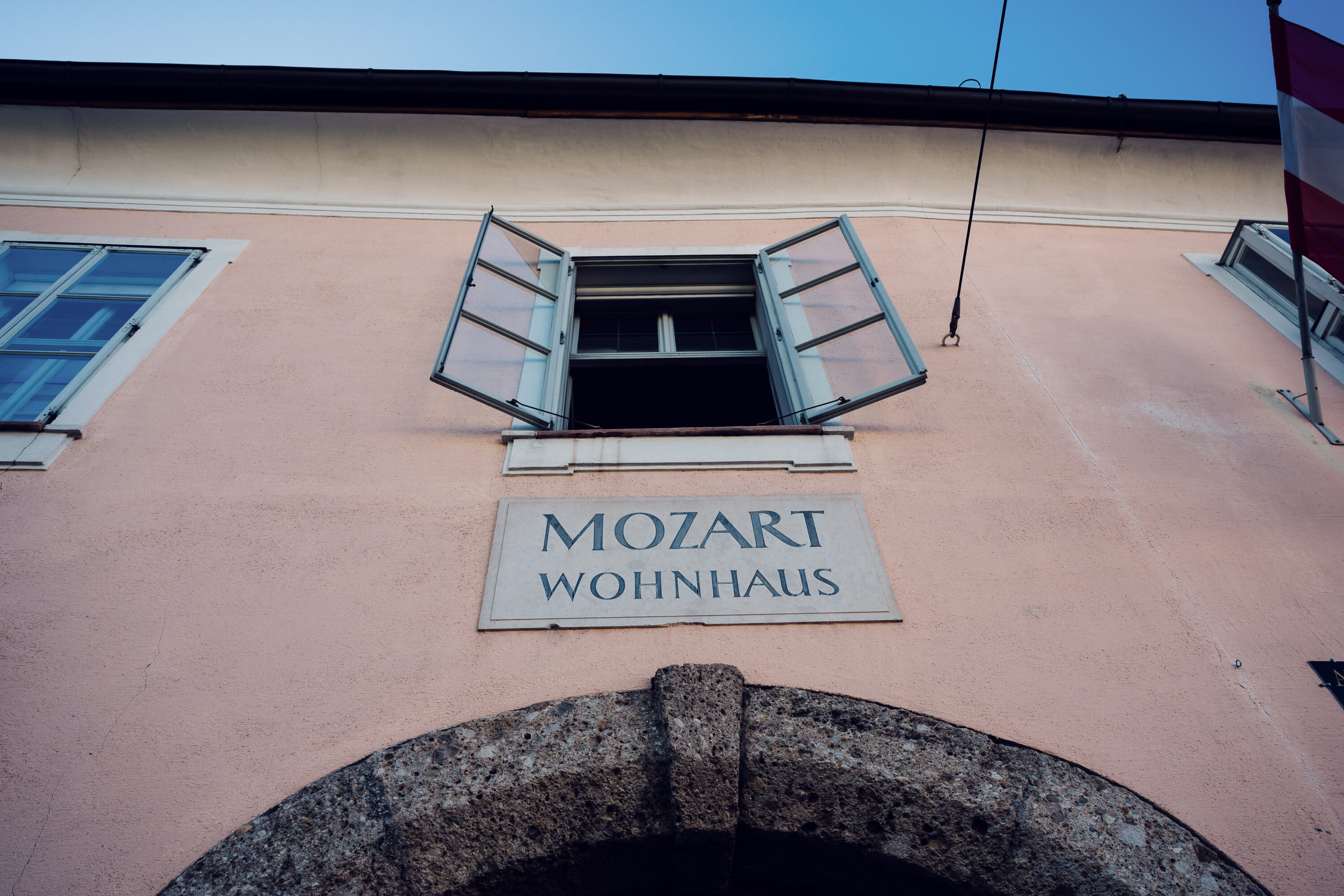
Entrance area of the Mozart Wohnhaus with the museum sign above the doorway.
The Mozart family moved to this house on Makartplatz in 1773, where Wolfgang lived until 1780.

Mozart's Formative Years

Wolfgang Amadeus was 17 when the family settled into the Mozart Residence. Over the next eight years, he composed a large portion of his Salzburg works here, including symphonies, concertos, and church music for the court of Prince-Archbishop Colloredo. The apartment served not just as the family home but also as a place for social gatherings and music-making. The larger apartment allowed the Mozart family to host social gatherings more appropriately than their former home on Getreidegasse.

The family's time at the Tanzmeisterhaus was marked by departures. Anna Maria died in Paris in 1778 while traveling with Wolfgang on the journey to Mannheim and Paris. Sister Nannerl married in 1784 and moved to St. Gilgen. Wolfgang himself left Salzburg for Munich in November 1780 and never returned to live there, heading for Vienna and artistic independence the following year. Leopold lived on alone in the apartment, and from 1785 with his grandson Leopold Alois Pantaleon, who had been entrusted to his care. Leopold Mozart died on 28 May 1787, ending the family's connection to the house.

Destruction and Reconstruction

After Leopold's death, the building passed through several owners. On 16 October 1944, an Allied air raid destroyed two-thirds of the structure. The surviving portion was purchased by the International Mozarteum Foundation in 1955. An office building was constructed on the bomb-damaged section of the Mozart Residence, creating an awkward architectural hybrid for several decades.

The turning point came in 1989 when the Foundation acquired the office building too. After the office building was demolished, the Mozart Residence was reconstructed according to the original plans, and in 1994 Elsa Prochazka carefully renovated and reorganized the museum using modern museum technology to protect the exhibits. The restored Mozart Residence Salzburg opened to the public on 26 January 1996, Mozart's 240th birthday.
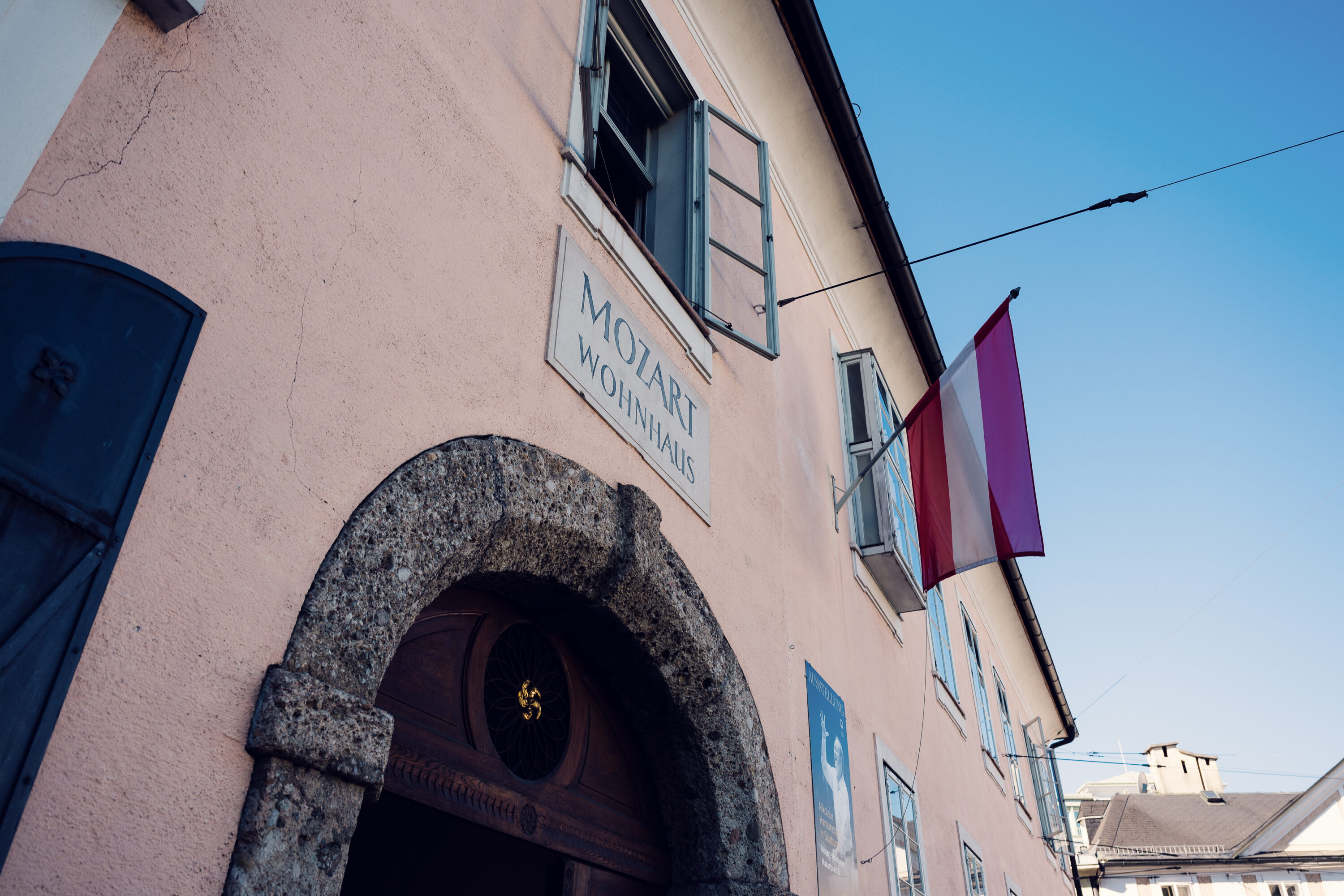
Close-up of a memorial plaque on the outer wall of the Mozart Wohnhaus in Salzburg.
Today the Mozart Wohnhaus is a museum dedicated to the composer's life and work in Salzburg.

The Museum Today

The museum centers on the former eight-room apartment, with the Autograph Vault in the basement and the Magic Flute House in the courtyard. The heart of the collection includes Mozart's original pianoforte, the della Croce family portrait, and hundreds of documents and letters. The basement houses the Autograph Vault, where the Mozarteum Foundation stores over half of all known documents connected to the Mozart family, including roughly 200 original Mozart letters and more than 100 autograph music manuscripts.

The Magic Flute House in the courtyard adds a Vienna chapter to the Salzburg story. This small wooden cottage is where Mozart reportedly composed parts of The Magic Flute in 1791, originally standing in the garden of the Freihaustheater in Vienna. The Mozarteum Foundation acquired the Magic Flute House in 1873, it was ceremonially transferred from Vienna to Salzburg in 1877, and after restoration it reached its final location in the courtyard of the Mozart Residence in 2022.