
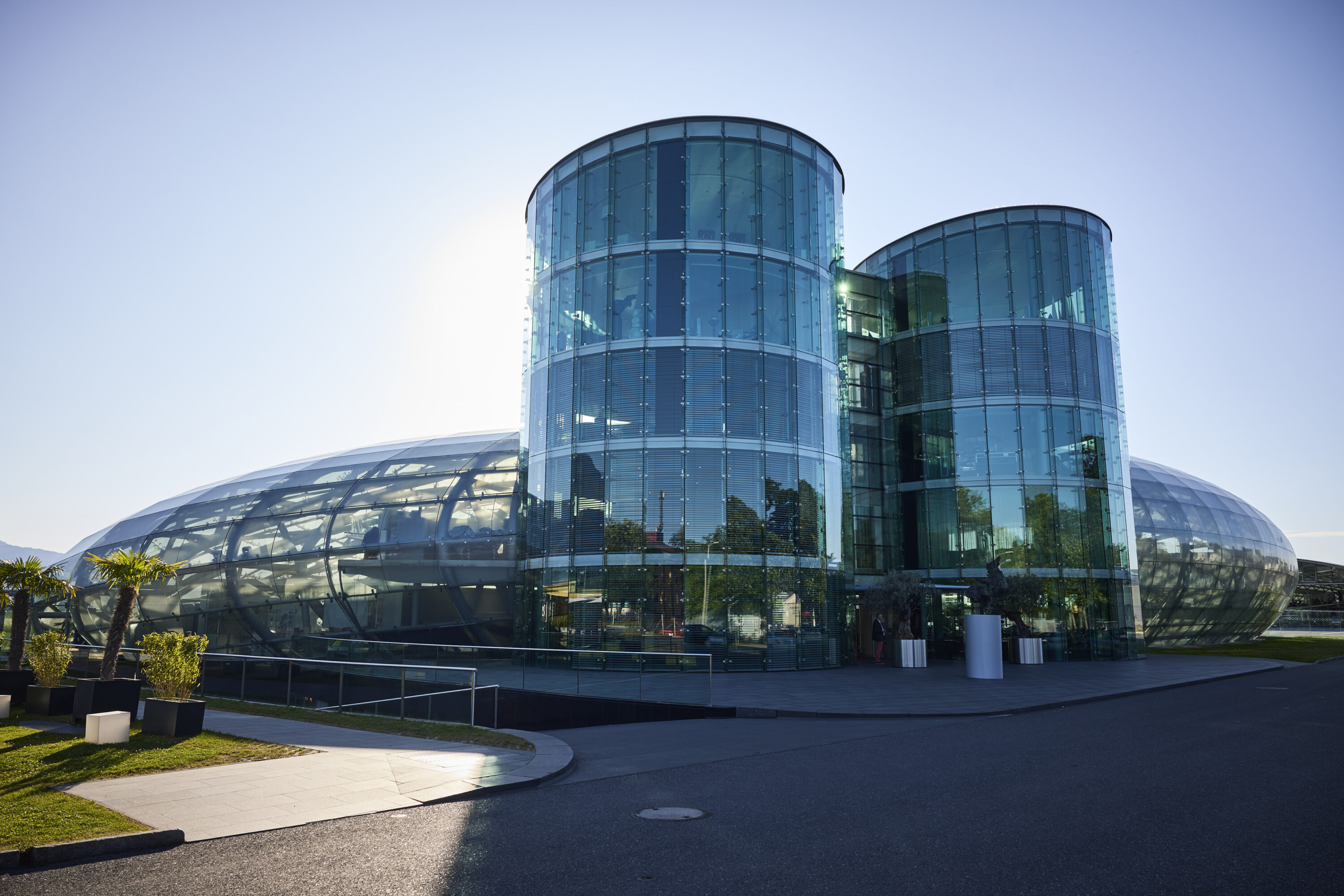
A Hangar Built for the Sky - Red Bull Hangar-7
From Vision to Blueprint
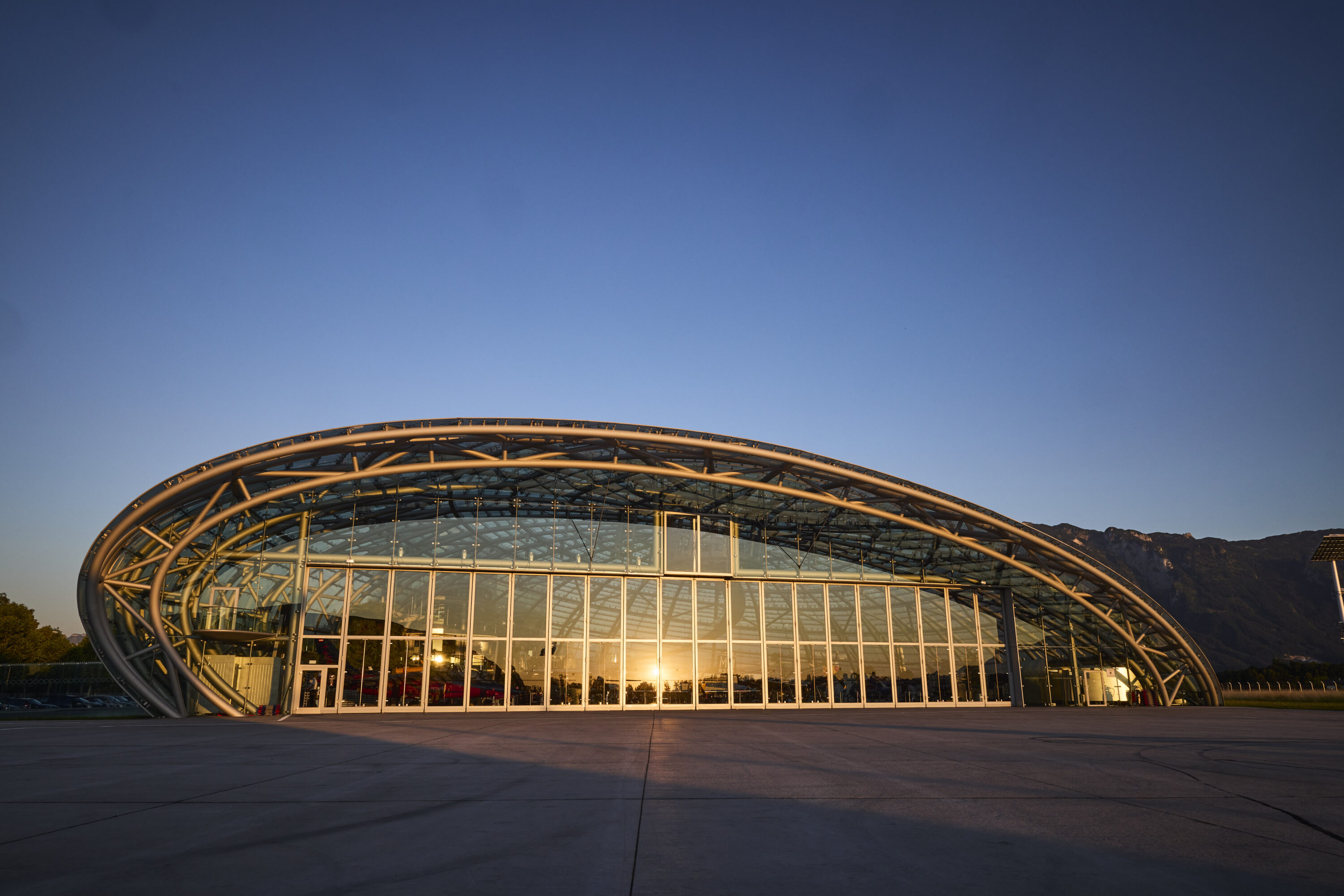
When Red Bull founder Dietrich Mateschitz began planning a new home for his growing aviation collection at the turn of the millennium, the brief was anything but conventional. The Flying Bulls, a fleet of historic and airworthy aircraft, had been based at Innsbruck Airport and needed more space. Mateschitz wanted a building at Salzburg Airport that would function as a proper aircraft hangar while doubling as a public space for art, dining, and events. Salzburg-based architect Volkmar Burgstaller took on the project, developing numerous sketches and models to refine a form that would look as if it could lift off the tarmac.
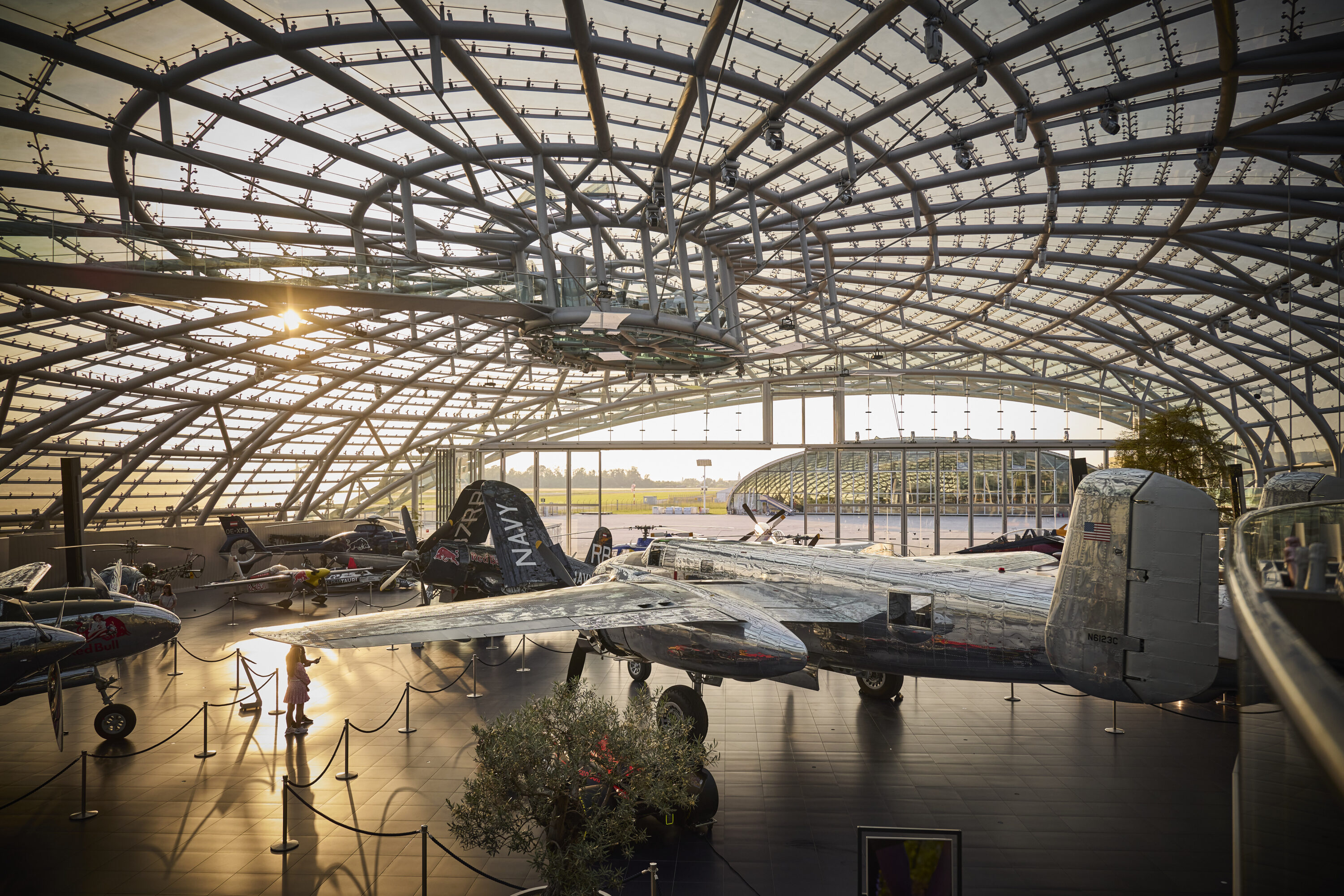
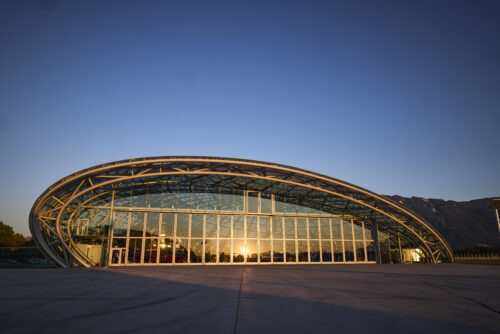
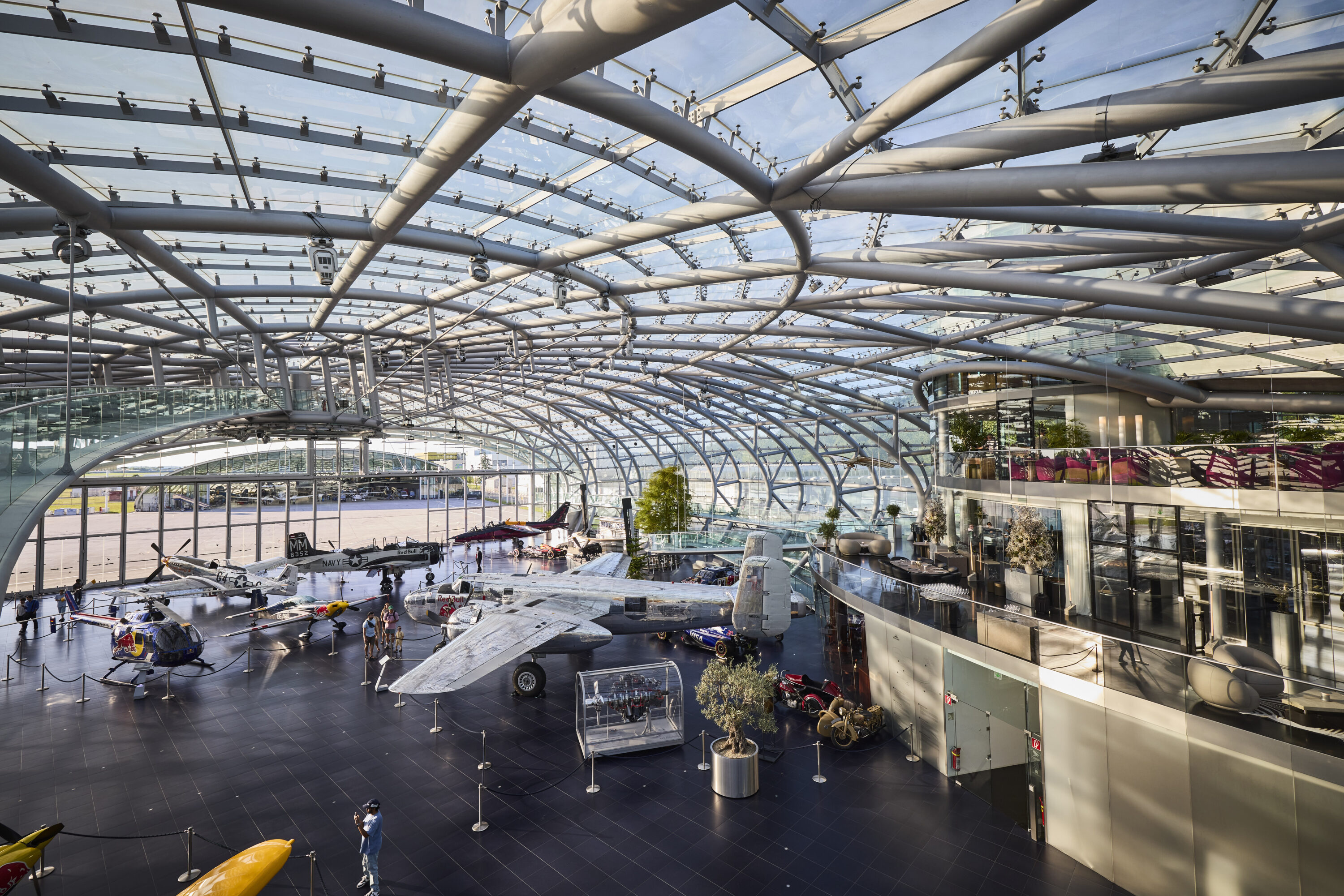
The dimensions were dictated by practical needs: the hangar's 40-meter-wide door had to accommodate the collection's largest aircraft, a Douglas DC-6B, with room to spare. Beyond that, everything was about ambition. Burgstaller's design called for a freestanding shell construction spanning 67 by 100 meters, a form no one had attempted at this scale before. Structural engineering firms in London and Stuttgart were brought in to confirm that the concept was feasible.
1,200 Tons of Steel, Zero Sharp Edges
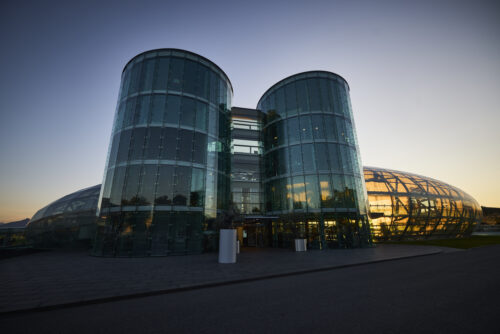
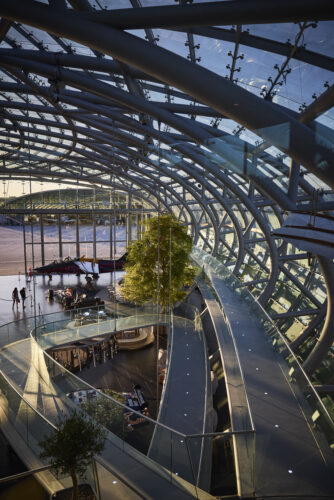
Construction required 14,000 cubic meters of concrete, 1,200 tons of steel, and 7,000 square meters of specialty glass cut into 1,754 panels, no two of which share the same dimensions. Many were custom-curved to fit the dome's compound geometry. The building's silhouette is deliberately streamlined, echoing the aerodynamic forms of the aircraft it houses.
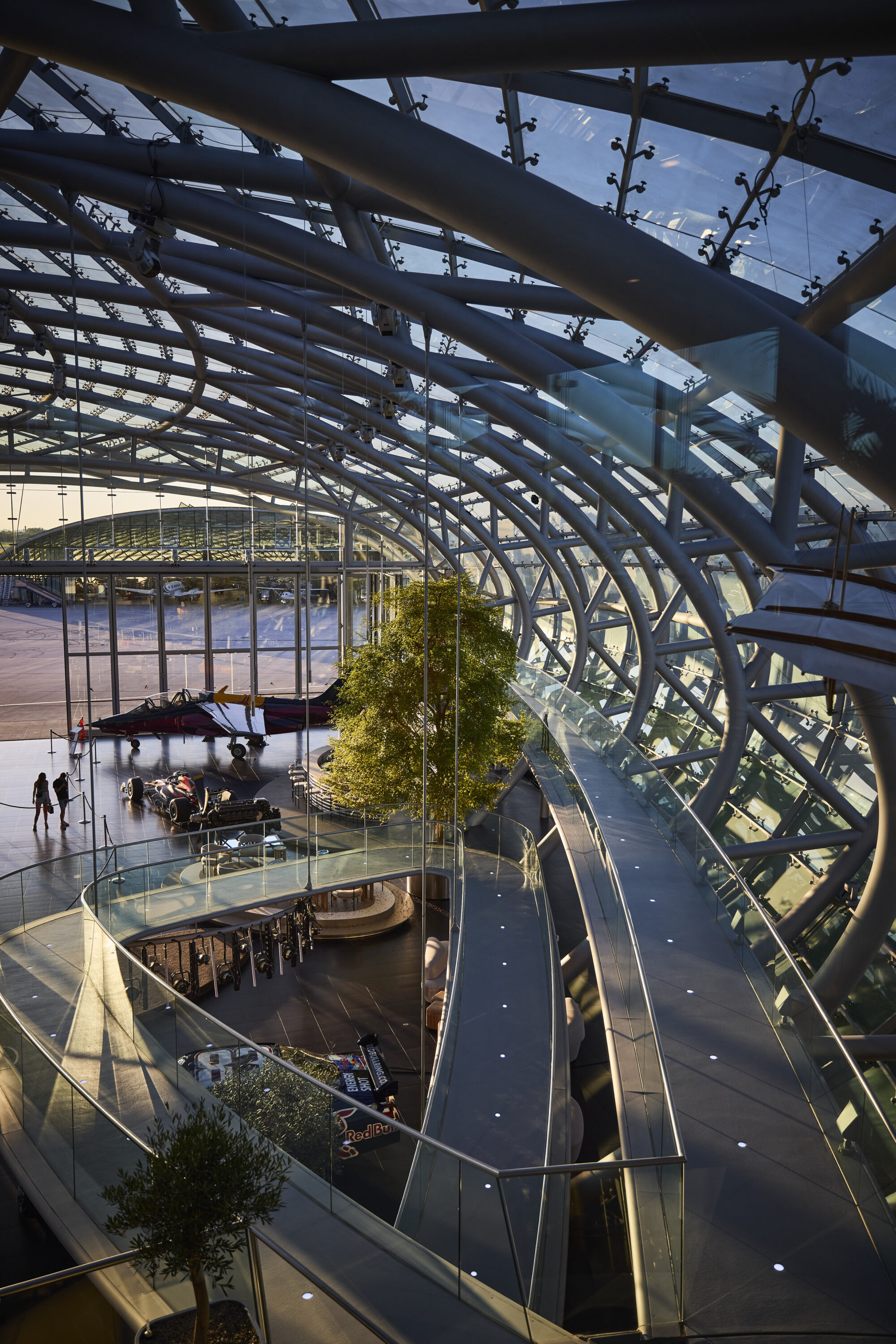
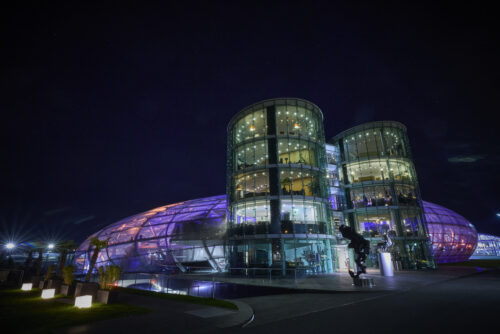
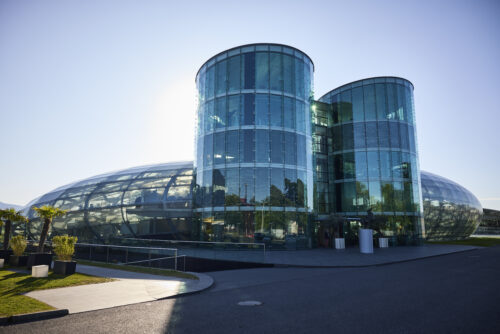
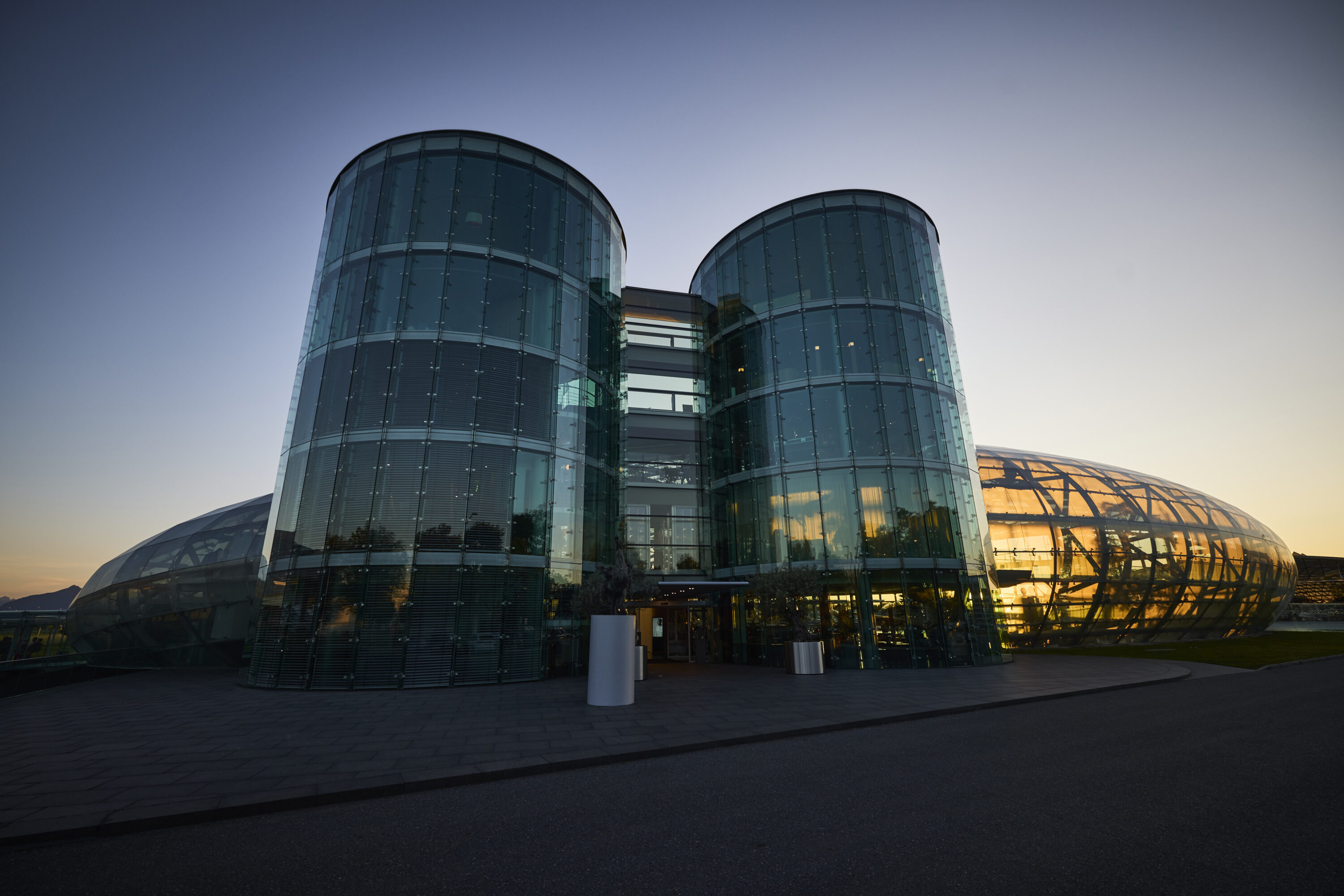
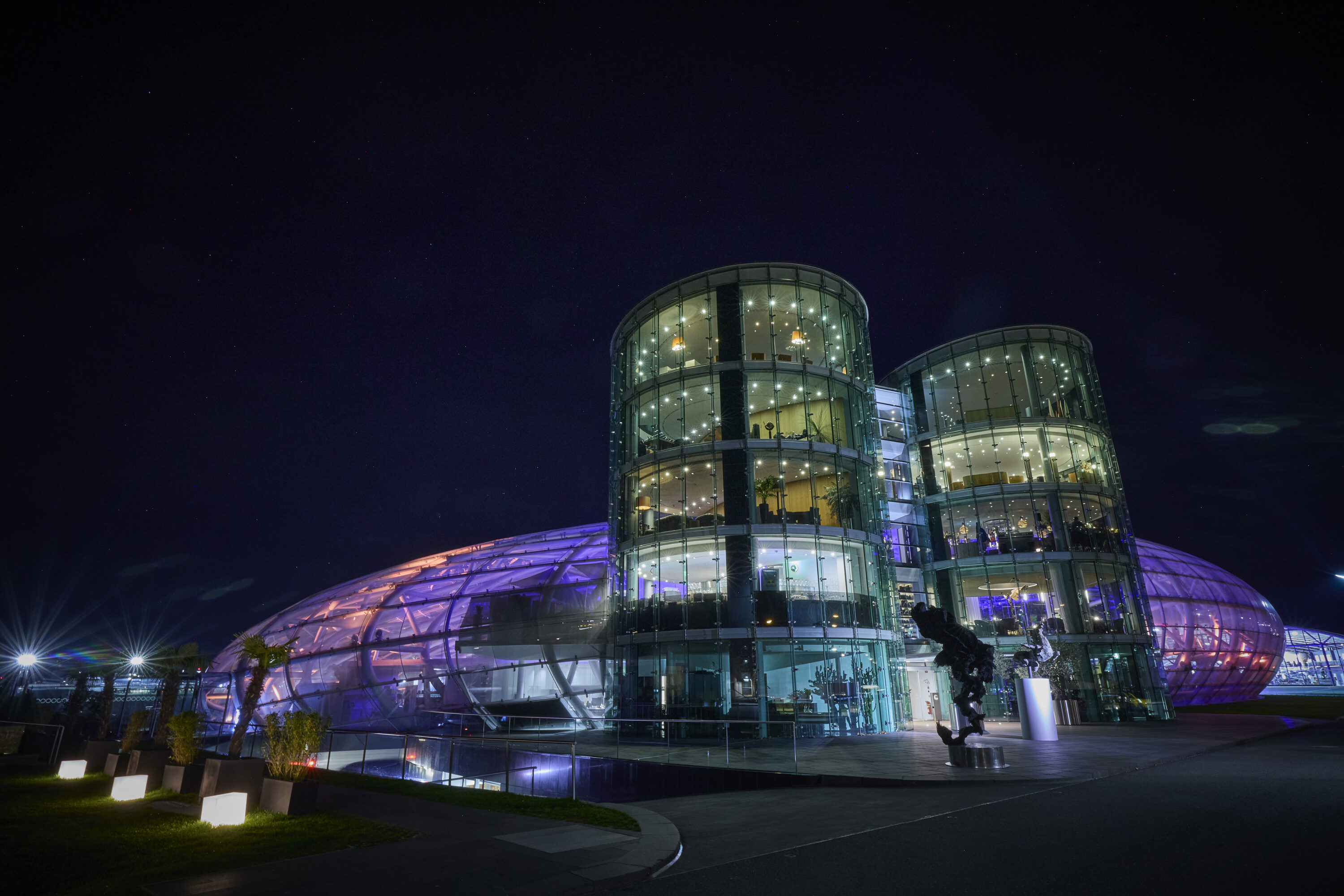
Two cylindrical glass towers rise alongside the main hall, housing the Carpe Diem Lounge-Café, the Mayday Bar, and administrative offices. These cylinders also serve as structural cross-bracing for the entire framework, a solution that kept the main hall free of interior columns.
Red Bull Hangar-7 opened to the public on 22 August 2003 after roughly four years of planning and construction. One detail captures the attention to detail that runs through the project: the floor-mounted lights in the main hall are arranged to match the exact star constellation visible over Salzburg on opening night.
Art, Aviation, and Formula 1
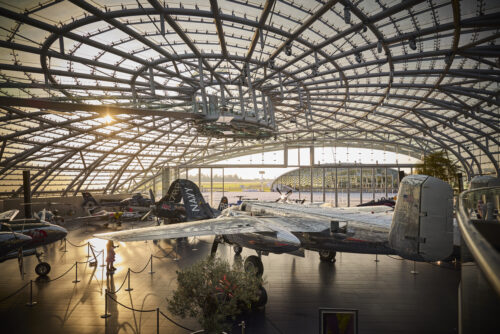
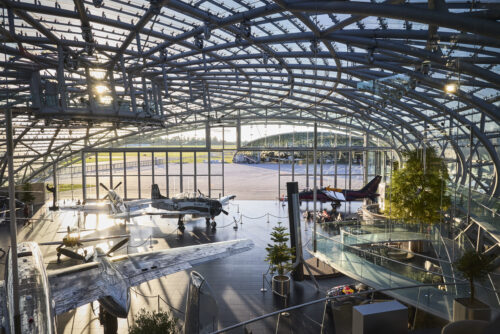
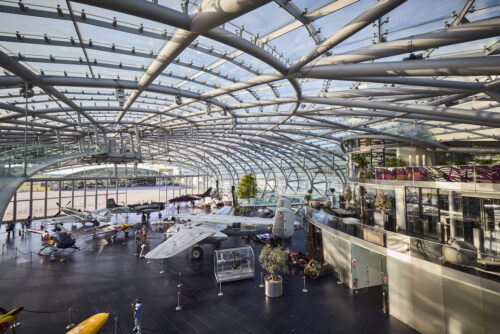
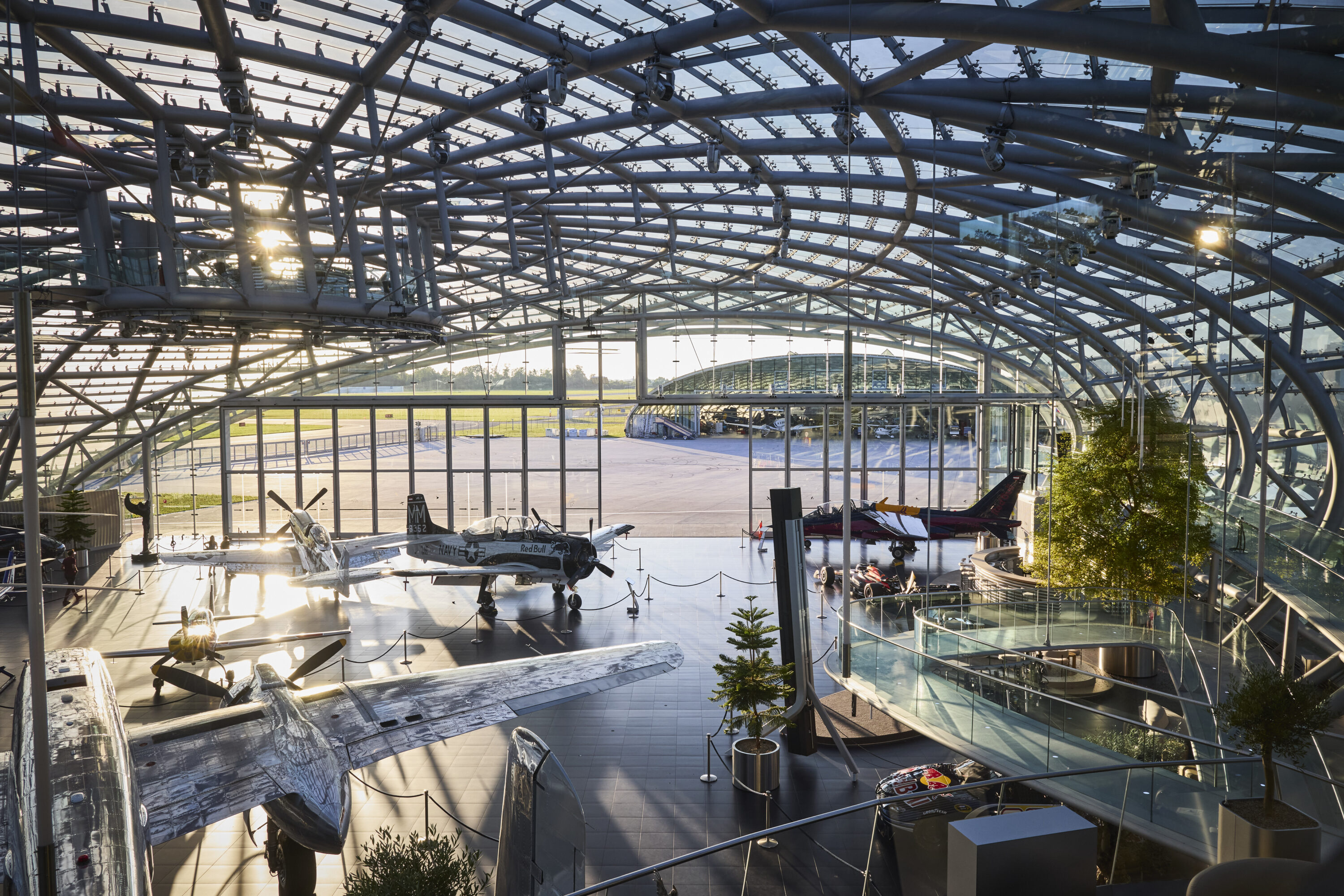
The exhibition at Red Bull Hangar-7 builds a bridge between technology and art. The core of the collection is The Flying Bulls fleet - carefully maintained historic aircraft that are fully airworthy, not static museum pieces. The Douglas DC-6B, the P-38 Lightning, a North American B-25J Mitchell, and a Chance Vought F4U-4 Corsair are among the fleet's highlights, though the specific aircraft on display can vary since many remain in active use for events and airshows. Formula 1 cars, MotoGP bikes, and other racing vehicles complete the picture.
Contemporary art has been part of Red Bull Hangar-7 from the beginning. In partnership with House of Arts, exhibitions rotate several times a year. Modular display surfaces and progressive design elements create what amounts to a room within a room, offering dedicated sightlines for each exhibition while the aircraft and vehicles remain visible in the background. Artists and visitors meet on equal terms here - the space is designed for exchange, not passive viewing.
The glass roof itself acts as a kind of curator. Natural daylight shifts with the sun and the weather, setting the artworks in a constantly changing light. It's a deliberate effect: the raw daylight frames both the engineering exhibits and the paintings and sculptures, letting the contrasts speak for themselves.
A Monday Night Stage
Every Monday evening, Red Bull Hangar-7 doubles as a live television studio. ServusTV broadcasts "Sport und Talk aus dem Hangar-7" at 9:15 PM, a sports talk show covering football, motorsport, winter sports, and extreme athletics. Guests can attend as part of the studio audience or watch from home. The exhibition area will be closed from 8 p.m. onwards on Mondays due to TV recordings - it's worth checking the website before a Monday evening visit.
Nature Under the Dome
Between the steel beams and the aircraft, roughly 30 larger plants from Europe, Asia, and Australia add an unexpectedly organic layer. Olive trees with histories stretching back up to 150 years stand alongside various ficus species, a towering bucida, and a graceful Norfolk Island pine. The collection includes a phoenix palm estimated at 25 years old, a Japanese yew, and a cycad, a living fossil whose lineage predates the dinosaurs. Perhaps the most remarkable specimen is an Australian grass tree, at least 80 years old, a fire-adapted species whose flowering and new growth can be strongly stimulated by bushfire.
The Hangar-7 Outdoor Lounge extends this character beyond the building, framed by Mediterranean plants including bamboo, oleander, citrus trees, and hemp palms, some of them older than Red Bull Hangar-7 itself.
The 2025 Renovation
After nearly 22 years of continuous operation, Red Bull Hangar-7 underwent its first comprehensive renovation in the spring of 2025. The building closed to the public in January for several months of work that went well beyond cosmetics. New climate control systems, modern materials, digital labeling for the exhibits, and a refreshed interior design were all part of the overhaul. The numbers give a sense of the scale: 16 kilometers of silicone joints were replaced, along with roughly 10,000 floor tiles and 26 custom-made glass panels.
Restaurant Ikarus emerged from the renovation with a redesigned dining room, a new walk-in wine cabinet, and fewer tables, sharpening the focus on the dining experience. The Merchandising Shop expanded into a larger space with a broader product range. Red Bull Hangar-7 celebrated its reopening on 4 June 2025 with Formula 1 World Champion Max Verstappen, motorsport demonstrations, an airshow with The Flying Bulls, and live performances.