

Muvamo Opinion
Most Vienna itinerary guides read like a school timetable: cathedral at 9:00, Hofburg at 11:30, lunch at 13:00 sharp. We've never traveled that way, and we don't think you should have to. Vienna rewards the traveler who lingers - a second Melange, a detour through a passage, an extra hour in a museum wing you hadn't planned for.
So this page works differently. Instead of a fixed schedule, we give you building blocks: half-day modules like the inner city, Schönbrunn, the Belvedere or the museum district. You decide how many days you have, pick your blocks, and combine them in whatever order suits your pace, the weather and your mood. Every block links to our detailed guides and free walking routes, so the fine print is always one click away.
Short version of this Vienna travel itinerary: we tell you what fits into a Vienna day. You decide when.
- How Many Days Do You Need in Vienna?
- The Building Blocks
- Vienna Itinerary: 1 Day
- Vienna Itinerary: 2 Days - A Weekend in Vienna
- Vienna Itinerary: 3 Days
- Vienna Itinerary: 4 Days or More
- Been Here Before?
- When to Swap
- Vienna by Season
- Beyond the Zones
- What Does a Vienna Trip Cost?
- Vienna Itinerary FAQ
How Many Days Do You Need in Vienna?
Two full days cover the essentials - the historic center and Schönbrunn Palace. Three days are ideal, because the city finally gets room to breathe. From four days on, you add day trips or go deep on the museums. And yes, one day in Vienna works for a first taste if you keep it to the inner city - though we would not plan a trip around it.
Vienna is compact where it matters. Almost everything inside the Ringstrasse sits within minutes of the next sight on foot, so you lose very little time in transit - one reason a short Vienna itinerary works better here than in most capitals.
How many days in Vienna you need is really a question of pace, so each section below is a Vienna itinerary in building-block form: a combination of modules, not a timetable. Blocks can be swapped freely: museums on the rainy day, gardens in the sun.
The Building Blocks
Every Vienna itinerary on this page is built from the same building blocks: seven city zones plus day trips. Each block is a flexible half day to a full day, each works on its own, and each links to the detailed guide when you want the fine print. Read them once here - below, we only combine them. Want every sight on one screen instead? Our Vienna map plots them all.

The medieval heart inside the Ring: cathedral, imperial palace and the Graben & Kohlmarkt shopping streets sit shoulder to shoulder. The Ringstrasse – Opera, Parliament, Rathaus – wraps around it all like a frame: walk a stretch of it, or hop on a tram along it when your feet give up. In the early evening, climb the cathedral tower or settle into a classic coffee house – both count as sightseeing in Vienna.
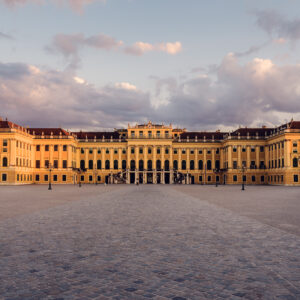
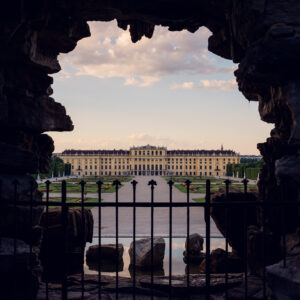
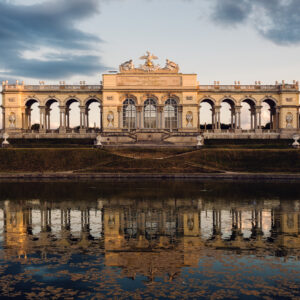
Habsburg summer glamour: state rooms, the free gardens and the Gloriette panorama. The palace is at its calmest right after opening. Half a day covers the essentials – add the zoo and it becomes a full family day.
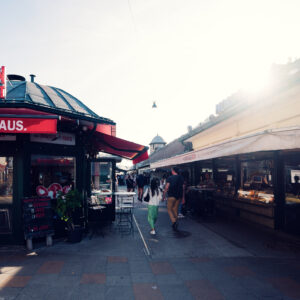
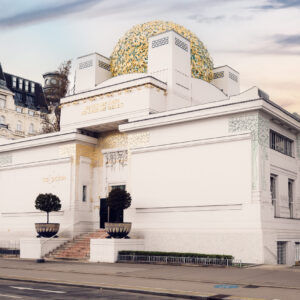
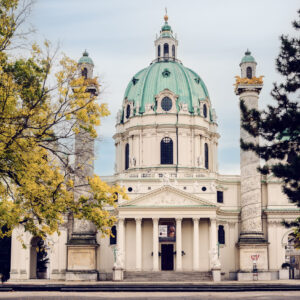
Vienna’s market mile to graze through – liveliest before noon, still a feast in the afternoon – and Karlsplatz a few steps away, which is really four sights in one square: the golden-domed Secession, the baroque St. Charles Church with its two columns, Otto Wagner’s Jugendstil pavilions at the U-Bahn entrance, and the Wien Museum for the city’s own story from Roman camp to Red Vienna. Our free Art Nouveau route ties it all together. Pairs naturally with the Belvedere next door – together they make a full South-of-the-Ring day.
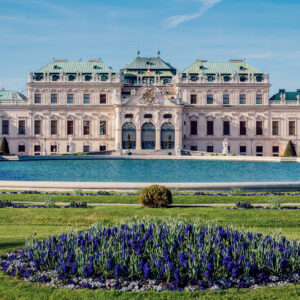
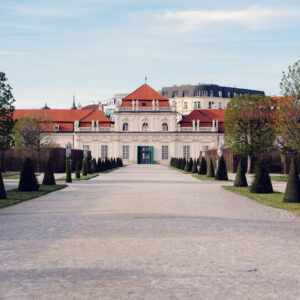
Baroque palace, Klimt’s The Kiss and gardens with a skyline view – then our Stadtpark route back toward the center. The perfect unhurried afternoon, and half of it costs nothing. Just 15 minutes on foot from the Naschmarkt – combine the two for a full South-of-the-Ring day.

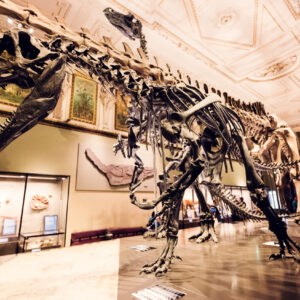
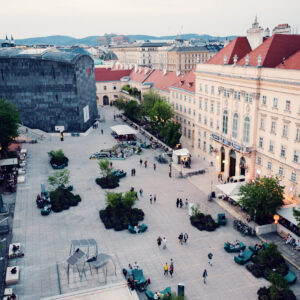
Bruegel and Vermeer at the Kunsthistorisches, dinosaurs at the Natural History Museum, and the MuseumsQuartier courtyards in between – then the Spittelberg lanes and Mariahilfer Strasse for the browsing after. This is the block you reach for when the weather turns: you lose nothing indoors.
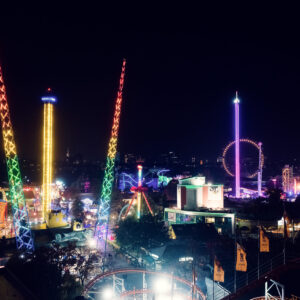
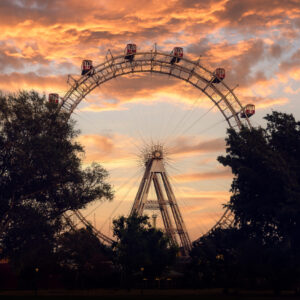

Ferris wheel, chestnut alleys and Vienna at its most relaxed – plus the 150-meter Danube Tower view that puts your whole itinerary on one horizon. In summer, the Alte Donau and Donauinsel add swimming to your sightseeing; the Hundertwasserhaus is on the way.
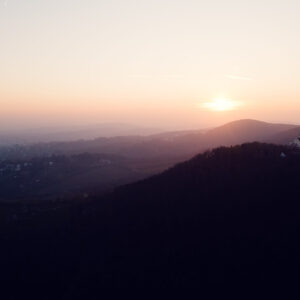
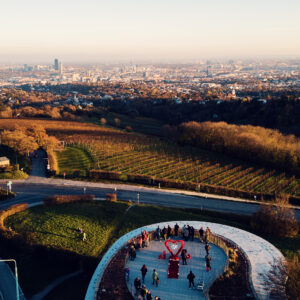
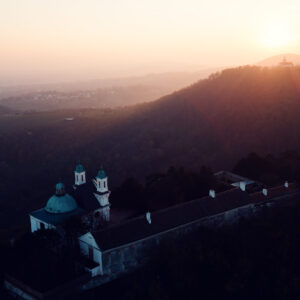
Vienna is the only capital that grows serious wine inside its city limits. Ride up to Kahlenberg for the view over the whole city, walk the vineyards across to Cobenzl, and end the day in a Heuriger – a wine tavern evening is a complete Vienna experience of its own.
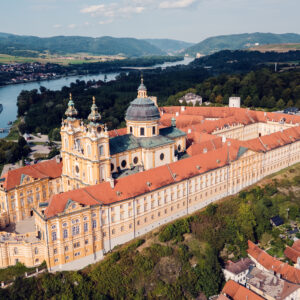
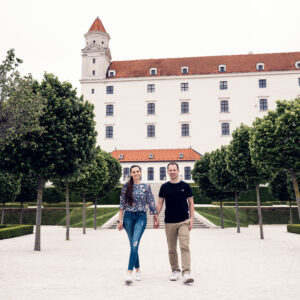
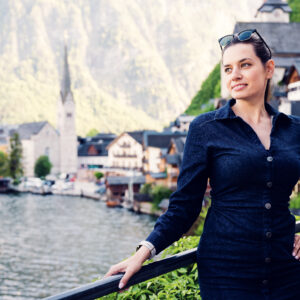
From day four, leave the city. The Wachau valley, Bratislava, Salzburg and Hallstatt all work as day trips from Vienna, each in a completely different direction and mood. Salzburg and Hallstatt are the long ones – two and a half hours each way – so they are early starts or better still an overnight.
Vienna Itinerary: 1 Day
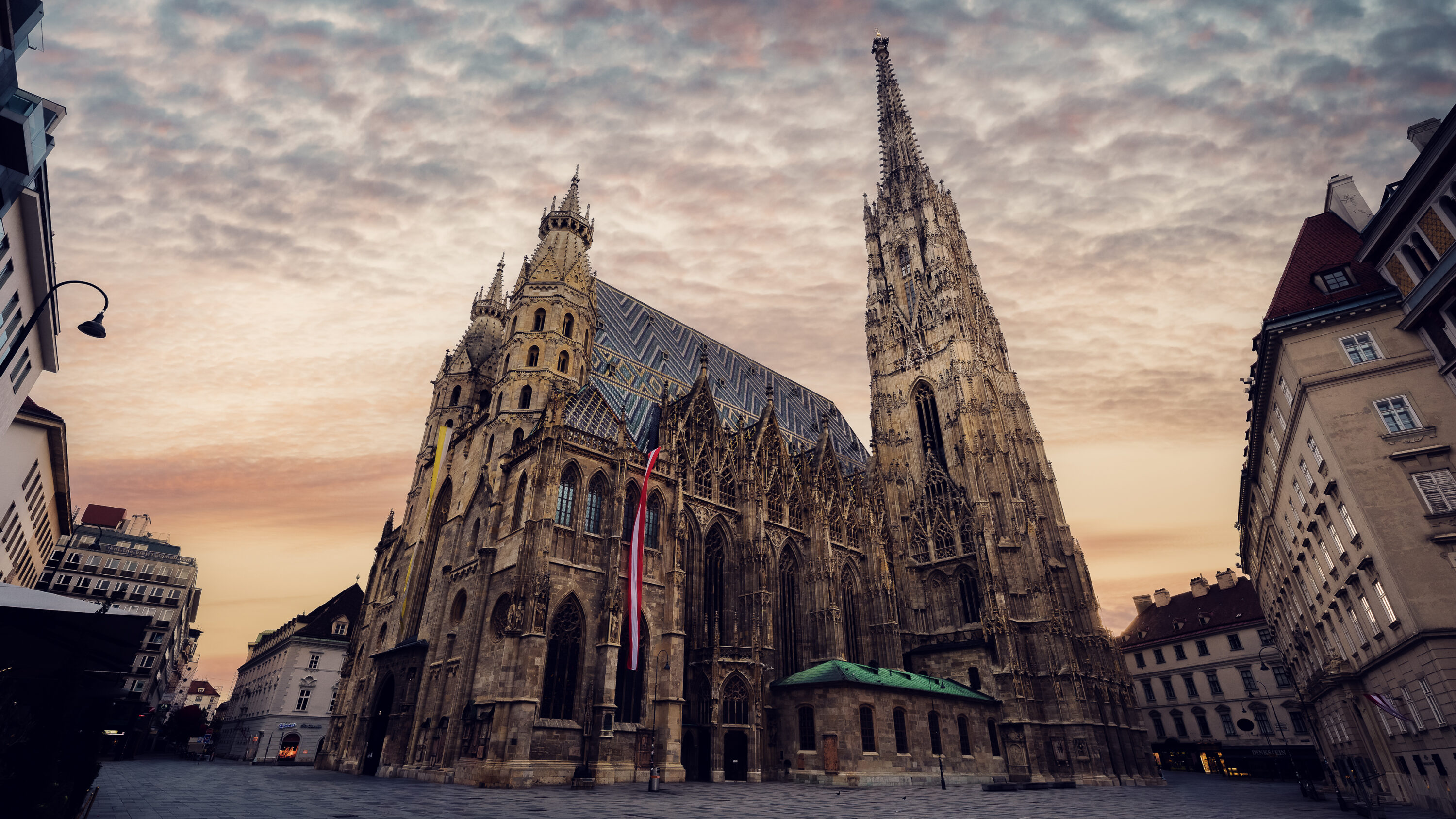
One day in Vienna means one decision: stay inside the Ring. The medieval core around St Stephen's Cathedral, the Hofburg complex and the Graben and Kohlmarkt shopping streets sit shoulder to shoulder - you can cover them entirely on foot.
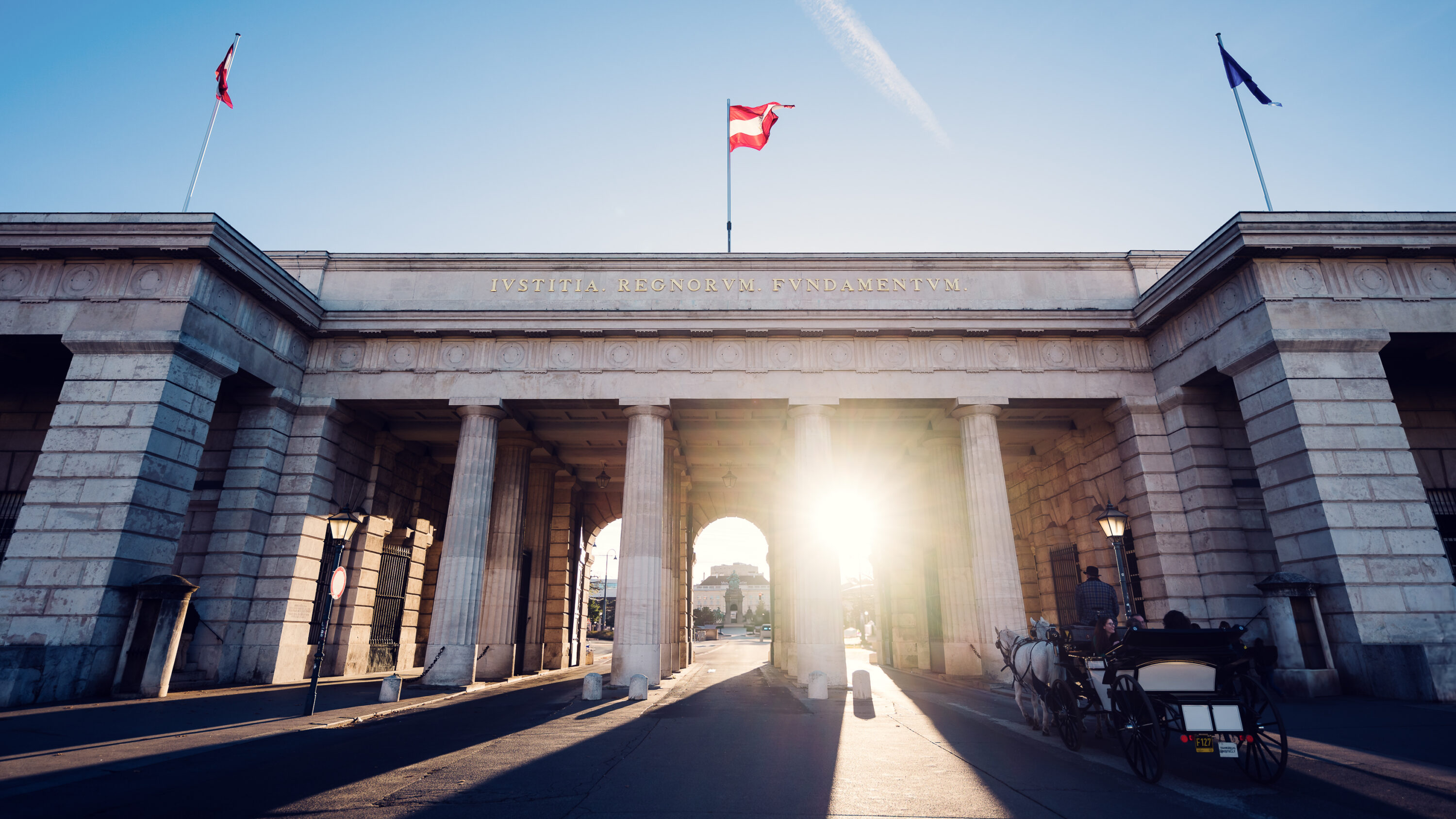
Your formula: City Center + a stretch of the Ringstrasse. Walk our free city center route and you'll pass the State Opera, the Hofburg and the cathedral without ever opening a transit app - our Vienna map shows just how short those hops really are.
Here is what the day actually feels like. You come up the subway stairs at Stephansplatz and the cathedral is simply there, too big for its square, the roof tiles zigzagging green and gold above you. Graben opens behind it - wide, pale, baroque, with the plague column in the middle and shop windows down both sides - and narrows into Kohlmarkt, which ends at the Hofburg's green dome like a stage set. Through the palace gate the gravel of Heldenplatz crunches underfoot and the traffic noise drops away. By late afternoon the Ringstrasse takes its turn: trams 1 and 2 roll past parliament, the city hall and the Burgtheater, and when your feet have had enough you ride a stretch of it for the price of a single ticket. In the early evening, climb the cathedral tower for the city seen from above, or settle in at a marble table and let the day end slowly - both count as sightseeing in Vienna.
If you only tick off five things, make it these: the cathedral (climb the South Tower or visit the catacombs), the Hofburg courtyards, a slow stroll along Graben and Kohlmarkt, the State Opera facade - and one unhurried pause in a Viennese coffee house, where nobody will ever rush you out of your chair. Everything beyond that is a bonus, not a debt: a 1-day Vienna itinerary is not about volume, it is about not hurrying the few things you do see.
Vienna Itinerary: 2 Days - A Weekend in Vienna
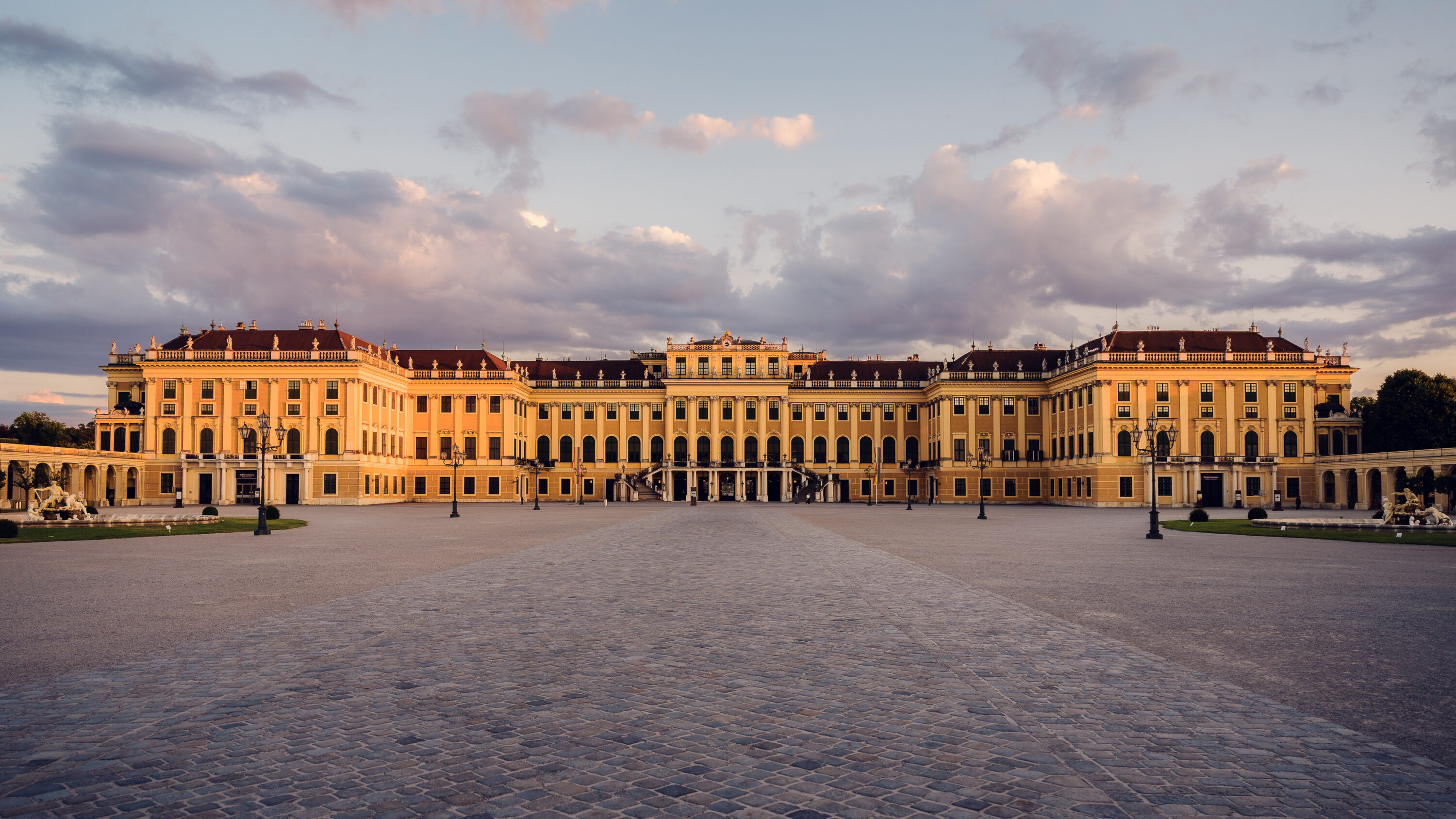
A 2-day Vienna itinerary - the classic weekend in Vienna - splits naturally: one day at Schönbrunn, one day inside the Ring. It's the obvious pairing, and it earns its reputation: 2 days in Vienna give you the imperial city and the medieval one without either feeling rushed.
Day one starts big: Schönbrunn's gate opens onto a courtyard the size of a village square, with the palace front - Maria Theresa yellow, hundreds of rooms behind it - running its entire width. Inside, the state rooms move from gilt to mirrors to the little lacquer cabinets. Outside, the gardens are free to wander and climb toward the Gloriette, and that walk up is the part people remember: the flower parterre falling away behind you, the palace shrinking, the city skyline rising over the hedge line. Go early - right after opening the palace is at its calmest and the parterre is almost yours.
Decide at lunch: add the zoo and make it a full Schönbrunn day, or head back into town for the afternoon - the U4 runs from Schönbrunn to the Naschmarkt without a change. The market is a long double row of stalls - olives, spices, dried fruit, cheese, things you eat standing up - loudest before noon and lazy in the afternoon.
The market ends at Karlsplatz, and that square is really four sights in one: the golden-domed Secession with its motto over the door, the baroque Karlskirche and its two carved columns, Otto Wagner’s Jugendstil pavilions at the U-Bahn entrance, and the Wien Museum for the city’s own story from Roman camp to Red Vienna. Any two of them fill the afternoon - and the Wien Museum is free: since the 2023 reopening its permanent exhibition costs nothing, only the special shows upstairs are ticketed.
If art matters more to you than markets, spend that afternoon at the Belvedere instead: Klimt's The Kiss, a baroque garden and a long view back over the city. It is the bigger sight of the two - we lead with the market only because it is the lighter half-day after a morning of state rooms.
Day two is the one-day plan above, walked at half the pace. And that is the honest arithmetic of a short trip: the big museums are what does not fit. What to see in Vienna in 2 days isn't really the question - it's what you're happy to leave for the next visit.
That order is deliberate if your two days are a Saturday and a Sunday: shops close on Sundays here by law and the Naschmarkt stalls keep shop hours, so the market has to happen on Saturday - which is flea-market day too, some 400 stalls of bric-a-brac next door - though that one packs up at two, so make it a morning if the junk-hunting is the draw. The food stalls run until six on Saturdays, nine on weekdays. Sunday then belongs to everything that opens anyway: churches, palaces, museums, parks and coffee houses. In short: Saturday for the stalls, Sunday for the interiors. Travelling midweek? Then the order does not matter - take the two days in whichever sequence suits you.
Vienna Itinerary: 3 Days
Three days are the sweet spot. Days one and two follow the 2-day plan; day three is where your Vienna itinerary becomes yours. 3 days in Vienna is also the point where the city stops being a checklist: Vienna in 3 days leaves room for a long museum morning, an afternoon that is not already spoken for, and still something green before dinner.
For day three, pick a lane:
The Art lane, concretely: Bruegel and Vermeer at the Kunsthistorisches Museum, where the staircase and the domed café eat half an hour before you reach a single painting, then Klimt and Schiele at the Leopold Museum, with the MuseumsQuartier courtyards and their colored loungers for coffee in between. Two museums, no more - the rest of Vienna's museums will still be there next visit.
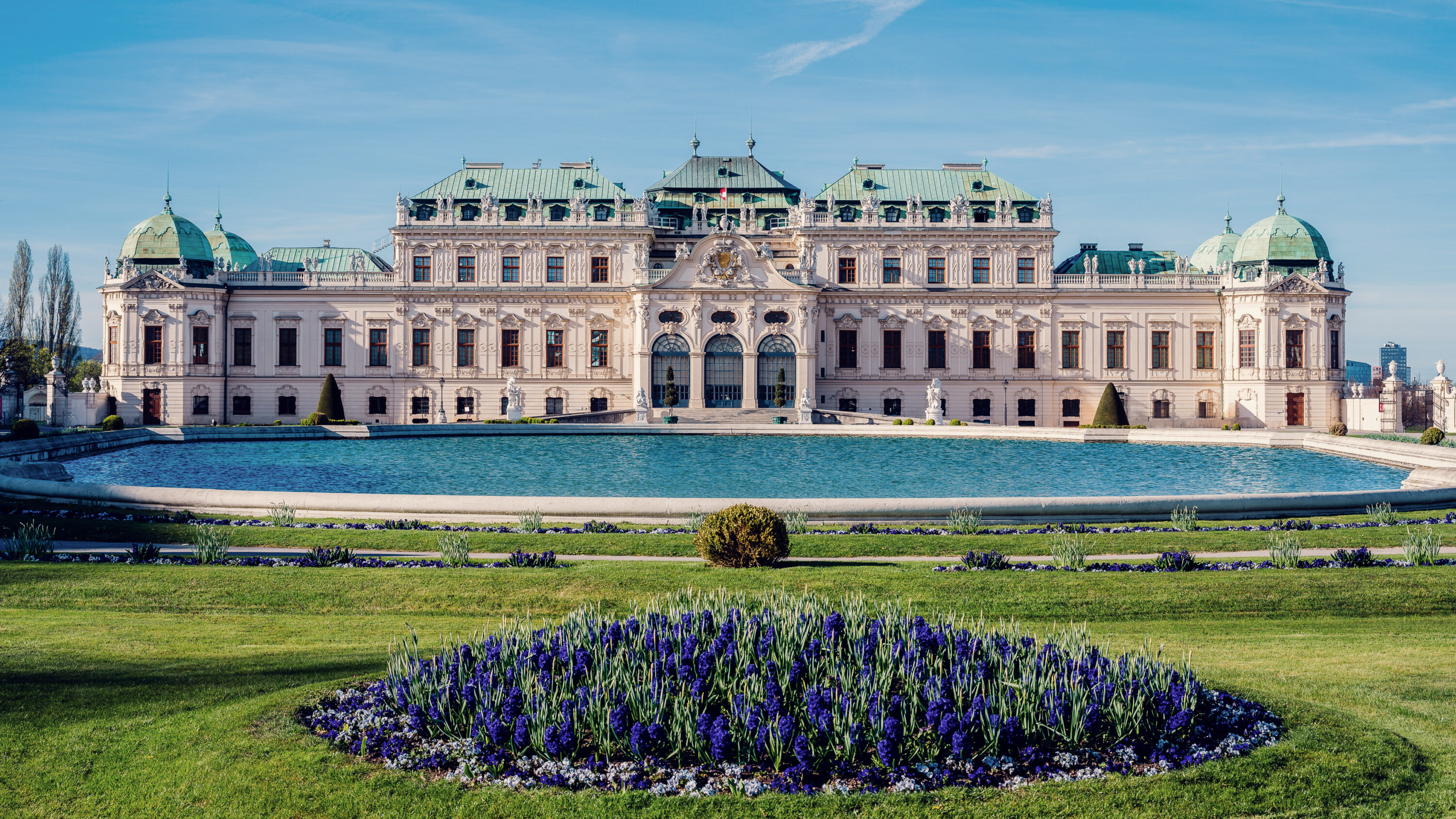
The Classic lane: The Kiss at the Upper Belvedere - smaller in person than everyone expects, and busiest between late morning and mid-afternoon, so go right at opening - then down through the terraced gardens, where the classic view has the Lower Belvedere below you and the cathedral spire on the horizon. Walk it off through the Stadtpark, past the gilded Strauss statue, back toward the center.
The Family lane: dinosaurs, the meteorite hall and the tiny Venus of Willendorf at the Natural History Museum, then the Prater, where the Riesenrad's wooden cabins turn slowly enough to eat dinner in and the park around them costs nothing to walk into - you pay per ride, not per entry. The world's oldest zoo at Schönbrunn is the rainy-day stand-in.
Whichever lane you choose, keep the evening free of sightseeing - but not free of planning. Vienna fills its evenings by itself; it is the good versions that need reserving. The Musikverein and the State Opera go weeks ahead, a table at a well-known Beisl or Heuriger a day or two. What you can still decide at six: a walk along the lit-up Ringstrasse, or standing room at the Opera, sold at the box office shortly before curtain.
Vienna Itinerary: 4 Days or More
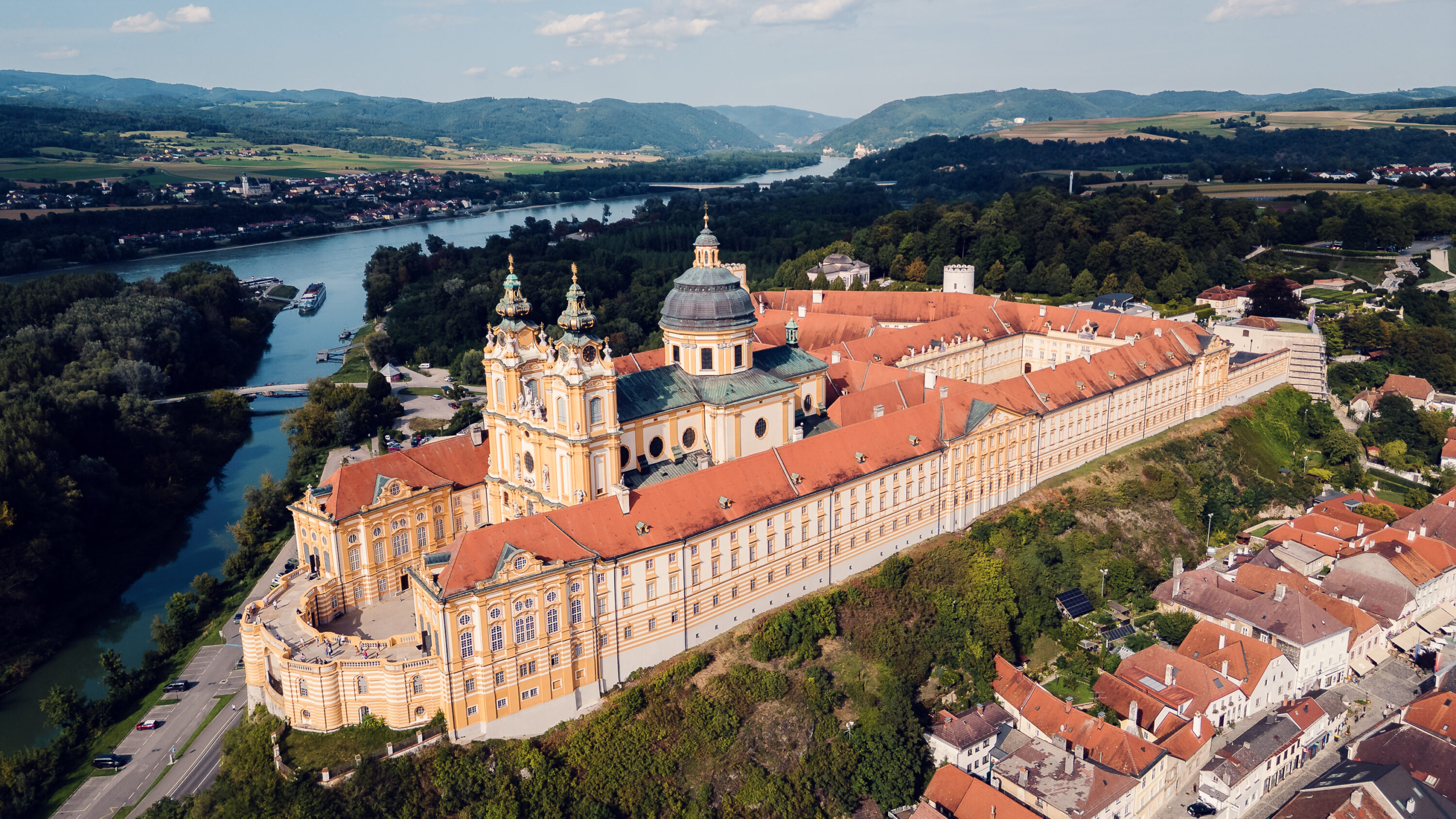
From day four you can leave the city - or go deeper into it. 4 days in Vienna is where the plan stops being obligatory: the Wachau valley, Bratislava and Hallstatt all work as day trips from Vienna, each in a completely different direction and mood. The Wachau for terraced vineyards, apricot orchards, Dürnstein's blue church tower and a boat down the Danube; Bratislava for a second capital before lunch, an hour away by train or 75 minutes by catamaran down the Danube; Hallstatt for the postcard - long ride, big reward, and best started early.
For day four, pick a lane:
Not everyone wants a train day on a short trip, and nobody has to. A museum day earns its place just as well - two of the houses you have walked past all week, with a proper lunch in between instead of a sandwich on a platform. And a day built from the second-visit places keeps you inside the city without repeating a single thing you have already seen.
Back in town, slow down on purpose: a lazy morning at the Alte Donau, where Viennese swim off the jetties and rent pedal boats by the hour, or the lift up the Danube Tower for one of the best views in the city - your whole itinerary laid out on a single horizon, Schönbrunn on one side, the wine hills on the other. Then, late in the afternoon, head up into the wine hills for a Heuriger - timed so the sunset catches you on the way. A 5-day Vienna itinerary doesn't need more sights. It needs more sitting.
Been Here Before?
Everything above assumes a first visit. On a second trip the whole logic changes: you no longer owe the cathedral anything, the order stops mattering, and the city gets quietly more interesting. You can drop a single one of these into a day that is otherwise familiar - or build a whole day out of them and never cross the Ring at all.
What changes most is the pace. The first visit is spent covering ground; the second is spent going in - one long museum, one guided tour, one afternoon in a single district. If you have three days again, a good shape is one of these mornings, one zone you rushed last time, and one evening you keep completely free.
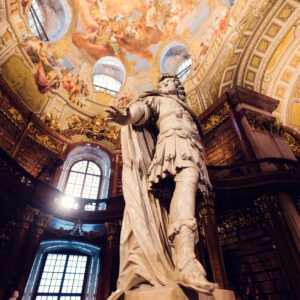

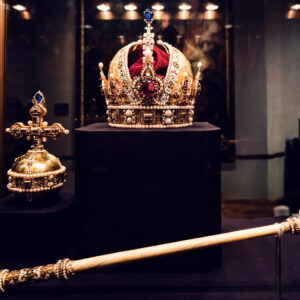
These are not secrets – the State Hall of the National Library is one of the most beautiful rooms in Europe, and Parliament runs free guided tours – you just have to register online beforehand. They are simply the things that lose out to the cathedral when your time is short.
When to Swap
Your Vienna itinerary is weatherproof as a system: when conditions change, you swap - you don't cancel. The three swaps we actually use:
None of these is a downgrade. The rainy-day museums are half the reason people come to Vienna in the first place, and on a 35-degree afternoon our list of the coolest places in Vienna beats anything else on your plan.
Vienna by Season
The building blocks do not change with the calendar, but which ones you reach for does. Four short answers, one per season - each links to the month guide if you want the detail.
In detail: March and April bring the first terrace weather and the Easter markets; May and June are the ones locals would pick, with long evenings and everything still green; July and August are hot, emptier of Viennese and best spent near water. Autumn is the quiet favourite - Sturm in the wine taverns, golden light in the gardens, and the last warm evenings on a Heuriger bench before the markets start.
A Vienna itinerary in winter loses almost nothing, because the blocks that carry the cold months are the ones you came for anyway: the museums, the palaces, the opera, the coffee houses. Swap garden time for gallery time and the whole system still holds. This is a city built for indoor seasons - the art collections, the concert halls and the cafés were all designed to be enjoyed while it is grey outside.
3 days in Vienna in December work particularly well, because the Christmas markets turn every evening into a block of its own: you finish a zone, and the market nearest to it finishes the day. Most run from mid-November until December 23, and a few keep going between Christmas and January 6 - useful to know if you are travelling between the holidays. After that the ball season takes over and the city dresses up all over again. The block at the end of this section lists the markets we actually go to.
Three practical winter notes. It gets dark around four, so put the outdoor block first and the indoor one after - not the other way around. A clear, cold day is the best day of the year for the Gloriette hill or Kahlenberg, because the air is sharp and the view runs all the way to the mountains. And the coffee house stops being a nice idea in January and becomes a genuine part of the plan: you will want that warm room with the marble table more than you expect.
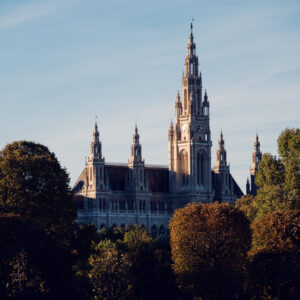
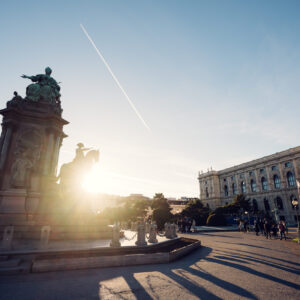
From mid-November the squares light up: Rathausplatz for the classic Christkindlmarkt, Spittelberg’s lanes in zone 5 for the romantic one, Schönbrunn’s palace courtyard in zone 2 for the backdrop. In zone 1, Am Hof and the Freyung keep it old-Viennese, and the village on Maria-Theresien-Platz sparkles between the museums. Markets are an evening block, not a day plan – pair one with whatever zone you finish in.
Beyond the Zones
Some of Vienna's best ideas don't live in one zone. These cross-zone themes plug into any Vienna itinerary - the zone numbers tell you where each piece sits on the map above.
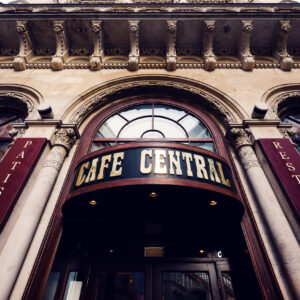
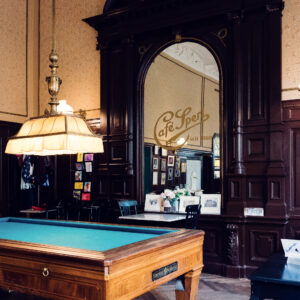

In Vienna, eating is sightseeing. The list is short and worth taking seriously: Wiener Schnitzel (veal, pounded thin, bigger than the plate), Tafelspitz (the emperor’s boiled beef, served as a small ceremony), Kaiserschmarrn, Sachertorte, Apfelstrudel – and a Melange in a coffee house, which is less a drink than a permit to sit for three hours with a newspaper. Our food guide sorts all of it by dish and by occasion, from the midnight Würstelstand to the white-tablecloth version.
The only planning rule you need: one classic a day. Schnitzel and Tafelspitz on the same day is not a food tour, it is a nap. Pick one, let the rest of the day happen around it.
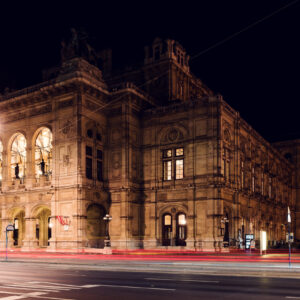
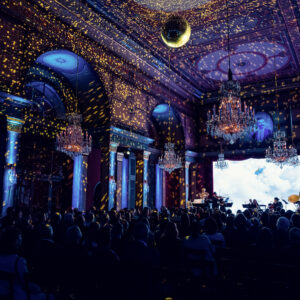
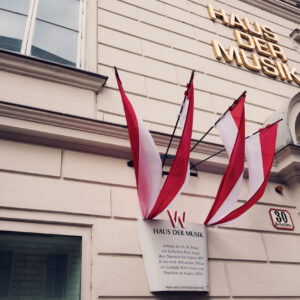
Classical music here is a nightly habit, not a museum piece. The State Opera anchors zone 1, the Musikverein’s Golden Hall sits by Karlsplatz in zone 3, the Konzerthaus by the Stadtpark in zone 4 – and the new House of Strauss waltzes in Döbling, on the way to zone 7. Between the big houses, churches carry the evenings: candlelit Vivaldi in the Karlskirche, free organ recitals in the Peterskirche. Standing room at the Opera is Vienna’s best bargain; the Musikverein needs booking ahead.
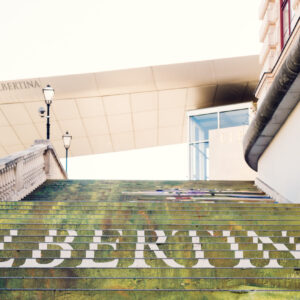
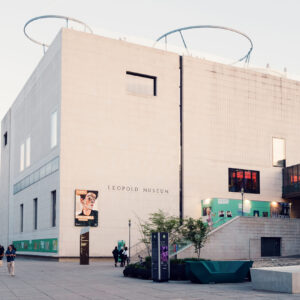
The heavyweights cluster tightly: the Kunsthistorisches Museum and the MQ share zone 5, the Albertina sits inside zone 1, and Klimt waits at the Belvedere in zone 4. Pick two per day at most – Vienna’s museums reward slow looking – and check whether a pass beats single tickets before you queue.
What Does a Vienna Trip Cost?
Vienna is friendlier to a budget than its imperial reputation suggests, mainly because so many of the best blocks are free. Walking the inner city costs nothing. So do Schönbrunn's and the Belvedere's gardens, browsing the Naschmarkt, the vineyard paths above Kahlenberg and the Prater park itself. Our free walking routes are exactly that: free, self-guided, no booking, no tip expected.
That formula is a genuinely good day in Vienna and it costs one transport ticket. Which is worth saying plainly: you can spend a full day here, see the cathedral, a palace garden, a market and a vineyard view, and pay for nothing but the tram.
Two decisions actually move the total, and both depend on how many days you have. Tickets: a Vienna city pass starts to pay off from roughly two or three paid sights in the same day; spread one highlight per day and single tickets stay cheaper. Transport: Wiener Linien dropped the 48- and 72-hour tickets at the start of 2026, so it is a 24-hour ticket for one or two days and the 7-day ticket from three days on - the digital version cheaper again. Inside the Ring you will barely use either, because walking is faster.
The honest other half: what scales with the length of your trip is a bed and three meals a day, not the sights. A fourth day adds a hotel night and another round of restaurants; it does not have to add a single entry ticket, because the blocks that fill it - the Prater, the wine hills, the Danube - are free. With a central hotel and two sit-down meals a day, on the other hand, Vienna gets expensive quickly. That part is the same whether you stay two days or five, and the concrete price ranges live in our Vienna travel tips.
The planning rule that actually saves money: build each day around one paid highlight and fill the rest with free blocks. A day with one palace, a park and a market costs a fraction of a day with two museums and two sit-down meals - and it usually feels better, because you are not queuing twice.
Vienna Itinerary FAQ
Is 2 days in Vienna enough?
Yes, for the essentials. Two full days cover the historic center and Schönbrunn comfortably, which is what most first-time visitors come for.
What does not fit is the museum half of Vienna - the Kunsthistorisches, the Leopold, the Albertina. If that is the part you care about, plan three days; if not, a 2-day Vienna itinerary makes a genuinely satisfying city break.
How many days should you plan for Vienna?
Two full days for the essentials; a 3-day Vienna itinerary is ideal. From four days on, add day trips like the Wachau valley or Bratislava.
How many days for Vienna and Prague?
Plan at least five: two to three days per city plus the roughly four-hour train between them.
Vienna, Prague and Budapest also combine well into a one-week trip.
How many days for Vienna and Salzburg?
Five to six days work well: three for Vienna, two for Salzburg, and the scenic two-and-a-half-hour train ride between them.
Salzburg's old town is compact - two days cover it at the same unhurried pace as this Vienna itinerary.
What does a trip to Vienna cost?
It depends far less on Vienna than on how you build the days. Several of the best blocks are free - the inner city on foot, Schönbrunn's and the Belvedere's gardens, the Naschmarkt, the vineyard paths above Kahlenberg - so a full day of sightseeing can cost you one transport ticket.
What scales with the length of your trip is a bed and three meals a day, not the sights. Two decisions do move the total: from roughly two or three paid sights in the same day a Vienna city pass starts to pay off, and for transport a 24-hour ticket is cheapest for one or two days while the 7-day ticket already wins from three days on (Wiener Linien dropped the 48- and 72-hour tickets in 2026).
Vienna can also get expensive quickly, with a central hotel and two restaurant meals a day. Concrete price ranges are in our Vienna travel tips.
Where should you stay for this itinerary?
Anywhere inside or just off the Ring puts most blocks on your doorstep; a hotel near a U-Bahn line does the same for less.
Our where to stay guide breaks down the best areas and hotels.
Is Vienna worth visiting in winter?
Absolutely - the city is built for it. Swap garden blocks for gallery blocks: the great museums, coffee houses and palaces move your Vienna itinerary indoors, and you lose nothing.
From mid-November to Christmas, the Christmas markets become a building block of their own - our Christmas market guide has every market and its dates.
Does this itinerary work with kids?
Yes - you swap blocks rather than change the plan. The Natural History Museum, Schönbrunn Zoo and the Prater are the reliable hits, and the Prater park itself costs nothing to walk into.
The building-block approach helps here more than anywhere else: no forced marches between sights, and you can cut a day short without breaking the rest of the trip.