
-
Mozart in Salzburg: Where He Was Born, Lived, Played and Is Remembered
- Mozart's Birthplace on Getreidegasse: Where Mozart Was Born
- The Mozart Residence on Makartplatz: Where Mozart Lived from 1773
- Mozartplatz and the Mozart Monument
- Salzburg Cathedral: Mozart's Baptism and His Organ Job
- The Residenz: Mozart as a Court Musician
- St. Peter's: the Mass in C Minor and Nannerl's Grave
- Mozartkugeln: How to Tell the Original from the Rest
- Where to Hear Mozart in Salzburg: Palace, Fortress and Dinner Concerts
- Mozart Week, the Salzburg Festival and the Marionette Theatre
- Lesser-Known Traces of Mozart in Salzburg: Graves, a Hilltop Bust and a Giant Chair
- Seeing Mozart in Salzburg in One Day on Foot
Mozart in Salzburg begins on Getreidegasse: Wolfgang Amadeus Mozart was born at No. 9 on January 27, 1756, and was baptized in the Cathedral the next day. He died in Vienna on December 5, 1791, aged 35, but Salzburg is where he grew up and worked until he was 25.
Two houses, a bronze statue, a cathedral font, the state rooms where he played as a boy and the cemeteries where his father, his sister and his widow are buried: you can see all of it in a day on foot. This guide to Mozart in Salzburg also sorts out which Mozartkugel is the original and where his music still sounds in the rooms it was written for.
Mozart in Salzburg: Where He Was Born, Lived, Played and Is Remembered
Mozart's Birthplace on Getreidegasse: Where Mozart Was Born
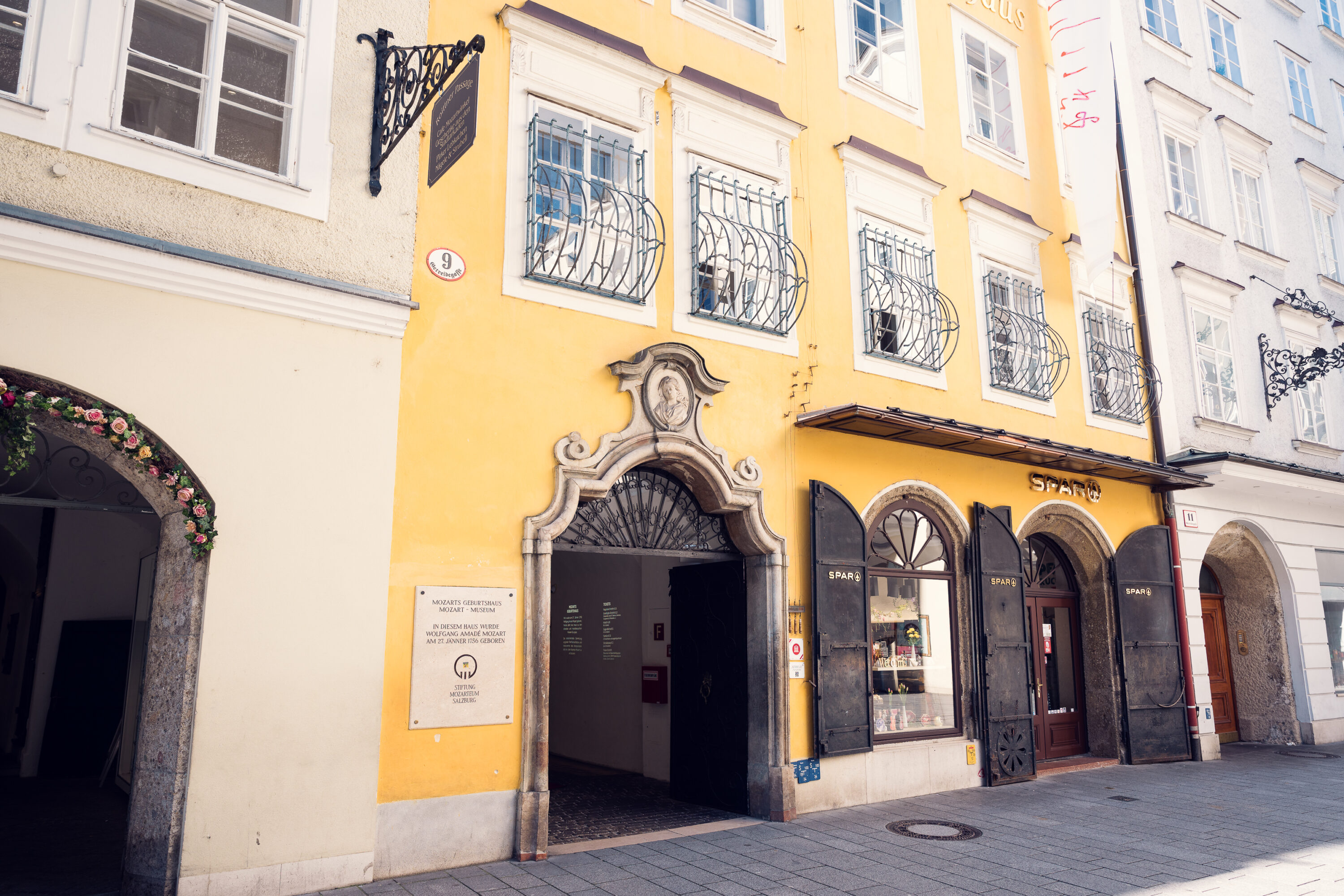
Mozart was born in the Hagenauer house at Getreidegasse 9, the yellow-fronted building that is now Mozart's Birthplace. His father Leopold Mozart was a musician at the court of the prince-archbishop, his mother Anna Maria Pertl came from St. Gilgen, and of their seven children only two survived: Wolfgang and his elder sister Maria Anna, called Nannerl. From 1762 Leopold took both children on tour to the courts of Europe, Wolfgang aged six.
Today the International Mozarteum Foundation runs the house as a museum spread over three floors, with the family's domestic life, his friends and patrons, and his love of opera. If you've ever wondered which instruments Mozart played, the answer is in the Foundation's collection of his own instruments: his childhood violin, made by the Salzburg court luthier Andreas Ferdinand Mayr, his concert violin, a viola, his clavichord and the fortepiano attributed to Anton Walter that he played at his concerts in Vienna. Plan about an hour inside.
The Mozart Residence on Makartplatz: Where Mozart Lived from 1773
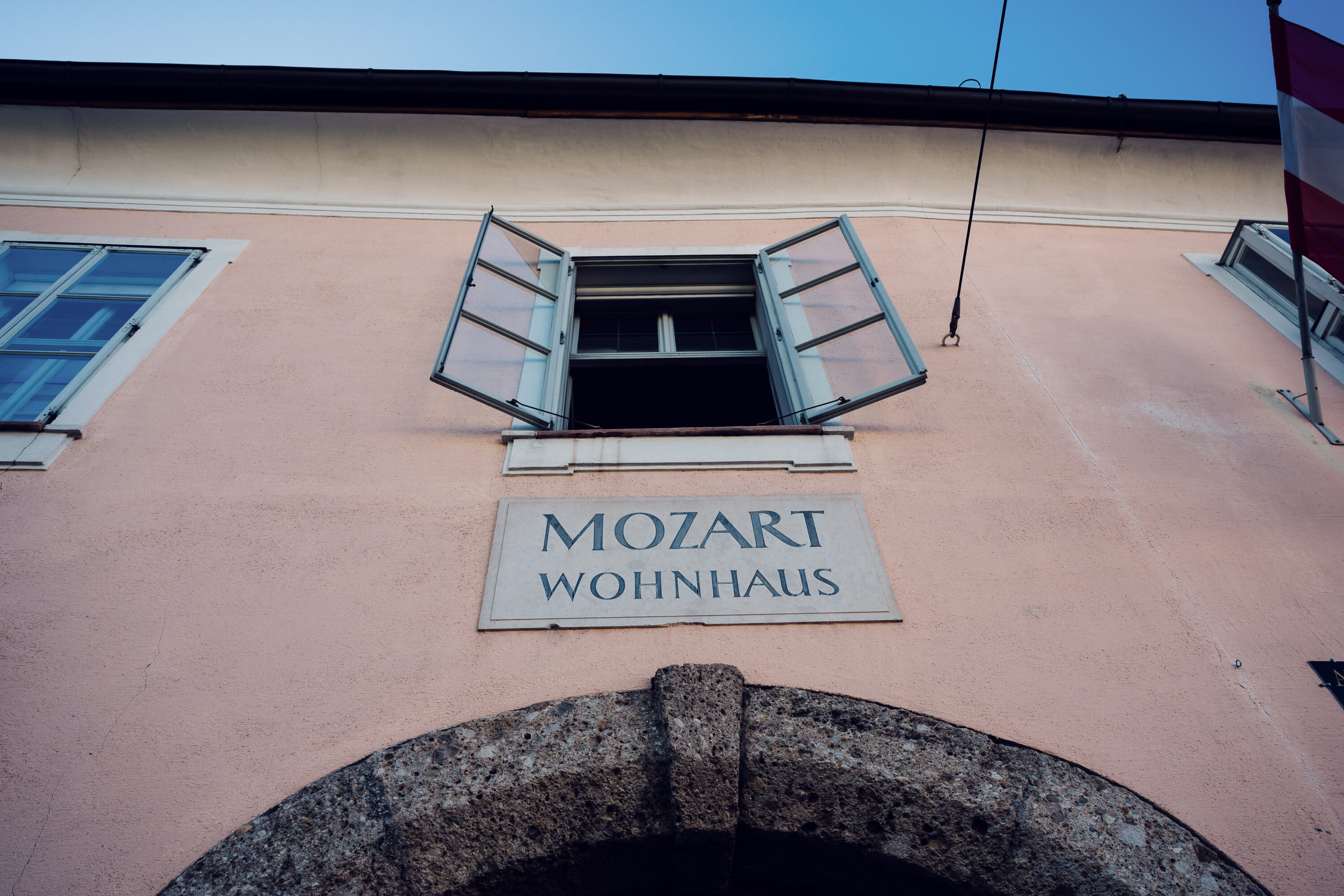
In autumn 1773 the family left Getreidegasse for the spacious Tanzmeisterhaus across the river, on what was then Hannibalplatz and is now Makartplatz 8. The new apartment on the second floor had eight rooms, and Wolfgang lived there until the end of 1780, when he left Salzburg for good. The house was partly destroyed in World War II, rebuilt, and opened as the Mozart Residence in 1996.
In the courtyard stands the Magic Flute house, the small wooden garden cottage from Vienna where Mozart is said to have written parts of The Magic Flute; you see it as part of the museum visit. As for which house to choose: the Birthplace is the one for the story of the child prodigy and the family, the Residence for the eight-room home of his later Salzburg years and the Magic Flute house. With one day, we'd start at the Birthplace; with two, a combined ticket covers both.
Mozartplatz and the Mozart Monument
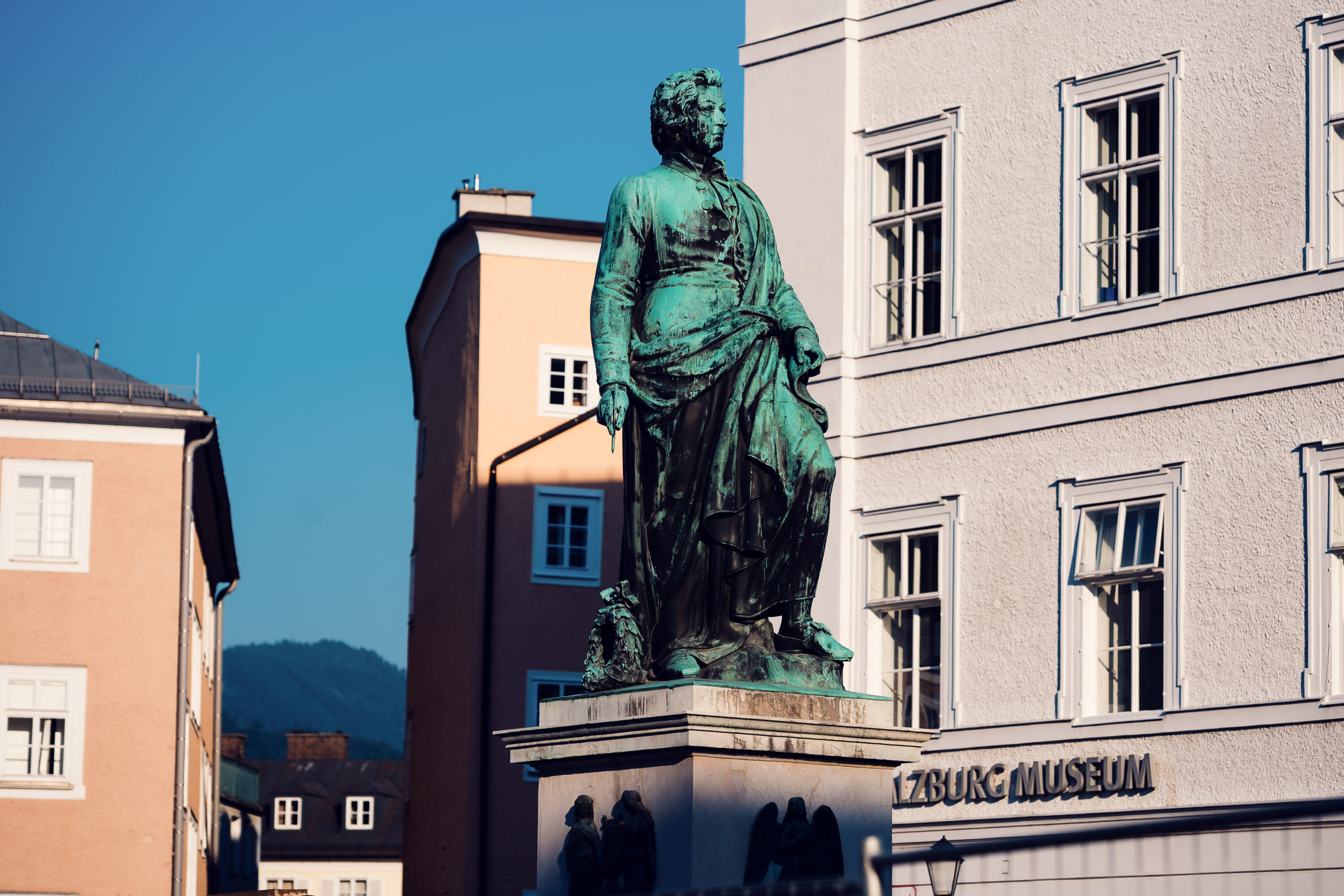
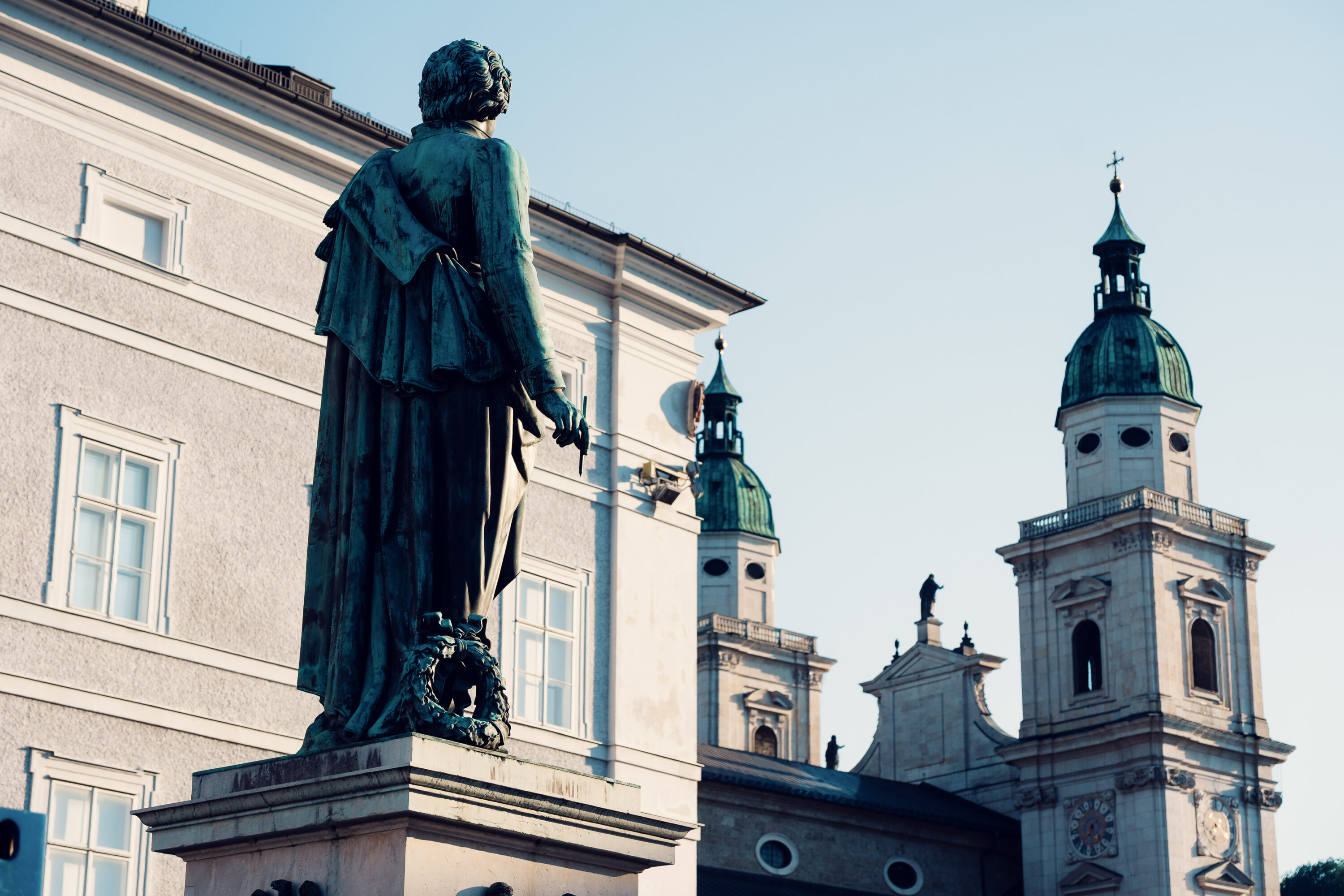
The bronze statue on Mozartplatz is by Ludwig Schwanthaler. It was meant to go up in 1841, the 50th anniversary of Mozart's death, but the workmen found a Roman mosaic in the ground and the unveiling slipped to September 4, 1842, in the presence of Mozart's two sons. King Ludwig I of Bavaria paid for the marble pedestal, and a copy of the mosaic lies at the statue's feet.
The delay had a sad side: Mozart's widow Constanze lived in the pink house right behind the statue and died before it was unveiled. Stand by the statue and look past the square, and the towers of the Cathedral fill the view, which is where the next chapter of his story starts.
Salzburg Cathedral: Mozart's Baptism and His Organ Job
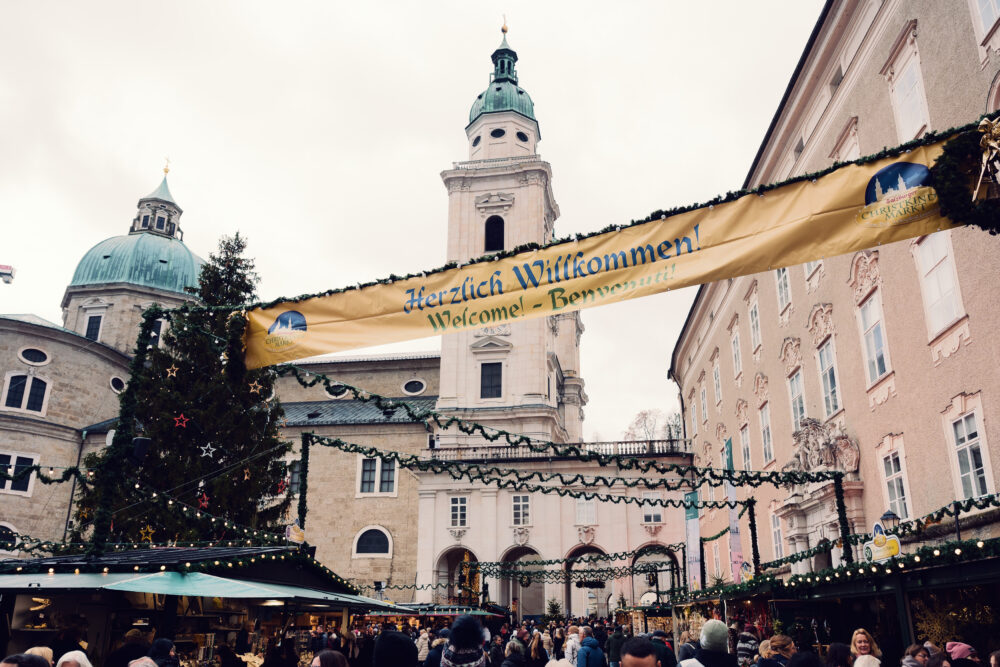
The day after he was born, Mozart was christened in Salzburg Cathedral as Joannes Chrysostomus Wolfgangus Theophilus; he later turned the last name into Amadeo or Amadé. The bronze baptismal font from 1311, resting on lions from around 1200, is still in the church, and Joseph Mohr, who wrote the words of "Silent Night", was baptized in it too. In 1779 Mozart became court organist, and the Cathedral's organs are among the instruments he played.
The Residenz: Mozart as a Court Musician
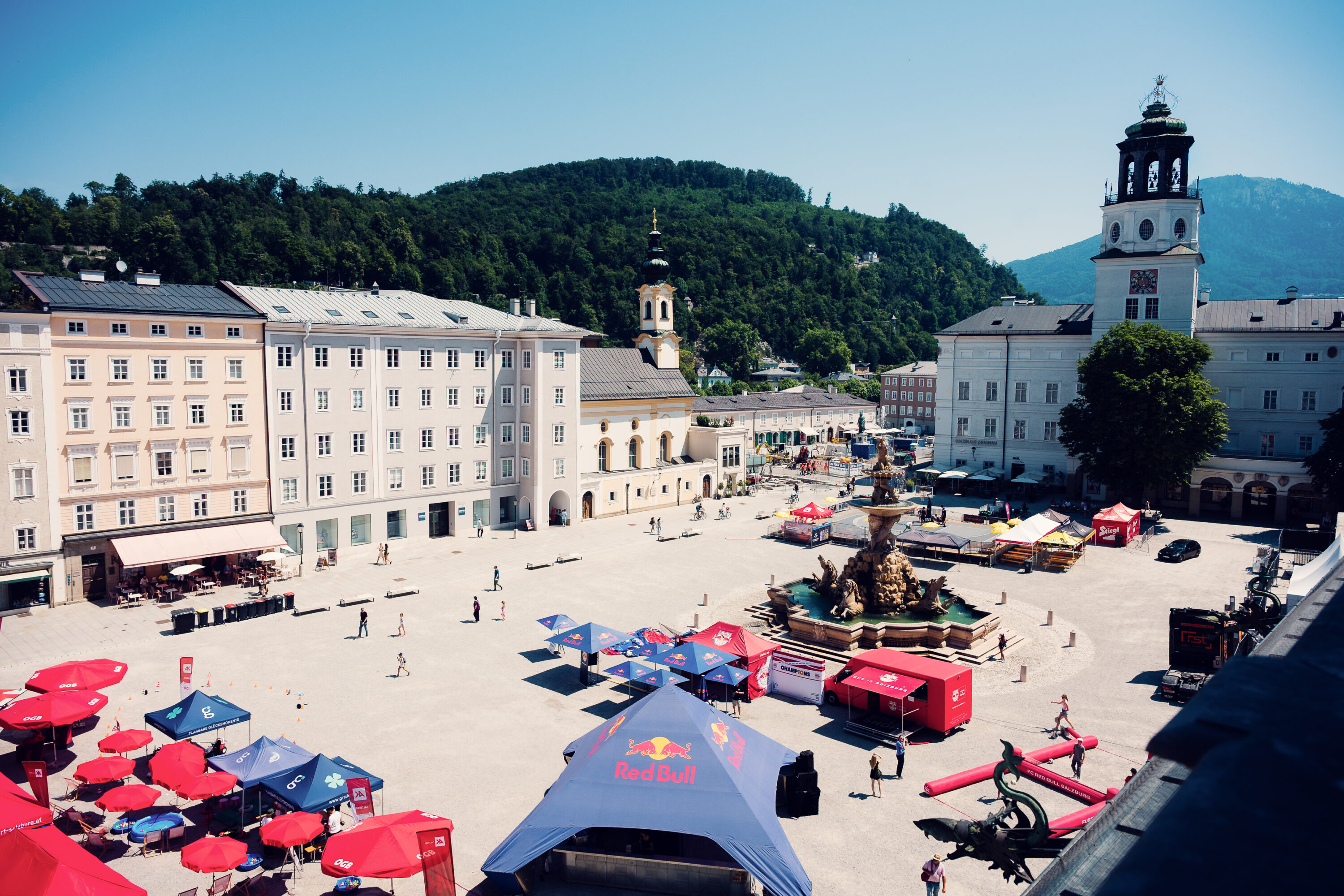
On the far side of Residenzplatz, the Residenz was the seat of the prince-archbishops who employed Mozart. In 1763, aged seven, he gave his first court recital in the Conference Room, and several of his early works were first performed in the Rittersaal. He served two rulers here: Sigismund von Schrattenbach, and from 1772 Hieronymus Colloredo, under whom he was a salaried concertmaster. After the premiere of Idomeneo in Munich in 1781 he fell out with Colloredo and moved to Vienna.
Today you walk through these state rooms on the circuit of the DomQuartier Salzburg, and the DomQuartier's own concert series, Date with Mozart, brings his chamber music back into the rooms he wrote for.
St. Peter's: the Mass in C Minor and Nannerl's Grave
In 1783 Mozart came back to Salzburg with his wife Constanze, and on October 26, 1783 his unfinished Great Mass in C minor was performed in the abbey church of St. Peter. If a line in Nannerl's diary is read correctly, he wrote the soprano solos for Constanze. Since 1927 the Mass has been a Salzburg Festival tradition in the same church.
Nannerl herself is buried in St. Peter's cemetery. Right beside the abbey, the St. Peter Stiftskulinarium counts the Mozarts among its past guests; its candlelit Baroque Hall now hosts the Mozart Dinner Concert.
Mozartkugeln: How to Tell the Original from the Rest
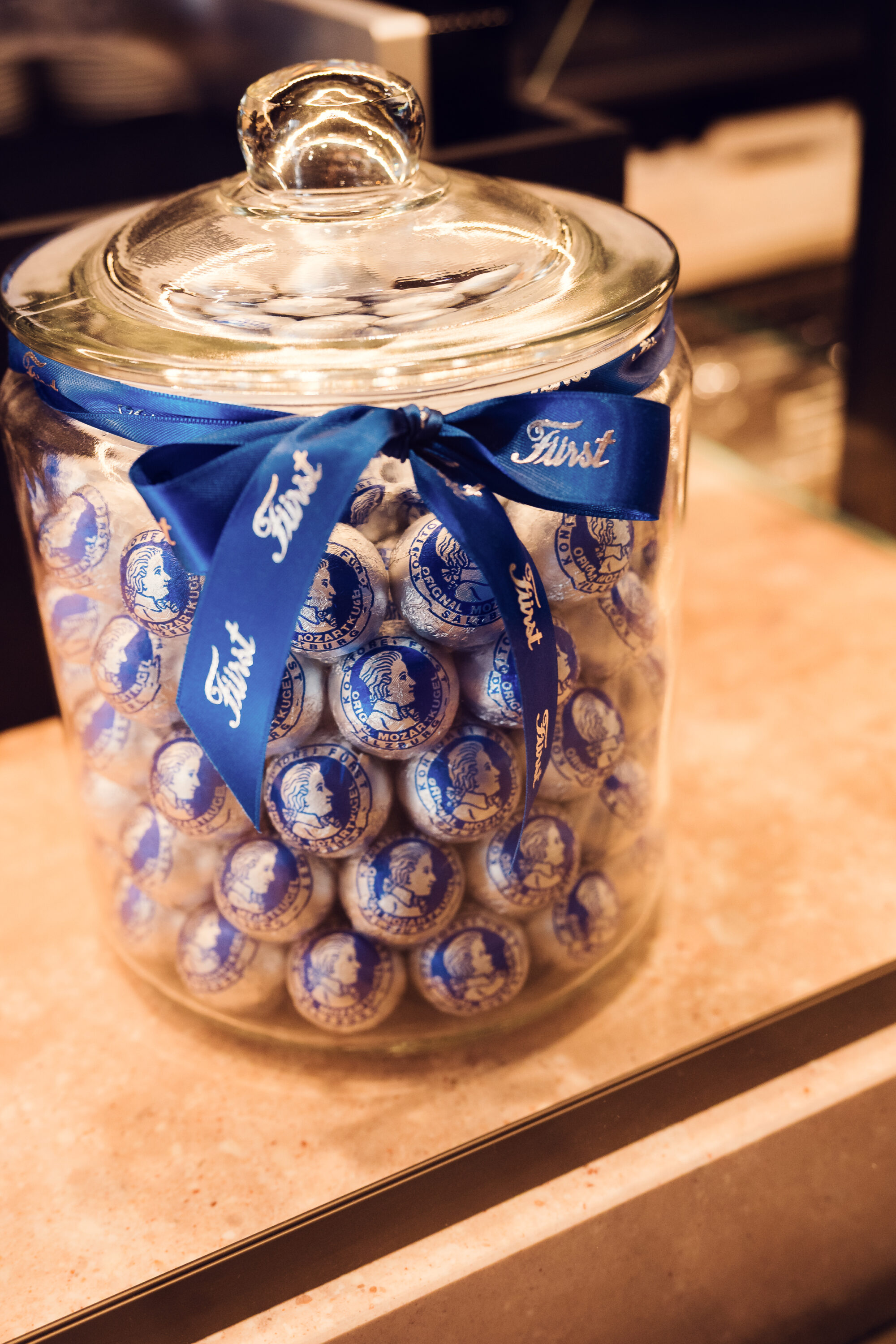
The sweetest side of Mozart in Salzburg is the Mozartkugel, and it's a local invention: confectioner Paul Fürst created it around 1890 in the shop he had opened in 1884 at Brodgasse 13 on the Alter Markt. A core of green pistachio marzipan is wrapped in nougat, set on a wooden stick, dipped in dark chocolate, and the hole left by the stick is sealed afterwards, which gives every hand-made ball its little "belly button". Fürst won a medal for it at the Paris exhibition of 1905, but patenting ideas wasn't customary then, and industrial copies soon followed by the million.
Here's how to tell them apart. Only Fürst may sell the Original Salzburger Mozartkugel, in silver foil with a blue Mozart portrait, a wrapping registered as a trademark since 1997. The red-and-gold balls in the souvenir shops come from industrial makers such as Mirabell, whose version is sold as Echte Salzburger Mozartkugeln, "real" rather than "original", and Reber in Bavaria. The Fürst ones are made without artificial preservatives, so they keep for about eight weeks; the industrial ones last 10 to 12 months.
You can buy original Mozartkugeln at Fürst's own shops, starting with the original confectionery, Café Konditorei Fürst on the Alter Markt, or across the river at Café Konditorei Fürst on Mirabellplatz. There's also a Mozart chocolate workshop in town.
Where to Hear Mozart in Salzburg: Palace, Fortress and Dinner Concerts
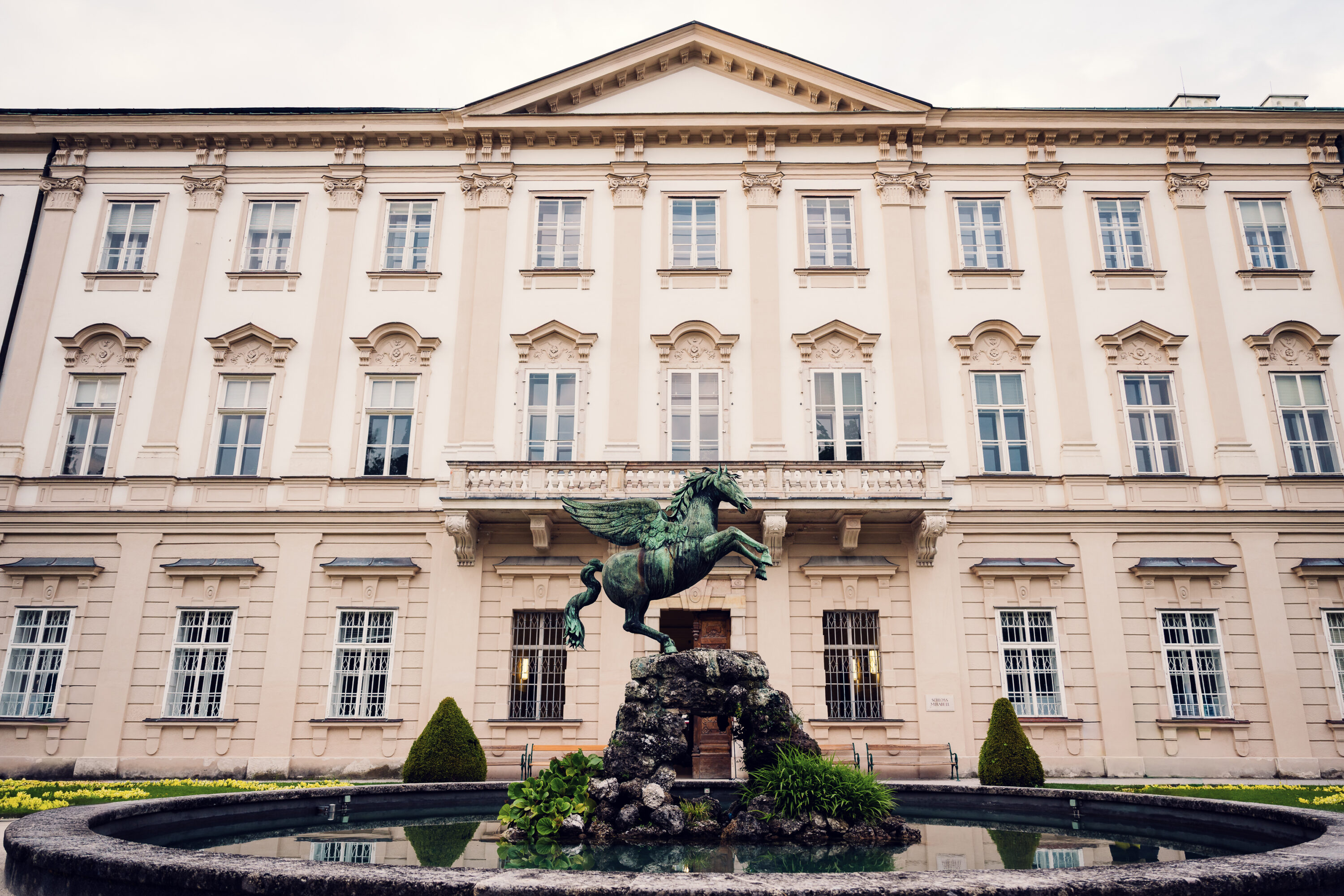
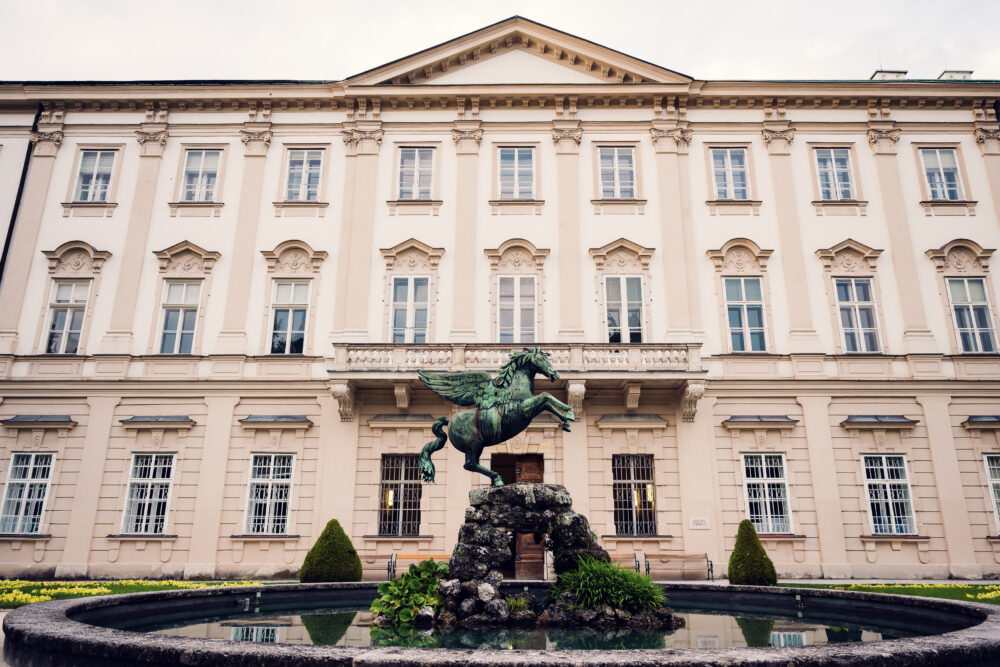
Hearing Mozart in Salzburg can mean sitting in rooms he knew. The Marble Hall of Mirabell Palace, the prince-archbishop's former banqueting hall lined with marble and gilded stucco, is where Wolfgang played with his father and sister; the Salzburg Palace Concerts are held there today. Up at Hohensalzburg Fortress, the fortress concerts fill the Golden Hall of the Princes' Rooms or the Burgsaal with Mozart's best-known works, played by the Mozart Chamber Orchestra of Salzburg or the Salzburg Mozart Ensemble, with dinner beforehand if you book it.
For the evening as a whole, the Mozart Dinner Concert in the Baroque Hall of St. Peter serves a three-course menu based on historical recipes between arias and duets from The Magic Flute, Don Giovanni and The Marriage of Figaro, sung by performers in period costume. For our pick of what's on through the year, see the events in Salzburg page.
Mozart Week, the Salzburg Festival and the Marionette Theatre
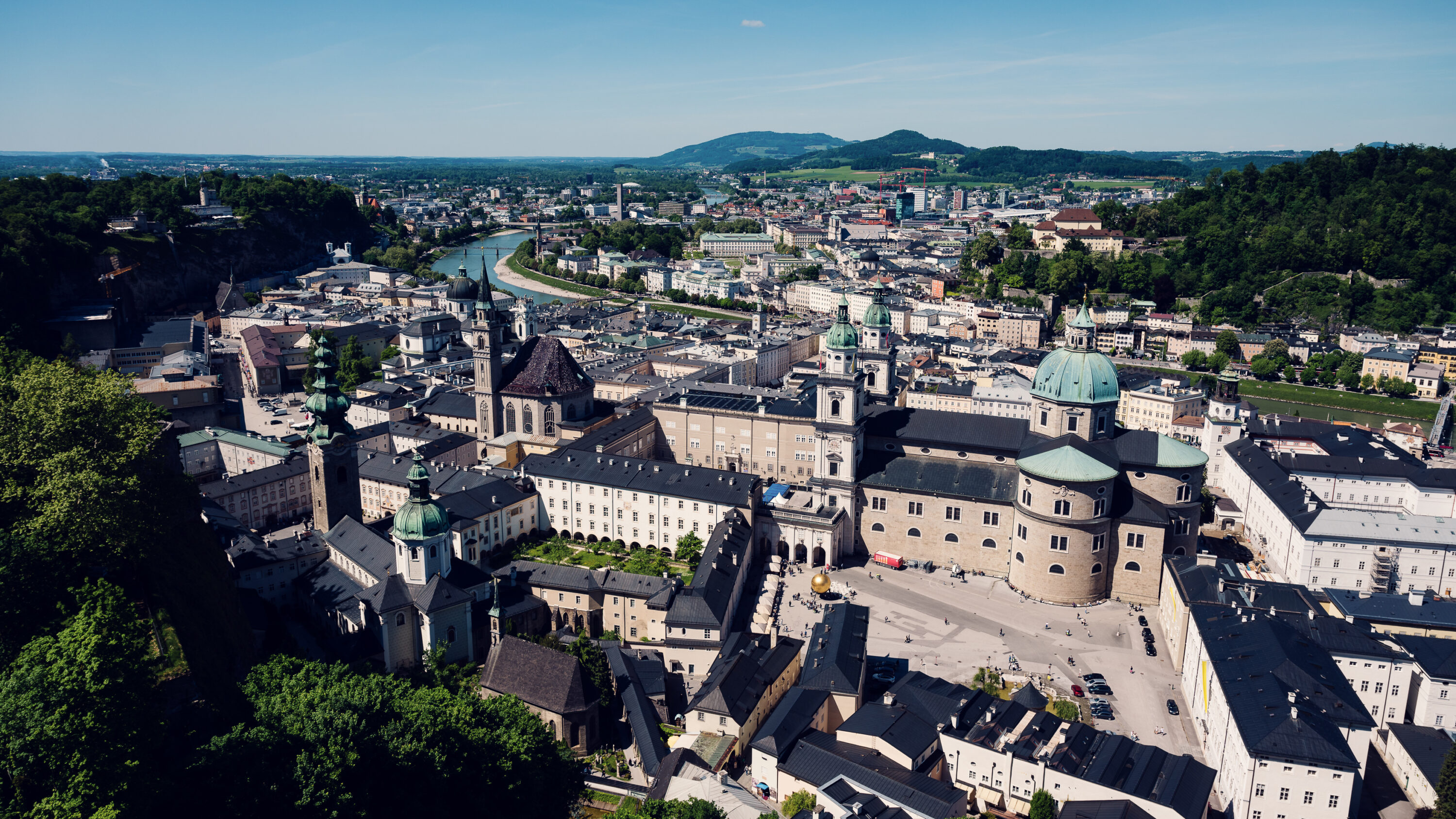
Mozart in Salzburg has its own festival calendar. Every January, around his birthday, the Mozarteum Foundation stages the Mozart Week, with opera, orchestral and chamber concerts. The Salzburg Festival grew out of the same reverence: after the monument went up in 1842, the idea of regular Mozart festivals kept coming back, and Hugo von Hofmannsthal, Max Reinhardt and Richard Strauss finally founded the Festival, which opened with Jedermann on Domplatz on August 22, 1920. Mozart, the Festival says, is its genius loci, the spirit of the place.
With children, the gentlest way into Mozart in Salzburg is the Salzburg Marionette Theatre. The sculptor Anton Aicher founded it, and its first public performance, on February 27, 1913, was Mozart's Bastien und Bastienne; The Magic Flute is part of its repertoire.
Lesser-Known Traces of Mozart in Salzburg: Graves, a Hilltop Bust and a Giant Chair
On Linzergasse, the arcaded St. Sebastian's cemetery is where Leopold Mozart was laid to rest, and where Constanze lies in the Nissen family tomb with her second husband, Georg Nikolaus von Nissen. It's a quiet place, laid out around 1600 like an Italian campo santo, with a covered arcade running around the courtyard.
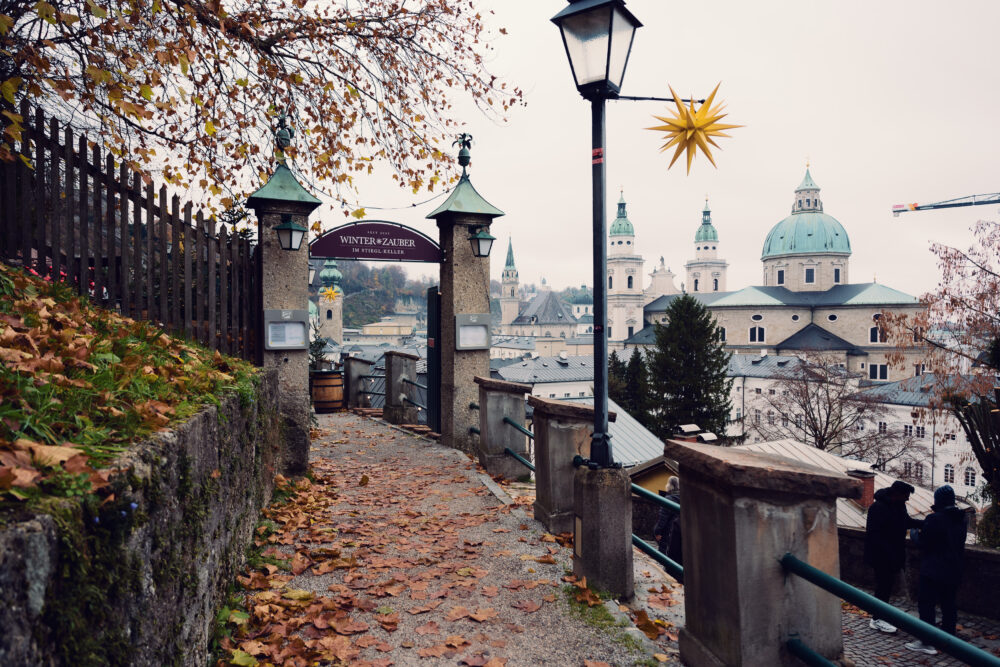
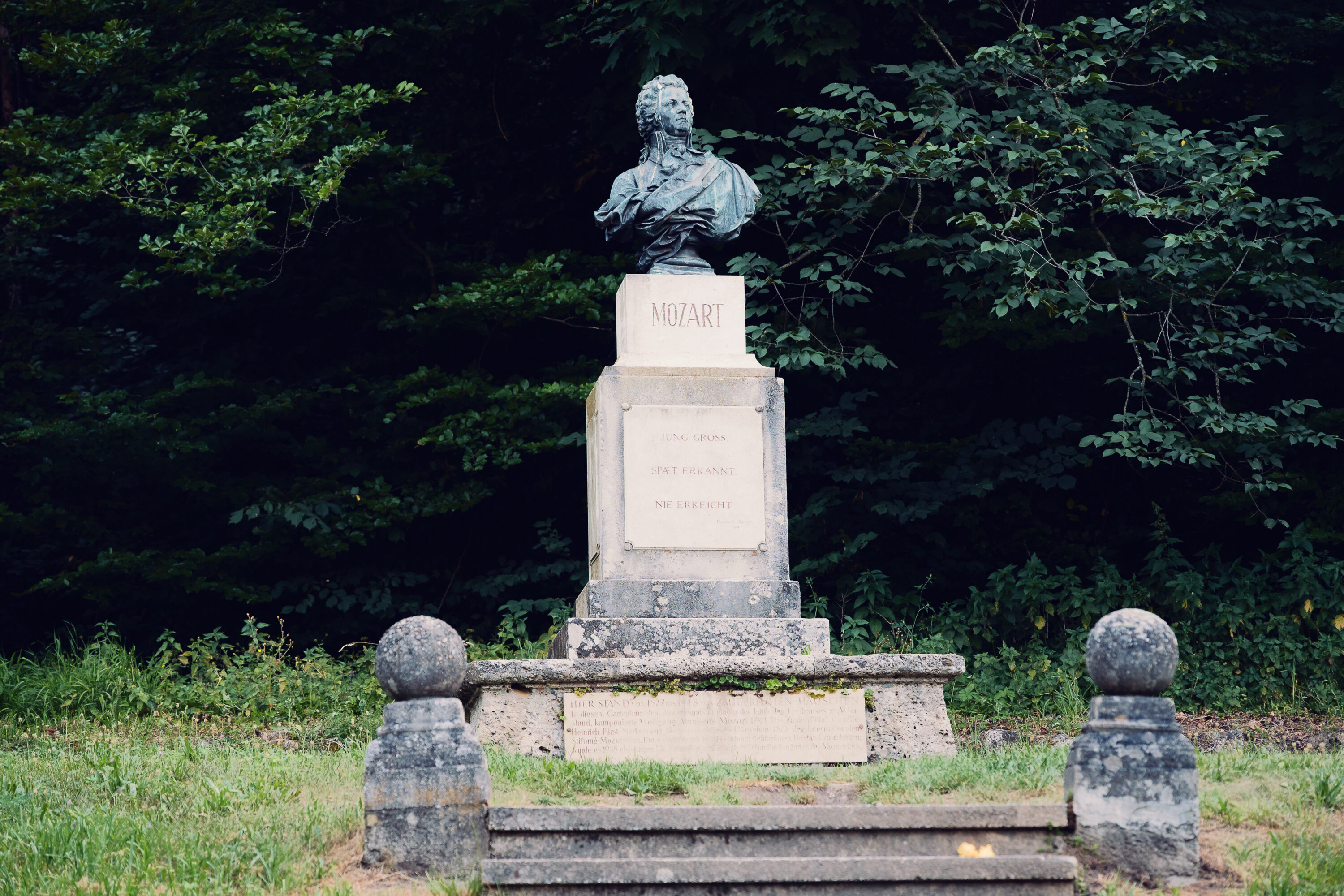
Further up the same side of the river, the Kapuzinerberg hides a Mozart bust: walk up the Stefan-Zweig-Weg to the fork, where Mozart looks down from a stone pedestal. A plaster bust went up here in 1877 for Salzburg's first international music festival; Edmund Hellmer's bronze replaced it in 1881. The pedestal quotes the singer Wilhelmine van Hasselt-Barth: "Jung groß - spät erkannt - nie erreicht", great when young, recognized late, never equaled. The Magic Flute house stood behind it until after World War II.
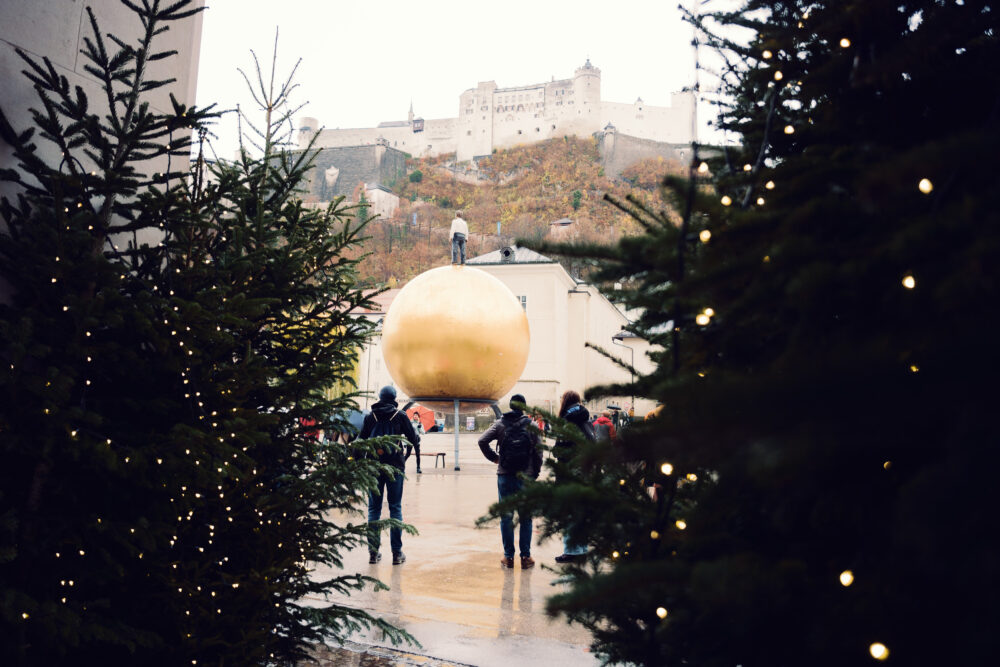
Two more for the list. At the northern end of the Staatsbrücke, Marina Abramović's Spirit of Mozart is a 15-meter stainless steel chair surrounded by eight smaller ones you can sit on. And on Schwarzstraße, the Mozarteum Foundation, founded in 1880, runs both Mozart museums, supports research on his life and work and organizes concerts.
If you have a spare day, take the trip out to St. Gilgen on the Wolfgangsee. Mozart's mother Anna Maria Pertl was born there on December 25, 1720, in the court house her father had built, and in 1784 Nannerl married the local magistrate and moved into the same house, now known as the Mozart House.
Seeing Mozart in Salzburg in One Day on Foot
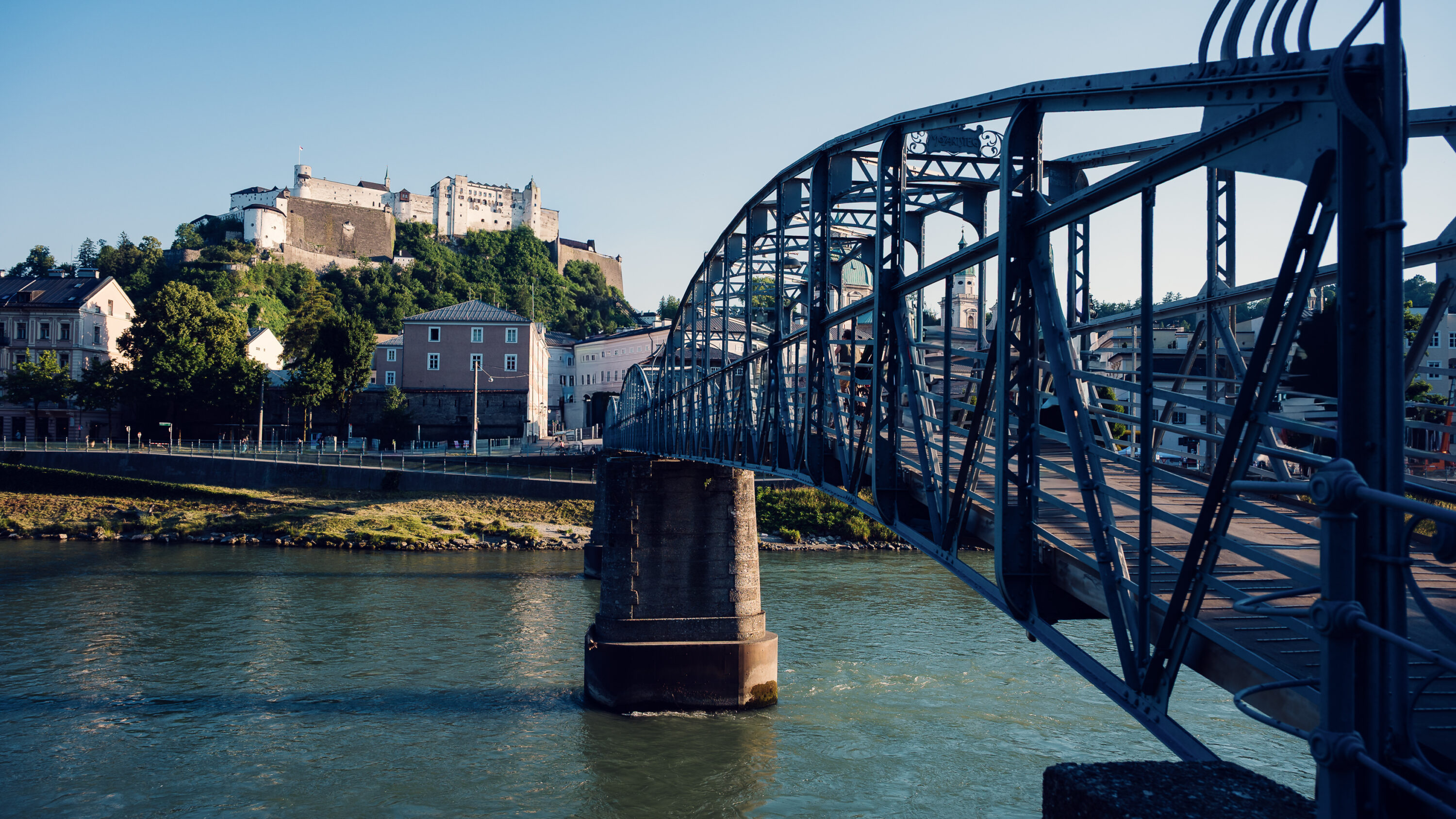
The Mozart places in the city fit into one day on foot, and our Mozart Walking Tour links them in one self-guided route: it starts at the Birthplace on Getreidegasse, stops at the original Fürst café on the Alter Markt, crosses the Salzach on the Mozartsteg and ends at St. Sebastian's cemetery on Linzergasse. Mirabell Palace is on the way too; come back in the evening for a concert in its Marble Hall.
Both Mozart museums are included in the Salzburg Card; for current hours, closing days and the combined ticket, see the Mozarteum Foundation's museum page. To see Mozart in Salzburg with a guide, there are walking tours through the Old Town and the Mirabell Gardens. With more time, our Kapuzinerberg Walk climbs the hill from Linzergasse, where the Mozart walk ends, and passes the Mozart bust; the Mönchsberg Walk starts on Mozartplatz and climbs onto the Mönchsberg, and the St. Peter & the Salzburg Festival District Walk leads through the abbey quarter and the Festival district.
Once you've seen Mozart in Salzburg, the rest of the city is waiting, from the fortress to the beer halls: see our best things to do in Salzburg.