
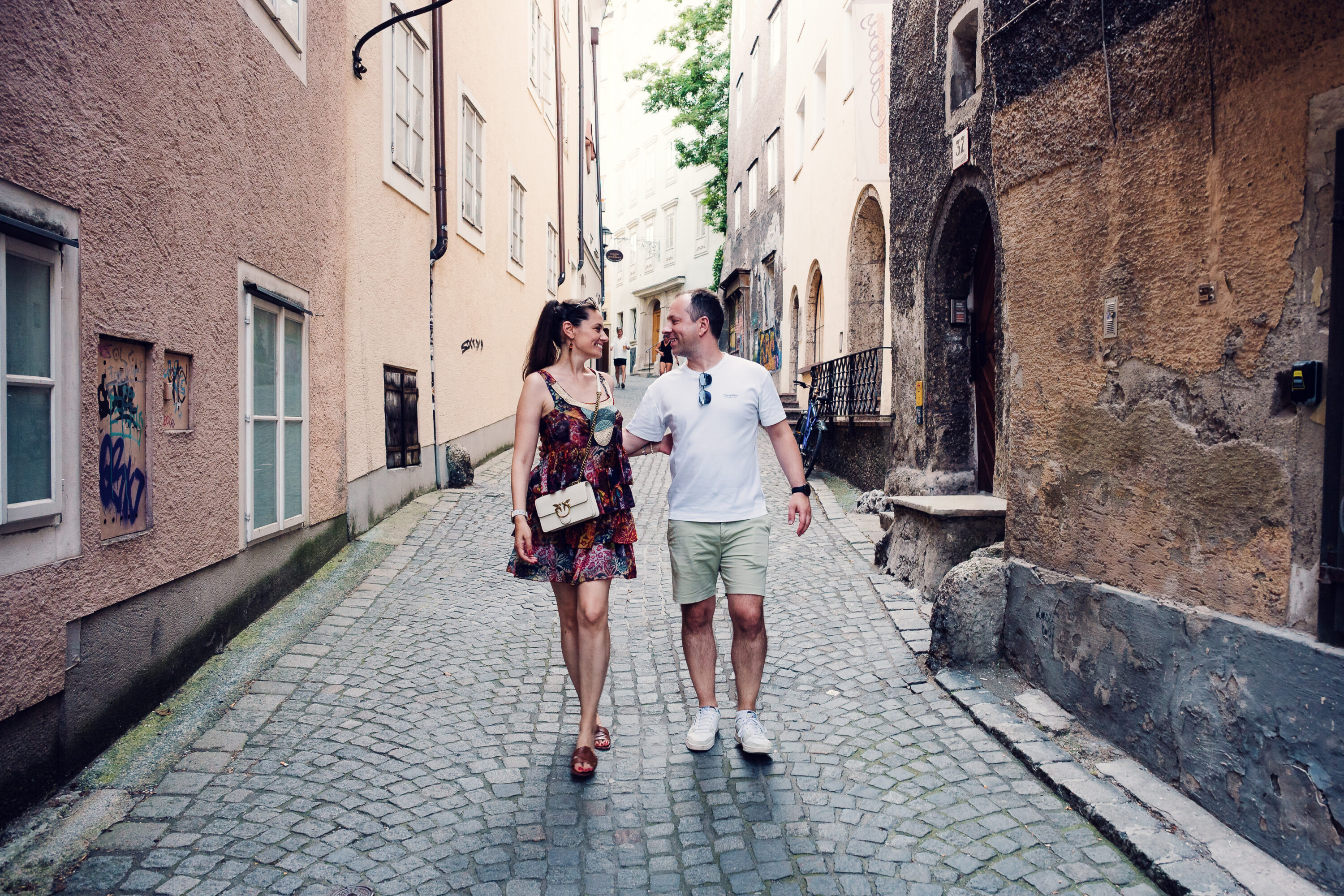
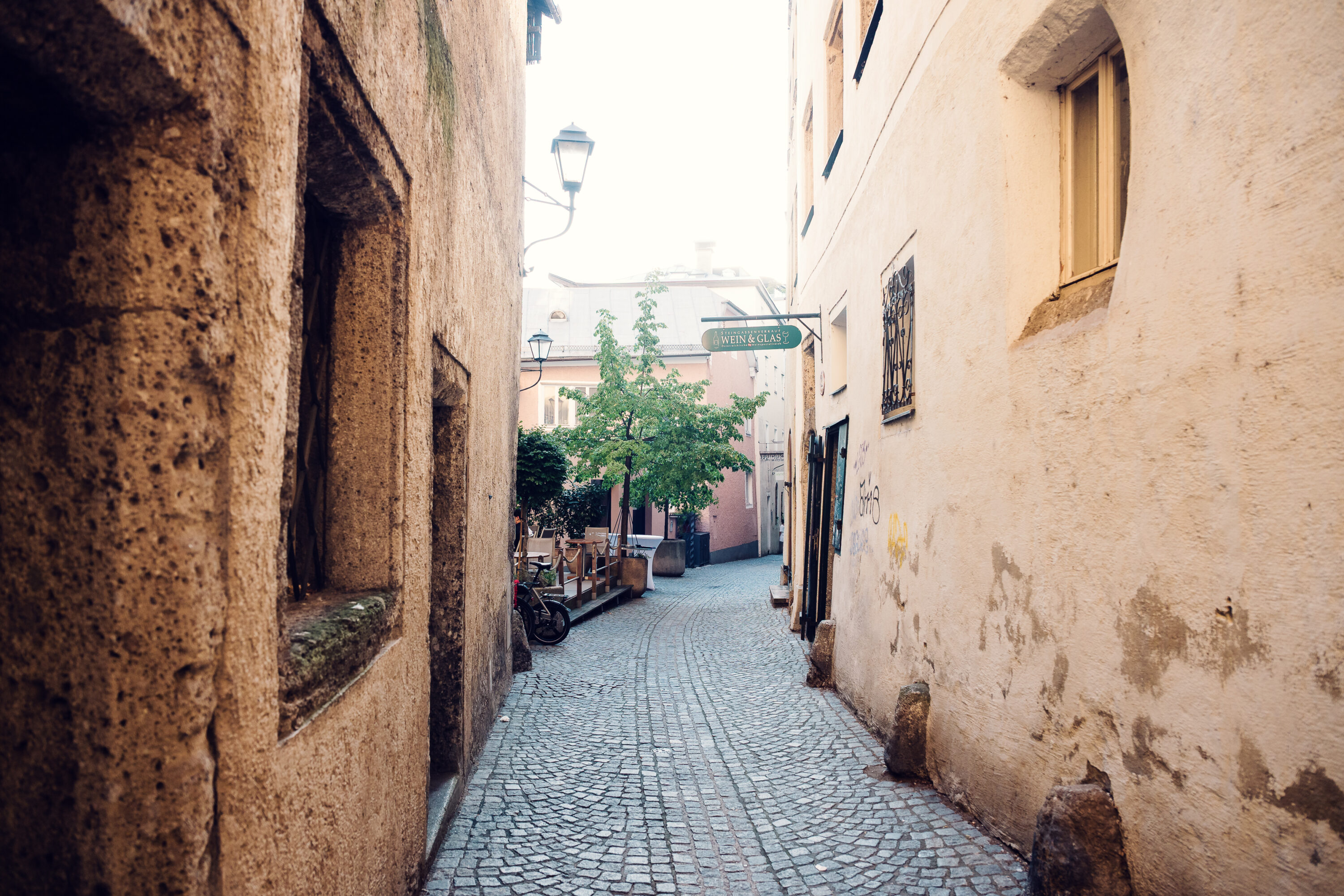
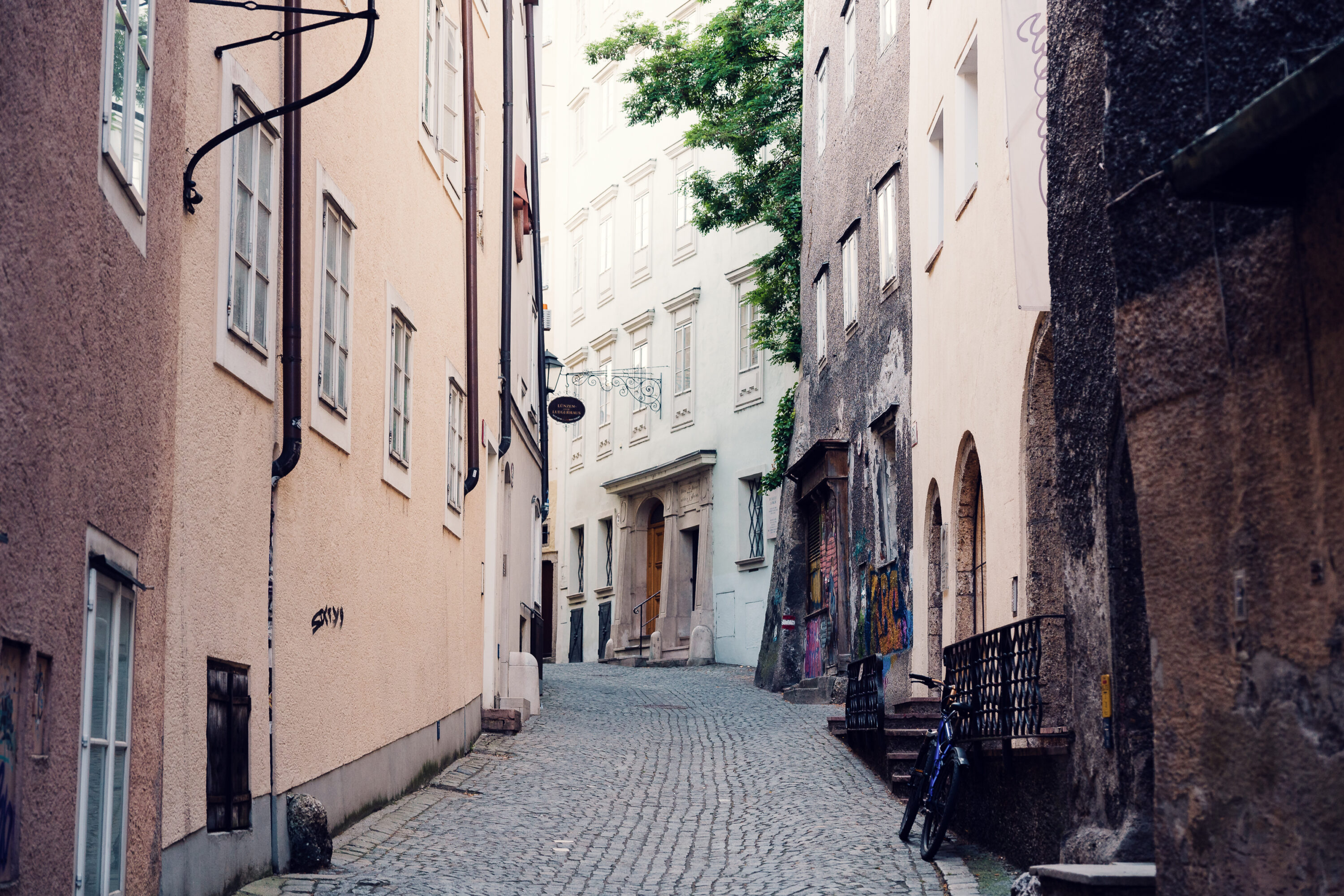
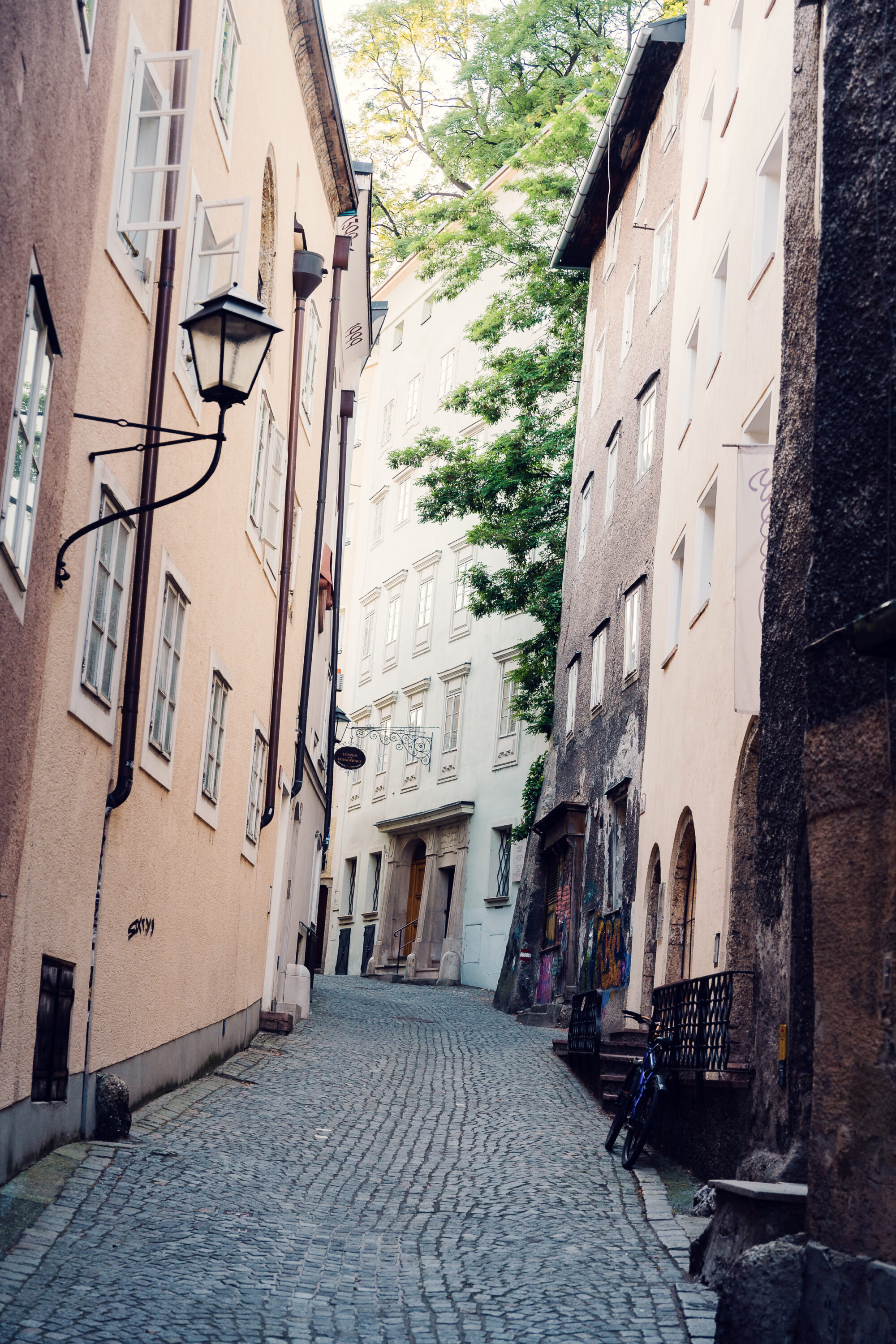
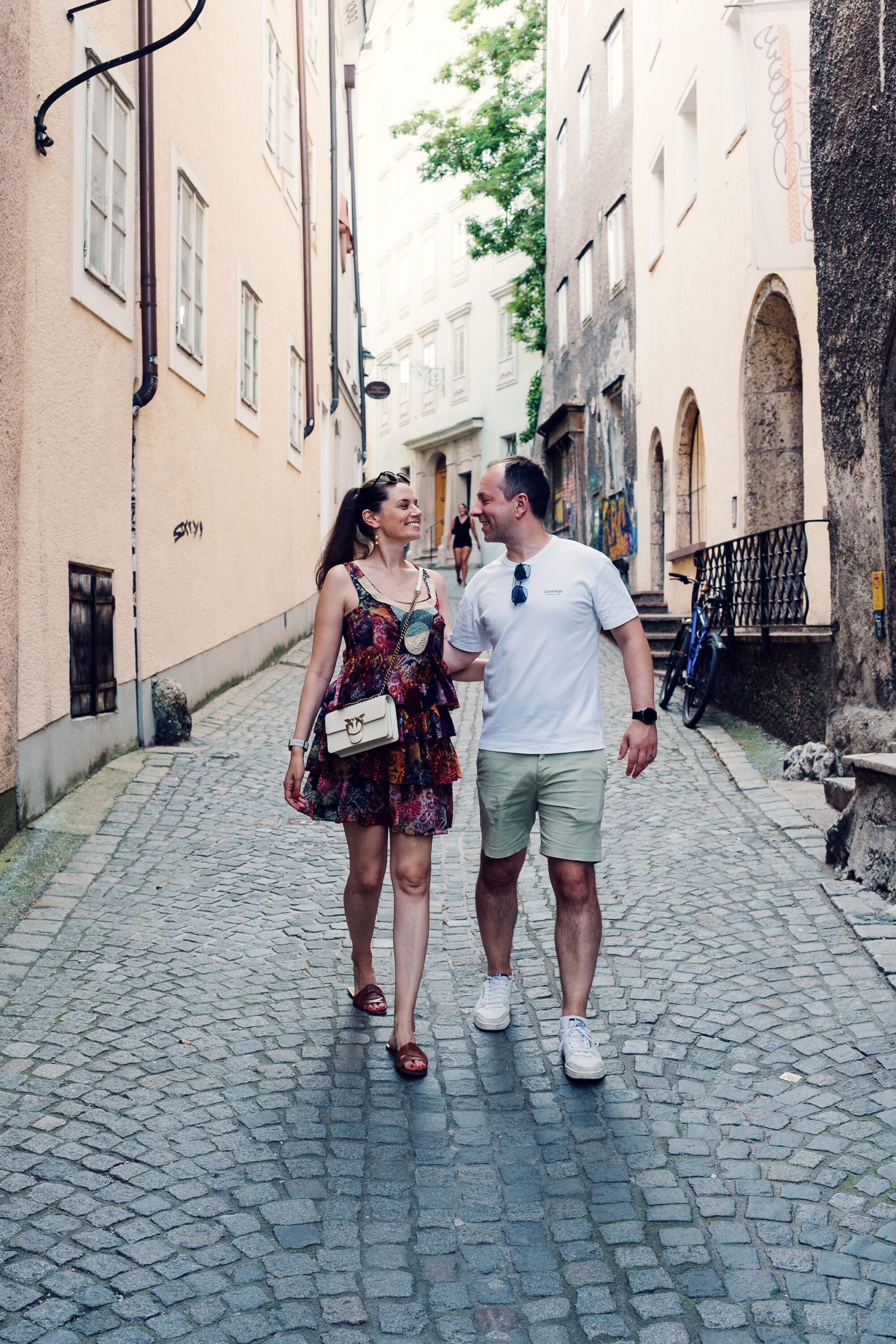
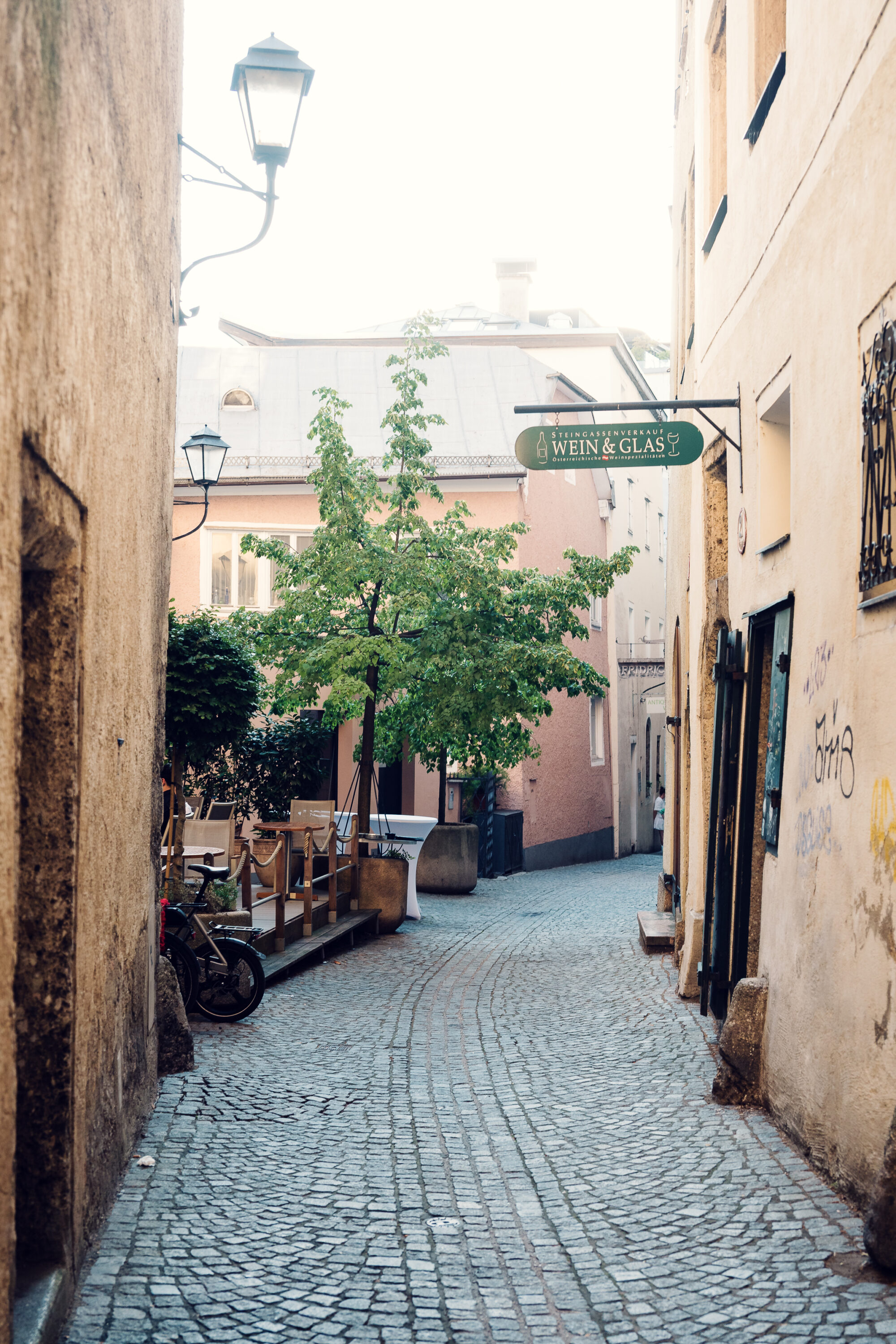
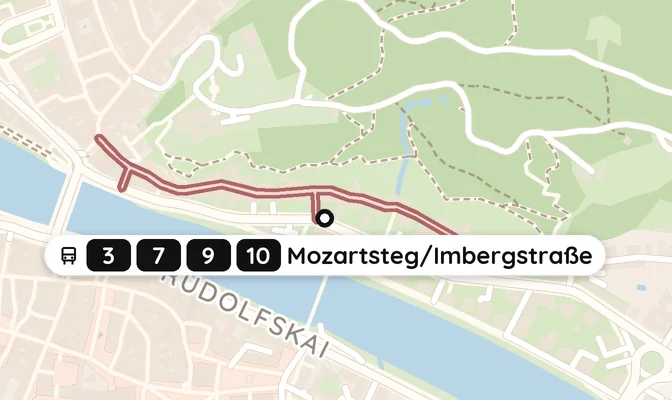

From Roman Road to Quiet Riverside Lane: Steingasse
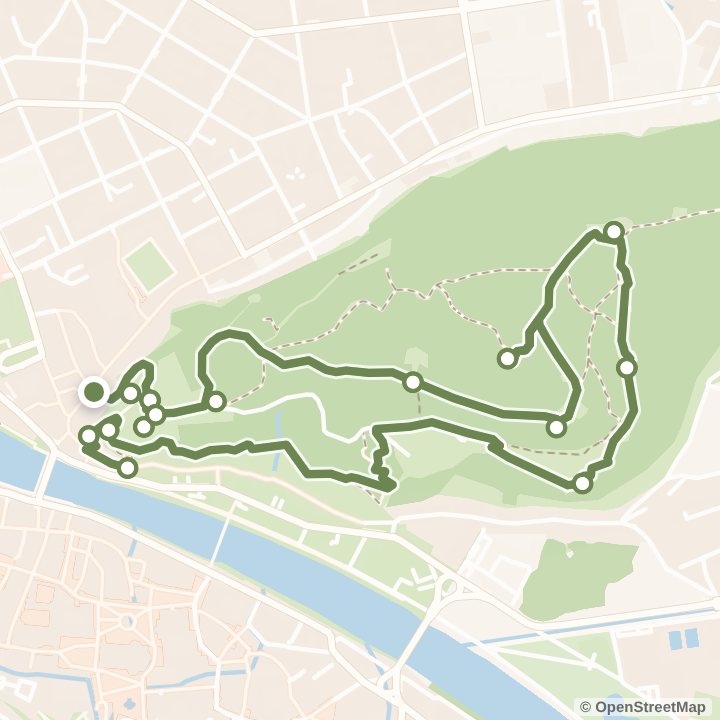
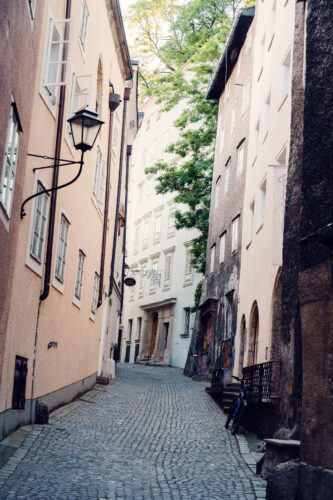
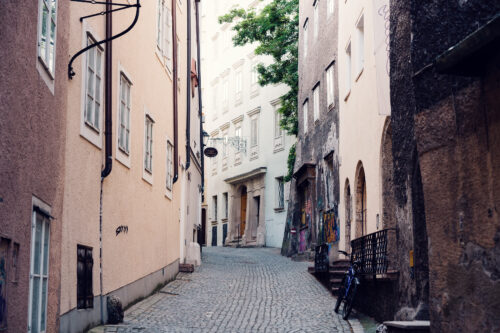
The name says what it is. In old Germanic usage "stein" meant rock or wall, and the houses of the Steingasse were built directly onto the hard stone of the Kapuzinerberg, the hill once known as the Imberg. The rock here is far tougher than the conglomerate of the Mönchsberg on the opposite bank, and the lane took its name from it.
Long before it was picturesque, the Steingasse was essential. Alongside the Salzach itself, which carried the salt that made the city rich, this was the main overland route into Salzburg from the south. It was the busiest road toward the mountains and on to Italy, one of the key north-south arteries of medieval trade. Salt hauled up from Hallein came through here. So did travellers, though many coming from the south preferred to loop around the Kapuzinerberg, because the Steingasse flooded so often from the Salzach that it had a poor reputation as a through-road.
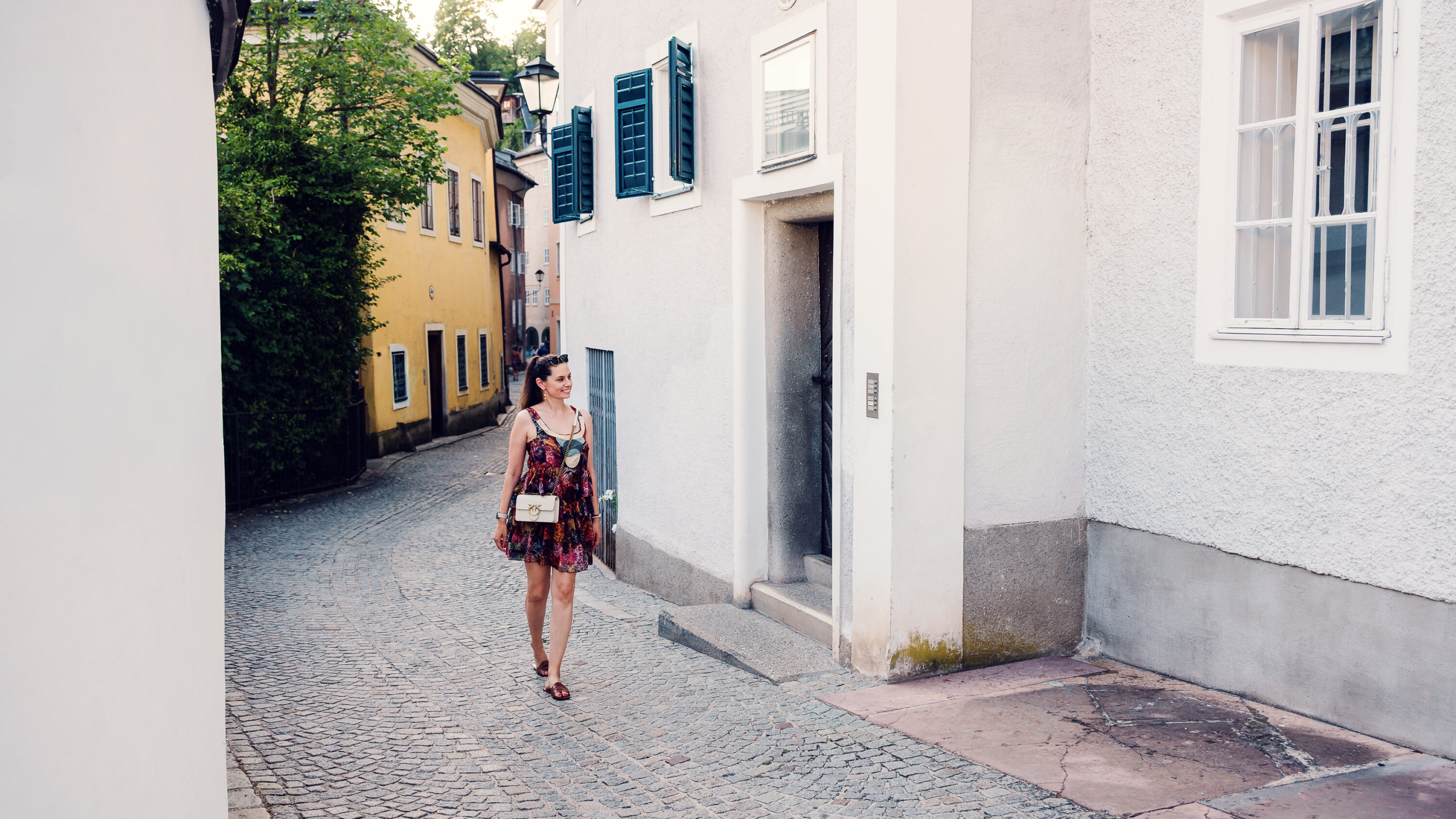
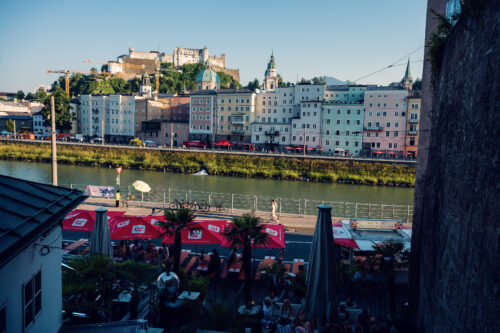
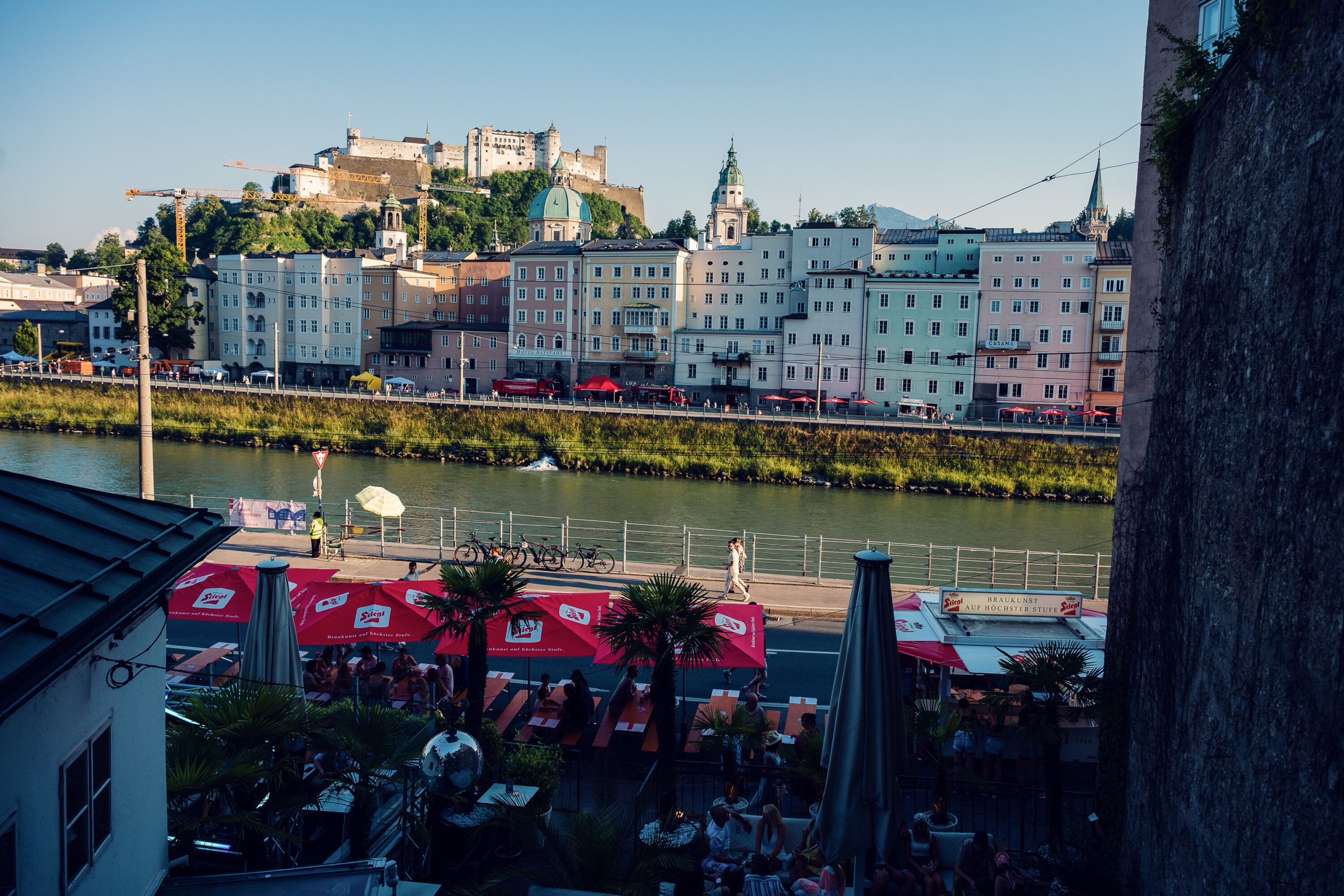
The people who lived here worked with their hands. For centuries this was a street of tanners, potters, dyers and linen weavers, the trades that needed water and were pushed out of the city centre for their smell. Until the river was regulated in 1862, the houses on the river side had gardens and direct access to the Salzach, and their airy lofts were used to dry finished leather. One workshop earns a special footnote: a violin maker on the lane had his workshop, and the story goes that Mozart's first violin was built here.
Joseph Mohr and "Silent Night"
The street's most famous resident grew up in poverty. Joseph Mohr, the priest who wrote the lyrics to "Silent Night," was born in Salzburg in 1792 and grew up in a house on the Steingasse, the son of an unmarried seamstress. The lane he knew was cold and damp, hard up against the wet rock of the Kapuzinerberg. For decades, an incorrect memorial plaque on the street confused visitors, but the mistake was clarified and the old plaques were removed in 2017. Mohr went on to write the words in 1816; Franz Xaver Gruber set them to music two years later.

Gates, Trades and Quiet Years
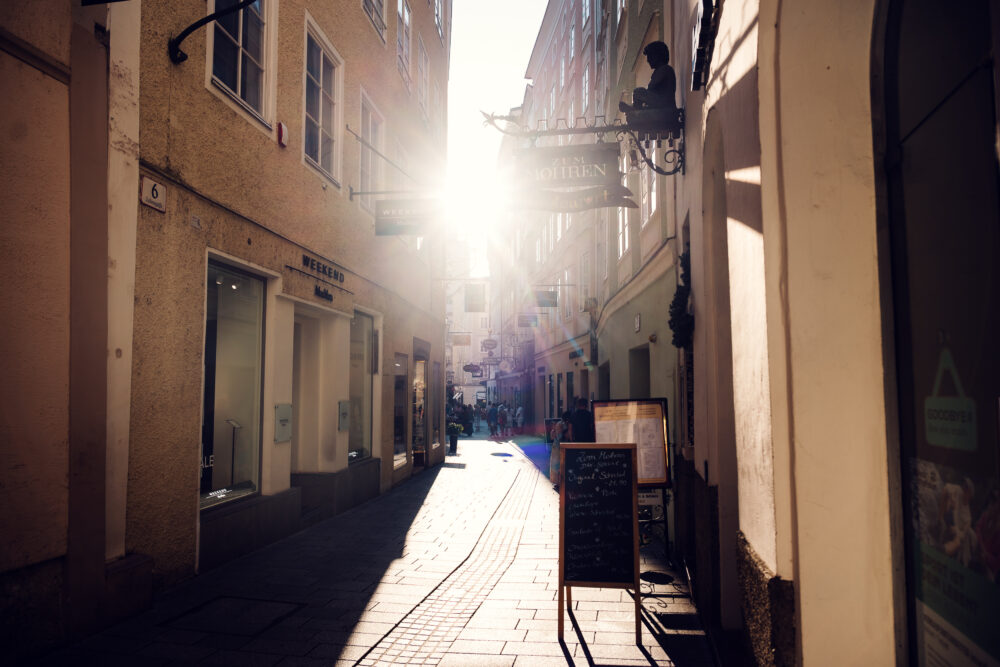
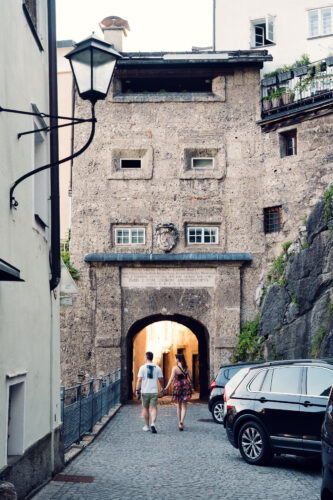
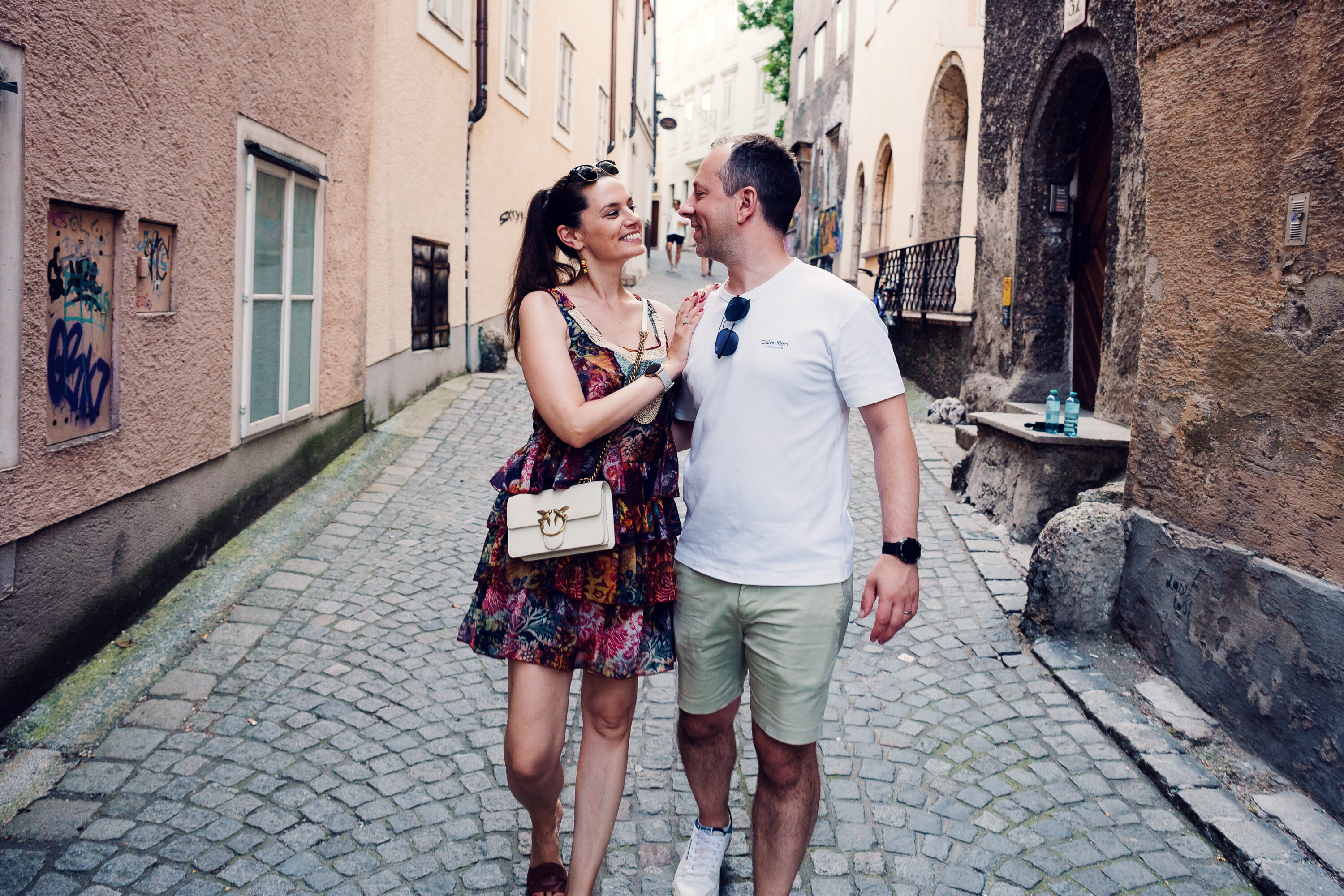
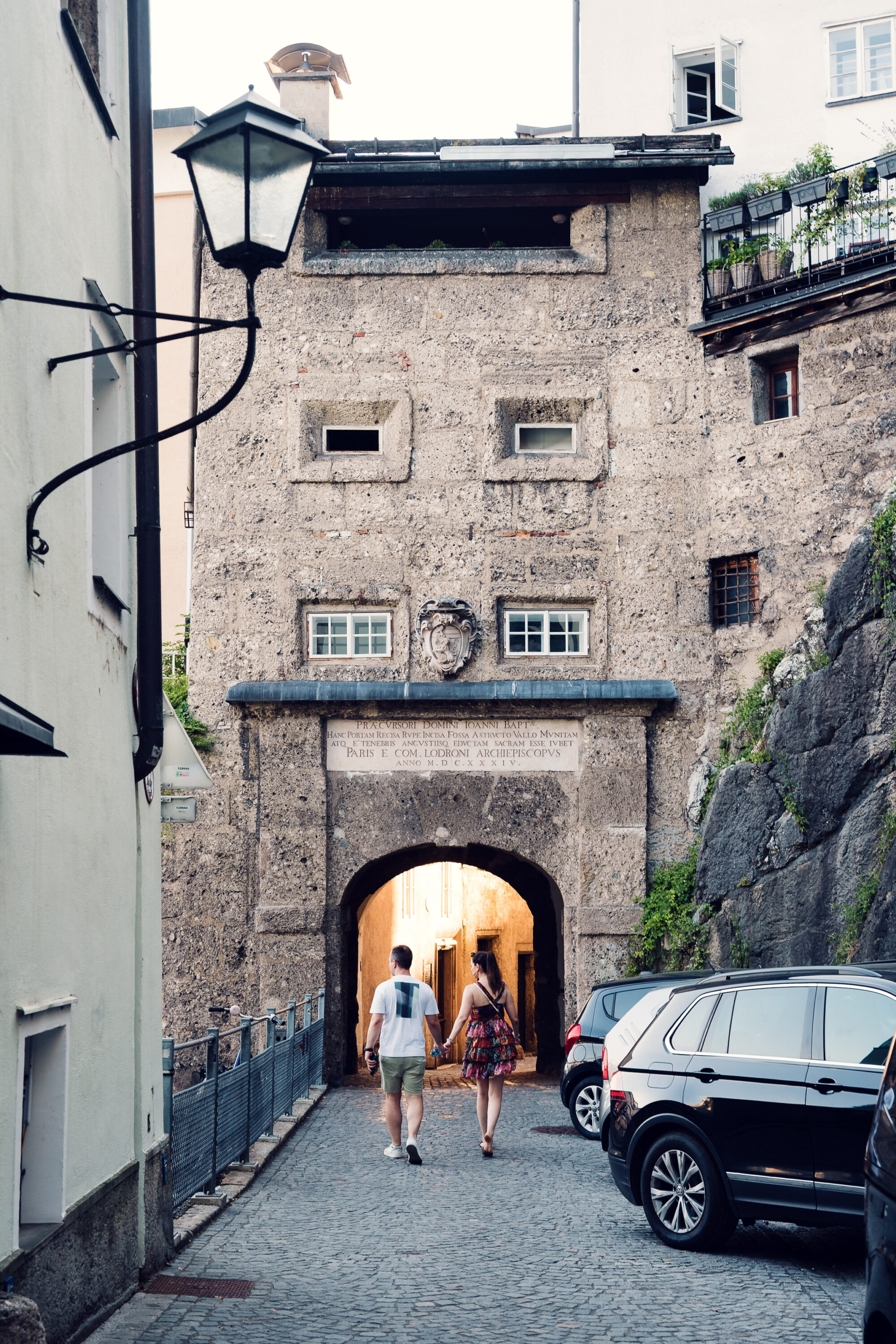
The Steingasse was once guarded by two gates. The Outer Stone Gate is long gone, but the Inner Stone Gate, first built around 1280 and rebuilt in its present form in 1634, still stands and counts among Salzburg's oldest surviving city gates. As the city grew and the broad Imbergstrasse took over as the main road, the Steingasse slipped into a quieter life. Today its imposing old houses are mostly homes again, with only a few shops, bars and galleries among them. The grand through-traffic is centuries gone, which is precisely why a walk here now feels like stepping into the oldest layer of the city.