
The Prince-Archbishops' Grand Stage: Residenzplatz
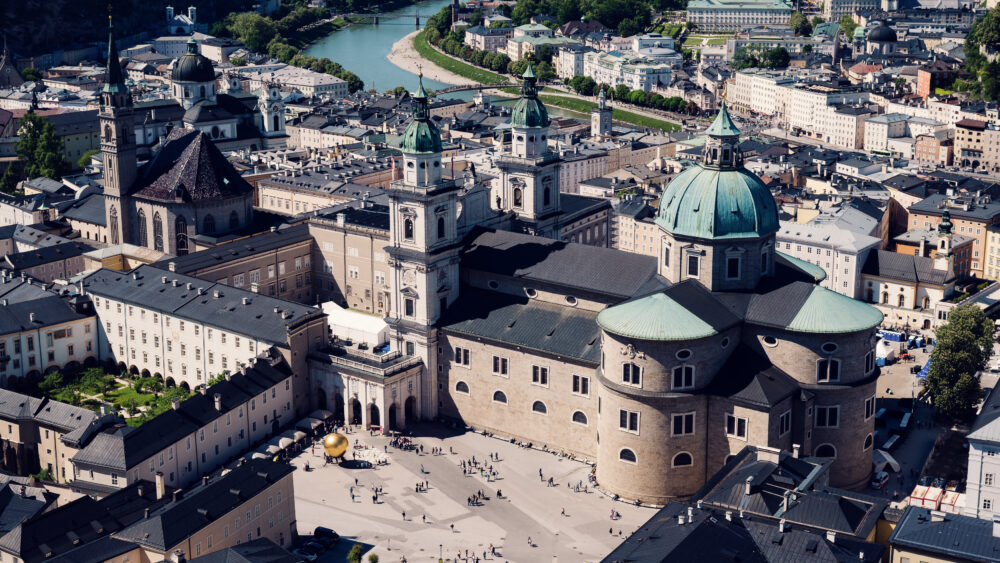
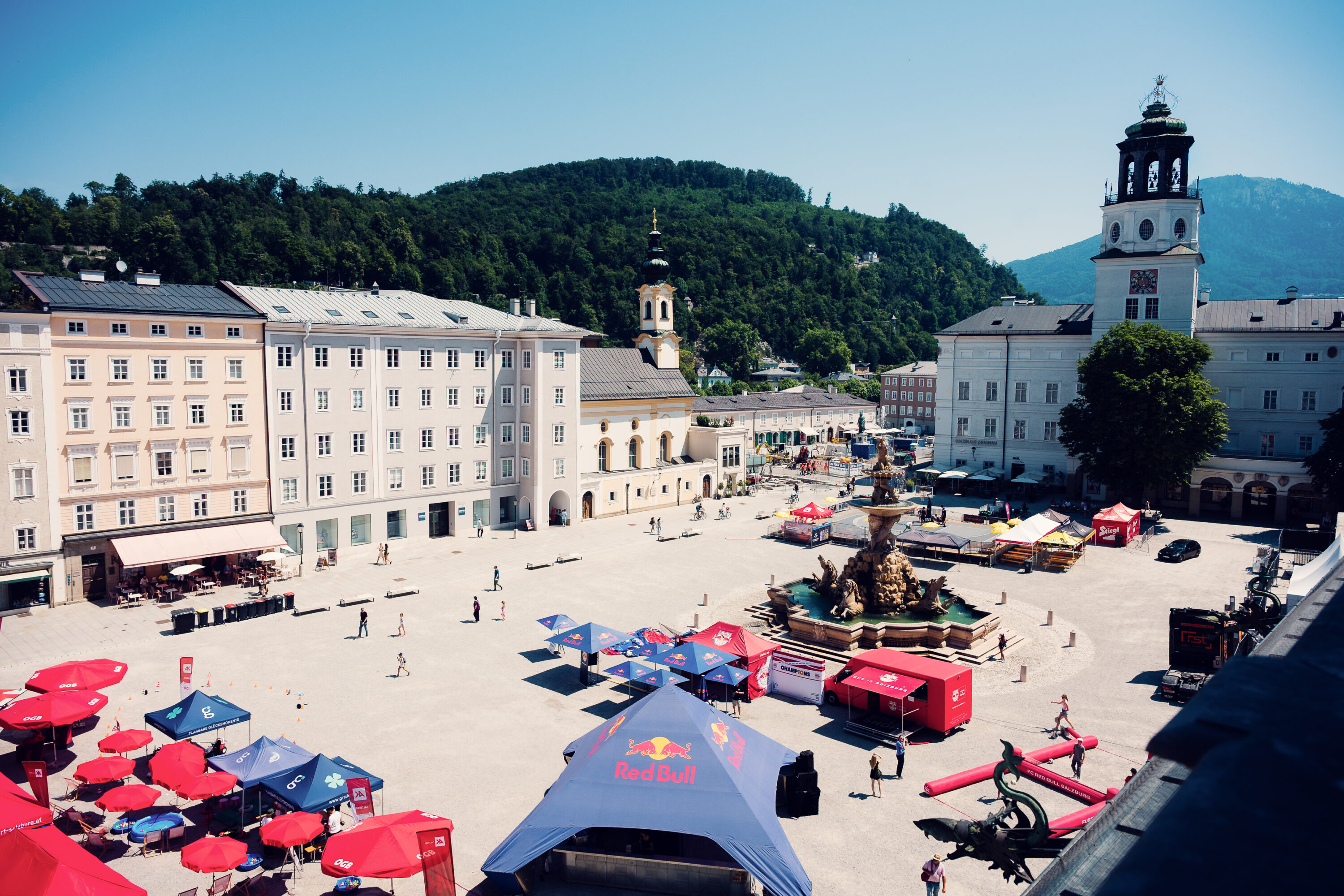
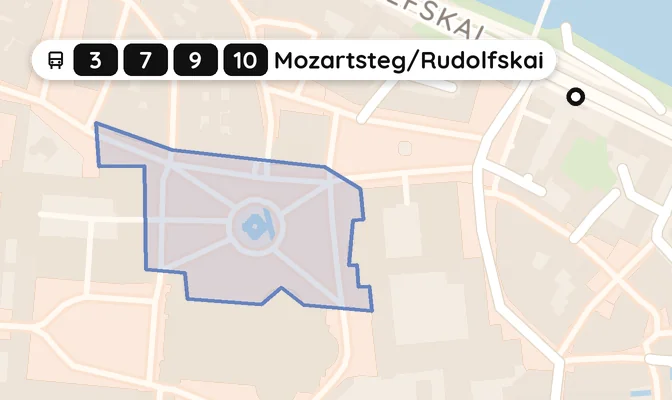
When Wolf Dietrich became prince-archbishop in the late sixteenth century, he wanted Salzburg to look like the Rome he'd known as a young man. Residenzplatz was one of his first and boldest moves: a churchyard and a cluster of narrow medieval houses stood on the ground north of the cathedral, and he had the lot cleared to open a single wide space at the heart of the town. The design followed an Italian taste for broad, ordered piazzas, and the effect was immediate, a stage set into the middle of a cramped medieval city. At first it was simply the Hauptplatz, the main square; only later did it take the name of the palace on its western edge, the Alte Residenz.
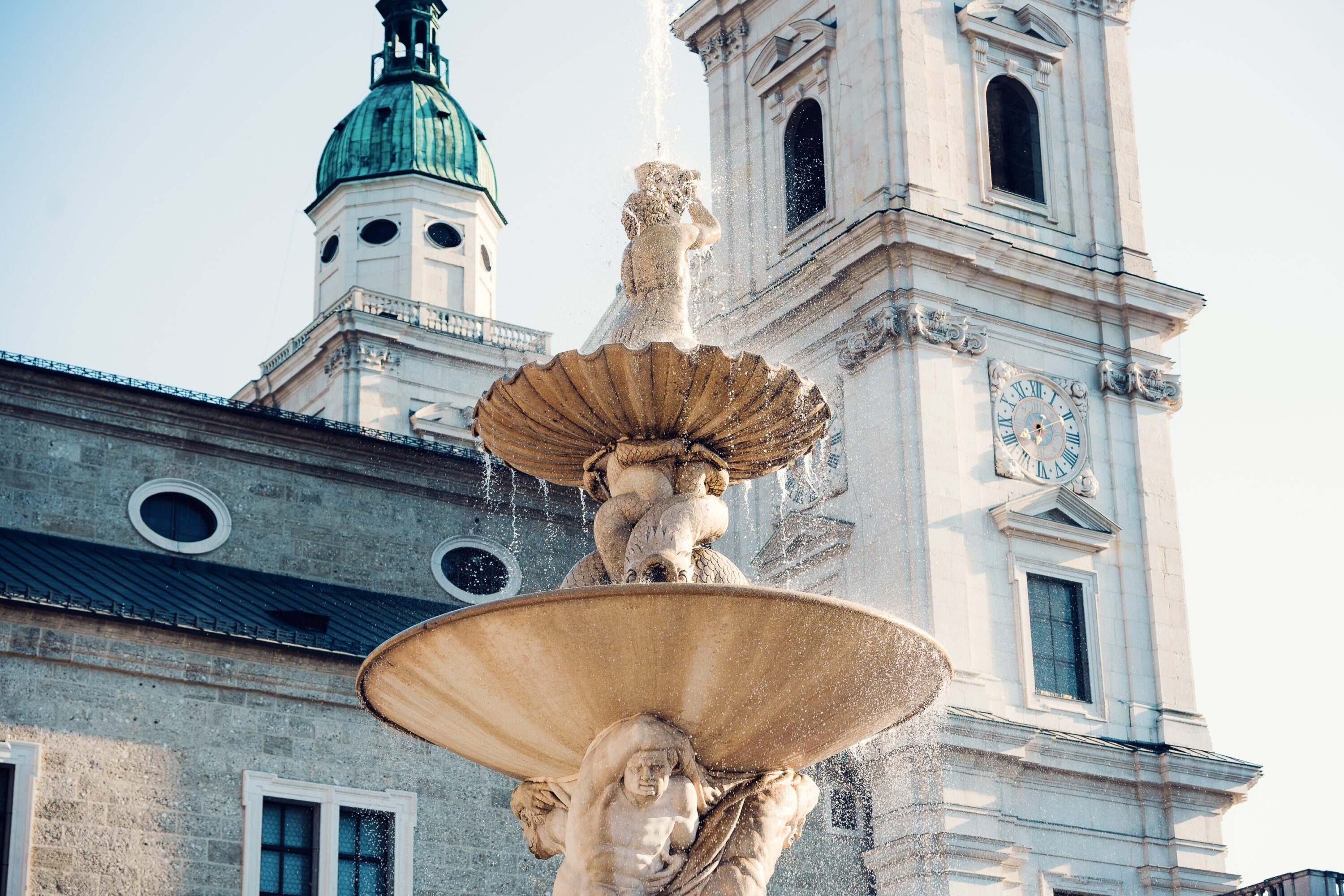
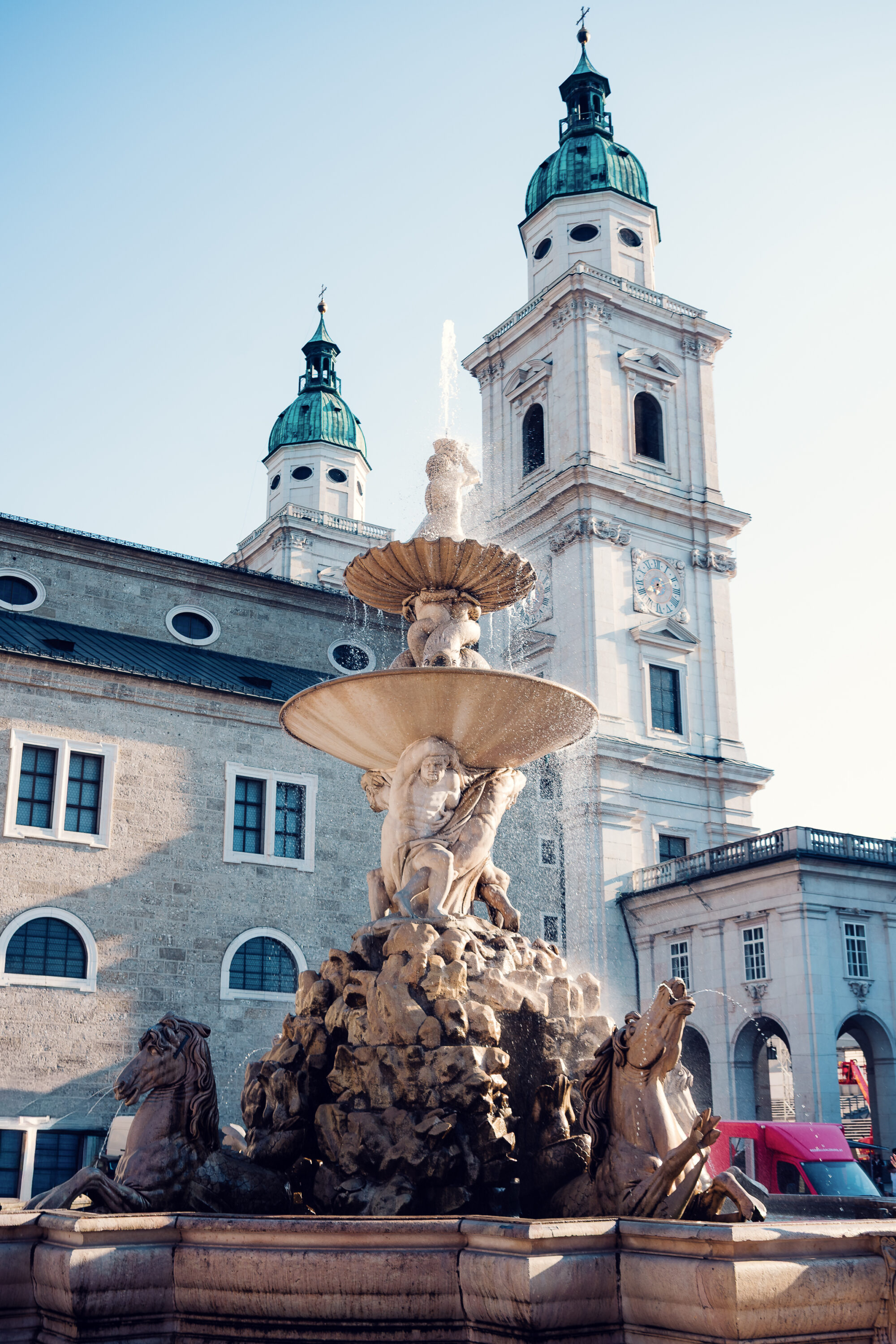
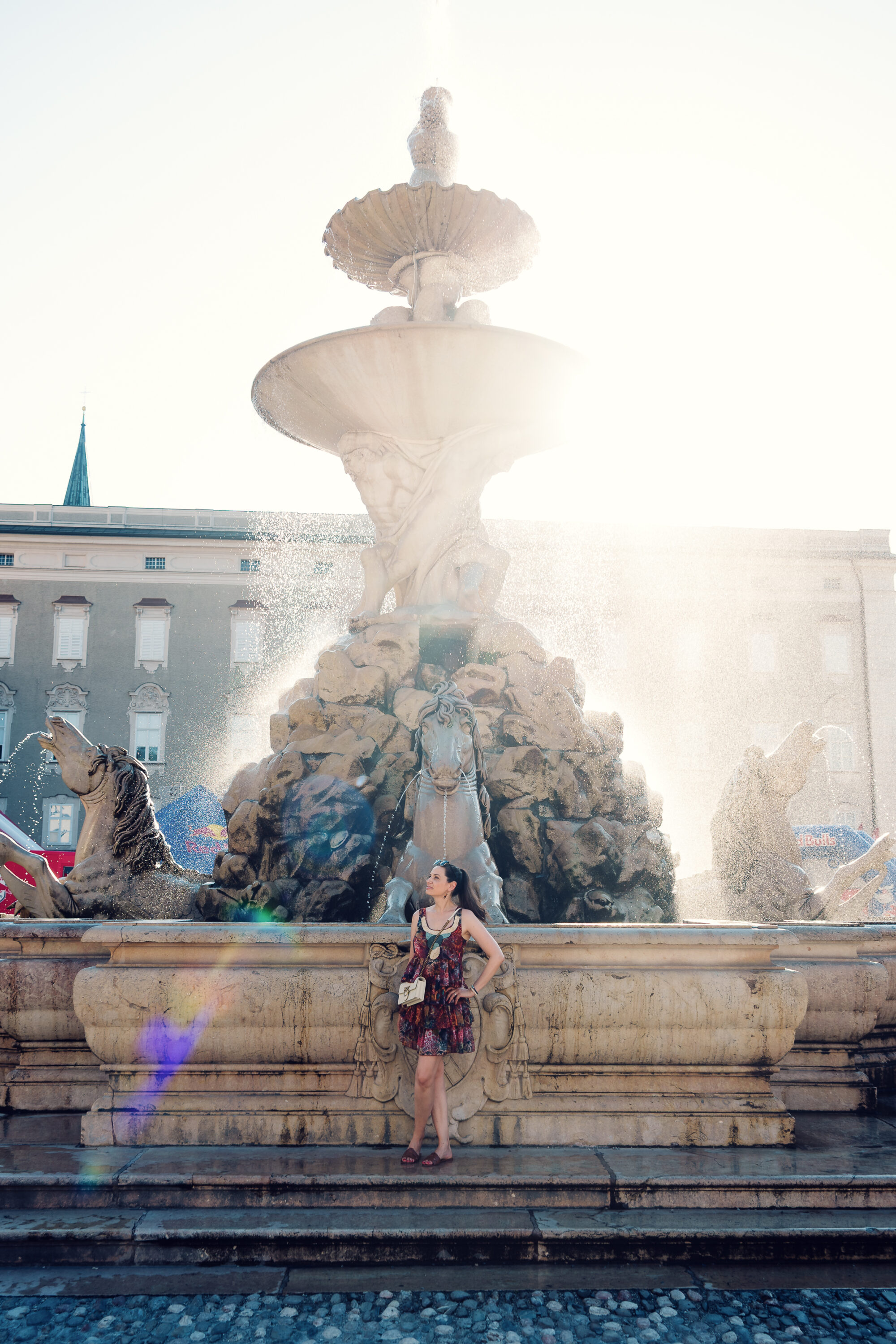
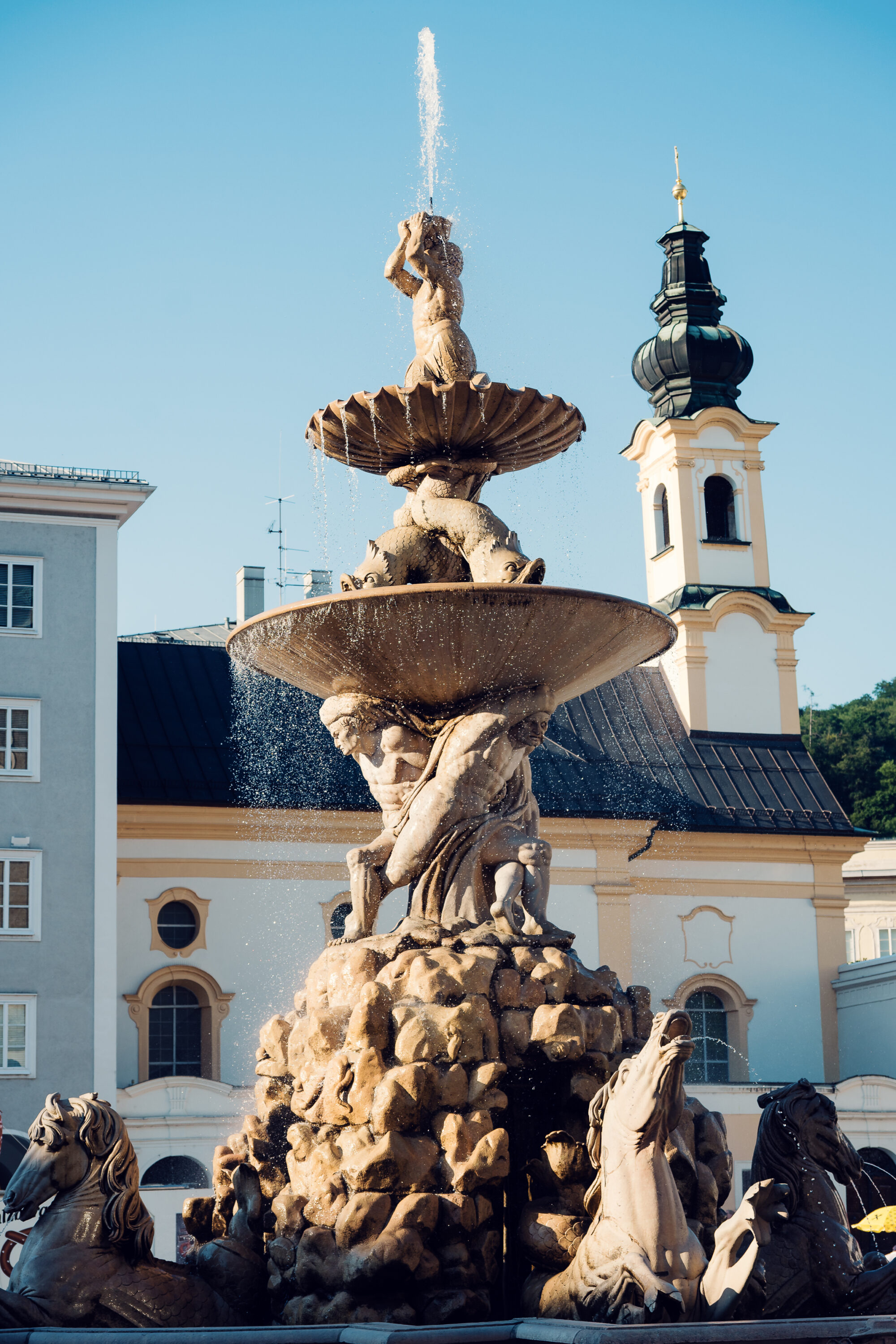
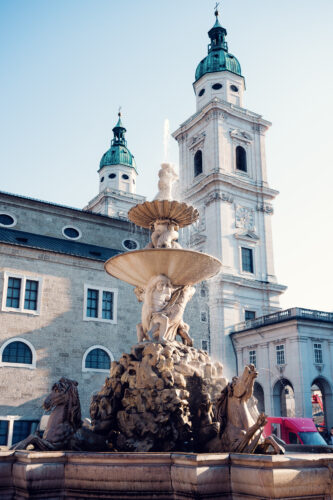
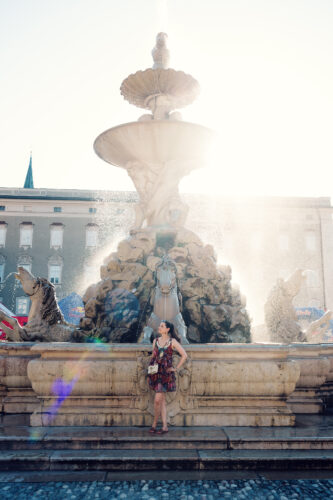
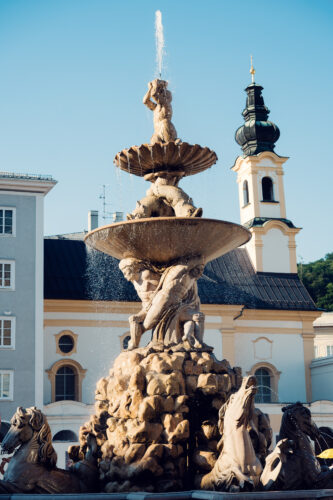
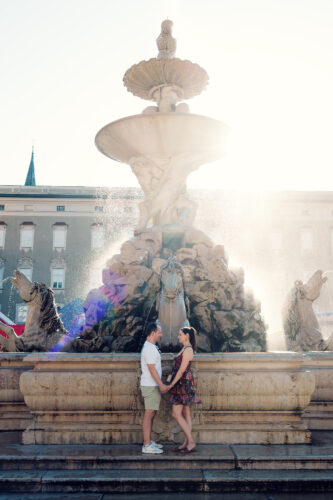
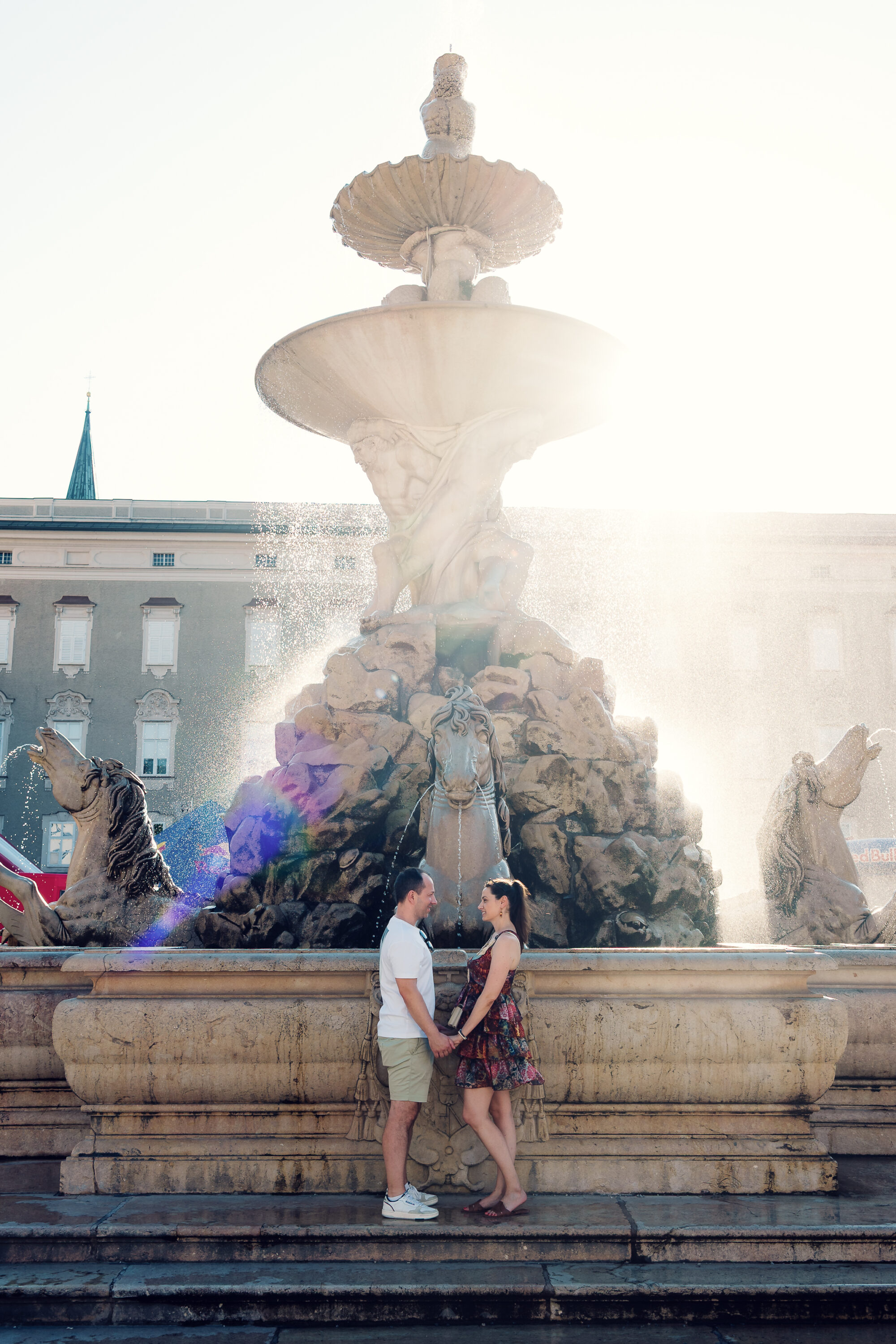
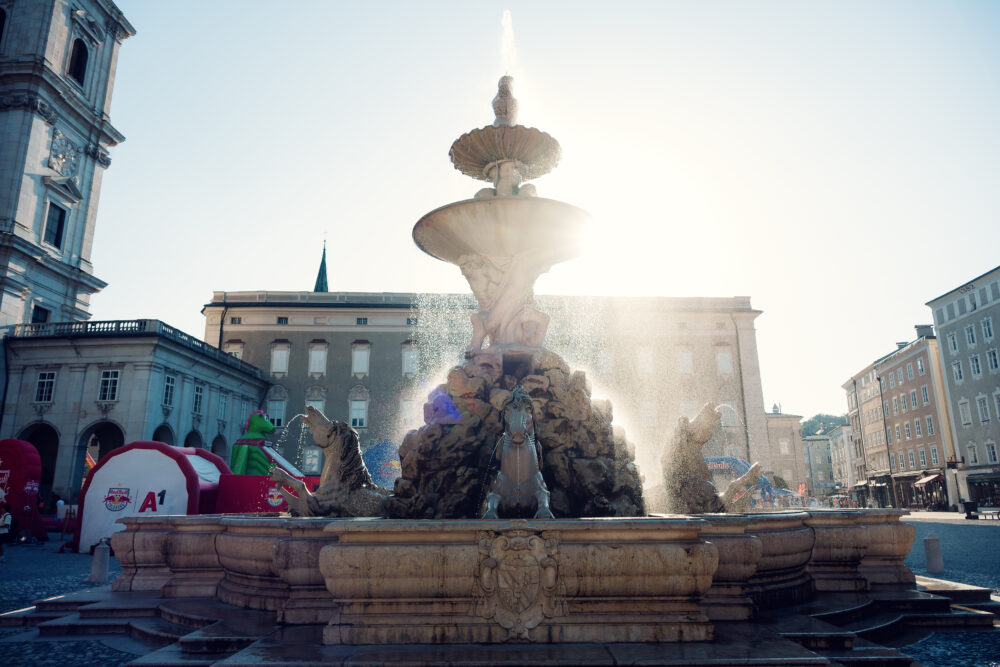
The Residenzbrunnen at the centre came several decades later, between 1656 and 1661, and it's still the reason the square feels less like a crossroads and more like a room. An Italian sculptor worked the pale marble of the nearby Untersberg into one towering composition: sea horses lunging from the base rock, giants shouldering the lower basin, dolphins balancing the bowl above, and a Triton at the summit blowing a jet of water from a conch. The whole design borrows openly from Bernini's Roman fountains, the Tritone and the Quattro Fiumi, exactly the models an archbishop who had studied in Rome would have wanted to rival. Historically, the fountain depended on Salzburg's elaborate water engineering, including systems connected with the Untersberg/Almkanal area; today it is maintained as part of the city's fountain infrastructure. Every winter the sculptures are boxed up to protect the soft stone from frost, so the fountain you photograph in summer looks very different from the one you'll meet in the cold months.
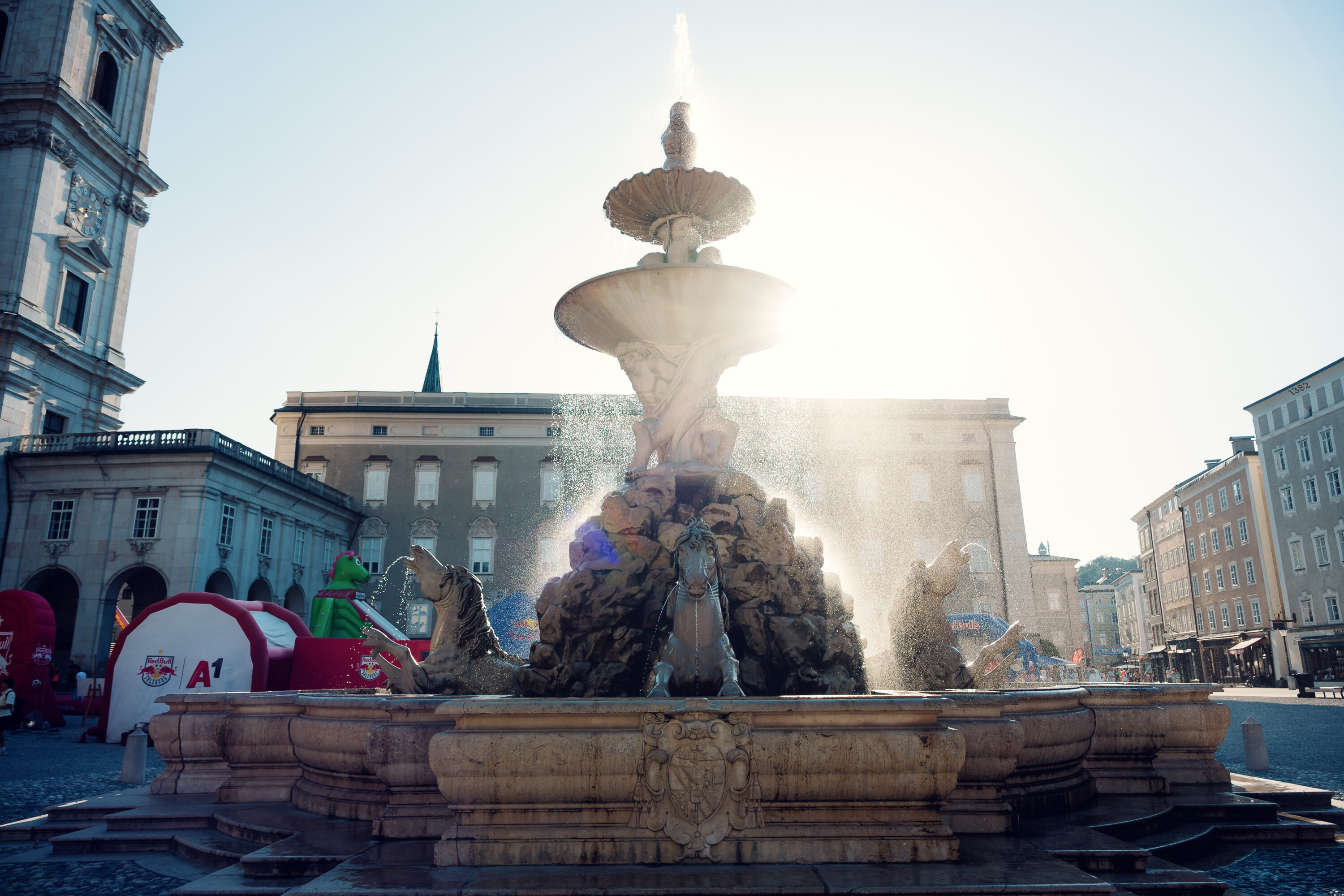
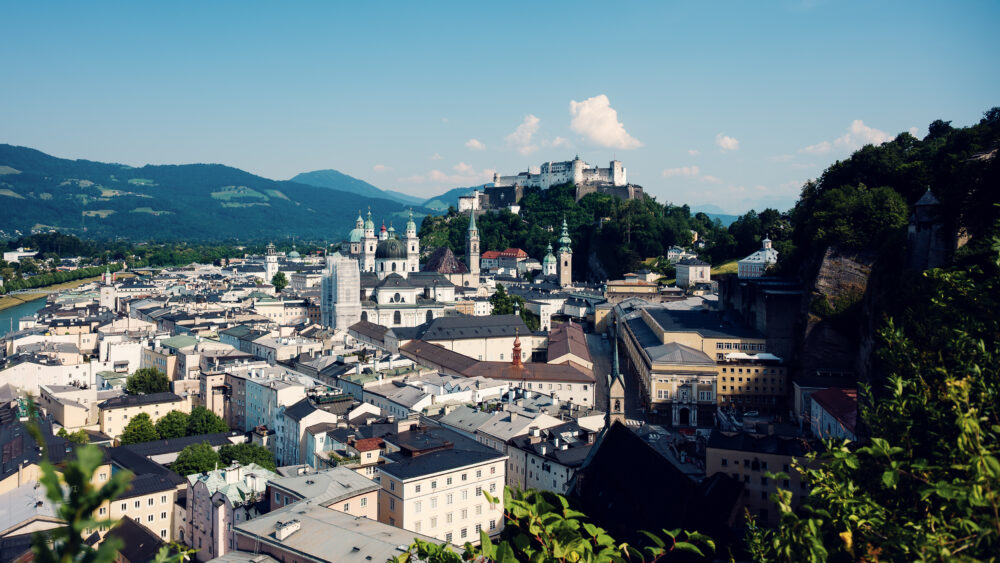
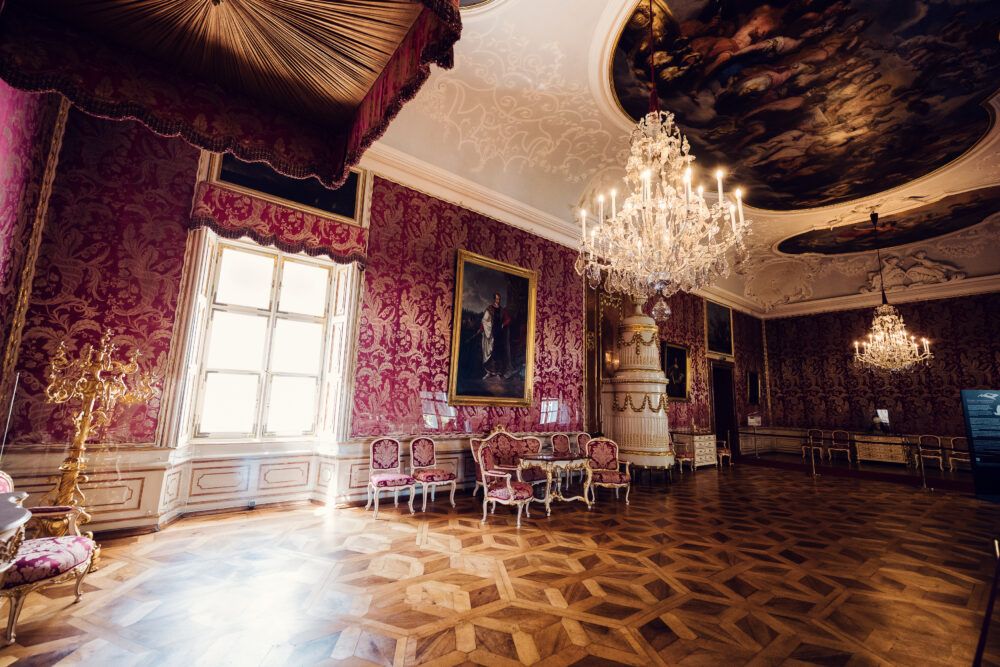
Each side of the square carries part of the city's story. To the west, the Alte Residenz housed the ruling prince-archbishops and now forms part of the DomQuartier, the walkable circuit that links palace and cathedral. To the east stands the Neue Residenz, with the carillon tower; it is the main building of the Salzburg Museum. A row of tall townhouses closes off the north side, while to the south the cathedral arches open onto Domplatz and Salzburg Cathedral itself. The result is one of the most complete baroque ensembles you can stand inside anywhere in the city.
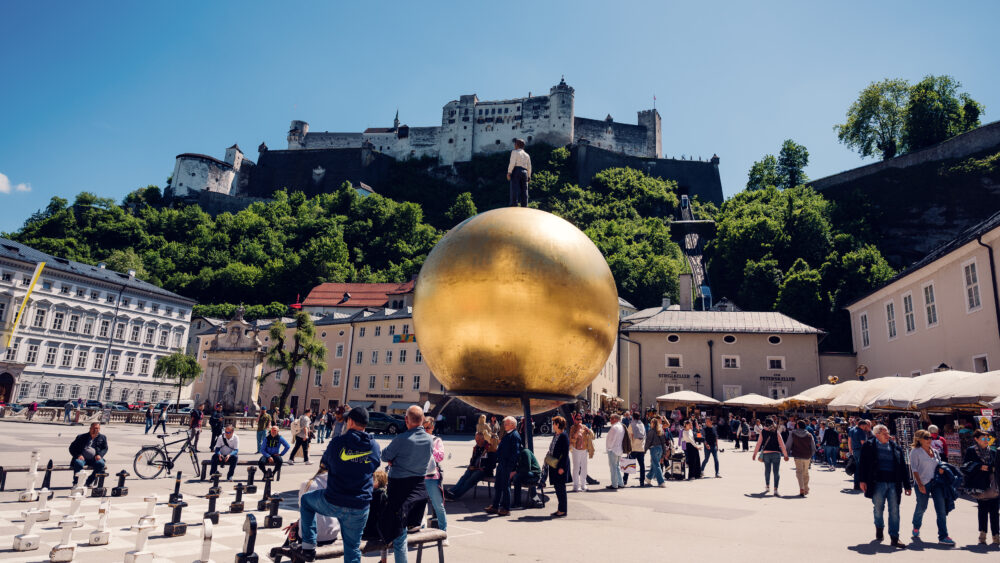
For many visitors the square feels familiar before they arrive. In The Sound of Music, Maria crosses Residenzplatz singing "I Have Confidence" and splashes the fountain horses on her way to the von Trapp villa; later, the same cobbles appear under the flags of the Anschluss. Those cobbles still carry the year's calendar: the Christkindlmarkt glowing around the fountain in Advent, the Rupertikirtag fair each September for the city's patron saint, and major public events through the year; the regular summer Festspiel screenings take place nearby on Kapitelplatz. It's a square that has never stopped being used.