
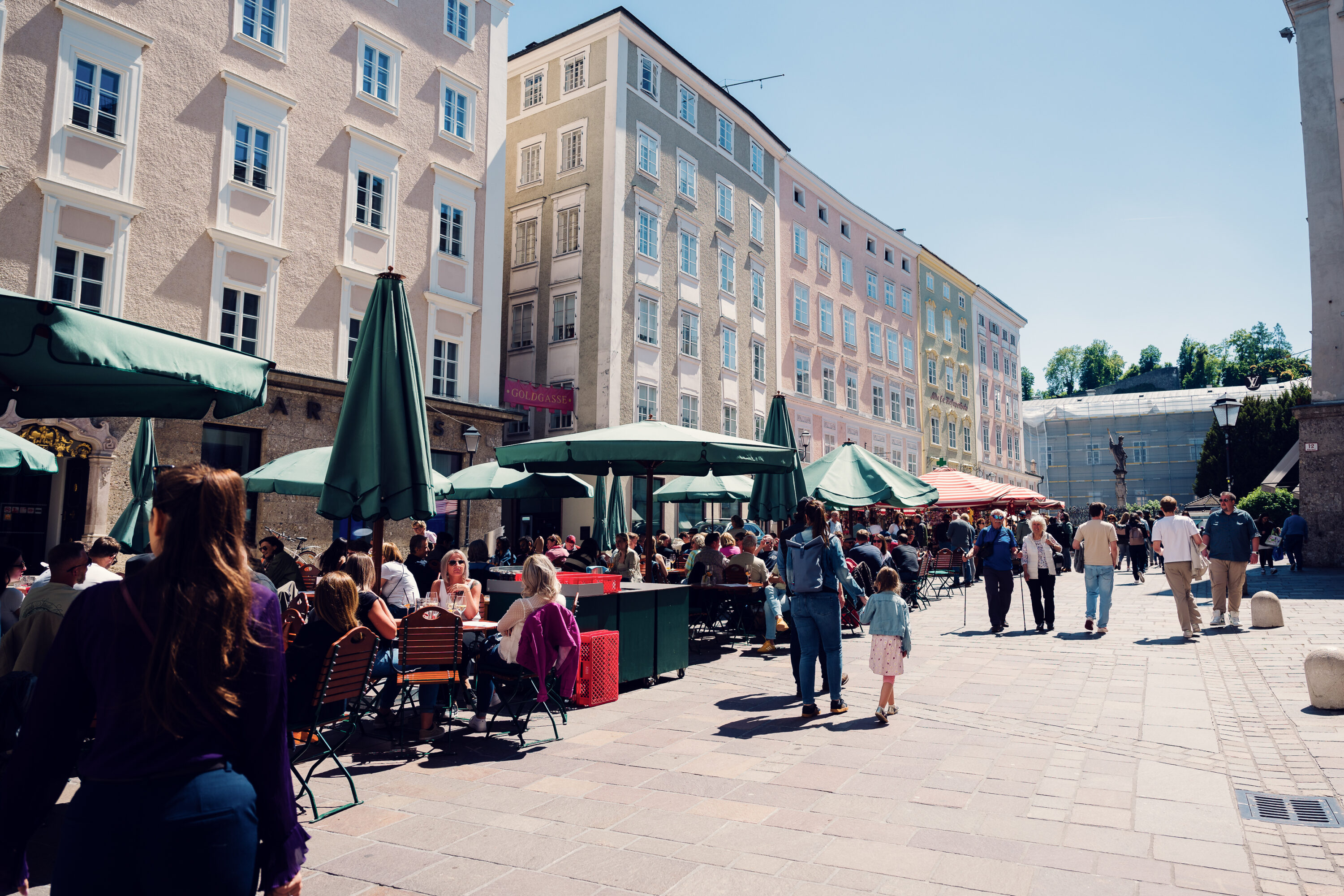
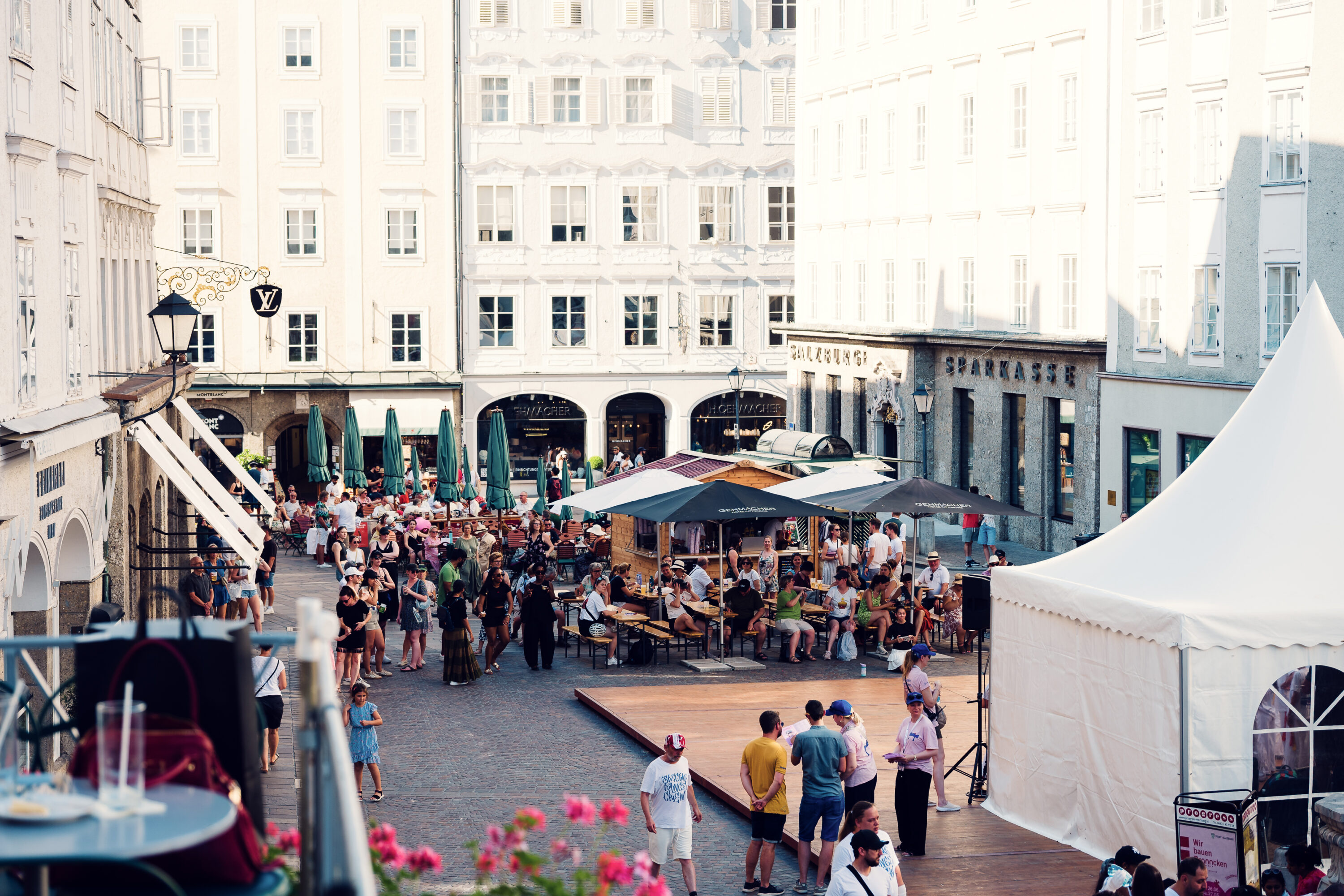
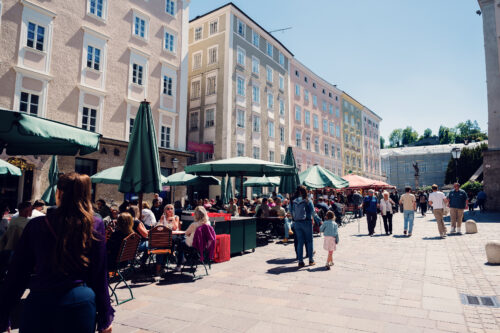
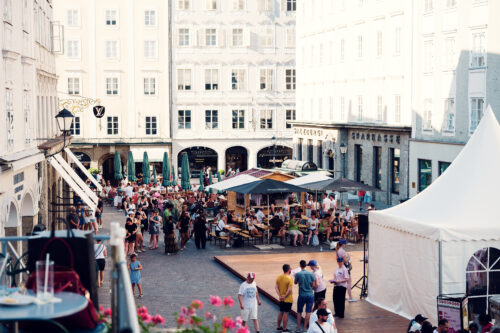
People stroll past busy terraces under green parasols on the Alter Markt, beneath a row of pastel townhouses.
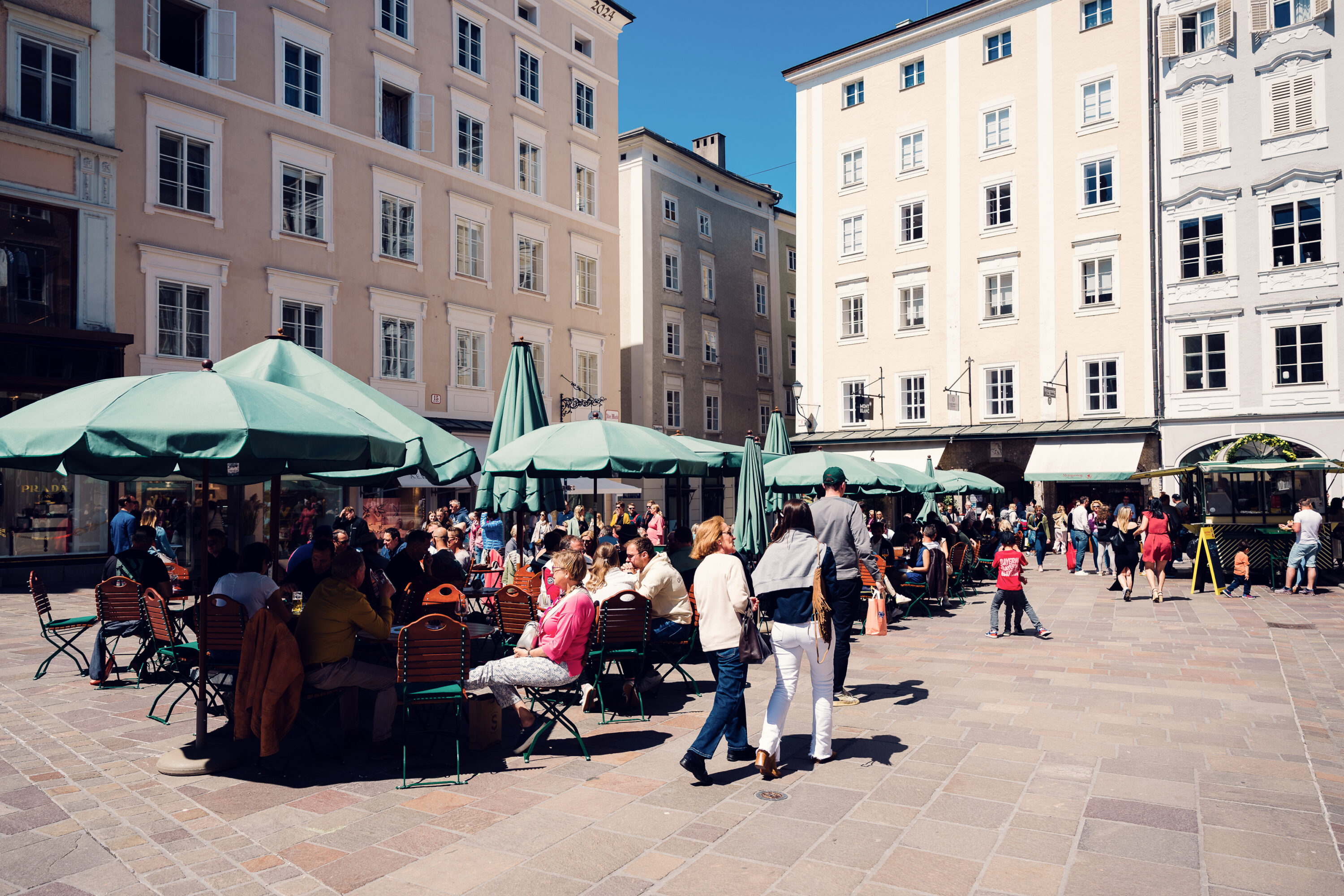
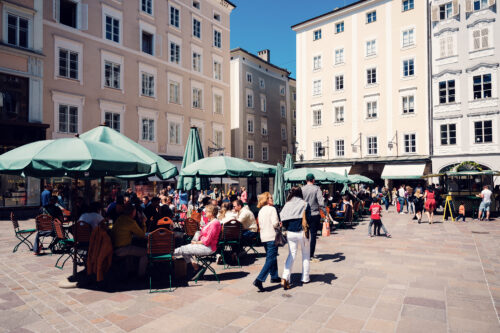
Guests sit in full sun under mint-green parasols on the Alter Markt, framed by pale cream facades.
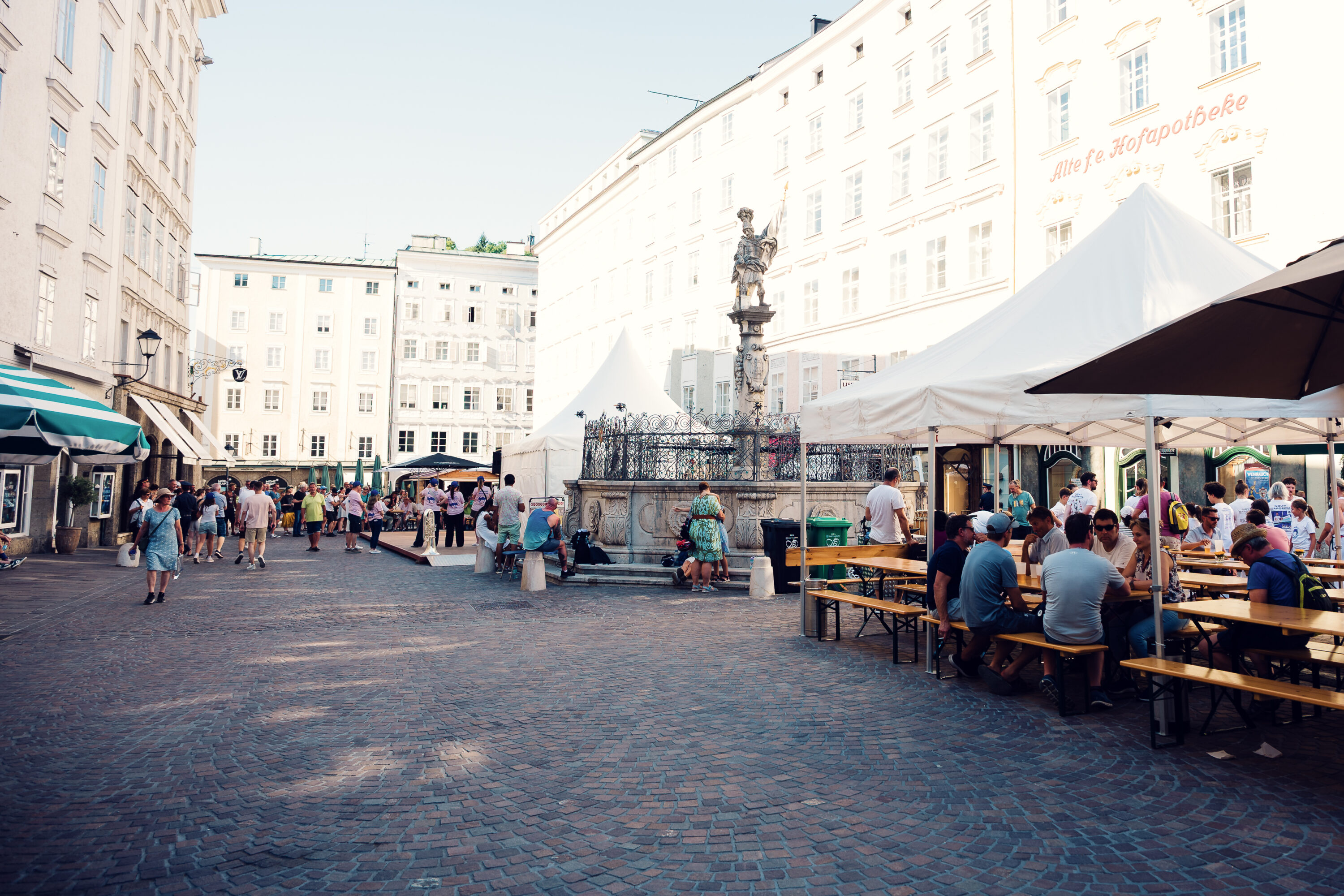
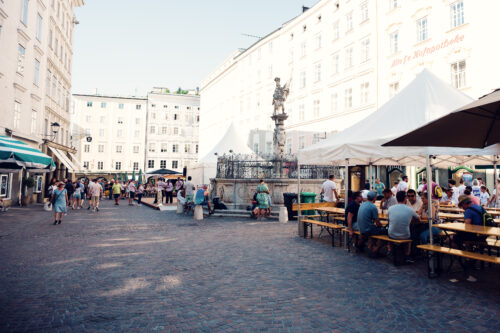
Visitors share beer benches under white tents beside the Florianibrunnen on the Alter Markt in hazy light.
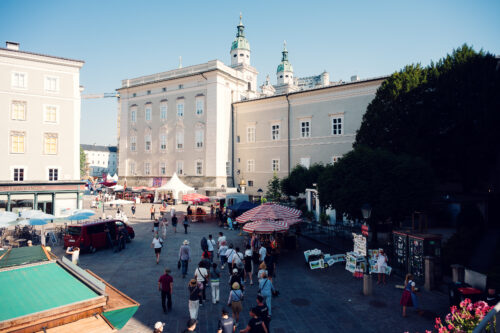
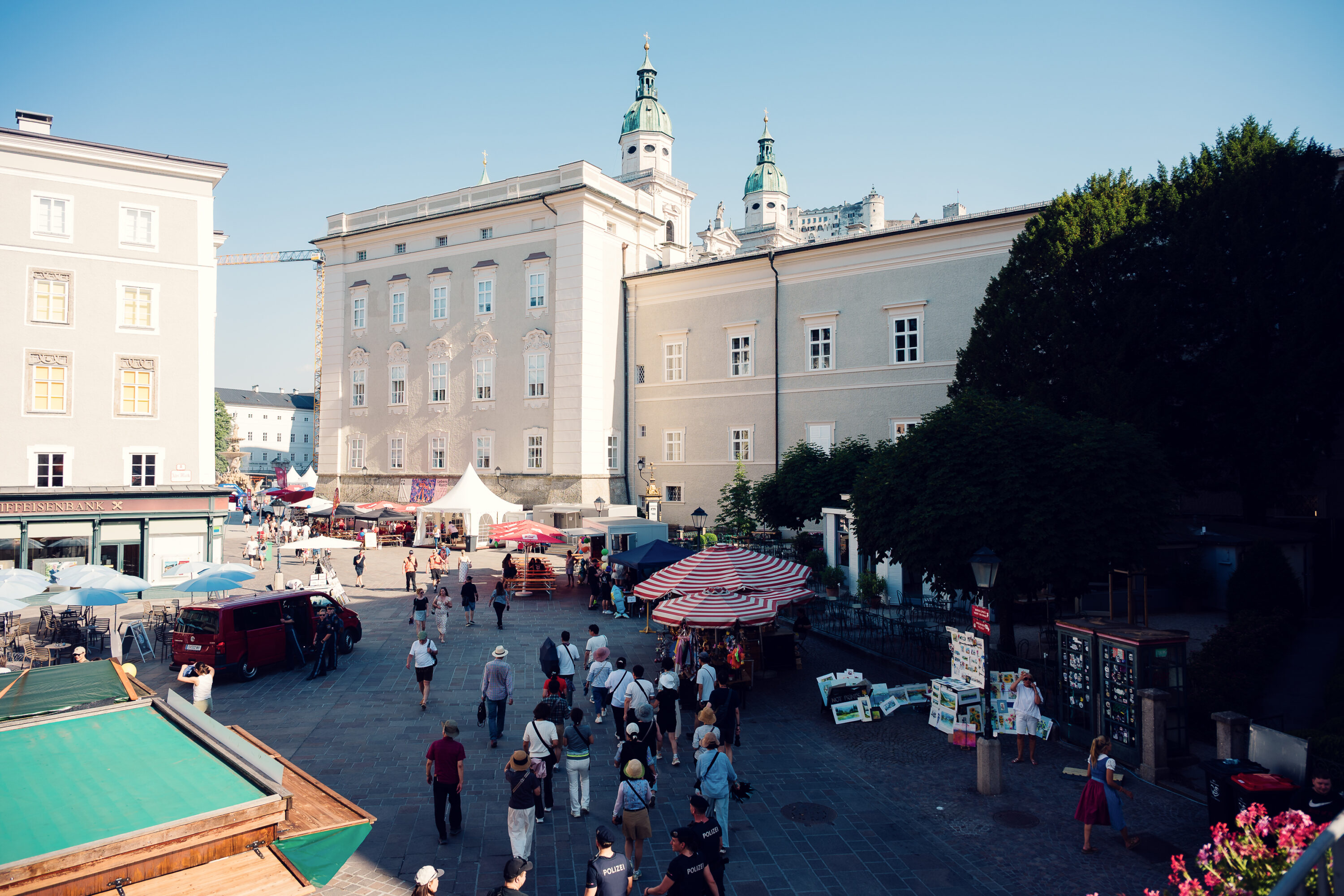
Pink balcony flowers frame a view down onto crowds around a low wooden platform on the Alter Markt.
Fall in Love with

Alter Markt

Salzburg's Alter Markt is a 13th-century market square home to Austria's oldest café, the original Mozartkugel shop, and a fountain from 1488.

* Affiliate links: if you book, a small commission supports our independent work, at no extra cost to you.

01 / 04
01 / 04

Alter Markt

Today
Always accessible
Admission
Free
Plan for
30 mins
outdoors
Where
Old Town

The Alter Markt sits at the heart of Salzburg’s Old Town, a compact square that packs more history into its cobblestones than most streets manage in an entire district. Laid out as a marketplace in the mid-13th century, it served as the city’s commercial center for over 600 years before the weekly market moved to Universitätsplatz in 1857.

Today, the Alter Markt is framed by an unbroken row of medieval and Baroque townhouses, with the Florianibrunnen standing at its center. You’ll find Austria’s oldest café, Café Tomaselli; Café-Konditorei Fürst, home of the Original Salzburger Mozartkugel; Salzburg’s oldest surviving pharmacy, founded in 1591 and appointed court pharmacy in 1647, with Rococo furnishings from 1777; and what is generally described as the smallest house in Salzburg’s Old Town. The Alter Markt sits right on the walking route between the Goldgasse and the Residenzplatz, but it’s worth more than a quick pass-through.

Plan your visit

Opening Hours
Always accessible
Getting there
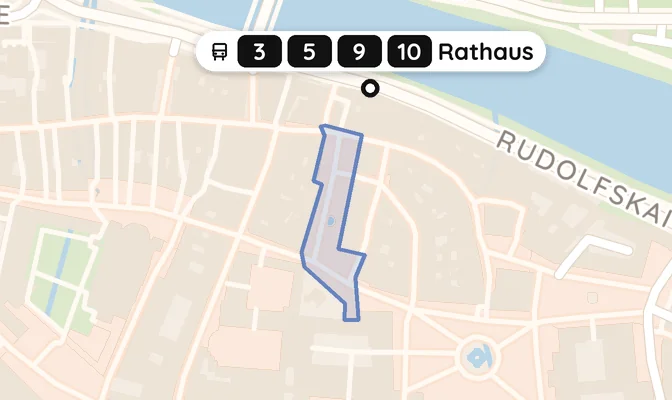
Alter Markt, 5020 SalzburgBus 3 5 9 10 Rathaus · 1 min walkOld Town

What's on here

Krampus and Perchten Runs in Salzburg

Hand-carved wooden masks, shaggy fur and heavy bells: on Advent evenings, Krampus and Perchten groups stamp and roar their way through the old town to drive out the winter.

Dec 05, 2026 - Dec 21, 2026

Krampus and Perchten Runs in Salzburg

Dec 05, 2026 - Dec 21, 2026

Hand-carved wooden masks, shaggy fur and heavy bells: on Advent evenings, Krampus and Perchten groups stamp and roar their way through the old town to drive out the winter.

  • Salzburg old town: Christmas market on Domplatz, Getreidegasse, Alter Markt and Linzergasse; plus Maxglan, from Rochusgasse to Stiegl-Brauwelt, 5020 Salzburg
  • Sat 5 December: Barmstoana run in Linzergasse from 17:00, Falkenpass run through Getreidegasse and Alter Markt from 17:30, Krampus run at the Christmas market on Domplatz around 19:00. Sun 6 December: St Nicholas and the children's Krampus at the Christmas market from 15:30. Tue 8 December: Maxglan Krampus and Perchten run from 18:00. Mon 21 December: Perchten run at the Christmas market on Domplatz around 19:00.
  • For the Falkenpass run, wait on the Alter Markt: the route loops from the Festspielhaus through the Getreidegasse. With small children, watch from a few steps back, because the Krampuses carry chains and switches. The gentler version is St Nicholas with his children's Krampus at the Christmas market on the afternoon of St Nicholas Day.

Tours & experiences

Alter Markt


Muvamo Opinion

The Alter Markt is one of those squares that gets better the longer you stand still. It's compact enough to cross in under a minute, but there's an unusual density of detail packed into that small footprint.

Take the Florianibrunnen at its center. The fountain's history stretches from 1488 to 1734, with its wrought-iron grating from 1583, its marble basin from the 1680s, and its St. Florian statue added nearly 50 years later. That's a single monument with three centuries of craftsmanship layered into it - and it's one element of the square.

Then there's the lineup along the edges. Café Tomaselli has been serving coffee at this address since the mid-18th century, making it Austria's oldest continuously operating café. Right next door, squeezed into a gap barely wider than a doorway, is Salzburg's smallest house at just 1.42 meters wide. Across the square, the Alte Hofapotheke still operates in a space fitted with Rococo furnishings dating to 1777, including historic shelving, a prescription table, and original porcelain jars. You can walk in during business hours and see them.

The architecture around the square reads as a single composition. The townhouses form a continuous ring of Baroque facades, most of them built over medieval cores as old as the square itself. That enclosure is part of why the Alter Markt works: you're not passing through an intersection, you're standing inside a room.

For us, the Alter Markt works as a kind of anchor point in the Old Town. It connects the Judengasse and the Goldgasse shopping areas to the larger squares around the cathedral, and nearly every walking route through the Altstadt passes through it at least once. That's probably why it still functions as exactly what it was designed to be more than 750 years ago: the natural meeting point of the city.

Recommended tours & experiences

Helpful Hints

  • During the Advent season (late November through December), the square hosts a small but atmospheric Christmas market with handcrafted goods and warm drinks.
  • Café Tomaselli’s terrace on the Alter Markt fills up fast on sunny days. Arriving before 10:00 or after 15:00 gives you a better chance at a table.
  • The Alte Hofapotheke’s Rococo interior can be viewed during business hours; ask the staff before taking photographs.
  • The Alter Markt connects directly to the Judengasse heading toward Waagplatz and to the Residenzplatz through a short passage.

Gastronomic Discoveries

  • Café Tomaselli is the obvious choice here.
  • Café-Konditorei Fürst at Brodgasse 13, directly on the Alter Markt, is the home of the Original Salzburger Mozartkugel, created by Paul Fürst around 1890. The handmade Original Salzburger Mozartkugeln in silver-blue foil are sold at Fürst’s Salzburg shops and through its own online store when seasonal shipping is available.

Hidden Gems

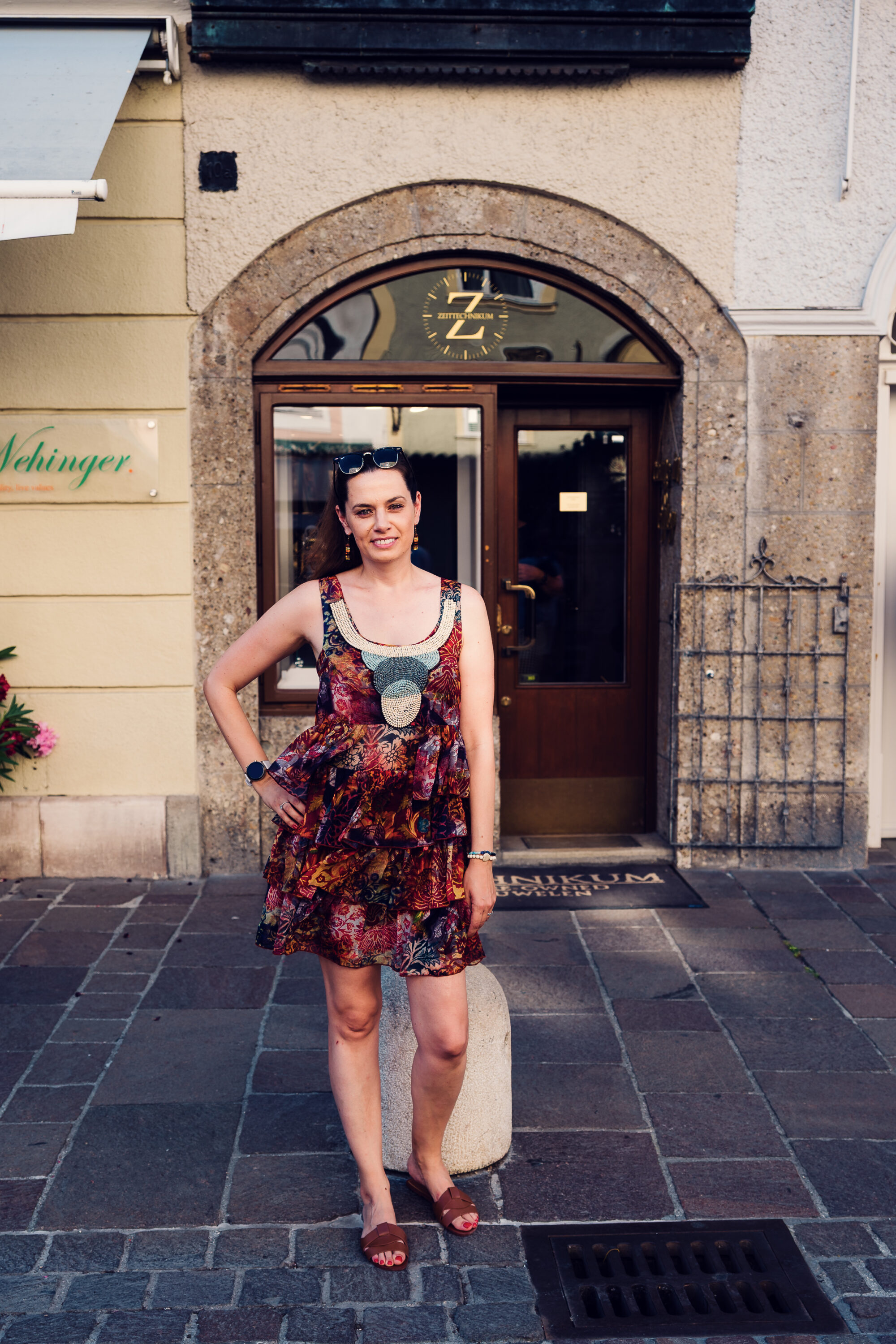
  • Salzburg’s smallest house at No. 10a is wedged between Café Tomaselli and the neighboring building, just 1.42 meters wide, and easy to overlook if you’re not looking for it.
  • The Alte Hofapotheke at No. 6 retains Rococo furnishings dating to 1777, together with original porcelain jars that can be seen during business hours.
  • The wrought-iron grating on the Florianibrunnen was created by Wolf Guppenberger in 1583 and is the oldest surviving part of the present fountain.

Our Little Extras

  • The Stadtverein Salzburg has operated a weather station at the Alter Markt since 1888, still visible at the boundary toward Residenzplatz.
  • During Advent, the stalls at the Alter Markt are run by volunteer associations, and purchases made at the market support charitable causes.
Photo Spots & POIs
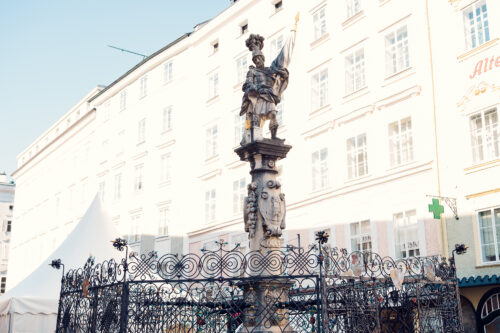
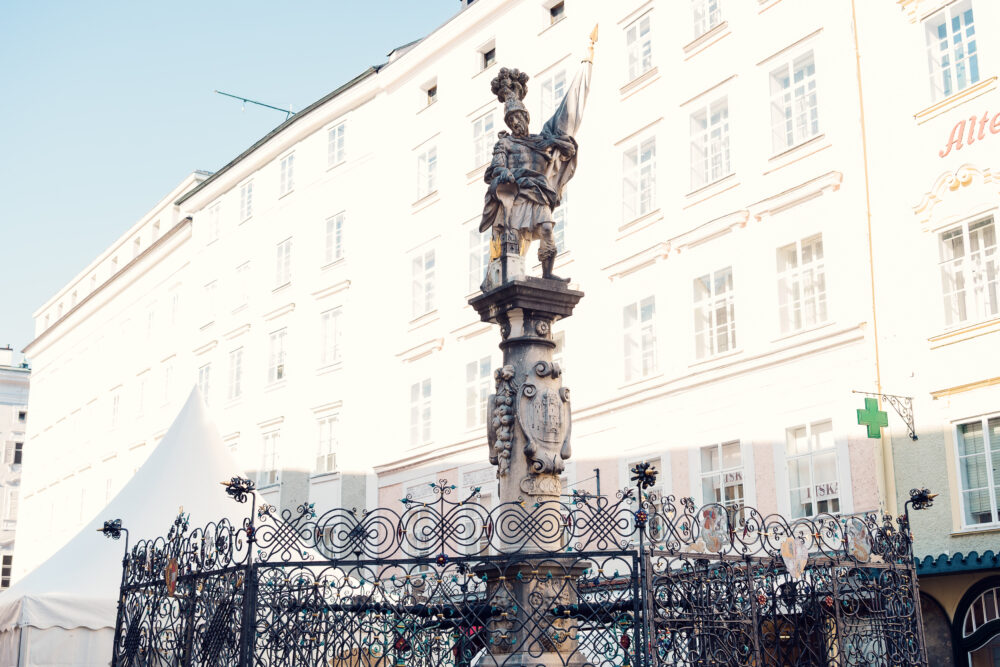
St. Florian raises his flag atop the Florianibrunnen on the Alter Markt, above a swirling iron grille.

Florianibrunnen

Stand close to the wrought-iron grating and the sheet metal fills with figures: riders, birds, unicorns, coats of arms. The farrier Wolf Guppenberger made it in 1583, and he hid a horseshoe in the ironwork as the mark of his trade. That grating is the oldest surviving piece of the fountain, older than the marble basin around it and older than the saint on top by a century and a half.

Map
Photos
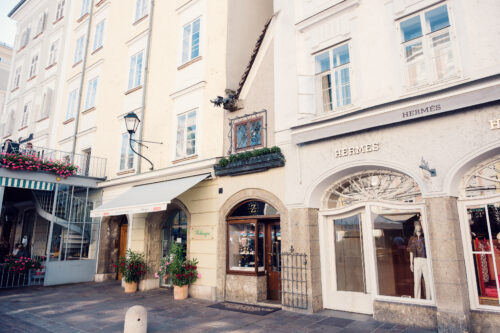
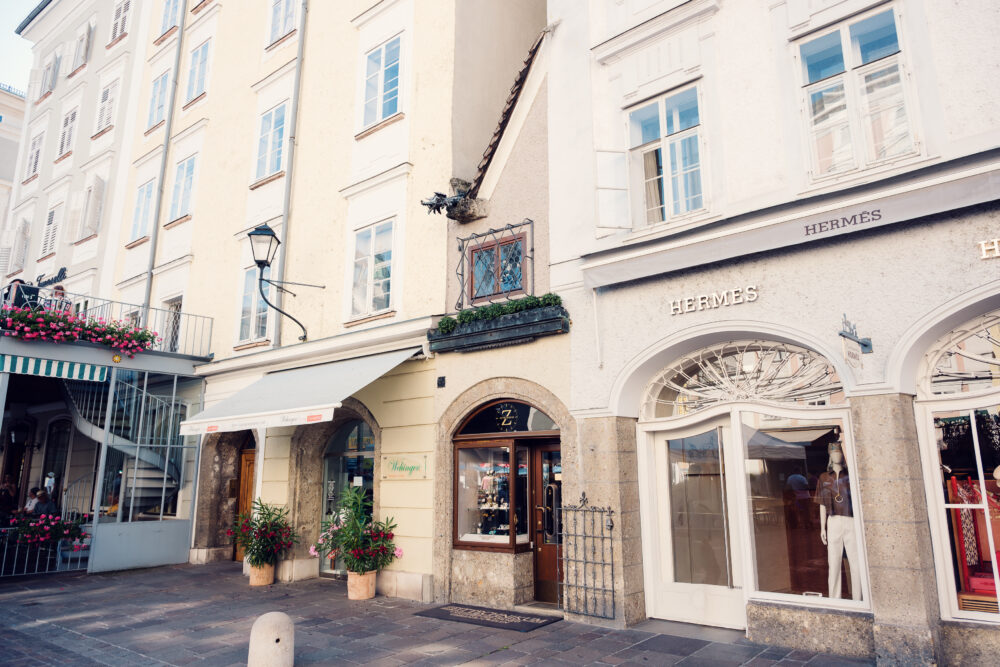
A slim house with a steep roof squeezes between taller facades on the Alter Markt near Café Tomaselli.

Smallest House (Alter Markt 10a)

A narrow alley once ran between two patrician houses on the Alter Markt. It was built over in the 19th century, and what was left became number 10a, 1.42 meters across. The prince-archbishops put a writing office in it first; from 1880 an optician had his shop on the ground floor and his workshop above, the two linked by a small iron stair in the back courtyard.

Map
Photos
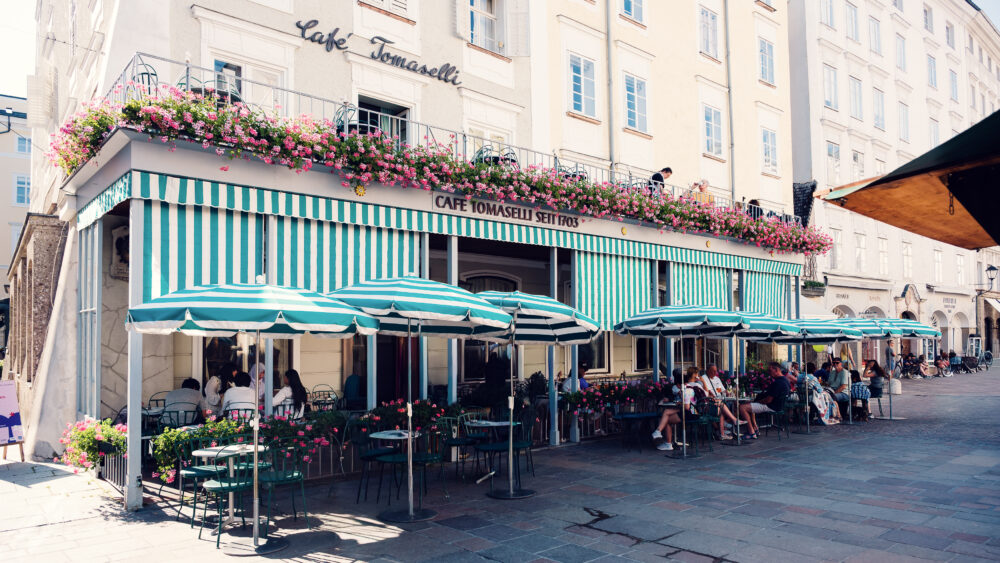
Pink flowers spill over Café Tomaselli's balcony above green-striped parasols and terrace guests on the Alter Markt.

Café Tomaselli

Café Tomaselli has held this corner of the square since 1764, when Anton Staiger bought the house; the confectioner Carl Tomaselli took it over in 1852 and left his name on it. Austria has no older coffee house. Inside, a rack of international newspapers still stands by the door, and the first-floor veranda looks straight down over the Alter Markt.

Map
Photos More
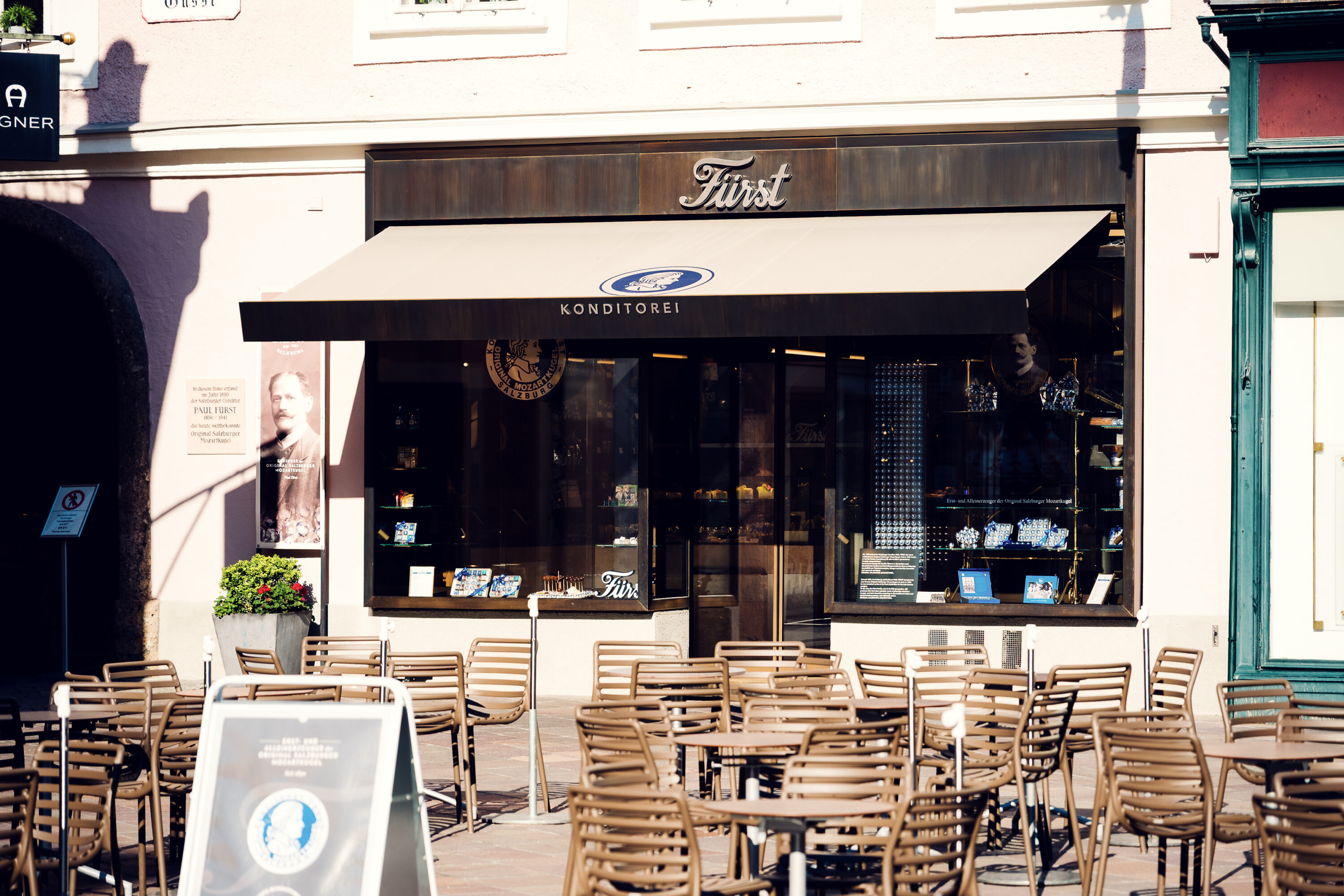
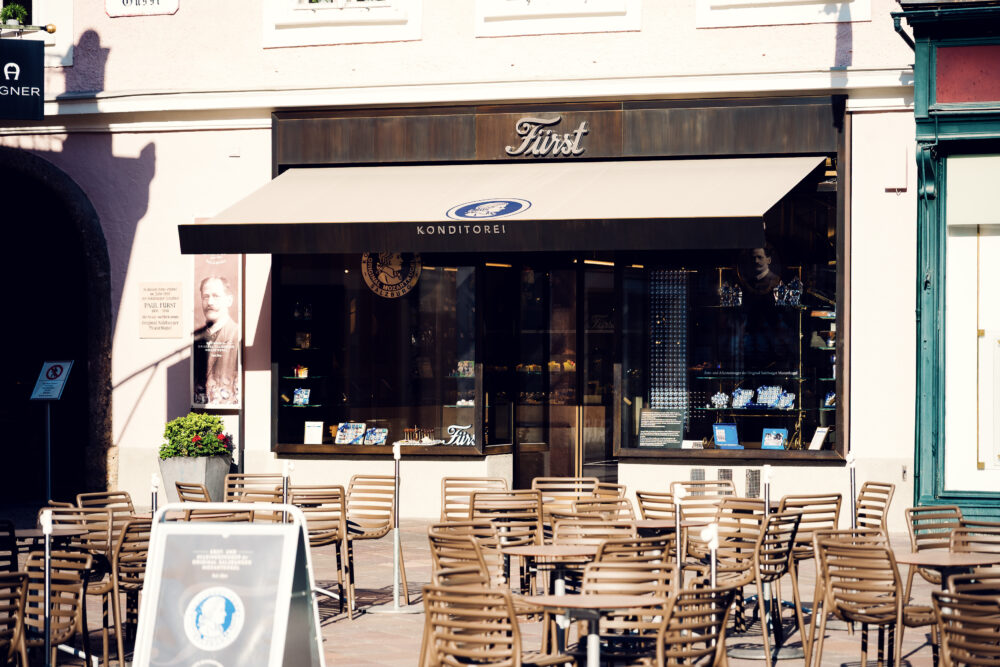
Empty terrace chairs wait in the bright sun outside Café Konditorei Fürst on the Alter Markt.

Café Konditorei Fürst

Café Konditorei Fürst has been at Brodgasse 13 since 1884, when Paul Fürst opened his patisserie here. Around 1890 he rolled pistachio marzipan into a ball, wrapped it in nougat, set it on a stick and dipped it in dark chocolate. His new sweet, the Original Salzburger Mozartkugel, won him a medal at the Paris exhibition of 1905. The recipe is the one in his 1915 workshop book, and the ball still comes wrapped in silver and blue.

Map
Photos More

A Marketplace Since the Middle Ages - Alter Markt

The Alter Markt was established in the mid-13th century as Salzburg’s third marketplace, after the Waagplatz and a smaller trading square at the junction of Brodgasse and Goldgasse. For roughly 600 years, it functioned as the city’s central weekly market, hosting dairy, herb, turnip, and stove-fitters’ stalls alongside the main commercial activity.

But the Alter Markt served more than commercial purposes. It doubled as a stage for public festivals and guild traditions: the Pfingsttanz at Whitsun, the sword dance performed by miners from the Dürnberg salt mines, and the Johannisfeuer celebrating the summer solstice. The barefoot bakers’ dance was held here annually, and until around 1800, the square hosted the Metzgersprung, a ritual where newly qualified butcher apprentices washed themselves in the fountain’s basin before being formally declared journeymen on Ash Wednesday.
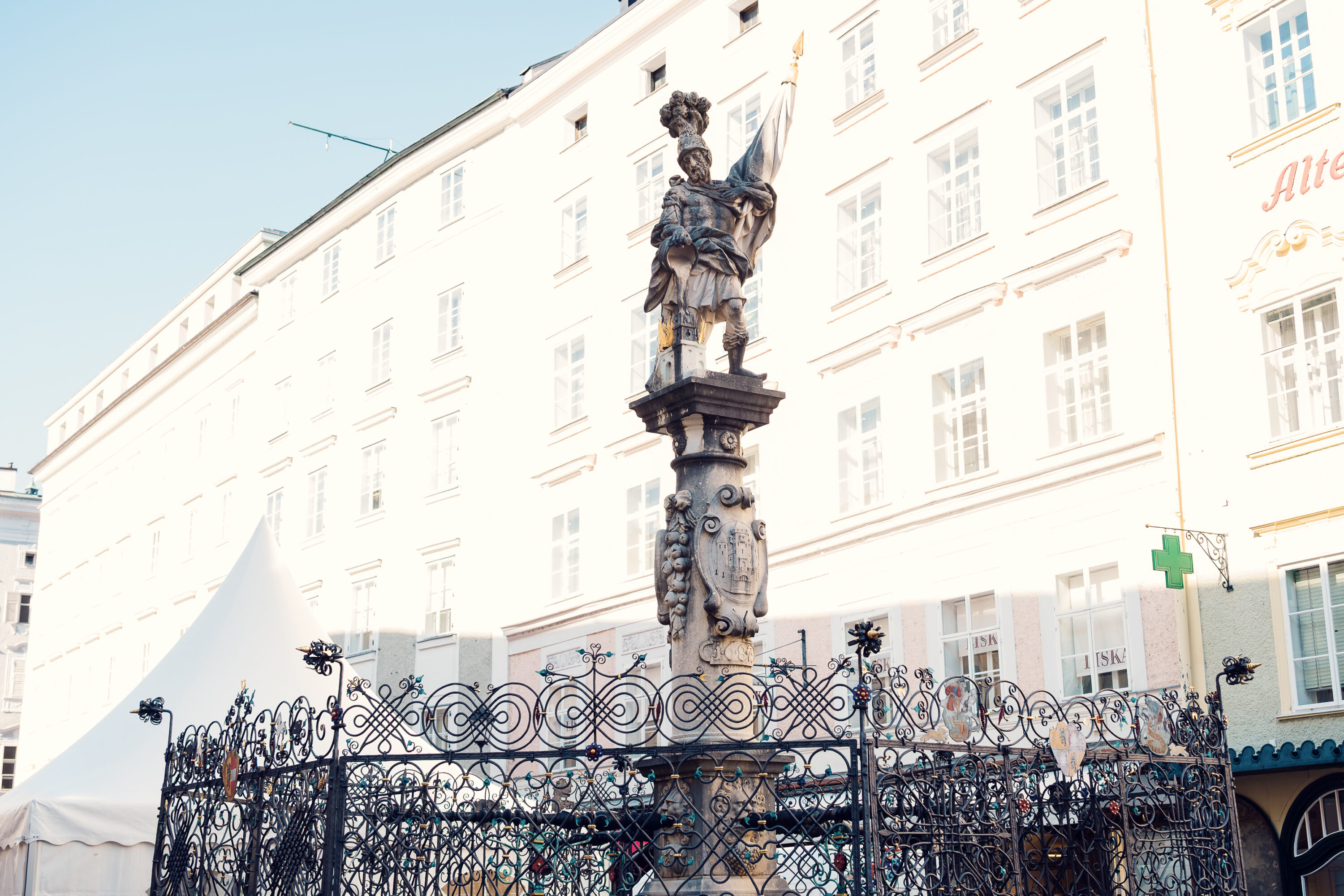
St. Florian raises his flag atop the Florianibrunnen on the Alter Markt, above a swirling iron grille.

The Florianibrunnen

The fountain at the center of the Alter Markt has stood on this site since 1488, when it replaced an older draw well and became the first fountain in the civilian part of the city to receive piped drinking water from the Gaisberg. The original structure was substantially rebuilt between 1685 and 1687, when the eight-sided marble basin was added, decorated with rosettes on the side panels and acanthus leaves at the projecting corners. The wrought-iron spiral grating surrounding the fountain column is older still, dating to 1583. The statue of St. Florian at the top was added in 1734, a fitting choice for a fountain figure given his role as patron saint of firefighters.

The Buildings of the Alter Markt

The square is enclosed by a continuous row of townhouses whose core structures mostly date to the medieval period, though their facades were updated in the Baroque and Classical periods. A few buildings stand out.

The Alte fürsterzbischöfliche Hofapotheke (Old Court Pharmacy) has been at the Alter Markt since 1591 and was appointed prince-archiepiscopal court pharmacy in 1647. It moved to its current location at No. 6 in 1903, bringing along its Rococo furnishings from 1777, and still operates today.
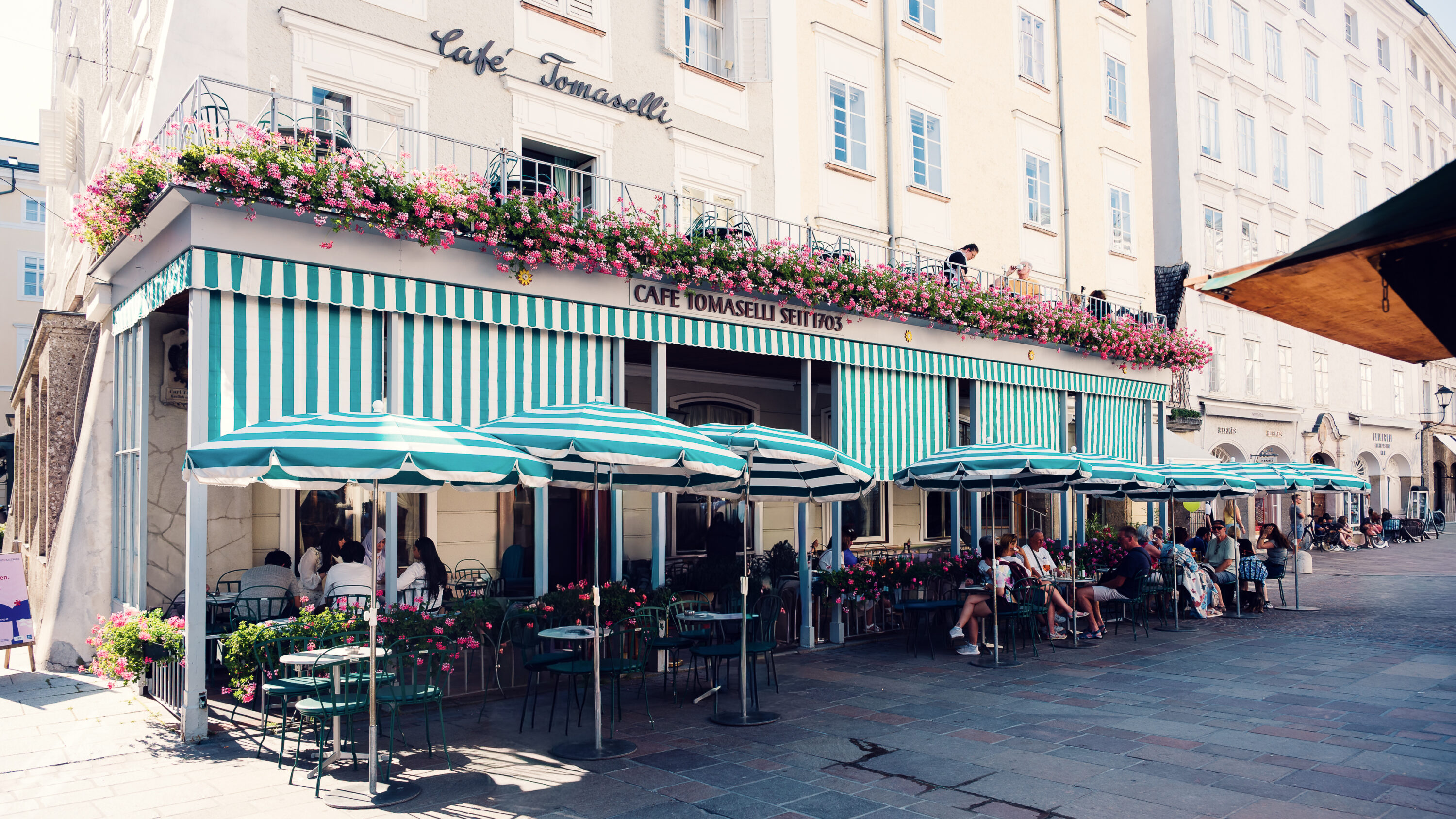
Pink flowers spill over Café Tomaselli's balcony above green-striped parasols and terrace guests on the Alter Markt.
Café Tomaselli has been serving coffee on Salzburg's Alter Markt since 1764, making it one of the oldest coffee houses in Austria.

At No. 9 and 10 sits Café Tomaselli, Salzburg’s oldest café and quite possibly the oldest continuously operating coffeehouse in Central Europe. It traces its origins to 1700, when a license to serve coffee, tea, and chocolate was first granted at a nearby location on Goldgasse before the business moved to the Alter Markt.

The Altes Rathaus at the northern edge of the square was acquired by the city in 1407; its present Rococo facade dates from renovations carried out between 1772 and 1775, while the Justitia statue above the portal was created in 1616 and the tower carries a moon-phase clock. Adjacent to it at Kranzlmarkt 3 stands what is probably Salzburg’s oldest surviving patrician house, with a medieval core and a Gothic residential tower.
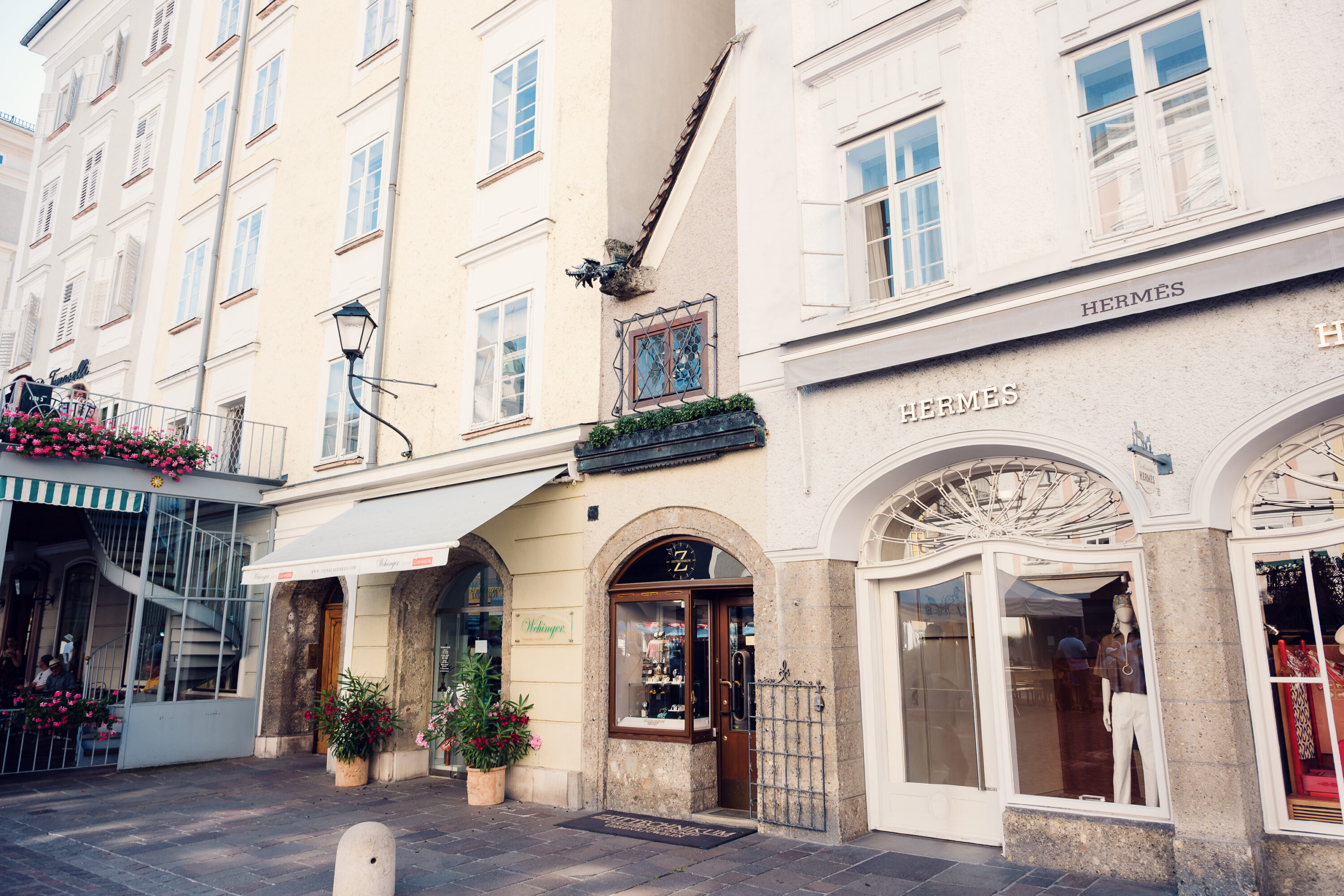
A slim house with a steep roof squeezes between taller facades on the Alter Markt near Café Tomaselli.

Between the Café Tomaselli and the next building, the smallest house in Salzburg’s Old Town was squeezed into a narrow alley gap between 1830 and 1860. At just 1.42 meters wide, it’s easy to walk past without noticing.

From Market to Monument

In 1857, the weekly market was relocated to the Universitätsplatz, and the square, previously called simply “Marktplatz,” was renamed “Alter Marktplatz.” From 1886 to 1927, it was called Ludwig-Viktor-Platz in honor of Archduke Ludwig Viktor, the youngest brother of Emperor Franz Joseph I, who lived at Schloss Klessheim and was known in Salzburg for his charitable support. In 1927, the city council returned to the historical name, settling on the current “Alter Markt.”

A plaque on the Café Tomaselli building commemorates Constanze Mozart, who lived at the Alter Markt with her second husband in the 1820s.