
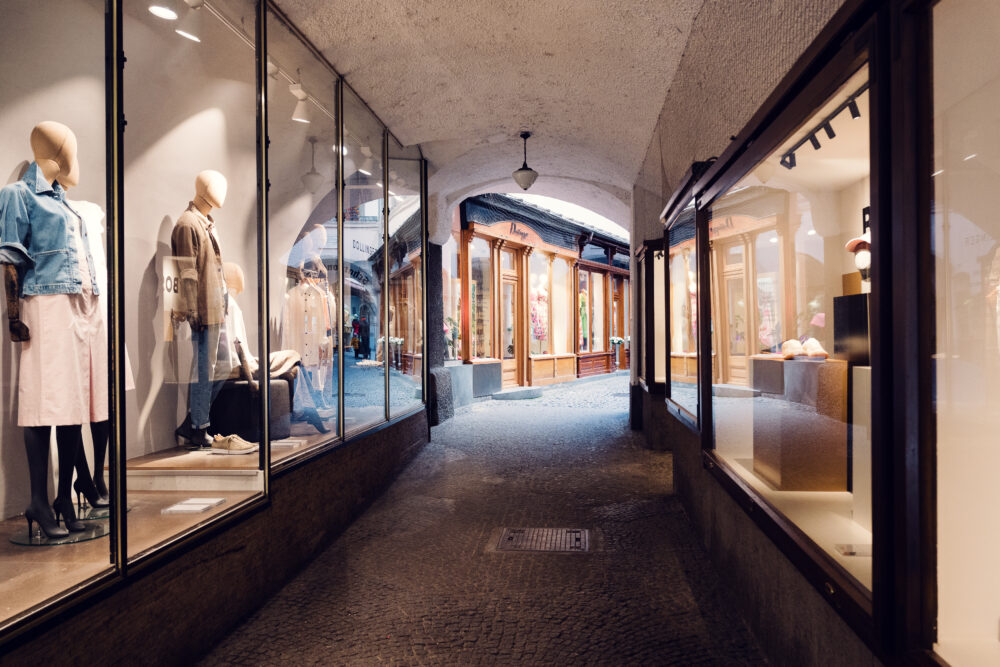
From Roman Trade Route to Salzburg's Golden Mile – Getreidegasse
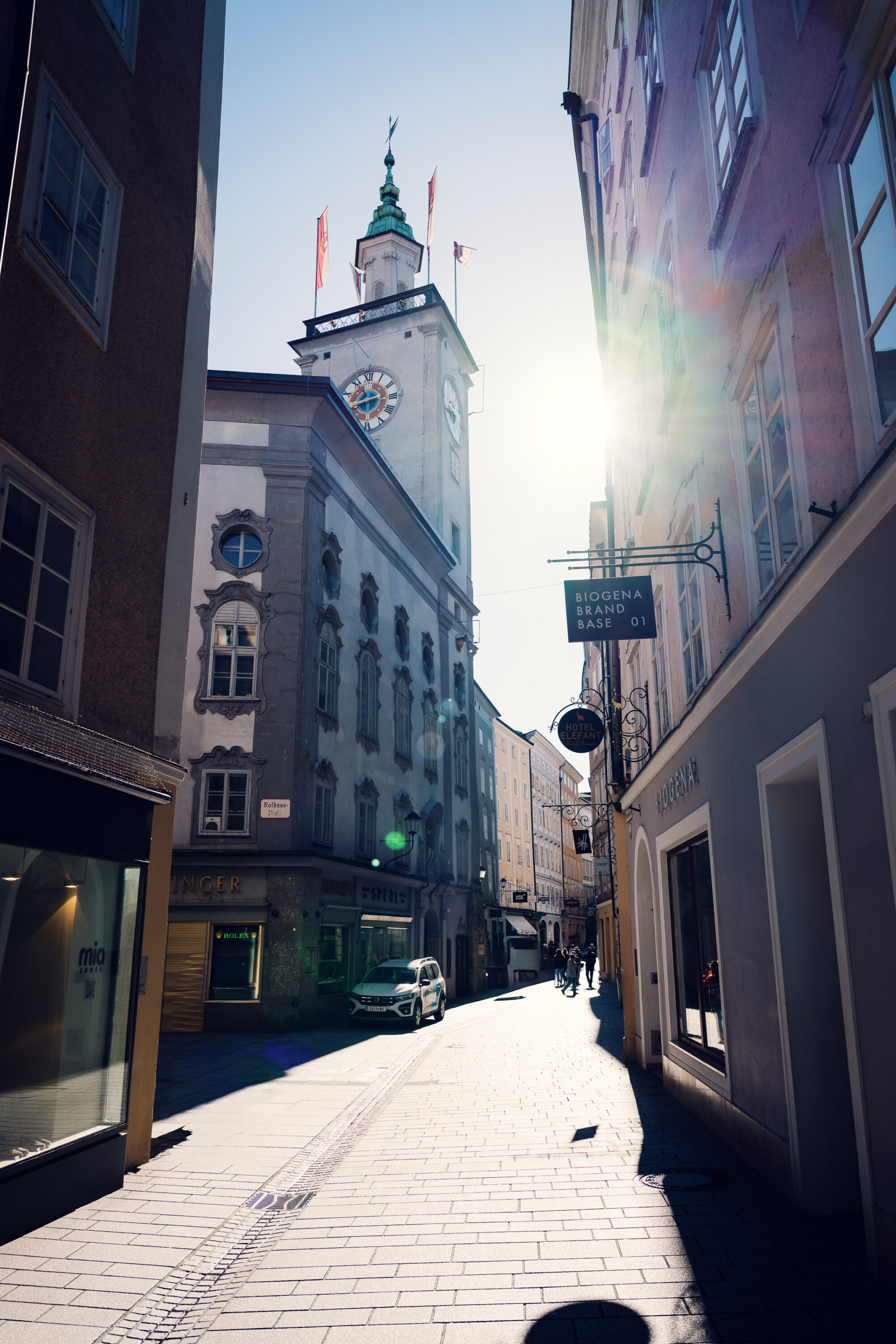
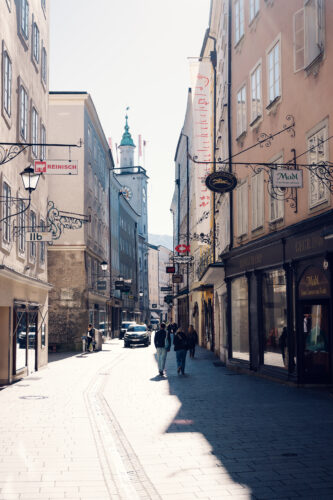
The Getreidegasse has been a central artery of Salzburg life for many centuries. During the Roman period, when Salzburg was still known as Iuvavum, this route was already an important road through the settlement toward Bavaria. Over time, it developed into one of the city’s key thoroughfares, which meant that trade, travel, and everyday movement regularly passed through this part of Salzburg.
The street's first documented mention dates to around 1150, when it appeared in records as "Trabegasse" - derived from the verb "traben" (“to trot”), likely a reference to the horse traffic along the route. Despite what the current name suggests, "Getreidegasse" has nothing to do with grain ("Getreide" in German). The name evolved through several variations over the centuries before settling on its present form.
Merchants, Minters, and the Rise of a Golden Address
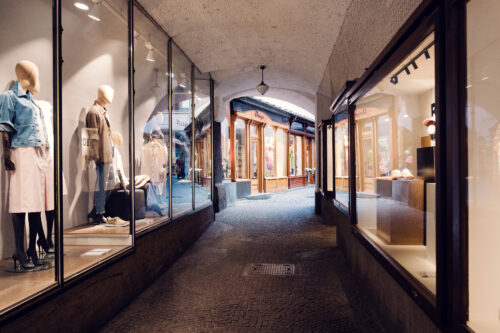
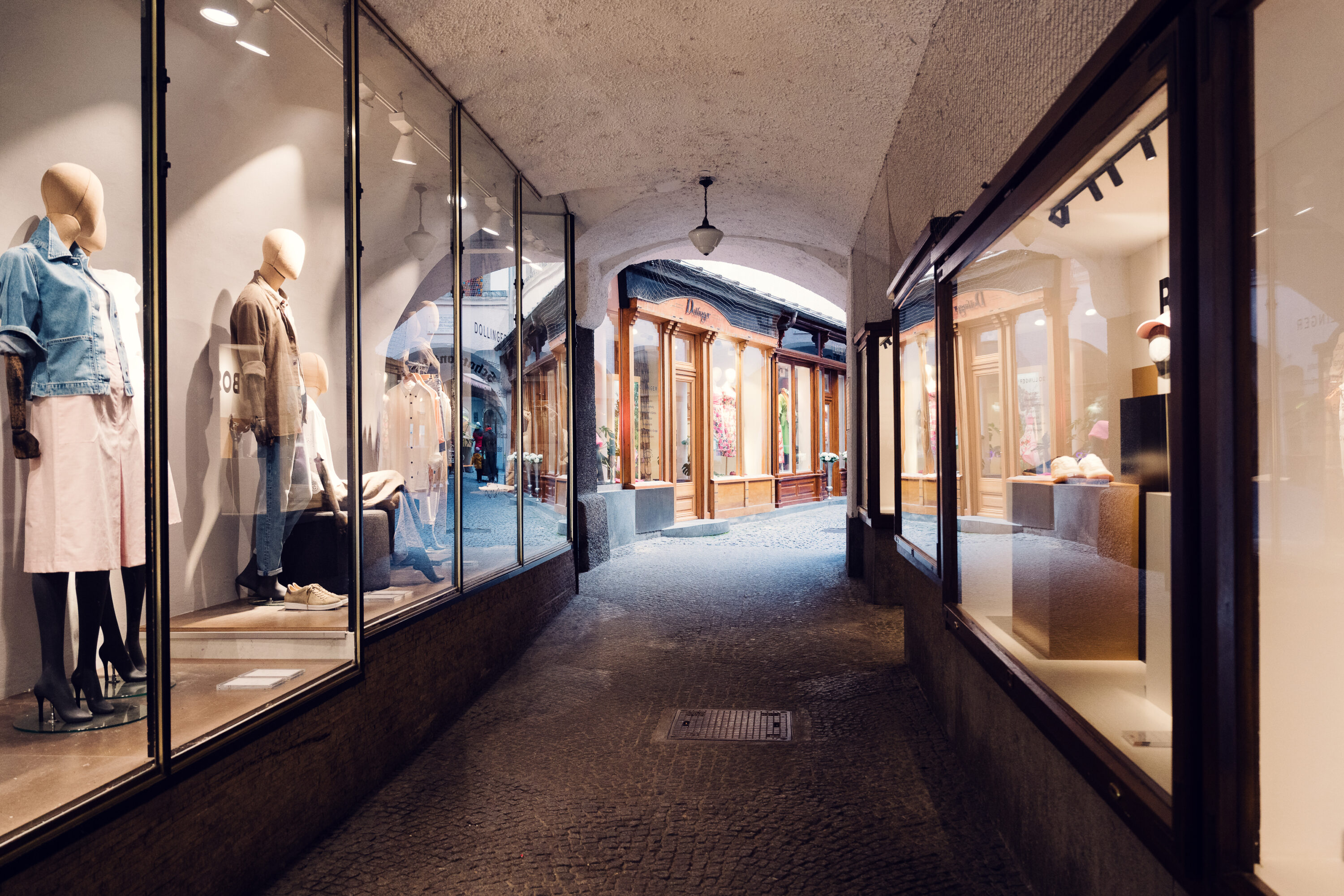
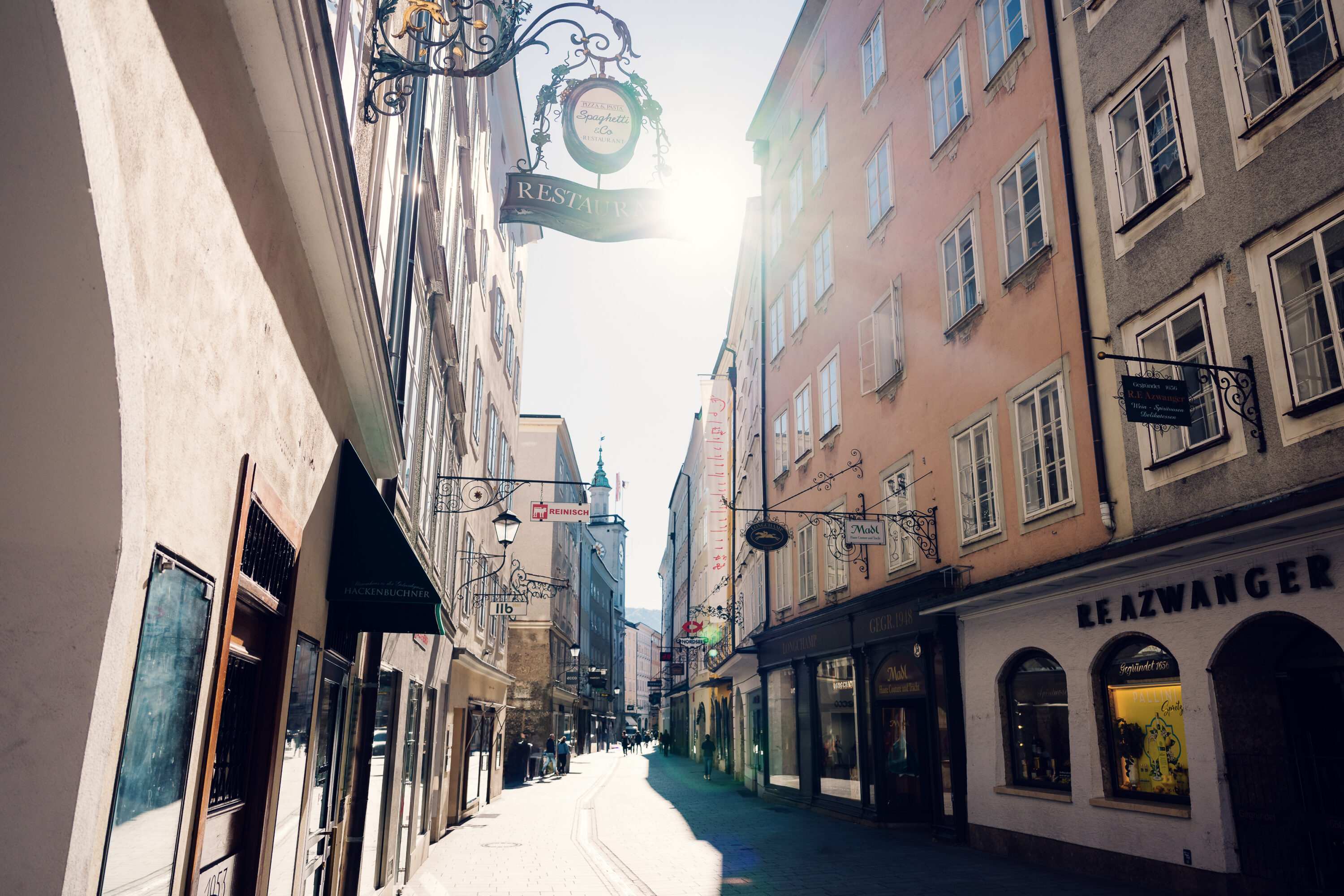
By the 14th century, the prince-archbishops of Salzburg had granted the street's citizens staple rights, which required passing traders to display their goods for local sale. This helped transform the Getreidegasse into a commercial hub. The tall, narrow townhouses that line the street today belonged to many of the city's wealthiest residents, including councilmen, judges, officials, and minters. Trading houses, apothecaries, breweries, and craft workshops made this stretch one of the commercial hearts of the city.
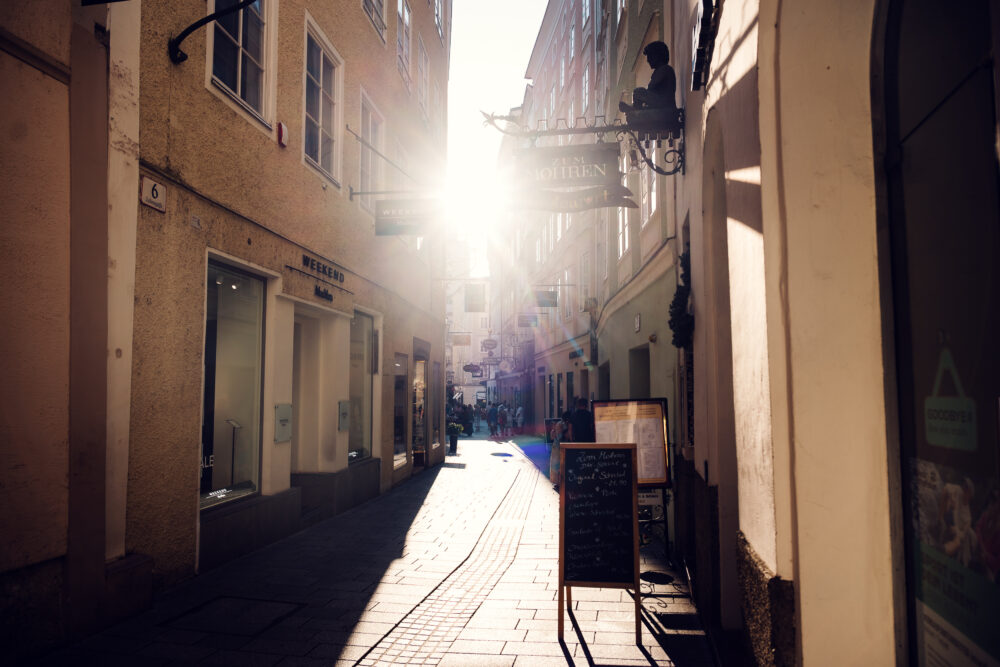
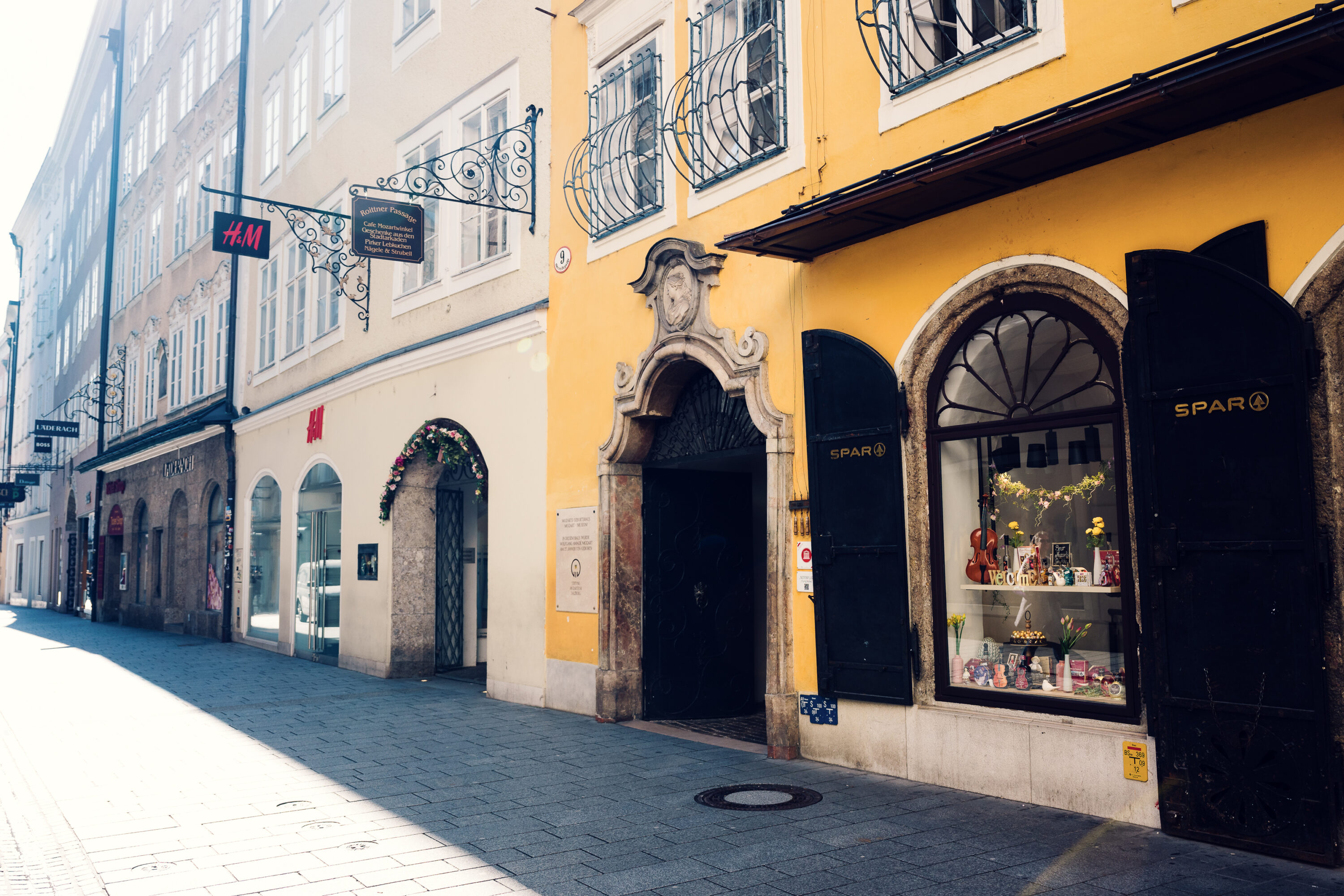
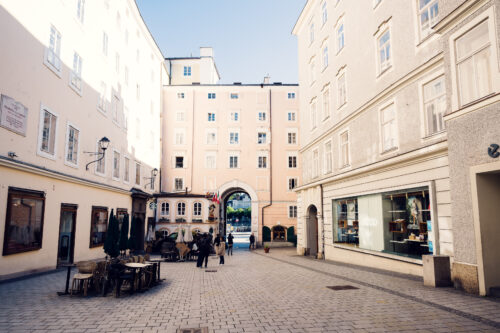
The buildings themselves are a striking example of practical medieval urban architecture. Built narrow and deep, they rose upward rather than outward. Many feature ornate stone doorways on the ground floor and windows that shrink in size with each ascending story - one of the street’s characteristic architectural features. Saturday mornings, and also before holidays, the entire street was flushed clean by diverting water from the Almkanal, an impressively organized sanitation system for its time.
Mozart's Birthplace and the Street's Most Famous Address
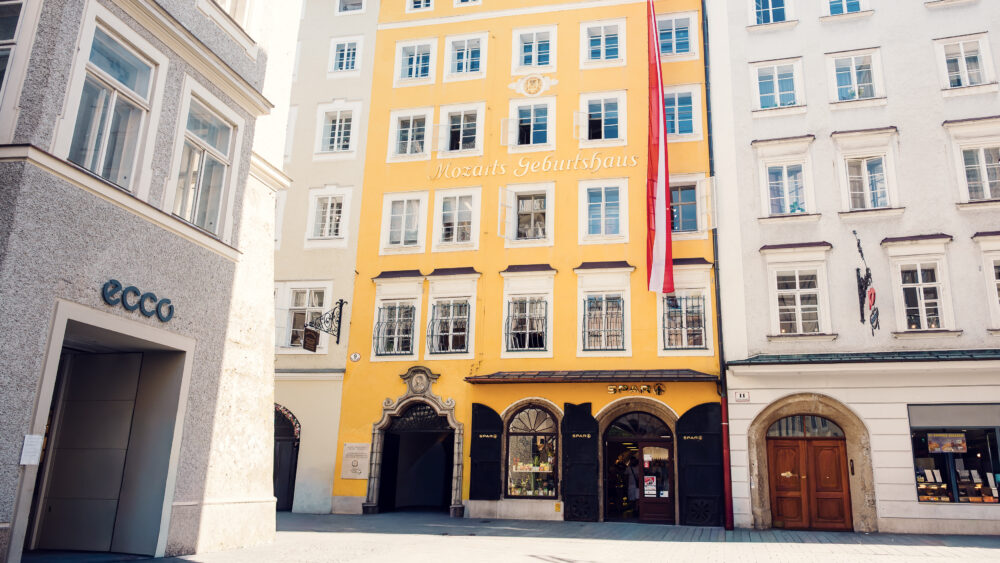
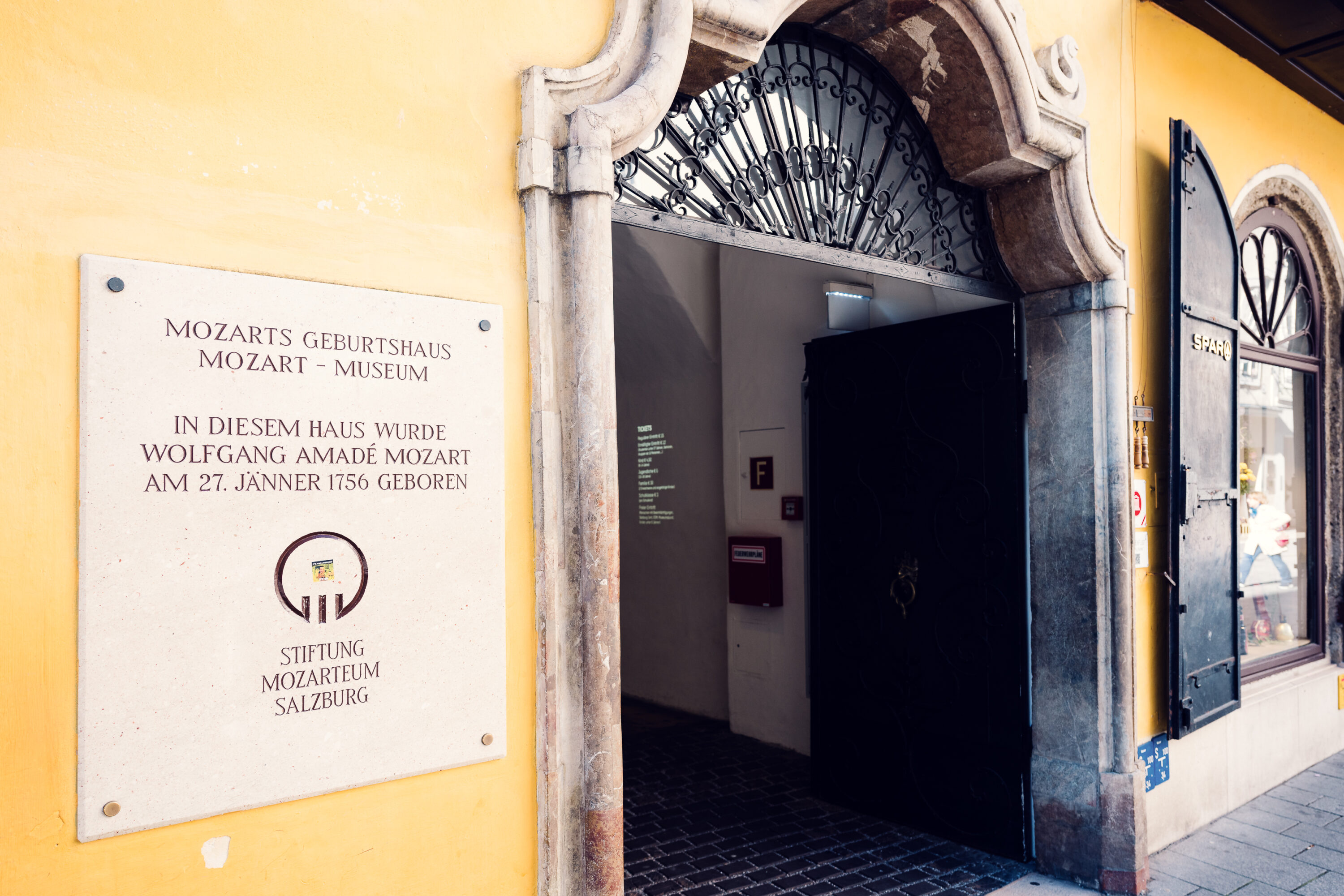
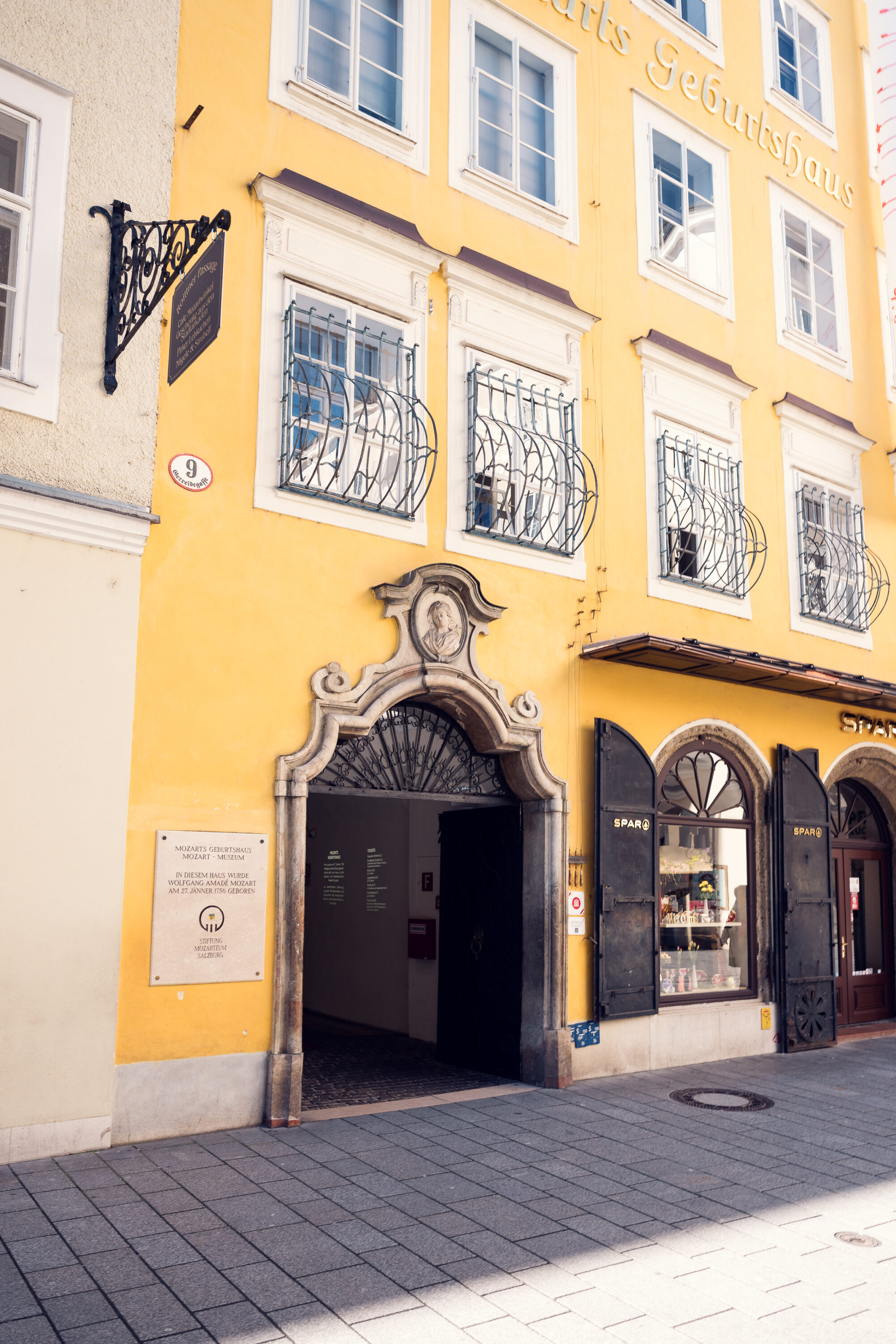
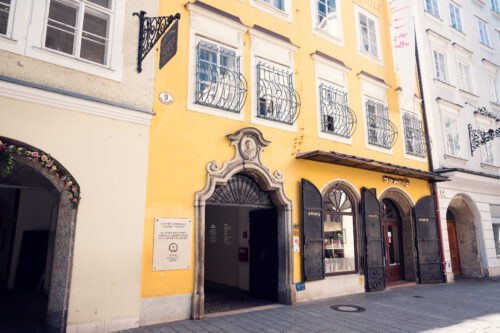
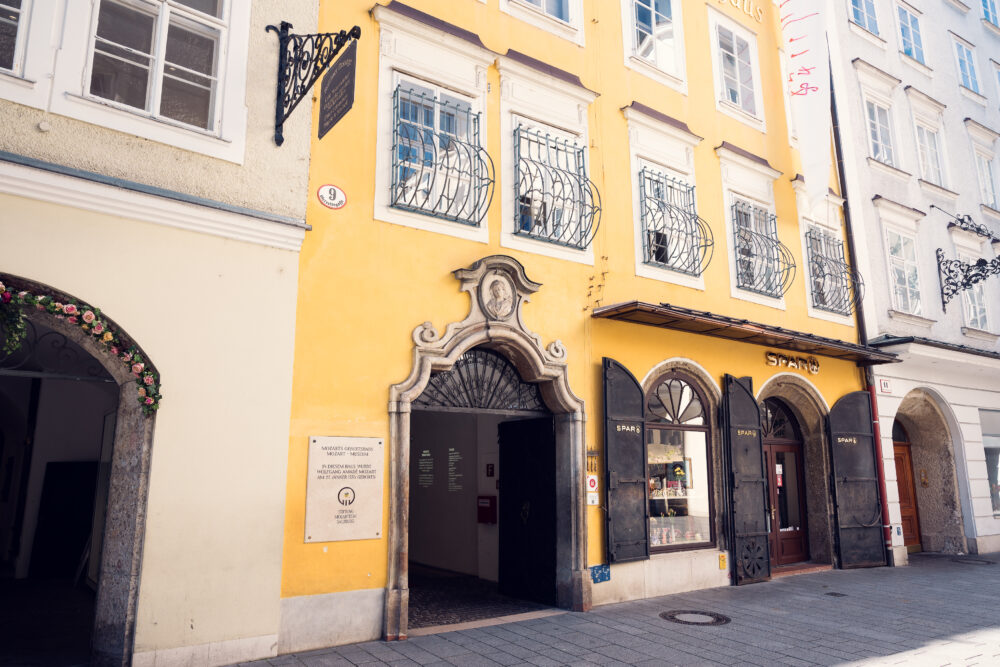
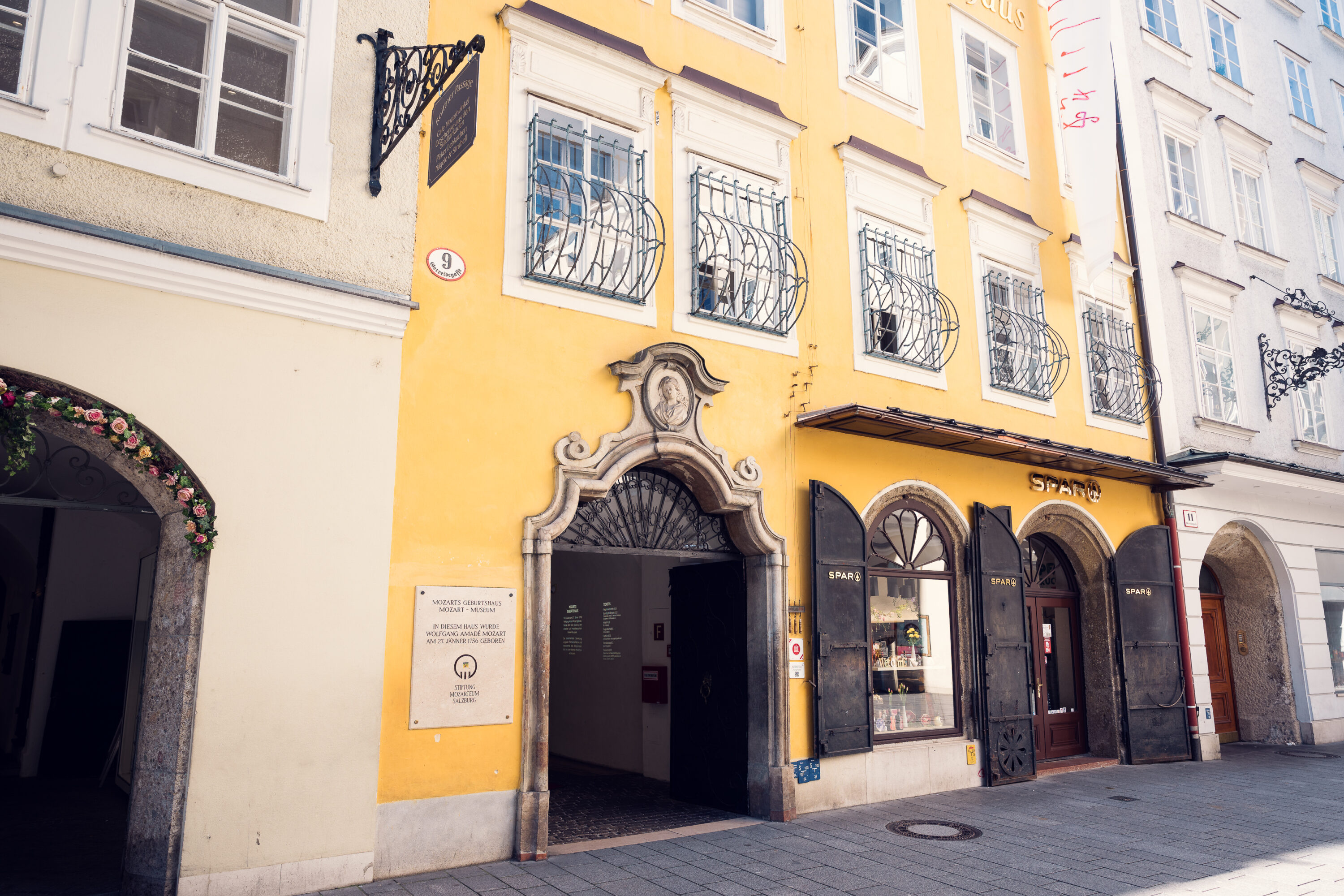
The house at No. 9 Getreidegasse is one of the most famous residential addresses in Austria. Known as the Hagenauerhaus after the merchant family who owned it, the building was home to Leopold and Anna Maria Mozart from 1747. Their son Wolfgang Amadeus Mozart was born here on January 27, 1756 - the seventh child, though only the second to survive infancy. The family occupied a third-floor apartment and remained here until moving to the Tanzmeisterhaus on the other side of the river, now Makartplatz, in 1773.
The International Mozarteum Foundation opened a museum in the building in 1880. Visitors can see original documents, portraits, historical instruments, original rooms, and reconstructed domestic spaces connected with Mozart’s early life.
Guild Signs and the Art of Iron
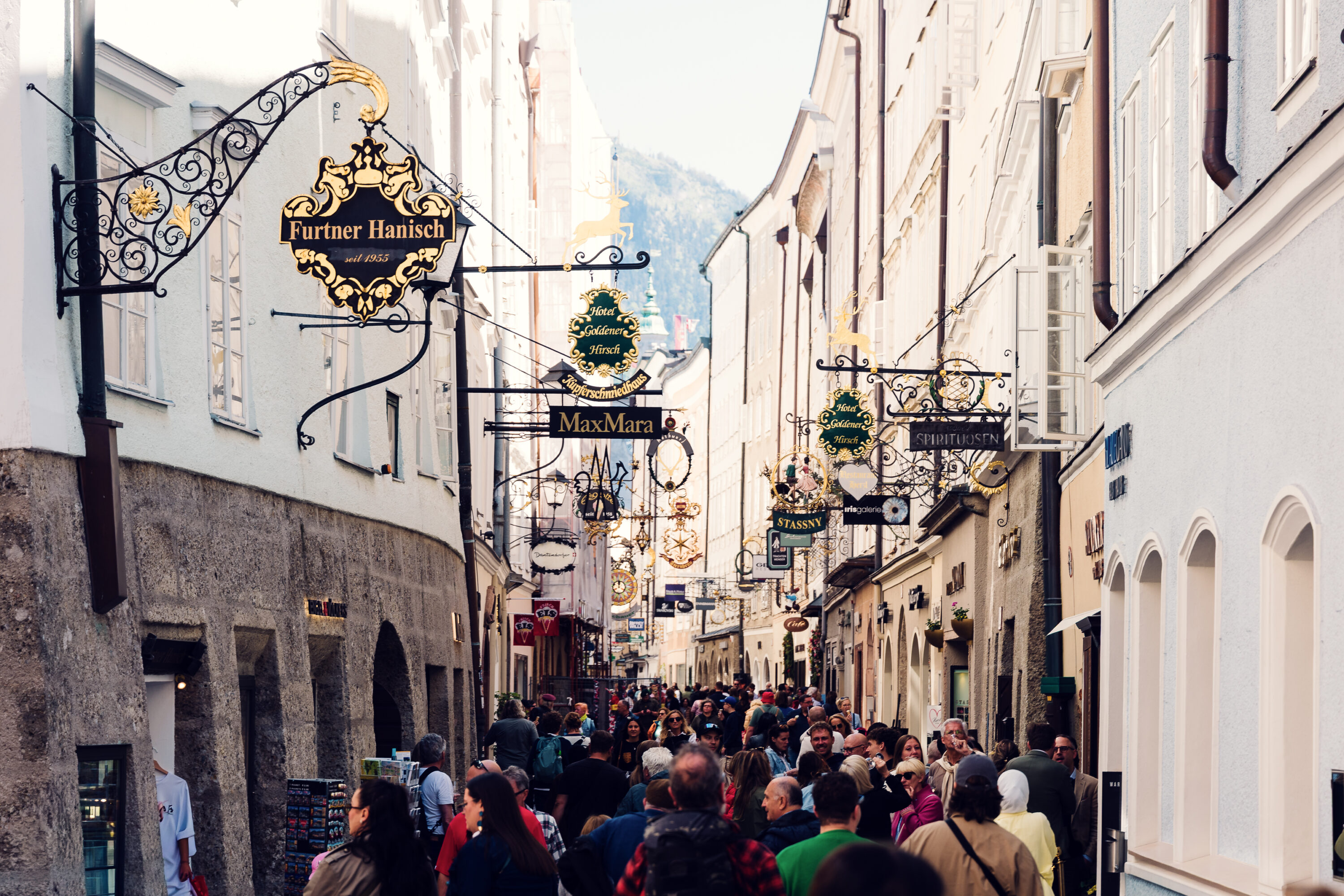
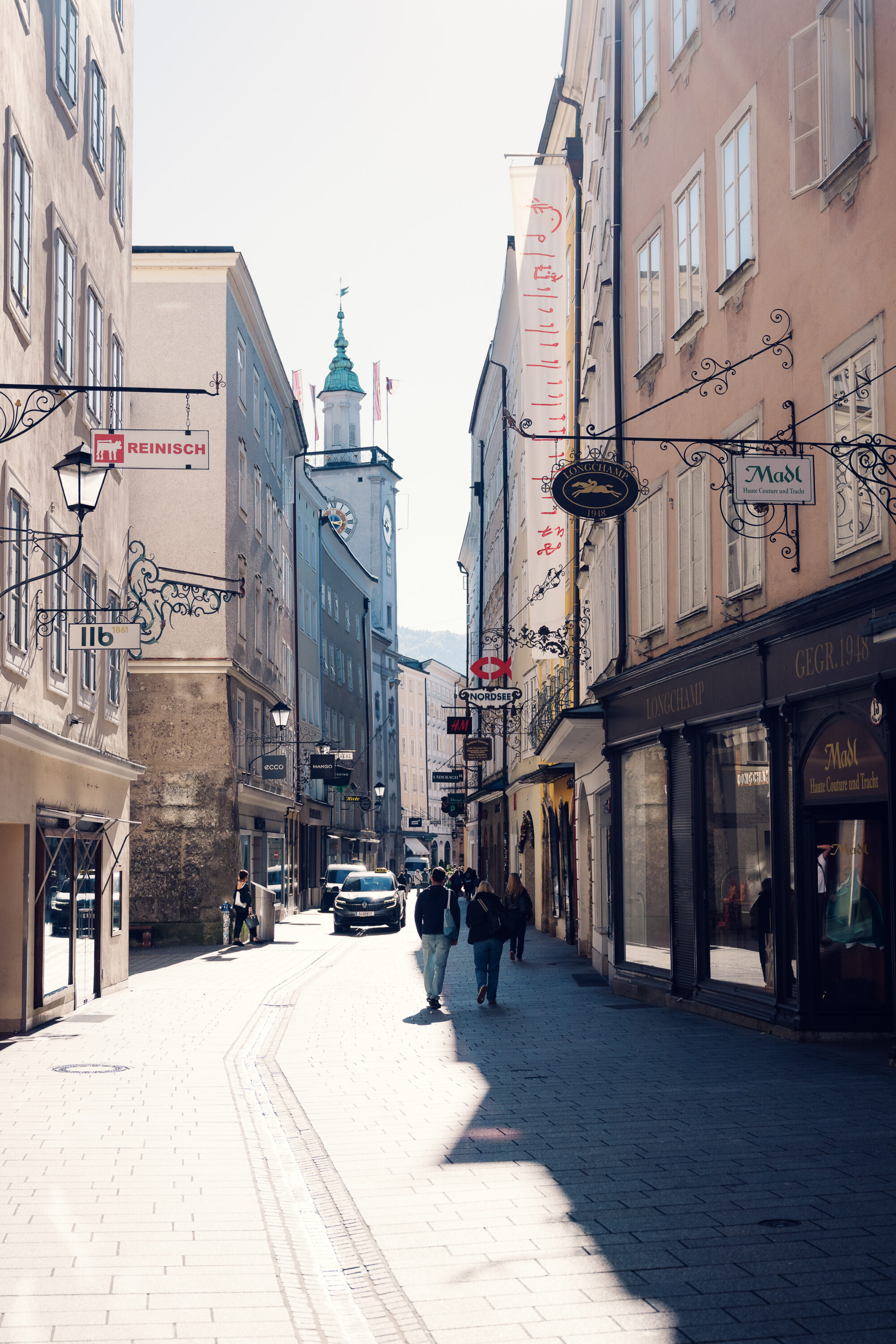
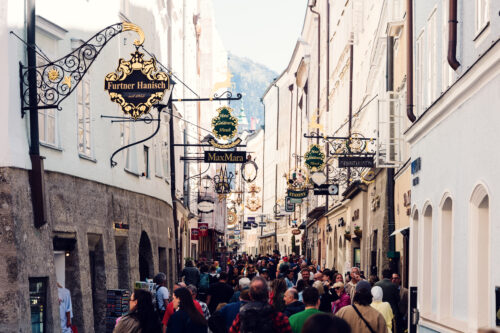
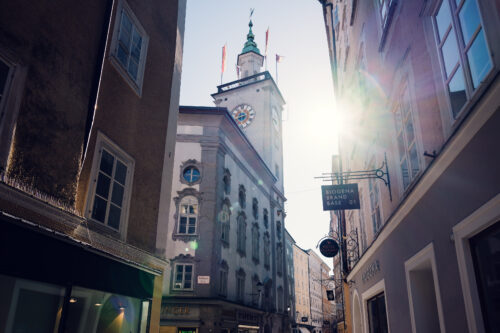
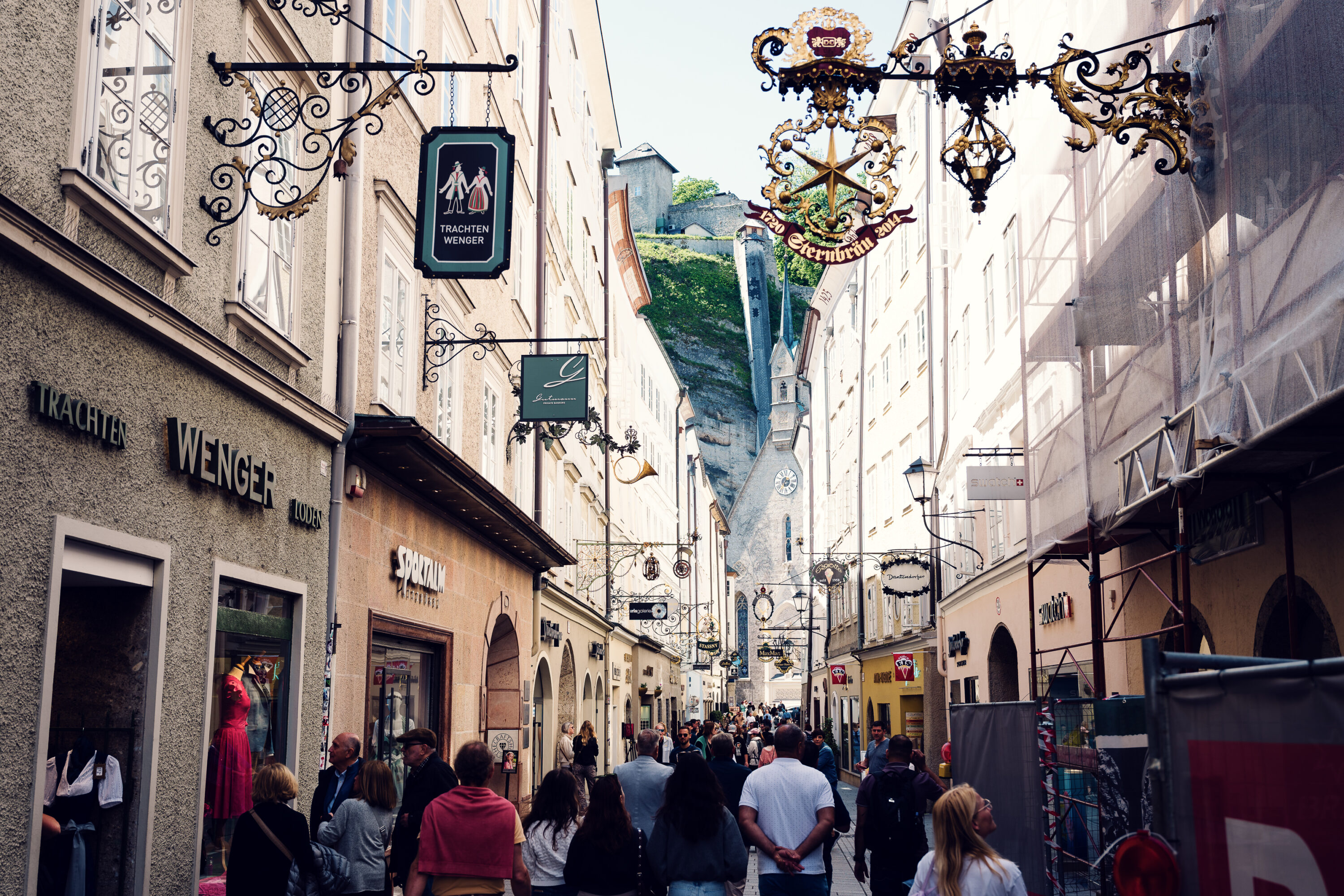
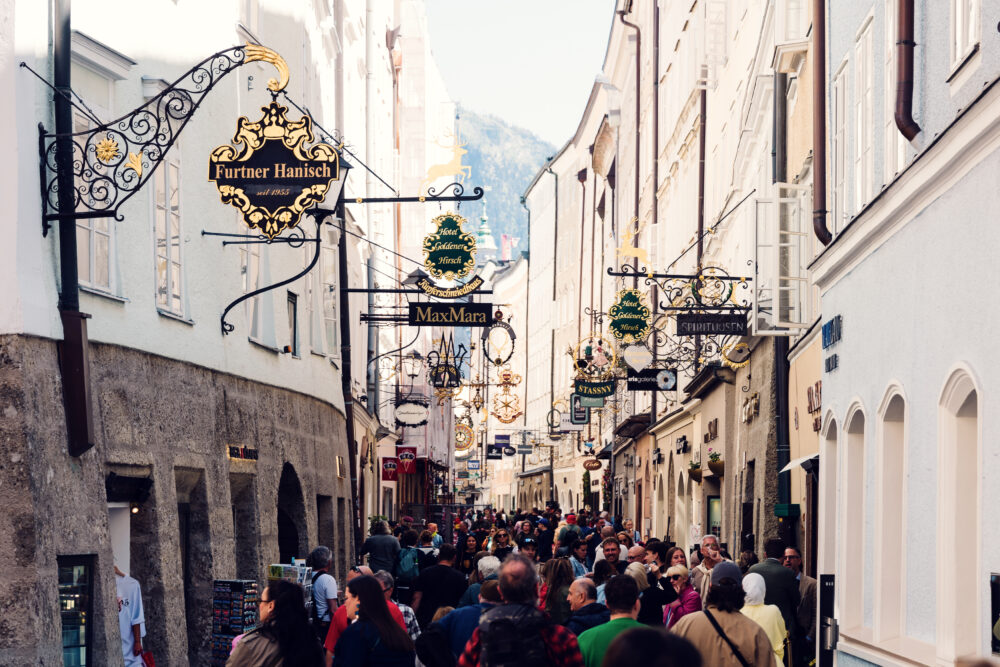
The wrought-iron signs that line the Getreidegasse aren't merely decorative - they are part of a living craft tradition. Originating in the Middle Ages, when shop owners used visual symbols to identify their trade, these Zunftzeichen became one of the street’s most distinctive features. A baker would display a golden loaf, a locksmith an ornate key, a pharmacist a serpent-wrapped staff.
Today, the tradition still shapes the appearance of the street. The Wieber metalworking shop, located on the Getreidegasse itself, still produces these signs by hand. The result is a visual timeline of commerce: centuries-old guild symbols hanging alongside modern brand interpretations.