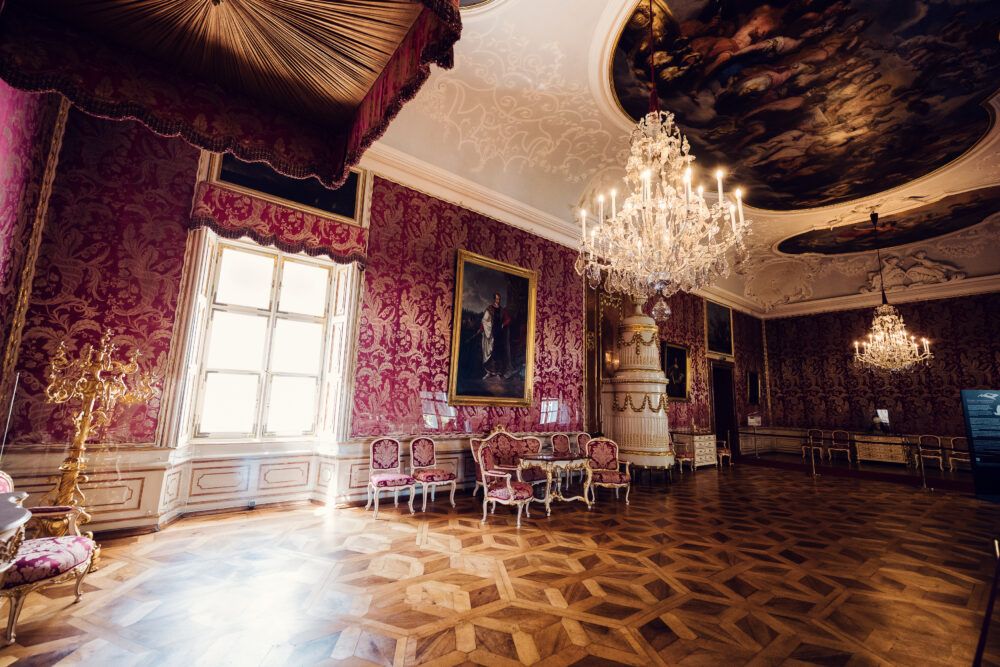

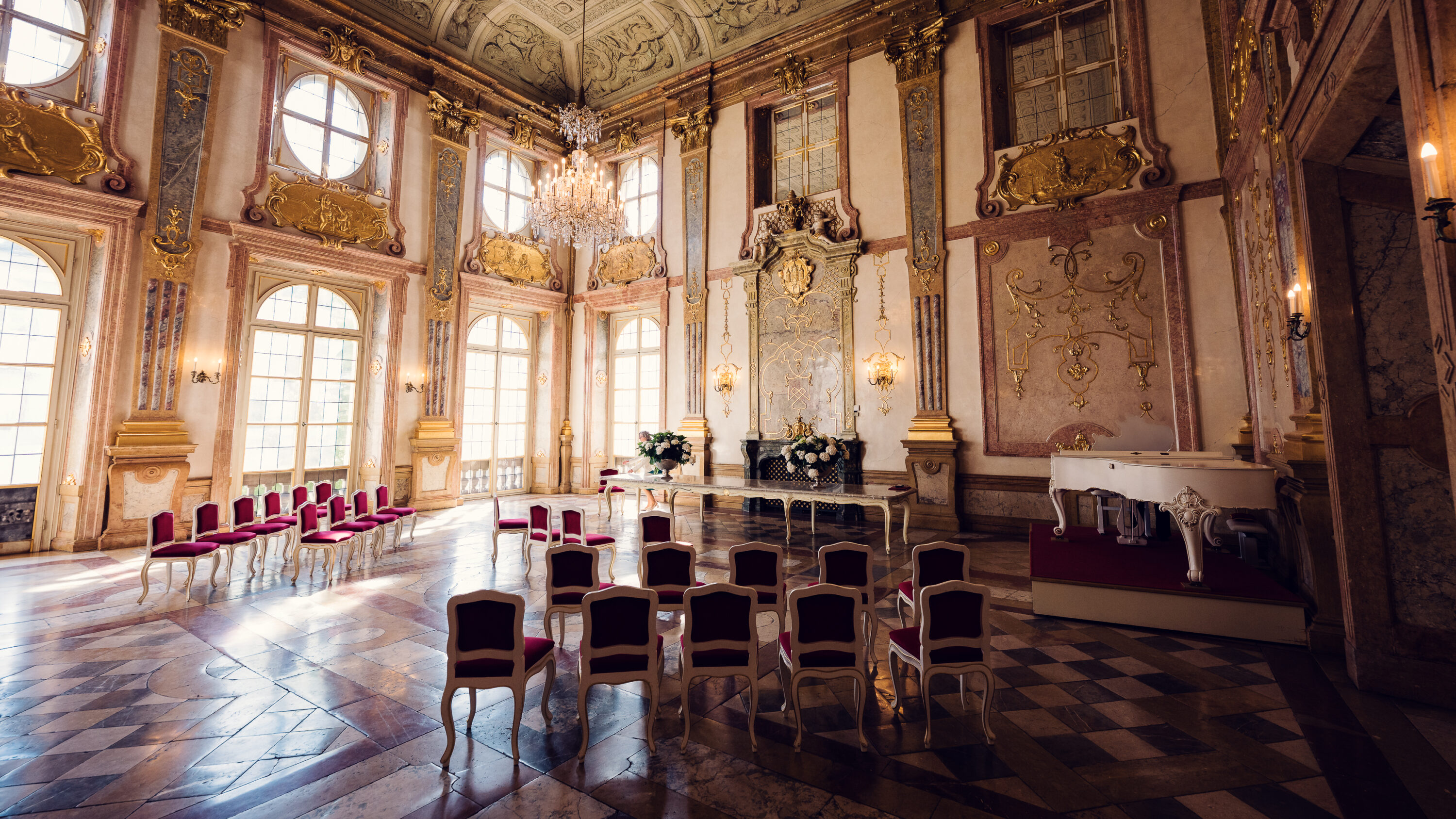
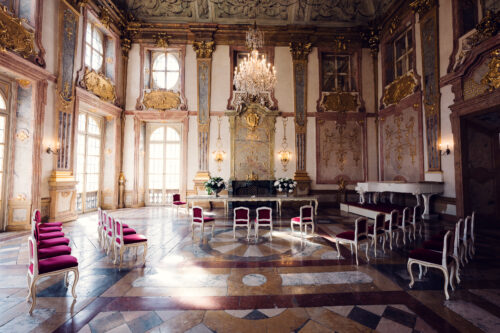
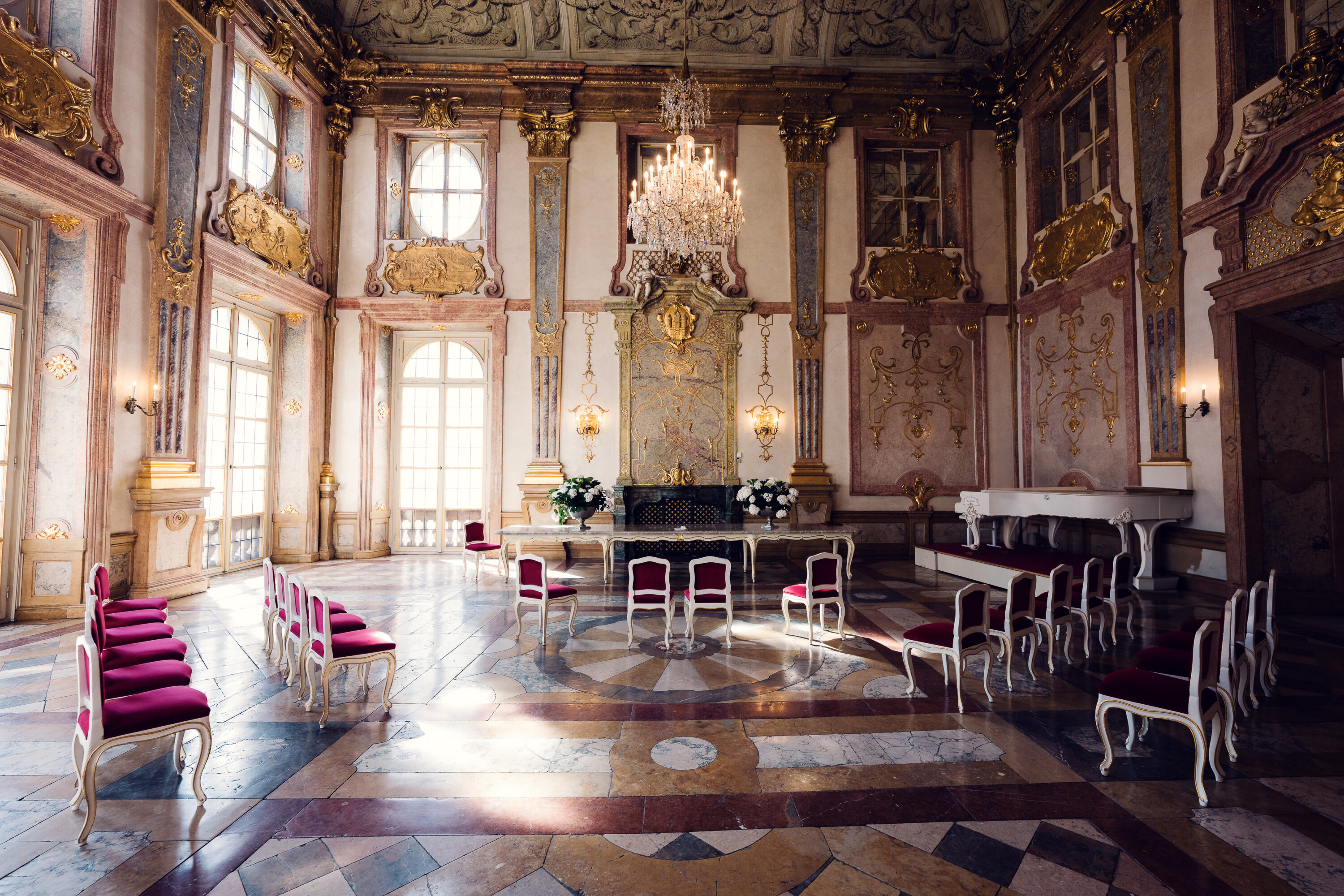
Wide view of the Marble Hall in Mirabell Palace with baroque wall decorations, chandeliers, and rows of chairs for ceremonies.
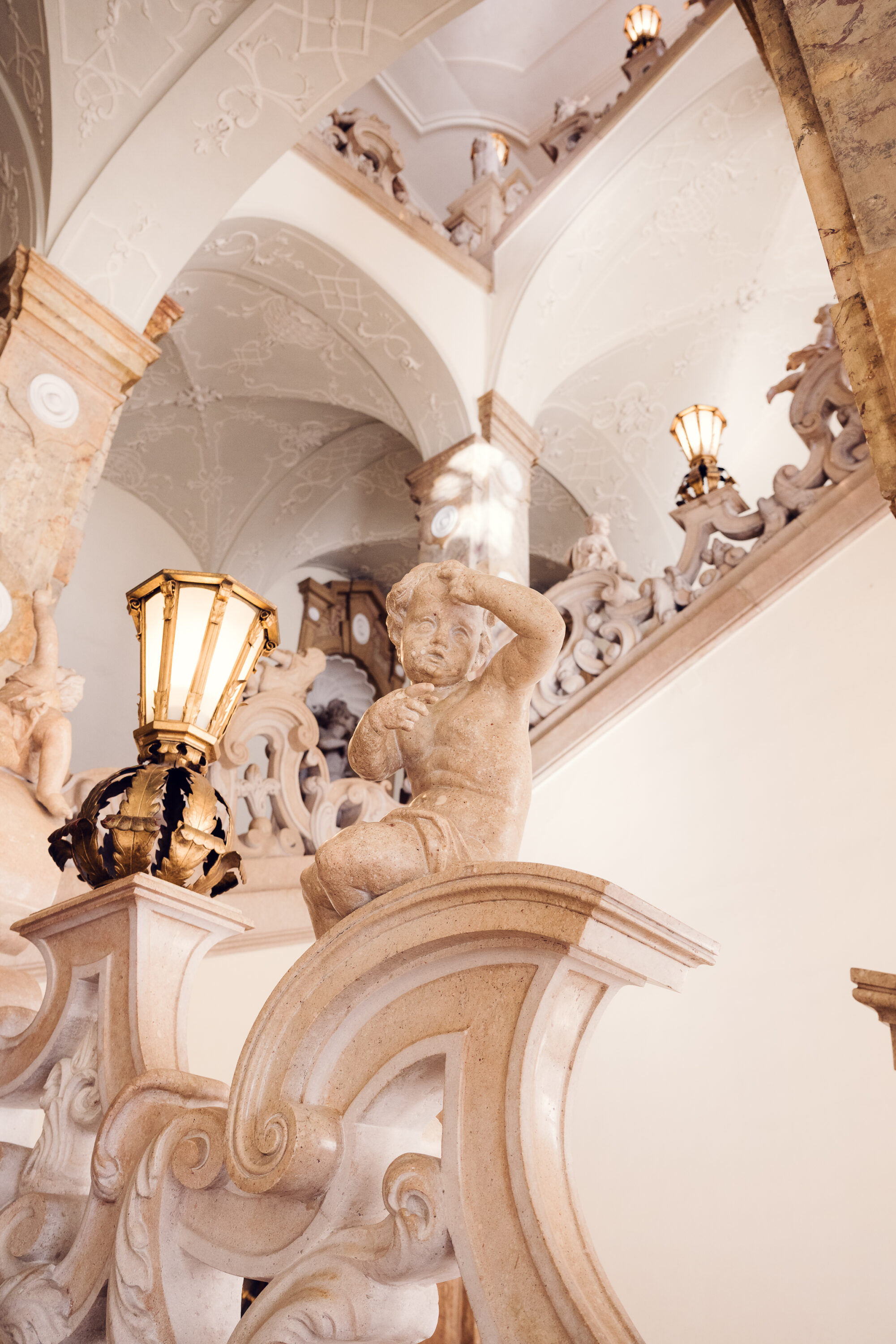
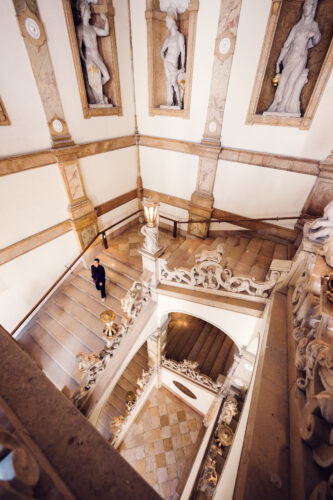
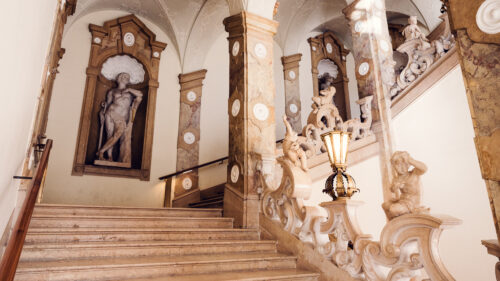
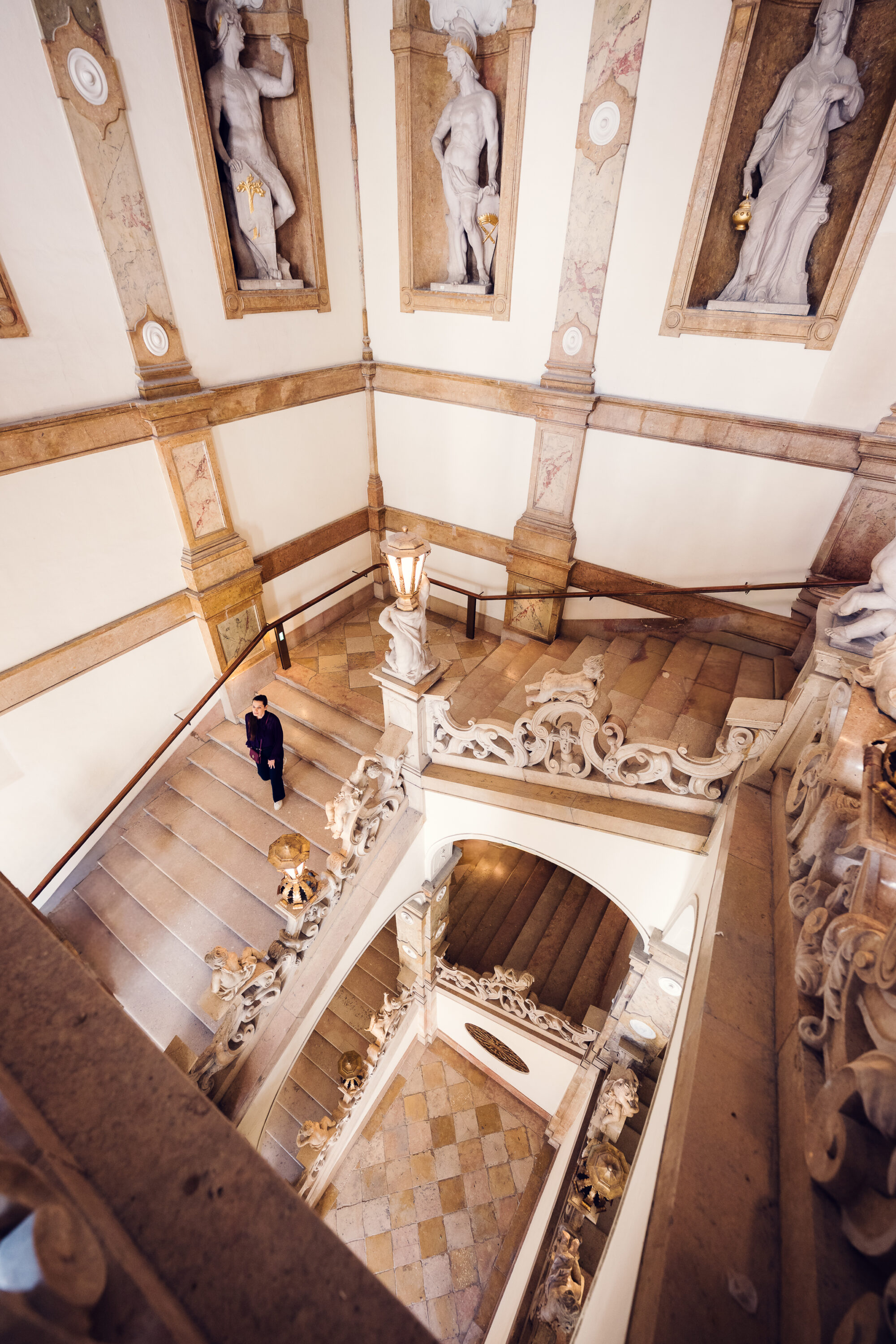
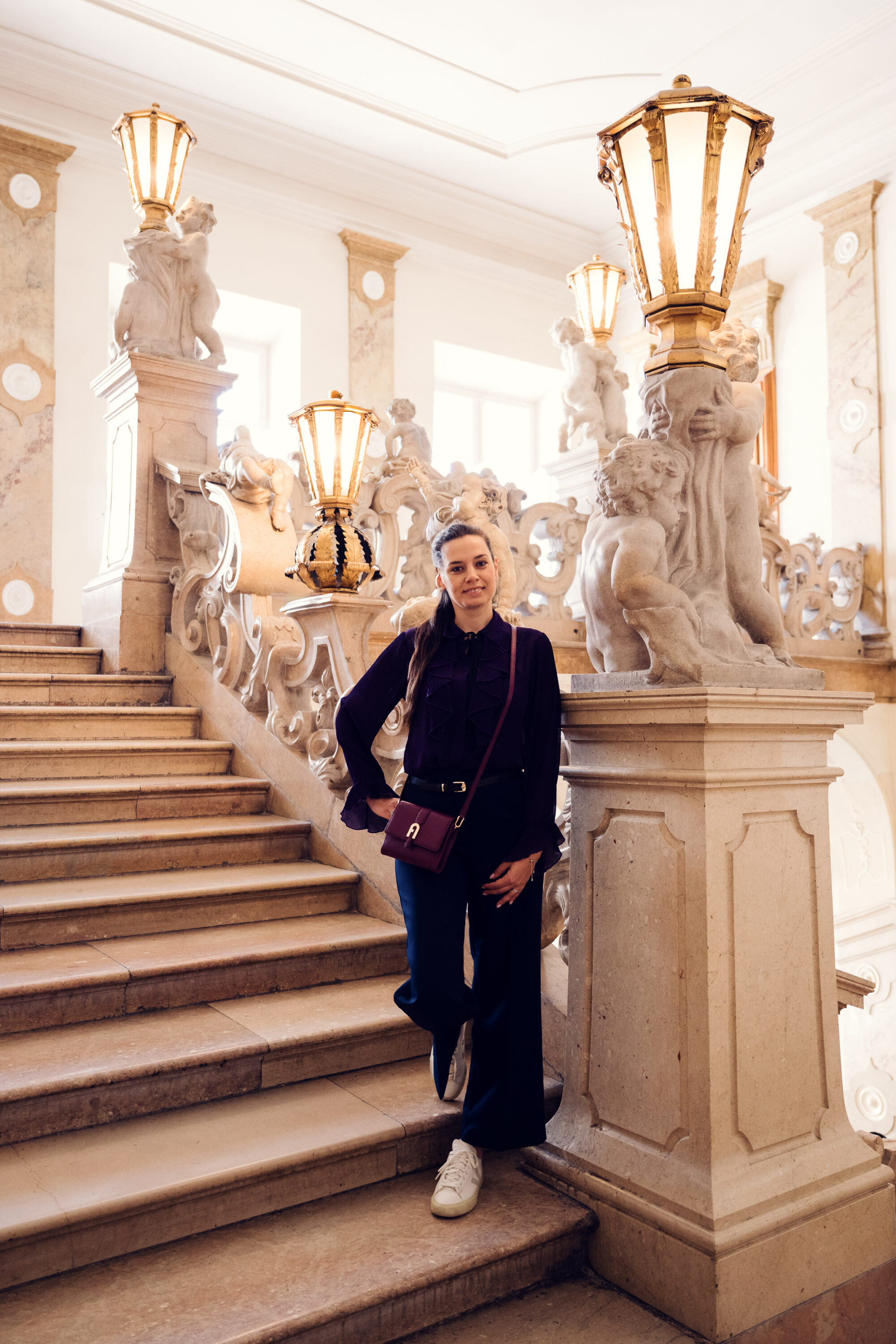
The Angel Staircase inside Mirabell Palace with marble cherub sculptures along the balustrade and a classical statue in a wall niche.
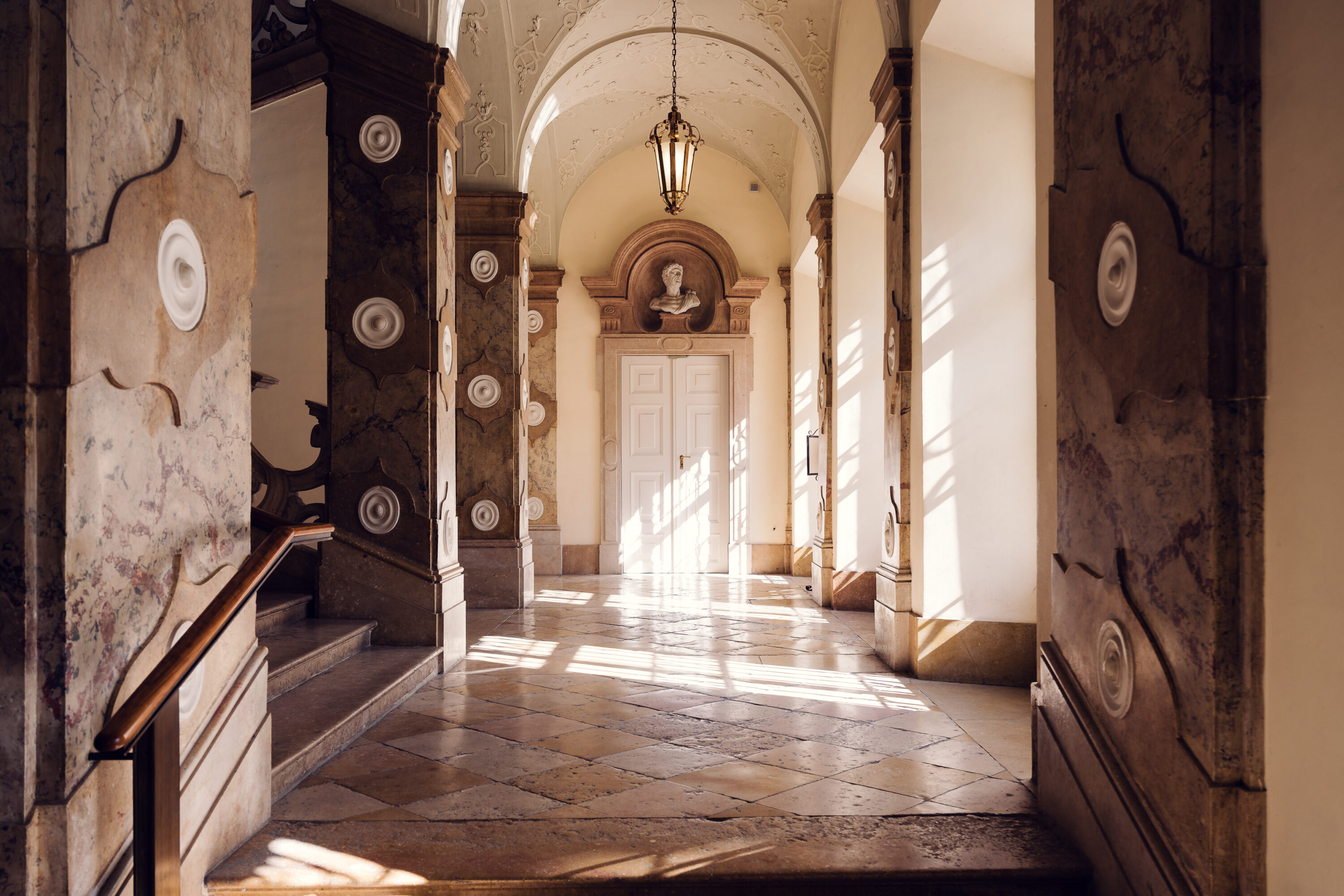
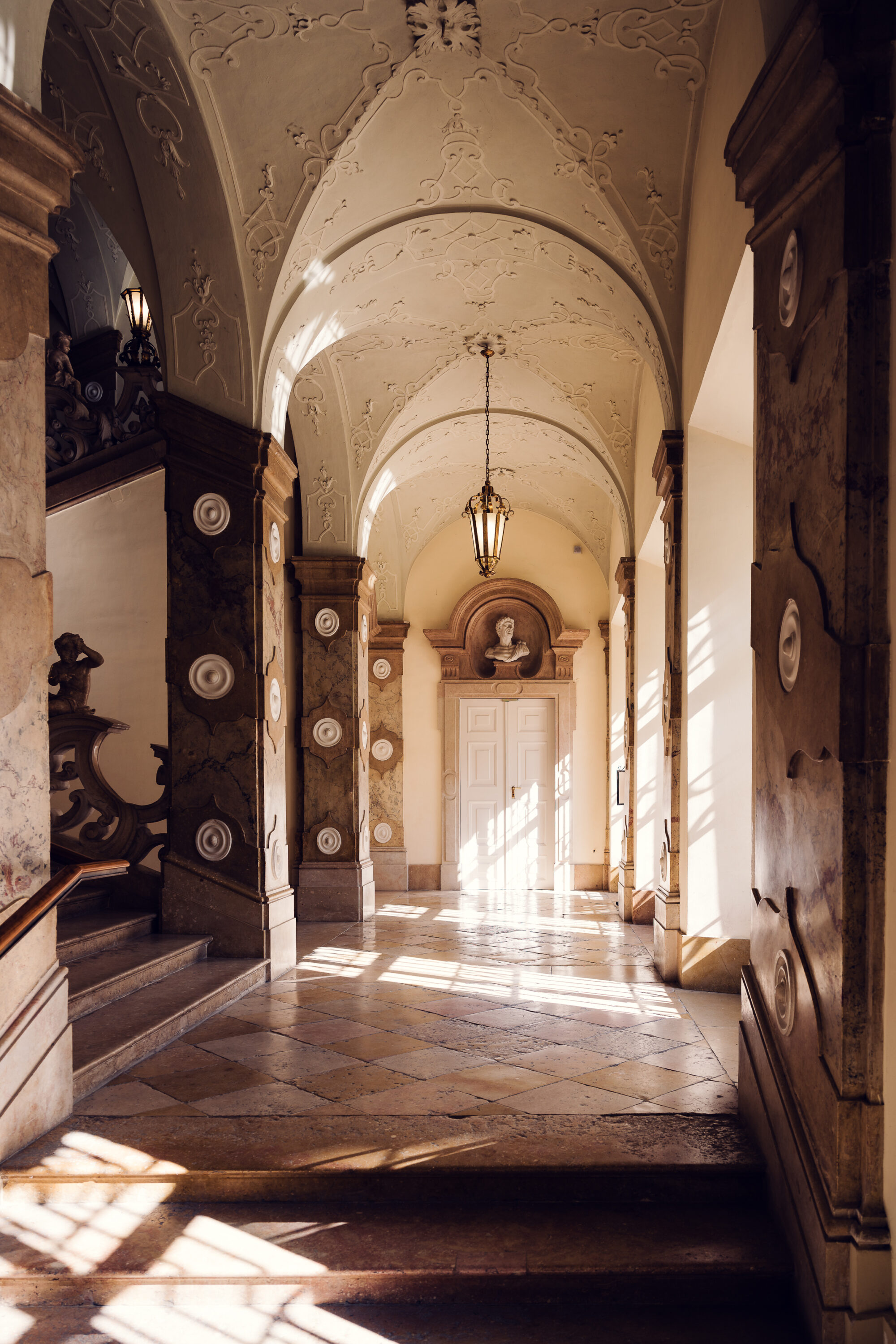
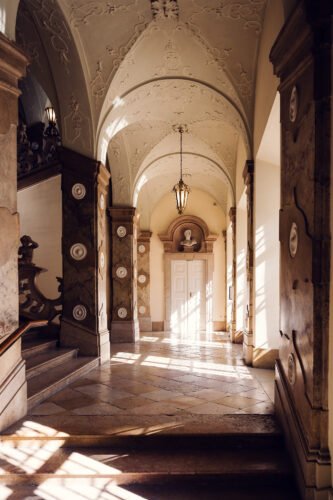
Interior corridor of Mirabell Palace with marble pillars, a hanging lantern, and light streaming through windows onto the stone floor.
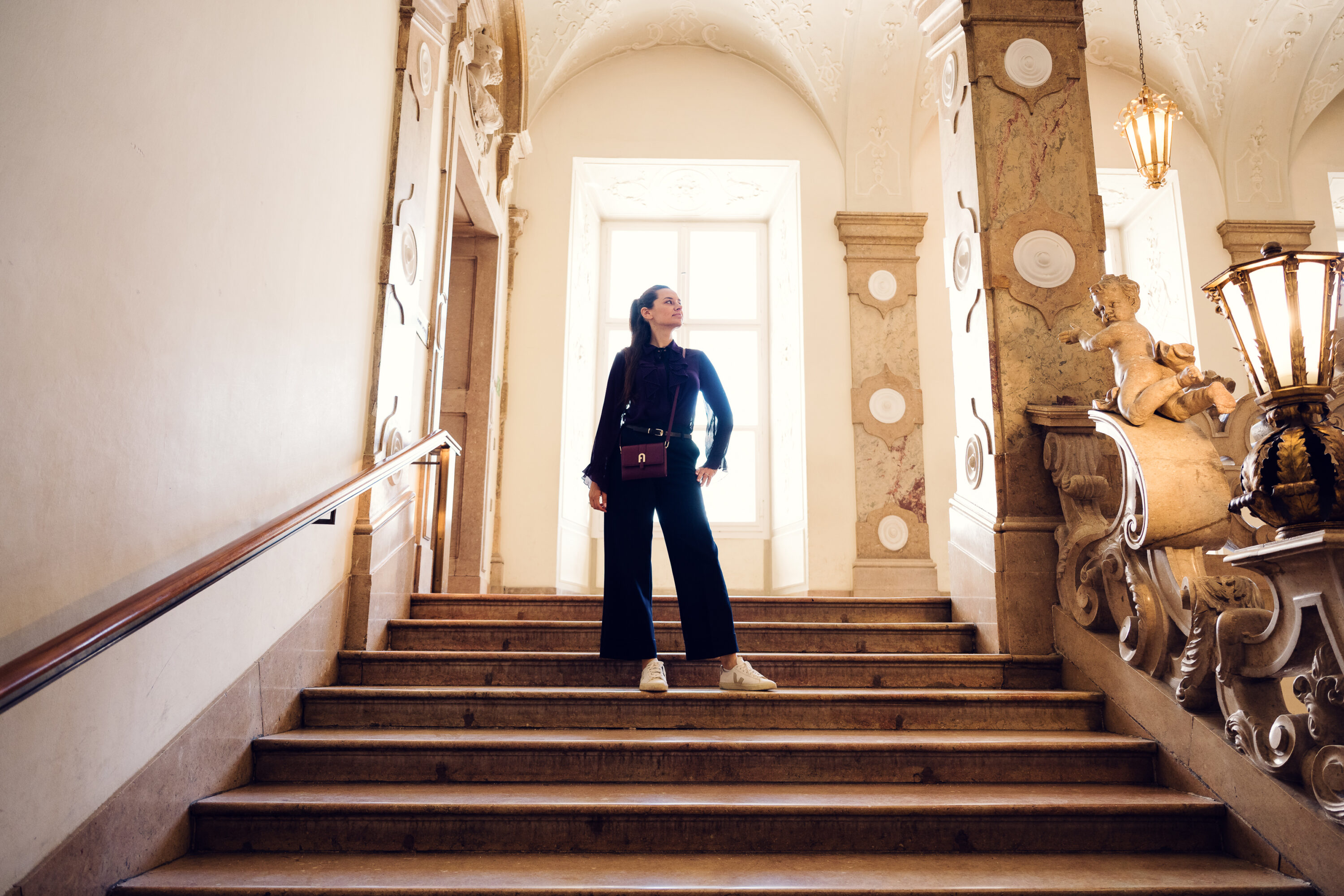
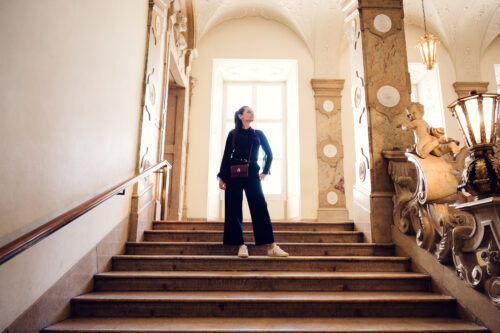
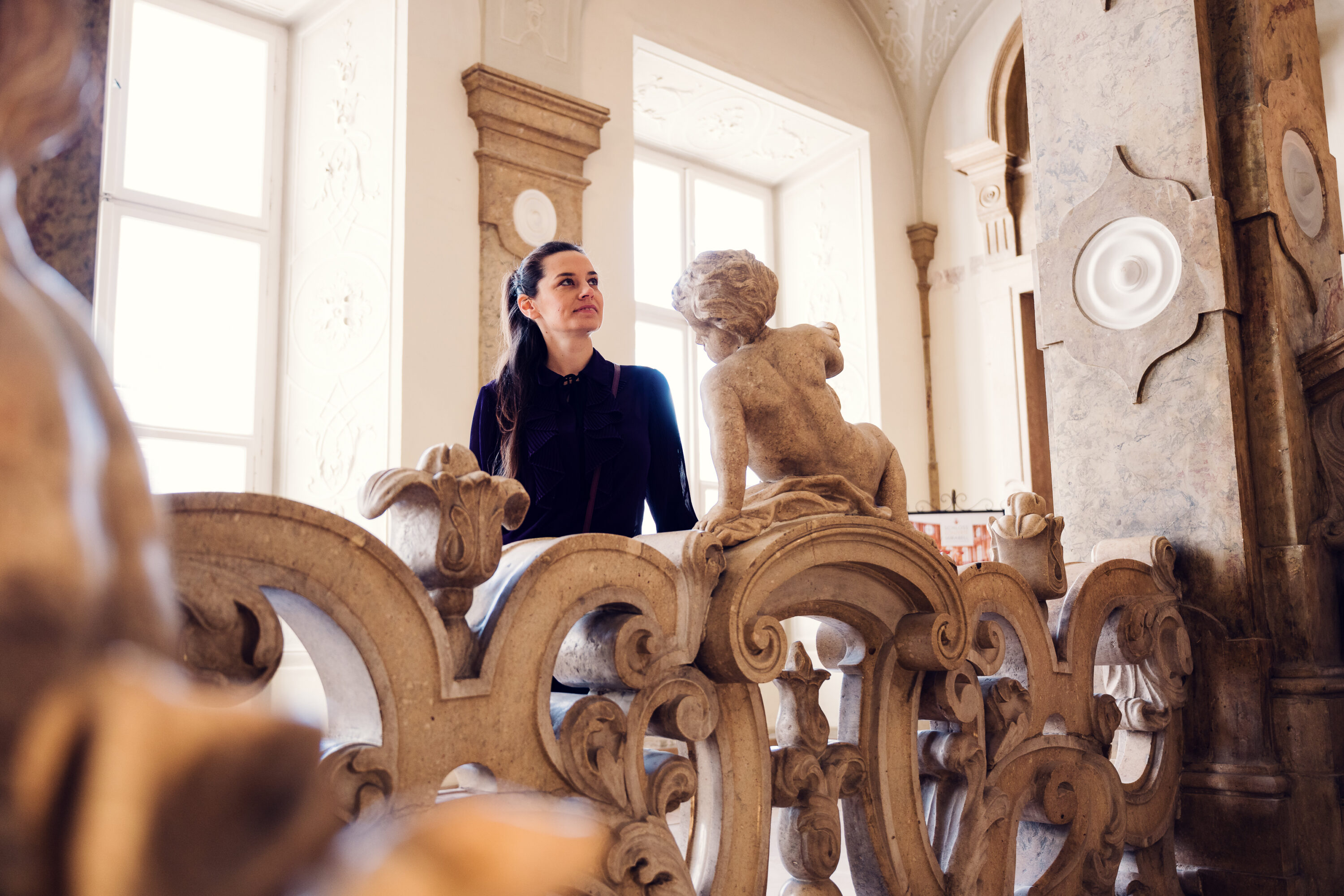
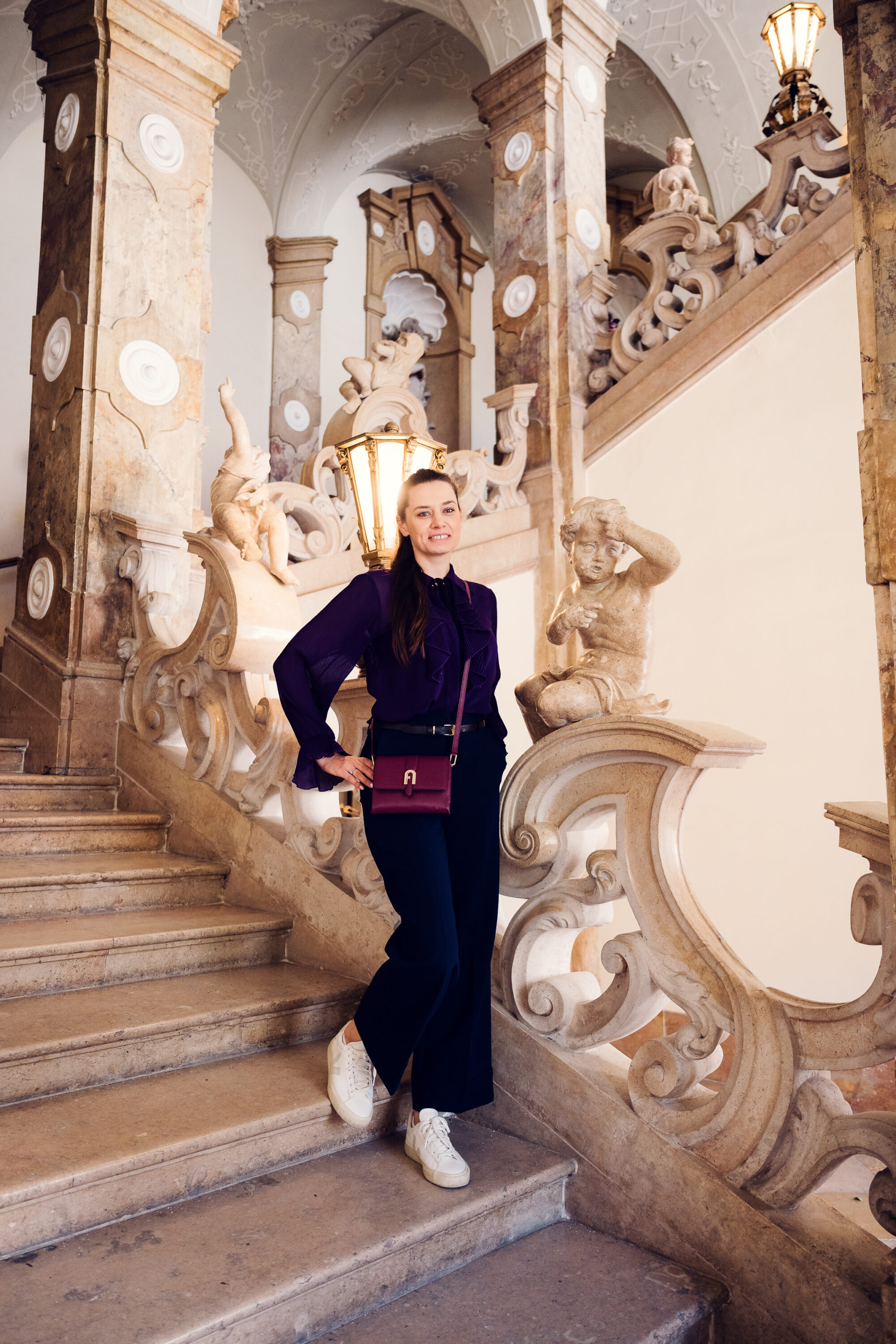
Adriana at the top of the Angel Staircase in Mirabell Palace, looking up at the ceiling decorations.
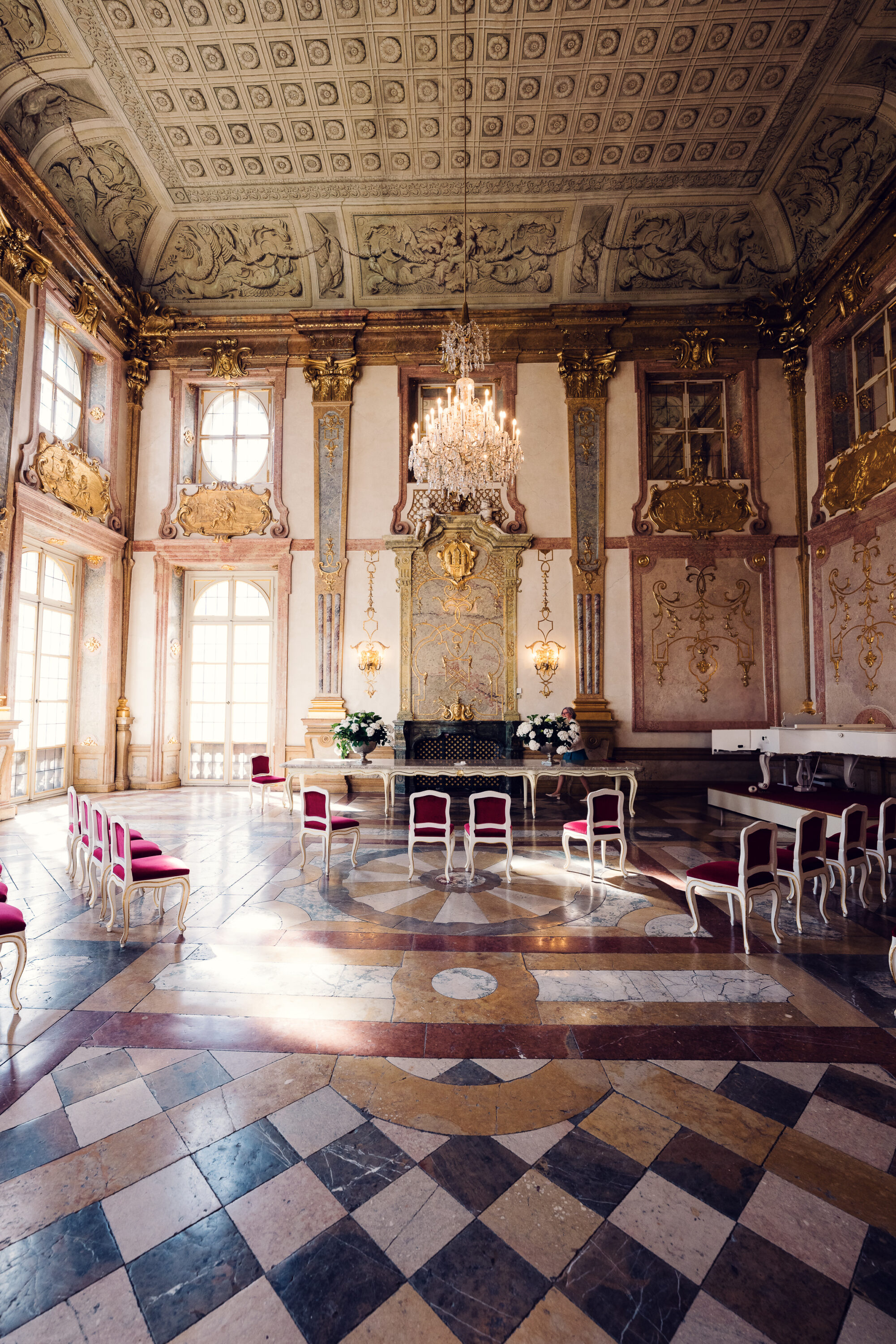
The Marble Hall of Mirabell Palace from a different angle, with the decorated ceiling, crystal chandelier, and geometric marble floor.
Sunlit corridor inside Mirabell Palace with vaulted stucco ceiling, marble pillars, a hanging lantern, and a bust above a white door at the end.
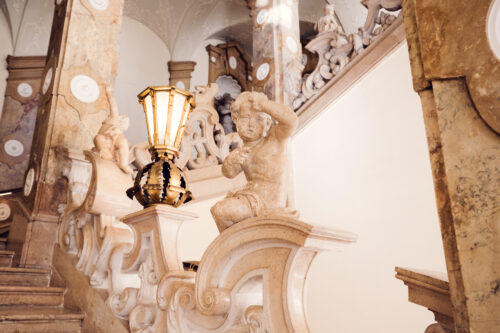
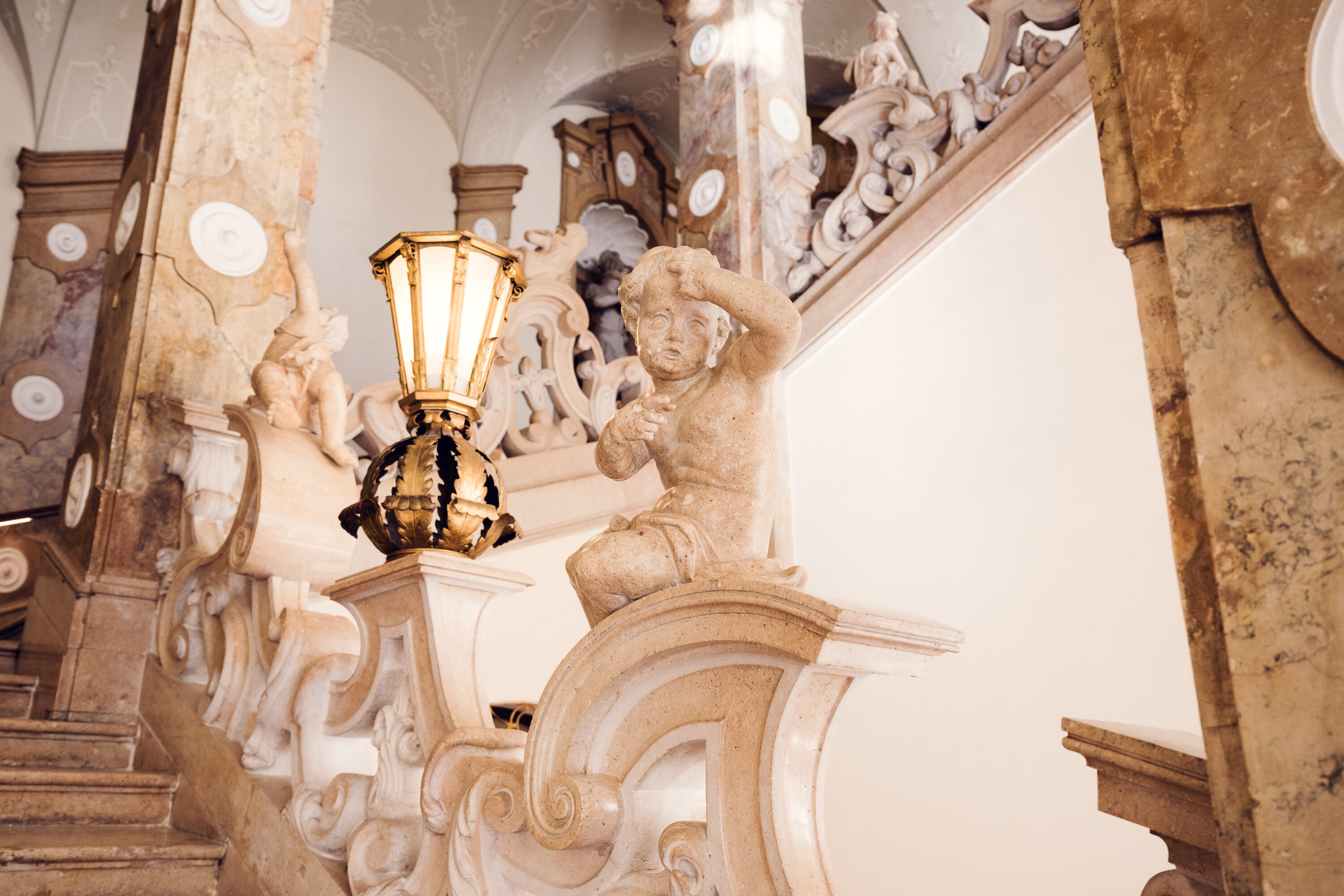
Close-up of a marble cherub and golden lantern on the balustrade of the Angel Staircase in Mirabell Palace.
Fall in Love with

Mirabell Palace

Mirabell Palace in Salzburg is a free-to-visit baroque palace with gardens, a marble concert hall, the Do-Re-Mi steps, and views of Hohensalzburg Fortress.

* Affiliate links: if you book, a small commission supports our independent work, at no extra cost to you.

01 / 04
01 / 03

Mirabell Palace

Plan for
90 mins
indoors
Where
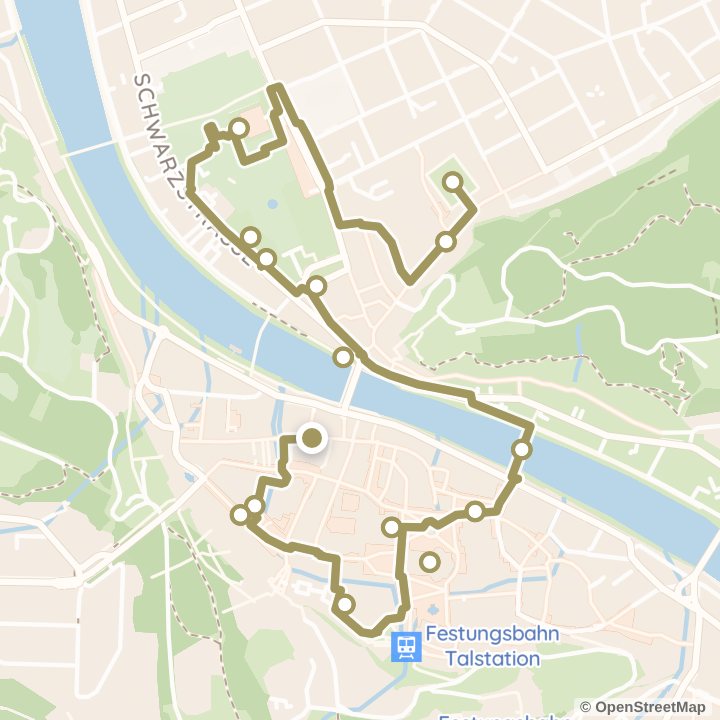
Mirabell & Kapuzinerberg

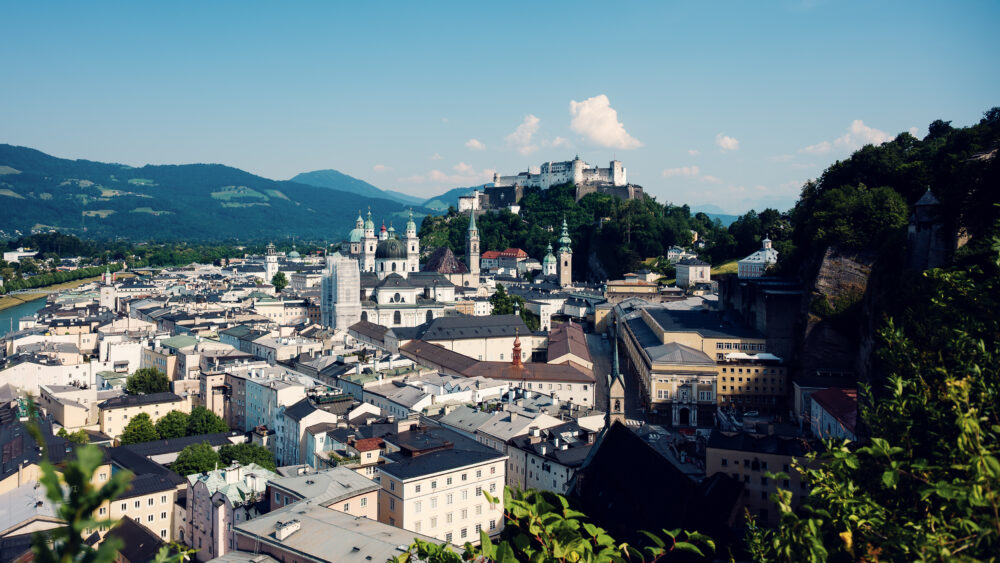
Mirabell Palace is one of Salzburg’s most visited landmarks, and it doesn’t cost a cent to walk through. Built in 1606 as a gift of love from a prince-archbishop to his mistress, the palace sits on the right bank of the Salzach River, directly across from the Old Town. Today, Mirabell Palace houses Salzburg’s mayor and parts of the municipal administration, while visitors come for the Marble Hall, the Angel Staircase with sculptures by Georg Raphael Donner, and the Mirabell Gardens, whose baroque layout aligns with Salzburg Cathedral and Hohensalzburg Fortress. The gardens featured prominently in The Sound of Music – the Pegasus Fountain and the Do-Re-Mi steps are two of Salzburg’s most recognizable photo spots. Whether you’re here for the flower beds in summer, a Mozart concert in the Marble Hall, or just the view from the Rose Hill at sunset, Mirabell delivers one of the best free experiences in Salzburg.

Plan your visit

Opening Hours
Mon - Thu 08:00 - 16:00  Tue from 13:00  Fri 13:00 - 16:00  Sat - Sun closedAll hours
Getting there
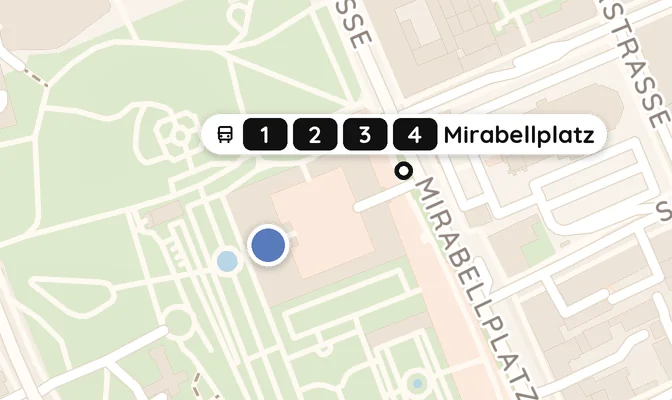
Mirabellplatz 4, 5020 SalzburgBus 1 2 3 4 Mirabellplatz · 2 min walkMirabell & Kapuzinerberg
Good to know
Website · stadt-salzburg.at

What's on here

Mirabellplatz Christmas Market

Wooden huts on Mirabellplatz, right in front of Mirabell Palace on the right bank of the old town. Crafts from around Salzburg, roast chestnuts and mulled wine, with brass music outside the palace.

Nov 19, 2026 - Dec 31, 2026

Mirabellplatz Christmas Market

Nov 19, 2026 - Dec 31, 2026

Wooden huts on Mirabellplatz, right in front of Mirabell Palace on the right bank of the old town. Crafts from around Salzburg, roast chestnuts and mulled wine, with brass music outside the palace.

  • Mirabellplatz, in front of Mirabell Palace, 5020 Salzburg
  • Sun-Thu 10:00-20:00, Fri-Sat 10:00-21:00. 24 Dec 10:00-15:00, 25-26 Dec 11:00-18:00, 27-31 Dec 10:00-19:00 (food and drink stands stay open later on 31 Dec). Brass music in front of Mirabell Palace Wed, Sat and Sun at 17:15.
  • Come on a Wednesday or at the weekend for the early-evening brass music in front of Mirabell Palace. The whole square is level, so it's an easy one with a pushchair or wheelchair, and dogs on a lead are welcome.

Opening hours

Mirabell Palace

Monday08:00 - 16:00
Tuesday13:00 - 16:00
Wednesday08:00 - 16:00
Thursday08:00 - 16:00
Friday13:00 - 16:00
SaturdayClosed
SundayClosed

The Marble Hall cannot be visited while events are taking place.

Tours & experiences

Mirabell Palace


Muvamo Opinion

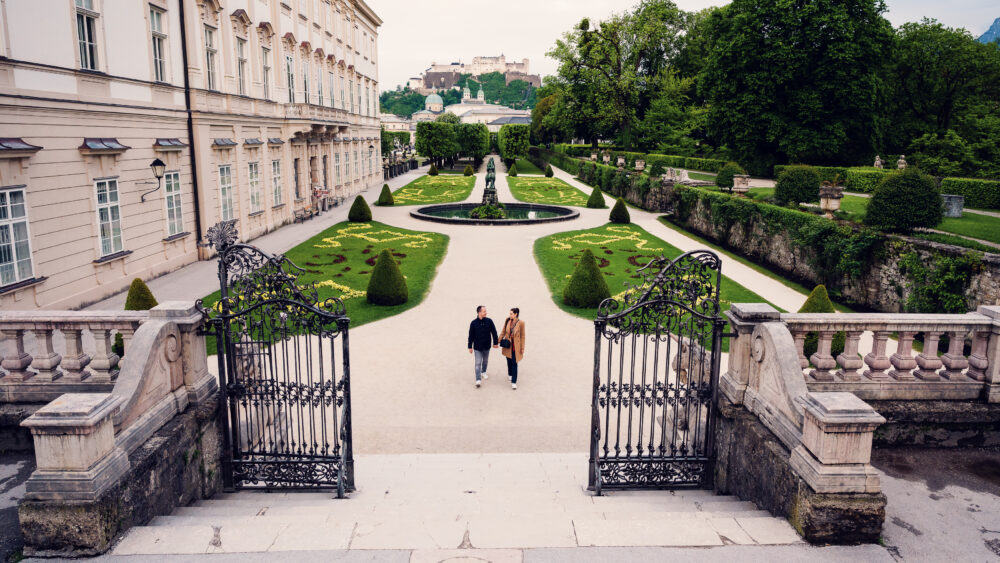
Mirabell Palace makes its impression through the harmony between the palace, the gardens, and the view beyond. From the Grand Parterre, the palace, the baroque flower beds, the central fountain, the old town rooftops, and Hohensalzburg Fortress line up in a view that has been carefully designed for more than 300 years. It is one of the clearest examples in Salzburg of how architecture, landscape, and geography work together.

We’ve walked through the gardens in every season, and they always feel worth visiting. In summer, the roses fill the smaller parterre and the hedge theatre sometimes hosts performances. In autumn, the tree-lined paths turn amber and give the gardens a softer look. Even in winter, when the Dwarf Garden and some central sections are closed, the main walkways stay open, and the view of the fortress still holds up.

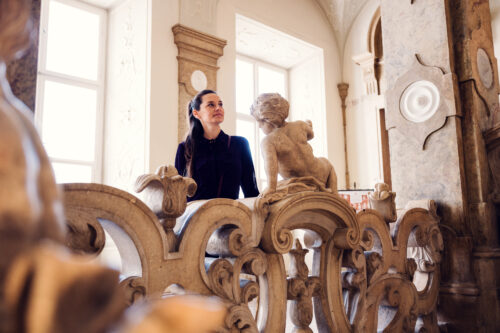
Inside the palace, the Marble Hall is the highlight. With its white marble, gilded stucco, and angel sculptures, it is one of Salzburg’s best baroque interiors. It is also tied to the city’s musical history, since Leopold Mozart once performed here with Wolfgang and Nannerl for the archbishops. Today the hall hosts regular chamber concerts, many of them focused on Mozart.

The approach to the hall is part of the appeal. The Angel Staircase, or Donnerstiege, takes its name not from thunder but from the sculptor Georg Raphael Donner, who created the figures in 1726. The marble putti along the balustrade are among the strongest baroque details in the palace.

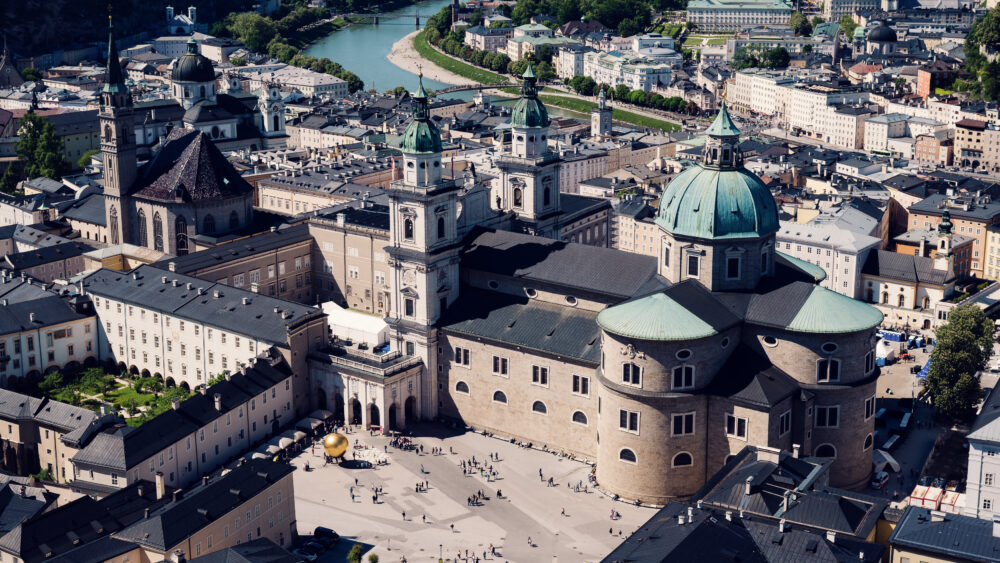
Then there is the Sound of Music connection, which is hard to ignore. The Do-Re-Mi steps are here, and the Pegasus Fountain sits right beside them. Visitors re-create the scene every day, but the area is worth seeing even without the film connection. The steps lead up to the Rose Hill, where you get a wide view over the gardens, the cathedral domes, and the fortress.

Mirabell Palace offers a well-kept baroque palace, free gardens, strong views, and a concert venue that still feels special, which is more than enough to make it one of Salzburg’s most rewarding stops.

Recommended tours & experiences

Helpful Hints

  • The Marble Hall at Mirabell Palace is only open on weekdays - Mon, Wed, Thu 8-16, Tue and Fri 13-16. It closes for events without notice, so check beforehand.
  • Come early in the morning for quiet photos. By midday the Grand Parterre fills up with tour groups and wedding parties.
  • The Dwarf Garden and Hedge Theatre close for winter. The main garden paths stay open year-round from around 6:00 until dusk.
  • The closest parking is the Mirabell-Congress-Garage on Faberstraße 6-8. Bus lines 1, 2, 3, 5, and 6 stop at Mirabellplatz right by the palace.

Gastronomic Discoveries

  • For a coffee break near Mirabell Palace, Café Konditorei Fürst at Mirabellplatz is the most straightforward pick. This classic Salzburg café is known for its pastries and for serving the original Salzburger Mozartkugel.
  • For a pre-concert dinner, the Sheraton Grand’s Restaurant Mirabell sits next door and offers a combined dinner-and-concert package.

Hidden Gems

  • The Schlosskirche Mirabell (Palace Chapel) hosts intimate classical concerts in a smaller, more intimate setting than the Marble Hall.

Our Little Extras

  • The view from the Do-Re-Mi steps to the Rose Hill is one of Salzburg's best free panoramas - fortress, cathedral domes, and garden in one frame.
  • Mirabell is Salzburg's most popular wedding venue. The Marble Hall regularly hosts ceremonies, so you might stumble into a bride on the Angel Staircase.

A Love Story in Stone - Mirabell Palace

A Palace for Salome

In 1606, Prince-Archbishop Wolf Dietrich von Raitenau commissioned a pleasure palace on the north bank of the Salzach, just outside the medieval city walls. It wasn't for state functions. Raitenau built it for Salome Alt, his longtime mistress, who moved in with their fifteen children. The estate was initially called Schloss Altenau - a name combining Salome's family name, Alt, with Au, the local term for the elevated riverbank where it stood. Reports suggest it was completed in roughly six months, following Italian and French models that reflected Raitenau's cosmopolitan taste. Traces of the original building still survive in the southwestern corner and the cellar.

Raitenau's tenure didn't end well. In 1611, his forces invaded the Berchtesgaden Provostry, provoking a military response from Duke Maximilian I of Bavaria. Bavarian troops marched into Salzburg, and by 1612 Raitenau had been captured and imprisoned - first at Hohenwerfen Castle, then at Hohensalzburg Fortress, where he remained until his death in 1617. His cousin and successor, Markus Sittikus von Hohenems, promptly expelled Salome and her children from the palace and renamed it "Mirabell" - from the Italian mirabile (wonderful) and bella (beautiful). The new name was a deliberate act of erasure: Sittikus wanted no trace of his cousin's personal life attached to the property.
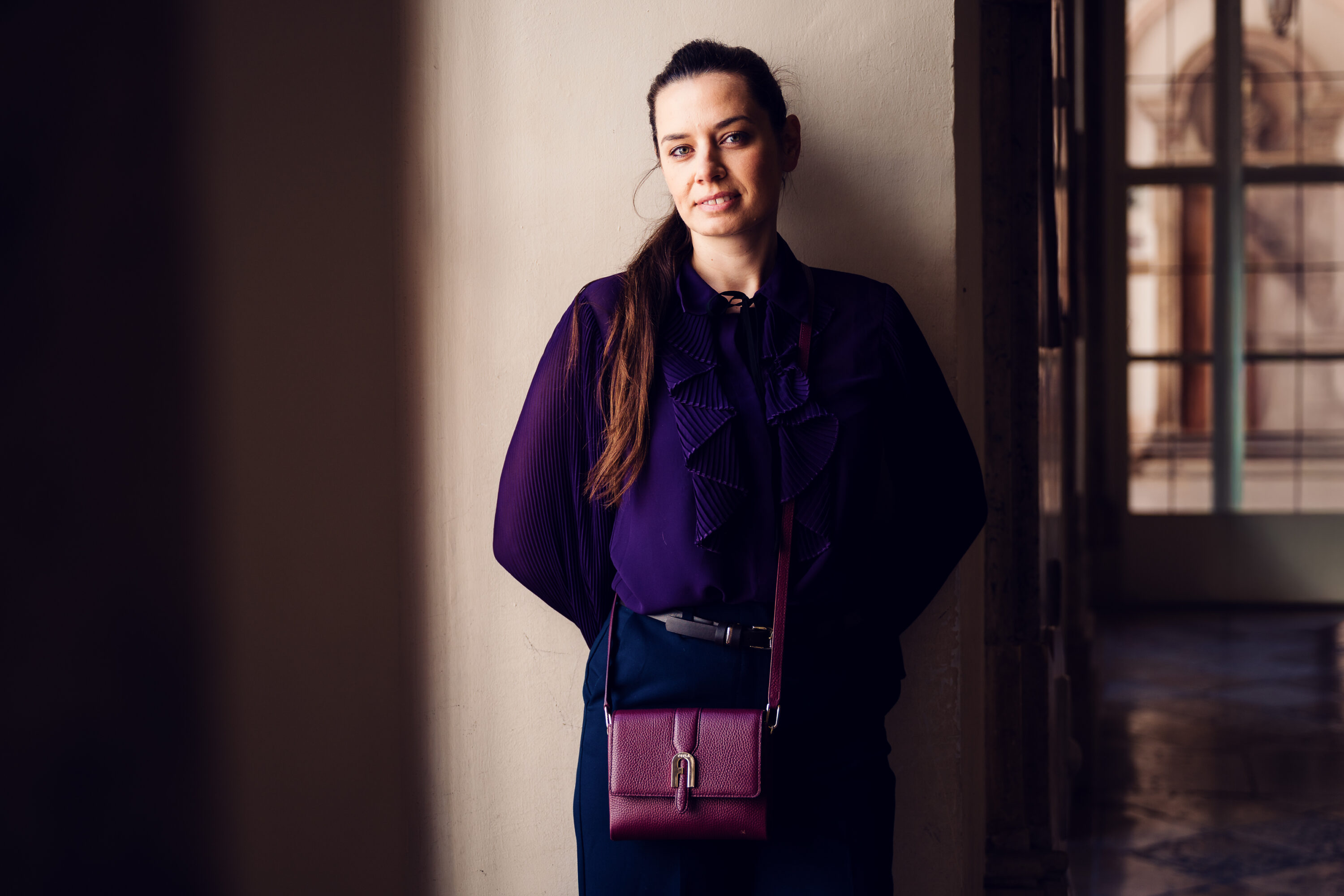
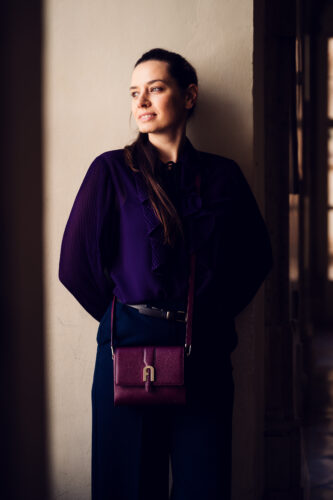
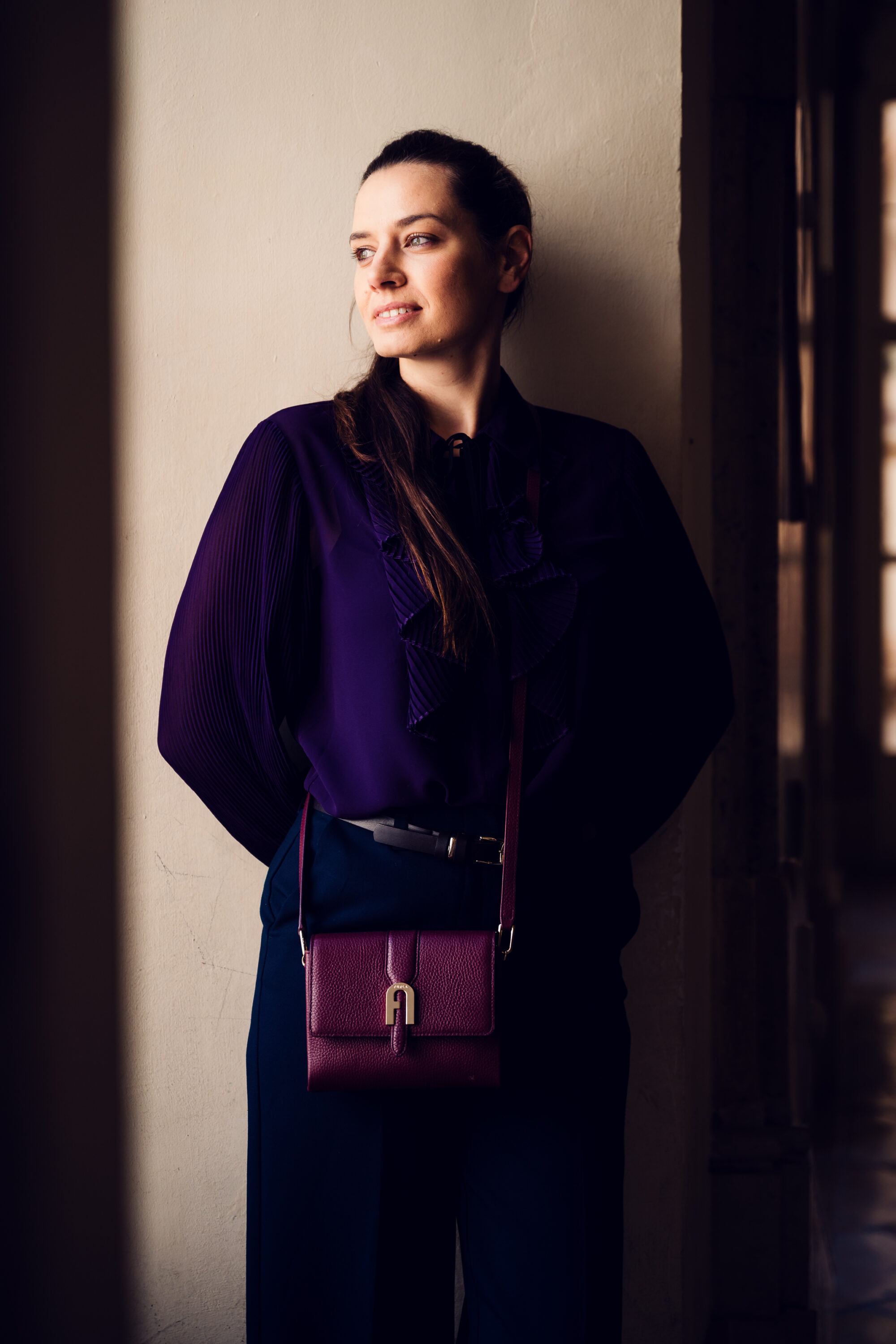
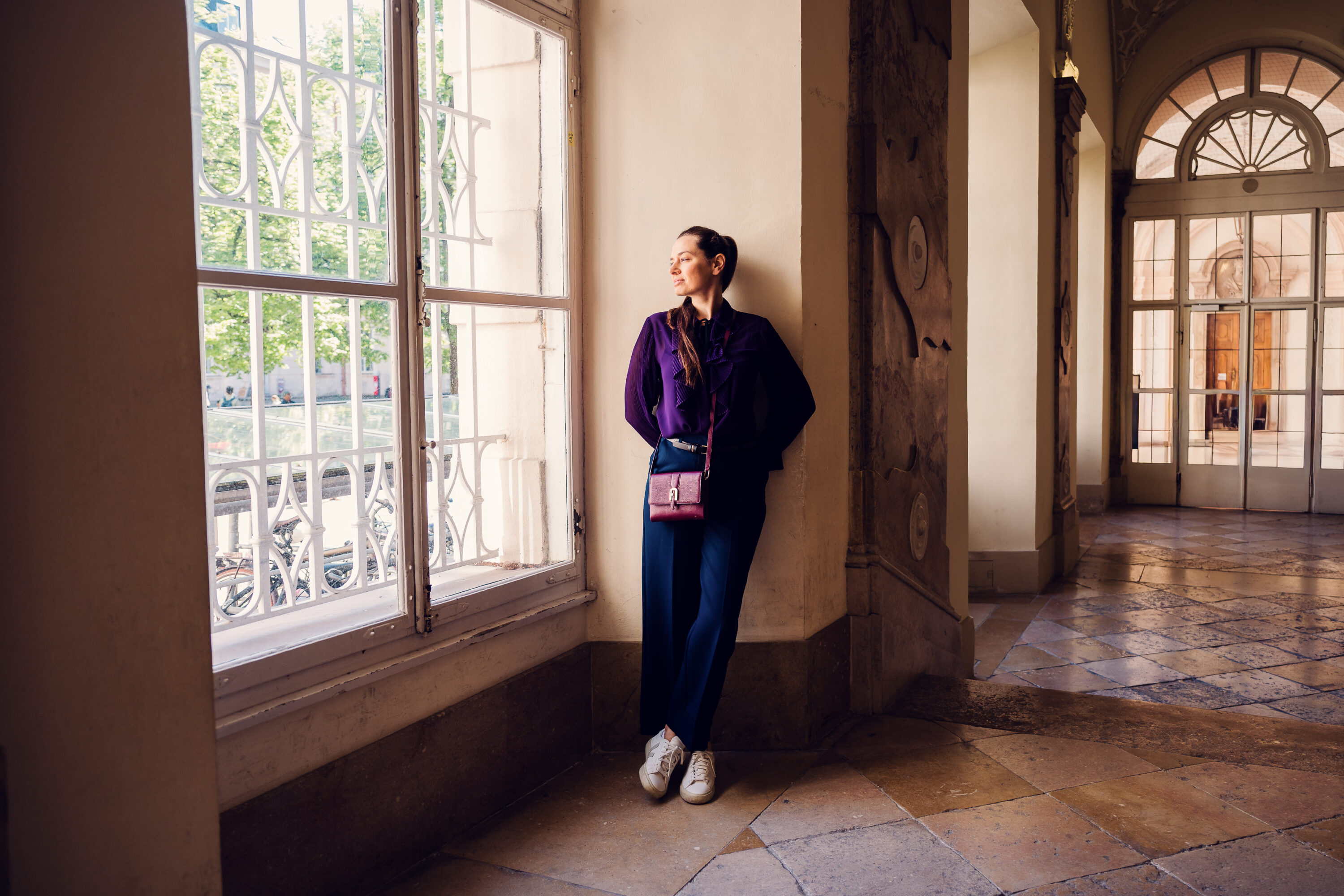
Portrait of Adriana leaning against a wall near a window inside Mirabell Palace.
Portrait of Adriana leaning against a wall inside Mirabell Palace.

Hildebrandt's Baroque Transformation

The palace changed hands through several archbishops before its most significant transformation. Between 1721 and 1727, Prince-Archbishop Franz Anton von Harrach commissioned architect Johann Lukas von Hildebrandt - the same architect behind Vienna's Schloss Belvedere - to rebuild Mirabell as a unified baroque complex. Hildebrandt merged the previously separate buildings into a single cohesive palace, adding the Marble Hall as the archbishop's banqueting room and the grand marble staircase, later decorated with sculptures by Georg Raphael Donner in 1726. Frescoes by Johann Michael Rottmayr and Gaetano Fanti adorned the ceilings. The result was one of the most elaborate baroque residences in the prince-archbishopric.

The Mirabell Gardens had already been redesigned decades earlier. From 1687, architect Johann Bernhard Fischer von Erlach reworked the layout under Archbishop Johann Ernst von Thun, establishing the geometric baroque parterre that still defines the garden today. The basic axial alignment - from the palace south toward the cathedral and the fortress - dates from this era.

Fire and Reconstruction

On 30 April 1818, a devastating fire swept through Salzburg and heavily damaged Mirabell Palace. The Rottmayr and Fanti frescoes were destroyed. The massive eastern tower was lost entirely. The Marble Hall and the grand marble staircase survived the 1818 fire, preserving two of Mirabell Palace’s most remarkable historic interiors.

Peter de Nobile, the Habsburg court's architectural consultant, designed the reconstruction, though Salzburg engineer Johann Wolfgang Hagenauer carried out the actual work. Together they gave the palace its current neoclassical exterior, replacing the destroyed baroque facades with clean lines, restrained window surrounds, and understated stucco. The contrast between the ornate baroque interiors and the sober neoclassical exterior remains one of Mirabell's most distinctive features today.
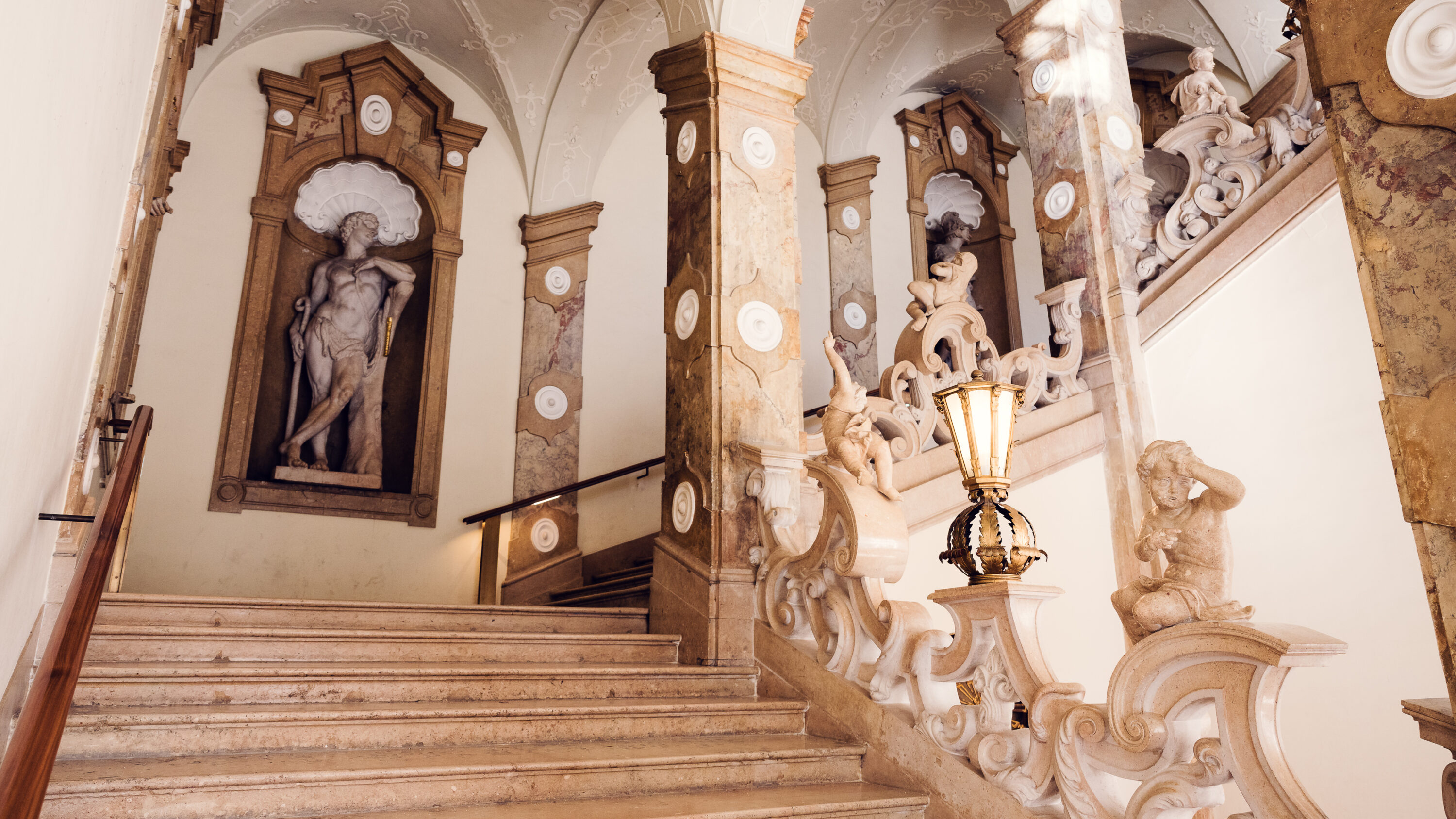
The Angel Staircase inside Mirabell Palace with marble cherub sculptures along the balustrade and a classical statue in a wall niche.

From Archbishops to City Government

In 1854, Emperor Franz Joseph opened the Mirabell Gardens to the public. In 1870, Schloss Mirabell became property of the city of Salzburg.

Since 1947, Schloss Mirabell has housed Salzburg’s mayor and parts of the city administration. The Marble Hall, once reserved for archbishops and their guests, became - and remains - a venue for concerts, weddings, and civic ceremonies.

The palace entered popular culture in 1965, when several scenes from The Sound of Music were filmed in the gardens. The Pegasus Fountain, the Do-Re-Mi steps, and the Dwarf Garden all appear in the film's "Do-Re-Mi" sequence with Julie Andrews and the von Trapp children. The gardens, along with the entire Salzburg Old Town, were designated a UNESCO World Heritage Site in 1996.