
Fire, Power, and Marble - The Story of Salzburg Cathedral
From Roman Ruins to the First Cathedral
The area beneath today's Domplatz and Residenzplatz preserves traces of building activity going back to Roman times, including remains from ancient Iuvavum. Remains of a Roman villa with mosaic floors and a heating system still survive underground in the Domgrabungsmuseum.
Bishop Virgil built the first cathedral here in the 8th century, and for its time it was remarkably large: one of the most important early church buildings north of the Alps. The relics of St. Rupert, Salzburg's patron saint, were transferred here from St. Peter's Abbey when the church was consecrated. Over the following centuries, the building went through constant additions and repairs.
The Romanesque Cathedral and Its Destruction
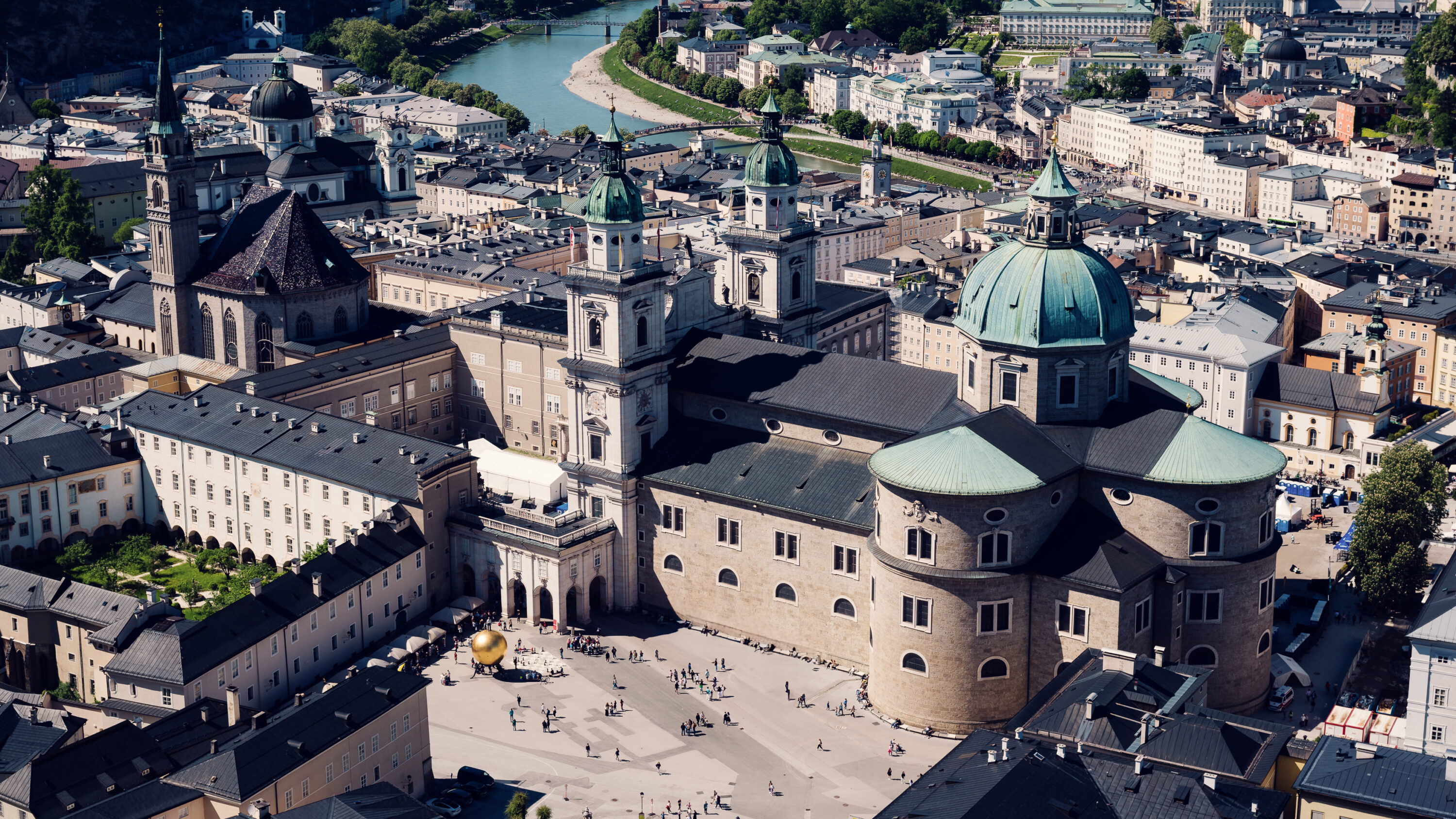
After a devastating fire destroyed Virgil's church in 1167, the Romanesque cathedral that replaced it became one of the most powerful Romanesque church buildings north of the Alps, stretching across five naves. It stood for over four hundred years before a devastating fire in 1598 destroyed the roof structures and, after weeks of further collapse, left the building severely damaged. Prince-Archbishop Wolf Dietrich von Raitenau eventually made the controversial decision to demolish the old cathedral; from 1606 onward, the medieval structure was radically cleared to make way for the Baroque rebuilding, while remains of earlier phases survive below ground.
Solari's Masterwork
Wolf Dietrich initially commissioned Italian architect Vincenzo Scamozzi, whose plans envisioned a cathedral for 16,000 people, the entire population of Salzburg at the time. Even Wolf Dietrich found this excessive, and Scamozzi's plans were never carried out. Wolf Dietrich's conflict with Bavaria led to his imprisonment in the fortress, and construction of the new cathedral only began under his successor Markus Sittikus in 1614, with Santino Solari's revised design.
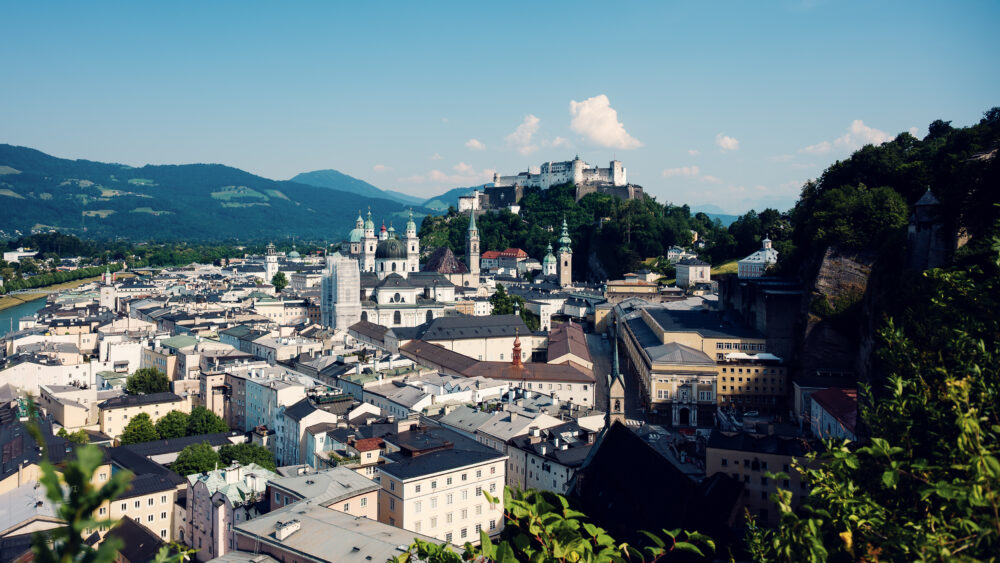
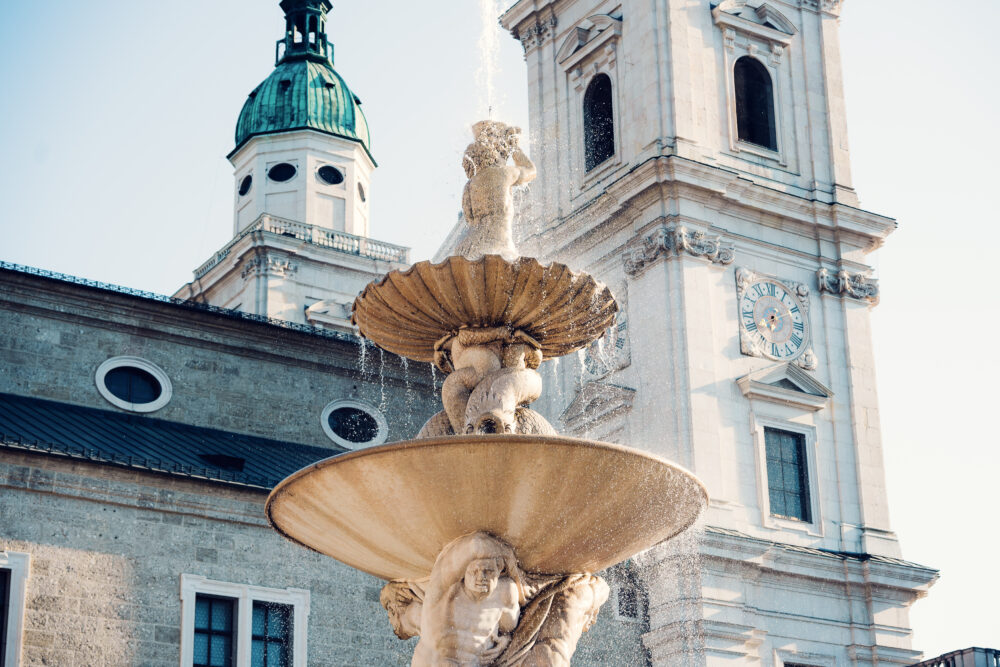
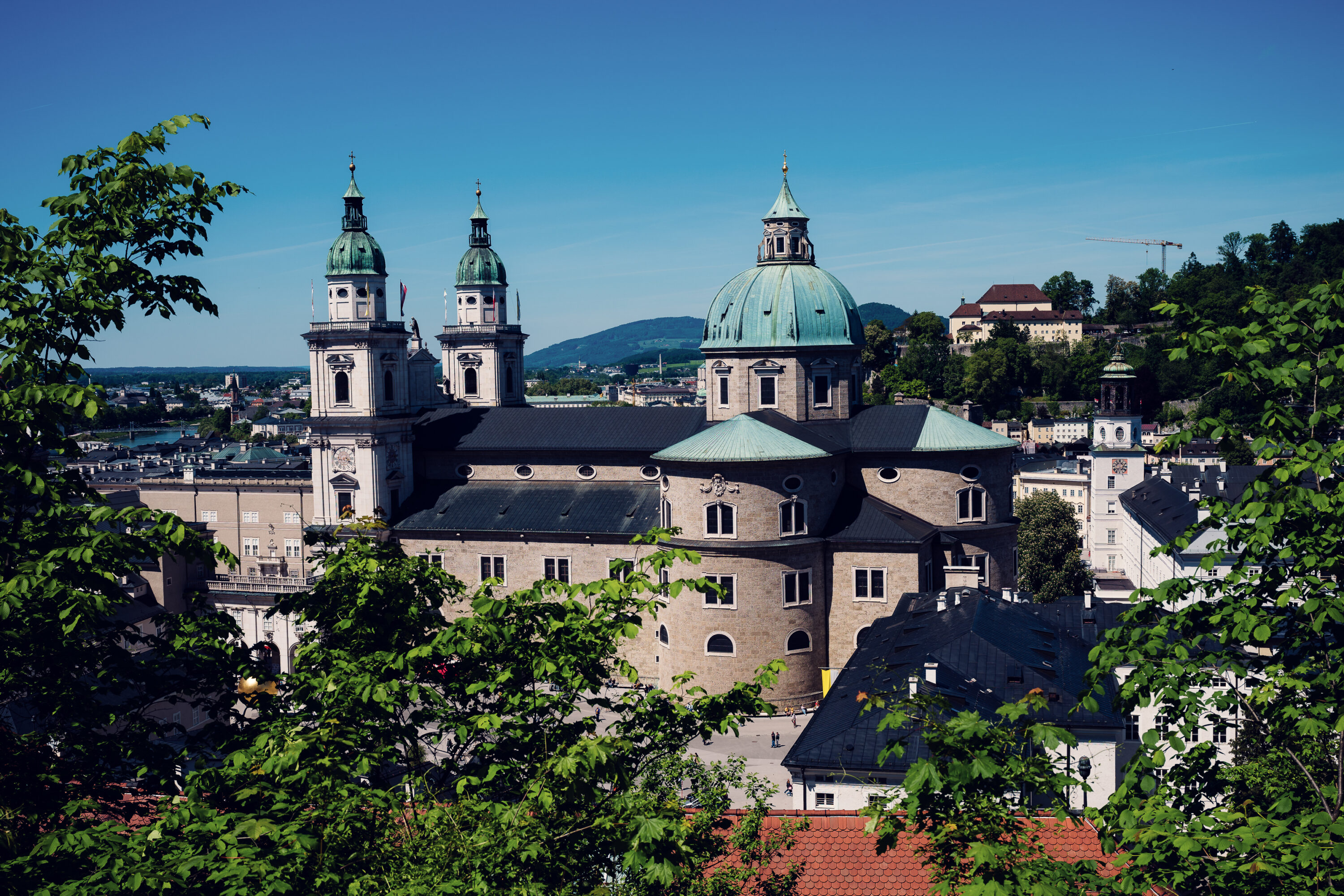
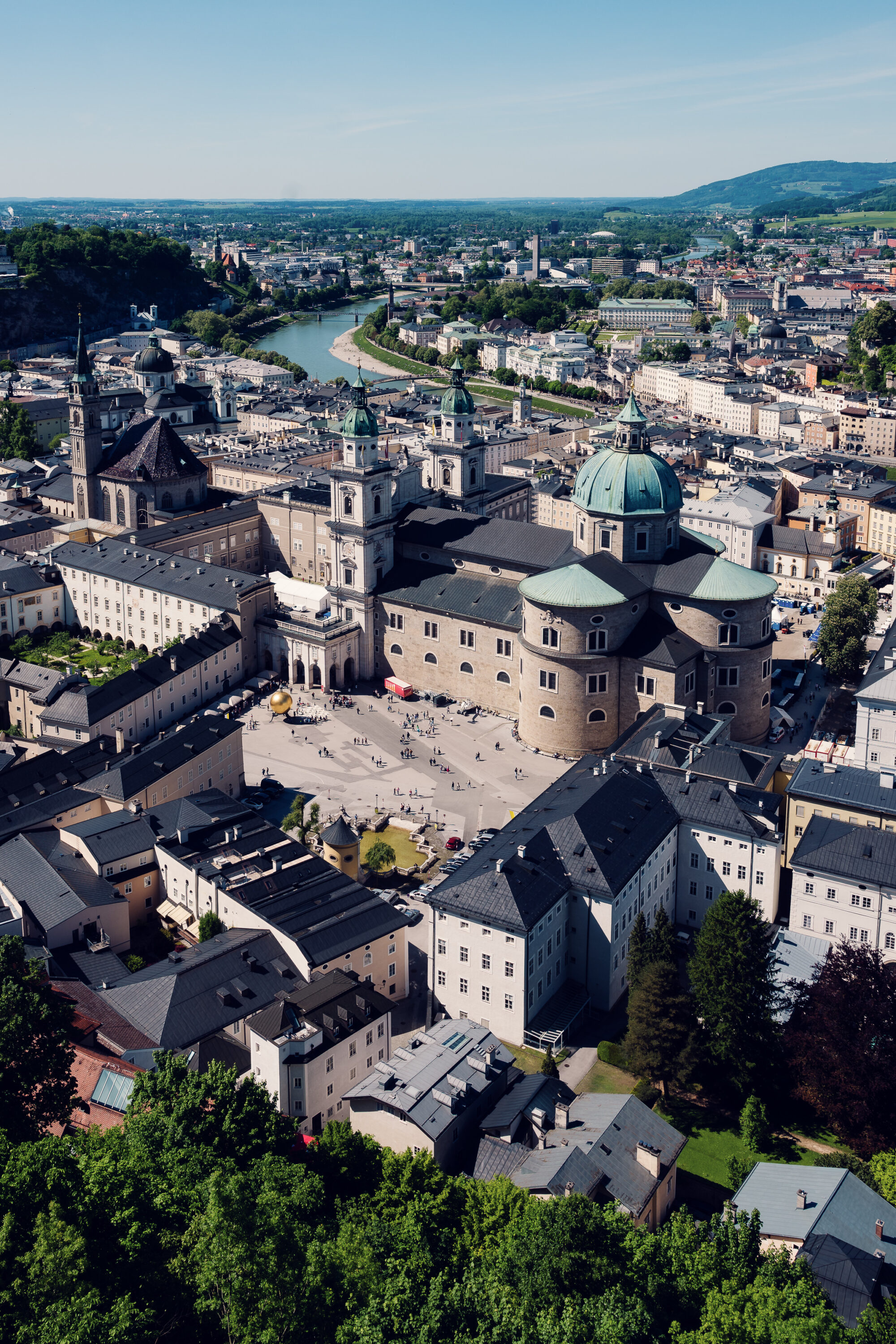
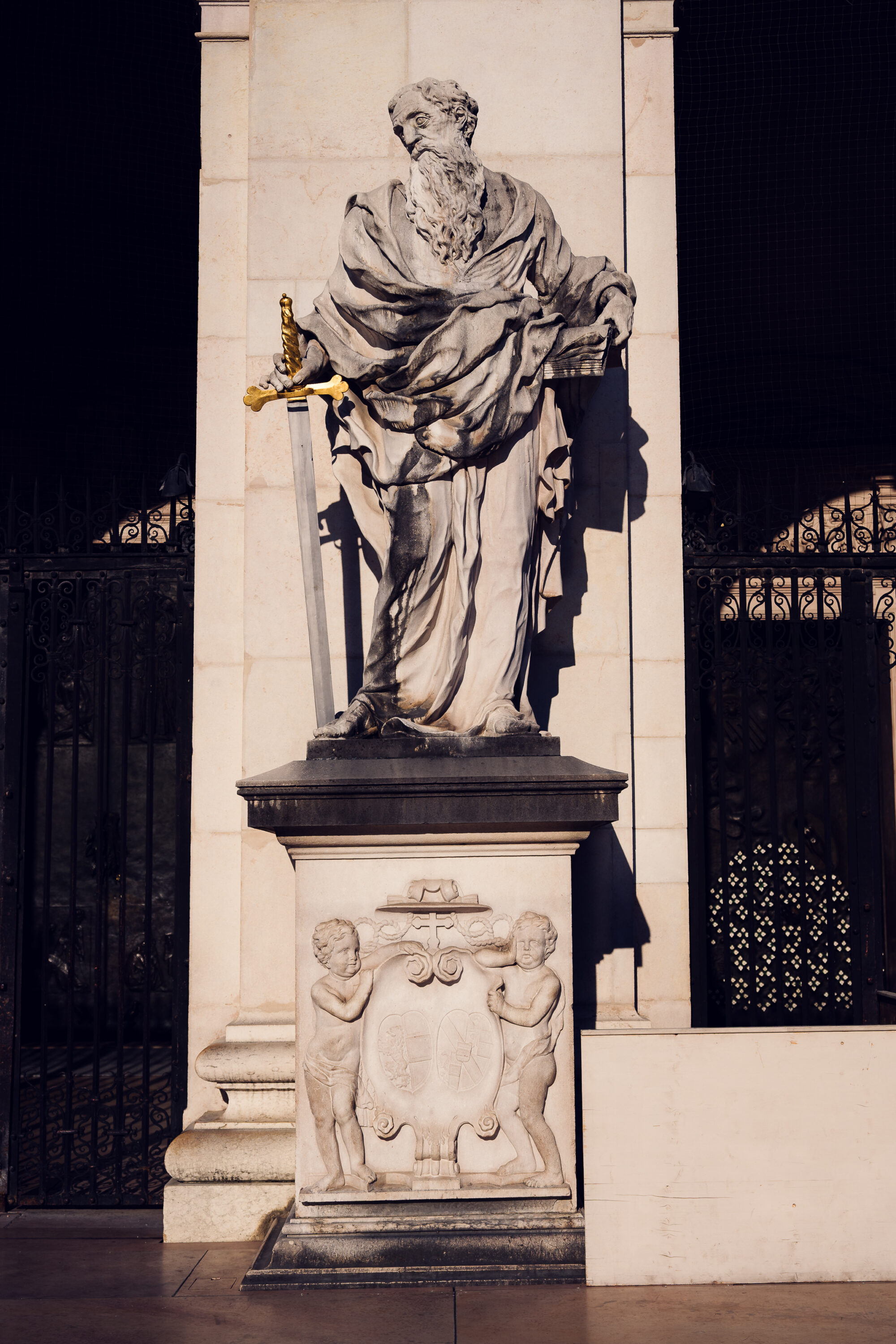
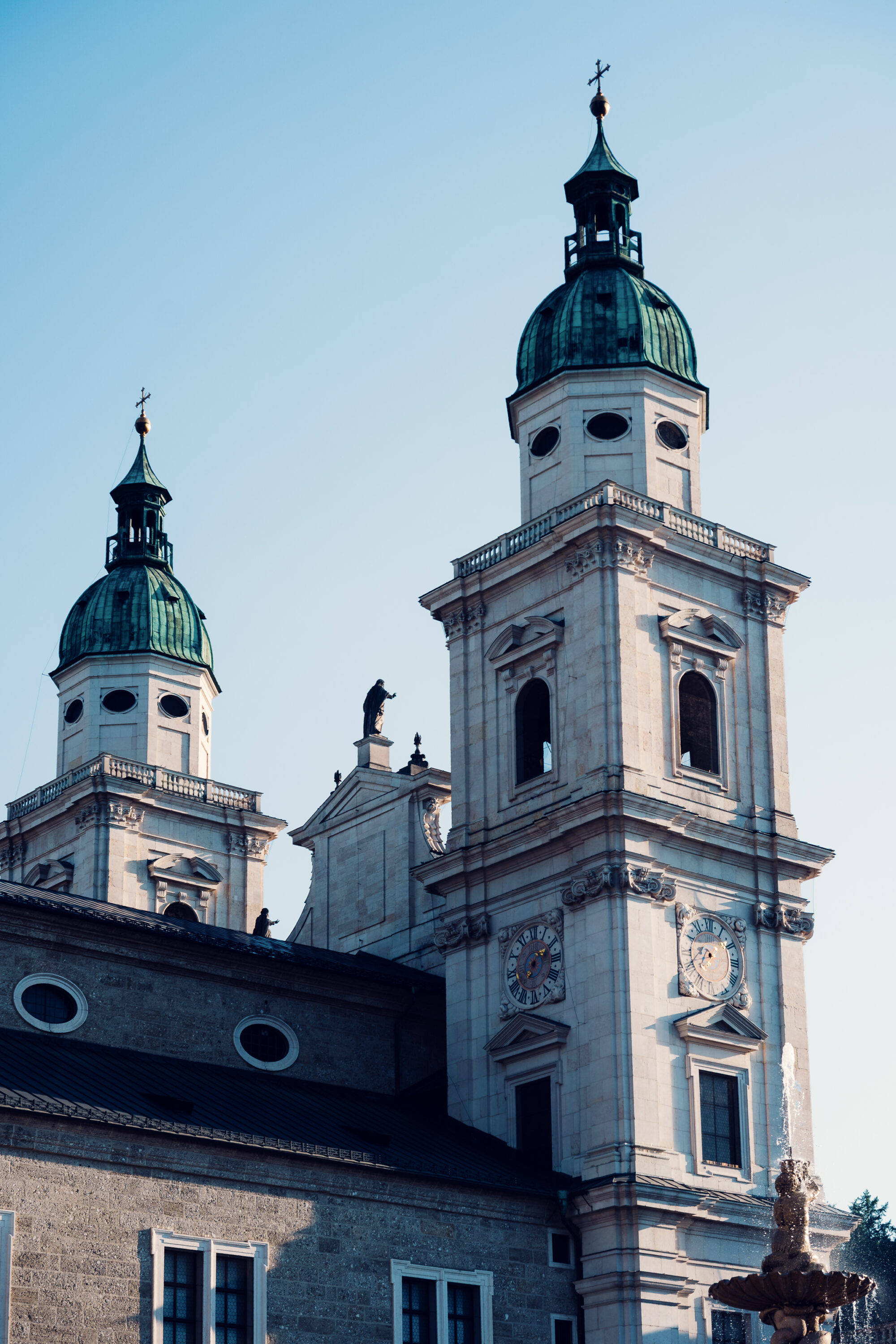
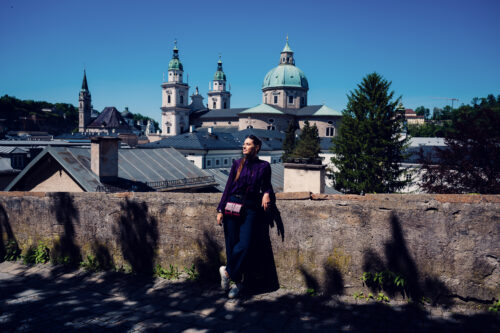
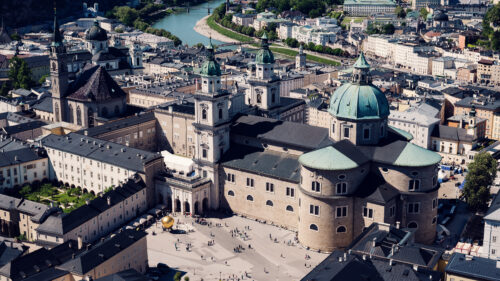
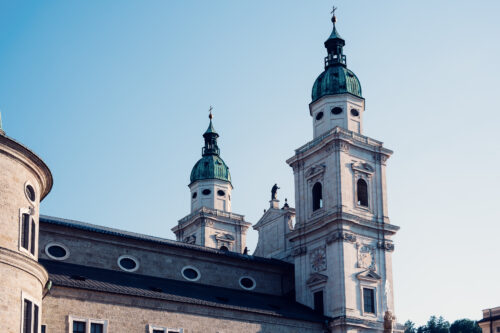
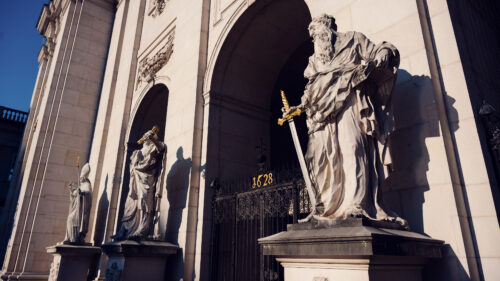
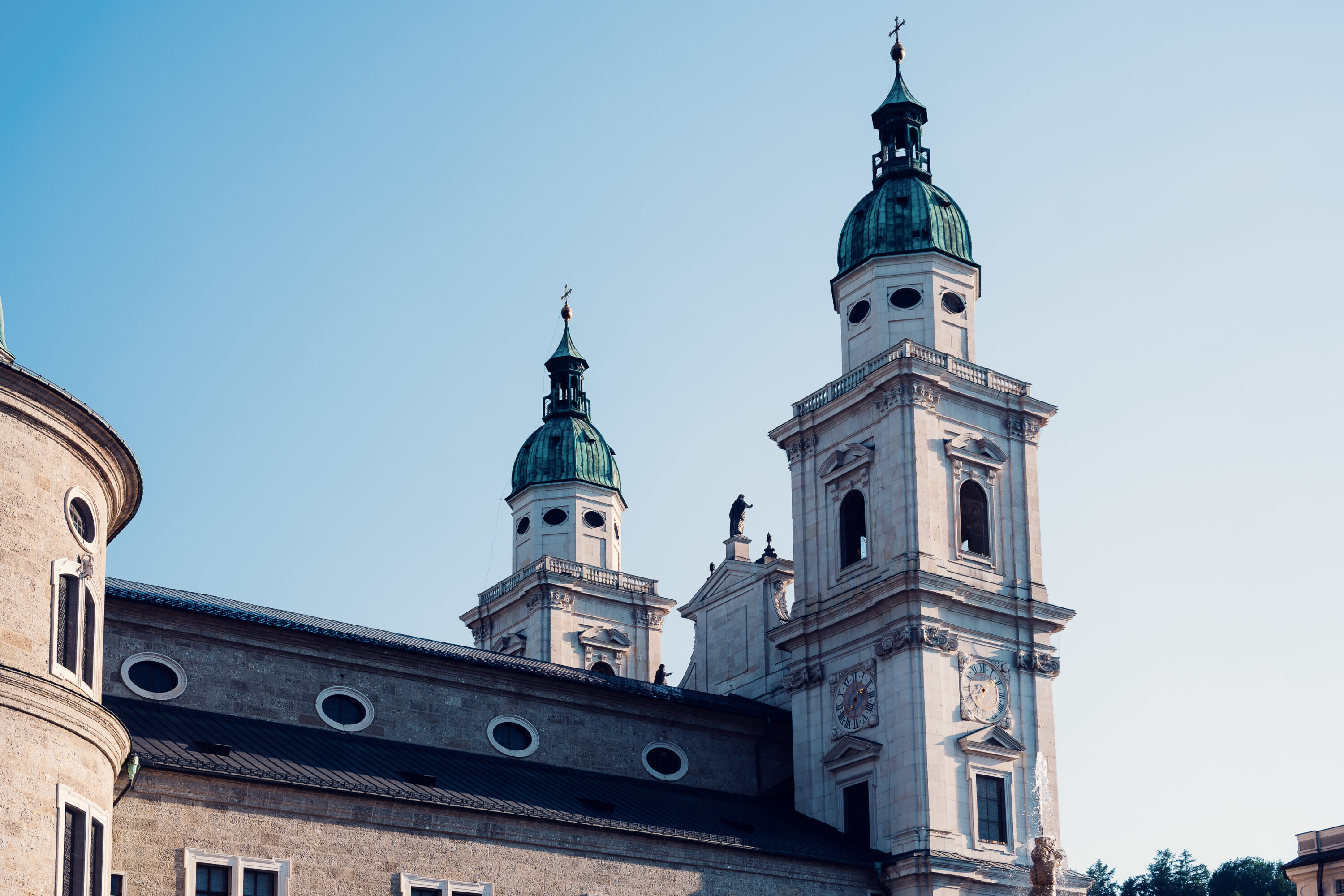
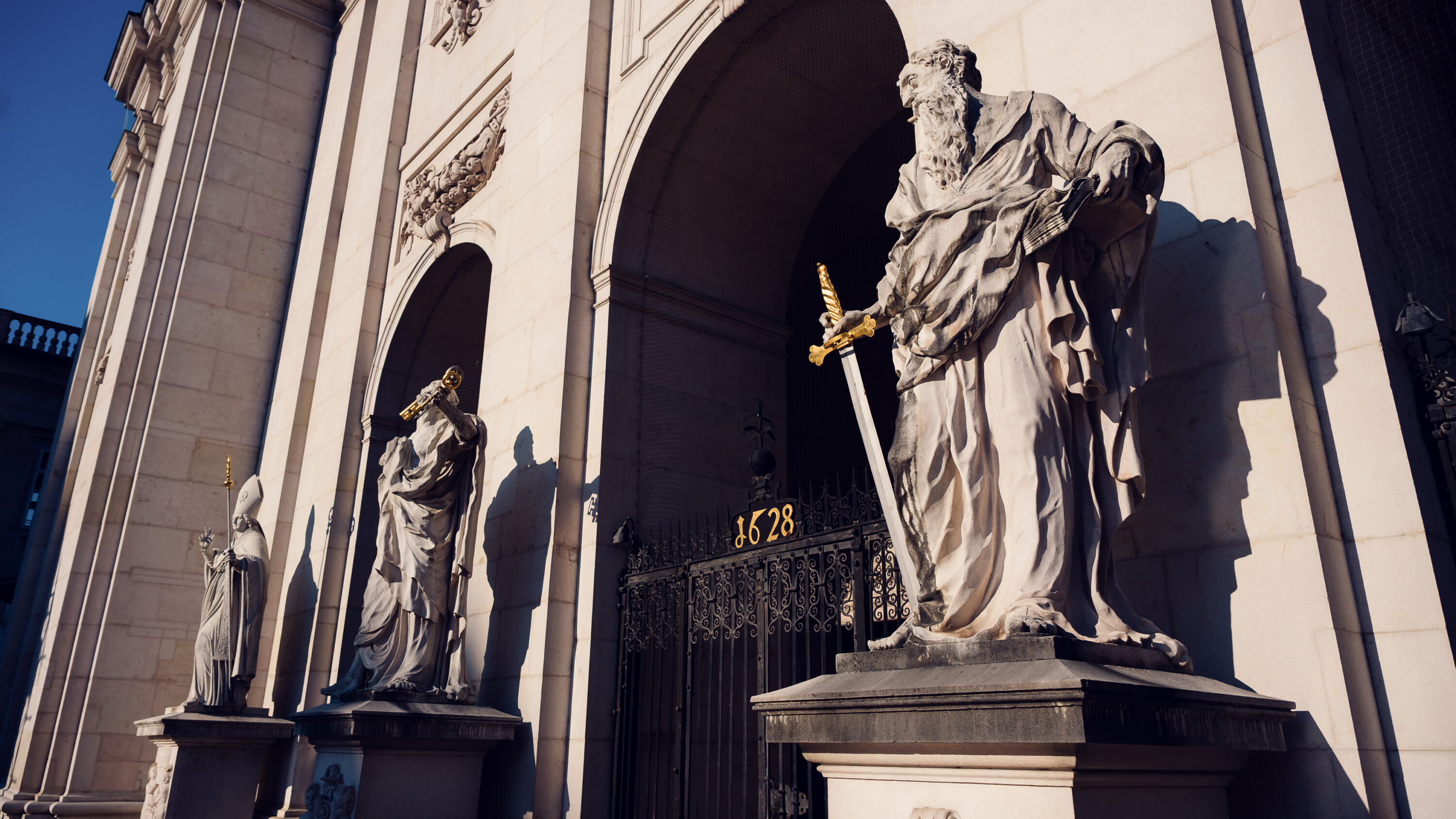
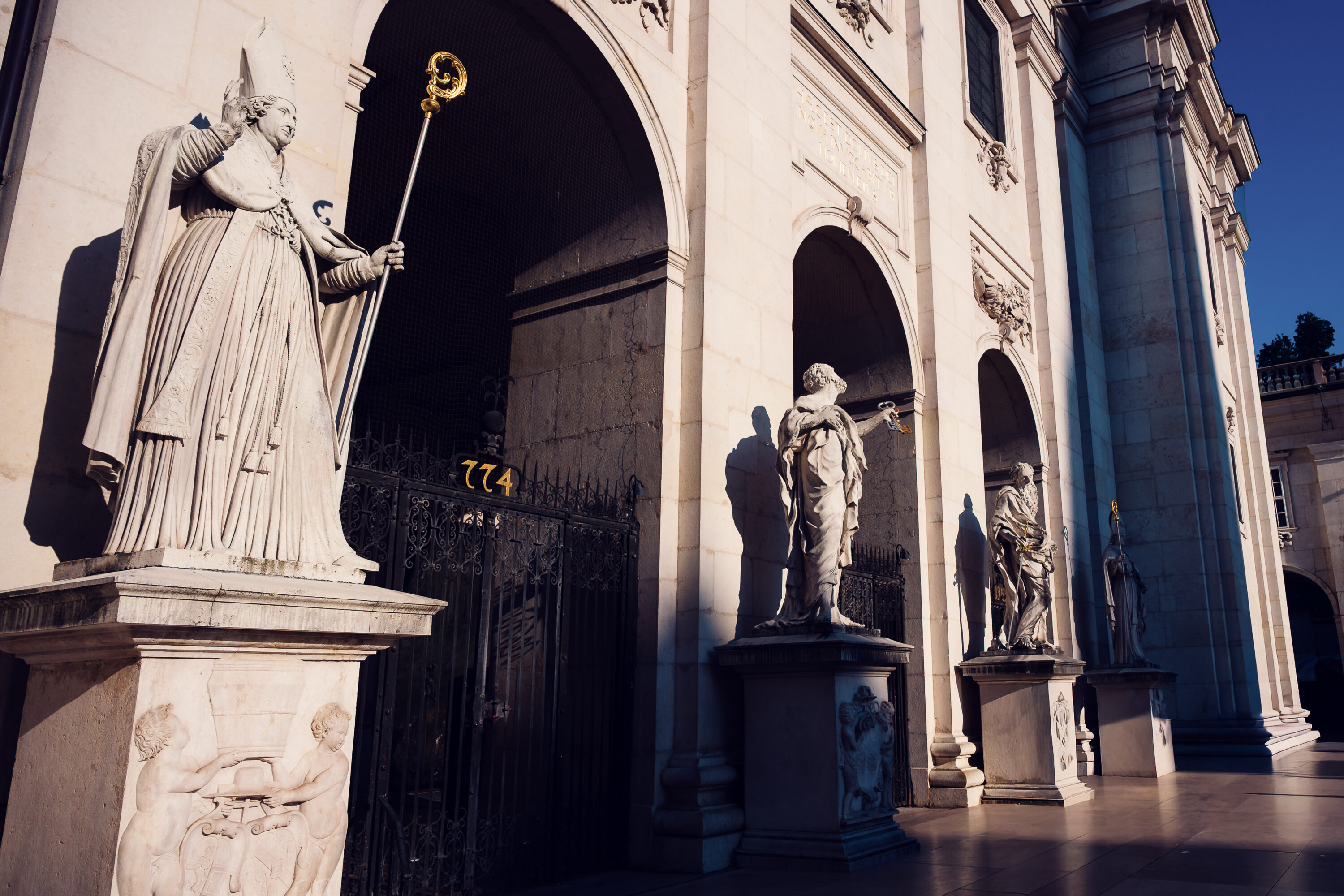
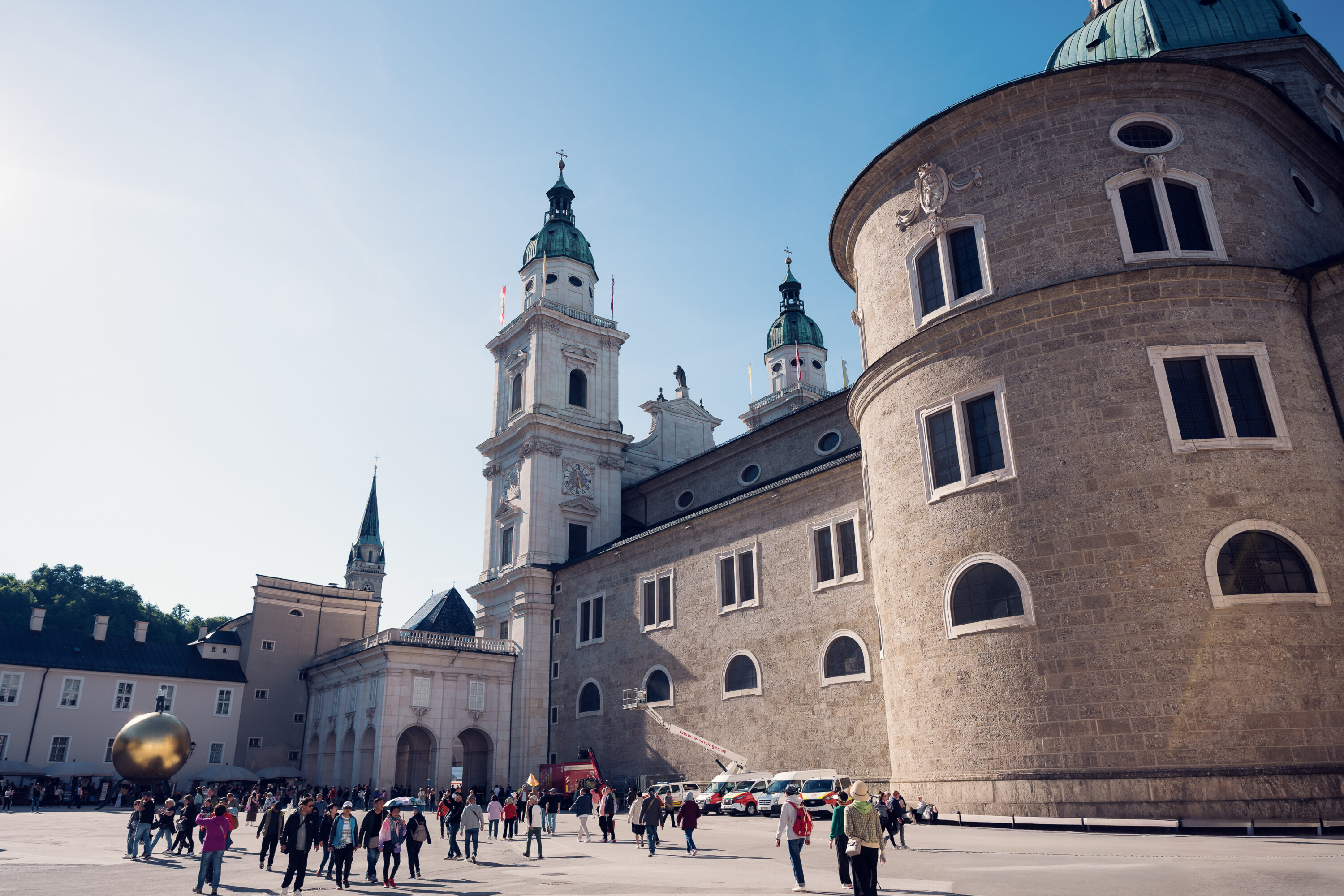
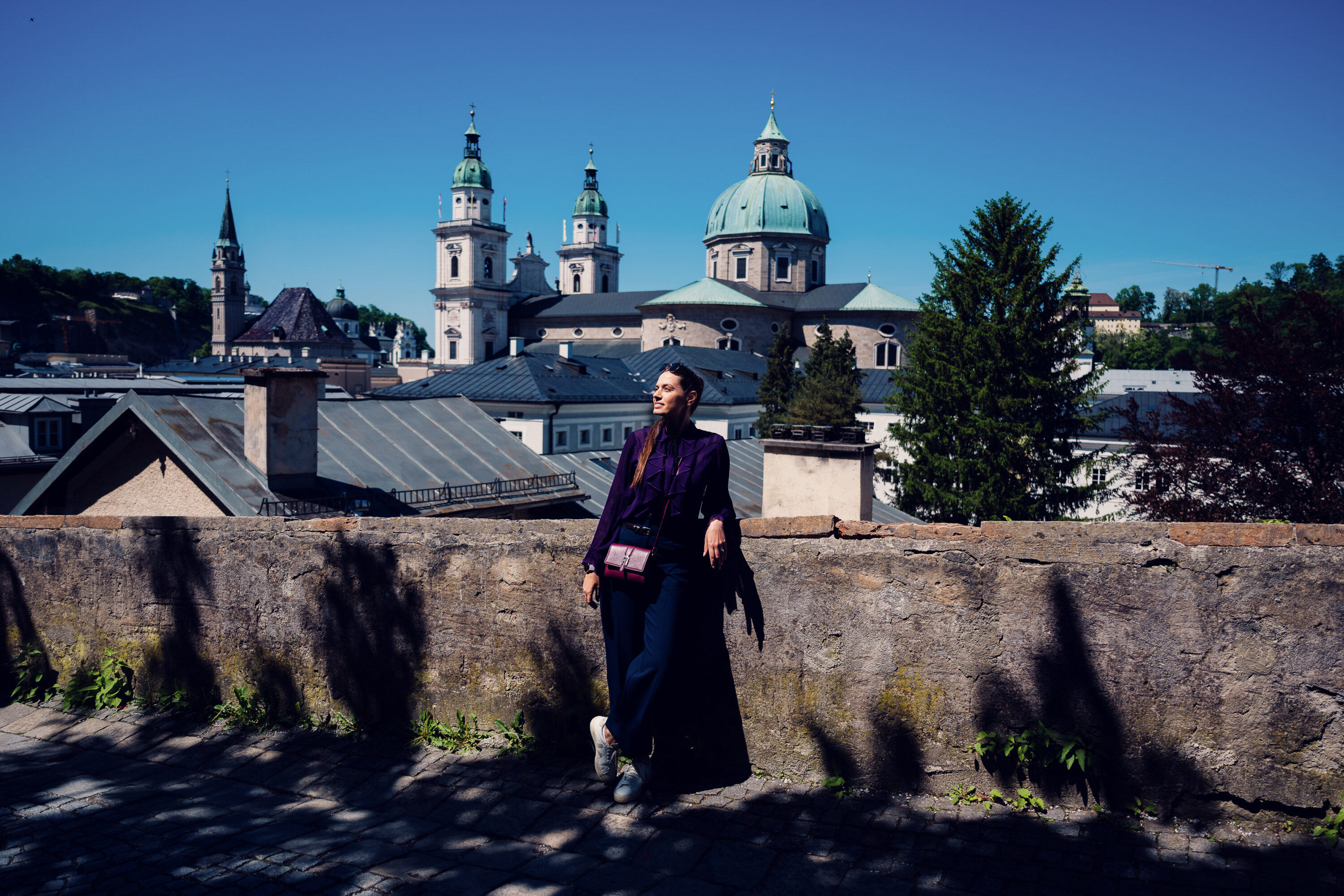
The result is the building you see today, consecrated in 1628 under Paris Lodron. The Untersberg marble facade, the twin green-domed towers, and the light-filled interior all belong to a building considered the first early Baroque church north of the Alps. Four monumental statues guard the entrance: the apostles Peter and Paul, and the patron saints Rupert with his salt barrel and Virgil with a model of the church.
War Damage and Restoration
In 1944, a single Allied bomb crashed through the central dome, severely damaging the crossing and parts of the altar area. Restoration took more than a decade, and the Salzburg cathedral was finally re-consecrated in 1959. Three new bronze doors were installed during the restoration, each by a different artist from a different country, representing Faith, Love, and Hope. The three years of consecration, 774, 1628, and 1959, are inscribed on the entrance gate grilles, a quiet reminder of how many times this site has been built, destroyed, and rebuilt.