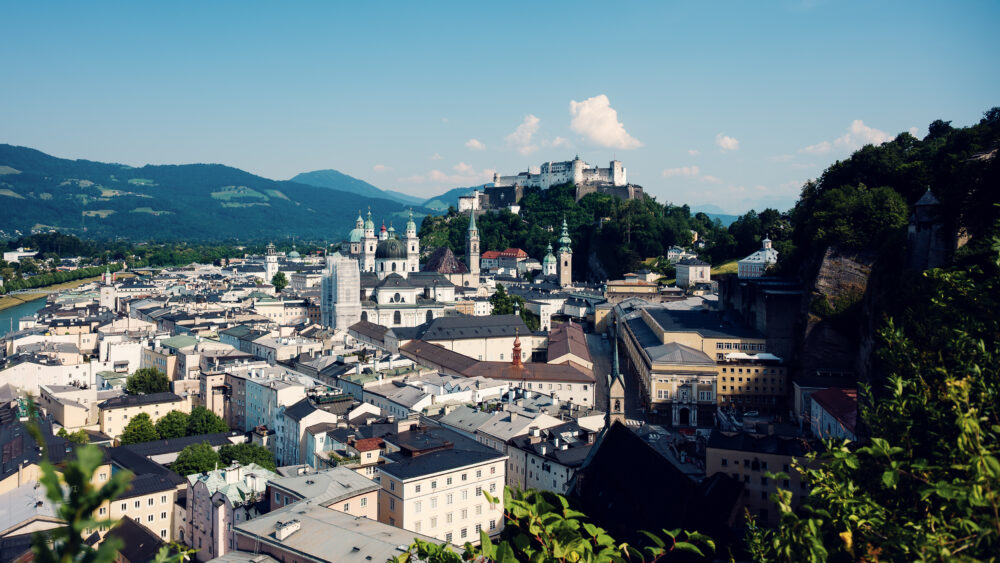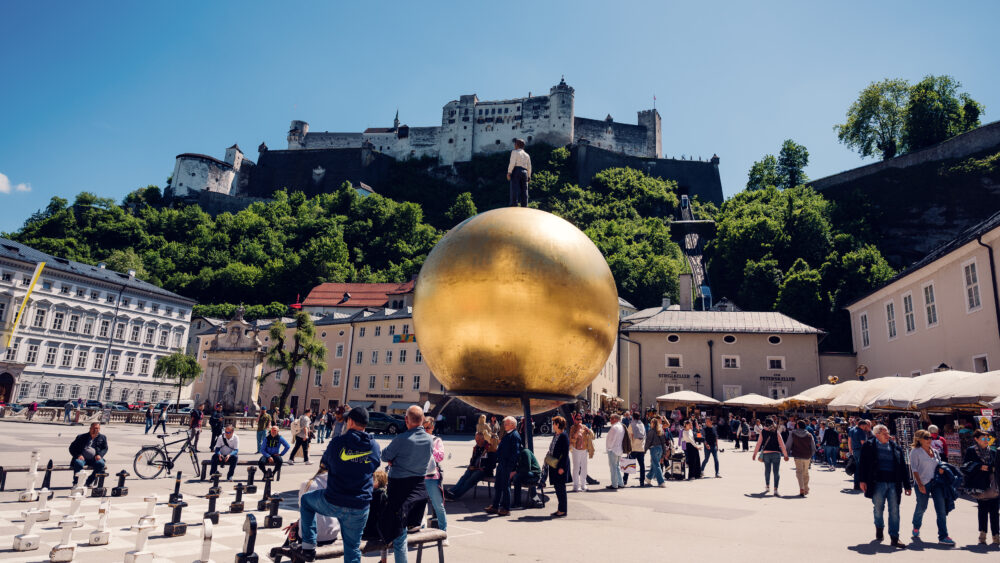

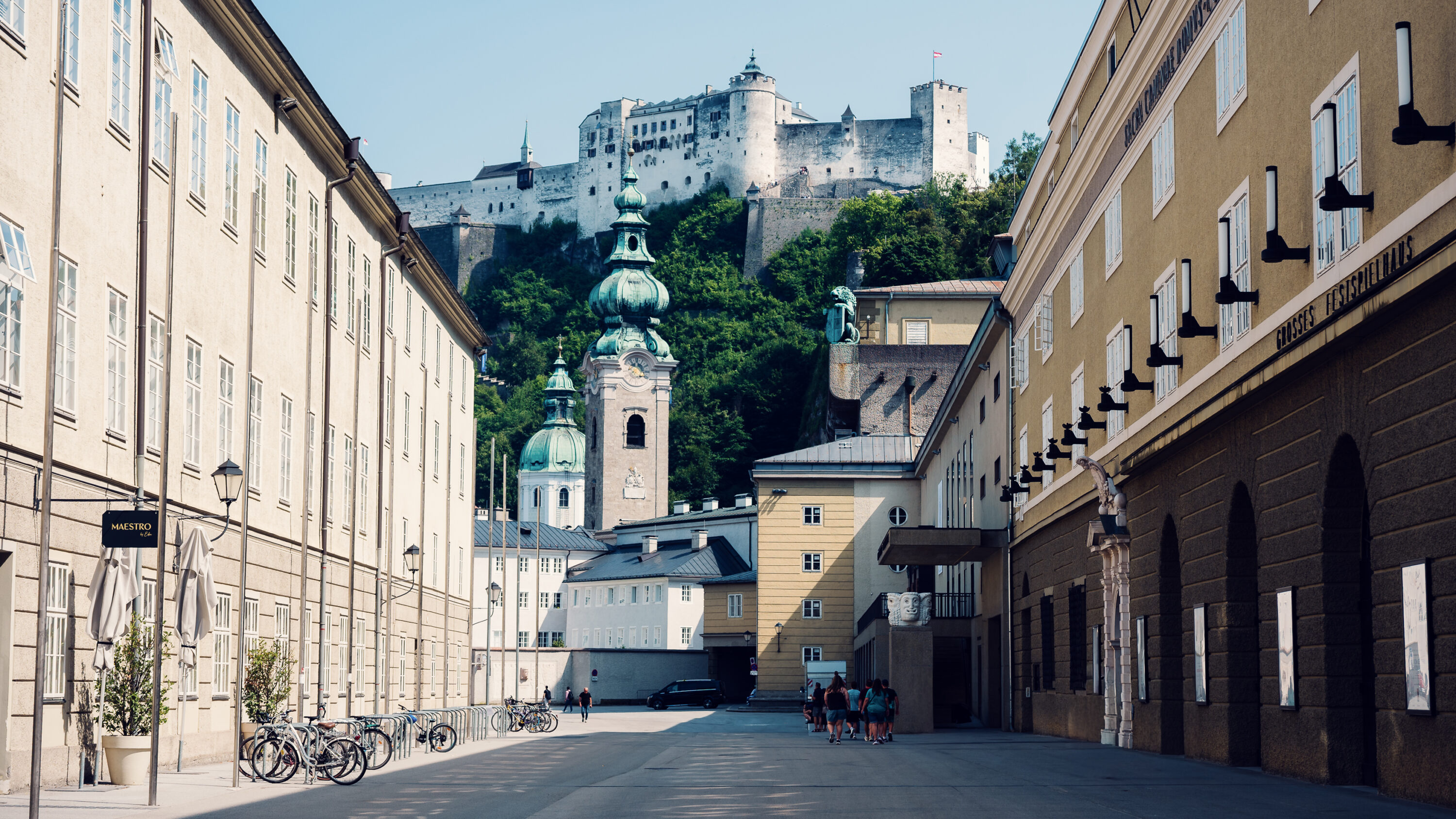
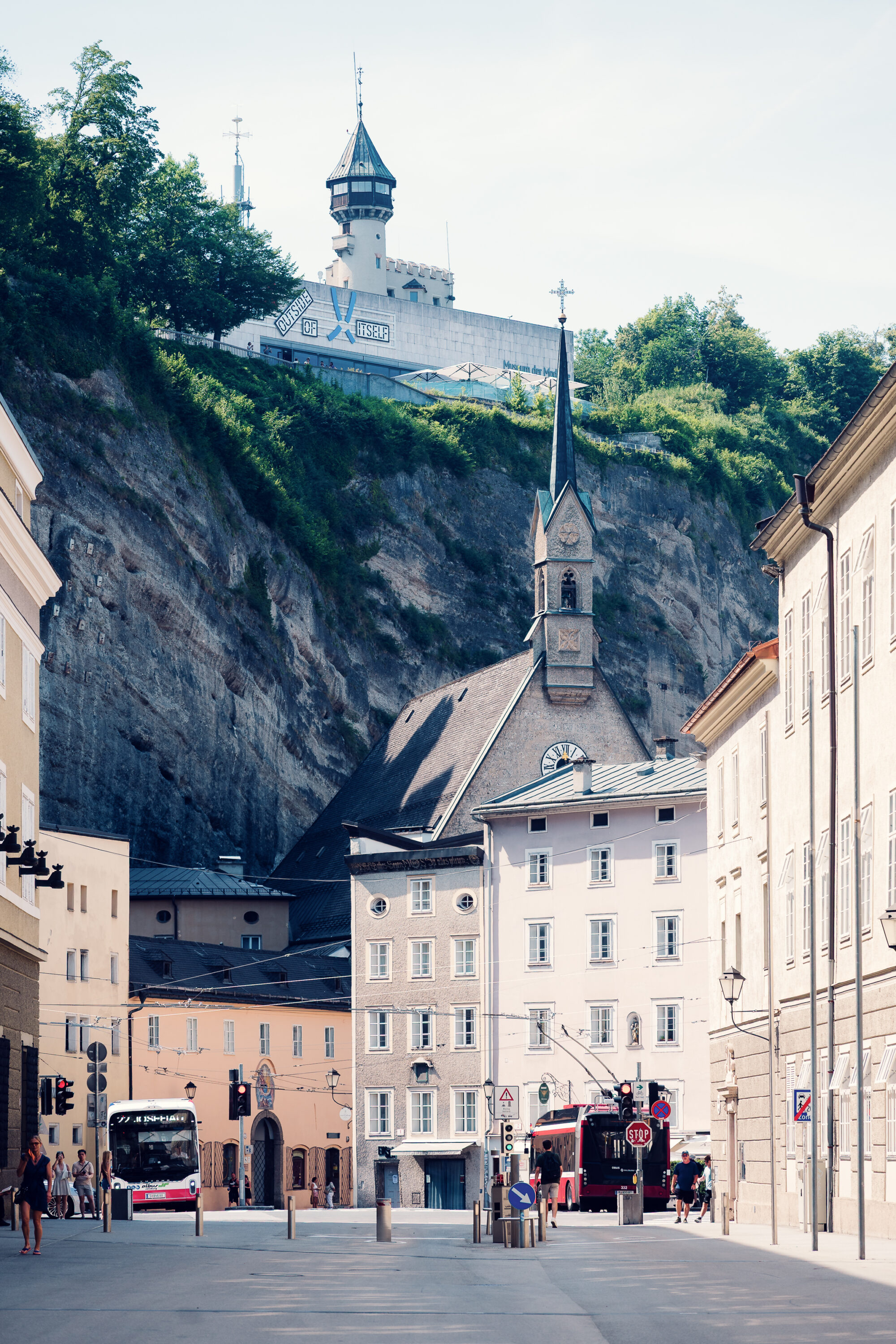
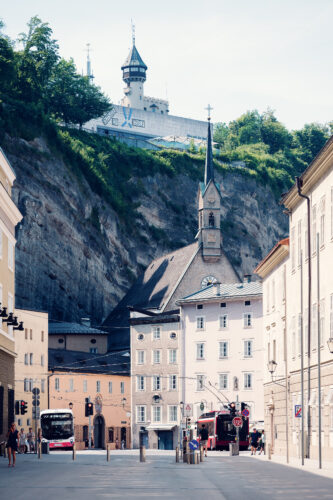
Hofstallgasse stretching toward the tree-covered Mönchsberg hill with Hohensalzburg Fortress above.
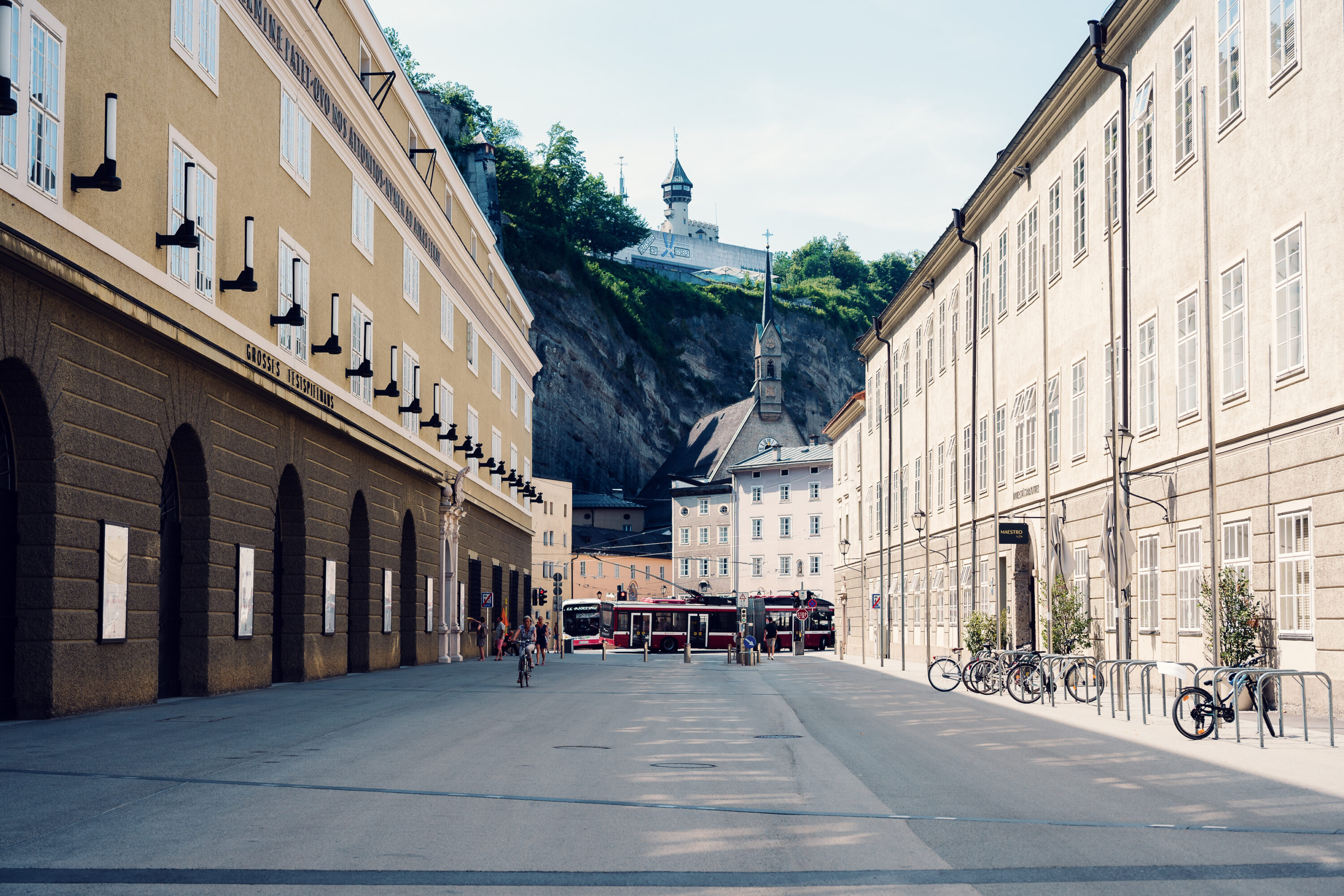
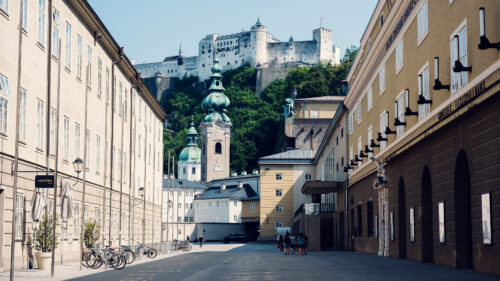
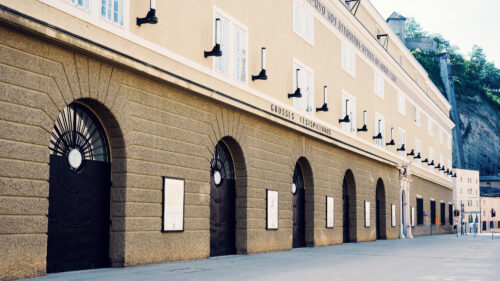
View along Hofstallgasse toward the Salzburg Festival Hall with its arched entrance and classical facade.
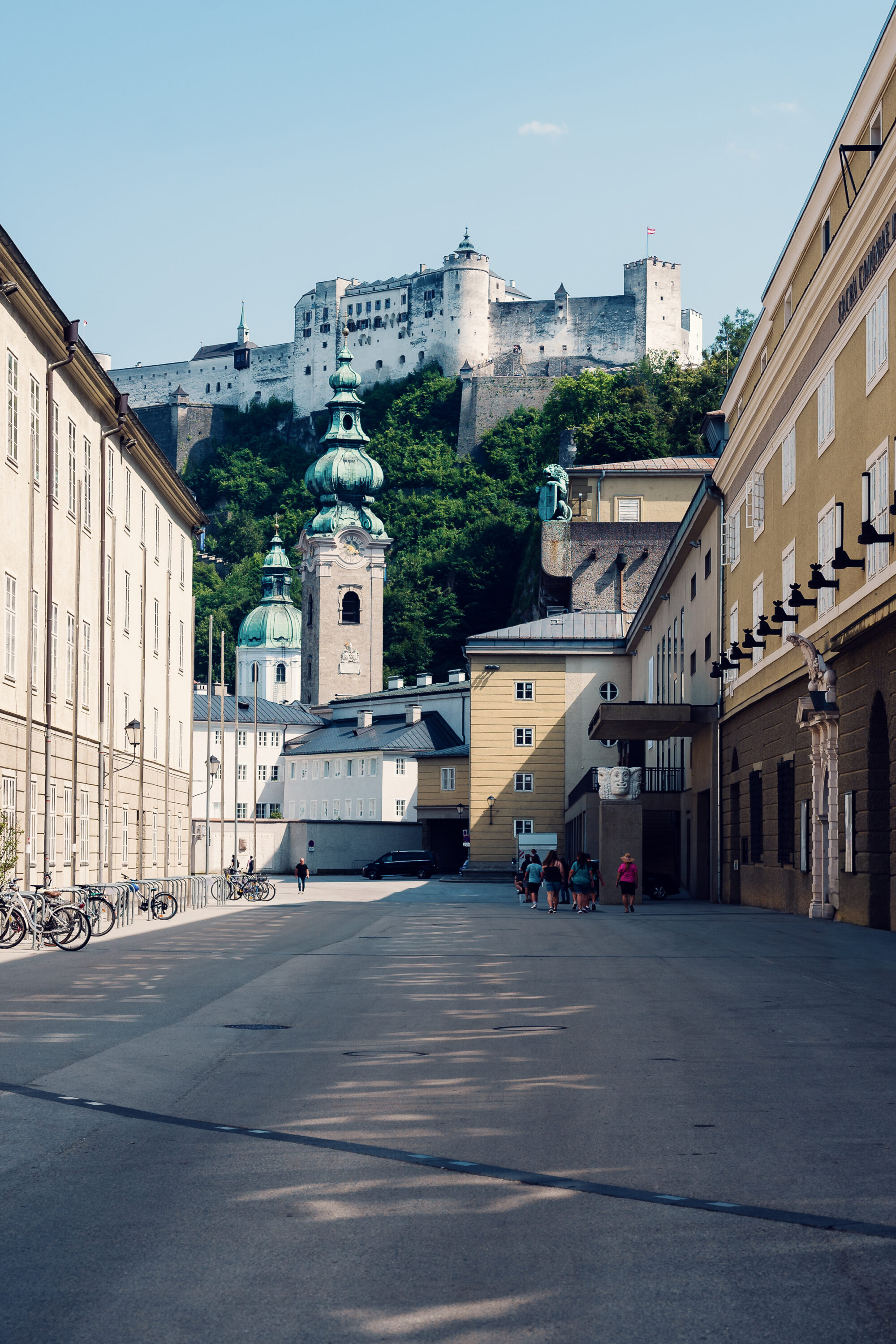
Hofstallgasse in Salzburg with classical building facades and Hohensalzburg Fortress on the hilltop in the background.
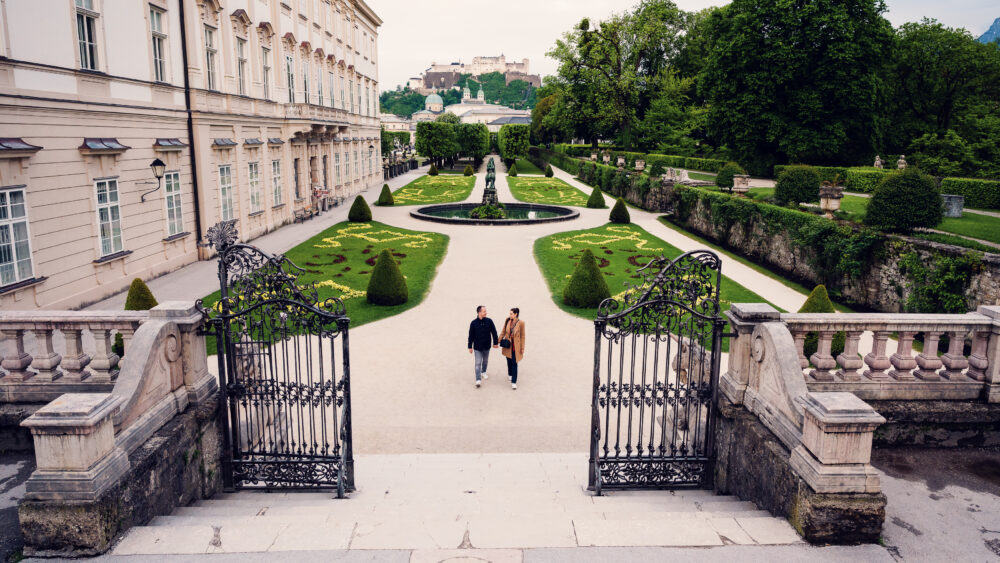
Mario and Adriana strolling together along the Hofstallgasse in Salzburg.
Adriana walking along the Hofstallgasse in Salzburg with historical facades on both sides.
View along Hofstallgasse toward the Salzburg Festival Hall with its arched entrance and classical facade.
Fall in Love with

Hofstallgasse

Hofstallgasse is Salzburg's festival street, home to the three Festival Halls below the Mönchsberg and a Baroque view to the fortress.

* Affiliate links: if you book, a small commission supports our independent work, at no extra cost to you.

01 / 03
01 / 03

Hofstallgasse

Today
Always accessible
Admission
Free
Plan for
45 mins
outdoors
Where
Old Town

The Hofstallgasse is Salzburg's festival street: a 130 metre run of pale stone along the base of the Mönchsberg cliff. Three Salzburg Festival venues line one side, the sheer rock rises on the other, and the street was laid out so that St Peter's spire and the Hohensalzburg Fortress align in a single sightline. For most of the year it's quiet and cool. For several weeks each summer, it becomes one of Austria's most glamorous cultural addresses.

Plan your visit

Opening Hours
Always accessible
Getting there
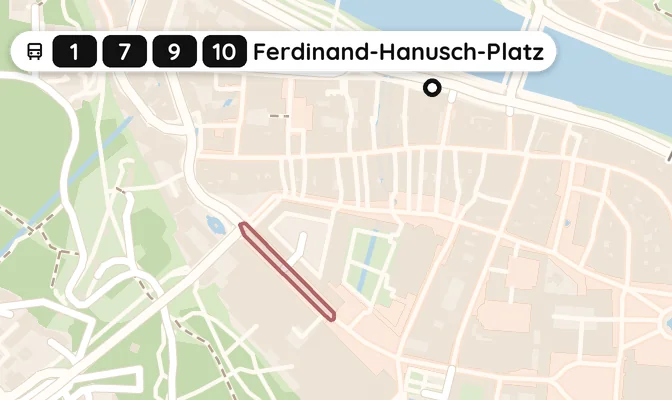
Hofstallgasse, 5020 SalzburgBus 1 7 9 10 Ferdinand-Hanusch-Platz · 5 min walkOld Town

What's on here

Mozartwoche

Every January around Mozart's birthday, the Stiftung Mozarteum fills Salzburg with his music. Orchestral concerts, chamber recitals and opera across the city's concert halls.

Jan 21, 2027 - Jan 31, 2027

Mozartwoche

Jan 21, 2027 - Jan 31, 2027

Every January around Mozart's birthday, the Stiftung Mozarteum fills Salzburg with his music. Orchestral concerts, chamber recitals and opera across the city's concert halls.

  • Stiftung Mozarteum and venues across the city, 5020 Salzburg
  • Concert times vary by programme.
  • Every concert is ticketed, with prices set by concert and seat category. Single tickets and subscription packages are sold through the Stiftung Mozarteum's own ticket office and online shop.
  • The Mozarteum's Großer Saal is known for its acoustics. If you only catch one concert, make it a chamber programme in that hall.

Osterfestspiele Salzburg

Salzburg's Easter festival, founded by Karajan in 1967 and back in the hands of the Berliner Philharmoniker. Opera and orchestral concerts over Holy Week and Easter.

Mar 20, 2027 - Mar 29, 2027

Osterfestspiele Salzburg

Mar 20, 2027 - Mar 29, 2027

Salzburg's Easter festival, founded by Karajan in 1967 and back in the hands of the Berliner Philharmoniker. Opera and orchestral concerts over Holy Week and Easter.

  • Festspielbezirk, Hofstallgasse, 5020 Salzburg
  • Performance times vary by production.
  • Every performance is ticketed, with prices set by production, venue and seat category. Tickets are ordered through the festival's own ticket office.
  • It's a smaller, more exclusive affair than the summer Festival, and the audience dresses for it. Book early; the opera nights go first.

Salzburger Pfingstfestspiele

May 14, 2027 - May 17, 2027

A concentrated long weekend of music over Whitsun, curated by Cecilia Bartoli. Rare baroque works and star voices, a refined prelude to the summer Festival.

  • Festspielbezirk, Hofstallgasse, 5020 Salzburg
  • Whitsun weekend, Friday to Whit Monday. Performance times vary by programme.
  • Every performance is ticketed, with prices set by production and seat category. Tickets are ordered through the Salzburg Festival's own ticket office once the Whitsun programme is published.
  • Bartoli usually builds the programme around a single theme and often sings herself. It's a small festival, so the handful of performances sell out fast.

Salzburg Festival Opening Celebration

~Jul 16, 2027 - Jul 23, 2027 Estimated

The Salzburg Festival's free opening party: the theater doors open for everyone, with concerts, open rehearsals, readings and a torch dance in the squares, courtyards and halls of the Old Town.

  • Venues across the Old Town, from Domplatz to courtyards and the festival halls on Hofstallgasse, 5020 Salzburg
  • Three days in July at the start of the festival summer, the third a week after the first two. The full program with all times is published in early July.
  • Free Entry
  • Keep your count card with you after you've booked it. It doubles as a ticket for every bus and train in the Salzburg transport network, valid from six hours before your event until the last service, so you can leave the car at the hotel.

Salzburger Festspiele

Jul 16, 2027 - Aug 29, 2027

Through July and August the whole city becomes one stage. Opera, drama and concerts with the names that define classical music, set against Salzburg's baroque backdrop.

  • Festspielbezirk, Hofstallgasse, 5020 Salzburg
  • Mid July to the end of August. Performance times vary by production.
  • Every performance is ticketed, with prices set by production and seat category, from standing room to the top categories. Tickets are ordered through the Festival's own ticket office once the programme is published; seats still available afterwards go on direct sale online.
  • Tickets for the marquee operas go through an order-and-allocation system months ahead. For a spontaneous trip, aim for a concert or a Jedermann ticket on Domplatz, which are far easier to land.

Tours & experiences

Hofstallgasse


Muvamo Opinion

The clever thing about the Hofstallgasse is that it was built as a view. When Wolf Dietrich's master builder drew up the street, he aligned it so that the spire of St Peter's and the Hohensalzburg Fortress stack up above the rooftops as you look south. Four hundred years on, that sightline still works, and most people walk right past it on their way to a concert.

The setting does a lot of the work. The Mönchsberg's raw conglomerate wall rises directly behind the Großes Festspielhaus, so the hall looks carved out of the mountain, not dropped in front of it. Five bronze doors break up the long pale facade. Across the street, the Alte Universität and the white curve of the Kollegienkirche close off the northern end.

Come by day and you get the architecture, the stone, and that deliberate Baroque perspective almost to yourself. Come on a festival evening and the same street turns into the open-air foyer of the Salzburger Festspiele, with black tie and evening gowns gathering under the cliff before the bell calls everyone in. Both versions are worth your time, and they're the same 130 metres.

Recommended tours & experiences

Helpful Hints

  • During the Salzburg Festival in late July and August, the street fills in the early evening before performance.

Gastronomic Discoveries

  • The Universitätsplatz farmers' market sits a block behind the street near the Getreidegasse, good for a quick pretzel, cheese or fresh juice between sights.
  • For a sit-down meal a few minutes away, the St. Peter Stiftskulinarium serves classic Austrian cooking in the vaulted rooms of St. Peter's Abbey.
  • Salzburg's oldest coffee house, Café Tomaselli, is a short walk north for a Melange and cake after your stroll.

Hidden Gems

  • The Pferdeschwemme at the far end appears briefly in The Sound of Music, during the “My Favorite Things” Salzburg montage with Maria and the children.

Our Little Extras

  • On a festival evening you don't need a ticket to enjoy the scene: the arrival of the audience in evening dress under the floodlit cliff is a free spectacle.

From Court Stables to the Stage of the World: Hofstallgasse

The Hofstallgasse was never meant to be ordinary. When Wolf Dietrich von Raitenau reshaped Salzburg into a Baroque capital, his master builder laid out this short lane as a piece of stagecraft: look south along it, and the spire of St Peter's and the fortress fall into a single line. That deliberate sightline still holds today.

A street named for horses

The name is literal. This was the address of the prince-archbishop's court stables, built for more than a hundred horses; later, the nearby summer riding school was created in the former Mönchsberg quarry, and its arcades survive today as the Felsenreitschule. At the southern end of the Hofstallgasse, the Pferdeschwemme still shows a horse-taming sculpture against a frescoed wall, one of the clearest surviving traces of the court-stable era.
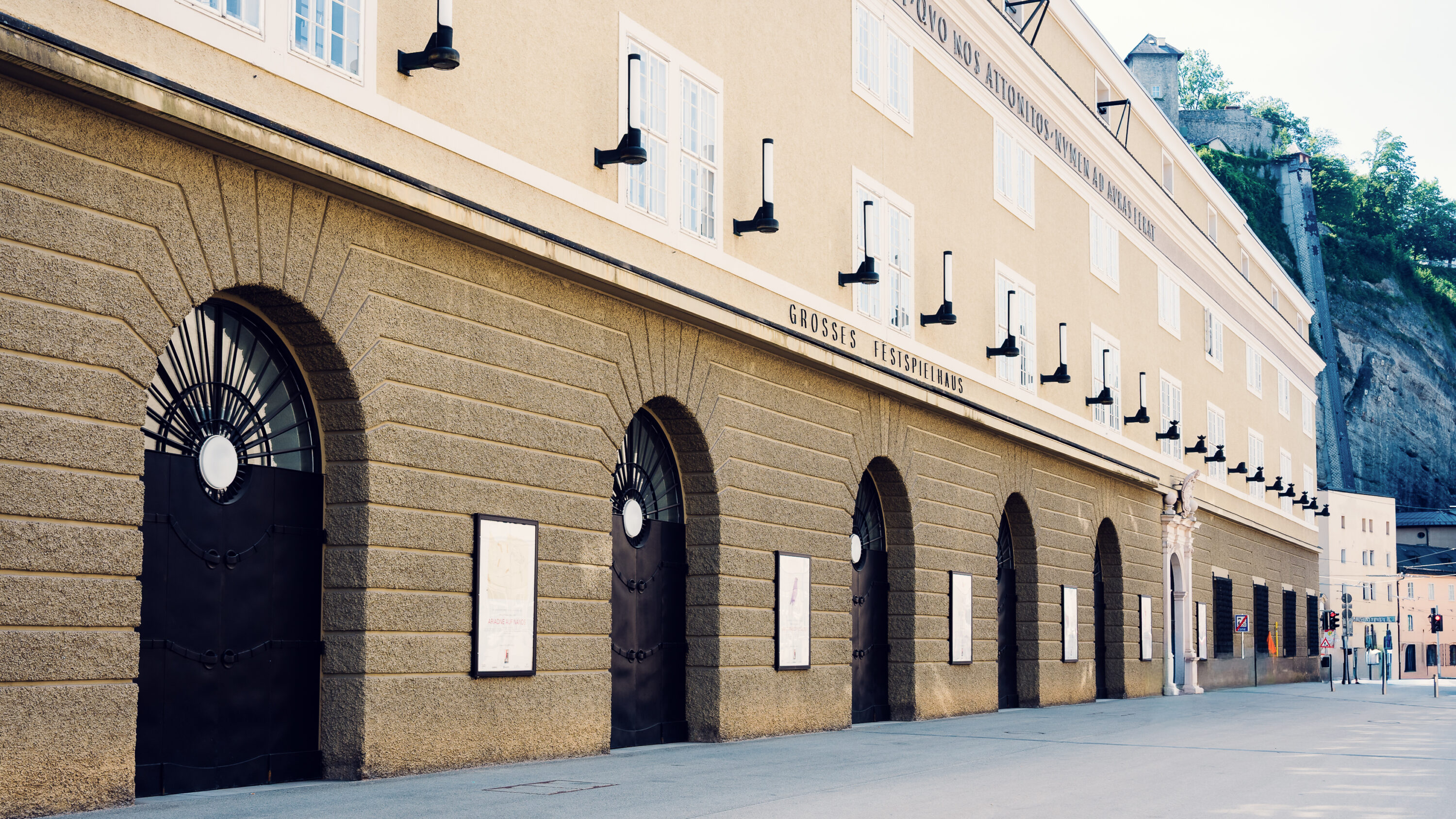
View along Hofstallgasse toward the Salzburg Festival Hall with its arched entrance and classical facade.
The Großes Festspielhaus on Hofstallgasse is Salzburg's largest concert venue and the main stage of the Salzburg Festival.

When the festival moved in

In its early years, the Salzburg Festival had big ideas and limited resources. Rather than build entirely new theatres straight away, the organisers gradually adapted the former prince-archbishop's stables and riding halls, and the temporary solution became permanent. Three houses now line the Hofstallgasse beneath the cliff: the Großes Festspielhaus, the Haus für Mozart, and the Felsenreitschule.
The great hall and the golden street

The Großes Festspielhaus is the newcomer, and building it meant blasting tens of thousands of cubic metres of rock out of the Mönchsberg to make room for one of the widest stages anywhere. It opened under Herbert von Karajan, and in its foyer you'll still find floor mosaics of horses' heads, a wink at what stood here first. The Hofstallgasse had its own moment of theatre when it was resurfaced in gold-toned asphalt for a Mozart anniversary, a choice that split the city before fading quietly back toward grey. Opposite the hall, the Alte Universität rounds out a lane that has carried Salzburg's sacred, academic and musical life for four centuries.