
Eight Centuries Between Darkness and Light - Franciscan Church
The earliest Marian church on this site may predate the cathedral building associated with Saint Virgil; in the eighth century, Virgil is associated with restoring or developing the church as a Marian, baptismal, and synodal church. He may have used the building for baptisms, a function it served alongside the cathedral community for centuries. A document from 1139 records a parish church here, but that building was destroyed by fire in 1167 along with five other Salzburg churches, including the Dom.
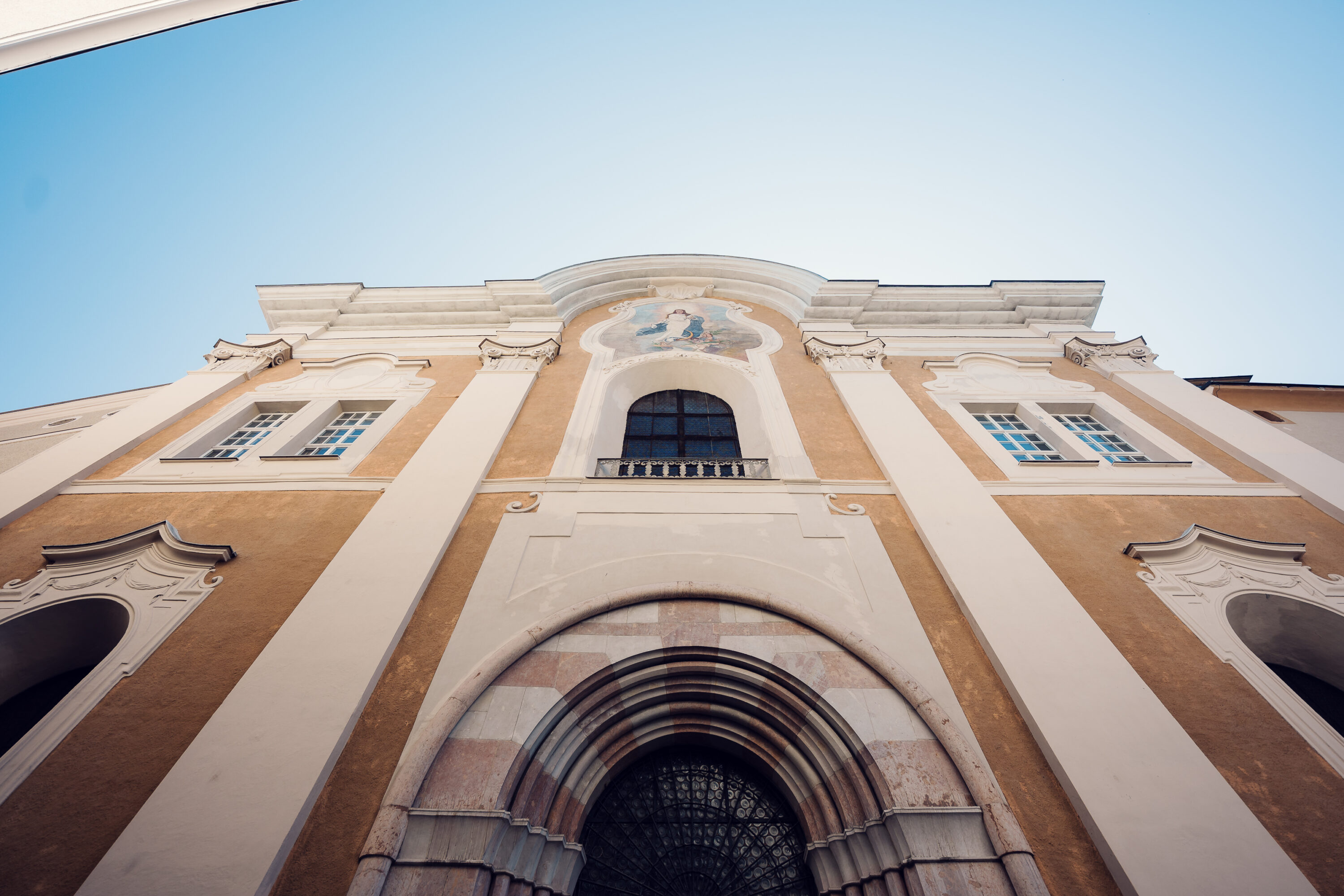
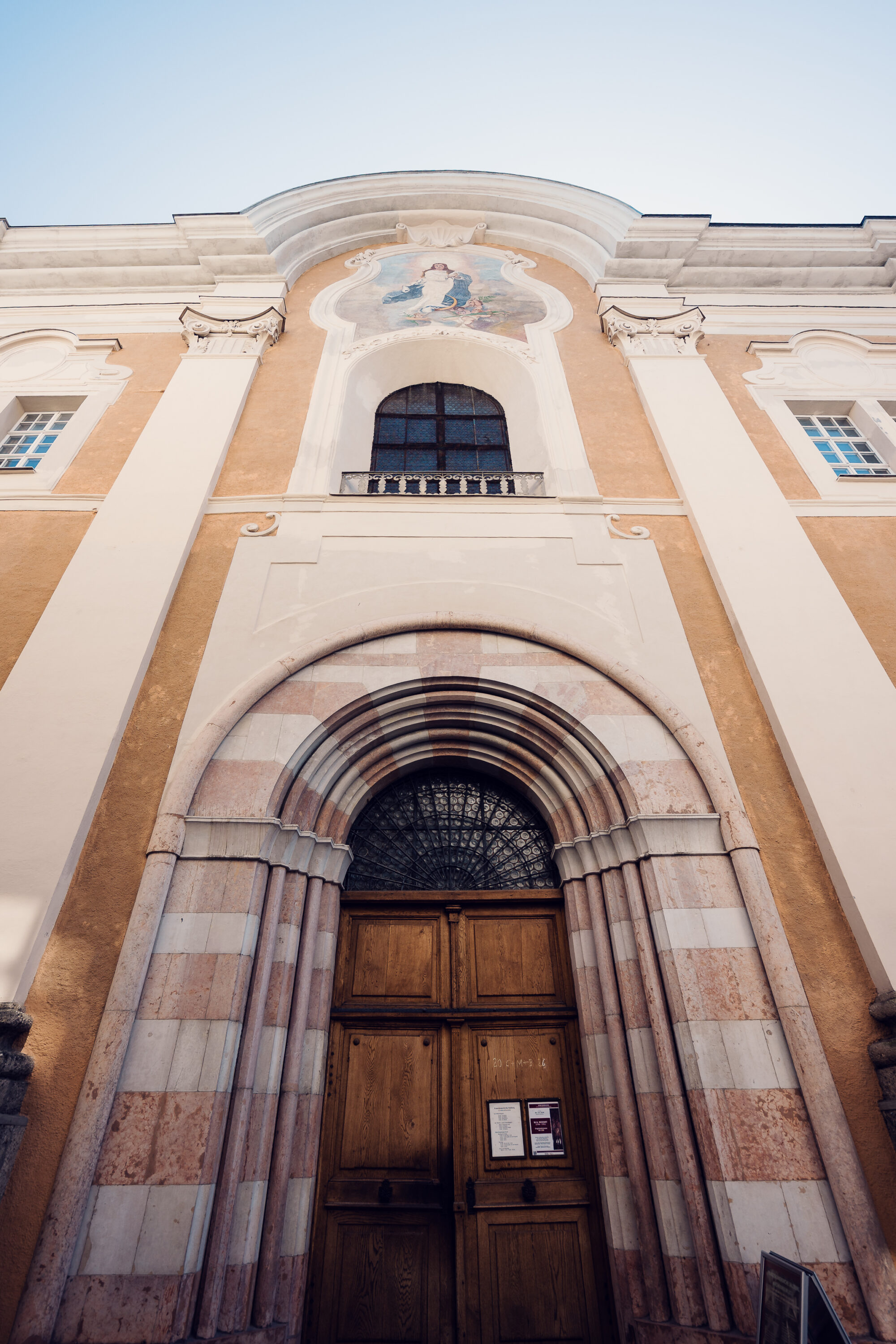
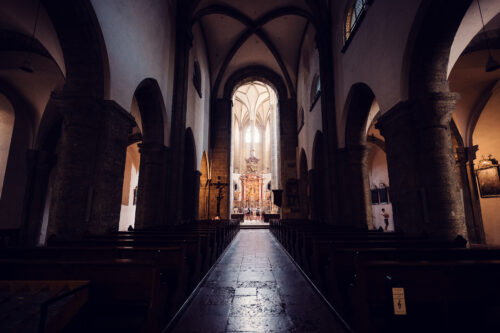
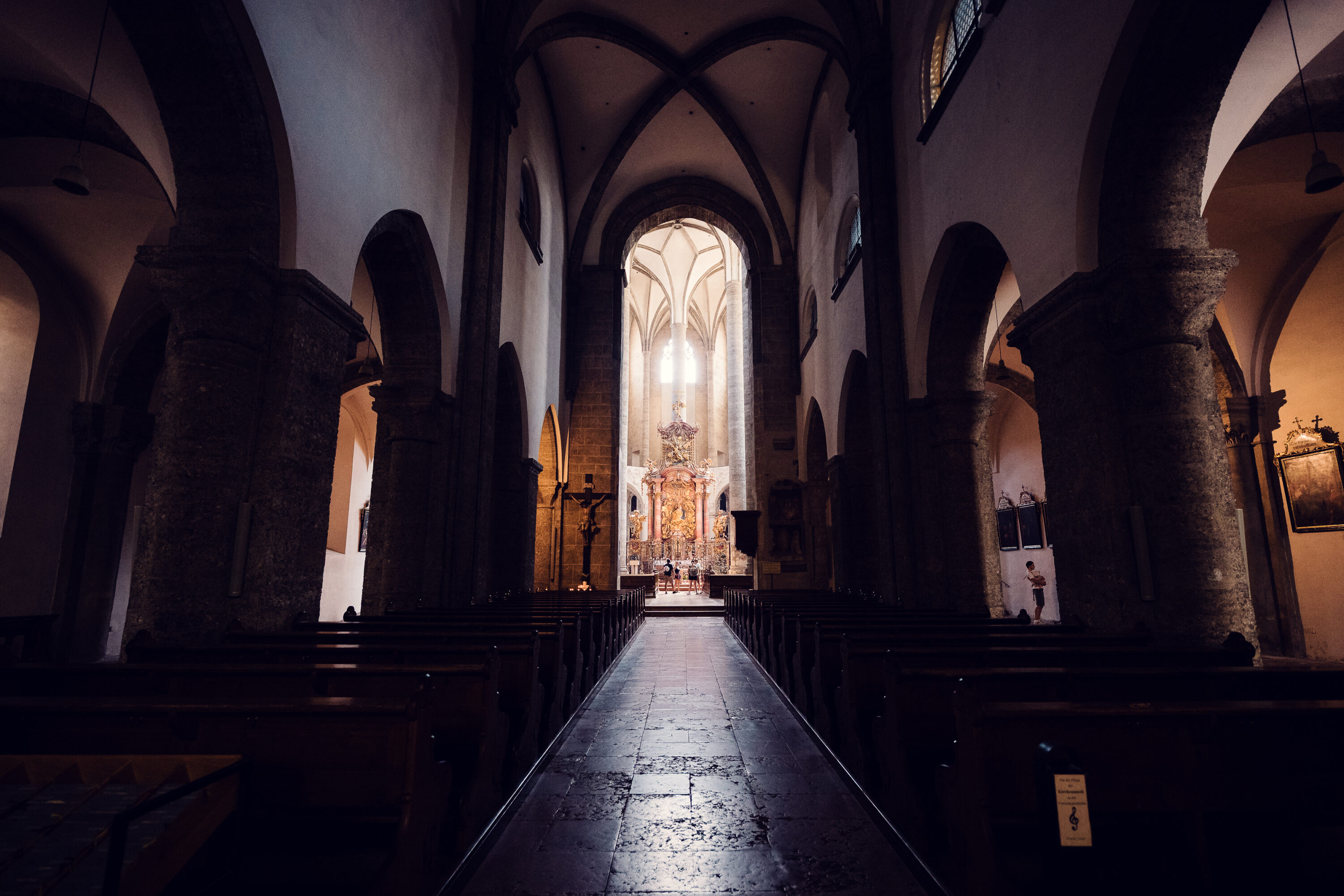
Reconstruction began around 1208 in the late Romanesque style. The late Romanesque nave, with its ribbed vaulting and heavy supports, was consecrated in 1223. Today the Franciscan Church remains one of the oldest standing structures in Salzburg, a rare physical link to the city's pre-Gothic past.
The Gothic Transformation
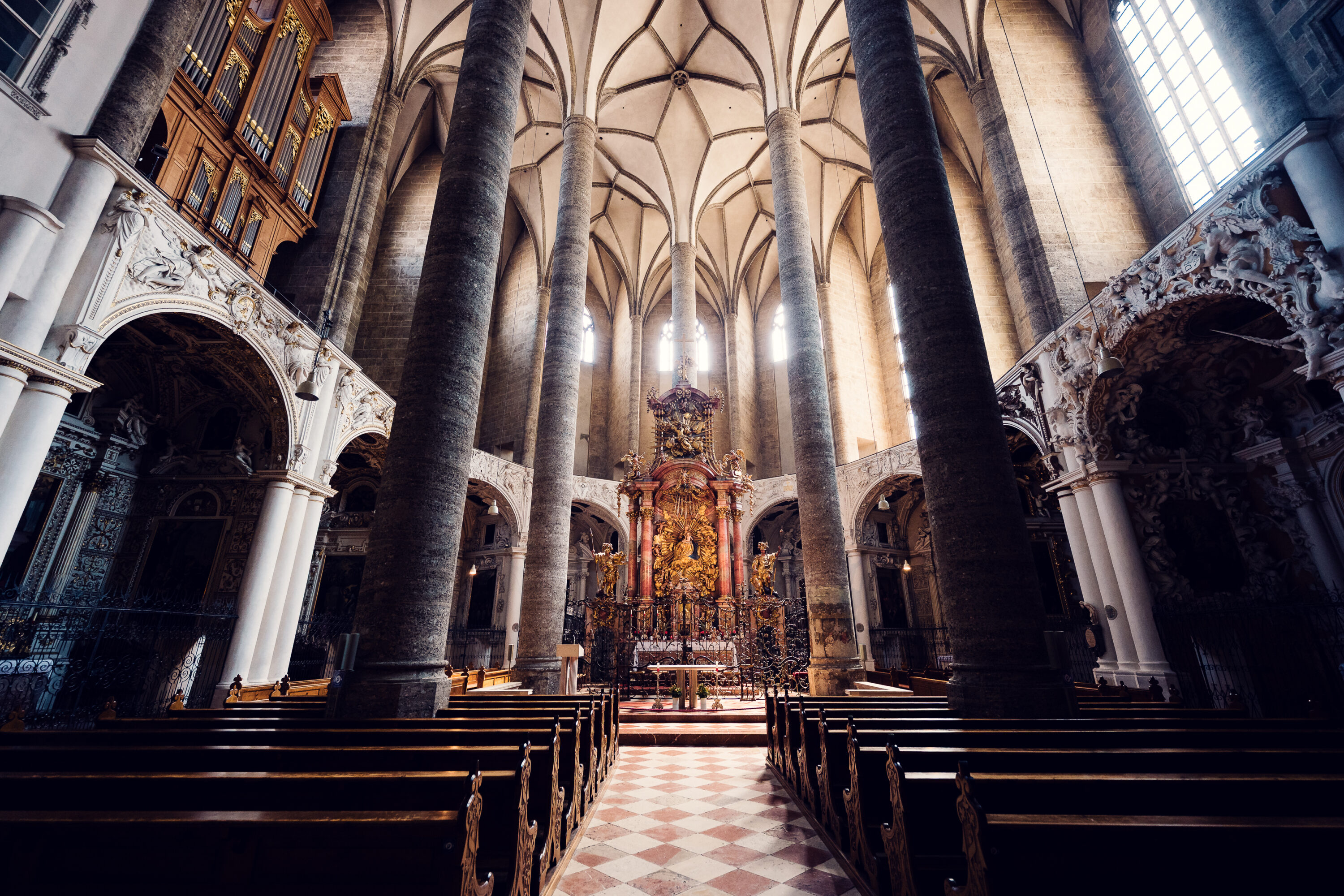
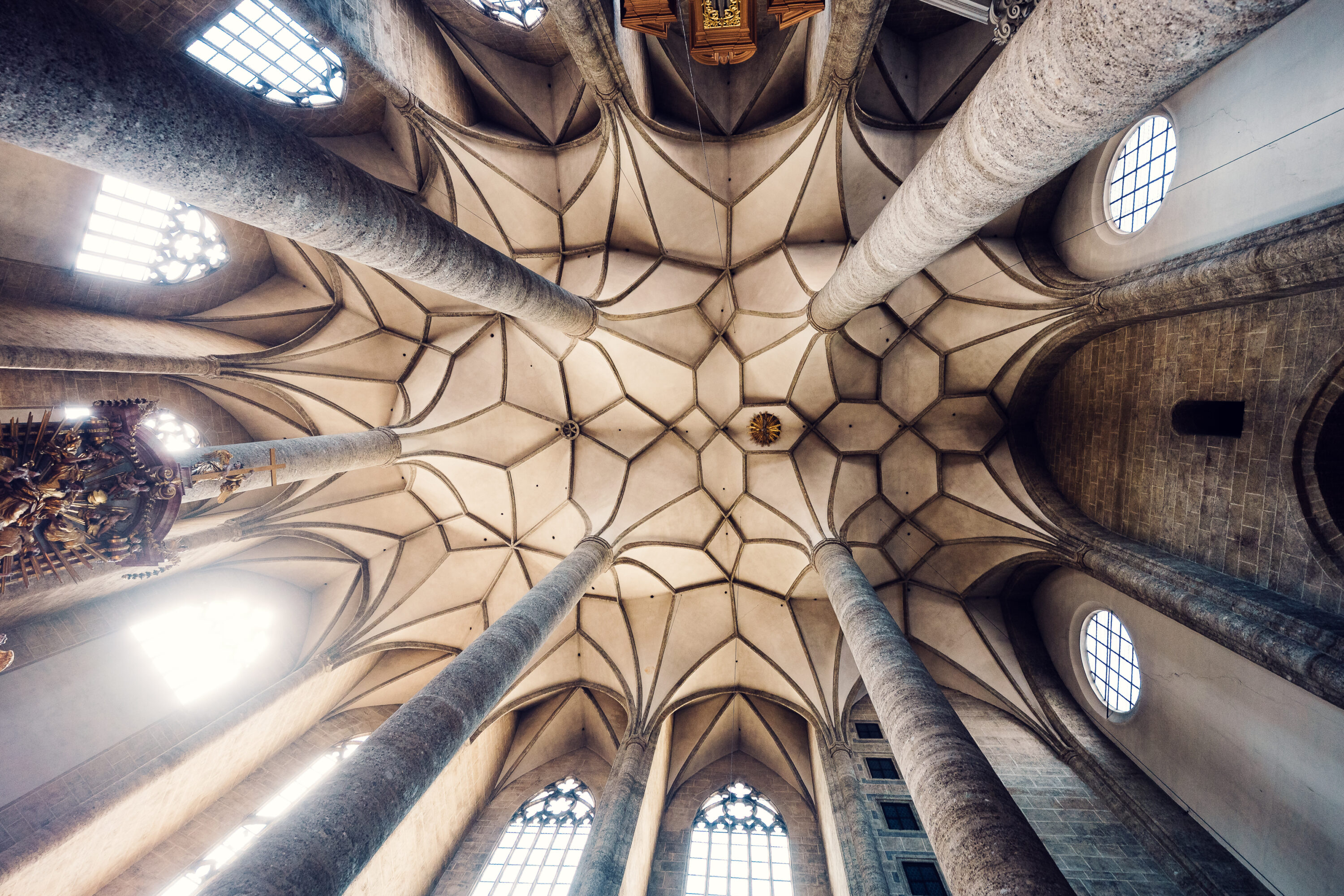
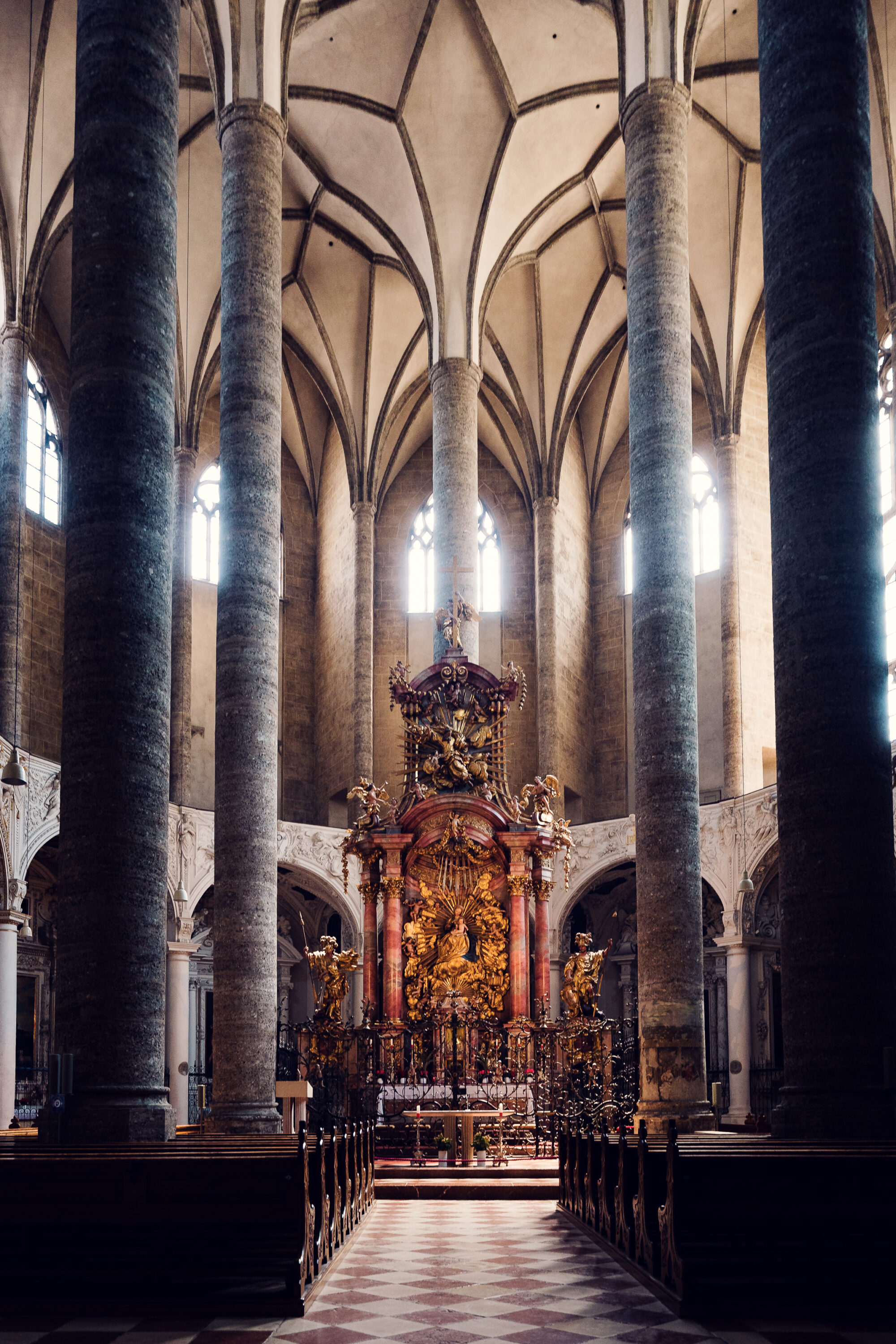
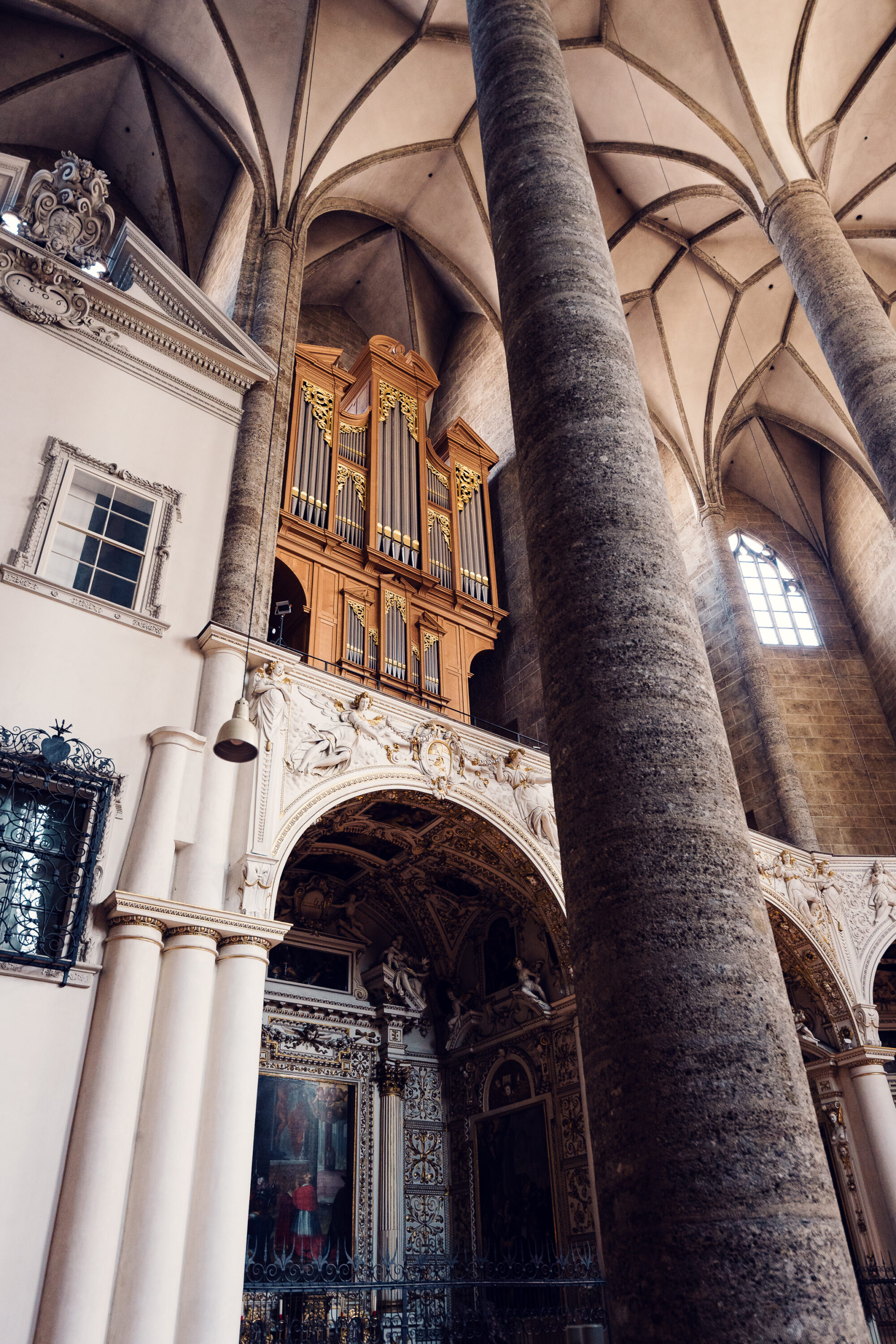
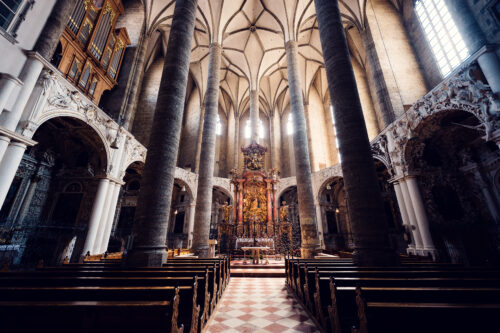
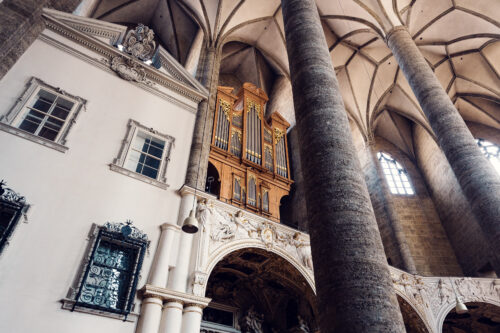
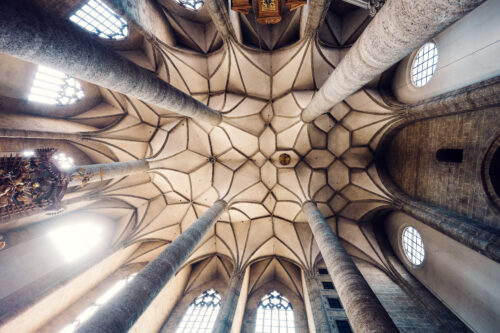
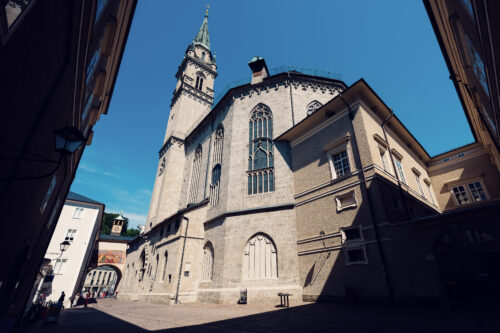
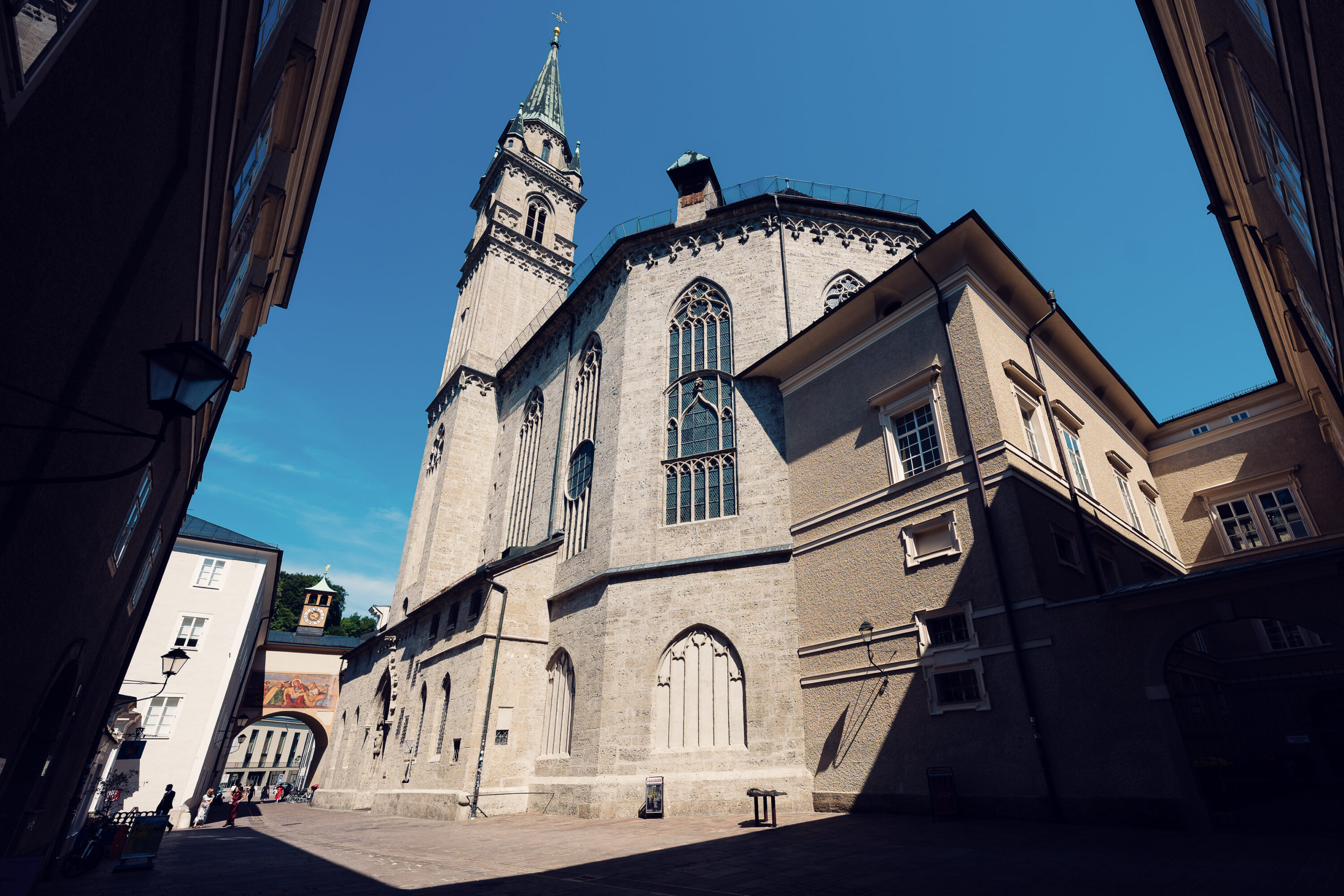
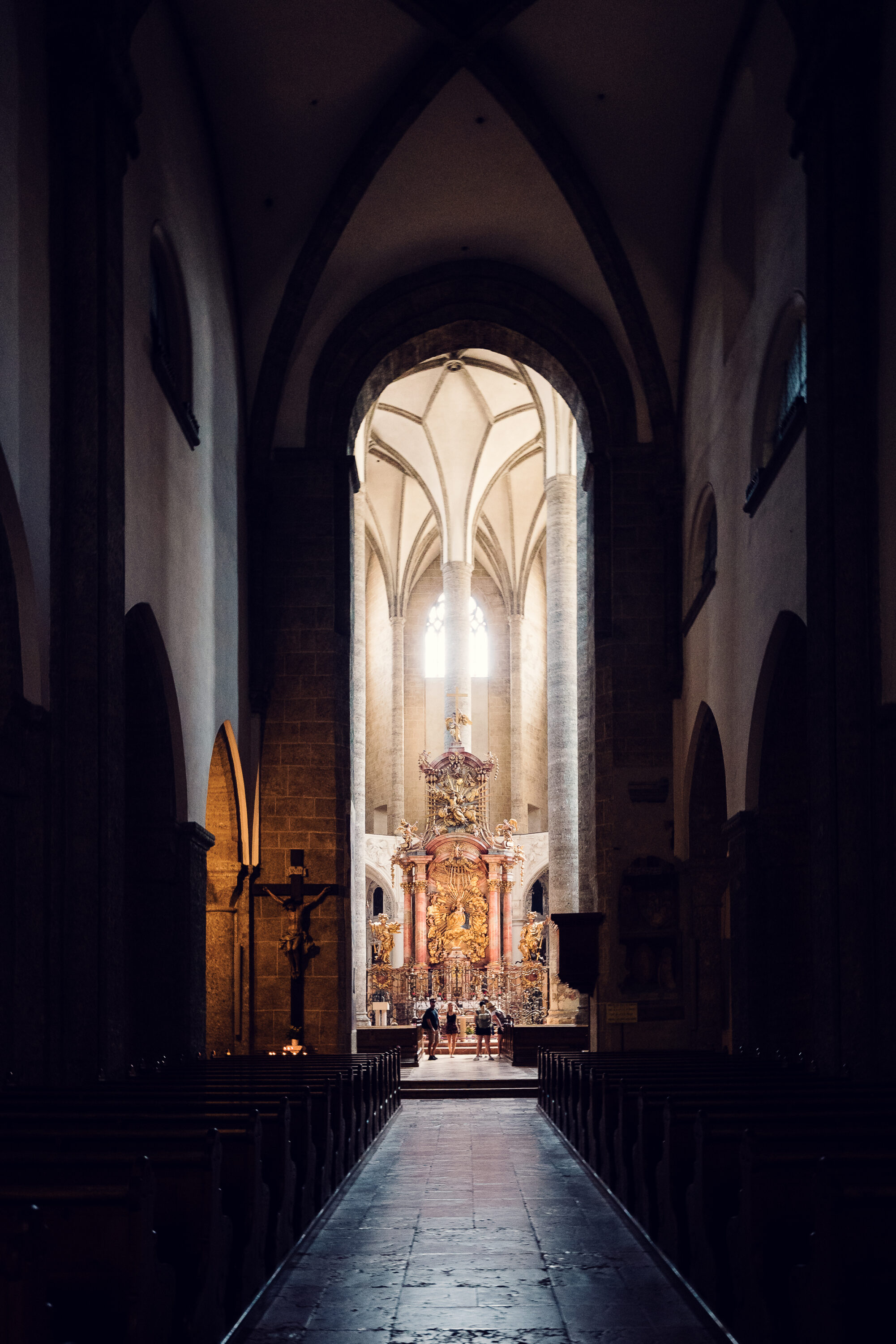
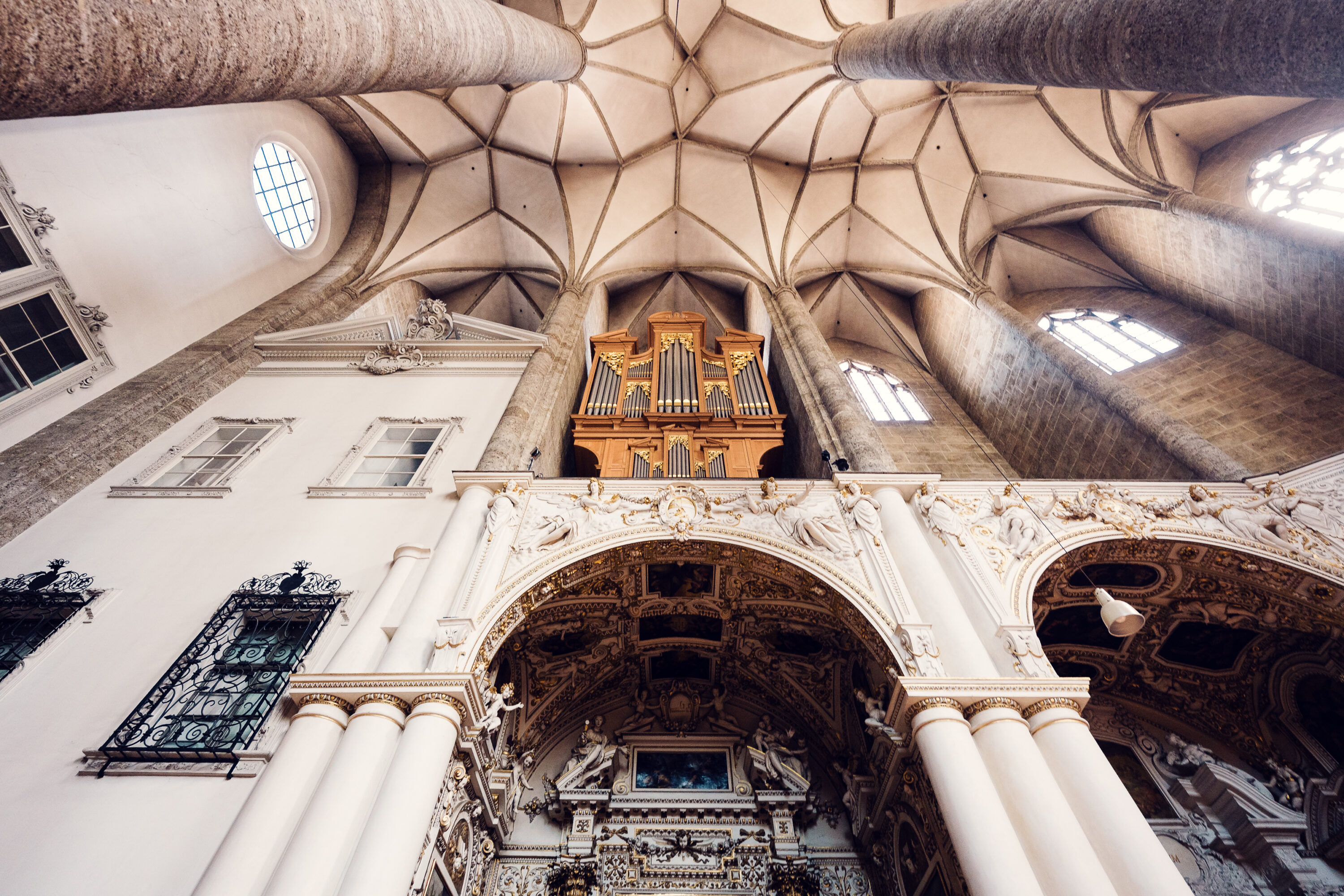
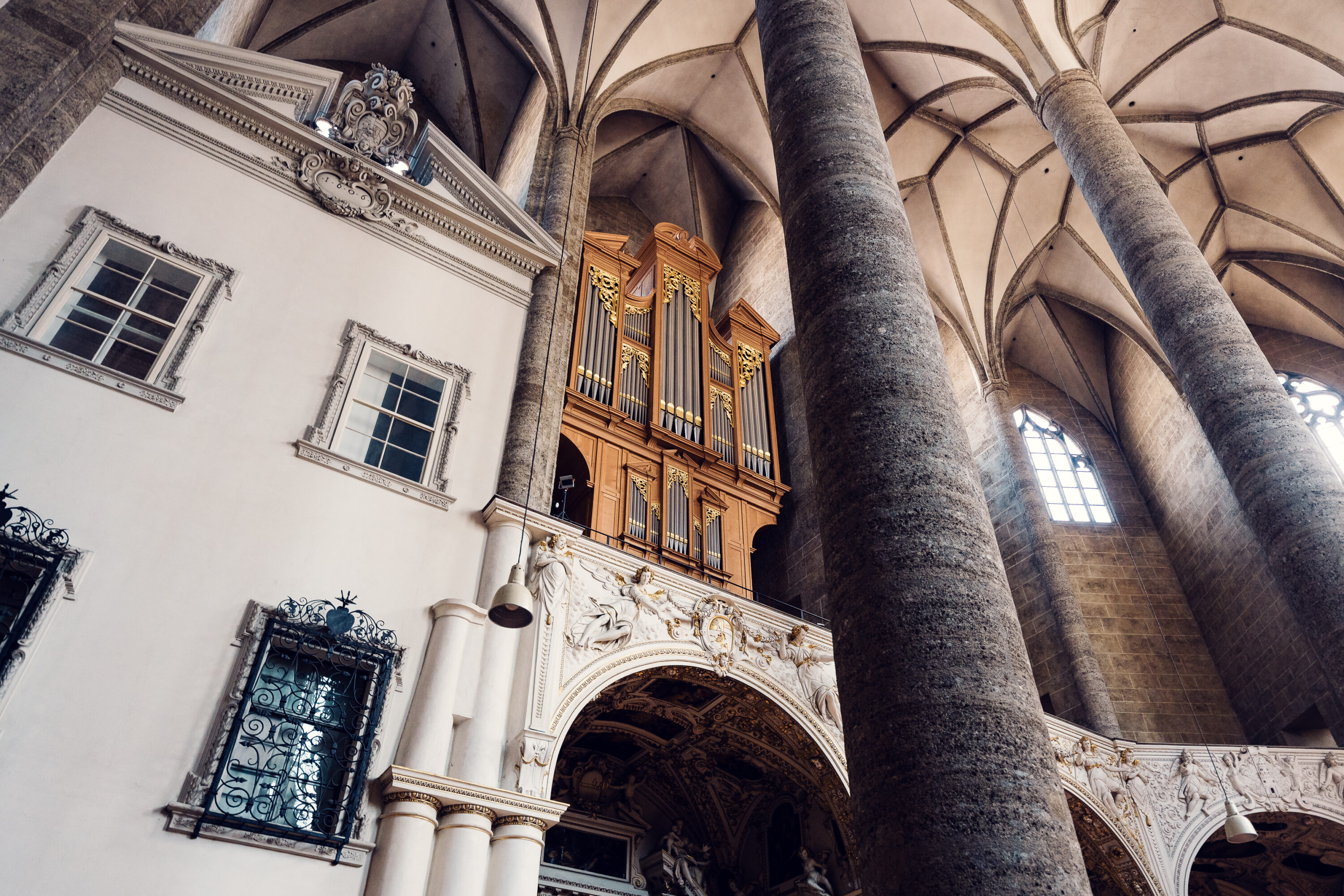
The church's most dramatic architectural chapter began in 1408 when Master Hans von Burghausen started work on a new choir to replace the Romanesque original. What he and his successor Stefan Krumenauer completed by 1450 was a masterpiece of Late Gothic hall-church design: three naves of equal height, slender cylindrical columns rising to a star-ribbed vault, and large windows that flood the space with light. The choir stands at roughly twice the height of the Romanesque nave, and the transition between the two creates an almost theatrical experience of spatial expansion.
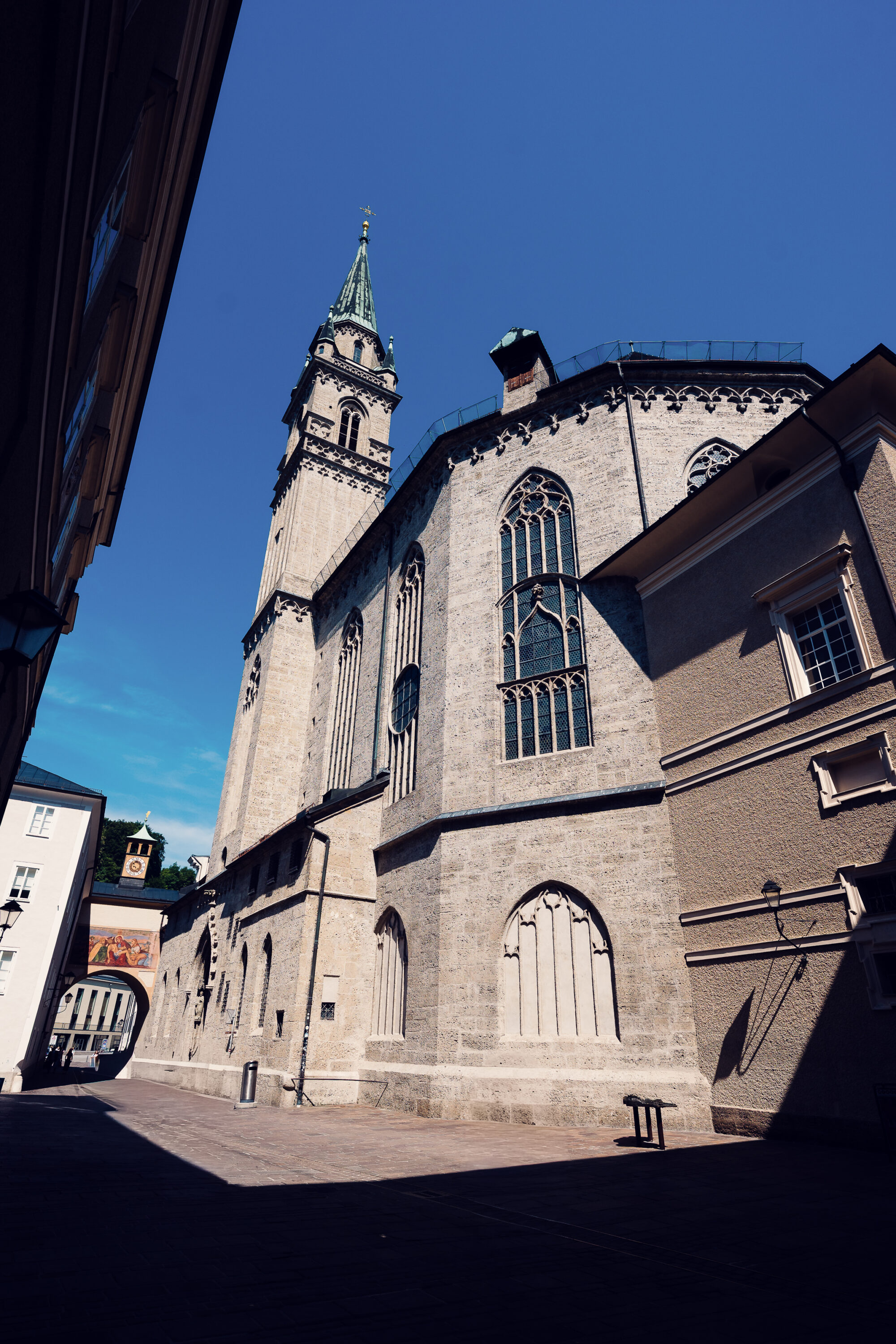
The Gothic tower was expanded in the late fifteenth century; the tower's upper storeys are generally dated to 1486-1498, with the present Gothic tower completed around 1496/1498. It soon became a point of controversy. In 1670, Archbishop Max Gandolf von Kuenburg ordered the spire removed because he considered it improper for the Franciscan Church's tower to exceed the height of the cathedral. The Neo-Gothic restoration of the spire followed in 1866-67 under Josef Wessicken.
From Parish Church to Franciscan Convent
The Franciscan Church served as Salzburg's main parish church for centuries, dedicated to the Virgin Mary. That changed in 1635 when the rebuilt cathedral took over the parish role. The building had been assigned to the Franciscan Order by Archbishop Wolf Dietrich von Raitenau in 1592, and it became their convent church. Wolf Dietrich also created a connecting corridor to the Residenz, allowing the archbishop to attend services without stepping outside.
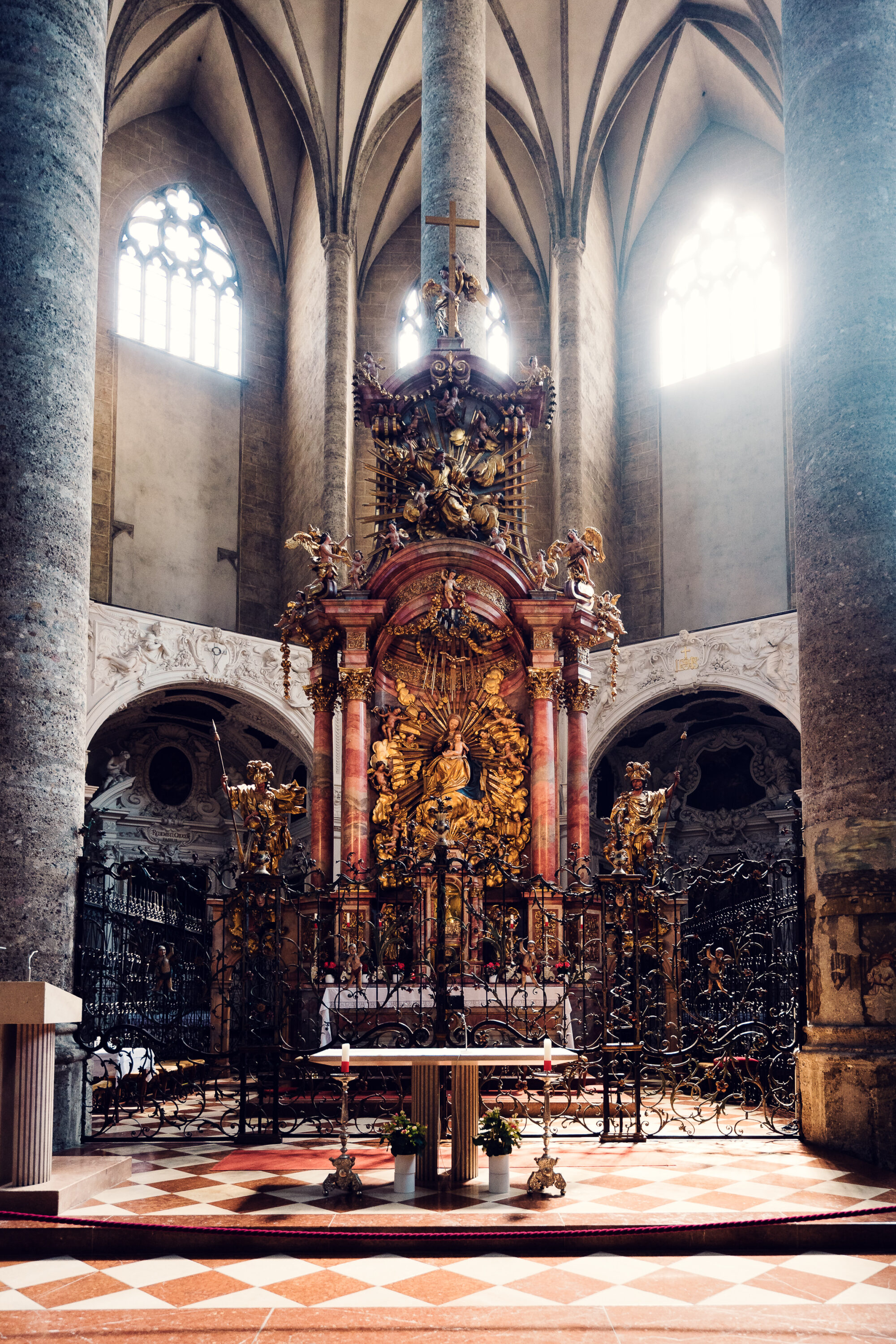
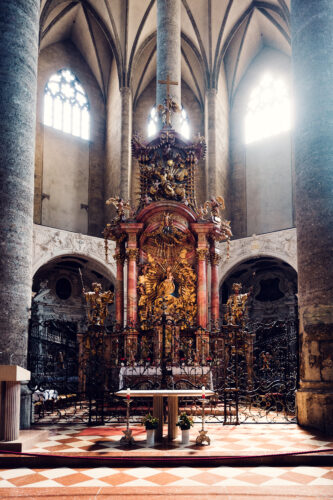
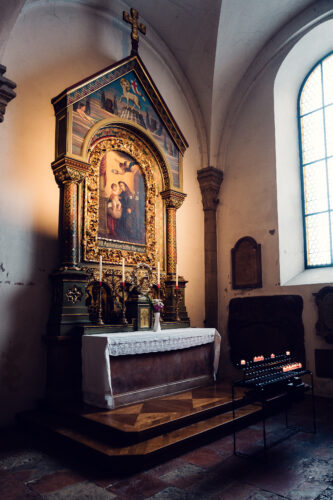
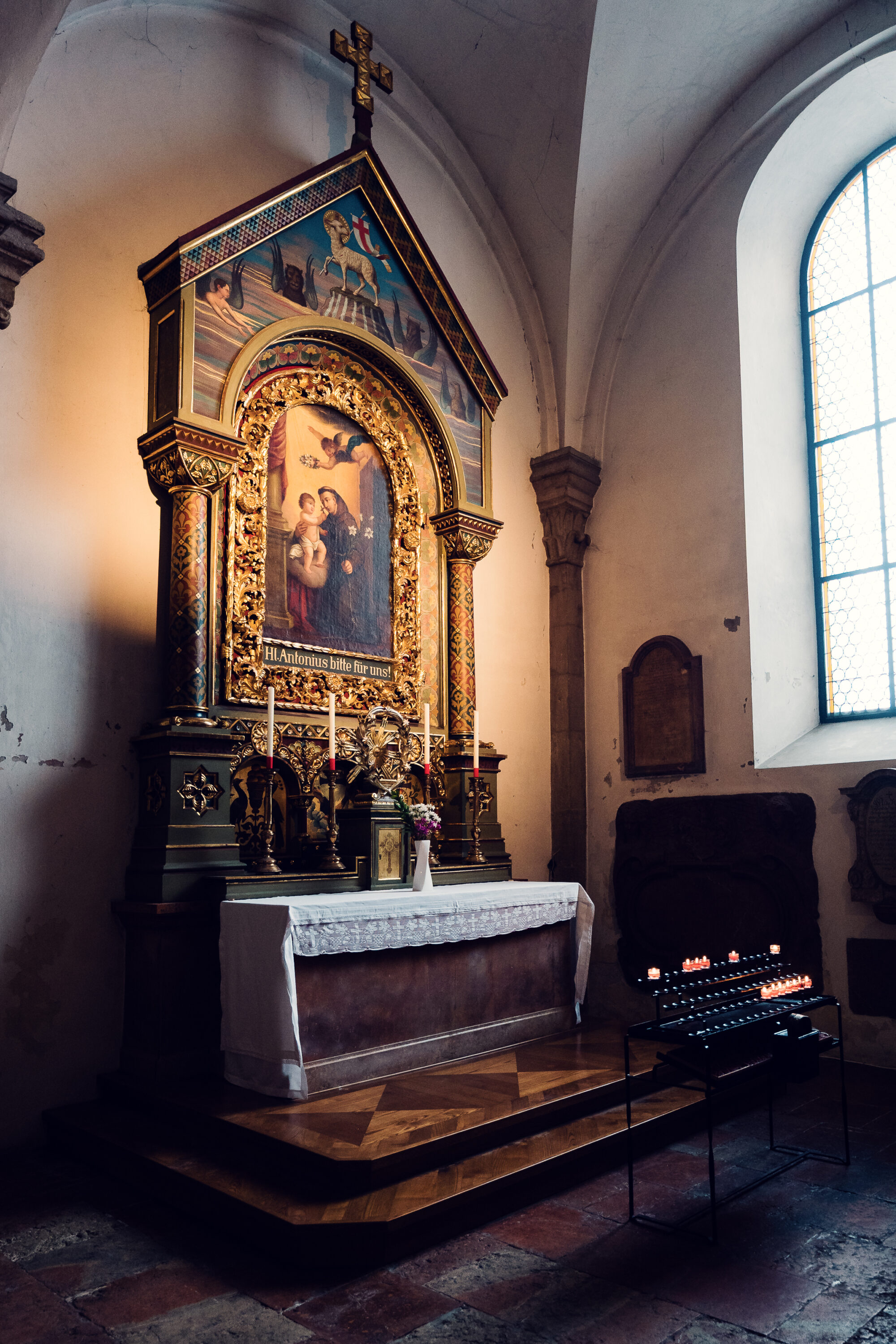
The Baroque period brought Johann Bernhard Fischer von Erlach's high altar in 1709-1710, a grand marble-and-gold structure built around Michael Pacher's Gothic Madonna. Throughout the seventeenth century, the archbishops and their patrons filled the radial chapels with Baroque decoration, each chapel reflecting the taste and ambition of its donor. The Franziskuskapelle, commissioned by Archbishop Johann Ernst Thun, features frescoes by Johann Michael Rottmayr depicting scenes from the life of St. Francis.
Survival and Revival
The Napoleonic wars brought French soldiers into the monastery in 1800, using it as a barracks for three months. After Salzburg became part of Austria again following the Congress of Vienna, the Franciscan community gradually rebuilt. The most severe threat came in 1938 when the Nazi regime seized the monastery as a Gestapo headquarters and used parts of the building as a prison. The church itself remained open, tended by a handful of friars who continued living in the city.
After 1945, American forces occupied the monastery, and Austrian public broadcaster ORF's Salzburg studio operated from its rooms until 1973. A full restoration in 1974-1977 returned the complex to the Franciscans, and since 2007 it has served as the seat of the Franciscan Province of Austria. Today, about a dozen friars live and work here, continuing a tradition of pastoral care and the music at the Franciscan Church that spans centuries.