
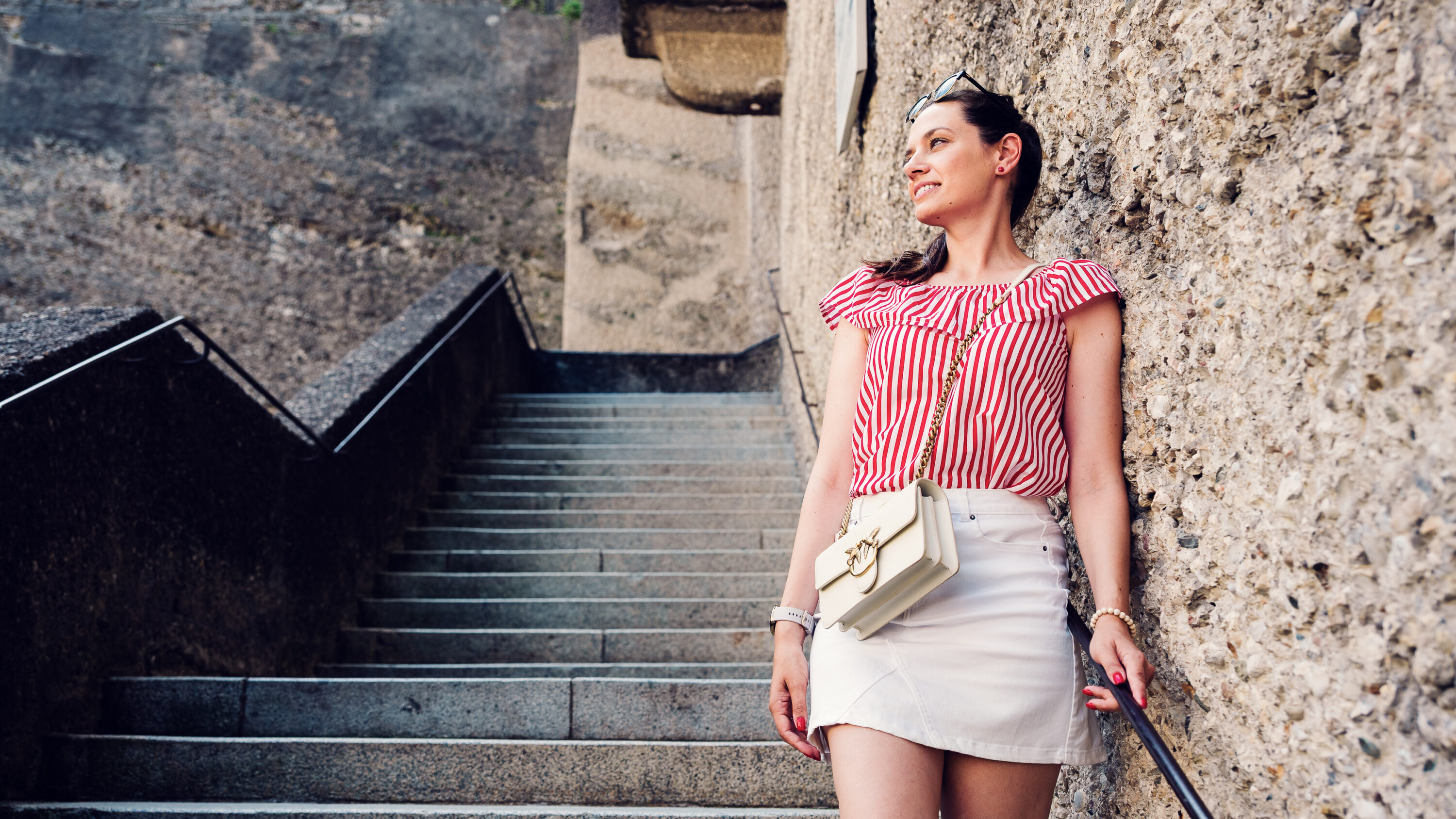
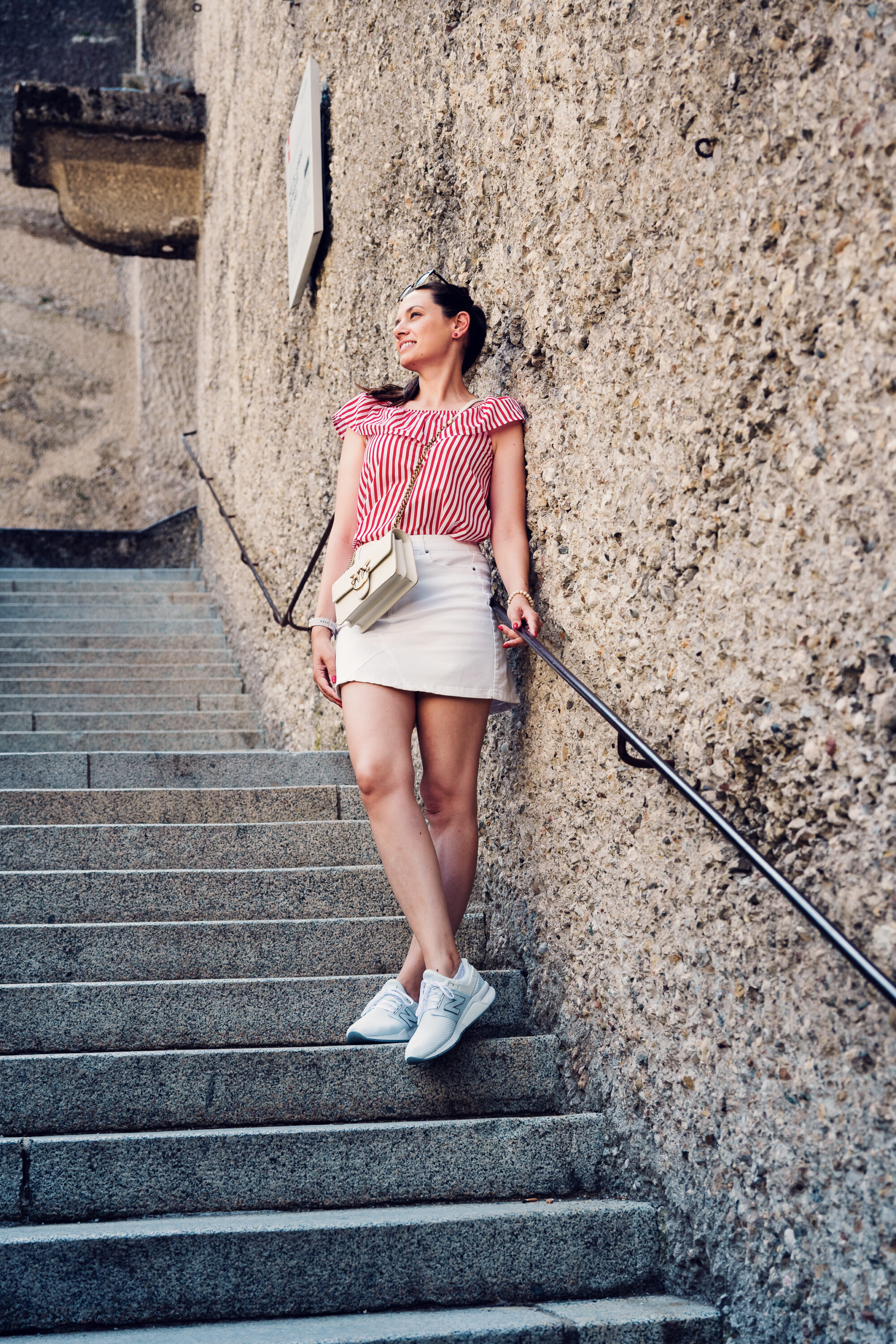
Adriana standing beside the stone wall at the top of the granite staircase in the Toscaninihof, the steps descending to the left in Salzburg.
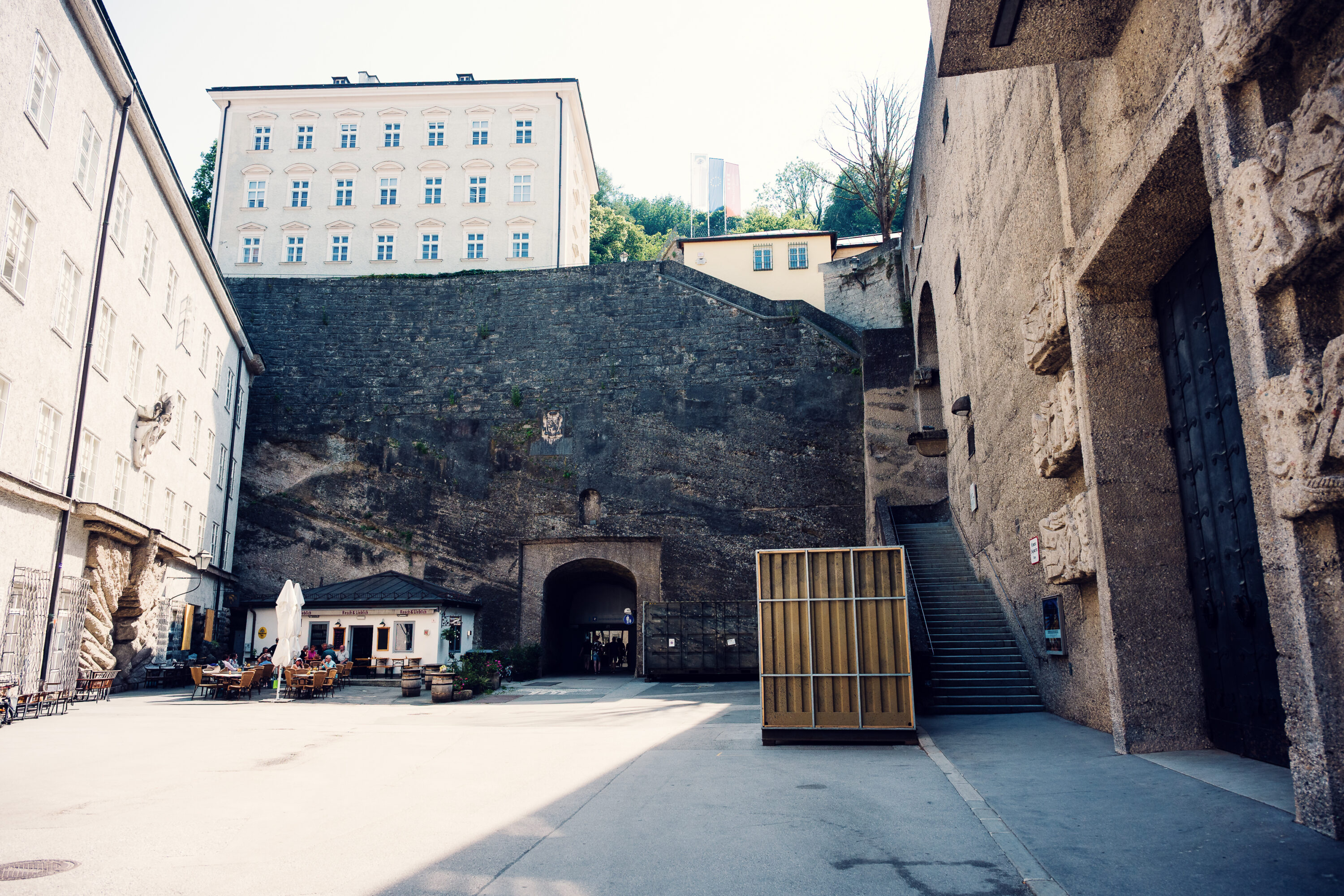
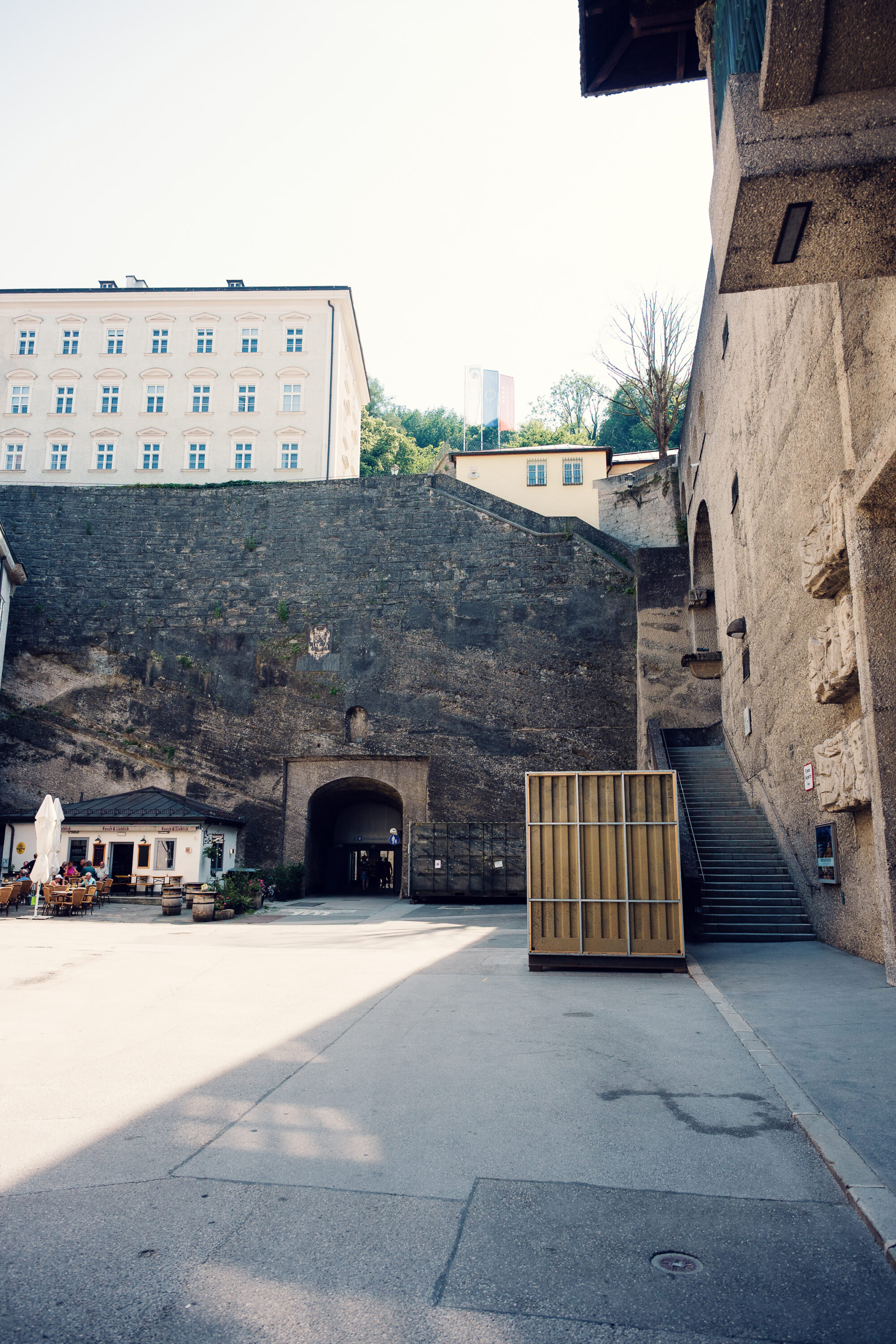
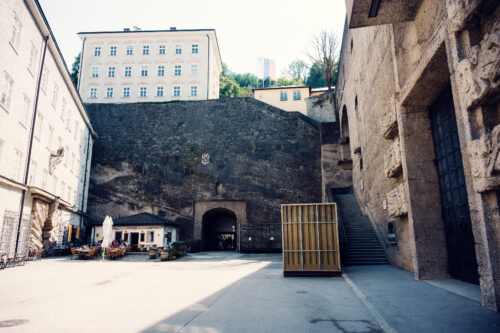
Open courtyard of the Toscaninihof with a cafe terrace on the left, a tunnel passage through the rock, and a staircase climbing the Mönchsberg in Salzburg.
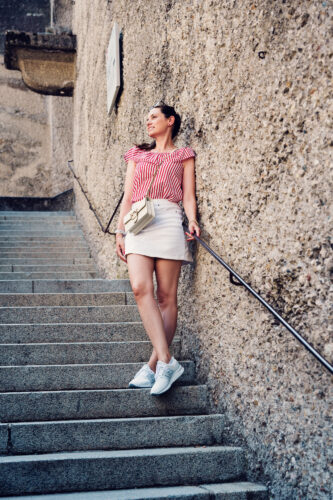
Adriana leaning against the stone wall on the staircase at the Toscaninihof, looking up into the sunlight in Salzburg.
Tiered rows of stone arches rising against the Mönchsberg cliff at the Toscaninihof in Salzburg.
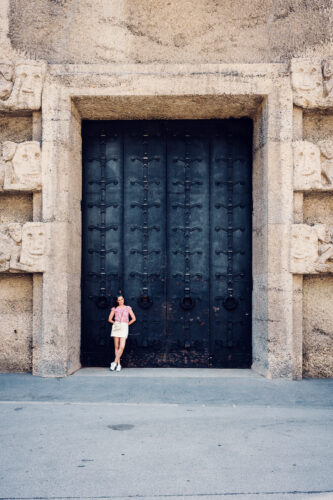
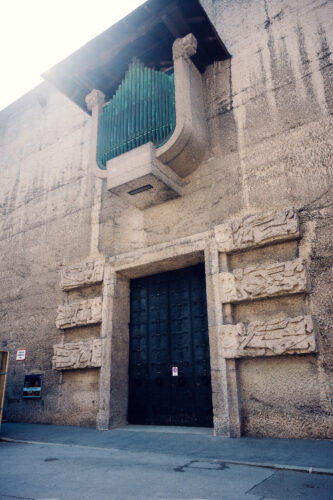
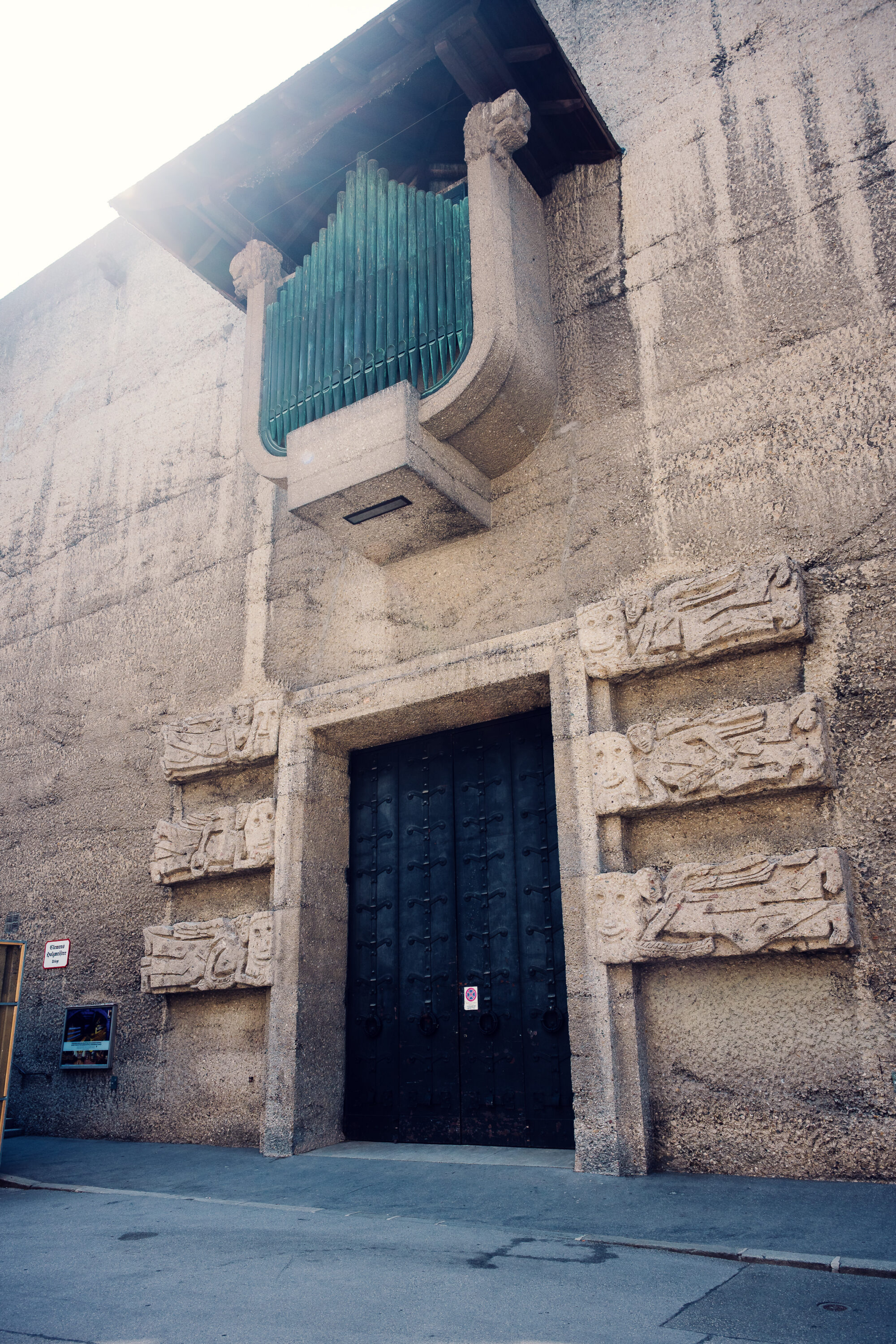
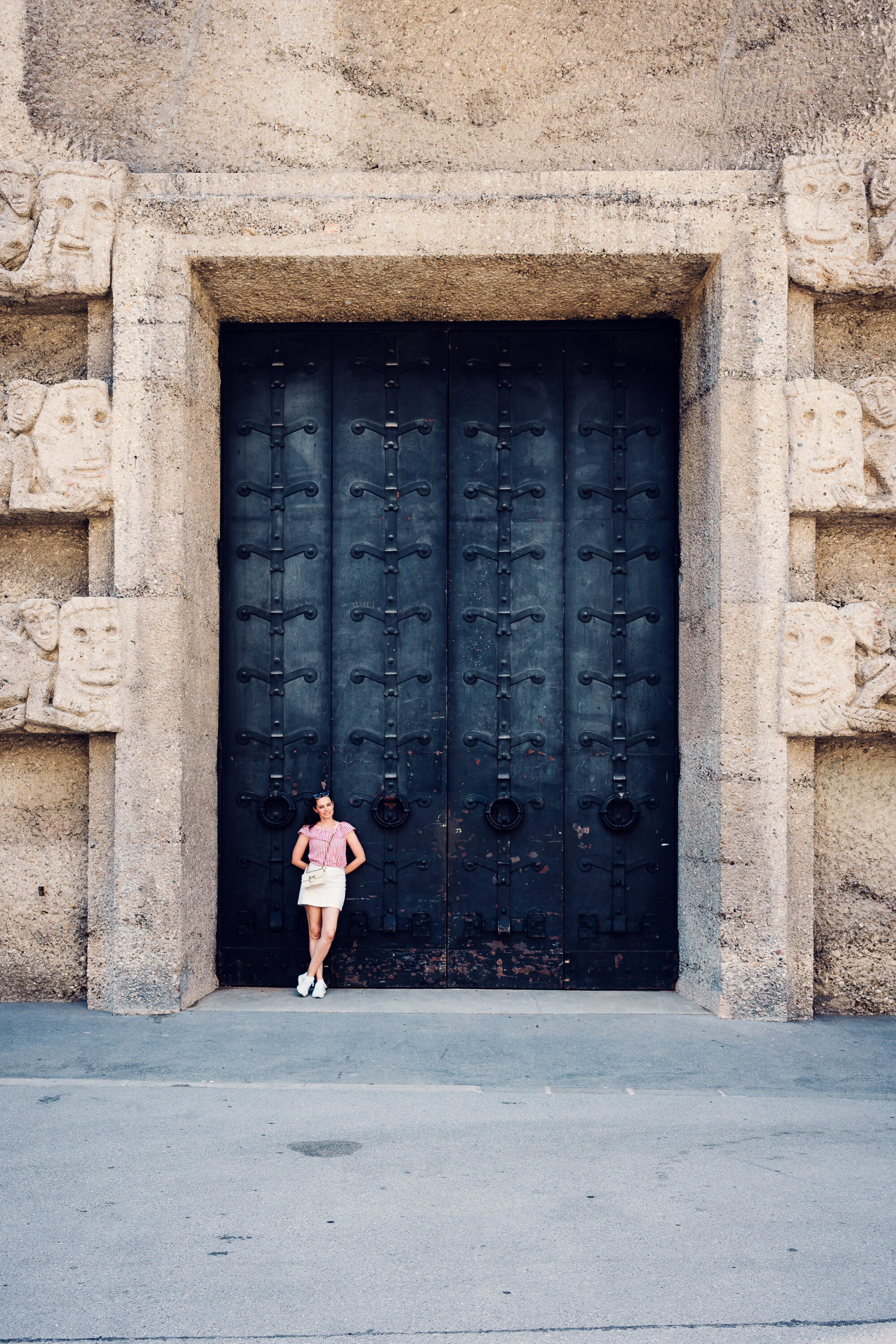
Adriana standing at the tall black studded door of the Toscaninihof, with carved stone masks lining the portal in Salzburg.
Fall in Love with

Toscaninihof

The Toscaninihof is a courtyard in Salzburg's Old Town beside the Felsenreitschule, with a staircase up the Mönchsberg and Sound of Music history.

* Affiliate links: if you book, a small commission supports our independent work, at no extra cost to you.

01 / 02
01 / 03

Toscaninihof

Today
Always accessible
Admission
Free
Plan for
45 mins
outdoors
Where
Old Town

The Toscaninihof sits at the working heart of Salzburg's festival district, a small courtyard hemmed in by the back walls of the Felsenreitschule and the Haus für Mozart. Walk in from the end of Hofstallgasse and you land somewhere that's half stage door, half mountain path: the artists' dressing rooms of the Salzburg Festival look down onto the paving, and a broad stone staircase climbs straight up the Mönchsberg behind it. The square carries the name of the Italian conductor Arturo Toscanini, who shaped the festival's golden years in the 1930s. Film fans know the spot without always realising it. This is where the black cars of the Sound of Music finale pull up during the rehearsal scene, and where Rolf hands Liesl the telegram from Berlin. Most people pass straight through on their way somewhere else, using the Altstadt garage exit or the pedestrian tunnel through the Mönchsberg toward Riedenburg. It's worth a slower look: an open-air organ on the wall above, a modern statue set into the rock, and one of the quietest high views over the old rooftops in town.

Plan your visit

Opening Hours
Always accessible
Getting there
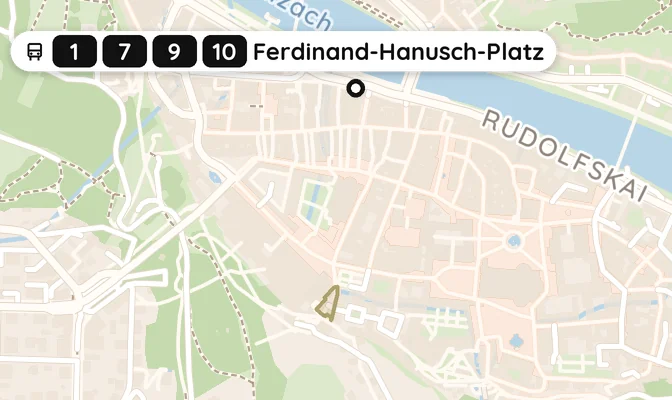
Toscaninihof, 5020 SalzburgBus 1 7 9 10 Ferdinand-Hanusch-Platz · 5 min walkOld Town

Tours & experiences

Toscaninihof


Muvamo Opinion

The Toscaninihof shows you the Salzburg Festival from the back. The grand foyers and the ticketed glamour sit on the far side of these walls. Here you get the service side. Tall iron gates swing open to move scenery onto the Haus für Mozart stage. Dressing-room windows look straight down on the paving. During rehearsal weeks in summer, you can sometimes watch stagehands wheel set pieces in and out. It's a rare look at the machinery that keeps one of the world's major music festivals running, and it happens in plain view of anyone passing through.

The staircase is the other reason to stop. It rises straight out of the Toscaninihof: the Clemens-Holzmeister-Stiege climbs the flank of the Mönchsberg, partly in rough concrete that echoes the conglomerate rock around it. Go up even a dozen steps and the noise of the square drops away. From the first turn, you look down into the private abbey garden of St. Peter. Across the roofs you catch the facade of the Franciscan Church, and beyond it the green Kapuzinerberg on the far bank of the river. It's one of the calmest high views in the old town, and almost nobody stops for it.

At ground level, the detail that stays with us is the open-air organ. It sits in a stone balcony on the Haus für Mozart, built in 1938 by the Salzburg firm Dreher & Flamm. On the right evening, it can turn the whole square into an instrument. There's more packed into this small space. There's more packed into the Toscaninihof than its size suggests. The Sound of Music telegram scene played out by these iron gates, when black cars of Nazi officials sweep in during the rehearsal. The modern Frau im Fels statue watches quietly from her niche in the rock. All of it costs nothing, and the square is normally open day and night.

That's why the Toscaninihof is worth a proper detour, not just a hurried shortcut. Come for ten minutes on your way to the Cathedral. Give it thirty and climb the stairs. That's the version of this place worth having.

Recommended tours & experiences

Helpful Hints

  • Free and normally open: the Toscaninihof is a public square with no regular ticket or entrance gate, so you can usually walk through at any hour.
  • The staircase beside the organ is a real shortcut up the Mönchsberg, saving you the lift queue at the far end of the hill.

Gastronomic Discoveries

  • Stiftsbäckerei St. Peter, the ancient abbey bakery nearby, still bakes natural sourdough bread in a wood-fired oven, with the old Almkanal mill wheel beside the bakery.
  • For coffee and cake after the climb, the cafés around Alter Markt are five minutes east through the lanes.

Hidden Gems

  • Above the Toscaninihof, a rare permanent outdoor organ from 1938 sits high on the Haus für Mozart wall, built by Dreher & Flamm and brought back to life after decades of silence.

Our Little Extras

  • Frau im Fels is the counterpart to Sphaera, the golden man on a globe on Kapitelplatz; both are 2007 works by Stephan Balkenhol created for the Salzburg Foundation's Walk of Modern Art.

From a Governor's Birthplace to a Maestro's Courtyard: The Toscaninihof

The Toscaninihof looks permanent, as if the walls of the Salzburg Festival had always closed around this patch of paving. In fact the square is younger than the fame of the man it's named for, and the ground beneath it has a history of its own.

The Conductor Behind the Name

The square honours Arturo Toscanini, the Italian conductor who shaped the festival's most celebrated years. He came to Salzburg in the mid-1930s already a legend, an exacting perfectionist who had just turned his back on Bayreuth in protest at the politics of the new Germany. Here he conducted acclaimed opera and orchestral evenings that drew an international audience to the city and helped lift the festival to a new peak. For his seventieth birthday, in 1937, the city renamed the courtyard in his honour. The tribute soon carried a sharp edge: within a year, as Austria slid toward the Anschluss, he cancelled his Salzburg engagements in protest and never conducted here again. His name stayed on the stone.

A Courtyard Carved from the Festival District

The Toscaninihof itself is a by-product of the festival's growth. Until the late 1930s a private house stood here, the birthplace of the governor who did more than almost anyone to build the modern festival. When the festival halls were rebuilt and extended, the house came down and the courtyard opened up between the wings. Today it's boxed in by working theatre architecture: the Felsenreitschule cut straight into the rock, the Haus für Mozart with its tall stage gates, and the festival's own offices. An open-air organ sits in a stone balcony on the wall above, and two concrete reliefs of mask-holding figures flank the gates; knocked off during the Nazi years, they were later rebuilt by the original sculptor.
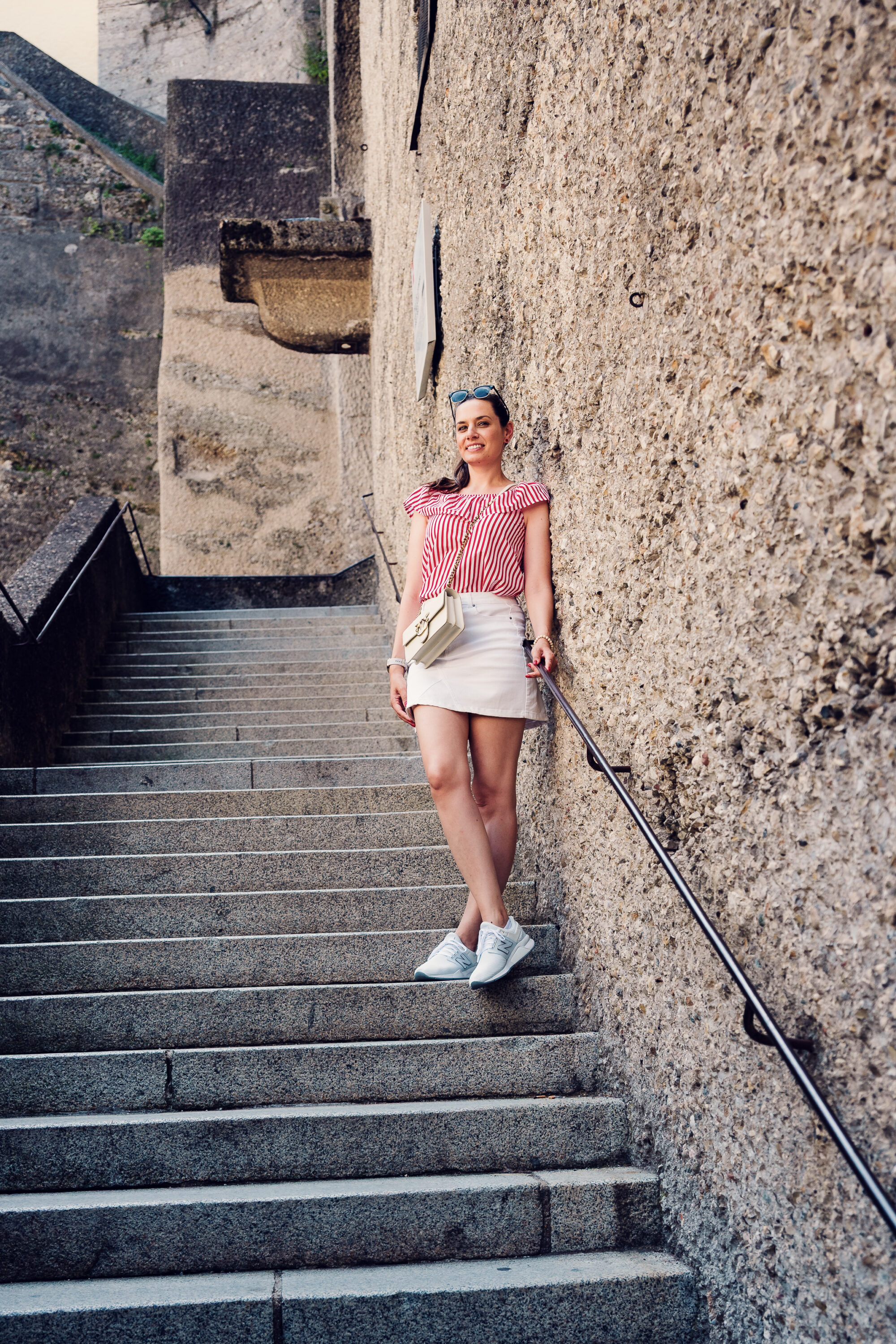
Adriana on the long granite staircase of the Toscaninihof, leaning against the rough stone wall by the handrail in Salzburg.
Adriana standing at the tall black studded door of the Toscaninihof, with carved stone masks lining the portal in Salzburg.

The Staircase and the Mountain

The most physical feature of the square is its staircase, the Clemens-Holzmeister-Stiege, named for the architect who reshaped the halls. Partly built in rough concrete that echoes the conglomerate rock around it, it climbs the flank of the Mönchsberg, linking the courtyard with the terraces above and carrying on to the paths across the hill. Halfway up, the view opens onto the private abbey garden of St. Peter and out over the rooftops to the Kapuzinerberg across the river. Below the stairs, the Felsentor opens into a pedestrian tunnel through the rock, with routes to the garage inside the mountain and toward the far side of the hill. Above it is the usual niche of Frau im Fels, a quiet figure by Stephan Balkenhol set here in 2007.

A Scene from The Sound of Music

For many visitors the Toscaninihof is, above all, a film location. In the closing act of The Sound of Music, as the family rehearses in the neighbouring Felsenreitschule, cars carrying Nazi officials sweep into the courtyard, and Rolf, now in uniform, hands Liesl a telegram from Berlin for her father. The film bends Salzburg's real geography for the sake of drama, but the square is genuine, and it still looks much as it did on screen.